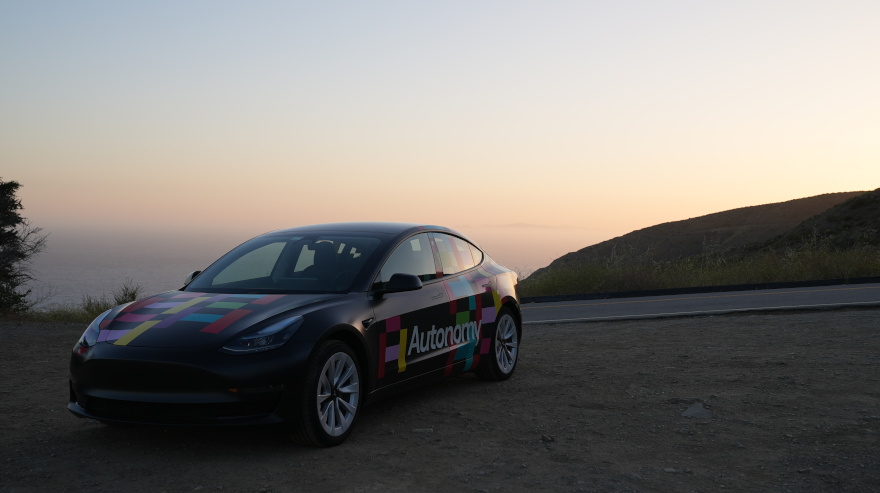
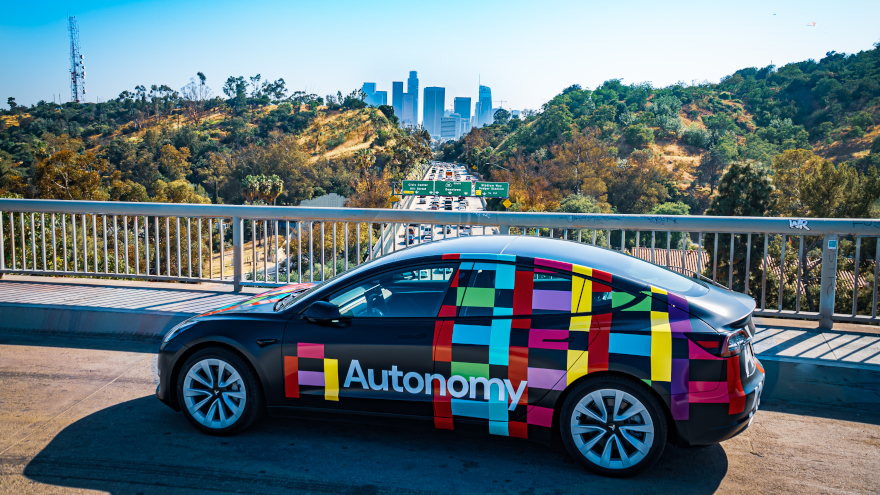
Autonomy reinforced its insurance resources again on Wednesday.
After the electric vehicle subscription company struck an arrangement with DigiSure at the beginning of August, Autonomy introduced a completely digital, month-to-month auto insurance product into its subscription bundle in partnership with Liberty Mutual Insurance, reportedly the sixth-largest global property and casualty insurer.
Autonomy said auto insurance coverage is now available as part of EV subscription bundle, which already includes tax, title, registration, routine maintenance and roadside assistance.
According to a news release, qualified subscribers will now receive Autonomy’s subscription with its fully integrated insurance offering.
Unlike most insurance policies that are offered on a semiannual or annual basis, Autonomy’s integrated insurance product is offered to subscribers on a flexible month-to-month basis.
“For the first time, consumers can pay for car insurance on a month-to-month basis through an Autonomy subscription all on their smartphone,” Autonomy founder and chief executive officer Scott Painter said in the news release. “Car subscriptions represent ease and flexibility, and insurance was the missing piece of our all-in-one offering.
“Liberty Mutual has been a great partner in helping us bring to market our new insurance product,” Painter continued. “Integrating auto insurance into our month-to-month subscription bundle solves yet another consumer pain point in the mobility experience and reinforces our core consumer value propositions.”
Gita Gupta is senior director of strategic partnerships at Liberty Mutual.
“Liberty Mutual is at the forefront of the evolution of subscription-based auto insurance, offering innovative programs to meet the needs of our partners’ business models,” Gupta said. “We are excited to partner with Autonomy to create easy, seamless access to electric vehicles.”
Autonomy keeps collecting relationships that meant to boost its place as an electric vehicle subscription company.
On Thursday, Autonomy entered the insurance category, finalizing a connection with DigiSure — a software company that provides screening, insurance management and claims — as its insurance platform partner.
Executives highlighted the platform partnership with DigiSure provides Autonomy with the ability to digitally onboard, evaluate and qualify a subscriber for month-to-month auto coverage that Autonomy will launch this month.
“Being able to provide Autonomy subscribers with fully digital auto coverage that’s month to month, without them having to buy annual insurance, and is tailored to their needs is core to delivering on our promise of providing easy and affordable access to electric vehicles,” Autonomy founder and chief executive officer Scott Painter said in a news release.
“We need proven partners, like DigiSure, with tested capabilities that allow us to provide a simple, intuitive, and frictionless customer experience,” Painter continued.
Mike Shim is CEO and co-founder of DigiSure.
“Autonomy is inventing a completely new way for people to enjoy EV ownership, and we believe that requires a new kind of insurance experience as well,” Shim said. We are excited to collaborate with Autonomy to embed auto insurance and protection products seamlessly into their offering for subscribers.”
The relationship with DigiSure arrived after Autonomy finalized arrangements with AutoNation to gain scale by working with the large, publicly traded dealer group. Autonomy also crafted a relationship with EV Mobility, which provides EVs on demand 24/7 as an amenity to luxury hotels as well as at multifamily apartment buildings and other commercial properties.
Interest in used electric vehicles has climbed and sales appear strong — trends that may have far-reaching impacts beyond dealership lots.
A year ago, half of electric vehicle shoppers said they would consider going used. But now nearly 80% are interested, according to the Q3 2022 Used Electric Car Market Report from Recurrent, a company that provide analysis of EV battery health.
And sales figures in Recurrent’s research appear to …
Read more
Autonomy has teamed up with AutoNation in a partnership the electric vehicle subscription company says will help it scale — both in terms of geographic and product expansion.
Currently, Autonomy offers the Tesla Model 3 and Model Y, but AutoNation, which will be Autonomy’s “Dealer of Record,” will aid the company in its plans to acquire as many as 20,000 electric vehicles from additional automakers over the next year to year-and-a-half.
The retailer will also provide vehicle preparation and delivery as part of Autonomy customer activations, along with maintenance, repair and reconditioning for Autonomy’s subscription fleet.
“AutoNation and Autonomy’s shared vision for how consumers gain access to electric vehicles is the basis for this partnership and has again shown that AutoNation is among the most innovative and forward-thinking retailers in the world,” Autonomy founder and chief executive officer Scott Painter said in a news release.
“This partnership allows Autonomy to drastically accelerate and diversify its vehicle lineup with a 20,000-vehicle order over the next 12-18 months while paving a clear and aggressive path for national expansion,” Painter said.
“Just as importantly, this also allows Autonomy to remain capital efficient and infrastructure light as we advance our mission to accelerate the adoption of EVs and scale subscriptions profitably.”
This move arrived just a few days after Autonomy finalized a relationship with EV Mobility, which provides EVs on demand 24/7 as an amenity to luxury hotels as well as at multifamily apartment buildings and other commercial properties through its mobile app.
The international share of car sales commanded by electric vehicles doubled last year, according to a new report from ResearchAndMarkets.com, which said their penetration climbed from 4.4% to 8.8% globally.
In the U.S., there were 608,000 sales of electric vehicles last year, up from 308,000 the year before, according to the U.S. Department of Energy.
This type of growth arguably necessitates — and perhaps is also spurred by — consumer outreach by the auto industry itself.
Among recent moves in that regard, Chase, which has financed EVs for four years and has deals in place finance EVs from Rivian and Fisker, announced the launch of its Electric Vehicle Education Center this week.
The website aims to not only educate consumers about EVs, but help them find and purchase electric and hybrid cars.
The center provides information on EV ownership costs, charging, battery range and maintenance, and is designed to serve consumers, dealers, OEMs and employees.
“The electric vehicle movement is here, and our customers are excited about all the options out there,” said Jamie Jones, Chase’s general manager of luxury & electric brands, in a news release.
“Chase is committed to bringing another valuable resource to consumers through the launch of this Education Center,” Jones said. “We’re here to provide them with the information, tools and financing to get them into a hybrid or electric vehicle they’ll love.”
Elsewhere, Octopus Energy U.S., a renewable energy retailer, said Wednesday it has debuted a new business unit, Octopus Electric Vehicles, to “accelerate accessibility and adoption of EVs and smart charging.”
The division’s first launch is EV Concierge, which it describes as an “integrated demand response EV leasing plan.”
Customers will be able to lease EVs through the program and also integrate smart charging and billing into their existing energy plans through Octopus.
The EV Concierge program is beta testing in Texas, and customers can apply to participate at octoev.us.
Qualifying customers will be provided guidance through the EV search and leasing process, along with vehicle delivery, EV home charger installation and education on EV ownership.
“Interest in electric vehicles is at an all-time high. With Texas as the third-largest market for EVs, and a global leader in energy, we will be positioned to help customers realize vehicle and energy savings all on one bill,” said Chris George, director of U.S. Octopus Electric Vehicles, in a news release.
“As fossil fuel continues to be impacted by inflation, it's never made more sense to get an EV paired with smart charging to extract the lowest priced energy from the grid,” George said. “EV Concierge will ensure that new EVs enter our state optimized to create a more reliable, clean and affordable energy system.”
It’s been a busy month so far for Lucid Group.
The luxury electric vehicle manufacturer finalized a path for its customers to secure financing through a relationship with Bank of America, which is also leading a credit facility for the company worth up to $1 billion.
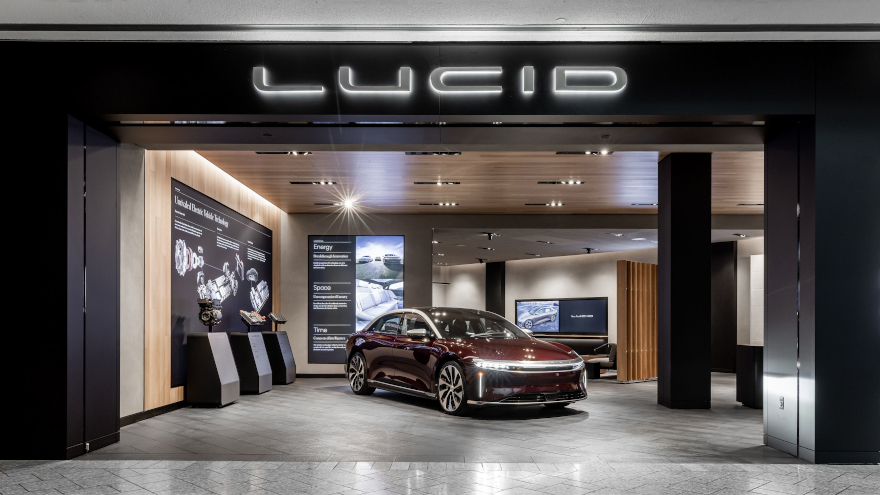
And then on Friday, Lucid announced the official opening of its first studio location in Denver at the Cherry Creek Shopping Center.
According to a news release, this studio opening marks 27 studio and service center locations now in operation throughout in North America.
The company highlighted every Lucid studio offers a digitally oriented luxury experience tailored to each customer’s preferences, whether they visit in-person, make inquiries entirely online, or combine the two.
Lucid studios allow customers to experience the brand and obtain information about its products in locations that underscore the company’s unique design aesthetic. Visitors who explore a Lucid studio will get a vision of how the company draws inspiration from the beauty, innovation, and diversity of its home state of California.
In addition, the company said Lucid studios augment the physical experience of seeing and touching a Lucid Air with an elevated digital experience. Using a 4K VR configurator, Lucid’s virtual reality experience combines the physical and virtual worlds to showcase seamless personalization of everything from interior finishes and materials to exterior color.
“The state of Colorado’s ambitious plans to support the acceleration of widespread electrification closely align with our mission to inspire the adoption of electric vehicles,” Lucid vice president of sales and service Zak Edson said in a news release. “The new Lucid Studio in Cherry Creek will provide excellent exposure to the Lucid Air in an area quickly growing in electric vehicle sales.”
For those customers who aren’t able to visit a Lucid studio, there is Lucid Studio Live, a private virtual tour that lets customers browse and build their dream car with the guidance of a Lucid team member.
Each one-to-one appointment allows time for questions and offers a 360 degree look at Lucid Air. Customers can see everything from views inside the cabin, into the trunk and frunk, to outside and even above the vehicle — all set in their choice of iconic California backdrops. From there, customers can save a favorite design configuration to their Lucid account if they wish.
A new installer of electric vehicle chargers, solar panels and solar panels is partnering with car dealers to provide charger installation to EV buyers.
And that’s quite fitting for evNation, which was founded by dealers Alex Livadas and Neil Okun, who each have three decades of experience in the car business.
The company takes a “concierge approach” and aims to help consumers install solar car chargers to their garages in addition to providing home installation of solar panels with battery storage.
“The first question consumers are asking when considering purchasing an electric car is: how do I charge the car?” Livadas said in a news release. “Studies have found that 80% of customers prefer to charge their cars at home, so we set up evNation to team up with auto dealerships like Fletcher Jones Motorcars (the nation's No. 1 Mercedes-Benz dealer) in Newport Beach to offer home installations of the unique SolarEdge Smart Level 2+ EV Charger at the point of sale.”
Livadas’ LinkedIn profile indidcates he has been the sales team manager at Fletcher Jones Motorcars since 2008.
Okun added: “We have built our business on the fundamental premise that solar and electric vehicles are complementary technologies. It is obvious that the current electric grid cannot support all the electric cars that will soon be connecting to it. The choice that customers make to help the environment by replacing their fossil fuel cars with clean energy EVs should be extended to include a home solar system.”
Bank of America evidently enjoys working with the Lucid Group.
On Wednesday, the luxury electric vehicle manufacturer announced entry into a credit agreement with an initial committed amount of up to $1.0 billion with Bank of America serving as the administrative agent and swingline lender on the transaction.
According to a news release, other lenders in the initial bank syndicate for the credit facility include:
—Citigroup
—Barclays Bank
—Goldman Sachs Bank USA
—JPMorgan Chase Bank
—BNP Paribas
—Royal Bank of Canada, Capital Markets
—HSBC Bank USA
—MUFG Bank
—Sumitomo Mitsui Banking
—Wells Fargo Bank
“We are pleased to complete this credit facility with an exceptional syndicate of banks, which illustrates our ability to access alternative forms of financing and provides us with further financial flexibility to scale our business,” Lucid chief finance officer Sherry House said in the news release.
“We ended the first quarter of 2022 with close to $5.4 billion of cash on hand, which we expect will fund us well into 2023. We remain committed to scaling our business and are executing against our strategic objectives,” House continued.
Certain terms and covenants contained in the new credit facility include:
—Provides revolving credit under the facility with an initial committed amount of up to $1.0 billion, with availability based on the value of certain eligible assets included in the borrowing base from time to time, and includes a $350.0 million sublimit for letters of credit and a $100.0 million sublimit for swingline loans.
—Provides for uncommitted incremental revolving commitments of up to an additional $500.0 million, plus certain other amounts, in each case subject to obtaining the commitments from lenders providing such incremental commitments.
—The credit facility has a stated term of five years, maturing on June 9, 2027.
Previously, Bank of America pledged to be the institution behind Lucid Financial Services to help consumers secure financing for the company’s EVs.
Holman is adding more financial juice into the electric vehicle space.
Last week, the global automotive services organization announced an investment from its venture capital division in AmpUp, a leading electric vehicle management software company.
Executives highlighted AmpUp’s innovative technology allows organizations and fleet operators to efficiently monitor and manage their EV charging infrastructure to simplify charging schedules and optimize energy consumption.
In addition to the strategic capital investment, the company said this collaborative effort is poised to leverage Holman’s fleet management services and AmpUp’s technology platform to aggregate charging information with vehicle operating data, reducing the risk of data fragmentation and mitigating fraud while also eliminating potential blind spots as fleet operators successfully navigate the transition to EVs.
“As a growing number of organizations embrace EVs and the associated infrastructure becomes increasingly robust, enhanced visibility to charging data will be vital to effectively managing EV chargers and optimizing charging strategies at scale,” Holman director of sustainability Emily Graham said in a news release.
“As we continue to explore potential electrification opportunities with our customers, aligning with technology leaders such as AmpUp allows us to integrate at-home and public charging information with the full range of vehicle operating data we already capture, further streamlining the transition to EVs for fleet operators and delivering the insight necessary to make fully-informed strategic decisions,” Graham continued.
AmpUp’s proprietary software solution is designed to help to simplify electric vehicle adoption by improving the EV charging experience for organizations and their drivers. The technology can make EV charge scheduling easier and more convenient while also providing better infrastructure control and delivering increased visibility to key charging metrics.
“Holman’s automotive expertise and legacy in the industry is second to none and we’re extremely proud of the investment they’re making in our company as we continue on our mission to electrify transportation,” AmpUp chief executive officer Thomas Sun said in the news release.
“As more businesses transition their fleets to electric vehicles, we believe our intuitive technology will help organizations quickly scale smart charging solutions and make implementing electrification programs as seamless as possible for fleet operators,” Sun went on to say.
For additional information, visit Holman.com or AmpUp.io.
As AAA reported ahead of Memorial Day weekend that the national average for a gallon of gasoline stood at $4.59 and all 50 states were above $4 per gallon, vehicle shoppers in America are more likely than ever to consider buying a fully electric vehicle.
And J.D. Power said new EV entries also are responsible for much of the added consideration.
These new entries, many from long-established vehicle manufacturers, are turning EV skeptics into likely EV considerers, according to the J.D. Power 2022 U.S. Electric Vehicle Consideration (EVC) Study.
According to the J.D. Power research, the percentage of shoppers who say they are “very likely” to consider an EV for their next purchase or lease climbed to 24%, 4 percentage points higher than a year ago.
J.D. Power explained several factors are at work in prompting the increase, but the introduction of new electric models — some of which are in an important and largely untapped segment such as pickup trucks — is a primary reason for the increased consumer interest.
“The addition of new EV models has moved the needle on consumer consideration,” said Stewart Stropp, senior director of automotive retail at J.D. Power. “In fact, several new models from perennial mass market brands are at the top of that consideration list.
“Even so, more remains to be done in terms of transitioning from early to mass adoption,” Stropp continued in a news release. “Though the study findings show a shift in favor of EVs, about 76% of new-vehicle shoppers say they are not ‘very likely’ to consider buying one. With new EV model introductions coming at a rapid pace, automakers must continue their efforts to persuade more shoppers to give these vehicles a try.”
One hurdle to EV adoption revolves around shoppers’ living and working situations.
J.D. Power indicated there is a substantially higher ratio of shoppers who own their home who say they are “very likely to consider” an EV (27%) than those who rent (17%). Not only are homeowners more affluent, on average, but are more likely to be able to charge an EV at their residence. Perhaps most tellingly, 34% of those who indicate they are unlikely to consider purchasing an EV say they lack access to any charging capabilities at home or work.
The study, now in its second year, determined that the more vehicle owners drive, the more they are likely to consider an EV.
While daily commuters who are encountering higher fuel prices are logical candidates to switch to EVs, J.D. Power pointed out that individuals who take frequent vacations and road trips might be assumed to be less likely to adopt EVs.
But, like heavy commuters, experts said heavy road-trippers have a higher EV purchase consideration tendency than those who use their vehicles less often for this purpose. It could be an indication that frequent drivers are increasingly seeing the advantages of EVs compared with their gasoline-powered counterparts, according to J.D. Power.
Still, as the number of EV models proliferates, J.D. Power said manufacturers must seek to convert the large percentage of EV shoppers who say they are “somewhat likely” to consider into actual customers. The study noted a key opportunity to accomplish that: expose EVs to those shoppers who have never driven, ridden in or even sat in such a vehicle.
Echoing last year’s findings, the 2022 study showed that firsthand experience with EVs plays an important role in purchase consideration.
Only 11% of study respondents who had no personal experience at all with EVs say they are “very likely” to consider an EV. That percentage more than doubles to 24% among those new-vehicle shoppers who have simply been a passenger in an EV and rises to 34% among those who have driven an EV.
Owners of EVs are also sold on the technology, as 48% of owners say they are “very likely” to consider another EV for their next vehicle purchase.
Other key findings of the 2022 study include:
—EV consideration stronger among premium buyers: Since purchase price continues to play a prominent role in the vehicle purchase process, and because EVs often have higher price tags than their gas-powered counterparts, it is not unexpected that EVs are finding more favor among premium buyers than mass market buyers. Some 37% of premium vehicle owners indicate they are “very likely” to consider an EV for their next purchase vs. just 21% among those who currently own mass market vehicles.
—EV consideration by owners of mass-market vehicles on the rise: Though premium vehicle owners remain more likely to consider EVs than owners of mass market vehicles, the owners of mass market vehicles increasingly register an interest in buying an EV. The year-over-year increase in those who say they are “very likely” to consider an EV is up 6 percentage points among owners of mass market vehicles and up one percentage point among owners of premium vehicles. This suggests some owners of mass market vehicles are receptive to more affordable EVs.
—More information engenders more consideration: The study reinforces findings from a year ago that a lack of information about EVs is a key factor in shoppers’ rejection of them. Nearly one-third (30%) of rejecters cite a lack of information as a reason for their lack of consideration. Because firsthand experience with EV technology is still not entirely commonplace, shoppers need to be better informed about the ownership experience they offer.
—EV consideration by geographic location: It is not unexpected that new-vehicle shoppers in the West region show the highest proclivity for EV purchase. Some 31% of those in the West say they are “very likely” to consider an EV. Surprisingly, the South (26%) tops the Northeast (22%) among those who say they are “very likely” to consider an EV. The North Central is at 22%.
—Legacy automakers turn in strong showing: Owners of numerous mass market brands express an increased interest in EVs from a year ago. At the same time, owners of several premium brands, including Tesla, express somewhat less interest in making their next vehicle an EV.
“Tesla remains a dominant player, but new-vehicle shoppers are proving quite willing to consider EVs from legacy brands,” Stropp said.
The U.S. Electric Vehicle Consideration (EVC) Study is an industry benchmark for gauging EV shopper consideration. Study content includes overall EV consideration by:
—Geography
—Demographics
—Vehicle experience and use
—Lifestyle
—Psychographics
The study also included model-level consideration details such as cross-shopping and “why buy” findings, and analysis of reasons for EV rejection. The study measured responses from 10,030 consumers and was fielded from February through April.