Consumers are showing greater interest in used electric vehicles, which is evident in their key strokes and in their tire kicking.
In a report published last week, CarMax examined used EV search volume on its website and its own test-drive numbers, with each data set going back to January of last year.
The EV Test Drives & CarMax.com EV Search Volume Index was set at …
Read more
Perhaps what’s now available at Advance Auto Parts will help calm any apprehension about battery status of used hybrid and electric vehicles your dealership's potential buyers might have.
On Monday, the automotive aftermarket parts retailer announced the introduction of DieHard EV with xEV by Clarios, becoming what the company said is the first auto parts retailer to sell 12-volt batteries designed specifically for hybrid and electric vehicles.
In a survey of electric vehicle owners by Clarios, 84% did not know their automobile uses both high-voltage lithium and low voltage (12-volt) AGM batteries.
In a national survey of motorists commissioned by Advance, 51% of electric vehicle owners reported ownership of their vehicles as three to five years — prime replacement time for 12-volt batteries and 81% said it is important to have a 12-volt battery designed specifically for electric vehicles.
Advance highlighted DieHard EV batteries are an advanced, low-voltage technology designed to provide superior reliability, durability and safety for all hybrid and electric vehicles, which place more demand on their low-voltage batteries.
To address this situation, the retailer said DieHard EV batteries offer 30% more cycling versus standard AGM batteries and can provide stable performance from day one through end of life.
Additionally, Advance pointed out their robust construction helps assure critical safety functions like brakes, steering and lighting remain operational during an emergency.
“At Advance, we are committed to serving all makes and models of the growing vehicle population. While there are many years of parts and service growth ahead for internal combustion engines, we also recognize the increasing demand for hybrid and electric vehicles,” Advance Auto Parts president and chief executive officer Tom Greco said in a news release.
“This first-to-market DieHard EV 12-volt battery is a great addition to our robust offering of hybrid and electric vehicle parts available in our catalog today to serve both our professional and DIY customers,” Greco continued.
“Advance is also leading the way by equipping our professional customers with the training and support they need to service the evolving vehicle population, including offering more than 50 classes on hybrid and electric vehicles at Advance’s STX conference, which is the world’s largest automotive aftermarket training event,” he went on to say.
Advance also mentioned DieHard EV extends the AGM technology UL validated earlier this year that significantly reduces the environmental impact and resources needed to manufacture.
All DieHard AGM batteries contain a minimum of 94% post-consumer recycled polypropylene and lead content using a closed-cycle mass balance system.
“As the global leader in advanced, low-voltage battery solutions, we have designed the Clarios xEV battery portfolio to meet the needs of the growing hybrid and electric vehicle market,” Clarios chief executive officer Mark Wallace said in the news release.
“More electrified powertrains, like those found in hybrid and electric vehicles, require advanced 12V solutions to address the complex demands placed on the low-voltage systems,” Wallace continued. “DieHard EV leverages our experience with nearly every global automotive manufacturer and is the right product to confidently meet these demands.”
DieHard EV is available exclusively at Advance stores, participating Carquest stores and advanceautoparts.com.
Now operational in three of California’s largest markets, Autonomy announced another path toward growing its digital electric vehicle subscription service.
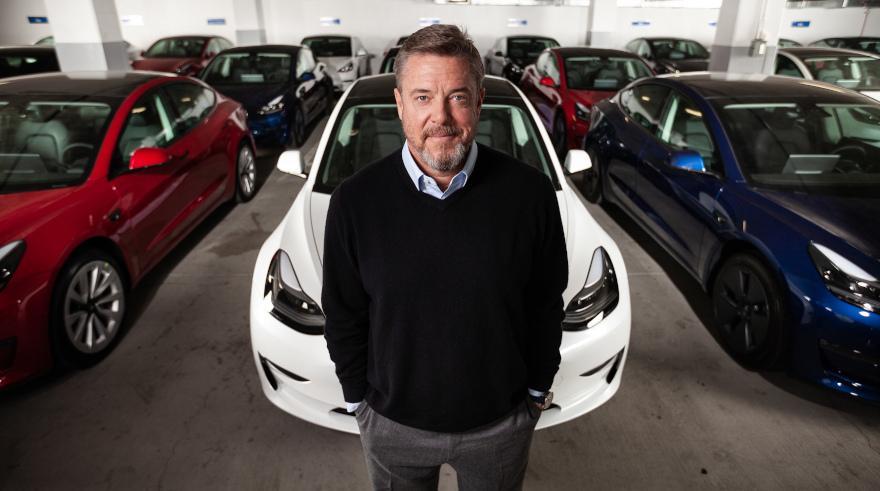
The company that says it provides consumers with the cheapest, fastest, and easiest way to subscribe to a Tesla Model 3, has partnered with leading workplace perks provider, Next Jump.
According to a news release distributed on Monday, Next Jump powers Perks at Work, which helps 70% of the Fortune 1000 companies care for their employees by providing discounts in categories ranging from travel to everyday essentials, free online classes and HR software. Next Jump counts Google, Starbucks, PwC and The Home Depot among their employer partners.
Through the partnership, millions of Perks at Work members will now get flexible and affordable access to electric vehicles without long-term commitment or long-term debt.
Autonomy is currently available in California and is gearing up for expansions to other regions of the country.
Autonomy’s subscription program is month to month after a three-month minimum hold period and bundles routine maintenance, roadside assistance, and registration fees into a monthly payment.
In addition to Tesla Model 3, Autonomy will soon expand to other Tesla models, as well as models made by other OEM brands.
“The vast majority of employees need a car to get to work, but the increasing cost of vehicles and the fact that EVs cost more than gas-powered cars makes them less attainable for the average consumer,” Autonomy founder and chief executive officer Scott Painter said in the news release. “We’re excited to partner with Next Jump and provide millions of employees an easier and more affordable way to get access to an EV.
“Subscriptions are simply a novel way for consumers to get more car for less money without long-term debt or long-term commitment, helping make EVs more affordable and the planet more sustainable,” Painter added.
Greg Kunkel is Next Jump co-founder and head of e-commerce.
“Companies are looking for unique ways to take care of employees right now,” Kunkel said in the release. “With the increase in inflation impacting wallets, and significant employee interest in supporting sustainable brands, we are excited to partner with Autonomy in providing a unique perk of EVs for our Perks at Work customers.”
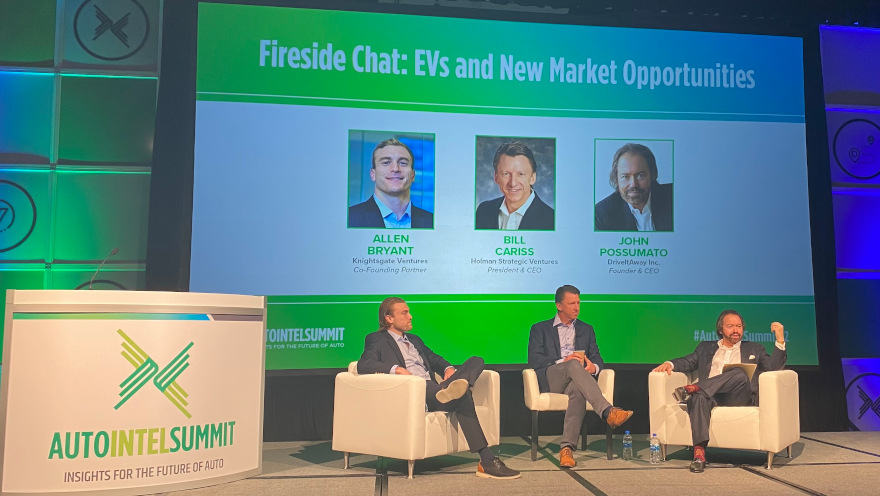
Continuing our series of special episodes of the Auto Remarketing Podcasts featuring general sessions from this year’s Auto Intel Summit — an added benefit for Cherokee Media Group Premium Members — we take another look at the potential for electric vehicles through the prism of the investment community.
Allen Bryant of Knightsgate Ventures and Bill Cariss of Holman Ventures offer their viewpoints during panel discussion moderated by John Possumato of DriveItAway.
To listen to the episode, go to this webpage.
Continuing our series of special episodes of the Auto Remarketing Podcasts featuring general sessions from this year’s Auto Intel Summit — an added benefit for Cherokee Media Group Premium Members — we have a conversation about one of the most popular topics of the year: electric vehicles.
Courtney Dusseau, Katie Johar and Branson Smith of Ernst and Young discussed how the industry is managing the disruption of the EV transition.
To listen to the episode, go to this webpage.
Following one of their workshops during this year’s Auto Intel Summit, John Howard and Kirsten Von Busch of Experian Automotive offered more of their time in North Carolina for this episode of the Auto Remarketing Podcast.
The Experian Automotive executives recapped a portion of the presentation, sharing who is the “other” electric vehicle buyer.
To listen to the conversation, click on the link available below, or visit the Auto Remarketing Podcast page.
Download and subscribe to the Auto Remarketing Podcast on iTunes or on Google Play.
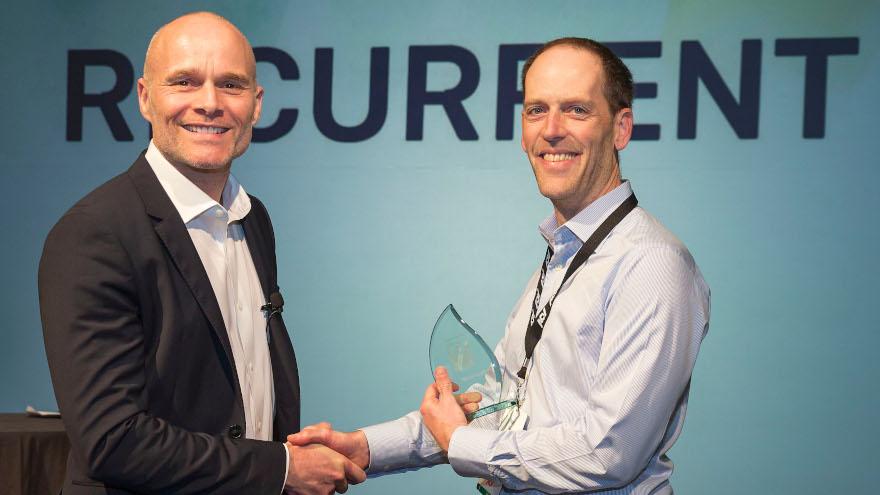
In this episode of the Auto Remarketing Podcast recorded at the Auto Intel Summit last week in Raleigh, N.C., we connect with Scott Case, who is chief executive officer of Recurrent, a company that analyzes electric vehicle battery health and one of this year's "Emerging 8" honorees.
Case discusses the company's recent $4.5 million round of funding and its new partnerships in both the retail and wholesale car markets.
To listen to the conversation, click on the link available below, or visit the Auto Remarketing Podcast page.
Download and subscribe to the Auto Remarketing Podcast on iTunes or on Google Play.
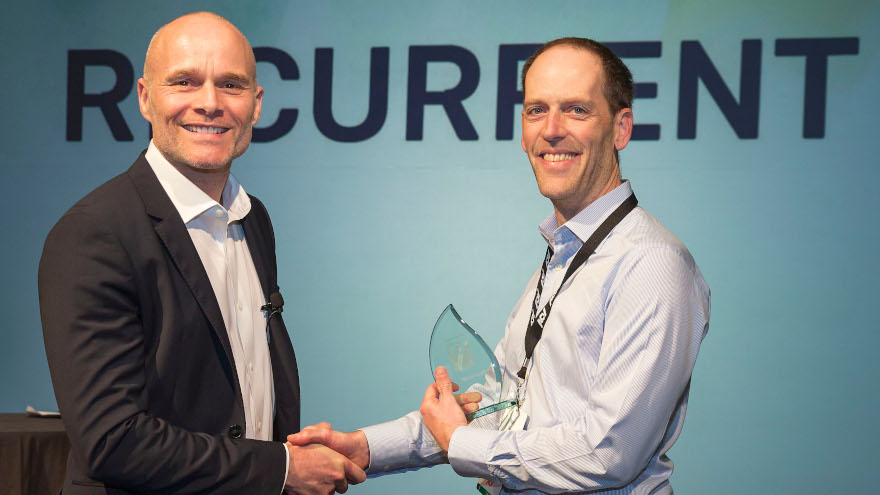
Recurrent, a company that analyzes electric vehicle battery health, announced a series of growth moves during last week’s Auto Intel Summit.
Those include new investors as well as new dealer and auction partners for the company, which was among Auto Fin Journal’s 2022 Emerging 8 honorees.
Starting with the new clients, Bay Area-based Del Grande Dealer Group and its 19 dealerships will utilize Recurrent’s ratings on its used EV listings.
“In addition, we’re thrilled that one of the largest used auto wholesale auction providers (Company name to be disclosed soon!) will be adding Recurrent to its digital auctions to offer buyers new levels of transparency when purchasing used electric cars,” Recurrent co-founder and chief executive officer Scott Case said in a message last week.
“This allows its customers to quickly determine how well an individual EV has retained its driving range and how that range can be expected to vary in different temperatures,” Case said. “Our ratings will be available to all auction bidders on the site.”
Offering his take on the partnership with the dealer group, DGDG CEO Jeremy Beaver said in a news release: “The shift to electric vehicles continues to be a great opportunity to help our guests reduce commuting costs and their carbon footprints.
“A key to helping our guests make informed buying decisions includes education around charging and range. Recurrent reports are an amazing resource for our team of product specialists that helps with the EV shopping journey and experience,” Beaver said.
Moving on to the new investors, Recurrent said it has added these new investors, who have contributed a total of $4.5 million in additional funding: Automotive Ventures, Goodyear Ventures, Hearst Ventures, Avesta Ventures, MAP Investco, Circumference Group, Enertech Capital, and E8 Angels.
“I have shared in the past that each new investor, advisor and seasoned customer helps me be a better CEO. I learn from them each day,” Case said in the message.
“Today, as I look around at the Recurrent community, which now includes 8,000 EV owners, tens of thousands of EV shoppers, 20 team members, and a growing client base, I am equal parts thankful for the past and excited for the future. Recurrent would not be what is without all of you,” he said.
In a separate news release, Case said: “For almost two years, we have been working tirelessly to develop a product that is capable of revolutionizing the secondary EV market. It is such a proud moment for everyone on our team that we are able to welcome these new investors as they help us scale it for all types of EV buyers. Whether you are a wholesaler, dealership or individual car buyer, we are ready to add transparency and confidence to your purchase.”
Both in formal presentations and networking chatter during last week’s Auto Intel Summit, attendees mentioned the collaborative move by General Motors and Honda when the topic turned to electric vehicles.
The automakers recently announced plans to expand the two companies’ relationship to a new chapter by codeveloping a series of affordable EVs based on a new global architecture using next-generation Ultium battery technology.
According to a news release, the companies are working together to enable global production of millions of EVs starting in 2027, including compact crossover vehicles, leveraging the two companies’ technology, design and sourcing strategies.
The companies said they will also work toward standardizing equipment and processes to achieve world-class quality, higher throughput and greater affordability. The compact crossover segment is the largest in the world, with annual volumes of more than 13 million vehicles.
GM and Honda also said they will discuss future EV battery technology collaboration opportunities, to further drive down the cost of electrification, improve performance and drive sustainability for future vehicles.
GM is already working to accelerate new technologies like lithium-metal, silicon and solid-state batteries, along with production methods that can quickly be used to improve and update battery cell manufacturing processes.
Honda is making progress on its all-solid-state battery technology which the company sees as the core element of future EVs. Honda has established a demonstration line in Japan for all-solid-state batteries and is making further progress toward mass-production.
“GM and Honda will share our best technology, design and manufacturing strategies to deliver affordable and desirable EVs on a global scale, including our key markets in North America, South America and China,” GM chair and chief executive officer Mary Barra said. “This is a key step to deliver on our commitment to achieve carbon neutrality in our global products and operations by 2040 and eliminate tailpipe emissions from light duty vehicles in the U.S. by 2035.
“By working together, we’ll put people all over the world into EVs faster than either company could achieve on its own,” Barra added.
GM and Honda have developed a close working relationship over many years, including several projects in recent years focused on electric and autonomous vehicle technologies.
In 2013, the two companies began working together on the co-development of a next-generation fuel cell system and hydrogen storage technologies.
In 2018, Honda joined GM’s EV battery module development efforts. In 2020, GM and Honda announced plans to codevelop two EVs, including the Honda Prologue, to be launched in early 2024, soon followed by Acura’s first EV SUV.
“Honda is committed to reaching our goal of carbon neutrality on a global basis by 2050, which requires driving down the cost of electric vehicles to make EV ownership possible for the greatest number of customers,” Honda president and CEO Toshihiro Mibe said. “Honda and GM will build on our successful technology collaboration to help achieve a dramatic expansion in the sales of electric vehicles.”
Further, the companies have an ongoing relationship with Cruise and are working together on the development of the Cruise Origin, one of the first purpose-built fully autonomous vehicles designed for driverless ride-hail and delivery.
“The progress we have made with GM since we announced the EV battery development collaboration in 2018, followed by co-development of electric vehicles including the Honda Prologue, has demonstrated the win-win relationship that can create new value for our customers,” said Shinji Aoyama, Honda senior managing executive officer. “This new series of affordable EVs will build on this relationship by leveraging our strength in the development and production of high quality, compact class vehicles.”
Doug Parks, who is GM executive vice president of global product development, purchasing and supply chain, added, “Our collaboration with Honda and the continuing development of Ultium are the foundation of this project, utilizing our global scale to enable a lower cost foundation for this new series of EVs for millions of customers.
“Our plans include a new all-electric product for North America positioned at a price point lower than the upcoming Chevrolet Equinox EV, building on the 2 million units of EV capacity the company plans to install by the end of 2025,” Parks went on to say.
Next up on our NADA Show podcast series, Cox Automotive Mobility president Joe George and Manheim president Grace Huang sit down with senior editor Joe Overby to discuss how electric vehicles — one of the most popular topics at the convention in Las Vegas — and auto auctions intersect.
They look at how Cox is preparing for an EV future, battery health tools the company has developed and much more.
To listen to this episode, click on the link available below, or visit the Auto Remarketing Podcast page.
Download and subscribe to the Auto Remarketing Podcast on iTunes or on Google Play.