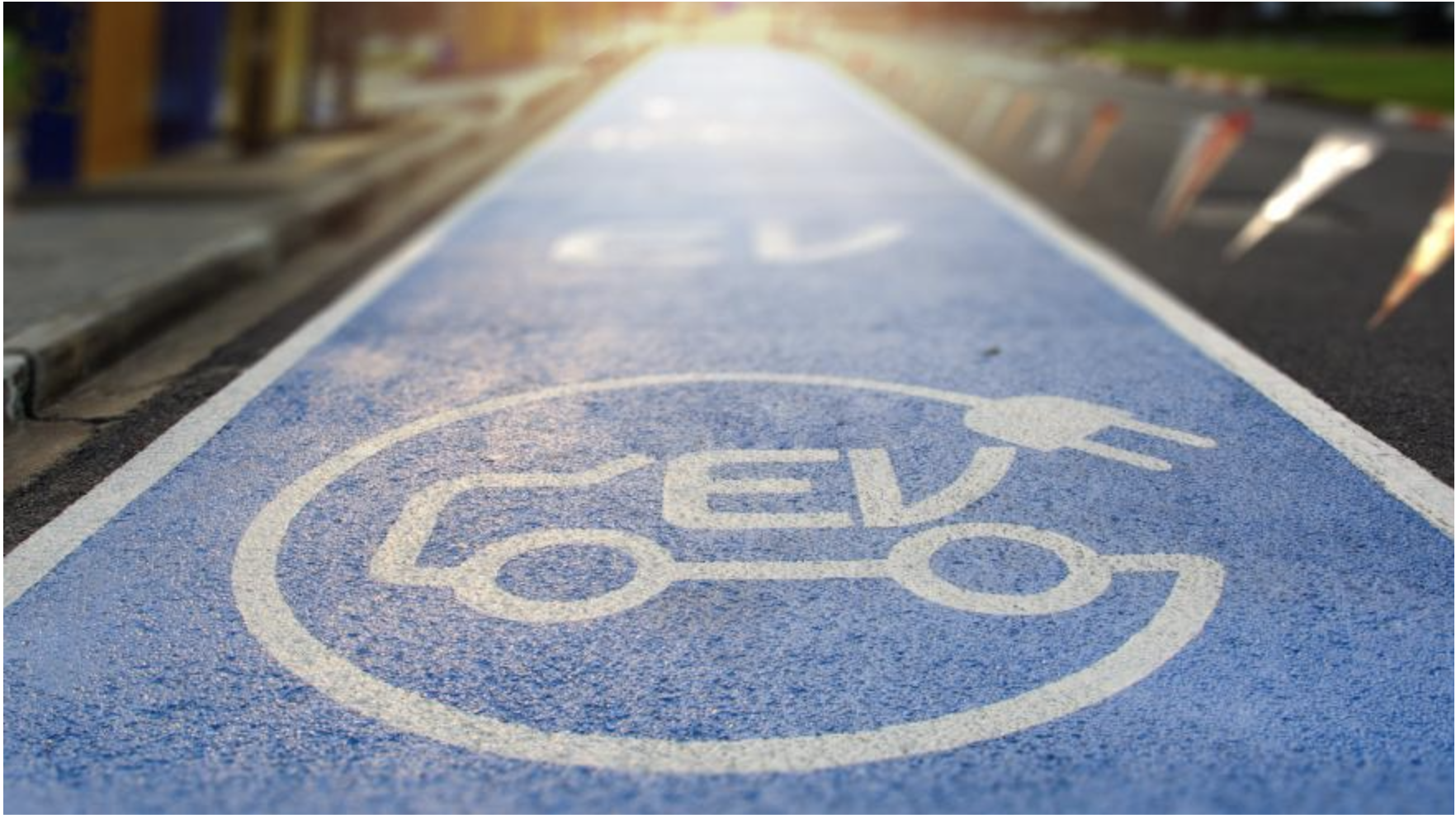
Electric vehicles were discussed so much at NADA Show 2022, a portion of the shiny, new Las Vegas Convention Center was rebranded as Electric Avenue.
As franchised dealers and their association learned more about the availability of and best practices for retailing EVs, the National Automobile Dealers Association also honored one of its own as the 2022 TIME Dealer of the Year
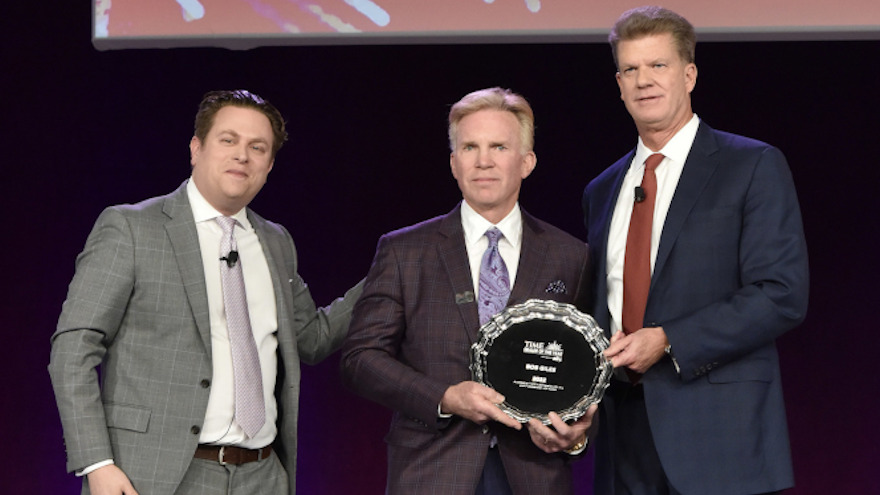
The honor from TIME and Ally Financial was given to Bob Giles, owner of Giles Automotive in Lafayette, La., at the 105th show, which wrapped on Sunday.
Now in its 53rd year, the TIME Dealer of the Year award is one of the auto industry’s most prestigious and highly coveted honors.
Keith Grossman, president of TIME, and Doug Timmerman, president of dealer financial services at Ally, announced Giles as the winner at a ceremony honoring all the dealer nominees. Giles was chosen from a field of nearly 16,000 franchised dealers across the country, 47 of whom made the nominee list.
Timmerman said in a news release, “Even as America’s auto dealers adapt to a rapidly changing auto market, the commitment to their customers, employees, and communities remains unparalleled. The TIME Dealer of the Year nominees stand out for doing it right in their industry and steadfastly giving back to their communities.”
In addition to Giles, the four dealers recognized as TIME Dealer of the Year finalists included:
— Robert Sickel, Pine Belt Chevrolet, Lakewood, N.J.
— Todd Ouellette Sr., Long-Lewis Ford of the Shoals, Muscle Shoals, Ala.
— Gregg Kunes, Kunes Country Ford-Lincoln, Delavan, Wisc.
— Chris Wilson, Wilson Motor Company, Logan, Utah
Ally, the exclusive sponsor of the TIME Dealer of the Year Award, will give $10,000 to the charity of Giles’ choice.
The company also will donate $5,000 to nonprofit organizations selected by each of the four finalists. Will Green, president of the Louisiana Automobile Dealers Association who nominated Giles for the award, will also select a charity recipient.
In recognition of their achievements and generosity, Ally also gave $1,000 to the charities of choice for each of the 47 nominees.
Officials said the Louisiana dealer’s extraordinary business and community leadership earned Giles the most prestigious award in the automotive retail industry. A standout of his many contributions was the launch of the Giles Essential Errand Running Service, which offers grocery and essential item deliveries by dealership staff to senior citizens and immunocompromised individuals.
Giles earned a degree in accounting from Texas A&M University in College Station in 1976, but his training in the retail automotive industry began at age 11, when he was paid 25 cents an hour to wash vehicles on the lot at his dad’s Ford dealership in Denison, Texas.
From there, Giles spent time working in all departments, learning how to operate a dealership from the ground up. That experience, paired with his accounting degree, led Giles to start selling vehicles after graduating from college and landed him a role as sales manager at 24 years old.
A few years later, Giles was awarded a Volkswagen, Porsche and Audi store in Lafayette, and he moved to the city on his 28th birthday to establish what would become Giles Automotive.
Today, the auto group includes three stores in Lafayette, one in Opelousas, La., and one in El Paso, Texas, representing Nissan, Subaru and Volvo brands.
Giles has been an active member of both his state and local dealer associations.
For the Lafayette Auto Dealers Association where he was named chair of the board four times, Giles was instrumental in launching the group’s annual car show and sale in 1984. Giles has also advocated for his fellow dealers during his time as a member of the Louisiana Automobile Dealers Association.
“I worked with the state association to put forth initiatives to benefit all dealers in the state, and focused on warranty reimbursement rates, technician training, purchasing groups and beneficial legislation impacting auto dealers,” he said in the news release.
Beyond his industry, Giles is a community leader who has initiated campaigns to help local organizations grow and expand. He partnered with a local TV station to create the Acadiana Community Heroes campaign, which recognized deserving individuals or nonprofit organizations that have made a difference in his area. The recipients received a monetary prize and exposure for their cause.
Giles also has been active in the Outreach Center, which provides shelter and services to the homeless in the Acadiana region for many years helping to increase their annual fundraiser from around $100,000 annually to more than $500,000.
Other organizations Giles supports include:
— Dreams Come True of Louisiana, which grants dreams to children with life-threatening illnesses
— Acadiana Animal Aid, a no-kill animal shelter in Carencro, La.
— Hunters for the Hungry, as local sportsmen provide fish and game for meals at homeless shelters
— Love Our Schools
Officials reiterated the TIME Dealer of the Year winner and finalists were chosen by a faculty panel from the Tauber Institute for Global Operations at the University of Michigan. Dealers are nominated for the award by state and regional automotive trade association executives.
NADA launches dealership electric vehicle education program
Beyond displays of EVs at the event, NADA showed another way it’s charged up about electric vehicles.
The association launched a new program, in collaboration with the Center for Sustainable Energy and Plug In America, that’s designed to enhance EV education at franchised dealerships nationwide.
Officials explained the dealership EV training program developed through this partnership is supported by the Alliance for Automotive Innovation, which will engage all vehicle manufacturers to further dealership participation across the U.S.
While automakers continue to bring more EVs to market, NADA acknowledged that providing future EV buyers with the information and expertise to get them comfortable and confident with their first EV purchase is far more crucial to mass-market adoption and fleet turnover than just product alone.
“By bringing these two EV-focused powerhouse organizations together with NADA, we will efficiently educate dealers and help accelerate the mass market adoption of electric vehicles in the U.S.,” NADA president and chief executive officer Mike Stanton said in another news release. “The dealership training program leverages the strengths of each organization and will ensure dealers are more than prepared to sell and service the EV future.”
NADA highlighted the online, interactive program will be designed to complement OEM model-specific training and will serve as a brand-agnostic review of essential content that dealership sales staff need to be able to communicate with customers to efficiently close EV sales.
The association mentioned the program will offer quick, easily digestible talking points that can allow sales staff to encourage potential EV buyers. The program also will include short modules to appeal to different learning styles.
“The electric vehicle market is moving beyond early adopters to consumers who have lots of questions about what it’s like to own an EV,” CSE president Lawrence Goldenhersh said. “Auto dealer sales staff sit at the nexus in this market transition, and will be called upon to provide confidence-creating, point-of-sale education to millions of auto buyers considering the move to an EV. We are honored to be working with NADA to provide the training that will empower these sales teams to be a trusted resource to the auto buyers they serve.”
Plug In America executive director Joel Levin added, “The transition to electric vehicles is now inevitable and dealers play an important role in helping consumers as they make the switch. We are excited to work with NADA and CSE to help dealers educate consumers about the many benefits of EVs, from cleaner air to convenience to the great driving experience.”
As a result of successfully completing the course, NADA said dealership sales staff will receive a program certification that documents their full understanding of and proficiency in various core competencies.
Additionally, successful program participants will also receive Plug In America’s PlugStar certification. Sales staff who earn a certification will be eligible to participate in the all-new Dealer Referral Network, a consumer resource for identifying dealerships with staff trained and certified in EV sales.
“The auto industry is undergoing a significant transformation, and preparing the workforce will be key as new electric vehicle technologies come to market,” Alliance for Automotive Innovation president and CEO John Bozzella said. “We look forward to working with our dealer partners on this program.”
Winner of Women Driving Auto Retail Video Contest
Bob Giles wasn’t the only one involved with NADA Show 2022 to claim an award.
On the event’s closing day, NADA named Carmen Hinton as the winner of the fifth annual Women Driving Auto Retail Video Contest, sponsored exclusively by Stellantis. Hinton is the service manager at Carter Myers Automotive’s Valley Subaru Service Manager in Staunton, Va.
“Every year, it is amazing to see the caliber of women working in the auto retail industry through this contest,” said Val Bowen, president of ValMark Chevrolet in New Braunfels, Texas and NADA board of directors member. “These videos are truly inspiring and make me proud to be a woman working in this industry.”
“Women purchase more than 60 percent of all new cars sold in the U.S. and influence more than 85 percent of all car purchases. I’ve always been surrounded by strong intelligent women in my family and I am a strong ally for women in all dealership roles,” said Wes Lutz, president of Extreme Chrysler/Dodge/Jeep, RAM Inc. in Jackson, Mich, who presented the award alongside Bowen.
Launched in August 2019, the video contest is part of NADA’s Women Driving Auto Retail initiative, which highlights the current voices of women working in dealerships and encourages other women to pursue automotive careers.
The video contest celebrates women who work in all areas of dealerships and aims to encourage more women to pursue a career in auto retail.
“I love what I do” said Hinton, who joined the auto retail industry with little experience and has been with Carter Myers Automotive for 11 years. “I am still learning every day. There are still obstacles that I am overcoming, but I feel like it has made me a better person.”
Stellantis agrees that gender diversity in the automotive space is crucial.
“Building a diverse employee talent pool continues to be a critical focus for Stellantis, its dealers, and its business partners,” said Phil Langley, who is vice president of the Stellantis dealer network. “Improving the diversity of our dealer network within all roles in the dealership starts with having a strong bench of qualified candidates who are excited to represent the Stellantis brands and products.”
In a video of three minutes of less, NADA highlighted that this year’s contest called on women working in the auto retail industry to share their experience, how their auto retail career journey began and why the industry is a great career path for other women.
“If you are a woman or know a woman interested in learning more about the successes Stellantis brands have had in the marketplace and want to join the family, I would encourage you to reach out to your local dealer and learn more about available opportunities,” said Eric Wong, Stellantis senior manager of dealer market representation, diversity and technology.
Hinton’s winning video can be watched here.
To view submissions from the 10 semifinalists on this website and find more information on NADA’s Women Driving Auto Retail initiative online here.
Charging infrastructure is a major component to driving widespread adoption of electric vehicles, and one franchised dealer in Wake County, N.C., is already taking action.
In preparation for a wave of new EV options from legacy OEMs, the dealership — which isn’t going public with these plans yet — has installed 12 charging stations on its property.
“They have them underground, ready to put them out in front of their dealership so that when the EVs come, they want the consumer to be charging their car in front of that dealership,” said Bob Glaser, president of the North Carolina Automobile Dealers Association.
“And that’s a perfect example of what we want,” Glaser said. “We want to be proactive in working with the dealers so that when that customer walks and says, ‘Hey, tell me about that new Volkswagen ID.4,’ they’re not reacting to that. They’ve planned that type of (interaction on EVs).”
Ahead of North Carolina dealer Mike Alford taking the helm as 2022 chairman of the National Automobile Dealers Association at NADA Show, Glaser spoke to Auto Remarketing about the major challenges and opportunities for franchised dealerships in the Tar Heel State — much of which centers on preparing for more EVs in the market …
Read more
As electric vehicle owners are becoming more satisfied with at-home recharging capability, more consumers are financing the acquisition of an EV.
But as these trends continue, at least one expert is cautious about the capacity of the U.S. power grid to handle EV charging to go with the demands already placed on it because of heating, air conditioning and other major home appliances.
That’s the summation of information shared recently by Experian, J.D. Power and the University of Texas at Austin.
According to Experian’s newest State of the Automotive Finance Market report released on Thursday looking at the fourth quarter, the percentage of electric vehicles being financed is growing at a rapid pace
Experian tabulated that EVs comprised 4.56% of new-vehicle financing in the fourth quarter, up from 2.25% in Q4 2020 and 1.34% in Q4 2019.
While gasoline vehicles continue to dominate new-vehicle financing, Experian noted that there has been growth in multiple alternative fuel vehicle segments, which comprised 15.91% of new vehicle financing in Q4 2021, up from 11.8% in Q4 2020. This includes electric plug-in/gas, flex fuel, and hybrids, in addition to EVs.
Focusing on EV financing, the Experian data showed consumers are more likely to purchase a new EV than lease it, with 72.3% of new EV financing being installment contracts and the remaining 27.7% being leases.
Analysts determined the majority of new EV financing is originated by banks (55.72%), followed by captives (29.81%) and credit unions (12.14%).
Experian added that the average monthly payment for a new EV was $774 in Q4 2021, which is a slight uptick from Q4 2020, when it was $738.
“The exponential growth in electric vehicle financing shows us just how prominent this fuel type is becoming, bringing additional context to the industry buzz,” said Melinda Zabritski, Experian’s senior director of automotive financial solutions.
“Understanding the landscape of financing will be helpful for lenders and dealers to understand consumer preferences and make informed decisions as more models continue to be introduced,” Zabritski continued in a news release.
Experian indicated two Tesla models made up the most financed new EVs in Q4 2021: the Tesla Model 3 at 36.62% and the Tesla Model Y at 34.18%.
Rounding out the top five were the Ford Mustang Mach-E at 6.02%, the Tesla Model S at 5.3% and the Volkswagen ID.4 at 3.4%.
J.D. Power study on home chargers & more
Whether the person acquired a Tesla, Ford, VW or a model from another OEM, J.D. Power acknowledged a brighter spotlight also will shine on home chargers.
And the J.D. Power 2022 U.S. Electric Vehicle Experience (EVX) Home Charging Study released on Thursday gave an inkling about where the situation stands at present.
The study showed satisfaction is highest among electric vehicle (EV) owners for Level 2 portable chargers and Level 2 permanently mounted home chargers, each garnering overall satisfaction scores of 752 (on a 1,000-point scale).
J.D. Power recapped that the study measured EV owners’ satisfaction in three charging segments:
— Level 1 portable
— Level 2 portable
— Level 2 permanently mounted charging stations
Analysts explained that satisfaction is measured across eight factors, all of which provide a comprehensive assessment of the owner experience and charger performance, including:
— Fairness of retail price
— Cord length
— Size of charger
— Ease of winding/storing cable
— Cost of charging
— Charging speed
— Ease of use
— Reliability
J.D. Power determined there is a 188-point gap in overall home charging satisfaction between EV owners who use a Level 1 charger (564) and those using a next-level Level 2 charger (752).
Analysts said satisfaction improved the most year-over-year — 11 points — among EV owners using a Level 2 portable charger, while Level 1 satisfaction declined 10 points from the 2021 study.
“Home charging is an important aspect of owning an EV and taking that to the next level by utilizing a Level 2 charger is key to optimizing the ownership experience,” said Brent Gruber, senior director of global automotive at J.D. Power. “When upgrading to Level 2 charging, some home electrical upgrades may be necessary. Making those changes will mean faster charging and result in a far more satisfactory EV ownership experience.
“With battery ranges increasing, it makes sense for many owners to make the upgrade if they haven’t already,” Gruber continued in another news release. “All parties involved in the EV marketplace need to pay special attention to home charging since 84% of owners regularly charge at home.”
Other key findings of the 2022 study included:
• Charging performance has notable effect on satisfaction: The gap in satisfaction with charging speed is 361 points — a year-over-year increase of 9 points — going from a low of 326 for Level 1 portable chargers to a high of 687 for Level 2 permanently mounted chargers. This is exacerbated by the difference in speed of charging importance to overall satisfaction between Level 1 portable chargers (27%) and Level 2 permanently mounted chargers (15%).
• Satisfaction with cost varies by location: The regional gap in satisfaction with home charging costs among owners of Level 2 chargers is 162 points, ranging from a low of 632 in the New England region to a high of 794 in the Mountain region. The Pacific region has the second-lowest level of satisfaction with cost (719), with California (689) having the lowest satisfaction score in the Pacific region.
• Preconditioning can improve satisfaction: Preconditioning a vehicle — warming or cooling it with the HVAC system while the vehicle is charging — is a new metric in the study this year. Satisfaction scores among owners of Level 2 permanently mounted chargers who say they always precondition their vehicle averages 794, while satisfaction among those who say they never precondition their vehicle averages 753. For owners of Level 2 portable chargers, overall satisfaction is 795 among those who say they always precondition their vehicle and is 745 among those who say they never precondition their vehicle.
• Upgrading to Level 2 requires owners to take action: Three-fourths (75%) of EV owners said at least one component upgrade was needed to complete the home installation of a Level 2 charger. The most common upgrades are wiring (55%); outlet (45%); and electrical panel (28%).
• Many EV owners unaware of utility programs: Only 40% of owners with Level 1 home charging and 52% of those with Level 2 charging know if any EV programs are offered by their local utility. Satisfaction is higher when EV owners utilize a program through their utility, such as charging during off hours at lower rates; financial incentives for a Level 2 installation; or itemized costs for EV usage.
“We’re on the verge of EVs approaching mainstream owners who are price conscious,” Gruber said. “The industry needs to be sensitive to the incentives beyond the purchase of the vehicle — and making sure owners are aware of them.”
The J.D. Power study also examined the home-charging experience of EV owners across all three charger segments, but only Level 2 permanently mounted charging stations are award eligible.
Tesla ranked highest among Level 2 permanently mounted charging stations with a score of 797. ClipperCreek ranked second with a score of 758. The segment average is 752.
J.D. Power highlighted that the U.S. Electric Vehicle Experience (EVX) Home Charging Study, now in its second year, is driven by a collaboration with PlugShare, a leading EV driver app maker and research firm.
Survey respondents for the study included 8,216 owners of 2016 through 2022 model year BEVs and PHEVs. The study was fielded in October and November.
Looking at the power grid
Javad Mohammadi is an assistant professor with the Cockrell School of Engineering at The University of Texas at Austin. Mohammadi’s research focuses on addressing the resiliency and decarbonization needs of the electric grid and electrified mobility systems.
In an analysis sent to Auto Remarketing, Mohamaddi discussed the expansion of America’s electric grid for EVs.
When it comes to broader deployment of electric vehicles in America, Mohamaddi explained what role expansion of the electric grid will play for those vehicles.
“Accessibility and reliability of our charging infrastructure are the keys to promoting electric vehicle deployments. This means that we need to have a resilient electric grid that can feed electric vehicles when and where it’s needed,” Mohamaddi said. “Also, having an efficient electric grid is critical to delivering clean energy to charge electric vehicles and reduce our carbon footprint.”
Mohammadi then identified what he believes are the key challenges for expansion of the electric grid for EVs.
“Our electric grid is aging and is not well-prepared to deal with disasters and weather issues. So, we need to modernize this infrastructure to deal with climate shocks and keep up with the growing energy demand,” Mohamaddi said. “The future of our energy grid will, for the most part, rely on its ability to store energy. So, electric vehicles could be a part of the solution because they are effectively batteries on the wheel, meaning that they can store energy and discharge it when needed.
“The main question here would be how to incentivize and manage an army of small batteries like individual batteries and electric vehicles to help the grid at time of need,” he continued.
Mohammadi recapped what progress has been made so far in expanding the grid for EVs.
“As manufacturers are betting big on EVs, the expectation is that our electric grid should keep up,” he said. “And there is a consensus that we need to invest in our electric infrastructure, and we need to have a modern electric system.
“Our decision-makers have started to rethink the role of Electric Vehicles in the future of our electric grid and develop plans and strategies for better integration. But these efforts need to accelerate,” Mohamaddi continued.
Finally, Mohammadi shared his recommendation for how the U.S. should move forward to expand the electric grid for EVs.
“We need to think holistically and consider transportation electrification in the broader context of our energy transition,” Mohamaddi said. “We need the right policies in place to incentivize EV adoption and encourage EV owners to help the grid in times of need.
“And addressing these questions is critical as we are upgrading our grid and building our charging infrastructure,” he went on to say.
Much of the national automotive conversation of late has involved automakers’ plans for electric vehicles, including the advertising lineup in store for Super Bowl LVI.
But two separate announcements coming out of the Raleigh, N.C., area this week exemplify the boots-on-the-ground and diverse array of moving parts involved in making widespread EV adoption a reality.
And whether it's the technology behind charging stations or the car dealers selling and servicing EVs, those things often happen on a state or local level.
During the same month and in the same city where the state's franchise dealer association launched an EV advisory committee and promotional campaign, Vontier — a Raleigh-based global industrial tech company specializing in transportation and mobility — announced Tuesday it has acquired Driivz, which provides EV charging and energy management software.
Driivz, based in Tel Aviv, is a cloud-based subscription software platform that works with electric vehicle charging infrastructure (EVCI) providers. It provides them with operations management, energy optimization, billing and roaming capabilities and driver self-service apps.
Driivz’s customers would include entities involved in EVCI rollout, like utilities, charge point operators, fleets, automakers, e-mobility service provides and oil/gas companies.
“The acquisition of Driivz accelerates our portfolio diversification and e-mobility strategies toward long-term secular growth drivers and positions us well to capitalize on the global EVCI market opportunities,” Vontier president and chief executive officer Mark Morelli said in a news release.
“Driivz provides us with market leading technologies within the highest growth, most profitable network management software market segment. We are excited to offer our customers with best-in-class software that is hardware agnostic and the ability to continue to own the consumer experience.”
Doron Frenkel, who is CEO of Driivz, added: ““We are delighted to become part of the Vontier family of companies. This acquisition will advance our vision and mission to transform the EV charging energy challenge into a solution to a bigger problem – creating a greener world for future generations. Together we can drive broader and deeper impact at a global scale and decarbonize our customers’ energy footprint.”
Moving to the retail side of the market, the North Carolina Automobile Dealers Association announced the launch of its “All In For EVs” campaign last week to promote the sale and distribution of electric vehicles throughout the state.
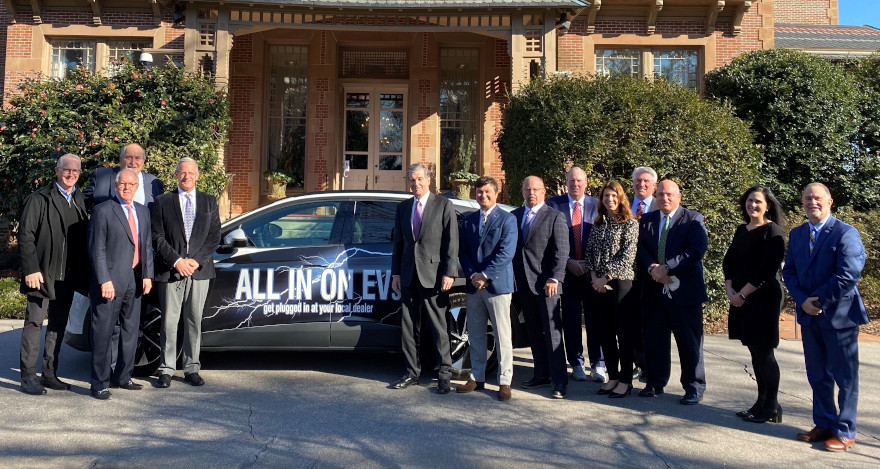
Several North Carolina franchise dealers met with Gov. Roy Cooper and Department of Transportation Secretary Eric Boyette at the governor’s Executive Mansion to discuss plan for how the state can prepare for more vehicles on its roads.
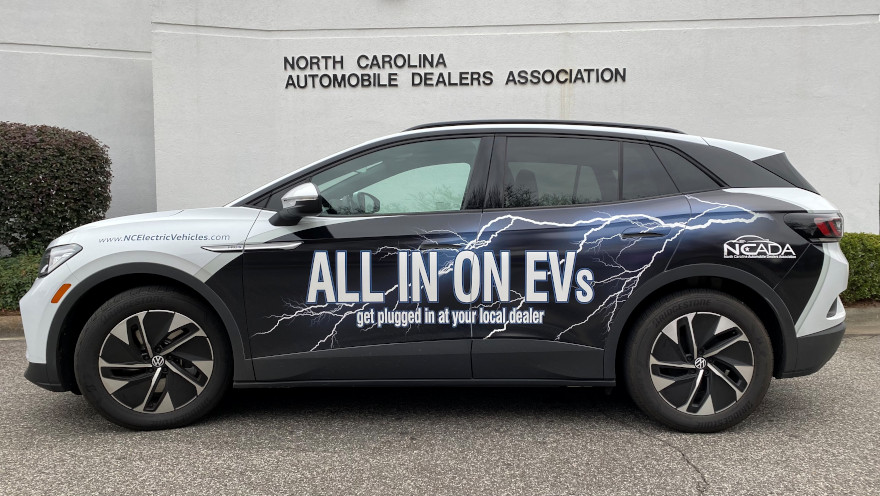
NCADA has formed a statewide advisory group of dealers to around EVs and plug-in hybrids. It has also purchased an all-electric Volkswagen ID4 to promote EVs in the Raleigh area. The dealer association teamed up with NC Clean Energy Group recently to promote EVs at Carolina Hurricanes hockey games in Raleigh. (Side note: The Hurricanes are owned by Tom Dundon, who made some of his fortune via auto financing and is still involved with finance companies such as Exeter Finance.)
And their commitment to EVs goes even deeper.
NCADA said in a release that the state’s franchise dealer body have spent millions on facility and infrastructure upgrades in preparation for what they said will be more than 45 new models arriving over the next two years.
“The advisory committee is focusing on efforts that can be undertaken to accelerate the implementation of chargers in and around dealerships as well as working with dealerships to educate salespersons and technicians on the sales and maintenance of EVs,” NCADA said in a news release.
The advisory committee will also launch an extensive training program to help dealers prepare for EV questions from consumers, and aims to partner with industry stakeholders to inform North Carolina consumers on where they can charge EVs and how long it will take.
“North Carolina’s nearly 600 new car and truck dealers stand poised and ready to assist consumers across the state making the shift to electric,” NCADA said. “Local franchised car and truck dealers are and will always be the best source to buy and service your next EV or plug in hybrid.”
Auto Remarketing will have more on these efforts in the upcoming NADA Show edition of the magazine, as North Carolina dealer Mike Alford is set to become the 2022 chair of the National Automobile Dealers Association at the group's convention next month.
Stay tuned to our special feature with NCADA president Bob Glaser in that issue.
NCADA will have a presence at Cherokee Media Group’s upcoming Auto Intel Summit, where electric vehicles will be a major focus.
For more information, visit www.autointelsummit.com.
The acronym “ACES” or “CASE” is often used in the auto industry to describe, in some form or fashion, the emerging role of connectivity, autonomous driving, shared mobility and electrification.
And as he has shared during industry presentations, Quin Garcia and the team at Autotech Ventures will often add a “D” to the latter to make it “CASED,” underscoring the prevalence of digitization within that mix.
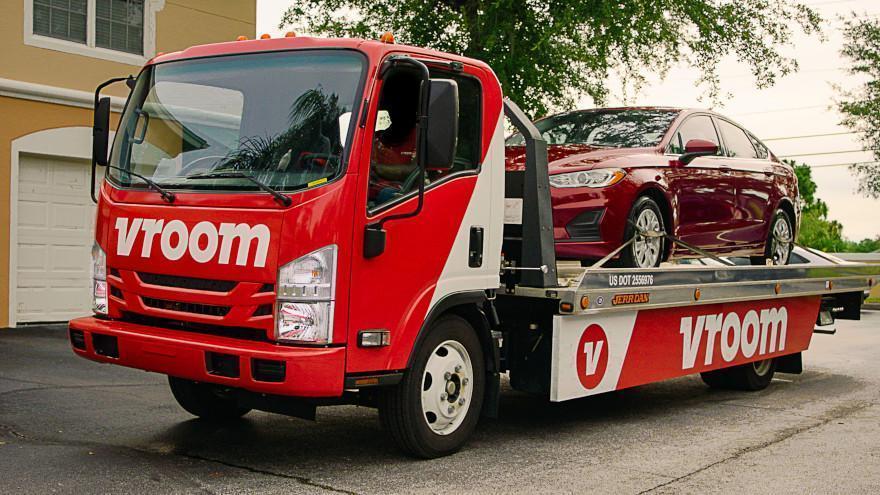
The marriage of “D” and “E” within that acronym is particularly evident in data shared by online auto retailer Vroom last week.
Citing internal data, Vroom said via email that it has sold 201% more used electric vehicles to consumers this year than last year.
And Tesla continues to dominate the list of most popular used EVs on the Vroom platform.
According to company data from January through October, the top four used EVs sold by Vroom were all Tesla models, including the Model 3 in the No. 1 spot.
It was followed by the Model S in the No. 2 spot, the Model X in third and the Model Y at No. 4.
Looking at the data from the same time frame of 2020, the Model S led the way, followed by the Model 3 and the Model X, respectively.
The complete lists of best-selling used EVs on the platform are below, with data courtesy of Vroom:
2021
- Tesla Model 3
- Tesla Model S
- Tesla Model X
- Tesla Model Y
- Chevrolet Bolt EV
- BMW I3
- Volkswagen E-Golf
- Hyundai Kona EV
- Kia Soul EV
- Nissan Leaf
2020
- Tesla Model S
- Tesla Model 3
- Tesla Model X
- Chevrolet Bolt EV
- Volkswagen E-Golf
- Kia Soul EV
- BMW I3
- Nissan Leaf
- Hyundai Ioniq Electric
- Mercedes Benz B-Class
Vroom also shared some data on the markets with the most used EVs sales on the platform, with Los Angeles (No. 1 in 2021) and Houston (No. 2 in 2021) just swapping spots in the last year.
One move of note was Phoenix moving from No. 7 in 2020 to No. 3 this year.
The complete top 10 lists of EV markets for Vroom are below:
2021
- Los Angeles
- Houston
- Phoenix
- Atlanta
- New York
- Washington, D.C.
- San Francisco-Oakland-San Jose
- Dallas / Fort Worth
- Orlando / Daytona Beach-Melbourne
- Seattle-Tacoma
2020
- Houston
- Los Angeles
- Dallas / Fort Worth
- Atlanta
- New York
- Denver
- Phoenix
- San Francisco / Oakland / San Jose
- Austin
- Seattle-Tacoma
The potential for electric vehicles seemingly is giving fleet operators quite a jolt of interest.
On Tuesday, behavior and analytics advisory firm Escalent released the latest findings from its Fleet Advisory Hub, a platform designed to explore the needs, expectations and emotions of commercial and fleet vehicle decisionmakers.
Read more
One way to combat uncertainty about electric vehicles: exposure and education.
That’s been the approach of at least two entities with the auto industry making efforts to connect with the public to “demystify” the EV segment.
Over at Cars.com, the company is hosting an online event Thursday — “Cars.com’s Guide for the EV Curious” — where experts from the company will discuss EV ownership and field live questions from attendees.
Consumers can send in questions ahead and time. The event requires registration, which can be done at live.cars.com.
The event starts at 1 pm ET/noon CT on Thursday.
“Cars.com bought its first plug-ins a decade ago, a Nissan Leaf and Chevrolet Volt, and we have since continued to evaluate scores of other electric models. Expanding beyond just how the cars drive, we live with EVs and test the range, as well as the cost and setup associated with home charging,” Cars.com executive editor and EV expert Joe Wiesenfelder said in a news release. “With all the buzz surrounding EVs, our team will cover everything from charging setup and other considerations to our thoughts on some of the more popular EVs.”
Citing its own EV Owners and Shoppers Study from June, Cars.com said nearly a third (32%) of car shoppers are “actively looking” at buying an electric vehicle for the first time.
But the site notes that “limited range, lack of charging locations, limited battery life span and varied charging times cause confusion and hesitation” for some consumers.
“On Cars.com, searches for EVs have almost doubled since last year — however, sales of EVs are growing at a slower rate,” Wiesenfelder said, citing Cars.com data from October.
“There's no doubt that consumer interest in EVs is growing, especially as more major automakers commit to the category and offer more SUV and pickup truck options for shoppers, but to the average person, uncertainty still exists,” Wiesenfelder said.
A Cars.com dealer survey from September shows that 37% of local dealers sell electrics, but close to two-thirds (63%) are preparing for EV sales, service and training, with internal data from Cars.com in October showing 41% of franchised dealers on the site listing new EVs for sale.
One group of franchised dealers, in particular, recently put EV education into action.
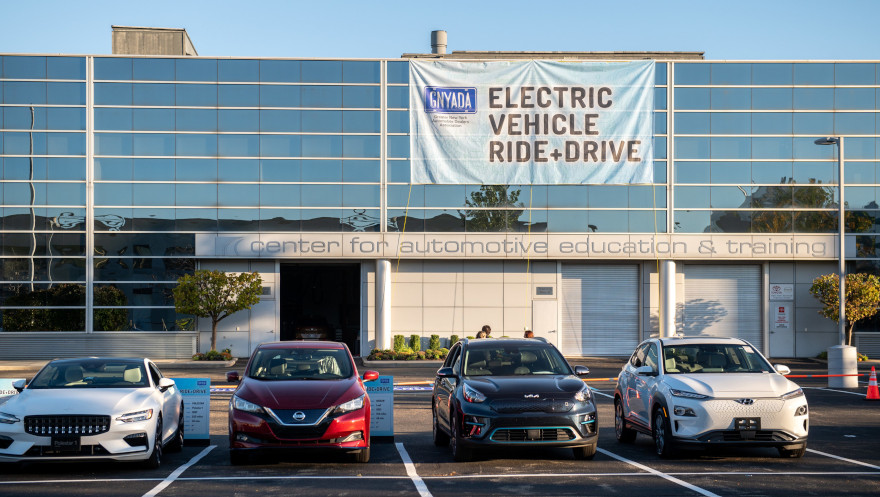
The Greater New York Automobile Dealers Association held an “Electric Vehicles Ride+Drive” event at its education center in Queens to showcase 18 EVs and emphasize that, yes, electrics are available at local new-car stores.
Automakers that participated in the event included Audi, BMW, Chevrolet, Ford, Hyundai, Kia, Nissan, Polestar, Porsche, Toyota, Volkswagen and Volvo
The event also delved into the opportunities that can come through New York state’s efforts to shift to all electric vehicles by 2035.
More than 150 people attended the event, including more than 40 legislators, policymakers and government officials. That included New York State DMV Commissioner Mark Schroeder, New York State Assembly Speaker Carl Heastie and GNYADA’s Labor Union partners
“Local franchise new car dealers are the key to mass electric vehicle adoption. We have more than 55 models available in showrooms now and another 50 new models coming in the next two years,” GNYADA president Mark Schienberg said in a release.
“There is a great infrastructure in place with hundreds of community-based retailers who are ready to sell, service, and finance electric vehicles today,” he said.
“We staged this event to showcase the incredible vehicles available to consumers at their local franchised new car dealerships across the state and to demystify electric vehicle ownership as state and federal plans move towards an EV future,” Schienberg said.
“It is important to remember that as electrics vehicles start to become mainstream, it is local franchised new car dealers who are stepping up to achieve these goals and to help consumers purchase, finance, and service them.”
Shortly after Manheim began putting some real muscle behind its electric vehicle infrastructure plan some two years ago, the COVID-19 pandemic threw a major roadblock across multiple lanes of the auto industry.
It was a stoppage that would almost certainly clog automaker investment in EVs — or so the auction company thought.
“One of the things that surprised us in 2020 was that when everything ground to a halt, we actually thought investment from the OEMs into EVs would slow down during the height of the pandemic,” Manheim president Grace Huang said in an interview with Auto Remarketing last week.
“And instead, what happened was, it felt like everybody actually doubled down, and we saw all the headlines — and continue to see the headlines — and continue to see the growth of these electric car companies, like Rivian,” Huang said, referring to an electric truck start-up in which parent company Cox Automotive has invested. “We were actually surprised by the industry response during the pandemic. They're all doubling down.”
In addition to inroads made by relatively new entrants like Tesla, Rivian and others, the traditional powers-that-be in auto manufacturing — like General Motors, which aims to cut all tailpipe emission vehicles from new-vehicle production by 2035 — are also putting their chips on the table.
In a summary of an EV-centric episode of its “Golden Age of Used Vehicles Podcast” podcast, J.D. Power Valuation Services said that more than 100 new battery electric vehicle models are expected to come to market in the next few years.
“We’re really starting to see that rapid growth in BEVs (Battery Electric Vehicles). J.D. Power is expecting BEVs to grow market share by 1 to 2% per year through 2025. It’s going to be a very competitive space,” said Cari Crane, director of industry insights with the ALG division of J.D. Power, in that summary.
As for this year, the second quarter marked the first time that pure EV sales have exceeded 100,000 units in a quarter, according to data from Kelley Blue Book.
KBB, which is part of Cox Automotive, found there were 118,233 new EVs sold in Q2, a 254.9% year-over-year increase.
When you add in sales of HEVs/PHEVs, total new-car sales of electrified vehicles came in at 376,361 units, a 201.1% increase, KBB said.
That widely outpaces the gain in overall new-car sales, which were up 49.5% in the quarter.
Electrified vehicles commanded an 8.53% share of the new-vehicle market in Q2, according to the KBB data, versus a 4.23% share a year ago.
That data indicates that the recently completed third quarter will show pure electric vehicle sales of 99,560 units, which would be a 40.1% hike.
On the used-car side, Manheim processed more than 114,000 electrified vehicles last year, a figure that includes battery electric, hybrid and plug-in hybrid vehicles.
That is a small percentage of Manheim's overall sales, but the forecasted boom in new EV launches and sales means that pre-owned population will only rise — and eventually filter back into the wholesale market.
And as more of those electrics find their way into auction channels in coming years, a major priority for auction companies like Manheim in getting them ready for the used-car market will monitoring battery health, as that is a major concern for retail consumers.
In fact, research from Cox Automotive indicates that 83% of consumers in a recent survey said they were anxious about EV batteries.
“Manheim has been setting vehicle values in the wholesale marketplace for decades and is committed to doing the same for used EVs,” Huang, the Manheim president, said in a news release. “Unlike traditional vehicles that are evaluated on miles driven, it’s all about battery health for EVs and grading them so dealers have a reliable valuation.
“Establishing a trusted battery health score will support new and used vehicle adoption, help build the industry standard for battery health, and enable transparency and confidence,” she said.
The Electrify Manheim initiative has taken several steps to help its auction locations gauge EV battery healthy and support service requirements.
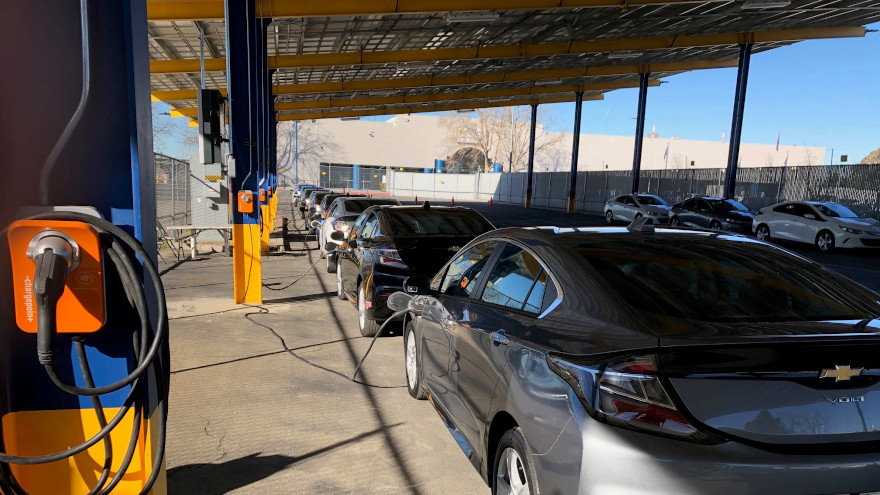
For one, Manheim has installed 127 charging stations, which can charge 250 vehicles at a time, throughout 53 of its auctions. That move is designed to help the movement of flow of EVs across the lot run more smoothly.
The company has also developed a battery health diagnostic tool, which utilizes a patented algorithm from Cox Automotive, through a partnership with Spiers New Technologies. Cox Automotive acquired Spiers in September.
Manheim is piloting this tool at six auctions throughout California, Nevada, Pennsylvania and Washington that have high volumes of electrics. The auction company plans to expand this to additional locations.
It is conducting tests with six automaker clients to collect battery performance metrics from pre-owned EVs, including state of charge and energy capacity. Through that data, Manheim is building an overall battery health score than runs from 1-5.0, and is including it in condition reports at select auctions.
Manheim is running comparison tests between same make/model vehicles with similar mileages, and early tests indicate, “that vehicles with a battery health score are getting roughly five times more views and bids than those that don’t, are selling for values that are for 1-4.5% higher according to Manheim data,” the company said in a release.
Additionally, Manheim said it has made investments in personal protective and other safety equipment as well as technician training to make sure the servicing and handling of EVs is done safely.
“As an industry leader, Manheim is committed to meeting the evolving EV needs of our clients and marketplace today, while planning for the future,” Huang said in the release.
Beyond the battery health, one of the major considerations for getting EVs ready to be sold in the wholesale channel is the aforementioned charging stations.
That’s been a priority for Manheim’s consignor clients, Huang said.
“When our remarketing partners think about … where to remarket their electric vehicles, they all come and visit the sites,” she said in the interview. “Because one of the first things you have to do is make sure you have the infrastructure to keep these cars charged.
“Now obviously, they don’t have to get up to 100% but we have to keep the right amount of charge. And obviously for different vehicles, there's different recommendations. So even being able to handle the charging is a different operation, because in the past, we would drive the gas truck. If a car's low on gas, we would drive the gas truck and go up to the car and fill it with gas,” Huang said.
“Well today, with electric vehicles, we can't do that. We actually have to move the vehicle to the charging station. There was a lot of consideration put in (for) just even where do you put these electric charging stations so that it makes sense in the flow of a Manheim location. But when we start talking about remarketing electric vehicles, one of the first things our remarketing partners do is come and look at the charging infrastructure.”
Being environmentally friendly is also of key importance for Manheim, and is often a rallying cry for EV proponents, in general.
For instance, consider the photo in the above frame, which shows an EV charging station at the solar carport at Manheim San Francisco Bay.
“The battery chargers are sitting on the pillars that hold up all the solar panels,” Huang said. “That's ideally how we'd love to do it. The whole idea of EVs is to make it more green.”
Many in the industry are rushing to secure their leadership position on the electric vehicle front, and some are are playing an even longer game, making sure to stay at the top of the pack when it comes to EV charging infrastructure.
That's certainly the case for Capital Volvo Cars of Albany. The upstate New York dealership, the latest addition to the Capital Luxury Cars dealer group, celebrated its grand opening and ribbon cuttiing of its new dealership rooftop in Colonie, N.Y., which includes eight electric charging stations with the infrastructure to add more, as needed.
The press release explained this reflects Volvo's leadership in electrification and sustainability.
"Similar to when Volvo took a leadership role in safety years ago, Volvo is taking a leadership position in electrification and sustainability through Volvo Recharge, a full line of hybrid or electric offerings," Kahn said. "Now consumers can experience luxury recharge technology and get the excellent ownership experience offered by the Volvo dealership network."
Leading the store's ribbon cutting ceremony on Friday were Volvo Car USA president and CEO Anders Gustafsson, Capital Luxury Cars and Friendly Auto Group president and CEO Eric Kahn, Albany County executive Dan McCoy, Colonie Mayor Tom Tobin, and representatives from LeChase construction services, who led the project.
The new 19,261-square-foot Volvo dealership, located at 350 Karner Road, also touts a five-vehicle showroom and 15-bay shop.
Morrey Volvo Cars Burnaby opens in British Columbia
A bit farther North, Morrey Volvo Cars Burnaby is opening in British Columbia on Still Creek Drive in Burnaby, after the recent launch of Volvo Cars Royal Oak in Calgary. According to Volvo, the move "demonstrates further growth for the Volvo brand as it turns its focus to the Lower Mainland (in Canada) as a primary market for expansion."
EV sales are up in B.C. this year, and the opening of Morrey Volvo Cars Burnaby "will help address the consumer demand for EV's," the news release said.
The over 15,000-square-foot dealership is in the active planning stages of installing electric vehicle chargers throughout the property to support Volvo's all-electric future.
"B.C. is a national leader in EV adoption, and the Lower Mainland is one of the prime markets around the country where we have been able to grow our brand," said Matt Girgis, managing director of Volvo Car Canada, in the release. "As such, we're excited to now offer our customers a retail location in Burnaby. Congratulations to the Morrey Auto Group and team on the opening of this address, and welcome to the Volvo Family."
Experts see electric vehicles eventually having a significant impact in the fleet space.
With that thinking in mind, behavior and analytics advisory firm Escalent recently released the latest findings from its Fleet Advisory Hub, a platform designed to explore the needs, expectations and emotions of commercial and fleet vehicle decisionmakers.
The newest report examined fleet decisionmakers’ familiarity with and opinions of many top brands with electrified vehicle plans across duty segments, as well as their likelihood of considering products from each brand for fleet implementation.
Escalent highlighted that among the key findings are clear indicators for the automotive industry’s biggest brands:
• Ford and Tesla earn top marks for electric vehicle (EV) applications in light and medium/heavy duty fleets.
• Tesla is the brand most synonymous and emblematic of the electrification movement, viewed as the “absolute leader for electrification” by approximately half of both light duty and medium/heavy duty fleet participants. This reflects similar Escalent EVForward findings, wherein retail consumers are most aware of Tesla as a leading manufacturer of electric vehicles.
• Among light duty brands, startups such as Rivian and Lordstown lag far behind legacy automakers and their observable products and accelerating marketing campaigns.
“With respect to electric vehicles, Tesla has carved out a unique position of ubiquity and alignment with the overall movement,” said Michael Schmall, vice president of automotive and mobility at Escalent.
“However, Ford is the clear winner from a consideration standpoint among fleet decisionmakers, a position it has reinforced with the introduction of the electrified Ford F-150 Lightning,” Schmall continued in a news release.
Escalent said the study also provides a closer look at the factors most likely to influence EV adoption among fleet decision-makers.
What didn’t surprise firm experts, they pointed out total cost of ownership (TCO) leads the factors most influential to adoption — though clarity also lacks, with many uncertain of EVs’ impact to the traditional TCO calculation.
Escalent added that fleet decisionmakers are also considering electrification potential around uptime, a brand’s reputation or their relationship with it, charging and infrastructure concerns and information available about brands’ EV offerings. including services to ease a transition to electric vehicles.
“Startup brands have a lot of catching up to do among light duty fleet decision-makers, where familiar brands and their electrified products dominate mindshare,” Schmall said. “The story is a bit different for those operating medium and heavy duty fleets, as few tangible products in this segment can be seen on the road, offering a more level playing field.”
Among fleet decisionmakers, Escalent said the road map for implementation has begun to come into focus.
Along with the needed definition for adjusting the TCO calculation, the study identified fleet decisionmakers’ perspective for the expected timeline to achieve operating cost parity with their internal combustion engine (ICE) counterparts, with most expecting to reach that point after two to three years of integrating an EV.
Fleet Advisory Hub is one of the largest collections of commercial vehicle and fleet decision-maker insights available on the market today. Currently, nearly 10,000 fleets collectively numbering more than 800,000 vehicles are represented.
More details about the Fleet Advisory Hub can be found via this website.