Recurrent, a company that analyzes EV battery health, has grown its board of directors by adding a former senior vice president from CarGurus. Chosen for the open board position is Martha Blue, who has experience with leadership roles in tech startups and auto companies.
“Adding Marty to the board is a big deal to me and the rest of our leadership team,” Recurrent chief executive officer Scott Case said in a news release. “She has already navigated many of the challenges we’ll face as a growing presence in the auto domain in the coming years.”
Recurrent aims to ultimely accelerate the overall adoptions of EVs, and providing more transparency and confidence in their buying process might just push that along.
This is key, Recurrent says, to reducing the 20% of U.S. carbon emissions that are currently produced by light-duty combustion engine vehicles.
Blue is now a senior adviser to carmakers on EV strategy at Harvard Business School's Boston Consulting Group. Before that, she was SVP of business development at CarGurus.
Blue worked with CarGurus through some pretty integral points in its journey. First, she guided the company through a successful IPO in October 2017. During her time with the company, CarGurus grew from 14 to more than 700 employees with a market cap in excess of $4 billion. In addition to leading business development, Marty also launched the sales, B2B marketing, product and industry relations functions for the company.
“I have been fortunate in my career to work with some very fast-growing and successful companies,” Blue said in the release. “Recurrent is poised to be one of the next household names in automotive, so I am thrilled to be along for the ride in this dynamic green tech sector. After years of helping people find their next car, it will also be fulfilling to help people find their first electric car as we work to improve the relationship between transportation and the environment.”
Cox Automotive Mobility said Wednesday it has purchased Spiers New Technologies, a service provider for electric vehicle battery lifecycle management with operations in the U.S. and Europe.
The pairing of the companies is part of Cox Automotive Mobility’s new end-to-end global EV battery service network, where the company offers high-voltage battery solutions to dealers, automakers and fleet providers.
Spiers provides repair, remanufacturing, refurbishing and repurposing of advanced battery packs in hybrids and EVs, and gives Cox Automotive muscle in terms of …
Read more
The fleet space is looking to keep “current” with the newest vehicles entering the sector.
On Wednesday, Merchants Fleet announced a partnership with Enel X — the Enel Group’s advanced energy services business line — to meet the infrastructure needs of the electric vehicle (EV) industry.
As part of the partnership, Enel X will provide smart EV supply equipment (EVSE), installation and charging infrastructure to Merchants Fleet clients to support the electrification of fleets nationwide.
The announcement follows an executive order from President Biden aimed at making half of all new vehicles sold in the U.S. be electric by 2030.
According to Bloomberg NEF, 100% of the world’s road fleet will need to run on electricity by the year 2050 to meet its Net Zero Scenario, requiring additional infrastructure to support the industry’s transition.
Through the agreement, Merchants Fleet clients will have access to Enel X’s portfolio of turnkey fleet electrification solutions, including JuiceBox smart charging stations and JuiceNet IoT software to manage electric fleets through optimized charging times, and remote access.
By electrifying fleets, the company explained that corporations can reduce emissions and fleet operating costs and help balance the grid by utilizing off-peak charging, which can generate bill savings and reduces strain on the grid during peak periods.
“Every day, the Merchants Fleet team works to develop and improve upon the fleet electrification solutions we can offer to our clients — solutions that not only elevate their brands environmentally, but integrate the latest innovations to reduce costs,” Merchants Fleet chief executive officer Brendan Keegan said in a news release.
“Bringing Enel X into our ecosystem expands the scale and capabilities of what we can offer to our clients, and supports us in our journey to over 50% electrification by 2030,” Keegan continued.
The partnership with Merchants Fleet continues to expand Enel X’s fleet electrification portfolio, including partnerships with Biogen, Uber, Vestas, Novartis and more.
Enel X is also working with transit agencies, including the Massachusetts Bay Transportation Authority (MBTA) to support the electrification of public bus fleets and Martha’s Vineyard on a microgrid that will power an all-electric public transportation bus.
“Across the country, we’re seeing enormous interest in EV adoption as businesses look to achieve corporate sustainability goals and get ahead of new or future regulations. Many of the world’s largest companies are electrifying their fleets, and relying on our smart charging infrastructure and services to reduce costs and emissions,” said Giovanni Bertolino, head of e-mobility for Enel X North America.
“Our partnership with Merchants Fleet makes the transition to EVs more efficient and more cost effective for Merchants’ clients,” Bertolino added.
Earlier this year, Merchants Fleet launched its Adopt EV program, which is designed to help clients make a seamless and cost-effective entry into EVs. The tool educates and guides clients throughout the EV and EVSE purchase process from concept to execution.
The company said the addition of Enel X to the ecosystem will give Merchants Fleet clients access to specialized engineers and advisors who will help plan, provide, and install custom fit EVSE, enabling the adoption of infrastructure and services that align with their needs and electrification goals.
Last year, Merchants Fleet set a goal to achieve 50% electrification of its mobility fleet portfolio by 2025, and 50% electrification of its managed fleet portfolio by 2030.
“Even before the first all-electric truck rolled off the production line, Merchants understood that infrastructure would emerge as the all-important factor for success within the industry,” the company said.
“To optimize operations while achieving sustainability goals for all clients, Merchants has implemented an ecosystem approach to provide highly customized and innovative solutions to integrate EVs into its clients’ fleets,” Merchants Fleet went on to say.
Prior to the COVID-19 pandemic’s effects on the automotive industry, electric vehicles (EV) were increasingly grabbing headlines even though the sales of these vehicles were miniscule compared with gas-powered cars and trucks. In fact, the combined annual sales of battery electric vehicles and plug-in hybrid electric vehicles tipped over the two-million-vehicle mark for the first time in 2019.
While this milestone was notable for EV fans worldwide, it still paled in comparison to overall annual new vehicle sales, which consistently neared 17 million prior to the pandemic. Nevertheless, changing consumer behaviors and a rapidly increasing focus toward reducing the global carbon footprint has placed much greater focus on EV cars and trucks in the near future.
Many vehicle manufacturers have unveiled plans to either launch new EV cars and trucks, or they have made plans to electrify significant portions of their current fleets over the next decade, with some announcing goals for fully electrified lineups in as little as five years.
EV cars and trucks are coming
A record number of almost 100 pure battery electric vehicles (BEVs) are set to debut by the end of 2024 according to these plans.
Revised goals for a reduced carbon footprint are driving much of this shift.
President Biden recently unveiled a major component of his administration’s plan to battle the growing climate crisis. In early August he announced a new target that half of vehicles sold in the country by 2030 will be battery electric, fuel-cell electric or plug-in hybrid. Along with major automakers by his side, approximately 40% to 50% of cars and trucks sold by 2030 will need to be electric vehicles.
How this onslaught impacts lessors
While many cheered at this announcement, lessors and the captive lending arms of manufacturers must take notice of how this shift will impact the residual risk that lies within their vehicle portfolios. Similarly to how the makeup of portfolios were drastically altered in the period between 2009-2015 when SUVs, trucks and crossovers replaced the majority of sedans, residual risk will once again see a shift when the inevitable takes place — EV cars and trucks become the majority of portfolios over internal combustion engine (ICE) vehicles.
This shift is no longer a matter of if, but a matter of when, and this change will impact many within the automotive ecosystem, including leasing companies. Lessors have reason to fear that leased ICE vehicles may come back as inferior products compared with the excitement surrounding the onslaught of EV cars and trucks, as well as the eventual growing demand for them. This shift could result in another round of significant portfolio losses, not seen since the financial credit freeze of 2009 and subsequent shift from sedan to truck/SUV.
What can lessors do to prepare?
Given that we know this eventual shift will take place, especially with the benefit of history telling us these changes do have a material impact on portfolios, lessors should be preparing today.
Lessors today need to pay close attention to their portfolio management. They should pay closer attention to the addition of EV cars and trucks and then maintain a balanced portfolio of ICE and EV vehicles in proportion to their new sales volume.
Lessors should also prepare to engage in proactive remarketing to stay ahead of the curve by proactively remarketing residual-challenged vehicles or vehicles that are trending down with attractive consumer and dealer buy out packages.
Furthermore, lessors should educate themselves on residual value insurance against residual value loss as the industry navigates through a heightened period of residual value risk, especially since no one has the crystal ball of when exactly this shift will take place.
Why is residual value insurance critical? It is an especially effective tool for aiding lessors (OEM captives, banks and credit unions) when used vehicle prices are or will be volatile. When a major change occurs in consumer preferences (such as the inevitable movement toward EV), which effects changes in supply, demand, and pricing, the risk that lessors are exposed to, i.e., that their residual values will be higher on ICE vehicles than the market will bear when they come back to market, is great and they will need protection.
It also sets a floor under the amount of residual losses a lessor can have and can free up capital that a lessor would have to reserve in a time of uncertainty, facilitating the lessor to put its capital to more productive use, i.e., growing the business.
Few people within the automotive industry have a crystal ball showing when this eventual shift in preference to EV vehicles will take place. However, based on the actions, strategies and plans of not only the vehicle manufacturers, but also global governments, we know this is where the industry is headed. It is time for lessors to realize this eventual shift and take the necessary steps to plan their portfolios accordingly.
Wei Fan is senior vice president and head of passenger vehicle and analytical services for RVI Group, a leading provider residual value insurance, financial solutions and analytical services. For more information visit https://www.rvigroup.com/.
Cox Automotive Mobility plans to be part of a safety effort started by Arizona’s governor three years ago.
According to a news release distributed on Tuesday, the division of Cox Automotive committed to advancing the world’s fleets to serve the next generation will be joining the Institute of Automated Mobility (IAM), a public-private consortium established by Gov. Doug Ducey in 2018 to shape the future of transportation safety, science and policy.
Officials explained the collaboration will leverage emerging technologies to advance mobility solutions with an emphasis on safety and efficiency. Key focus areas will include systems integration, data capture and sharing and smart infrastructure deployment.
“The future of mobility is being pioneered right here in Arizona, and the Institute of Automated Mobility is leading the way,” Ducey said in the news release. “Critical to IAM’s mission are partnerships from technology leaders like Cox Automotive Mobility.
“We are grateful to have their leadership and expertise as part of IAM to help advance mobility solutions that will make our roads safer and improve Arizonans’ lives,” the governor added.
Arizona has been labeled, “The place where automated vehicles go to learn” by the New York Times, with companies having operated automated vehicle (AV) testing in the state, including:
— TuSimple
— Mobileye
— Nuro
— Imagery
— Waymo
— Uber
— Lunewave
— Udelv
— Cruise
— Local Motors
Cox Automotive Mobility sees the partnership as driving additional economic development opportunities in the advanced mobility industry.
“As a fundamental enabler of the emerging global transportation ecosystem, Cox Automotive Mobility is focused on helping deliver transportation technology that keeps vehicles moving safely, efficiently and sustainably,” said Jim Heffner, associate vice president of product at Cox Automotive Mobility.
“We look forward to collaborating with the Institute of Automated Mobility and its vast network of innovative transportation thought leaders to further facilitate the expansion of driverless technology,” Heffner went on to say in the news release.
In addition, as electric vehicles (EV) increasingly integrate with AV technology, officials mentioned partnership has the potential to bolster Arizona’s rapidly expanding EV industry.
“Our work with Cox Automotive and IAM will bring together those revolutionizing the automated vehicle space,” said Sandra Watson, president and chief executive officer of the Arizona Commerce Authority.
“We look forward to seeing how these initiatives will positively impact driver and road safety and contribute to the state’s thriving innovation ecosystem focused on the future,” Watson added.
Since its inception in 2018, the IAM has worked to address obstacles to AV commercialization. For example, IAM’s safety metrics project is pioneering a new framework for AV safety leveraging existing infrastructure, data capture techniques and experts in the fields of computer vision, machine learning, artificial intelligence, edge computing and traffic engineering.
IAM members include industry leaders, government, academia and transportation communities.
On its website, Recurrent said it aims to "more transparency and confidence in pre-owned electric car transactions" in hopes of driving further EV adoption.
Its chief executive officer, Scott Case, joined the podcast to share how the company goes about doing just that. Plus, we discuss the fastest-selling used EVs, the infrastructure still needed in the pre-owned EV market and much more.
To hear the conversation, click on the link available below, or visit the Auto Remarketing Podcast page.
Download and subscribe to the Auto Remarketing Podcast on iTunes or on Google Play.
Think of a plant or tree seed. Physically, there’s not much there yet, but with the right environment, care and nutrients, within that seed is a lot of potential for growth.
You might think of the used electric vehicle market in the same way. Still deep in its infancy, the seedling could blossom.
As it stands, though, the market for used electric vehicles is small.
Tiny.
Even when compared to the numbers in the new-car market, where EVs have a 2% share, estimates Autotrader executive editor Brian Moody.
The foundation for used EVs to bear fruit may be in the certified pre-owned market, Moody says. But selling dealers or consumers on the value proposition of a used EV can be challenging.
“When it comes to used electric cars, I think a good opportunity might be for certified pre-owned, because I think that consumers are still a little bit concerned about things like, ‘What if I have to replace the battery?’ They still look at it as somewhat of a risk,” Moody said in an interview Monday.
“Prices for used electric cars are pretty low, so of course that’s good news for a consumer who wants to get a great electric car like, say, a first-generation Leaf for not much money,” he said. “But that’s not going to be much of an incentive for dealers to want to stock them on their lots, because where’s the profit in that versus, say, a Chevy Silverado or something like a Ford Expedition.
“At this point, it’s tough … what the key is, (is) that if the average person were to drive one, I think they’d really like it. And I think that’s probably the key to getting someone into a new or a used electric car.”
If EVs have a 2% share of the new-car market, Moody estimates electrics’ share of used is less than 1%. There likely is not much incentivizing in used EVs and there simply isn’t the same marketing or name recognition.
At this point, electrics aren’t commanding much share at all in the used wholesale market either, says Peter Kelly, chief executive of KAR Global, parent company of the ADESA chain of auto auctions.
But while EVs are a “very small slice” of pre-owned, there remains a lot of potential for used electrics, Moody said.
“It’s going to grow … we expect that the new-car (market) for electrics will grow, maybe double to 4% by the end of 2021,” Moody said. “As that happens, of course, with any type of vehicle, that’s going to increase the availability of good used electric cars in the marketplace.
“Think of it this way: a lot of the best electric cars in terms of range, price, performance, all that: those are mostly new,” he said. “A lot of the used cars are sort of the … first modern wave. So, think first-generation Leafs, maybe series hybrids like the Volt. In a year or two, you’re going to start seeing things like the Jaguar I-PACE, maybe there are going to be some Tesla Model 3s, those kinds of cars.
“So there’s still some time before it gets to be a big deal in terms of the used electric cars. Because right now, what there is (available) is those first crack at those new electric vehicles.”
Consideration set
And the consideration for used EVs and other altenative-powertrain vehicles is there, albeit being lower than consideration for new versions of those vehicles.
As previoulsy reported in Auto Remarketing, the 2021 Electric Vehicle Sentiment Survey from CarGurus posed this question: “Which ways of acquiring an alternative fuel vehicle would you consider?” Respondents were instructed to select all that applied.
Among those who plan to own an alternative-fuel vehicle within the decade, 73% said they were open to buying an electric vehicle as new and 61% said the same of hybrids, according to the CarGurus data.
While considerably lower, the certified pre-owned and used segments of these vehicles still had some strong numbers.
For EVs, 45% said they were open to buying as CPO. Hybrids yielded similar CPO consideration at 44%. Meantime, 42% would buy electrics as used and 42% said the same for hybrids.
In emailed comments for that April story, CarGurus senior consumer insights analyst Ali Chapman explained some of the used-car dynamics in EVs.
“Car buyers tend to understand that 'going green' with the purchase of an electric vehicle will usually come with a higher ticket price when compared with gas-powered vehicles and our study showed that consumers may turn to the used or CPO market as a way to offset those costs,” Chapman said. “Additionally, our study showed that younger shoppers are more likely to be interested in both used and new electric vehicles, and dealerships that have alternative-powered vehicles on their lots can use this inventory to engage with these potential new customers.”
EVs for CPO
Say an automaker or dealer takes Moody’s words to heart and finds a home for used EVs in a certified pre-owned program. He said it may have an impact on the certification process, but one thing to bear in mind is that the majority of EVs, hybrids and plug-in hybrids have extended warranties covering battery and drivetrain components.
“So, think of vehicles like the Prius, for example, or a hydrogen fuel-cell car like the Toyota Mirai, that kind of thing — the eight-year or 100,000-mile warranty on those things, probably an easy way for that CPO program to make sense is to just leave that in place,” Moody said.
“And that will alleviate the concern. But here’s the issue: the average consumer won’t know that. So, it will be up to the dealer to make sure that they know, ‘Hey, when you buy this lightly used electric car … you still have this much left on it with no concern.’”
To drill down further on that, there are a few key pointers for dealers to help foster peace of mind when they retail a used EV.
For starters, the dealer needs to be clear with the consumer that there is a warranty already in place, Moody said. And if the car is CPO, emphasize to the consumer that is part of a program backed by the automaker, he said.
“And third, I think there would have to be some kind of metric or some kind of result that you could show. Now, this is already available information, but I don’t know how you communicate it to a customer. How much of the battery life is left? How much of a charge can it hold? That kind of thing — things that people are concerned about with electric cars is that over time, they hold less and less of a charge,” Moody said.
The point is to communicate the capacity remaining of the battery, to be upfront with the consumer and to alleviate any concerns around battery life.
Top consumer concerns
Interestingly enough, the top priority for shoppers considering EVs is now range, according to the 2021 Electric Vehicle Survey published by Autolist.com this week. The last time around (2019), price and charging infrastructure topped the list, Autolist found.
In the latest study, consumers named their three most important considerations for buying an EV.
Sixty-one percent mentioned range, 50% mentioned price, 43% included charging infrastructure, 36% said recharge times and 35% pointed to battery efficiency, Autolist said.
In 2019, price (58%) topped the list, followed by charging infrastructure (44%).
“Two years is a long time in the world of electric vehicles, and buyers today have more models to choose from and more places to plug them in,” Autolist editor-in-chief David Undercoffler said in the company’s analysis. “That’s helped ease concerns about price and charging while pushing range to the top of their list.”
Used EV specialization may work
Statistically speaking, EVs are a niche market, even on the new-car side. Used electrics, even more so.
But often where there is a niche, there is an opportunity (after all, consider the publication you’re reading).
One such is example is Current Automotive, a Chicago-based retailer of used EVs that primarily focuses on online sales of these cars.
“Looking ahead, seeing all the planned plug-in vehicles coming to market meant that there’s going to be a healthy secondary market eventually,” Current Automotive co-founder Seneca Giese, who was with Tesla for nine years and helped launch its CPO program, said in an interview for this 2019 story.
Moody sees this type of niche specialization model as a “super smart” move. He gives the example of North Freeway Hyundai in Spring, Texas.
The store began “dabbling” in used Chevrolet SSR pickup trucks, a curious-looking vehicle from the 2000s whose style doesn’t necessarily fit the mold of your traditional Silverado-type truck.
“They just bought a couple, I think, to put them out front and get attention … Years later it turned out, that that place was kind of like the go-to place for a Chevy SSR, which turns out in Texas, there’s actually a demand for,” Moody said.
“And not only do they have a bunch of them for sale, but they had a way of servicing them, they had a way of sourcing parts that were hard to find. They would help people find a certain color,” he said.
“So, there’s definitely something to be said for a dealership that wants to focus on something that seems like a one-off, but is going to grow over time. And i think with electric cars, that’s what’s going to happen.”
Not that it will be an easy process. Despite EVs dominating a lot of the chatter, the typical consumer probably doesn’t have a lot of experience with those vehicles, Moody said.
The key is to get them, well, the keys to one.
“My opinion is, once the average consumer gets behind the wheel of a competent, electric car, they’re going to like it. That a gasoline-powered car will seem crude by comparison, but you have to get them in the seat,” Moody said. “And it’s a tough sell, because here you have a thousand gasoline-powered cars and maybe five electric cars.
“At this point, it may not make sense to invest in (specializing in used EVs) a bunch, but growing that over time will make sense, because people will soon come looking for electric cars that are way less expensive than what a new one is,” he said. “Because they are quite expensive when they’re new.”
Infrastructure plan
While it doesn’t top the list of concerns, concerns over charging infrastructure have remained consistent the past two years, according to Autolist.
But there has been progress, as there are now 114,000 public charging units, Autolist said, compared to 68,800 when the survey was last conducted.
Citing the Department of Energy, Autolist indicates there are now close to 48,000 EV charging stations, compared to a little more than 20,000 two years ago.
Still, Autotrader’s Moody acknowledges that there likely aren’t enough public charging stations at the moment, but more are on the way, per the planned investment in EV infrastructure as part of President Biden’s American Jobs Plan.
However, charging the vehicle at home will probably suffice for the typical EV buyer these days, Moody said.
“And this is another thing that I don’t think has been communicated well to consumers: you don’t need to purchase an expensive, in-home high-capacity Level 2 charger to charge up your electric car,” Moody said.
“You can do that and it will definitely charge your car faster, but I don’t think the average person knows that a charging cable comes with the car when it’s new — likely, it would come with the car when it’s used, too; otherwise, that would be a really tough sell.”
Moody says that folks may not be aware that EVs can be charged through an outlet in a garage or backyard.
And Autolist found that actually would be the preference for most.
In fact, 70% of respondents in the company’s survey said the ability to charge at home would be “essential to their purchase consideration,” while 14% considered it to be “somewhat important.”
Only a combined 15% were either unsure, found it to be “not important at all” or listed “other,” according to Autolist.
“Of course, adding more public chargers is a good thing,” Undercoffler said. “And yet that’s just not the use case most consumers imagine when they consider switching to electric — they want to plug in at home.”
Moody echoed that sentiment of charging station infrastructure still being important.
“And the government has a plan for that. The president has included electric vehicles and charging stations as part of a $174 billion plan,” Moody said, referring to the White House’s goal for 500,000 EV chargers to be built by 2030.
“That’s a lot. And that should definitely help,” Moody said.
“And it will matter where they are. So, for example, putting somewhere there are hotels would be a good one,” he said. “You charge your car up overnight; it’s sitting there not being used. That’s a logical type of thing to do.”
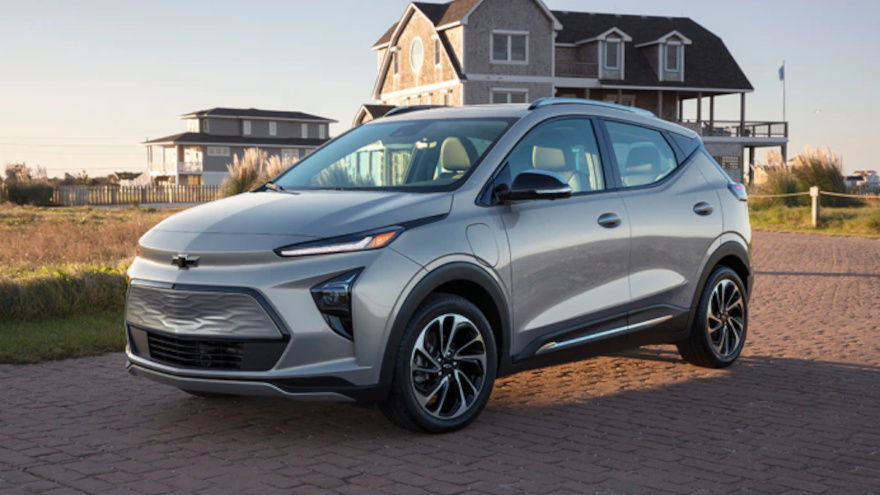
The 2022 Chevrolet Bolt EUV is a redesign of the Chevrolet Bolt that brought with it a compelling compact crossover variant.
“It’s mechanically the same as the updated Bolt EV electric car but it has a more rugged, SUV-like appearance and more back seat space, making it a little more family-friendly,” Autotrader wrote about the vehicle, adding that it is the first Chevrolet model available with Super Cruise semi-autonomous hands-free driving tech.
The vehicle is one of Autotrader’s 10 Best Electric Cars for 2021, and the company released its list while saying the electric vehicle boom is about to go into overdrive. Auto manufacturers are increasingly prioritizing the electrification of their vehicle fleets.
And shoppers are expressing their openness to making the switch, Autotrader said. The number of EV choices is growing, and factors for first-time electric car buyers to consider in their going-green journey include costs, incentives, battery life and driving range.
Shopping for an EV this year could be exciting because of the variety of new vehicle options and the various features offered across multiple price points, said Autotrader executive editor Brian Moody..
“While EVs historically are more expensive than traditional gas-powered vehicles, the rapid advances in battery technology and increased manufacturer efforts to roll out new models are making EVs more accessible to purchase — and more fun to drive — than ever before,” Moody said in a news release.
Autotrader editors based the 10 Best Electric Cars on criteria including:
— Vehicles must be priced under $75,000
— The car must have a plug or a way to run on electricity only for 15 miles or more
— The car must be available for sale to the public within the next six months.
In addition to the 2022 Chevrolet Bolt EUV, Autotrader’s latest selections for 2021, unranked and listed in alphabetical order, are the following:
2021 Ford Mustang Mach-E
Autotrader said Ford's first all-electric crossover SUV offers an impressive range of up to 300 miles, the latest tech features, and the style and performance to back up its iconic name. The vehicle does just about everything well, Autotrader said. “It also helps that it’s functional as a practical, everyday driver with plenty of space for people and cargo,” Autotrader said.
2021 Hyundai Kona Electric
Autotrader describes the Hyundai Kona as “an awesome subcompact crossover no matter what is powering the wheels.” Autotrader said that in addition to the EV variant’s range of up to 258 miles, it includes 250-kWh of free charging from Electrify America. The vehicle is unfortunately not available nationwide, Autotrader said. But it is an affordable choice of electric SUV for those living in a state that sells it.
2021 Hyundai Ioniq Electric
The all-electric version of the Ioniq is another compelling electric car in the Hyundai lineup, Autotrader said, noting the vehicle’s “stellar” 133 combined MPGe rating. That makes it more efficient than the Nissan Leaf and Chevy Bolt, according to Autotrader. The estimated annual fuel cost is only $500, Autotrader said, sourcing the EPA. But Autotrader said the vehicles’ 170-mile range is a bit limited.
2021 Lincoln Aviator Grand Touring
The plug-in hybrid midsize luxury SUV is a stylish and upscale three-row crossover with plenty of room to transport the family in what Autotrader describes as “a quiet and comfortable sanctuary.” Autotrader also noted the vehicle’s PHEV powertrain, making 494 horsepower and 630 lb-ft of torque, could be a blast for the driver. The trade-off, according to Autotrader, is that the vehicle sacrifices efficiency for performance. However, it manages an all-electric range of up to 21 miles.
2021 Nissan Leaf
The original mass-market electric car is now in its second generation and is still a strong contender among the more affordable EVs, Autotrader said. The company noted the Leaf’s sleek styling and roomy interior along with a base price that it said is within reach for many shoppers. The base model has a 150-mile range, but buyers can upgrade to the Leaf Plus, which achieves up to 226 miles of range.
2021 Toyota RAV4 Prime
Autotrader said Toyota has long been the king of hybrids. Now, the brand has finally come out with a plug-in hybrid version of its most popular SUV. “It’s well-equipped with standard features including AWD, and it has a good all-electric range of 42 miles,” Autotrader said.
2021 Volvo XC40 Recharge
Volvo is getting serious about electric cars, Autotrader said. The XC40 Recharge is part of that seriousness. The vehicle is an all-electric version of the XC40 subcompact SUV. The vehicle shows the safety ratings and features you would expect from the brand, Autotrader said. It also offers high-quality interior materials and style, and its 200-mile electric range makes it a practical commuter for many drivers.
2021 Volvo XC60 Recharge
The Volvo XC60 Recharge is the plug-in hybrid variant of Volvo’s compact SUV, with a 57- combined MPGe rating and up to 19 miles of all-electric range. Its electric all-wheel drive adds to the SUV's practicality, Autotrader said. “It also delivers pretty muscular performance, making this crossover both fun and efficient in one stylish and safe package,” Autotrader said.
2021 Volkswagen ID.4
Autotrader said the Volkswagen ID.4 is the brand's first electric SUV, but it’s also a showcase of future electric cars from the brand. A new design language is on display inside and out. “And we like the simplicity of the high-tech interior,” Autotrader said. “We also like the 250-mile range, the generous standard safety tech features, and three years of free charging with Electrify America.”
When it comes to electric and hybrid vehicles, consumers are more open to considering new vehicles than they are to considering used versions of those cars.
But don’t sleep on the pre-owned segment of alternative-fuel vehicles.
As part of the 2021 Electric Vehicle Sentiment Survey from CarGurus, consumers were asked, “Which ways of acquiring an alternative fuel vehicle would you consider?” and were instructed to
Read more
Looking at new data from Vroom on the top 10 most purchased used electric vehicles across the country, one trend in particular stands out.
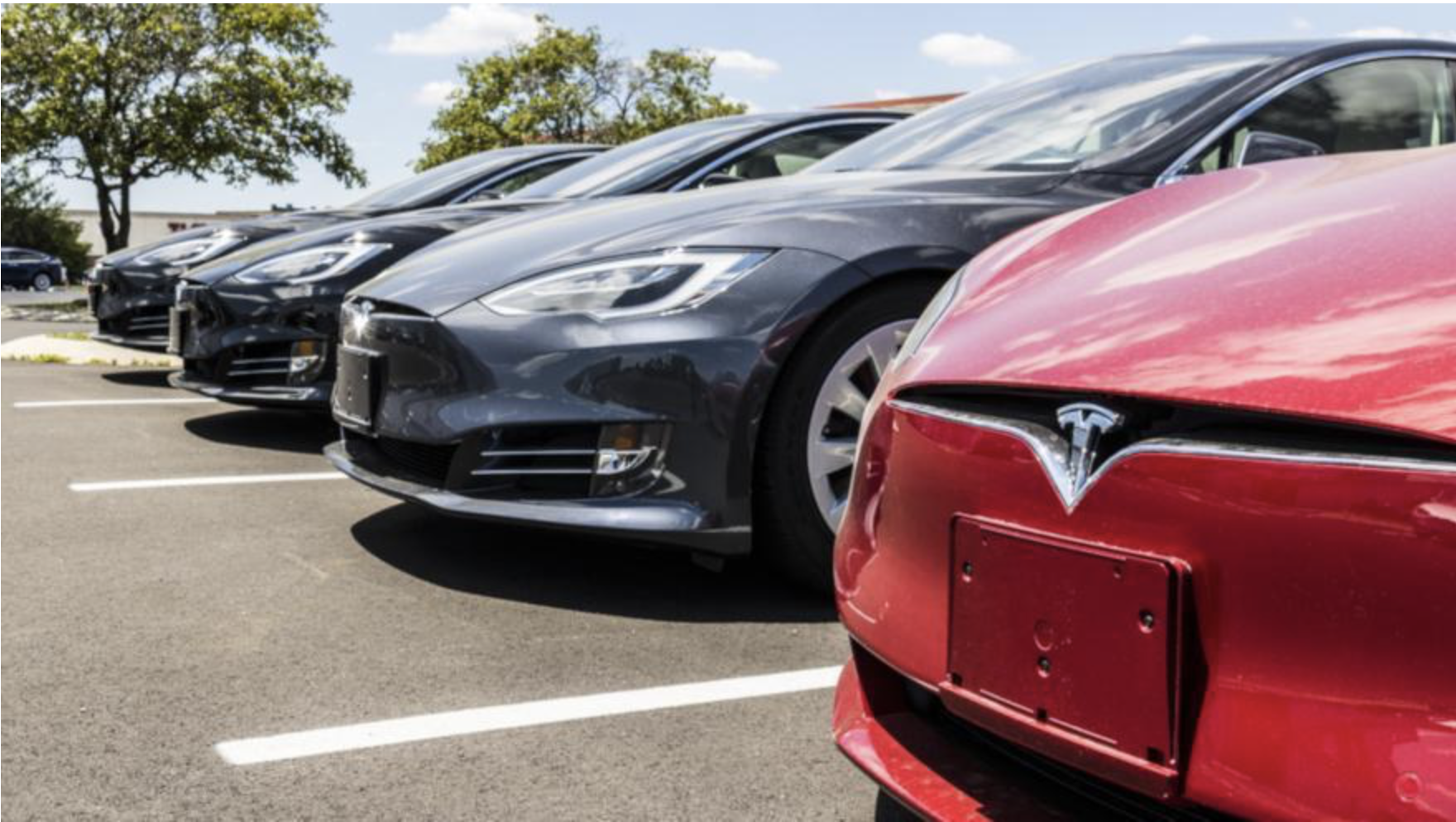
Three of the top 10 vehicles are Teslas.
Why is that?
In an interview with Auto Remarketing, Vroom chief executive officer Paul Hennessy provided a concise reason.
“It’s just an outstanding vehicle, and consumers know it,” said Hennessy of Vroom, which is an e-commerce platform for buying and selling used vehicles.
According to the Vroom data, the Nissan Leaf is the most purchased used electric vehicle across the industry, with an average price of $13,541. The BMW i3 comes in at No. 2 with a $21,000 average price.
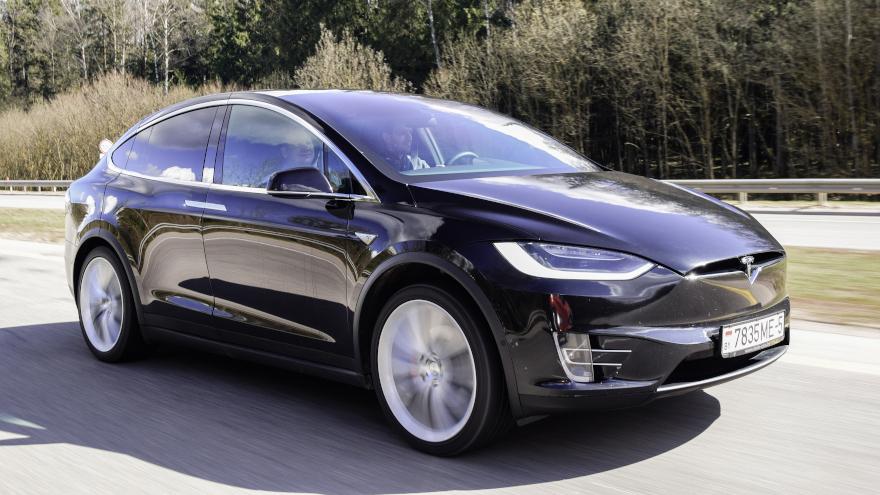
But placing at Nos. 3, 5, and 8 in the top 10 are the Tesla Model S, the Tesla Model 3, and the Tesla Model X, respectively.
Vroom’s business mirrored the overall industry numbers. Two-thirds of the electric vehicles that Vroom sold last year were Teslas.
Hennessy said electric vehicles represented about 2% of the overall industry vehicle sales in 2020, and he said the company expects that number to grow to 2.5% market share this year.
Vroom expects to match that trend, and then some.
“Already in Q1 of 2021, we’re not growing at 25%, but we’re really growing at 100%,” he said regarding used EVs. “So now what we’re seeing is 4% share in Q1.”
Industry-wide, the market for electric vehicles is growing.
“But they’re surging at Vroom,” Hennessy said, adding that Tesla performs so well in Vroom’s data “because they’ve just done an outstanding job, and customers want them and love them.”
Still a West Coast phenomenon
Vroom’s study also highlighted the top 10 most purchased used hybrid vehicles industry-wide, and the top three were the Toyota Prius, the Ford Fusion and the Toyota Camry.
But despite all the growth in hybrids and electric vehicles, the West Coast is still the most popular destination for people who are buying those cars.
San Francisco, Los Angeles, Seattle, San Diego, and Santa Barbara are among the top 10 locations for electric vehicles, and hybrids are nearly an exact replica of that trend, according to the Vroom data.
For used electric vehicles, no East Coast states are in the top 10.
“It’s a West Coast and moving-East kind of phenomenon,” Hennessy said.
Sensitivity to fuel efficiency and passion about climate change issues in California are reasons for that, Hennessy said. Some of the major companies, such as Tesla, Rivian, Lucid Motors and Faraday Future have California roots.
“Teslas are sold around the globe, and of course they’re sold on the East Coast, but I still think when you think about top 10 locations where they’re sold, they haven’t really migrated all that far from the West Coast,” Hennessy said.
Additional insights of Vroom’s new data: The most popular used EV body type is subcompact. Regarding the most purchased used hybrid vehicles, Toyota placed five vehicles in the top 10. The Prius came out on top, with an average price of $12,400. Other Toyotas in the top 10 were the Camry, the RAV4, the Prius c and the Highlander.
Vroom data mirrors industry as a whole
Overall, Vroom had 34,488 ecommerce sales last year, beating the year-ago figure by 82%. Hennessy emphasized how Vroom’s business is a microcosm of the broader car industry, and he also talked about how the used-car space tends to follow the new-car space by a couple years or so.
“We’re always tracking the data of our industry, and it’s no surprise that fuel efficiency that started a while ago in hybrids and is now evolving to pure electric plays, that’s becoming a growing segment of the used car space,” he said. “So we’re watching the trends in hybrid and electric, and it’s becoming a growing percentage of our business. We’re a data-driven company, so understanding the data, watching the data, and preparing for the data so we can better serve our customers, its kind of in our DNA.”
Hennessy also said, “So this was a natural piece of work that we would do, to make sure that we have what customers are looking for, so that’s great for them and good for our company.”
Top EVs: Lower price a factor
Some of the lower-priced EVs such as the Nissan Leaf and Chevrolet Bolt are attracting strong interest because of their low price, Hennessy said.
“I think what you’ll find, as with many things in life, price point drives interest,” Hennessy said.
The lower-priced EVs allow customers to get into an electric vehicle without paying approximately $50,000 for a Tesla S or more than $70,000 for a Tesla X.
Hennessy said part of the Vroom strategy is to offer a wide spectrum of what customers can afford.
“And in doing so, we’re satisfying their needs, based on what they can afford,” Hennessy said. “If they’re looking for luxury EVs, we’ve got them in Teslas. If they’re looking for affordable, entry level, we’ve got those, too.”
But the higher-priced EVs also play a role in Vroom’s data. Hennessy also discussed trade-ins, noting that of the electric vehicles that Vroom buys or trades from consumers, more than half are Teslas.
In December, Vroom released a data recap of the top car buying and selling trends for 2020, saying that Teslas sold to Vroom by consumers tripled since 2019 and Tesla inventory was 10 times higher.
What is driving all the interest in used Teslas? The company has simply done well in producing a strong vehicle, Hennessy said.
“I think they built a super brand,” he said. “I think they’re outstanding, high-quality cars, and when you get them from Vroom, they know they’re getting a high-quality, expertly reconditioned car that will last a long time.”
More details can be found below, with data courtesy of Vroom.
Top 10 most purchased used EVs across the industry:
1. Nissan Leaf (avg price: $13,541)
2. BMW i3 (avg price: $ 21,000)
3. Tesla Model S (avg price: $48,000)
4. Chevrolet Bolt EV (avg price: $22,500)
5. Tesla Model 3 (avg price: $42,000)
6. Fiat 500e (avg price: $9,200)
7. Volkswagen e-Golf (avg price: $15,000)
8. Tesla Model X (avg price: $71,000)
9. Chevrolet Spark EV (avg price: $10,100)
10. Kia Soul EV (avg price: $14,000)
Most popular used EV sales by body type:
1. Subcompact (avg price: $18,000)
2. Mid-size (avg price: $23,000)
3. Compact (avg price: $32,000)
4. Full-size (avg price: $50,000)
5. Mini (avg price: $10,000)
Drivers in these metropolitan areas purchase the most used EVs:
1. San Francisco
2. Seattle
3. Los Angeles
4. Portland, Ore.
5. San Diego
6. Salt Lake City
7. Honolulu
8. Dallas
9. Phoenix
10. Santa Barbara, Calif.
Hybrids
Top 10 most purchased used hybrid vehicles across the industry:
1. Toyota Prius (avg price: $12,400)
2. Ford Fusion (avg price: $15,900)
3. Toyota Camry (avg price: $15,000)
4. Chevrolet Volt (avg price: $15,700)
5. Toyota Rav4 (avg price: $26,700)
6. Ford C-Max (avg price: $13,000)
7. Lexus RX (avg price: $26,400)
8. Toyota Prius c (avg price: $12,500)
9. Hyundai Sonata (avg price: $13,000)
10. Toyota Highlander (avg price: $23,000)
Drivers in these metropolitan areas purchase the most used hybrid vehicles:
1. San Francisco
2. Los Angeles
3. Charlottesville, Va.
4. Sacramento, Calif.
5. San Diego
6. Seattle
7. Portland, Ore.
8. Eugene, Ore.
9. Santa Barbara, Calif.
10. Austin, Texas