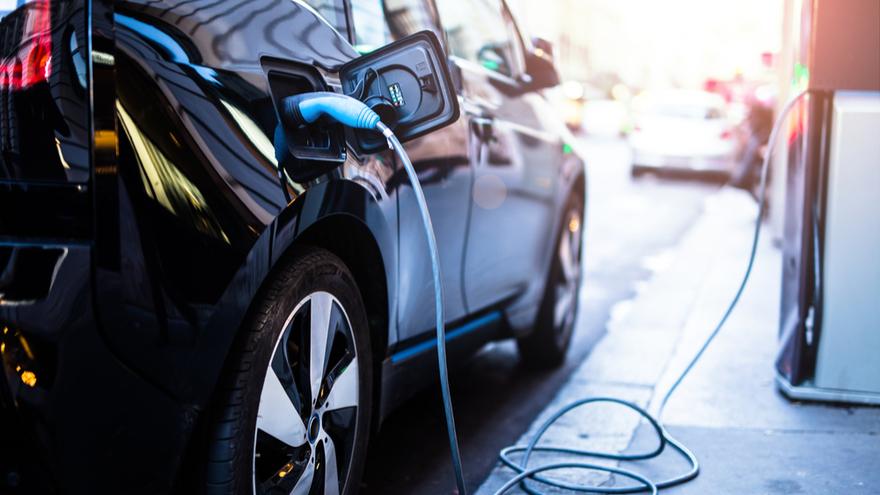
Projected growth in plug-in electric vehicles means challenges and opportunities for distribution utilities, according to Navigant Research. If PEVs are not managed intelligently, they can threaten overall grid reliability. But if they are aggregated and optimized with smart controls, they can offer grid services under new business model platforms such as microgrids and virtual power plants.
A new Navigant Research report says PEVs could become a viable enabling technology for microgrids and VPPs within the next five years.
“While the primary purposes of these platforms differ — resiliency versus bidirectional value exchanges — they share the common goal of extracting value from distributed energy resources portfolios,” Peter Asmus, research director with Navigant Research, said in a news release.
The report, “Implementing EV-Based Grid Services for Microgrids and VPPs,” covers the best methods of developing a strategy to best extract grid services embedded in plug-in electric vehicle batteries, charging loads and charging infrastructure to help support microgrid and VPP deployments.
For PEV ecosystem stakeholders to succeed in the market, they should support the development of communication standards, shape regulations on frequency regulation services and study new energy as a service (EaaS) business models, according to the report.
At the same time, the report says, microgrid ecosystem stakeholders should study the value that PEVs provide internally to the microgrid during emergency islanding and pair PEV fleets with stationary storage devices. VPP ecosystem stakeholders should use advances in artificial intelligence, the report says.
Those stakeholders should also advocate for market reforms and look for distributed energy resource management system market opportunities.
The report covers how to develop the best strategy to extract grid services embedded in PEV batteries, charging loads, and charging infrastructure to help support microgrid and VPP deployments.
The study also:
— defines the grid services possible from PEVs,
— showcases global deployments that tap PEVs as DER for microgrids and VPPs, and
— identifies lessons learned from deployments that point to market opportunities.
In addition, the report provides actionable recommendations for PEV, microgrid, and VPP stakeholders when implementing PEV-based applications within the next five years. An executive summary of the report is available for free download on the Navigant Research website.
New electric vehicle registrations during 2018 more than doubled year-over-year from slightly more than 100,000 to 208,000, according to business intelligence company IHS Markit. EV market share has also seen a strong gain during that period, the company said.
Along with those gains, the loyalty rates of EV buyers has also continued to grow.
IHS Markit said nearly 55 percent of all new EV owners who returned to market during the fourth quarter of 2018 acquired (purchased or leased) another EV. That loyalty rate is up from 42 percent in the previous quarter.
The trend continued into January of this year, with almost 70 percent of EV owners returning to market for a new EV.
“EV loyalty rates have been steadily increasing since their introduction by OEMs,” IHS Markit loyalty principal Tom Libby said in a news release. “This increase over such a short timeframe demonstrates that a portion of the U.S. market is highly accepting of this new technology and has a growing comfort level with it. As more new models enter the market, we anticipate an even further increase in loyalty to these vehicles.”
IHS Markit’s analysis included stats showing increasing strength for the EV sector. The study shows the U.S. market for fully electric vehicles (EVs) has reached record volumes with 208,000 new registrations in 2018.
The business intelligence company said it was not surprising that 59 percent of these vehicles were registered in California and the Section 177 states — Connecticut, Maine, Maryland, Massachusetts, New Jersey, New York, Oregon, Rhode Island and Vermont — which have all adopted the same vehicle emission standards and have been key markets for EVs as the OEMs have introduced new models. The analysis showed that nearly 46 percent (95,000) of new EV registrations in 2018 were from California.
However, with all the good news for electric vehicles, don’t count out those non-electric brands just yet. IHS Markit says the internal combustion engine is not going away any time soon. The company expects those vehicles to continue to dominate globally until 2030 and beyond.
But IHS Markit provided plenty of additional news that could mean a positive outcome for EV sales. Over the next decade, IHS Markit predicts a strong increase in new fully-electric models offered in the U.S. market. It expects more than 350,000 new EV sales in 2020, which would be a 2-percent share of the total U.S. fleet.
Recent IHS Markit powertrain forecasts show that figure rising to more than 1.1 million vehicles sold in 2025, which would be a 7-percent share.
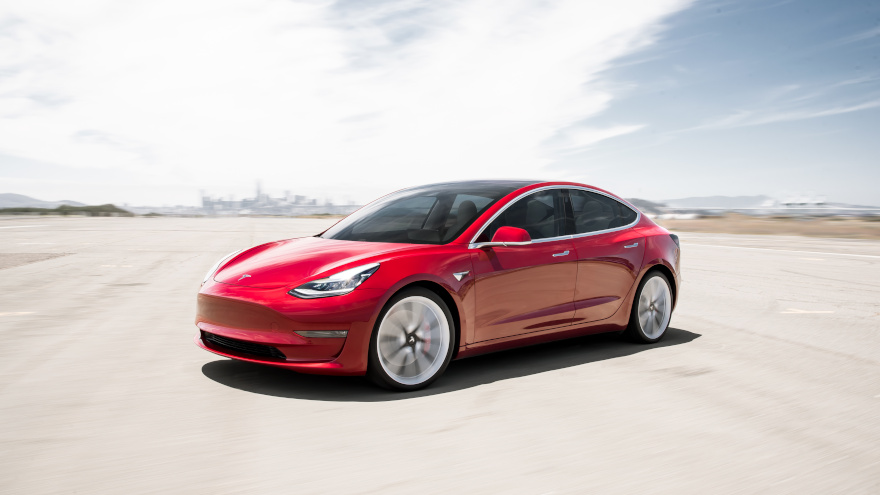
“A rapid increase in EV nameplates is the catalyst behind the projected growth throughout the next decade,” said IHS Markit powertrain analyst Devin Lindsay. “While relatively successful models such as the Tesla Model 3 mature in the market, other traditional automakers will be rolling out not just one EV as we have seen in the past, but multiple models off dedicated EV platforms.”
IHS Markit expects U.S. consumers to have much more of a choice of EVs at dealerships over the short-term, with traditional manufacturers as well as anticipated market entries from start-up automakers such as Rivian, Lucid and SF Motors.
Any federal government elimination or delay to California’s Zero Emission Vehicles (ZEV) mandate could be the “greatest headwind” for EV sales in the U.S., IHS Markit says. The EPA has proposed to withdraw the waiver, which would affect the ability of California and the section 177 states to regulate greenhouse gases separately from federal standards. That could have a negative impact on the nation’s most popular battery-electric vehicle market, IHS Markit predicts.
Loyalty rates for electric vehicles, per IHS
Q1 2017: 43.4 percent
Q2 2017: 37.4
Q3 2017: 35.5
Q4 2017: 34.3
Q1 2018: 43.2
Q2 2018: 42.4
Q3 2018: 42.4
Q4 2018: 54.8
Q1 2019* 69.9
*Q1 2019 includes January only. Note: Electric vehicles are those powered solely by electricity with no extended range gas support system. Source: IHS Markit.
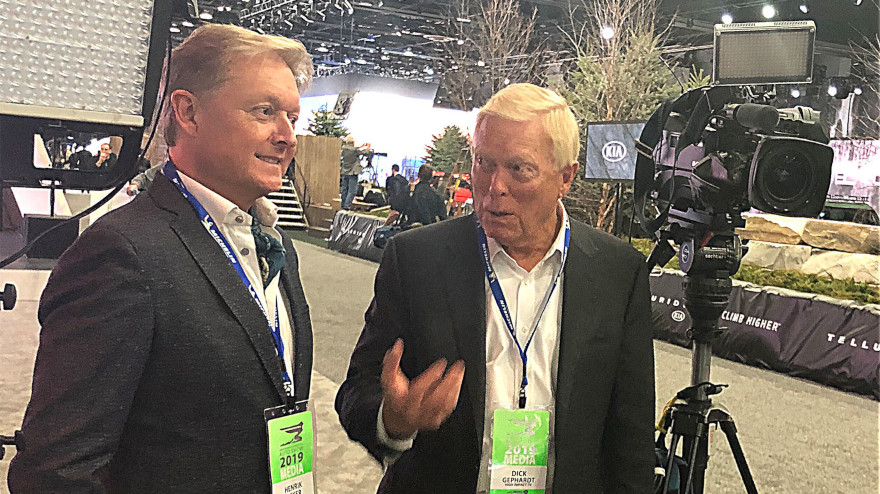
Attending high school in St. Louis in the 1950s, former U.S. Congressman Richard Gephardt came of age in the “golden age of automobiles.”
The post-World War II period brought about ambitions of vehicle ownership, he said, as well as a practical sense of vehicle know-how, as many could only afford to do auto repair work themselves.
“So, all of us as young people in those days in the 50s grew up learning how to change the oil, how to change a lot of the parts that went bad on cars,” the former House Majority Leader said in a February phone interview. “So, it was the golden age of automobiles.”
The auto industry is maybe — just maybe — entering a golden era of electrification, albeit with numerous hurdles to overcome.
That brings us to the latest automotive venture for Gephardt, a former Ford Motor Co. board member.
In late February, Fisker Inc. officially announced that Gephardt had signed on in an advisory role for the e-mobility and tech company that is building various electric vehicles and proprietary solid-state battery technologies.
Gephardt had been working with the company since the fall as a consultant on issues around state manufacturing partners, labor contracts and creating innovative compensation plans.
This continues the bits of automotive sprinkled throughout his career.
Gephardt, who joined the U.S. Congress representing a district in St. Louis, said of his days in Congress: “We had all three of the Big 3 car plants represented in St. Louis. My dad was a Teamster, so I was always interested in unions and in the workers. And so, I visited auto plants not only in St. Louis, but all over the country throughout my Congressional career.”
“And I always realized that probably the No. 2 industry in our economy was automobiles, the production of automobiles. The No. 1 (industry) is real estate, and No. 2 is automobiles and trucks. And it still is today, so it’s a major part of the American economy,” he said. “And as a member of Congress, I was obviously always worried about jobs and economics and was our economy growing or not growing. And so being interested in cars was always a major concern of mine.
“And then after I got out of Congress, I did some work with Ford and got to know Bill Ford and the whole crew there and really was honored to be asked to be on their board, which I was on for about eight years, right after the recession, when all the car companies in the United States were really challenged to survive,” he said. “So, it was great to be part of that process.”
The process, at least for the automotive work in which Gephardt is involved, now has moved over to electrification.
Competition in a ‘global economy’
Like company chairman and chief executive Henrik Fisker, Gephardt sees the auto industry moving to all-electric. But that road is paved with curves that will require some nifty maneuvering and investment.
“I feel strongly about the kinds of changes our nation needs in order to cope with the challenges of the new global marketplace. Around the world, people look to the United States for leadership because of our economic success and commitment to free market capitalism. To maintain this leadership, we must invest in workforce skill development, increase our production and use of alternative energies, and maintain our competitive edge in international markets,” Gephardt said in a news release announcing his partnership with Fisker.
“Fisker is leading the way for electric vehicle manufacturing in the United States, which will help us achieve these objectives,” he said. “We are excited to support Henrik’s vision, reinforced by his world-class design talents and outstanding team, propelling the U.S. into a leading role shaping the future of the global automotive industry.”
As it stands, though, the U.S. has not moved towards electrification to the degree that places like China and Europe have, Gephardt said in the interview.
China’s lead over the U.S. in electric vehicles may be more easily explained, in that China, which operates in more of a “top-down” fashion than American society, has made a “country decision, if you will” to go all electric as quickly as possible, Gephardt said.
“But I think the same thing is happening in Europe, (where) the countries are run as democracies more like we are in the United States,” he said.
“So, it always takes you longer to move toward a goal when you don’t have centralized leadership on a question. And we’ve always had different companies. We have rule of law here, we have freedom for companies and people to do things as they see them needed to be done,” Gephardt said. “And so, we haven’t been able to move in concert as easily and quickly as some other countries like China.
“But in the modern world, you’re in competition with everybody in the world. You’re no longer in just a national economy; you’re in a global economy, and if things are going to move to all-electric vehicles, you’ve got to move more quickly. And that’s what we hope can happen in the United States.”
To do so, he said, would require a “technically educated and capable workforce” to build electric vehicles as well as companies that partner with their workers.
“And unfortunately, sometimes in the auto industry in the United States, we’ve had adversarial relationships between companies that make vehicles and their workforce. And in the case of the Big 3 traditionally that workforce was unionized. And there’s been a history of some difficulty in that relationship,” Gephardt said.
“Fisker is really committed to innovating and improving that relationship so that we get 100-percent discretionary effort from every employee, every day, every minute of every day that they’re at work,” he said.
“You can’t do that unless you partner with people, unless you engage with people, unless you really understand the financial metrics of the company and make them partners in the entire company, including in the way they’re compensated,” Gephardt said. “Fisker is really going to bring to the auto manufacturing process, I think, some real innovation that sometimes you don’t see in the auto industry here or anywhere else.”
The company aims to launch various EVs that are “affordable, futuristic and segment leaders,” while also building technologies for its line of future EVs.
In building electric cars, Fisker — the CEO — explains that some of the basics might be the same as a traditional gas-powered vehicle.
“But the entire drivetrain is very different. You’re working with high-voltage components, battery, etc., and you’ve got to install electric motors — you’ve to install a different type of wiring harness. It’s a lot of what we call ‘orange cables,’ which are high-voltage cables. So, it does demand and slightly different educational approach,” said Fisker, who joined Gephardt on the phone interview.
“But nothing that you can’t be taught or learn very quickly, and that’s obviously the advantage of working with already great automotive workers because they are used to adopting — we’ve already seen a lot of change in the auto industry over the last 20-30 years, going to a lot of digital, a lot more electronics in vehicles today than there was 30 years ago.
“So, I think the auto workers in America are already used to seeing a lot of change. Here in America, we’re already making the most advanced vehicles and have always been leading in this change from more mechanical vehicles into sort of more digital vehicles or a lot of electronics in the vehicles.”
There are also a lot of differences in how a plant for electric vehicles is designed.
“But I think what’s important here is really that we get up to speed here in the U.S. And one of the things that we want to do at Fisker Automotive, we want to create the most advanced workforce and the most skilled, and really prepare ourselves for the future,” Fisker said.
“Because at the end of the day, we are going to go full electric. Nobody knows exactly how fast we’re going to do it, but I think pretty much everybody agrees that eventually every vehicle will be electric.”
Agree or disagree with that sentiment, there are current challenges, regardless.
We asked Fisker what has to happen for the auto industry to go all electric.
Challenges to electrification
For starters, the industry is at a “crossroads” around choice.
“I mean, if you go to the supermarket and you have no organic food, then you can also argue, ‘well, when are people going to start eating more organic food?’ Well, if there’s no choice, it’s going to go very slow,” Fisker said.
“It’s the same with vehicles. If you go down to your local dealership … and there’s no electric cars being offered, you probably aren’t going to drive 200 miles to find some other place to buy an electric car,” he said.
“So, the choice issue I think we are only about three to four years away from (solving),” Fisker said. “I think in three to four years, you’re going to see enough choice, and almost every carmaker will have at least one vehicle that is full electric (being offered). So that means people now have choice.”
The next hurdle, which Fisker also anticipates will take three to four years to alleviate, is the issue around the infrastructure of electric vehicle charges. He called efforts here “already on full speed” with various groups putting in charging stations.
“At the end of the day, we had to put up an infrastructure of gasoline stations, and the same will happen with charging stations,” Fisker said. “And then of course the advantage, anyway, with electrification is you can actually charge your vehicle at home, where you cannot really fill your car up with gas at home. So that is a huge advantage. Once people start realizing that, I think it’s an additional advantage, at least for people who have their own garage.”
And the third hurdle, which Fisker called “very important” for most people, is the need for affordable electric vehicle options.
Most of the electric vehicles that have come to market so far, at least the “desirable” ones, “have been very expensive,” he said.
“I think we are past the point where we need to show to the general consumer that you can make an exciting, fast electric car,” Fisker said. “I think it’s already been shown. Fisker did it with the Fisker Karma. It was very exciting, super good-looking. Tesla’s done it, and there’s been other vehicles out there that have shown to be fast and exciting. But I think the next big revolution is really about who can make a desirable, affordable electric car that is also profitable.
“And that’s really the segment that we at Fisker want to go into and we want to do it here in America, and I think America’s always been pioneers when it comes to getting new technology and new products to the mass market,” he said.
Creating affordable, mass-market electric vehicles, of course, is not easy.
“If it was, everybody would do it. But we think we have the right business model to be able to do that,” Fisker said.
In fact, in mid-March the company announced early details on an all-electric SUV priced below $40,000. Scheduled to debut in 2021, this would be first of three new mass-market EVs from Fisker.
Tackling climate change
Another piece of the EV discussion, obviously, revolves around sustainability and the environment. Concerns over climate change, Gephardt said, will likely push quicker adoption of EVs.
“That worry led to the existing tax credit that people get if they buy an all-electric vehicle in the United States now,” Gephardt said. “It’s a little limited because for instance, Tesla has kind of run out of their use of the tax credit.”
Similarly, the IRS announced on March 26 that General Motors had more than 200,000 sales of cars eligible for the plug-in electric drive motor vehicle credit during the fourth quarter, which triggers a staggered phase out for GM vehicles.
That phase-out begins April 1, with the tax credit going to $3,750, eventually moving to $1,875 on Oct. 1, which will last for the next two quarters. On April 1 of 2020, the credit will be gone for those GM vehicles.
“But I think things like that are going to change as the United States government — the Congress and the President — comes forward with a more aggressive plan to clean up the power sector — in other words capture carbon if you’re producing it with coal or gas or moving, of course, more to renewables, which takes batteries and a distribution system that works,” Gephardt said.
“So, all of that has been happening, is going to happen faster in my view, and then if you can move the fleet faster to all-electric, you pretty well, at least in the United States, can solve the climate change problem,” he said.
“Now, you’ve got to solve it in China and Europe and everywhere else around the world, but America, again, has always been the leader, as Henrik said, not only in consumption of products, but also in dealing with worldwide environmental problems,” Gephardt said. “And so, electric vehicles are really a huge component in allowing the human race to deal with climate change.”
Electric vehicle designer and manufacturer Fisker describes founder Henrik Fisker as an “EV pioneer” and a “world-renowned, American automotive icon.” Among his company’s highlights through the years is the Fisker Flexible Solid-State Battery, which the company says “is ushering in a new era in fast charging, safety and range.”
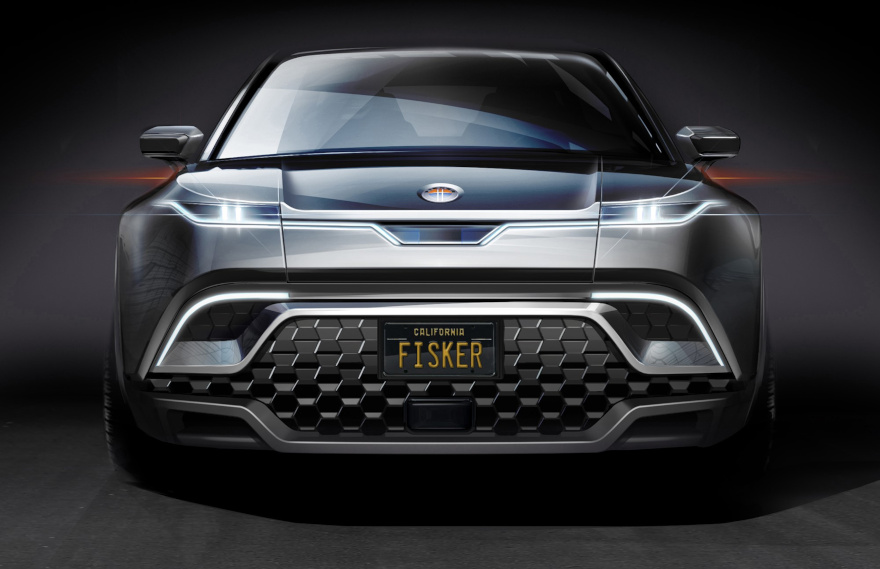
Now as part of its new development of “affordable, luxurious and technologically advanced electric vehicles,” Fisker plans another company highlight with the release of a new all-electric SUV design, priced below $40,000. The company noted in a news release that the SUV is Fisker’s first in an upcoming lineup of three all-electric vehicles that it promises will be affordable.
Using the phrase, #ReinventTheSUV, Fisker notes that the all-electric luxury SUV is “shattering old notions of what an SUV can be.” The company described the vehicle as “a futuristic, elegant muscular EV with clean surfaces and a dramatic shape.”
“The affordable mass market vehicle features captivating design touches that have been traditionally reserved for supercars in the past,” the company said in a news release.
The company added that it is developing a larger line-up of “affordable, luxurious and technologically advanced” electric vehicles. Launching after the SUV will be the Fisker EMotion luxury electric sedan, which the company describes as the brand’s low-volume flagship model. Fisker will introduce the EMotion to the market after an affordable model becomes available.
“As the ultimate symbol of future emerging technologies, the high-end EMotion will retake the stage as patented Fisker Solid-State Battery technology becomes ready for vehicle application and commercialization,” the company noted, adding that it will release more information and timelines at a later date.
“Our flagship, low-volume EMotion luxury electric sedan will be the first model to feature Fisker Solid-State batteries, targeted to deliver more than 500 miles of range with a single, quick charge,” Henrik Fisker said in a news release.
For the SUV that will launch first, Fisker is touting what it describes as some of the vehicle’s “never-before-seen, high-tech user experiences," including:
—An extended open-air atmosphere is possible with the touch of a button, and Fisker says that will occur “without compromising the rugged and safe structural integrity of an SUV.”
—The vehicle’s spacious interior includes what the company describes as “a modern aesthetic and high-quality materials.”
—Dashboard features will include a large heads-up display and a user interface that will control what Fisker describes as “emerging in-vehicle technologies.”
Fisker also describes some of the vehicle’s “future-forward technologies” that it says are now integral to the design of the vehicle. A small, center high-mounted, behind-glass radar replaces a traditional grill. The company notes that a traditional grill is no longer a necessity on an EV.
A “parametric pattern” exists at the lower front of the vehicle. In that area, air cooling is directed only as needed. In addition, the company states that lower body aerodynamic features “add more stimulating visuals.”
The SUV will be available in four-wheel drive with two electric motors, one at the front and one at the rear. An extended range (target of approximately 300 miles) will come standard, and an enhanced +80 KWh lithium-ion battery pack will make that range possible.
The vehicle will be available with optional 22-inch wheels.
Pricing is set at a base price below $40,000. The company anticipates final pricing and a drivable prototype to be revealed by the end of 2019.
Fisker plans to sell direct to consumers, and a nationwide concierge service model is also in development. The company also plans to begin accepting early deposits near the production start date. Fisker will share more information on timelines and a website link at a later date.