Holman Enterprises is charging up its fleet division at ARI in a new way.
According to a news release distributed on Tuesday, the company announced a new partnership with Lordstown Motors, an Ohio-based original equipment manufacturer of all-electric, light-duty fleet vehicles. Holman highlighted the strategic partnership will help to introduce the Lordstown Endurance, an all-electric commercial pickup truck, to vocational fleet operators across North America.
“For more than nine decades, Holman Enterprises has embraced innovative automotive technology and services on behalf of our customers. We believe Lordstown Motors’ commercial fleet strategy is a major step forward for the industry as a growing number of organizations look to integrate electric vehicles into their fleet operations,” said Chris Conroy, president and chief executive officer of Holman Business Services.
“The Endurance has the potential to deliver both immediate and long-term benefits to vocational fleet operators and we’re excited to help introduce the versatile pickup truck to this segment of the industry,” Conroy continued.
Through this partnership, the company said ARI will provide fleet management services, including vehicle supply chain logistics, for the Endurance on behalf of its customers.
Additionally, Auto Truck Group, Holman Enterprises’ work truck upfitting and manufacturing company, will provide the design, manufacturing, and installation of specialized equipment and upfit for the Endurance to help customize the vehicle for a wide-range of commercial applications.
“We are thrilled to announce this partnership and to work closely with Chris and the entire team at Holman Enterprises to provide the Endurance and its drivers with what we’ve designed to be the safest, most economical, and greenest pickup truck to ever hit the road,” Lordstown chief executive officer Steve Burns said.
“With the 75 MPG equivalent, there are no fuel costs, and with drastically fewer move parts than a traditional drivetrain, the Endurance is virtually maintenance-free, delivering a significantly lower total cost of ownership compared to typical pickup trucks,” Burns continued.
Conroy then added, “The EV space and the future of e-mobility has been a top strategic priority for Holman Enterprises for several years now and this partnership with Lordstown Motors is an exciting opportunity to further grow and strengthen our automotive core competencies in this segment of the industry.”
For additional information about Holman Enterprises, visit HolmanEnterprises.com. To learn more about Lordstown Motors and the Lordstown Endurance, visit LordstownMotors.com.
Fleet maintenance being done through mobile programs continued to gain usage this week.
Merchants Fleet announced a partnership with YourMechanic, a leading automotive mobile maintenance and repair services provider that brings vehicle care directly to customers’ homes, offices or lots.
The fleet company said in a news release that the partnership has enabled Merchants Fleet to greatly expand its mobile maintenance offering and overall fleet maintenance management program.
“We are excited to add YourMechanic to our partnership network and extend the mobile maintenance offering to our clients,” Merchants Fleet senior vice president of operations Adam Secore said. “With similar philosophies in client service, flexibility and total cost of ownership for clients, we knew we had the right partner to work with us and offer an important service at this time.”
Under the partnership, YourMechanic will provide contactless vehicle repair at the convenience of the drivers’ home or fleet lot. More than 600 auto repair maintenance and reconditioning services are offered in more than 2,500 U.S. cities.
The services are provided by vetted, highly-rated mobile mechanics, many of whom are ASE Certified, according to the companies.
As a fully integrated Merchants Fleet Maintenance Program, ASE certified staff at Merchants Fleet will review all repairs, and charges will be incorporated into the consolidated billing process.
Additionally, Merchants Fleet said its clients will have full visibility and easy access to maintenance data through customized dashboards and real-time reports in the fleet management software TotalView.
“Merchants Fleet serves a dynamic roster of clients who’ve come to expect agile, customer-centric service,” YourMechanic president and chief executive officer Anthony Rodio said.
"Our contactless mobile maintenance program launch is a testament to both organizations’ commitment to safely serving customers directly at their vehicles’ place and time of need," Rodio said.
Nationwide is trying to address the challenges faced by human services organizations that try to keep a close eye on fleet vehicles and driver performance that not only can be critical for ensuring client safety, but also can boost business performance and reduce costly interruptions.
The insurance company acknowledged the technology needed to track vehicles and driver safety in real time often can require significant investment and multiyear contracts, putting these tools out of reach for budget-strapped business owners.
As a result, Nationwide has established a telematics partnership program to reduce the cost barriers associated with exploring telematics and fleet management solutions. Now available in New York, New Jersey and Texas, the Vantage 360 Premium Partner Program offers comprehensive fleet management and GPS tracking for qualifying human services organizations at little to no cost.
“Employee and customer safety are top priorities for any business, but for those managing fleet vehicles, the cost of telematics equipment can often prohibit implementing solutions to monitor safe driving and vehicle efficiency,” said Pete Frey, director of commercial telematics and connected business at Nationwide.
“By helping to ease the cost burden for telematics solutions, we feel business owners can more realistically embrace telematics and fleet management and learn from valuable insights that will ultimately help them boost performance and improve the safety of both drivers and customers,” Frey continued in a news release.
To kick off the new program, Nationwide partnered with two telematics solution providers — Azuga and Zubie — to offer customers advanced telematics systems with fleet management and GPS tracking capabilities.
With the partnership program, human service organizations can:
• Track fleet vehicles in real time
• Find the closest driver to respond to client needs
• Monitor vehicle health and receive immediate notifications of engine or battery issues
• Measure mileage and vehicle utilization
• Monitor driver performance, including hard braking, speeding or rapid acceleration
• Verify arrival and departure from client sites
“At a time when many carriers are limiting insurance coverage, limits and services for human services businesses, Nationwide is elevating its solutions by making it easy to prioritize driver and client safety with telematics,” said Cheryl Tamasitis, associate vice president of human services at Nationwide.
“We want to give business owners and fleet managers peace of mind with a solution to ensure the safe and efficient use of their vehicles so they can continue to focus on serving those in need,”
Based in California’s Silicon Valley, Azuga is a global provider of connected vehicle and fleet technologies. Azuga’s safety-driven telematics solution can impact fleet efficiency and driving behavior improvements.
Through the company’s work with insurance companies, officials said Azuga has proven the value of telematics by reducing frequency and severity of accidents by as much as 50%.
Zubie, based in Minneapolis, is a telematics provider committed to providing smart, easy and simple solutions for businesses with small and medium-sized fleets. Since 2012, the company’s end-to-end connected-car technology has delivered real-time information about vehicles and drivers to help businesses manage and optimize their fleets.
Nationwide’s Vantage 360 Premium Partner Program builds on its Vantage 360 suite of telematics products. Vantage 360 Fleet, launched in July of last year and currently available in Arkansas, Illinois, Indiana and South Carolina, is a mobile app telematics solution available for small market customers.
Nationwide said it plans to expand the new Vantage 360 Premium Partner Program and Vantage 360 Fleet to additional states and industry segments in the near future.
Amazon recently announced the order of 100,000 electric vans to be delivered by 2030. For perspective, that’s more vehicles than FedEx currently uses worldwide. Of the many points of discussion around autonomous electric vehicles and the services they are expected to deliver, one underrepresented topic is the battery capacity of electric vehicles and the limitations this imposes.
Most autonomous vehicles, in the long term, are expected to be electric for several reasons. Electric drive trains require less maintenance than their gas counterparts. The fuel is less expensive than gasoline. They are easier to refuel without human intervention. Electric vehicle batteries are subject to variations of range and power that introduce new variable for fleet orchestration.
More than just range
Vehicle range is usually the first topic that comes to mind when it comes to electric vehicles—how far can the vehicle travel. But that is a tricky issue because the range is impacted by a number of factors unrelated to sheer distance. As with a gas-powered vehicle, electric vehicles use more power as their speed increases. Autonomous vehicles use energy as they process data, and the computers driving the cars process some 11 terabytes of data per day by some estimates.
Battery capacity is also influenced by temperatures — lithium, the type of battery most electric vehicles use, doesn’t like cold, and some AV shuttle services have been forced to shut down during cold weather. Air conditioning is another power drain, to the chagrin of an agency in Rhode Island that found its shuttles were not equipped with air conditioning and had to keep them garaged during summer heatwaves.
Vehicle weight (number of passengers, presence of bicycles or wheelchairs, etc. is another factor in energy use. And there are limits to the steepness of the grades that some vehicles can climb due to power constraints.
No two rides are alike
As a result, no two rides consume the same amount of battery power.
Vehicle energy availability becomes an even bigger issue when it comes to managing on-demand mobility services using electric vehicles. Whether moving packages or people, if there are constraints like guaranteed delivery times, ride times, and wait times, a vehicle’s battery strength is one of the many variables that need to be considered when deciding what vehicle to send to what traveler at what time.
Does the vehicle have the juice to complete a mission? Does it have enough battery power to reach a charging station after the mission? Where is the nearest charging station? Are there any hills or other energy intensive features of the route? How many vehicles are already waiting to be charged? How long can a vehicle afford to wait before it runs out of power?
Those are the issues on the front side of autonomous vehicle refueling. On the backside are questions like, when will a vehicle that is being charged return to service? Where should it be positioned in the event that there are no current ride requests near the charging station?
Service design issues
The location and capacity of charging stations are important considerations in service design. The number of vehicles, their passenger/package space, and service area dimensions and geography will be limited by the proximity and capacity of charging depots. Because each mission will consume different amounts of energy on every trip, this data has to be monitored and factored into every dispatch in real-time.
Energy use and availability are just two of the factors that make fleet orchestration so complex. For passenger services, the locations of every ride request; the number of passengers; the available vehicles; the vehicle locations; status; traffic; construction; weather; geography; ride times; wait times; and more all factor into matching the right vehicle with the right mission.
Included in the “more” are the considerations of surrounding demand and predicted future demand. Operators must make sure that there is always enough supply on hand and in the right locations to meet demand within defined service levels and operator utilization requirements.
Doing more with less
The goal of fleet orchestration is all about sending the right mission to the right vehicle at the right time. Most mobility providers aim to carry as many paying riders (or goods) as possible while driving the fewest vehicles and miles/kilometers. Service providers that own their fleets and/or pay drivers by the hour want to make the most of every vehicle-mile/km. Deadheading, the time traveling empty to fetch a new ride or to move to a different neighborhood, incurs costs (driver pay, fuel) while reducing revenue. For autonomous vehicle services using electric vehicles battery power plays a critical role in assigning missions to vehicles, and is an important service constraints that needs to be factored into fleet performance and fleet orchestration.
As cofounder, Anne Mellano directs the Bestmile’s global management activities, including identifying business opportunities and overseeing the company’s marketing and communications. She is a civil engineer with specialization in innovative transportation systems. She also directs Bestmile’s participation in Swiss and European Union government-sponsored mobility projects. Prior to founding Bestmile, she worked as a transport engineer where she was in charge two of the first autonomous mobility projects in Europe, ultimately codeveloping the concept of the Bestmile Fleet Orchestration Platform. Anne is a recognized expert in mobility services speaks around the world advocating for safe, efficient, accessible mobility for all.
When Mindy Holman joined family-owned Holman Enterprises in 1986, she followed in the footsteps of her grandfather Steward and father Joseph, who currently serves as Holman Enterprises’ chairman emeritus. Today, Mindy Holman is Holman Enterprises’ chairman of the board.
On Nov. 6, fleet services provider ARI, which is a subsidiary of Holman Enterprises, announced that the Women’s Business Enterprise National Council has given national certification to ARI as a women’s business enterprise.
Now that ARI has received the certification, its customers can classify their payments to ARI as Tier 1 Diversity Spend, which ARI says can “further diversify their organizations’ supply chain.”
The company says it is the first and only full-service, global fleet management provider to receive certification from the Women’s Business Enterprise National Council.
Steward C. Holman founded Holman Enterprises in 1924 as a single Ford dealership in New Jersey, and through steady growth over nine decades, it now comprises six business units, including ARI, that support various automotive industry sectors.
Earlier this year, Holman Enterprises was also certified as a women’s business enterprise.
Mindy Holman is one of several women to hold key posts in the organization. Her cousin, Kathy Andreola Mullin, is executive vice president and chief legal officer for the company. Mullin’s sister, Susan Andreola Moonan, previously served in several finance roles for the company. Moonan remains a key stakeholder of the organization.
ARI notes that WBENC’s national standard of certification implemented by the Women’s Business Enterprise Center East is a meticulous process. That process includes an in-depth review of the business and site inspection and is designed to confirm the business is at least 51% owned, operated and controlled by a woman or women.
“By including women-owned businesses among their suppliers, corporations and government agencies demonstrate their commitment to fostering diversity and the continued development of their supplier diversity programs,” ARI said in a news release.
Jaguar Land Rover Austin general manager Damon Spears says that his company’s use of Dealerware fleet management software has allowed it to know the most important information about its fleet in real time.
“We're saving thousands of dollars a month in fuel recovery, and most importantly, we're delighting customers with a more modern experience,” Spears said in a news release.
Following a program across 30 Jaguar Land Rover North America retailers that implemented Dealerware's fleet management software, Dealerware said on Tuesday that Jaguar Land Rover has selected Dealerware as its preferred fleet management software vendor. The company said the program resulted in what it describes as a “drastic improvement of operational best practices.”
Dealerware said that by switching from their existing loaner fleet management services, such as third-party providers, to internal fleet management with Dealerware, retailers’ alternate transportation costs decrease by hundreds of thousands per month and increase owner satisfaction. Dealerware said recent JD Power CSI results showed that retailers who use Dealerware for their courtesy loaner fleet program show an average CSI score 27 points higher than those that use other offerings.
According to Dealerware, Jaguar Land Rover North America retailers using Dealerware nationwide can now greatly reduce operating costs and improve program utilization and elevate owner experiences.
“Given our notable success with Jaguar Land Rover retailers to date, we're thrilled Jaguar Land Rover North America selected Dealerware to power its national service loaner fleet across its entire dealer body,” Dealerware president Russell Lemmer said in a news release.
Lemmer continued, “Dealerware reduces costs and elevates the customer experience by digitizing and automating the management of cars, contracts, and service customers — a true game-changer in automotive retail. We're looking forward to continue working with Jaguar Land Rover North America to enable retailers to deliver world-class programs with efficiency.”
Dealerware said its key differentiators are cost savings and customer satisfaction. The company says its customers recover an average of $65 per vehicle per month. Also, they see an average 15% increase in vehicle utilization with its mobile-first, connected fleet management platform, according to the company.
The company also said Dealerware’s ability to quickly deliver efficient services based on customer feedback is helpful in a fast-moving retail environment. Dealerware said its customer satisfaction scores average 98%.
The company added that the news of Jaguar selecting Dealerware as its preferred fleet management software vendor comes on the heels of 100% year-over-year growth for the company. That is driven by new customers such as Mercedes-Benz USA. The company also said it is the result of “a strong partner ecosystem with best-in-breed providers” such as CDK Global, PDP Group, Arrowhead, Reynolds & Reynolds, RedCap, myKaarma, Guidepoint and CarStory.
Payment and operating technology company Comdata says its new business intelligence product helps local and trucking fleet managers get more strategic and actionable analytics from their Comdata fuel cards.
Comdata, a FLEETCOR company, said the new product is called Comdata OneLook, and through key performance indicators, visualizations, and dashboards, it uses online analytics to measure fleet performance.
With the product, fleet managers can view and manage every critical aspect of fleet performance, “every mile of the day,” Comdata North American Trucking Division senior vice president of product and innovation Justin King said in a news release. He described Comdata OneLook as “a modern and intuitive analytics tool.”
The company says the product offers additional visibility into overall fleet and fueling behavior. It also provides individual driver decision patterns. With those two services, managers can now make necessary changes to improve performance by seeing how and where company funds are being used, according to the company.
Various fleet types use Comdata fuel cards, and the Comdata says Comdata OneLook defines key metrics to help managers of local fleets (class 2 to 7) and trucking fleets (class 8 to 13) to manage their performance. For mixed fleets, Comdata says Comdata OneLook provides a one-stop view for overall fleet operations. With what the company describes as easy-to-navigate filters, mixed fleets can drill into one side of their operation when needed.
Also with the new product, fleet owners and managers can view their fleet’s performance to make changes that the company says will help reduce costs, maximize discounts, and boost their top and bottom lines.
The company adds that fleet owners and managers will no longer have to wait for monthly reports to receive data. With Comdata OneLook, near real-time dashboards focus on areas such as fleet KPIs, driver behavior, fuel types, and average price per gallon.
Before its debut, Comdata OneLook was developed with a group of local and trucking fleet and fuel managers involved in its design and beta testing. Feedback from those Comdata customers, representing more than 100,000 vehicles and drivers, helped design the OneLook product.
For any trucking or local fuel card customer that is interested in subscribing to the tool. Comdata OneLook is available immediately.
“Comdata OneLook has really honed in on what my team needs,” said Bill Davis, category manager, procurement for PowerTeam Services Inc., which was a beta customer.
Davis added, “We now have access to fleet analytics right out of the box, saving us the time and effort needed to pull reports manually. It used to take us half a day to do what we can now do in just a few simple clicks.”
October’s arrival marks one year since the Cox Automotive Mobility Group acquired RideKleen, a provider of mobile car care and fixed location fleet services through what the company says are eco-conscious methods.
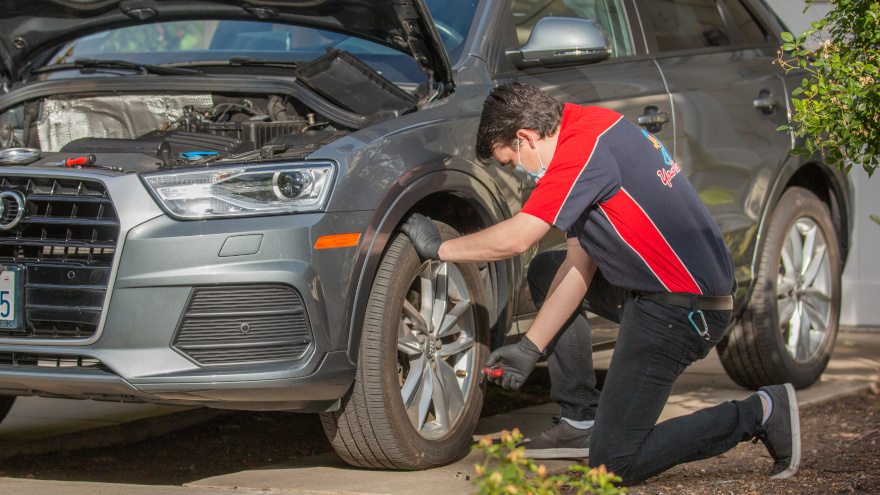
During the past year, RideKleen has extended its coast-to-coast footprint, now providing 24/7 mobile full-service fleet care across the U.S., including top mobility markets such as Atlanta, Los Angeles, Philadelphia, Portland, Ore., San Francisco, New York and surrounding locations.
Operating within the Pivet partner network, RideKleen looks to serve a variety of shared fleet providers, including Getaround, GIG Car Share, Manheim, Enterprise Car Share and Zipcar.
Catering to today’s on-demand culture, chief executive officer Pratik Patel explained that RideKleen can deliver a reliable, safe and clean car care experience to every fleet owner or driver no matter the frequency needed (daily, weekly, monthly) to reduce time out of service and maximize vehicle utilization.
“RideKleen is a mobile car care company, but we’re so much more,” Patel said in a news release.
“We’re an innovation company — disrupting the industry and exciting our customers,” he continued. “We’re a technology company — building new products and services that solve challenging problems for our partners. We’re a conservation company — committed to leaving the world around us better than we found it.”
Aligning with Cox Automotive’s water conversation efforts through Cox Conserves, RideKleen believes it is leading the sustainable car wash movement.
RideKleen leverages steam-cleaning technology that uses less than one gallon of water to wash a vehicle compared to a commercial car wash that uses approximately 30 to 100 gallons per vehicle. The company computed this process has contributed to an estimated 14 million gallons of water conserved since 2013, based on more than 475,000 vehicle washes conducted.
RideKleen also stressed that its commitment to the environment is matched by its dedication to its customer relationships.
To meet partners where their needs are, RideKleen highlighted that it has grown its team of full-time car care and fleet logistics specialists focused on providing a simple, scalable and sustainable way to maintain their vehicle fleets and help optimize utilization.
Using real-time data and analytics, RideKleen’s web portal and innovative mobile technology can deliver efficiencies in scheduling and management for cleaning, inspection and vehicle maintenance for increased transparency with both partners and consumers.
To learn more about RideKleen, visit www.ridekleen.com.
Before those used Ford commercial vehicles land in your inventory, they might be tracked closely thanks to the Blue Oval using technology from Spireon.
On Wednesday, Spireon launched FleetLocate for Ford, which offers GPS tracking for fleets operating supported Ford vehicle models. Leveraging the Ford open-platform Transportation Mobility Cloud (TMC), FleetLocate for Ford can enable mobile asset management and driver behavior monitoring, as well as delivering actionable insights to inform business decision making, without the need for aftermarket hardware.
The companies pointed out the launch coincides with the introduction of an enhanced user interface and new advanced diagnostics integration within the fleet solution’s maintenance module.
“Thanks to our partnership with Spireon, Ford fleets can now avoid costly aftermarket device installation while reaping the benefits of a comprehensive fleet management program,” said Michelle Moody, director of Ford Commercial Solutions.
“It is because of fleet management pioneers like Spireon that we are able to support integration into TMC and stay at the forefront of product innovation for our mutual customers,” Moody continued.
The companies explained the refreshed user interface brings a modernized look to an application that fleets “know and love.” Building upon an intuitive interface, Ford and Spireon believe the learning curve is shortened and ensures that fleet operators spend their time managing fleets and receive the insights they need to increase performance and improve fleet safety.
The companies went on to acknowledge vehicle maintenance remains a top concern for fleets. Integration of advanced engine diagnostics into the maintenance module can allow fleet managers to easily decipher and address trouble codes, ensuring swift and accurate intervention.
Spireon chief product and strategy officer Jason Penkethman insisted this ability for managers to act quickly and effectively reduces downtime and extends the life of mobile assets, ensuring that the fleet’s bottom line is protected.
“Our FleetLocate platform uniquely provides an all-encompassing management tool within one easy-to-use interface and our ability to offer richer vehicle data through our partnership with Ford just further simplifies operations for our customers,” Penkethman said.
“Our goal at Spireon is to continuously provide innovative solutions that help our customers improve their bottom lines and drive profits, and this new product allows us to deliver on this promise,” he went on to say.
FleetLocate, which earned the Silver award for Enterprise Service of the Year in the 2017 Best in Biz Awards, can provide real-time visibility to the location, activity and status of remote vehicles and drivers to improve fleet utilization, driver safety and vehicle health.
For more information about FleetLocate, visit this website. For more information about Ford Commercial Solutions, visit this website.
For a while now, there has been Software-as-a-Service (SaaS). And more recently, there has been the development of Mobility-as-a-Service (MaaS).
Now you can add another item to the “as-a-service list;” this time in the fleet space.
On Wednesday, Spiffy, an on-demand car care, technology and services company, introduced Fleet Management-as-a-Service (FMaaS) to help fleet managers maintain their units across the entire vehicle lifecycle.
Propelled by a fund raising of more than $10 million, Spiffy indicated that it is expanding into six new markets with FMaaS and also rolling out FMaaS in existing Spiffy markets of Atlanta, Charlotte, Dallas, Los Angeles and Raleigh, N.C.
Those new FMaaS markets include Denver, New York, Phoenix, Seattle, Tampa, Fla., and Washington, D.C., with more to come in 2019.
“Fleet Management-as-a-Service broadens Spiffy’s goal of zero-friction car care to include national fleets,” Spiffy chief executive officer Scot Wingo said in a news release.
“Offering full-lifecycle maintenance management gives fleet managers a one-vendor solution and, with features that are EV/AV and connected-car friendly, we have designed it to be future-proof,” Wingo continued.
Wingo explained that FMaaS can allow rental car fleets, automotive auctions, midsize fleets and car-sharing services to manage their vehicle in-fleeting, preventative maintenance and de-fleeting with the seamless marriage of digital-enabled fleet services. Fleet managers can utilize a fleet-friendly Spiffy app to schedule, track, rate and pay for vehicle services including pre-delivery inspections, reconditioning (wash/detail), preventative maintenance (oil change, tire rotation) and de-fleeting (de-fueling, label removal), along with a comprehensive set of other services.
Auto Remarketing connected with Wingo on Wednesday inquiring about what happens if a Spiffy technician spots a vehicle issue that might need more servicing. Perhaps the vehicle has something mechanically wrong or could use some moderate body work.
Because “we are a tech/digital heavy company,” Wingo replied with the process for those instances since, “for every fleet location we visit, we know the decision makers at that location.”
If the technician is working and sees a service need, Wingo noted they enter it into their technician app. The technician app sends a service upgrade approval request to the decision makers, including pictures, details and pricing. Wingo noted that the fleet service managers then can either approve or disapprove the suggested upgrade.
Wingo emphasized what he believes are the “great” components about this process being digital.
“It’s fast and easy and very much like a consumer experience. Nobody said b2b experiences have to stink compared to consumer experiences,” Wingo said.
“It creates a digital paper trail,” he continued. “If someone says, ‘Hey, why did we pay X to get service Y?’ We can say, ‘Manager X authorized this at 4 p.m. on Thursday, June 23, and here’s the pictures of before and after.’”
Spiffy can offer this capability in part because of the financial resources now available.
According to the news release, Spiffy’s latest round of financing was led by new investor Tribeca Venture Partners and included investments from new investors Zunis Investments and Trog Hawley Capital. Additionally, existing investors participated including Bull City Venture Partners and IDEA Fund Partners.
Chip Meakem, co-founder and managing partner at Tribeca said, “We’re excited to invest in Spiffy as they continue to grow. The comprehensive Fleet Management-as-a-Service offering positions Spiffy to ride the wave of change crashing through the automotive industry.
“From rental and commercial fleets to partnerships with innovative ride-sharing companies, like Lyft, and the recent Ford connected car partnership, Spiffy is riding several megatrends,” Meakem continued.
Wingo added in the news release, “Now with over 100 Spiffy vans in 11 cities and more than 150 W-2 employed trained technicians, we’re eager to execute on our next phase of growth.”
Auto Remarketing also asked Wingo why these particular 11 markets are ripe for this kind of service and how the company might broaden its footprint.
“Our goal is to be in 50 large U.S. markets that are the intersection of large population (more than 1 million), large airports (fleet orientation), density of convenience-oriented consumers. Even though starting with fleet, we’ll ultimately expand to consumer offerings at work (via office parks) and residential services,” Wingo said.
He went on to say, “We know those 50 cities, so the way we chose the 11, is a fleet partner (usually a rental car company with large airport presence) has said, ‘If Spiffy launches in City X, we'll make you our vendor for wash/detail/tires/oil change/etc.’ So it’s a collaborative effort with our fleet customers.’”
With funding available and planned path for growth, Wingo is quite upbeat about what he might be able to say about this part of Spiffy’s operation a year from now.
“In a year, I’d love to be on the phone with you telling you how we’re now at 30 locations and we’re adding 5-10 more services for fleets to our FMaaS offering and software,” Wingo told Auto Remarketing.
To learn more about Spiffy’s FMaaS offering, visit www.getspiffy.com/fleet.






![[SAP]_Ridekleen_CEI_Summit-1862_truck](https://www.autoremarketing.com/wp-content/uploads/2019/10/SAP_Ridekleen_CEI_Summit-1862_truck.jpg)