Perhaps the day is coming soon when dealership service drive personnel or rental fleet staffs already will have a host of information about a vehicle’s tire condition and other data points before the customer even gets in line.
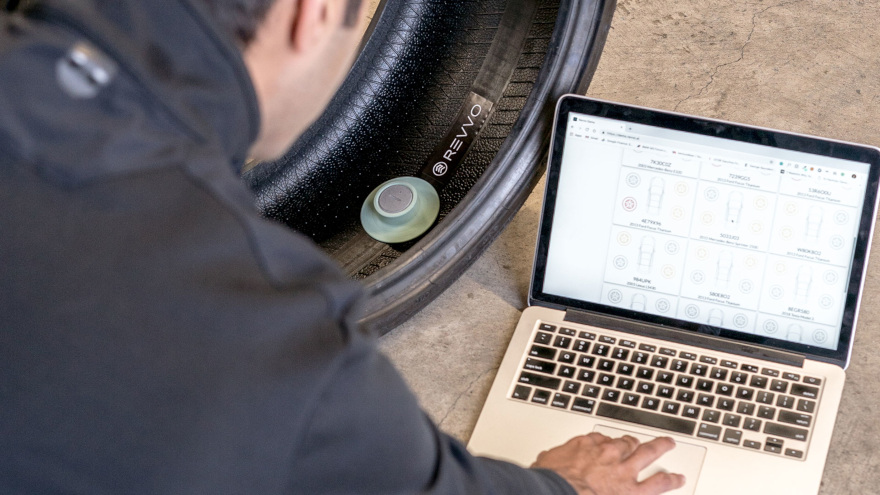
Revvo, a Silicon Valley-based startup formerly known as IntelliTire that offers an internet of things (IoT) “smart” sensor for vehicle tires, announced on Tuesday that it has raised $4 million in Series A funding.
Norwest Venture Partners led the round with participation from Vulcan Capital and AngelList, according to a news release.
Revvo said it will use the financing to continue to build the product and expand its technical and business development teams.
Revvo highlighted that the firm proudly joins the ecosystem of tech startups fueling the shift in the mobility and transportation sectors. Although autonomous vehicle and self-driving technology have made enormous advances, Revvo contends the tire has remained virtually unchanged, despite being one of the most critical components of a vehicle’s performance, safety and reliability.
The firm sees the market offering a massive opportunity with more than $225 billion spent on 2.2 billion tires in the last year alone. Revvo’s initial focus will be on the fleet sector, a segment consuming tires at a disproportionately high rate with clear pain points around tire usage.
Revvo explained that it has built what the company said is a first-of-its-kind, sensor-enabled artificial intelligence software platform to monitor tires while a vehicle is on the road. The technology includes proprietary sensors that are embedded inside the tire, which can generate a real-time feed of a tire’s condition and performance. The sensors capture thousands of data points per second from the interior of the tire which is sent to the cloud via an app on the driver’s phone.
Artificial intelligence and machine learning models are applied to the aggregated data set to better predict tire tread wear. This technology can helps the driver and fleet managers better understand the overall health of the tires on their vehicles which leads to increased vehicle uptimes, optimized efficiency, and improved safety.
“Until now, tires have not benefited from the mobility revolution. Through machine learning and AI, tires can provide an invaluable data set of road conditions, driver behavior, and feedback for vehicle performance,” Revvo chief executive officer Sunjay Dodani said.
“We’re extremely excited to have the support of the Norwest team, which will help us work toward our goal of enabling smart and connected tires,” Dodani continued. “Our team at Revvo is passionate about applying a data science-centric approach to bring intelligence to the only part of the vehicle that touches the ground.”
Parker Barrile, who is a partner at Norwest Venture Partners, added, “We live in a world of increasingly connected and autonomous vehicles, but tires haven’t changed in decades.
“We’re excited to work with the team at Revvo to make tires as smart as the vehicles that depend on them and to tap into a massive market that is shifting toward fleets and autonomous vehicles,” Barrile went on to say.
For more information, visit www.revvo.ai.
Zubie, a connected-car platform and telematics data insights provider, says its end-to-end connected-car technology has delivered real-time information about vehicles and drivers since 2012 to help businesses manage and optimize their fleets.
Seeking to fuel growth in the fleet sector and to introduce new verticals with its connected-car products, the company noted on Thursday that it has closed a round of funding. Existing investors BP and Melody Capital are providing the capital infusion.
The company also announced that telecommunications veterans Paget Alves and Dennis Huber will join its board of directors. Alves and Huber have a combined 50-plus years of experience in telecommunications, finance, operations, marketing, product development, and IT.
Zubie did not disclose the amount of the funding in the news release.
“This investment in Zubie underscores the market need for an end-to-end connected car solution," Ron LeMay, chairman of the board for Zubie, said in a news release. “There are a lot of companies focused on data collection — and there’s a lot of data out there. The marketplace needs more companies that help organize the data and extract business insight, and that’s where Zubie fills a void. We’re thrilled with the perspectives Paget and Dennis will bring to the board.”
“With a more mature hardware market, the opportunity for differentiation is in delivering usable insights in a simple, reliable package,” Gary Tucker, chief executive officer of Zubie, said in a news release. “For Zubie, 2019 will be about improved usability of our existing insights and solutions in the fleet market, while addressing a need for real-time insight for rental businesses.”
Fewer personal cars on the road. Less congestion. Cleaner air and more land for people, housing and open space.
Those are just some of the social and environmental benefits that car sharing can provide for its members and the cities in which they live. That assertion is according to car sharing network Zipcar’s 2018 Impact Report. The report is based on findings from 18 years of Zipcar member data as well as from third parties.
Zipcar says the findings, along with third-party research, offer evidence that car sharing provides those social and environmental benefits at a time when new mobility offerings are on the rise.
Additional findings of the study include its claims that car sharing frees up space for other pressing urban issues; car sharing sheds personal vehicles and helps the environment; and that car sharing delivers distinct social benefits.
Citing a 2010 article titled, "Impact of Carsharing on Household Vehicle Holdings," the study claims that Zipcar’s 12,000 vehicle fleet means an estimated 156,000 fewer cars on city streets. It also claims that 54 percent of Zipcar users report getting rid of a personal vehicle after joining Zipcar.
The study sources Zipcar’s 2018 National Transportation Survey in adding that 65 percent of Zipcar users report not owning a car today.
Zipcar uses that same survey in stating that its users rely on walking, biking and public transit for short trips and use car sharing services for longer, purpose-driven or recreational trips to out-of-town locations.
Also using information from the 2018 National Transportation Survey, Zipcar notes that 87 percent of Zipcar users spend less money per month on transportation when compared to the U.S. monthly average.
Zipcar’s 2018 Impact Report also addresses collaborative public/private partnerships, and the increasing mobility needs of non-profits. Zipcar’s Grant Program aims to address those two items in its mission to enable simple, equitable, and responsible urban living.
The company says that in 2018, it awarded more than $100,000 in driving credit to 36 local non-profit organizations in various cities where it operates. That allows these organizations to improve their work through access to Zipcar.
Zipcar’s 2018 Impact Report is available at www.zipcar.com/impact.
Along with an enhanced partnership with General Motors, Enterprise Holdings this week announced the promotion of Christine Taylor to president and chief operating officer and the promotion of Carolyn Kindle Betz to president of the Enterprise Holdings Foundation.
The move makes both senior executives among the highest-ranking women in the car rental, automotive and travel industries, while marking another milestone for the rising third generation of family ownership of the company, which owns the Enterprise Rent-A-Car, National Car Rental and Alamo Rent A Car brands.
“It’s fitting that these two talented women — granddaughters of our company’s founder, Jack Taylor — are moving up together as members of our senior leadership team,” said the company’s chief executive officer Pam Nicholson.
“Under Chrissy’s guidance, Enterprise has continued year after year to deliver record-breaking growth and business performance, while staying true to the values of customer service and workplace excellence that Jack instilled in our company,” Nicholson continued.
“Concurrently, Carolyn has continued to play a key role in developing our philanthropic strategies and ensuring that we are an engaged and responsible corporate citizen in the communities where we do business,” Nicholson went on to say.
Taylor previously was the company’s executive vice president and chief operating officer, a position she assumed in 2016. In her new role, Taylor will direct the company’s global business operations and oversee its product development and technology innovation efforts, with a special emphasis on ensuring that any new technology the company deploys supports its commitment to deliver a superior customer experience.
Taylor will continue to serve as a member of the corporate board of Enterprise Holdings and will report to Nicholson.
Kindle Betz previously was senior vice president and executive director of the Enterprise Holdings Foundation, which contributed more than $50 million in charitable gifts to a wide variety of nonprofit causes in the company’s most recent fiscal year. As president, she will develop and oversee execution of the foundation’s philanthropic strategies.
In addition, Kindle Betz plays an active role in several community organizations at Enterprise’s world headquarters in St. Louis. Most recently, she assumed leadership of the ownership group that seeks to bring an MLS soccer team to St. Louis – the first such group in MLS history to be majority-owned by women.
Kindle Betz also will continue to serve on the company’s corporate board. The current President, Jo Ann Taylor Kindle, will now assume the role of chairwoman.
“These are both enthusiastic, energetic leaders,” Nicholson said. “When you look at Chrissy’s competitive drive and passion for innovation and Carolyn’s strong commitment to help our company make a difference in the world, you see the brand of leadership that will take Enterprise to the next level.
“And you see, as well, living proof that strong family ownership is a powerful competitive edge. Enterprise’s future is in very good hands,” Nicholson went on to say.
Their grandfather founded the company in 1957 with only seven vehicles, later naming it after the World War II aircraft carrier he served on, the USS Enterprise. Today, with annual revenues of $24.1 billion and 100,000 employees, Enterprise Holdings and its affiliates own 2 million cars and trucks and operates — through an international network of regional subsidiaries and independent franchises — more than 10,000 fully staffed neighborhood and airport locations in more than 90 countries throughout the world.
Enterprise partners with GM to add 100,000 connected cars in 2019
In other company news, Enterprise Holdings announced a partnership with General Motors to significantly increase the number of connected vehicles in its fleet by the end of 2019.
Enterprise began piloting its connectivity platform with GM this year, with a goal of adding more than 100,000 connected Chevrolet, Buick, GMC and Cadillac vehicles to the fleet during the next 12 months.
The company highlighted this initiative will streamline and enhance the experience for customers of the Enterprise Rent-A-Car, National Car Rental and Alamo Rent A Car brands.
“This is our first step toward a fully connected fleet of vehicles,” Taylor said. “We’ve always understood the value of an integrated network, which has made this an easy decision. We’ll continue to adopt technology solutions that make renting cars easier and seamless for our customers.”
The company indicated connected vehicles will soon expedite the renting and returning of vehicles for customers at neighborhood and airport Enterprise, National and Alamo locations. For example, they can automate such tasks as checking fuel levels, vehicle condition and odometer readings. Onboard telemetry can allow geofenced rental locations to automatically receive these readings when customers return their cars, making the return of the vehicle frictionless.
“Connected vehicles provide customers with a simple, fast rental and return experience,” Taylor said. “The potential for the products and services we’ll be able to offer our customers when all of our vehicles are connected is limitless.
“As we add these cars to our fleet, we look forward to introducing customers to new technologies and features that not only enhance the driving experience, but also the entire transportation ecosystem,” Taylor added.
Beyond the benefits to future rental experiences, car rental customers can take advantage of the many features and services available via the embedded connectivity in GM’s connected vehicles. The vehicles will come with the latest technology for personalized driving experiences, including Apple CarPlay, Android Auto and OnStar. Such features as emergency services, crisis assistance, automatic crash response, and remote lock/unlock will also be included to add an additional level of convenience and safety.
“Together, we’re offering Enterprise customers the latest benefits of our connected fleet technology from renting the vehicle to enjoying it on the road and, finally, returning the vehicle,” said Ed Peper, U.S. vice president of GM Fleet. “This represents the latest evolution in our more than 60-year partnership with Enterprise.”
When Enterprise completes the transition to connected vehicles, the company said it will own the largest fleet of connected vehicles in the world.
Hertz is looking to make a safe bet on autonomous vehicles in Sin City.
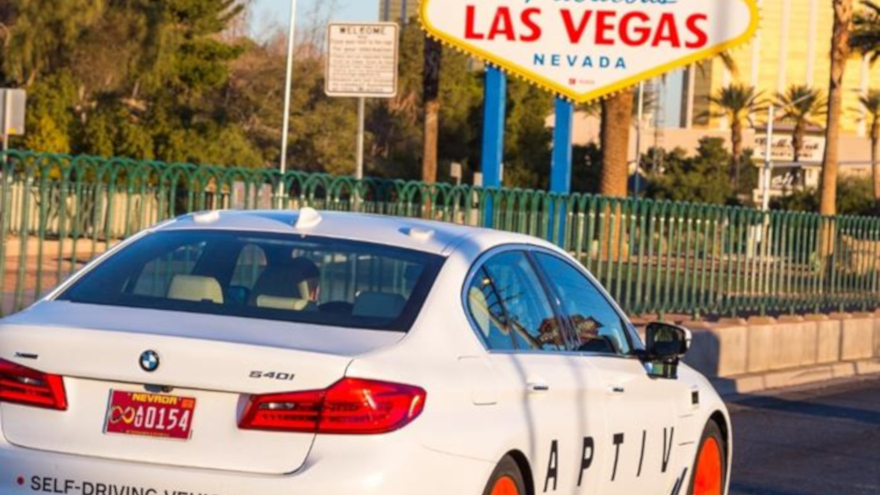
Coming on the heels of the rental car company hiring a new chief information officer, Hertz and its fleet management subsidiary, Donlen, on Tuesday announced a new strategic partnership with Aptiv, a global technology company enabling the future of mobility.
Hertz said it will assist with the operations and management of Aptiv's Las Vegas autonomous vehicles (AVs). The company highlighted Aptiv’s technology powers what are deemed to be safe and reliable AVs in cities worldwide with Las Vegas serving as the initial North American commercial deployment market.
The two companies will execute a phased approach to develop standard operating procedures for mobility-related AV fleets. The initial program, scheduled to launch this fall, will further enhance and guide the implementation of similar programs in future markets.
“Our partnership with Hertz will allow us to operate and maintain autonomous fleets at scale — a critical element of the offering that our on-demand mobility customers will require,” said Glen De Vos, Aptiv’s chief technology officer and president of its mobility and services group.
“This relationship is an important step in the broader journey for Aptiv, within the self-driving technology space,” De Vos continued.
Michael Fisher, senior vice president and chief digitization officer of Hertz, emphasized that the company is committed to emerging mobility and actively supporting fleet management partnerships.
“Hertz continues to innovate and execute winning strategies in the evolving mobility landscape. We’re pleased to announce this partnership with Aptiv, a leader in the development of autonomous driving technology,” Fisher continued.
“This allows us to build on our expanding platform for managing AVs of the future while we leverage our expansive expertise and network managing our existing car rental and commercial fleets of more than 1 million vehicles,” he went on to say.
Toyota is saying aloha in Hawaii in a new way.
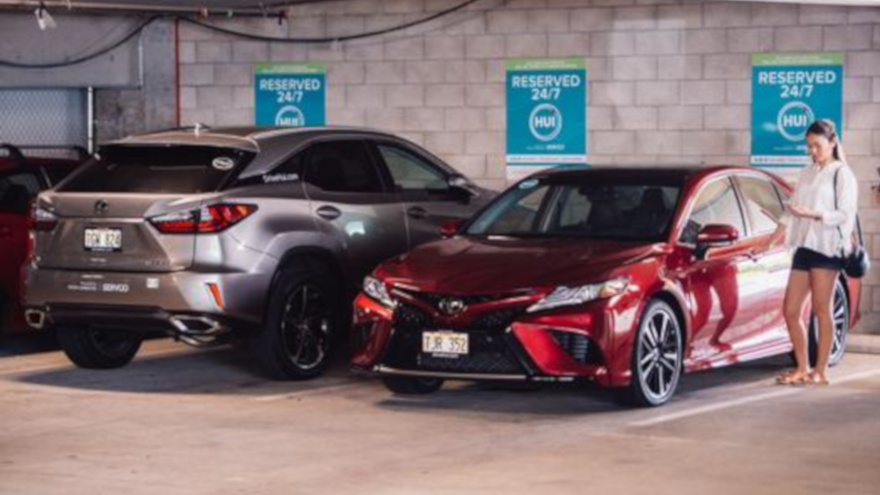
Whether it’s jaunt to the beach, a quick errand or the drive to work, the automaker highlighted these activities just became more manageable for residents of Honolulu and visitors alike with the recent launch of a creative new mobility solution called Hui – a round-trip, station-based car share service.
Operated by Servco Pacific, Toyota’s distributor in Hawaii, the Hui service utilizes Toyota’s proprietary global mobility service platform (MSPF) and a consumer facing app developed by Toyota Connected North America (TCNA), the global technology strategy business unit for Toyota.
A total of 70 Toyota and Lexus vehicles are available for reservation through the Hui mobile app (for iOS and Android devices) by the hour or day at 25 easily accessible locations throughout Honolulu. The vehicles initially in the program include the Toyota Prius, Prius Prime and Camry XSE, as well as the Lexus RX 350 and RX F Sport vehicles. Hui vehicles are parked in marked, reserved stalls for easy pick-up and drop-off.
The app supports a range of fleet management tools, as well as driver identification, authentication and payment management. In addition, Hui vehicles are equipped with Toyota’s Smart Key Box, which generates a digital key that allows users to lock and unlock, as well as start vehicles via their smartphone.
“We’re really excited about Hui because it’s a game changing way to offer car sharing,” said Zack Hicks, chief executive officer and president of TCNA, and chief digital officer of Toyota Motor North America.
“The program is simple to use and more convenient than a traditional car rental service — plus typical add-ons like gas and insurance are included in the reservation cost,” Hicks continued. “And thanks to Servco’s strong relationships with consumers and extensive knowledge of this market, Hui will be the most accessible car share service in Honolulu by far.”
TCNA and Servco developed the service together as one of the first public applications of MSPF, the core ecosystem for leveraging the potential of connected vehicle systems to support the development of new mobility businesses — such as car-sharing, ride-sharing and remote delivery.
The platform can give fleet operators the capability to launch their own car share programs, capitalizing on the strength of their local expertise, while supporting leading-edge mobility use cases as they arise.
“Hui is the most innovative car share service to hit the Hawaii market and marks a significant milestone for both Servco and Toyota,” said Mark Fukunaga, chief executive officer of Servco. “Hui provides a new option for Honolulu residents and visitors looking for vehicle access while complementing other existing mobility services such as bike share, ride share and public transportation, and we are excited for consumers to utilize the technology.”
For more information on pricing, station locations and terms of service, visit www.drivehui.com.
In several European markets where FCA does not operate its own captive arm, LeasePlan will now offer operational lease solutions to FCA customers.
The vehicle leasing and fleet management provider announced Monday that it has agreed to be a new FCA operational lease partner that will concentrate on the growing small and medium enterprise (SME) segment of car buyers.
FCA SME customers in Austria, Czech Republic, Denmark, Finland, Greece, Hungary, Norway, Poland, Portugal, Slovakia, Sweden and Switzerland can now take advantage of full operational lease products that are available on a preferred partner basis from LeasePlan.
LeasePlan said it defines SME customers as those with up to 25 vehicles in their fleet.
“SME is LeasePlan's fastest-growing segment and a crucial element in our strategy to lead the European Car-as-a-Service market,” LeasePlan senior vice president commercial Berno Kleinherenbrink said in a news release. “I'm therefore delighted to announce our new partnership with FCA, which gives us an additional route to serve the important SME segment.
“These customers want flexible, hassle-free and fast solutions — and that's exactly what we provide,” Kleinherenbrink continued.
At year-end last year, SME vehicles made up about 17 percent of LeasePlan's serviced fleet, according to the company.
In contrast to traditional white label agreements, LeasePlan explained that its new partnership with FCA is based on a referral model where the automaker will provide vehicles with an operational lease managed fully by LeasePlan.
The partnership aims to deliver customers flexible, cost-effective solutions in a short amount of time, according to LeasePlan.
“This is the first partnership of its kind for LeasePlan with a major European OEM,” the company said.
With pre-configured FCA vehicles available, LeasePlan said customers can receive the vehicles they select within two weeks.
Additionally, LeasePlan said that it will extend both training and certification to FCA dealers on its SME products and service portfolio.
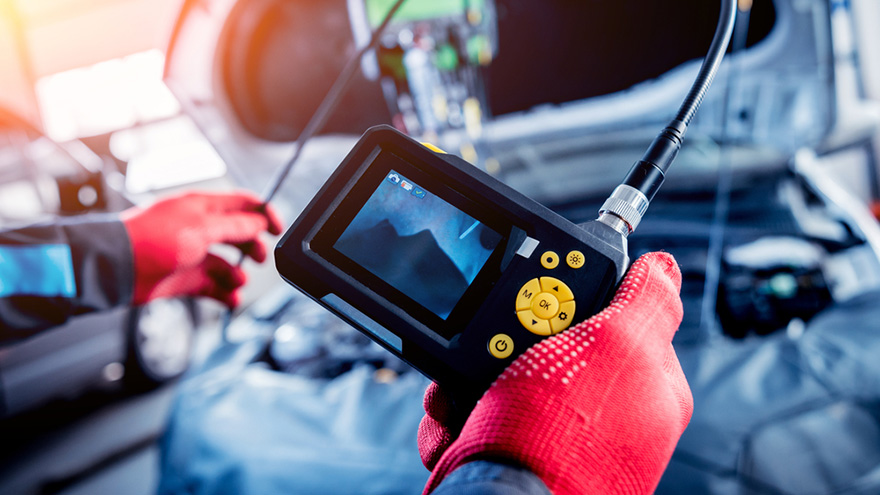
Donlen recently rolled out a solution to help fleet managers navigate through what can be one of the most challenging part of the jobs — watching for vehicle recalls.
Donlen released its latest recall management offering — Recall inSIGHT — a solution that can gives fleet professionals full visibility to their vehicle fleet’s open recalls, so they can take immediate action by working with their drivers to efficiently manage and address OEM and NHTSA recalls.
Donlen’s Recall inSIGHT can provides a comprehensive platform to identify open and/or closed recalls that can be sorted by campaigns as well as individual vehicles affected by recalls.
Using this platform, Donlen customers can filter recall campaigns by severity ratings and campaign status to prioritize the highest risk recalls and take action as soon as OEMs announce that they are ready to perform recall repairs.
“Recall InSIGHT comes with industry-leading features and benefits that are not offered in the fleet management industry today,” said Oliver Zerhusen, Donlen vice president of maintenance/accident products and supplier management.
“By screening more than 50 OEM and NHTSA recall databases on a daily basis, we provide comprehensive recall information for our customer’s entire fleet,” Zerhusen said.
Donlen customers will be able to access recall information through Donlen’s FleetWeb Intelligence Visualization Suite where they can view the progress of recall completion across their entire fleet by each open recall campaign. The company emphasized this capability can eliminate the need to check multiple OEM/NHTSA websites for recall campaign progress and individual vehicle recall repair completion.
Dumping sedans into fleet sales is certainly a path-of-least-resistance option leveraged by automakers in the past, but experienced used-car market observers understand the severe damage that strategy can do.
However, in light of technology advances and consumer preferences — not only in the United States but also globally — pulling the fleet lever doesn’t quite have the keep-the-metal moving impact that automakers experienced, especially when it comes to those sedans.
Cox Automotive senior economist Charlie Chesbrough and Autotrader executive analyst Michelle Krebs explained why during a conference call earlier this month.
“Consumers are clearly indicating that they love crossovers, and they can’t get enough of them,” Chesbrough said.
“We don’t see an end to this shift,” said Krebs, who later added, “There has to be a lot of contemplation going on in product planning meetings about how many car models and how much car production capacity each automaker has versus their utility lines and those capacities. I’m sure those discussions are going on.”
Perhaps those discussions are happening particularly within the meeting spaces in Michigan where domestic automakers have a noticeable presence in fleet sales. Here’s a quick rundown of what the Big 3 reported in the fleet department for January:
— Ford: Fleet sales of 45,956 vehicles were down 12.0 percent due primarily to a planned change in delivery timing of daily rental sales.
— General Motors: The automaker indicated 23.8 percent of January sales went into the fleet segment, representing a 2.9-percent lift year-over-year.
— Fiat-Chrysler: The OEM reported fleet activity accounted for 16 percent of total January sales.
The reported metric from Chrysler struck Chesbrough, who said, “That’s a fairly healthy range to be in, if you had to pick a number for fleet.
“Early indications are that there may be some agreements between the OEMs on who they’re supplying. Whether this trend carries through the rest of the year, we don’t know. Fleet was a big story last year. Cutting back in fleet by a couple hundred thousand units basically took us back from being close to another record sales level to seeing sales come in a little bit below,” he continued.
“So if fleet is weak again, it does suggest the market is going to have a hard time hitting even the high 16 million that most forecasters have right now,” Chesbrough went on to say.
And when even fleet sales are soft for a particular new model, Chesbrough explained that automakers now have limited options to retail those units beyond the United States, previously a viable choice.
“As much as we see here in the United States this shift away from cars and more toward this crossovers, this is a global phenomenon,” he said.
“This is happening in every major market around the world. Consumers love the crossover vehicles. They’re not that interested in cars anymore,” Chesbrough said.
“It makes the strategy for all OEMs to say, ‘How much do we invest in these cars?’ They have a lower margin. Before you could always say, ‘Well after we satisfy demand here we can ship it somewhere else and that will be the play.’ But because there is not a lot of demand for these vehicles anywhere, that’s not a viable option,” Chesbrough added.
Perhaps the advancements automakers have made to enrich profitable CUVs are coming at the cost of the value proposition sedan could offer.
“Another factor is we’ve made such advancements in fuel technology for these bigger vehicles. It was always the case that higher gas prices or the threat of higher gasoline prices always brought buyers back home to cars. They had a lower operating cost,” Chesbrough said.
“But now there’s not that big difference in fuel economy. There’s really no savings to be had but getting into the car version of a platform over the CUV version. I think it’s going to be a tough road to hoe for cars. I don’t see them coming back anytime soon even if gas prices spike, I see them coming back only a little bit,” he went on to say.
Krebs shared an example of a specific vehicle that’s often turned first in the fleet segment and then being impacted by the appeal of utilities. She added how the matter is compounded with an off-lease surge of popular models.
“With the (Chevrolet) Cruze, that’s a car that has significant fleet sales. When GM cuts back on fleet, it’s going to hit vehicles like the Cruze,” Krebs said.
“There’s are going to be a lot of off-lease utility vehicles coming back into the market so someone might be thinking about a brand new Cruze because that what’s they can afford — and I’m not picking on the Cruze — but they really want a sport utility. And now they’ve got more choices with more 3-year-old utilities in the market,” she went on to say.
Also during the call, Krebs interjected to a consumer-facing media participant about why avoiding fleet-heavy sales — in the United States or anywhere — is prudent no matter what vehicle segment is popular.
“Part of the strategy of some of the automakers to move away from fleet so they can keep their resale values up. It’s not a total negative across the board,” she said.
Runzheimer, a business vehicle technology and solutions provider, combed through more than a half dozen sources — including Manheim, Edmunds, IHS Markit and the National Automobile Dealers Association — to compile its Vehicle Capital Costs Trend Report.
Firm analysts cautioned fleet managers and other auxiliary service providers that new-vehicle prices in the U.S. have risen steadily since 2012 and potentially that trend could continue in 2018, citing their comprehensive data review suggesting that this will be the case.
Runzheimer suggested that the increase in vehicle costs is something businesses with fleet programs will need to consider when planning budgets for this year. The report mentioned three other crucial findings, including:
• The overall average price of a new vehicle will increase moderately over the next 12 months by 1 percent to 2 percent.
• As inventory in the used vehicle market steadily increases, residual values will decrease over the next 12 months by 2 percent to 3.5 percent.
• Depreciation is expected to increase 1 percent to 1.5 percent.
The entire Runzheimer report can be found here.