The National Auto Auction Association just wrapped up its annual convention last month in Dallas, but the trade group had more event news to share on Tuesday.
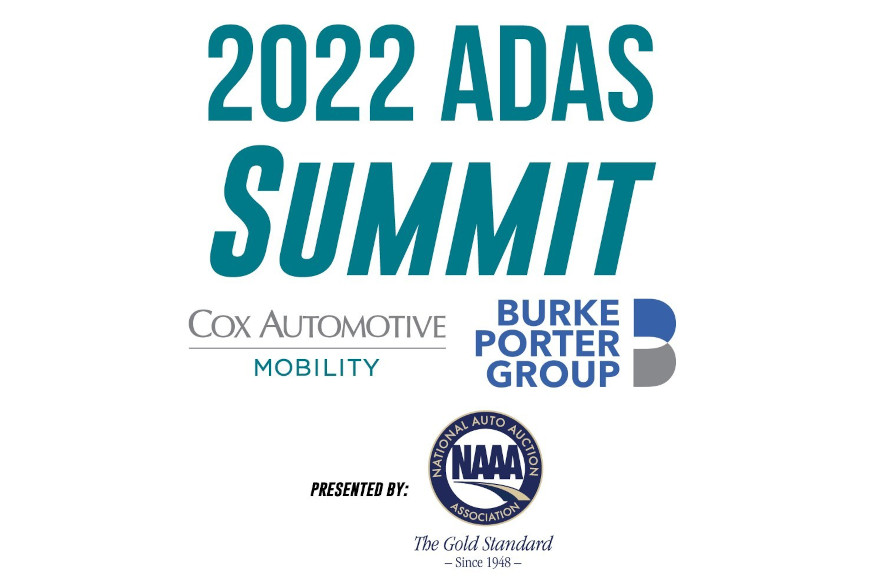
Along with Cox Automotive Mobility and the Burke Porter Group, NAAA said it will be hosting the inaugural ADAS Summit from 11:30 a.m. (ET) to 1 p.m. on Wednesday.
The digital event, which is free, will gather leaders from the auto aftermarket business to examine Advanced Driver Assistance Systems and their role in the industry.
The keynote speaker at Wednesday’s event is former NHTSA administrator Mark Rosekind, who is now the CEO of the California Mobility Center.
Auto industry analyst Glenn Mercer will then moderate a Q&A.
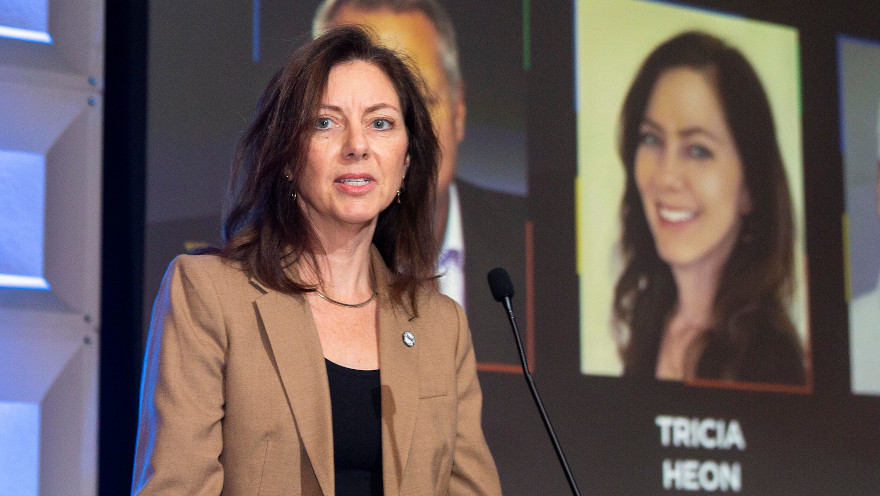
Other speakers include NAAA CEO Tricia Heon, Cox Automotive Inventory Solutions president Grace Huang, Burke Porter Group vice chairman David DeBoer and Cox Automotive senior manager of government affairs Hugo Carmona.
Registration for the event can be completed here.
Speaking of NAAA events, the association also announced dates for its 2023 Total Access event, which is its spring business meeting.
The event will be held Jan. 25-26 in Dallas. Registration begins soon, NAAA said.
The International Automotive Remarketers Alliance has named a new systems and communications manager. Hired for the position is Nikki Jones, who will manage IARA’s website and membership system and head up management for IARA’s integrated learning and event systems.
In a news release, IARA executive director Tony Long said: “Nikki took a brief hiatus from the industry, but it is great to have her back as part of the IARA family.
“Nikki is no stranger to this industry or to IARA,” Long said. “She is already IARA CAR Certified, and many of us know her from various conferences over the years.”
Kim Hunt, who held the role previously, is moving to a different position in the industry.
Long said: “Kim Hunt has been a great asset to the association, and although we hate to lose her, we wish her every success at her new post.”
IARA president Jeff Bescher added: “Kim did a great job for us, and we are sure that Nikki brings the skillset and industry knowledge that will allow her to pick up right where Kim left off. We’re excited to have her join our staff.
“We are working on some exciting additions to our website and online software technologies, and I’m sure Nikki is up to the task of helping us take IARA to the next level,” Bescher said.
Editor's note: This is Part II of a special preview, available only to CMG Premium subscribers, of Auto Remarketing's "2022 Used Car Kickoff" issue. This two-part piece focuses on the National Automobile Dealers Assocation, National Auto Auction Association, American International Automobile Dealers Association and International Automotive Remarketers Alliance. Part I can be found here.
The issue will also feature the National Automotive Finance Associaton. Receivables Management Association International, National Independent Auto Dealers Association and the American Financial Services Association.
When Mike Stanton took the job as NADA chief executive officer at the beginning of 2021, he noticed a “false narrative” about dealers: that they were uninterested in selling electric vehicles, a roadblock “in the way” of selling EVs.
“Anybody that knows a dealer and spent one minute with a dealer knows that they want to do two things: They want to sell stuff and they want to take care of customers,” Stanton said in an episode of the Auto Remarketing Podcast this fall. “So, none of this ever made any sense to us. And we did some research … but the gist is, the product hasn't been here; it's coming and the dealers are excited about the product. They're making the investments. We're talking about ($200,000 to $400,000 investments) at some stores to get ready for the electric vehicles.
“So, our dealers are all-in. And not only are they all-in, they are essential. They are absolutely essential, if we're going to hit these electric vehicle goals that have been stated by several OEMs. I think about, GM's Mary Barra say that GM wants to be at 100% EV by 2035,” he said. “And Biden, he says 50% by 2030. I mean, these are super aggressive targets. And the only way to get that done is through your dealer network.”
However, NADA is concerned about not having equal playing field when it comes to incentivizing electric sales, be it the EV OEMs or customers that qualify.
“NADA is for the broadest possible application of incentives when it comes to vehicles in the market, plain and simple. We don't want to be picking winners and losers. We certainly don't want the government (doing that),” Stanton said.
“And we need to make it simple, too. The consumers need to know what is out there — incentives have always been complicated in our industry. Consumers need to know what they qualify for, what the incentives are and they need to have the choice,” he said. “And i think that's our best path to attempting to reach some of these very aggressive goals.”
At the American International Automobile Dealers Association, chairman-elect John Connelly — an Acura dealer in Ohio — expressed concern about Build Back Better Act’s additional $4,500 tax credit on EVs built by union members. (While the bill’s status was to-be-determined at time of publishing, Connelly was interviewed in December).
“I have nothing against joining a union. That’s perfectly acceptable. Unions can be great. But why the government would try to pick winners and losers in this game makes no sense to me,” Connelly said. “If you run a business and if it's best to run it with union, great. If it's best to find another situation, that's great, too.”
But he finds it confounding that the government would “put their thumb on the scales like that” through incentives for union-made vehicles.
To reach legislators on such issues, it used to be that letter-writing was the way to go, said Connelly.
“But nowadays, it's not the letters, it's the videos. And if you can just do a quick, 30-second video saying, 'Hey, I'm John. I'm an Acura dealer in central Ohio. This is the way i feel,' it cuts across real quick … if a car dealer in your district sends you a note, you're going to listen,” he said.
“Car dealers employ so many people. They're the hub of so many cities and neighborhoods by sponsoring everything.”
AIADA set up a link where dealers could make videos to send directly to legislators regarding the tax incentive.
“And then we have people who work with us on Capitol Hill to lobby to stop this. And (we were) just sort of relying on the past 50 years of experience to get the word across, not only to the legislators, but to the car dealers. A lot of it was saying, 'Hey, this is real. This is something you've got to take seriously,’” he said.
“If you have an international nameplate, you'd be starting at a $4,500 disadvantage when you're trying to work up your lease on your new EV. That's not going to work. AIADA, just because of the past experience, was able just to jump right in and harness the power of over 9,500 different international nameplate stores to help fight this battle.”
Increased EV presence could also lead to greater regulation and an emphasis on compliance.
“I think NHTSA going to make a strong reemergence when it comes to the implementation of the electrical technologies and the OSHA standards and safety, and who knows what all. There's going to be so many things out there,” said Tony Long, executive director of the International Automotive Remarketers Alliance. “And a lot of the auctions look to the consignors for guidance on what's the proper way to, what's the standard for handling these cars for transporting (or) repair.
“I've noticed where there are some states that are protecting third-party repair rights (and) how we're going to work on all these cars. We've already got a shortage of manpower, as it is.”
Stanton added that the EV dynamic is “an amazing opportunity” for collaboration among dealers and manufacturers.
“We've always worked together; there's always been some friction though on one program or another. And look, i think some of that friction is very healthy. But this is an excellent time for us to band together and help run toward these goals,” he said.
“And we're going to support that from NADA's perspective through some education initiatives that we're excited to announce here in the coming weeks. We'll have a big announcement at the NADA Show and we are working with our sister trade association here, the Alliance for Auto Innovation, and we're talking with all the car companies about the need to work together to take care of the customer,” Stanton said.
“Because that's what's going to win in the marketplace. We've got to be in constant contact, constant dialogue and we have to be open and honest about what we can do together, again to take care of that customer.”
Other issues on the Hill & beyond
When asked what issues are most pressing to the auto auction industry when it comes to getting the attention of Capitol Hill, National Auto Auction Association CEO Tricia Heon said: “Certainly, all eyes are on EVs. And (we’re) looking at the infrastructure bill, the Build Back Better (plan). We're keeping an eye on that, keeping an eye on where funding is going to go and how we can continue to advocate for our members for those type of resources that are available.
“And then the chip shortage. We're very concerned about that and we're concerned about the future of protecting this industry so that we don't see such a shortage ever again,” she said.
NAAA is also closing watching the new United States-Mexico-Canada Agreement (USMCA), and how that trade agreement would impact automotive tariffs.
Tariffs are also important to AIADA, especially considering their dealers are selling vehicles from internationally based automakers.
Tariffs on parts or vehicles coming in from overseas “can be a huge disadvantage,” said Connelly. But it’s not just the international nameplates.
“Quite frankly, Ford and General Motors, they have a lot of business in Mexico and Canada. So, they're interested in the tariffs, too,” Connelly said.
Over at IARA, president Jeff Bescher called EVs a “huge topic” for the alliance as it “touches so many different areas,” he said.
“Data privacy is a second one, which also then runs into compliance, which we're creating a compliance certification that we are trying to get the consignors to buy off on, and the auctions are interested in it already,” Bescher said. “And then finally, all the technology. The rise of virtual selling and all those different companies that are coming in, as well as the traditional powers that have spent a lot of money in those particular virtual markets.”
Working together is paramount
Accomplishing the goals and tackle the challenges faced by these associations and the slices of the auto industry they represent will require continued collaboration, they say.
“All of these organizations are wise enough to say that we can't do anything effectively apart,” said IARA’s Long. “That we join hands and we find solve problems and deliver needed training and education and things like that.”
Added Paul Seger, board chairman at IARA: “There are similar focuses with NAAA or NIADA and the more we are able to kind of work and exchange notes and partner together, (the better). We collaborate from an information perspective and i think you're just getting a more unified, kind of, output to the industry, because these associations are aligned and talking together and doing things.”
The automotive business is “one ecosystem,” says NAAA’s Heon.
“And if you asked any of those organizations, they would completely agree. Working together's paramount. We are stronger together,” Heon said. “So, whether it’s advocating on Capitol Hill as an industry, or just sharing resources, listening to one another. One of the things that we did for the first time is have a joint committee meetings at IARA.
“And I will continue to open our doors at our association to continue to listen to their members' concerns and how we as an industry can address them together,” she said. “I think being connected as an industry is more important than ever. Especially entering this rapidly changing landscape.”
There has been a bit of “new” at the National Auto Auction Association in recent months. A new chief executive officer took office this summer, a new president this fall.
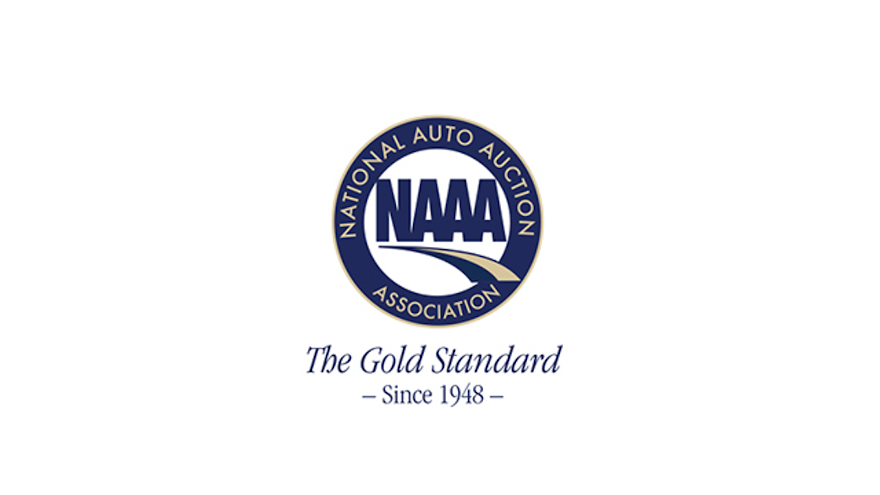
And on Monday, NAAA released a new logo and tagline.
The updated logo can be found in the above window, while the new tagline is “The Gold Standard.”
“This is the 74th year for the National Auto Auction Association. And for 74 years, we have been The Gold Standard of the auto auction industry,” NAAA CEO Tricia Heon said in an emailed message to association members.
“NAAA auctions represent integrity, honesty, and are entrusted by both car buyers and sellers. Our member auctions take pride in providing excellent customer service, adhering to a strict standard of ethics, and setting clear expectations for how to conduct business professionally,” Heon said.
“Our member auctions pursue and uphold excellence in all their operations and treat their employees, sellers, buyers, and auctioneers with dignity and respect.”
The association will also be launching a marketing campaign around the “Gold Standard” message, Heon said.