LotPop announced the launch of LotScore on Tuesday, an inventory scoring system which reports dealers’ top inventory and market indicators to help boost their used vehicle sales.
“Dealers using inventory management systems have access to so much data the information confuses decision-making. Instead, LotScore distills that data and, along with analyzing third-party party website data, presents managers with 23 essential and actionable inventory performance metrics,” said Jasen Rice, LotPop founder and chief executive officer.
LotScore is available as part of LotPop’s virtual inventory management service for physical and online inventory management. It is accessible to dealers using LotPop’s full services, such as professional inventory oversight, management of inventory, and online listings best practices.
The scoring system weekly grades a dealer’s inventory in four key areas and scores their growth regarding set goals. The service focuses on scoring inventory status, inventory marketing, inventory stocking and inventory ROI.
“LotScore represents more than a decade of research isolating key inventory performance metrics that actually point to inventory, pricing and market trends. This is the insight a GM, GSM or used car manager needs at their fingertips to isolate opportunities or trouble before things go off track,” Rice said.
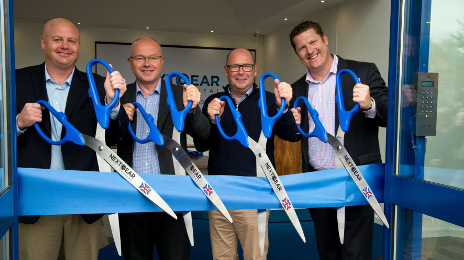
NextGear Capital UK has opened NextGear House, a new and significantly larger office located next to the company’s former headquarters in Chester. The move comes as a result of rapid business growth since the company opened its UK headquarters in 2014.
The UK business has a customer base of nearly 1,000 used vehicle dealers, which represents a sizable portion of the overall market. To date, NextGear Capital UK has funded more than $900 million worth of vehicles, helping to improve the balance sheets of used vehicle businesses around the country.
Since its UK launch in May 2014, the company has grown its in-house team to more than 65, with another 28 field-based team members. The new location, adjacent to the company’s former office, is more than double the size at 11,500 square feet.
David Mercer, NextGear Capital UK’s managing director, said: “With recent headlines about the UK used car market hitting record levels in the first half of the year, it is clear that our funding solution is helping dealers to capitalize on this strong consumer demand and is providing them with the means they need to help grow their business and stock more of those vehicles they know sell well.”
“The growth of the NextGear Capital UK business has been phenomenal, and part of that success has been driven by the speed at which we were able to start up in Chester and the opportunities that being based here have given us for our continued expansion,” said John Wick, chief strategy officer and general counsel for NextGear Capital US.
Chester is located south of Liverpool and on the border with Wales.
As part of a broader state-by-state roll-out plan, Denver-based DealersLink has announced its entry into Illinois.
The company, which is focused on helping dealers source and acquire used vehicles for their retail markets, says it is aggressively expanding and signing on new dealerships in the Prairie State with a focus on further expansion into Midwest markets.
The company’s model focuses on data-driven technology, inventory management apps, an understanding of car-industry market trends, and dealer-centric strategies that focus on increasing turn vehicle turn rates and grosses and optimizing inventory mix.
DealersLink features more than $1 billion in used inventory in stock and no wholesale transaction fees. Members use its marketplace daily to stock their lots with clean, reconditioned units, locate hard-to-find vehicles for their customers, sell inventory without incurring wholesale losses, arrange book-for-book trades, and manager their inventory with analytic tools.
Mark O’Neil, the newly minted chief operating officer of Cox Automotive, is staying put in Virginia, he tells Auto Remarketing during an on-site interview at the NADA Convention & Expo this past weekend.
He has no plans to move to Atlanta, where Cox Automotive and its parent (Cox Enterprises) are headquartered.
That’s no slight on the city; by all accounts, the company certainly plays an active role in the city’s economy and community.
It’s just a new way of thinking at a company, and within an automotive industry, that’s increasingly global.
While much of Cox Automotive’s leadership certainly still resides in Georgia’s capital, many of its top-line executives are situated throughout the country.
If you think about O’Neil’s direct reports, some are located in Atlanta, yes. But many others are based in places like Carmel, Ind.; Austin, Texas; and Burlington, Vt.
And just as those cities represent various corners and alcoves on the U.S. map, much of Cox Automotive’s business model resembles a cross-section of the retail and wholesale auto industry at large.
Auctions, classifieds listings, vehicle research/pricing guide, inventory management, websites, software, transportation, and so on.
These services, along with senior leadership located throughout the country, reflect Cox Automotive's rapid acquisition expansion in recent years that culminated in perhaps the crown jewel of all the purchases: Dealertrack Technologies, where O’Neil had been chief executive officer.
But it also reflects a changing mindset towards senior leadership and Atlanta: they're “connected, not relocated,” as O’Neil put it.
“I’ve had long discussions with the senior leadership of Cox Enterprises about the importance of building a global company; that if we are going to be a global company, we cannot be Atlanta-centric. Because the world does not revolve around Atlanta,” he said.
Cox Automotive is introducing a new approach, one that will be a “multi-year effort,” where the line of thinking is, “it’s important to be connected to Atlanta; it’s not necessarily important to live in Atlanta,” O’Neil said.
“It’s not necessarily important to think about your job being there, whether it’s my job or (chief product officer Rick Gibbs’) new job,” he said.
“You can be almost anywhere in today’s environment. But wherever you are, you must be connected to all of those who you work with,” O’Neil said. “And that can be a virtual connection; it doesn’t have to be physical.
“And the ideal is probably a hybrid, right? We’re going to do so many meetings a year in person; we’re going to do so many events in person; and we’re going to do so many virtually,” he said.
“And, oh by the way, in between, we’re all going to be at clients and be distributed around doing other things, where we’ll also connect,” O’Neil said. “So, connected, not relocated. It’s also much more efficient for the company.”
Editor's Note: This is the first in a series of stories about Cox Automotive's leadership stemming from Auto Remarketing's interviews with O'Neil and Cox Automotive president Sandy Schwartz at the NADA Convention.
Sixteen percent of AutoNation’s used-vehicle inventory was unable to be sold at the end of last year due to its own internal policy to not sell any vehicles with open safety recalls. Add that to the less than 2 percent of their new-vehicle inventory affected by the same policy, this represents roughly 6 percent of all of AutoNation’s inventory that it had grounded at the close of 2015 for this reason.
Bill Berman, AutoNation’s executive vice president and chief operating officer, says this policy, which AutoNation put in place last year, has certainly impacted the company’s used-vehicle sales – but will prove to be worth it.
“We continue to implement systems and processes in support of our efforts to ensure no vehicle with an open recall is retailed,” Berman said. “We continue to believe the long-term safety benefits for our customers far outweigh the short-term impact to our results and further support the AutoNation brand promise.”
Pointing out that the recall policy has virtually no impact on new-vehicle sales, AutoNation chairman, chief executive officer and president, Mike Jackson, believes the short-term discomfort the recall policy is having will iron out within the first half of 2016 and will eventually be a selling point for its customers.
“It’s a significant impact on preowned. Just to discuss the issue for a moment, I think the auto industry really had some credibility issues it has to face up to,” Jackson said. “Everything from some of these horrific recalls we’ve had with significant loss of life to credibility issues around the Volkswagen situation. So we sit there and say, you know, what can we do on our part to make it better? So on preowned it’s a significant issue. On any given day 15 percent of our inventory has open recalls.
“These are significant safety recalls and we feel the time has passed that it’s appropriate to take a vehicle in trade with a significant safety recall and turn around the next day and sell it to a consumer,” he continued. “We’re the only one that’s done it, we think it’s a brand attribute, we will work to make it a brand attribute in 2016, and we feel in the long term it will be a tremendous advantage to us. In the meantime, it’s very disruptive to our used-car business because we see no way to get it below 15 percent with new recalls arriving every day. So we have to increase inventory to get to the same point.”
Although Jackson does say that the disruption from these recalled vehicles being grounded impacted used sales, he thinks there is a bigger issue for the industry that “pulls the rug out from under” AutoNation’s used-car inventory: new-vehicle incentives.
“I think the biggest threat to used-car values are additional incentives from the manufacturers, or additional discounts from us,” Jackson said. “That’s the big-picture issue. So it’s very interesting, our fourth quarter performance, where manufacturers are increasing incentives by $250 a car, us increasing our discount by $20 a car, that had an immediate impact on our used-car values. And then we had to discount anything that was relatively new versus the new vehicle on the showroom floor. It’s a double impact. It impacted our new-vehicle gross margin. It impacted our used-vehicle gross margin. That’s the biggest issue and that’s my greatest concern about over-production.”
Jackson said he hopes incentives won’t go further into the double-digit percentages than they currently are, which he said is roughly 10 percent, because it disappoints his dealer base and his customers by depreciating their trade-in values.
To check out AutoNation’s fourth-quarter and full-year sales results for 2015, click here.
Direct distribution — a direct result of market needs and innovation or a threat to consumers and the country’s franchised dealers?
That's just what industry experts were debating during the Federal Trade Commission’s Auto Regulation Workshop held last week in Washington D.C., during a panel discussion, titled, “Auto Distribution: Current Issues & Future Trends."
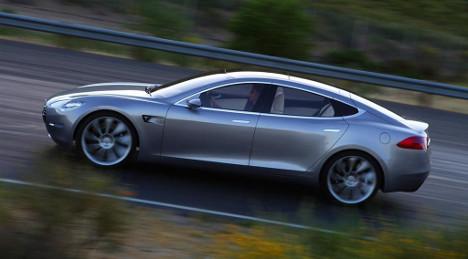
Since the arrival of Tesla Motors to the auto market, the automaker’s method of direct-to-consumer sales and the bypassing of the franchised dealer network has been a matter of controversy. And now, other alternative manufacturers, such as Elio Motors, which also plans to sell its highly fuel efficient low-price vehicles directly to the consumer through retail centers, are joining the discussion.
Many states restrict the ability of automakers to engage in direct-to-consumer sales, but young, innovation-driven companies such as Tesla are looking to overturn these regulations.
Tesla vs. traditional manufacturers
Todd Maron, general counsel at Tesla Motors, participated in the panel and focused on how Tesla differs. from other huge, franchised-dealer driven automakers.
First off, though, Maron encouraged listeners to think about the way new technology catches on and is distributed.
“It makes sense when new technology comes out, consumers don’t come to it, we bring the new technology to the consumer,” Maron said as fodder to support the direct distribution argument. “That’s a standard, well accepted thing … you have to make it convenient for them for them to accept it.”
Another point to keep in mind is the way Tesla is different from, say, General Motors. First, Tesla handles inventory differently than more manufacturers.
“We do not have inventory in the same way — the vehicles don’t get built until they are ordered,” said Moran. In other words, the traditional new-car showroom and lot full of cars is “unworkable,” said Moran, as the automaker builds its units to sell.
Moran went on to explain that Tesla customers also tend to have more questions regarding the new technology in the vehicles, so the fast-paced dealership sales process wouldn’t necessarily work.
And on top of that, a considerable amount of profits from traditional franchised dealers come from service and parts, as well as warranties and add-ons in the F&I office — in fact, more of a profit is made on those items than on a new sale alone. Moran argues Tesla can’t offer that to any franchised dealer, “because we make money off of one thing — new-car sales.”
Lastly, Moran pointed out, “Manufacturers fund dealer advertising. Tesla doesn’t advertise. What franchised dealer is going to accept not being able to advertise?”
Both Moran and fellow panelist, Joel Sheltrown, vice president of government affairs at Elio Motors, agreed consumers are being harmed by states that bar direct distribution by automakers.
Elio Motors, whose cars are still in development, has retail centers that will offer point-of-sale options; customers choose the options they desire; the order goes to one of seven marshaling centers, and the car is delivered to the retail center by 10 a.m. the next day.
A focus on intrabrand dealer competition
Following the notes made by two leaders of companies pushing direct distribution, Maryann Keller, managing partner of Maryann Keller & Associates, made an effort to prove the value of the franchised dealer system for consumers, manufacturers and dealers.
She started out by noting, “Making and selling cars are two different things.” She contends there are two erroneous assumptions that have become dogma in the direct distribution debate.
“First, that direct distribution lowers cost and those savings will be passed on to consumers,” she said. "And second, that there are no benefits to consumers among competition between same name-brand dealers,” she said.
This is a commonly broached topic in this discussion as much of it centers around what dsitribution model best protects consumers and passes down savings to these buyers.
According to Keller, there is no savings to be had for consumers through direct retail sales, noting, "what the proponents of the direct-to-retail model don’t realize is that same-brand franchised dealers compete heavily on price to the benefit of consumers.”
Paul Norman, partner at Boardman & Clark took a similar approach, bringing up the point that in the past, intrabrand competition between franchised dealers has cut down on profit margins, and in turn, retail prices for consumers.
“Manufacturers who choose to vertically integrate their distribution systems to include all retail outlets of their products eliminate intrabrand competition entirely from retailing those products,” he said.
He also outlined how franchised dealers independent from a manufacturer can provide a healthy consumer dynamic. In other words, Keller implied dealers see service and recall issues as opportunities to connect with and please customers, while automakers may just try to minimize the cost.
And when an automaker goes out of business or closes, the franchised dealers remain to help consumers, such as Suzuki, which announced in 2012 it would stop selling cars in the U.S.
“In any case, the decision is for the state to make, said Norman, “These laws maintain manufacturers must have an independent entity to interface with the customer to promote intrabrand competition among various sellers of your products.”
The right to adapt to market needs
Interestingly, one would assume a panelist representing manufacturer interest would come out swinging against direct distribution, but Steven McKelvey, partner at Nelson Mullins, brought up a very interesting point.
“The problem is not the current franchise system. The problem is the overreaching motor vehicle laws that prohibit the original manufacturers from having even the option to respond to consumer demands, market needs or competition in any other way other than the traditional channels,” McKelvey explained.
In other words, the consumer is king, and manufacturers should be able to adapt to market needs and wants, including direct-to-consumer sales.
McKelvey explained manufacturers and franchised dealers share important business relationships, but these relationships are very highly regulated, and in some instances, perhaps too much.
“Manufacturers that have that network have to be able to adapt over time when and to the extent consumer and market demand require. There should not be undue restrictions on the ability to meet those demands now or in the future,” he said.
McKelvey contends that even though franchised dealers have a place in the system, if manufacturers were free to respond to consumer demand for additional sales and service options it would serve not only the interest of the consumers, but also the brand and dealers.
“There are and will be times that market and consumer needs warrant at least having the option to engage in sales and service activity through channels outside of the existing network,” he concluded.
‘Is this really about protecting consumers?’
The initial panel wrapped up with an impassioned speech from University of Michigan Dan Crane, who questioned whether the arguments that cite consumer protection as a reason for barring direct distribution are valid.
Emerging technologies do sometimes need to be distributed in innovative ways, and Crane contends “current rules are motivated by dealer protection, not consumer protection."
To back up this assertion Crane pointed out no consumer oriented groups or economists are joining the fight against direct distribution. Instead, the fight is led by mostly manufacturers, dealers and dealer associations.
Crane stated that consumers might actually be better off when manufacturers are free to choose their own distribution method that works best for them in their particular market circumstance.
“The choice of distribution methods is itself is an important dimension of competition,” Crane said. “Economic literature shows that new market entrants with new technologies often need new distribution methods to get to market.
“Let’s let the market settle this — we will find out if direct distribution leads to savings for consumers,” Crane said. “That’s what the market's for.”
VehicleXchange LLC announced Monday that it has added automated GM Financial pre-qualification capabilities to its service lane lead solution.
The tool, launched by Pearl Technology Holdings in January and otherwise known as “VX,” now allows dealers to pre-qualify customers through GM Financial within seconds.
The VX system utilizes pre-screening technology from Experian to allow dealers to calculate a customer’s equity in their vehicle as well as allowing consumers to view all vehicles in a dealer’s inventory that they are pre-qualified to purchase.
Another aim of VX is to help customers find “improved” terms via manufacturer incentives and estimated payments, allowing customers to upgrade their vehicle and maintain the same or lower monthly payments.
Allowing for automatic communication to consumers on the dealer’s behalf, the VX system can turn manufacturer incentives into targeted marketing campaigns within 24 hours of release.
The solution has achieved 1,300 subscriptions from dealers since it launched at the beginning of the year. To learn more about VX, click here.
Remarketing company FLD Inc. announced Thursday an internal promotion to fill the role of chief financial officer.
Taking the reins of CFO is Rita Miller, who joined the company as a comptroller in 2008.
According to FLD, in her new role, Miller will now be more involved with projections in budgeting, assisting with the introductions of new products and services to the market, and contributing to FLD’s efforts to expand globally.
“Rita has made tremendous impacts thus far in her time with FLD and has proven vital to our company’s success,” said Ron Sanders, FLD’s chief executive officer. “We look forward to continuing to grow FLD’s technology and services under her day-to-day leadership.”
Having grown up in Orlando, Miller graduated from Florida Atlantic University prior to becoming a CPA in 2005.
After joining the company in 2008, she assisted FLD’s former chief operations officer, Laurie Conn, with administrative tasks, including non-auction-related human resources tasks as well as state and federal income tax issues.
“I have a great support team, and I am fortunate to have worked closely with the executive team for the last eight years as well as mentorship from Laurie Conn,” Miller said. “I am excited about the opportunity to help continue the growth and expansion of the company.”
Avis Budget Group announced on Tuesday that more than 3,000 dealers have registered to date to participate in Avis Direct, the company's used-vehicle sales program designed exclusively for licensed dealers.
Launched in February of last year, Avis Direct is designed to provide dealers with a dedicated website to buy late-model, off-rental vehicles from the Avis, Budget, Payless and Zipcar brands — with no enrollment or purchase fees.
“Avis Direct was designed to provide dealers with a direct, easy, fast and no-fee way to purchase our high-quality used vehicles, while providing us with a way to maximize the financial return from our vehicle sales and minimize our fleet costs," said Michael Schmidt, senior vice president of fleet services at Avis Budget Group.
“We’re excited that, in less than two years, more than 3,000 dealers have enrolled in the program,” Schmidt continued. “The initiative is proving to be a great alternative distribution channel for vehicle disposition, and a success in terms of our strategic goal of driving efficiency throughout the organization.”
Avis Direct can enables dealers to purchase Avis Budget Group's used vehicles at many locations across the United States. Dealers also can benefit from online photos and independent third-party condition reports.
Furthermore, regional consultants are available to assist with the purchase process.
For more information, dealers should visit www.avisdirect.com or call (855) 289-2847.
The United States Environmental Protection Agency today issued a notice of violation of the Clean Air Act to Volkswagen AG, Audi AG and Volkswagen Group of America, alleging that five of its diesel-powered vehicles include “defeat device” software that circumvents EPA emissions standards for certain air pollutants.
Separately, the California Air Resources Board issued an in-use compliance letter to VW. Both the EPA and CARB have initiated investigations based on VW’s alleged actions.
Covering roughly 482,000 diesel passenger cars sold by VW and Audi in the U.S. since 2008, the affected diesel models include the following:
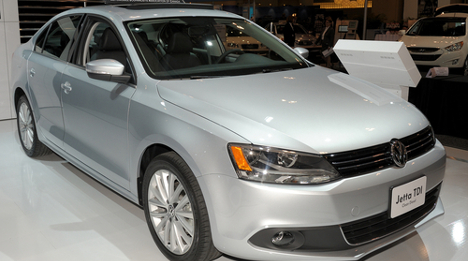
• Jetta (Model Years 2009 – 2015)
• Beetle (Model Years 2009 – 2015)
• Audi A3 (Model Years 2009 – 2015)
• Golf (Model Years 2009 – 2015)
• Passat (Model Years 2014-2015)
“Using a defeat device in cars to evade clean air standards is illegal and a threat to public health,” said Cynthia Giles, assistant administrator for the EPA’s Office of Enforcement and Compliance Assurance. “Working closely with the California Air Resources Board, EPA is committed to making sure that all automakers play by the same rules. EPA will continue to investigate these very serious matters.”
According to the EPA, a “sophisticated software algorithm” on certain VW vehicles detects when the car is undergoing official emissions testing and then activates full emissions controls only during the test. Otherwise, the effectiveness of the affected vehicles’ pollution emissions control devices is greatly reduced during all “normal driving situations,” resulting in the emission of nitrogen oxides, or NOx, at up to 40 times the standard legally allowed.
The discrepancy was discovered after independent analysis by researchers at West Virginia University, working with the International Council on Clean Transportation. In early September, the EPA and CARB asked for an explanation for the identified emission problems, which both organizations say that VW admitted that the cars contained “defeat devices.”
When reaching out to VW, the company responded to Auto Remarketing with the following official statement.
“Volkswagen Group of America, Inc., Volkswagen AG and Audi AG received today notice from the U.S. Environmental Protection Agency, U.S. Department of Justice and the California Air Resources Board of an investigation related to certain emissions compliance matters. VW is cooperating with the investigation; we are unable to comment further at this time. This is a notice of non-compliance that needs to be addressed. Volkswagen will develop a remedy in coordination with EPA and CARB. Owners of the affected vehicles should be aware that this is not a safety related issue. Owners of these vehicles do not need to take any action at this time.”
The folks at Edmunds.com offer a couple of key points for dealers to think about when judging the situation. Below is part of a note the company shared:
- In recent high-profile recalls, there has been very little — if any — impact on sales. With so many recalls in the news, they easily become white noise for a lot of consumers, and they don't appear to have much of an influence on shopping decisions. Nevertheless, Edmunds encourages all car owners to take any recall notices seriously and follow the instructions provided by their dealers.
- Edmunds counts 44 models that offer diesel-powered engines in the 2015 model year . VW and Audi combine to produce 17 models — or 39 percent—of those 44 total models.
Matt DeLorenzo, Kelley Blue Book's managing editor of KBB.com, also chimed in on the subject, saying this may result in a major hit for diesels in the U.S.
“Not only is this a black eye and a huge problem for Volkswagen, from an industry perspective it may set back diesel technology as a means for automakers to reach the requirements for high fuel economy," DeLorenzo said. "Manufacturers were counting on diesels to deliver fuel economy comparable to hybrids without the expense of having an engine plus electric motors and a battery pack. We may have reached a tipping point where now diesels will become more expensive to make than hybrids. That coupled with European cities looking to ban or limit diesels, there will be a shift away from that technology to hybrids and electrification through pure battery EVs and fuel cells.”
To check out the full statement from the EPA, click here.