The way Bruce Thompson sees it, the process of auto retailing hasn’t changed tremendously in the past 50 years, albeit one big exception: the Internet.
But even within that massive change, there are some gaps the industry is still trying to fill.
Put it this way: You can go on Amazon and buy just about any product, Thompson said. But dealer-to-consumer car sales online? That’s a puzzle that is still being put together, and one that many across the car business are trying to solve.
As for Pearl Technology Holdings — where Thompson is chief executive officer — the company is aiming to tackle the e-commerce demands of consumers through a product it is launching at this spring's NADA Convention & Expo called ShowroomXpress.
According to a brief provided by Pearl, the tool is an “on-demand automotive retail platform” for franchised dealers that lets consumers take on the “various elements of a vehicle purchase/trade-in in their own way, at their own pace” — essentially letting the consumer tackle various steps of the car shopping process when and where they so choose.
Or, as Thompson put it, ““start anywhere and complete anywhere.”
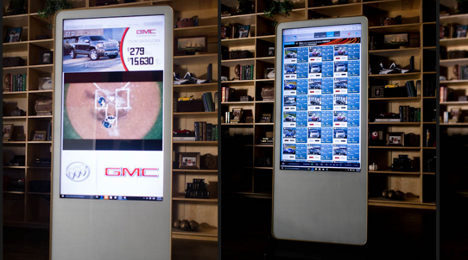
That can be through a widget installed on the dealerships’ website if the shopper wants to take care of certain elements outside of the store. Part of ShowroomXpress also includes the option for dealers to have 6-foot in-store kiosks where the consumer can handle things digitally from within the store.
The program aims to trim time off of what can often be a long, arduous process.
“I think the biggest buzz right now is digital retail — how do we get there?” Thompson said. “And so, this is really what we call ‘express automotive retailing.’ And it’s a ‘clicks-to-bricks’ solution.”
Being able to have a dealer-to-consumer car-buying process online is what shoppers are demanding, particularly the millennial generation, Thompson said.
He believes a product such as ShowroomXpress is what the future of auto retailing may look like.
“We live in a different culture today. We’re a connected society. Everybody’s on a smartphone,” he said
Thompson points to the usage of services like Amazon and Uber, but adds that, “the only thing that really hasn’t changed is the way we buy and sell vehicles.”
“And so I think the companies and the dealers that can bring a true digital retail, streamline express solution to the public are going to win. And that’s why folks like AutoNation and Sonic are making such a significant investment in the space,” Thompson added. “I just think the old ways are going to move, and the dealers that are stuck in the old ways are going to be the ones that are left behind and forced to come along for the ride.”
A new survey from TransUnion again emphasized the value of accurate information available to collectors as a pathway to improve skip-tracing success.
Officials found that more than nine in 10 collectors — 95.2 percent to be exact — have improved their right party contact rate since using online databases and sophisticated technology.
TransUnion also determined nearly three in 10 respondents (27.4 percent) have more than doubled their right party contact rate by using online databases to uncover information.
Right party contact information — such as phone numbers, addresses and place of employment — can help collectors reach the right person on the first attempt. More than eight in 10 (85.5 percent) collectors surveyed by TransUnion said online databases greatly improve the accuracy of customer information.
The survey also found that despite the benefits derived from using online databases, only 57.6 percent of respondents said they always use them. Approximately 40 percent said they “sometimes” use the databases.
“As right party contact rates become increasingly important, the collections industry needs to invest in databases with search technologies to identify the best contact information. Our survey findings clearly demonstrate the value of using an online database with up-to-date, accurate and actionable data,” TransUnion vice president Peter Ghiselli.
“We have shown the value of using online databases and it would be in the best interests of collectors to embrace this technology to help improve their process and aid them with their compliance efforts,” Ghiselli added.
TransUnion conducted the survey in January and included 635 respondents from debt buying organizations, first-party collection agencies, third-party collection agencies and collection law firms. Respondents collected a variety of types of debt, including auto, bankcard, commercial, consumer loans, government and municipal, medical, mortgage, private label, student loans, telco and utility.
TransUnion explained conducted the survey to better understand what solutions work best for the collections industry and their continued right party contact efforts.
One other note from the survey. According to respondents, having one best phone number for an individual is the most important aspect of right party contact information. Nearly seven in 10 respondents (67.9 percent) ranked having an accurate phone number as the most important tool, while 63.9 percent ranked address as one of the most important pieces of information.
“One best phone number, available through TransUnion’s TLOxp solution, allows business to achieve better results while investing fewer resources,” Ghiselli said.
“At TransUnion, we combine credit and alternative data with sophisticated analytics through a variety of products and services to offer collectors the latest available information to improve right party contact rates,” he went on to say.
TransUnion Collections Solutions combine its almost 50 years of experience with deep data and analytics to provide customers with better insights to improve skip-tracing, contact the right party and prioritize accounts. TransUnion’s tools and strategies can allow organizations to streamline processes so they can work more accounts and achieve better results.
Respondents’ Rankings of Most Important
Right Party Contact Information Types
Type of Right Party
Contact Information |
Percentage of Respondents
Who Ranked in Top Two |
| One best phone number |
67.9% |
| Address |
63.9% |
| Place of employment |
49.5% |
| Top three phone numbers |
28.8% |
General Motors’ Factory Pre-Owned Collection service has gone live, the automaker announced Tuesday morning.
The company said more than 1,000 GM dealers say they will participate in the program, which offers U.S. consumers online access to an exclusive inventory of low-mileage former company-owned, off-lease and daily rental vehicles.
The inventory includes more than 40,000 vehicles, each of which has less than 37,000 miles and an extended factory bumper-to-bumper limited warranty.
To use the program, an online shopper first browses the inventory. Once the consumer has chosen the vehicle, he or she can then select a participating GM dealer and use the automaker’s Shop-Click-Drive program to reserve that car.
Finally, the shopper finalizes the purchase and takes delivery from that selected dealer.
The Factory Pre-Owned Collection was first announced Jan. 13.
“Our goal is to earn customers for life and we know many of them want to use the internet to save time and make the process of buying a used vehicle simpler and easier,” Steve Hill — vice president, GM U.S. sales and service — said in Tuesday’s news release. “The Factory Pre-Owned Collection extends our Shop-Click-Drive service and gives our dealers another way to attract new customers to their dealerships.”
Consumers can receive Carfax vehicle history reports for vehicles that are on the site. Other amenities include a three-day/150-mile exchange program, a three-month trial of the OnStar Guidance Plan and the Sirius/XM Satellite Radio All-Access Package, roadside assistance and courtesy transportation during the warranty period, and more.
Additionally, Kelley Blue Book has worked with the OEM to offer the KBB Fair Market Range to the program’s shoppers.
“Businesses today are focusing more and more on e-commerce and the auto industry is no exception, so it was a natural fit to work with GM to bring this valuable KBB.com tool to their dealers and consumers for pricing information,” Dan Ingle, KBB’s vice president of valuations, industry solutions and international, said in a news release from KBB. “At Kelley Blue Book, we are always looking for ways to improve the car shopping experience for consumers, and this new collaboration between KBB.com and GM will help buyers feel comfortable with the price of their used-car purchases.”
Ingle added: “Based on the purchase habits of consumers today and the changing attitudes of consumers toward technology, auto retailers will need to continually evaluate how they attract and communicate with consumers.
“By selecting a dealer of their choice and using trusted Kelley Blue Book values, now consumers can buy a used car with confidence and ease," he went on to say.
Rapid Recon Inc. announced Monday that it has integrated recall management into its time-to-market reconditioning software for dealers.
According to Rapid Recon, the solution can move cars from the start to the finish of the recon process in three to five days. Rapid Recon’s new Open Safety Recall Management solution, under license from AutoAp, updates the safety recall status of vehicles in inventory inside of its reconditioning software, identifying open safety recalls from the time the car first enters inventory until the car is sold.
“Automating the identification of open safety recalls is a natural and vital step in preparing cars for sale,” said Dennis McGinn, the company’s chief executive officer. “We chose AutoAp Inc., based on their highly accurate recall data and proprietary daily recall verification processes.”
The company hopes that the new feature of the reconditioning software will help dealers reduce their recall liability, increase warranty revenue, improve customer safety, enhance market differentiation, optimize service bay utilization and reduce overhead costs.
“Dealerships find it difficult to stay on top of safety recalls, due to the size and complexity of the problem,” said Mark Paul, AutoAp’s chief executive officer. “With our proprietary processes, AutoAp generates the most-accurate, multi-brand safety recall status available, anywhere. We are excited to partner with Rapid Recon, so that we can reach more dealers even faster to help address this significant problem.”
To learn more about Rapid Recon, click here.
Insurance Auto Auctions announced the arrival of its turnkey customer self-service tool aimed at enhancing the total loss claims experience for IAA Title Services customers.
Named MyVehicleClaim.com, the site allows insurance companies to provide vehicle owners with the means to track the progress of their total loss claim.
Owners can receive communications and track their information throughout the entire total loss claims process, including real-time status updates, messaging features, document downloads and multiple-claim management.
IAA hopes the tool will improve customer satisfaction and retention on the front end while reducing the amount of administrative work on the back end.
"We are proud to incorporate this capability into our Total Loss Solutions offering," said Pat Walsh, senior vice president of business development at IAA. "MyVehicleClaim.com reflects the type of full service claims management solutions that our customers have grown to expect. It delivers a customer self-service product for our clients so they don't have to build their own propriety solution."
To learn more about IAA, visit its site here.
vAuto founder Dale Pollak told the industry about the company’s new Stockwave sourcing tool earlier this week, and the industry innovator says the solution is designed to tackle four problems “all dealers have.”
Pollak went over these four issues in an interview with Auto Remarketing shortly before the sourcing product was officially announced.
Stockwave isn’t just for vAuto dealers, it’s an independent product for both franchised and independent dealers, whether or not they happen to subscribe to vAuto, Pollak stressed.
Through the solution, wholesale inventory will be coming to users in a constant stream from all over the country, “no matter the auction, no matter the seller.”
So, why would Cox Automotive create a tool that enables dealers to buy vehicles from auctions other than its own Manheim? Pollak said the answer is what inspires him the most to work at Cox Auto.
“The answer is that Cox is enlightened enough to realize that at the end of the day if you don’t put your clients’ interest first before your own, you aren’t going to win,” said Pollak. “If you are Manheim and you are the market leader, things are pretty good the way they are, why would you want to disrupt the current status quo?
“And yet, Janet Barnard (president at Manheim North America) and Sandy Schwartz (president of Cox Automotive) recognize that if you are going to continue to be the leader, you have to create and deliver solutions that serve the dealers’ interests first.”
This tool is agnostic, and Pollak pointed out it will make wholesale recommendations with zero preference to any particular company’s products or services, “most importantly, including our own.”
And Pollak pointed out sourcing solutions, and tools that increase efficiency in dealerships, are about to become even more important as he predicts some tougher times might be on the way.
In fact, Pollak spent the last year or so traveling the country trying to temper dealer enthusiasm following record new sales.
“Most dealers had a really phenomenal year in 2015, which is great, and we should all be happy about that and celebrate that success,” said Pollak. “But what I saw is some dark clouds on the horizon that I thought dealers should be mindful of.”
Those “dark clouds” include the fact that the industry is enjoying historically high levels of sales volume, but it’s a cyclical business, and “they aren’t going to last,” said Pollak, who noted that “sales volumes will level off and ultimately go down.”
No. 2, used-car margins are compressing at a rapid rate, and with an influx of off-lease used supply expected to hit the auctions this year, this is bound to become even more of an issue.
“If you combine all of these events, it is undoubtedly going to mean for dealers tougher ability to make profit. I went around last year telling dealers they need to anticipate this changing environment, and sure enough here we are in 2016, and everything you read says margin compression, over-supply of cars, pressure on profits, etc.” Pollak said. “Seeing it coming, I think Cox Automotive, being a leader in the market for dealer solutions, I think it is our obligation, and frankly our opportunity, to create and deliver solutions to dealers that they need most, when they need them.”
In that spirit, Pollak saw an opportunity to leverage a lot of different capabilities across the Cox Auto family to solve four particular problems that he said every dealer in the country has when it comes to sourcing and stocking their used-car operation.
- “They really don’t know as well as they think they know, or could know, what they should stock.”
Pollak asserts every dealer has this issue, but this is one not all stores will admit to. To explain the functions of Stockwave that are designed to help with this issue, Pollak says to imagine a spreadsheet.
Imagine the columns are vehicle segments, while the rows are price-class ranges. Every cell on that grid represents a particular vehicle on a dealership lot, at a particular price point. With this data, the tool can take a look, for example, at a dealership’s compact SUV category in the $25,000 and up price point, and if the dealership has eight in stock but has only sold two over the last 125 days, “I can tell you have six too many of those units,” said Pollak.
And the same strategy is used, of course, to discover what units the dealer needs more of, as well.
“So, with that sort of perspective on every dealers’ inventory, I see all the sorts of improper allocation of investment capital,” said Pollak. “I see some categories in their inventory where they have too many based on their sales, and their current stock levels, and I see other categories in which they have too few, based on their current stock and past-sales history.”
Pollak says the solution aims to help dealers reallocate and redistribute their capital investments in their used-car inventory to sell more cars and make more profit.
- “When they do what they want to stock, it’s often very difficult to find those cars, and it takes a lot of searching and researching.”
Most every dealer and buyers is well aware of this issue — sourcing cars takes time, lots of it. Often, buyers have to spend hours, sometimes days, searching for the cars their dealership needs, and when they find those cars, they have to spend more time researching their history, equipment, features, and on and on.
“I’ve got the ability technologically, that once I know what you need on your lot, to show you every vehicle available that meets that criteria,” Pollak said.
"For example, if you needed compact SUVs in the $20,000 to $25,000 range, I can show you everyone in the country, or within a certain radius, that meets that qualification, and I can rank order them anyway you want: which are the hottest sellers, I can show you the ones with the greatest profit opportunity, I can show you only green ones,” said Pollak. “I could sort them and filter them and rank order them based on all this criteria, so you don’t have to spend a single second searching or researching. So, I could take that problem off the table.”
- “When they do find them, there is a lot of uncertainty to what they should pay and whether the vehicle is too expensive or not.”
And once the cars are found, of course, up pops the issue of knowing what one should pay for the units.
Stockwave works to solve this problem by taking a look at your target profit. If the dealership needs a compact SUV it can sell for around $20,000 and you want to make a $2,000 profit, and your recon expense is normally close to $1,000, the solution knowns that you ought not pay more than $17,000 for the unit to meet your profit goal.
“So I can show you on every car, only the cars that you need, what is the max bid limit that you should be prepared to pay,” said Pollak. “So I can take that question that you spend hours researching and often don’t come to the correct conclusion after you spend all that time, and take that problem off the table, as well.”
- “The whole process takes a lot of time and effort.”
Lastly, sourcing vehicles is key to a dealership’s success, but it takes a significant amount of time and effort.
The team at Stockwave asks dealers to one thing with the new solution — “just turn it on,” said Pollak.
“And it takes all of those things that you spend hours of days trying to figure out, and often don’t get the right answers I might add, I can do all of that for you and give you the best answers,” he continued.
Pollak also shared the tool might increase operational efficiency to the point dealers could potentially reallocate some of their investment in full-time and part-time buyers and perhaps use those employee’s expertise elsewhere in the dealership.
The technology behind Stockwave can see the dealers’ inventory in real-time — what they have sold and what they haven’t sold — and bounce those stats up against a target supply.
Why is this especially important now?
“In this year that we are entering right now, where margins are going to be compressed, dealers are going to have a lot of difficult time achieving profit levels comparable to prior years,” Pollak said. “What they need is two things: They need more sales and gross profit generated, and when I help you allocate your investment in your inventory to be more optimally balanced, it is certainly going to help you sell more cars at more profit.”
When dealers get to the point where Stockwave has pre-selected and pre-filtered the best cars for them, and have chosen the ones they want, all they have to do is click a button, and the solution will open a window right to that auction house and bring them right to the spot where they can bid on the unit.
“At that point, we just drop them right into the auction houses site at the right spot,” Pollak said.
Product to launch at NADA
The companies aim to launch the all-new Stockwave at the upcoming 2016 NADA Convention & Expo in Las Vegas.
And if dealers go to stockwave.com, they can register for a demo. And beginning on March 1, vAuto will invite those pre-registered dealers to participate in group Web demos, after which they can either get started and sign on, or they can schedule a one-on-one in-dealership demo.
The initial entry-level product, interestingly, will include most all the solution’s functions. There are two add-ons available, though: GeniusSync and MarketSync. GeniusSync allows a dealer to use Stockwave in a live-bid environment; in other words, if they are participating in a LiveBlock auction, for example, users can have Stockwave open at the same time. And MarketSync basically gives dealers access to the vAuto Live Market View data and recommendations.
Pollak pointed out that the only reason vAuto can release a solution such as Stockwave is through the combined resources at Cox Automotive.
“When we formed Cox Automotive, the thesis was that if we combined our resources across our vast enterprise, we ought to be able to do things that nobody else can do,” he said. “The different pieces of the solution I just described to you are plucked from and pulled from various different technologies and various services and capabilities that we have across the Cox enterprise network.”
“And that is really our obligation and our opportunity at Cox — to provide solutions to dealers that they need the most, when they need them,” he concluded.
There was a paradigm shift that began two to three years ago, says DealerSocket’s Aaron Schinke, where people changed how they accessed the Internet, turning to a bevy of products that included not just smartphones and tablets but devices like Apple TVs, watches and Google Glass.
More people were turning to these products than those who weren’t, he said.
As such, responsive websites and platforms became paramount, including the space of the auto business in which DealerSocket operates.
In April, that culminated in what DealerSocket referred to as “Mobilegeddon.” With an update to its algorithm, Google detected whether websites were responsive or not, Schinke explained. Those that were could realize lifts in SEO results and those that didn’t offer a strong mobile experience were punished.
So, as Schinke noted in a January interview with Auto Remarketing, not only would not having a strong mobile site hurt you in terms of the consumer not having a good experience, but they might not even see you in the first place.
“You either did it and you were kind of safe, so to speak, or you didn’t and you kind of run the risk of getting run over by those who actually made the shift,” said Schinke, who is director of product management (websites and digital) at DealerSocket.
But as big as this paradigm shift may have been, there’s another one on the horizon, DealerSocket believes.
It involves taking the various digital processes of a dealership that have often operated in “silos” — websites, CRM, DMS, inventory tools, etc. — and integrating them to work hand-in-hand. And doing so for the purpose of meeting the needs of consumers, many of whom today want an increasingly digital experience.
“Everything we do is a response to consumer behavior, as it should be, being a consumer market,” Schinke said. “All of these things have lived in these silos and it’s kind of prevented us from adopting processes that are what the consumer’s looking for. You have all these people coming up, trying to disrupt the market — the Beepis, the Carvanas.
“And what they’re doing is getting rid of the silo and bringing all of these things together, so we can provide that experience,” he added.
“So, whether it’s leveraging CRM data to have a better website experience or leveraging inventory data to have better activity in CRM and be able to suggest different vehicles or get proper incentives … it’s breaking down the walls between all these systems that we use and unifying it to allow for a better in-store process, which therefore sells more cars and becomes a much more attractive process,” Schinke continued.
“Otherwise, dealerships run the risk of being disintermediated by these other people that are trying to go the pure e-commerce transactional route,” he added. “By bringing these tools together and leveraging that data between the silos and those products or systems, it will also enable the dealers to be on the leading edge of bringing that e-commerce, or digital retail, if you will, to the consumer.”
And that’s what many, though not all, consumers want, be it from startups, companies like Tesla or even the more traditional OEMs.
“It’s not everybody; but, again, just like mobile, we’re starting to see the majority of people, or a bigger percentage, want to go that route,” he noted. “And so really, making our products come together and have a more intelligent dealership because of it is what I think is coming next.”
As an example on the dealership side of breaking down those silos, Schinke mentions AutoNation, with whom he works closely.
He said the retailer has its own CRM, and is able to send CRM information back to DealerSocket’s website platform — and then the website info goes back to the CRM.
This helps determine, for example, if a consumer has submitted a lead before or if the customer is a returning visitor.
“And then they can show different pricing or AutoNation pricing or enable different incentives from the detecting, using user information to adapt the website behavior,” he said, adding that the back-and-forth exchange allows the retailer to “get true attribution.”
And, say, the dealership is using the DealerSocket CRM and website platforms. The company can provide a similar service and, for instance, notify the dealer that a customer is shopping online and show information about that shopper in the CRM
“So, there’s a billion different ways that it starts to happen, and I think the first wave is the AutoNation and the website-CRM (pairing), which has some inventory implications, as well,” he said.
These trends fit in to DealerSocket’s strategy: simplifying the admittedly complex processes involved in running a dealership to help them respond to the shifting needs of the consumer.
Or, put differently, “connecting the dots” between the consumer life cycle and the vehicle life cycle, Schinke said, and bringing the dealers those services to help accomplish that.
Again, not every shopper is going to want to completely buy that car online and pay without seeing the vehicle or test-driving. There’s a broad range of shopper types, and DealerSocket is aiming to respond to all of them.
By offering “single view of the customer,” the company aims to help dealers accomplish that.
For example, knowing that a shopper is shopping for service items on website, they could follow up with customer service campaign via or a phone call if they’re looking for a specific vehicle.
“So, again, that doesn’t even have to mean they’re going to buy online or do the online transaction or ecommerce path; we can actually go pre-transaction and start to affect behavior that way,” Schinke said. “And again, it becomes super important because there are people trying to intercept the customer before they even think about taking an action and walking into a dealership or making that phone call.
“So, it’s really about more intelligent and contextual relationship-building that we’re enabling with these things.”
vAuto, whose parent company is Cox Automotive, is coming out with a new wholesale sourcing tool.
The companies aim to launch the all-new Stockwave at the upcoming 2016 NADA Convention & Expo in Las Vegas. And the tool isn't just for stores who use vAuto — it is open to all dealers.
Dale Pollak, the founder of vAuto, discussed the news Monday on his Velocity Overdrive blog, noting, “I’m very excited about Stockwave’s potential to solve the persistent challenges of acquiring wholesale inventory from auctions, and make the entire process far more efficient and simple for every dealer.”
According to the tool’s promo video, featured above, vAuto has this to say about their new tool: “We’re talking about a sourcing solution so simple, you’ll only have to do one thing — just turn it on.”
This is a phrase that pops up throughout the video as well as the online brochure, pointing perhaps to the simplicity and ease-of-use of the new tool.
According to the video, wholesale inventory will be coming to users in a constant stream from all over the country, “no matter the auction, no matter the seller.”
Also interesting to note, the video points out, too, that the “steam is smart,” and “gets smarter” as it gets to know you and your market, based most likely on your data input, profile and usage.
It will also be interesting to see how the new tool cuts down on research time for wholesale buyers, as the video and brochure state: “Imagine no more researching. Vehicles that perfectly match you and your market are yours — before you know you need them”
According to the brochure, Stockwave includes the following functions:
- Get specific stocking level recommendations based on sales velocity and target days’ supply.
- Know what to pay, based on exit strategy, profit goals, factoring in recon, transportation and other costs. Stockwave automatically displays the specific profit potential and bid maximum for each vehicle.
- Aggregated listings from multiple auction houses across the country in one constant steam, ranked by their profit potential.
The tool also offers two add-on packs, called GeniusSync, which helps give dealers direct access to Stockwave research and valuation data, and MarketSync, which provides real-time stocking levels and retail market information.
Pollak shared the industry can expect to see more ads for Stockwave in industry publications and online, as well as hearing more about the product from the teams at vAuto and Cox Auto.
In his blog post, Pollak picked out two points he says makes Stockwave a “unique solution”:
- First, Stockwave represents the first large-scale example of Cox Automotive’s mission to use our expertise and resources to provide integrated innovation that helps dealers increase efficiencies and profitability. Simply put, Stockwave wouldn’t have been possible without an unprecedented degree of collaboration and cooperation between Manheim, vAuto and other Cox Automotive brands.
- Second, Stockwave also fulfills Cox Automotive’s vision to develop agnostic and open solutions that, first and foremost, serve the interests of dealers. As such, Stockwave isn’t just about Manheim; rather, Stockwave brings together vehicles from Adesa, SmartAuction and other leading auctions to create what we’re calling ‘surprisingly simple sourcing.
Stay tuned to Auto Remarketing as we learn more about this new sourcing tool about to hit the market. In the meantime, for more information, see the promotional video above, and check out the new tool at www.stockwave.com.
Car Lister announced Monday the launch of its fully transactional e-commerce platform that allows dealers to buy, sell, trade and ship inventory to each other.
The Dealer Wholesale Platform is now available for dealers to create national wholesale groups to manage movement of vehicles between members.
According to Car Lister, the platform allows dealers to pre-select their buying preferences. The platform then automatically searches the Car Lister inventory to source vehicles from private consumers, dealer wholesale inventory, and other industry related inventory.
The program then allows dealers to keep sell and buy fees in-house, as well as allowing them to place an electronic deposit, confirm title, schedule an inspection, arrange shipping and finalize payment with ACH funds transfer.
Bryan Harmon, the founder and chief executive officer of Dreamware Inc., Car Lister’s parent company, compares the Dealer Wholesale Platform to the stock market, saying that dealers can use it to buy, sell, trade and track inventory while also viewing inspection reports and ship.
He also said the product has the potential to facilitate the vehicle trade process in a way that lessens the pain points involved in the traditional wholesale process.
Harmon went on to add that through its services, “dealers will have full control over how and when they bring new inventory onto their lots by fully harnessing the power of technology and the Internet. Our vision for wholesale is to be proactive, not reactive. That's why we validate the title and inspection reports before a vehicle is shipped, thus eliminating any problems before they occur."
For more info on Car Lister, visit our previous write-up here.
Connected-car service provider Airbiquity released its 2016 industry predictions on Wednesday.
Scott Frank, the company’s vice president of marketing, says we can expect the rapid pace of technology development related to connected vehicles to continue.
"Automotive continues to face significant challenges—and opportunities—for connected car technologies and programs. The industry has only begun to scratch the surface of what is yet to come," Frank said. "A decade ago, no one could have predicted the rate of technology evolution or level of competition the industry is experiencing today. One thing we know for sure is the pace isn't going to let up; in fact it's going to accelerate."
Here are a few of Airbiquity’s predictions for 2016, provided by the company:
- Increased recognition of automotive leadership threats by non-traditional technology players: Well-known and highly capitalized Silicon Valley technology companies like Google, Apple, Tesla, Uber and Lyft are declaring their ambitions to be automotive industry disruptors and leaders – and consumers are receptive to the idea based on the dominance of their brands, products, and track records of vision and innovation. To counter this threat, traditional automakers will fast-track internal transformations to adopt new technologies, embrace new ecosystem partners, and change outdated processes and procurement policies that are hindering progress. The good news is automakers are increasingly aware of the stakes and taking action. The bad news is a daunting task lies ahead that will test automaker management teams top-to-bottom, as well as the rank and file that must get on board to make it happen.
- Tighter integration of connected vehicle programs with product and customer life cycles: In addition to providing consumers with in-vehicle infotainment content, connected cars are unique in the ability to receive remote software updates to fix recalls and enhance features, as well as provide data about vehicle operations and driving history. This ability presents tremendous cost savings and consumer engagement opportunities for automakers such as reducing recall expense, enabling real-time part and system evaluation, optimizing back-office operations and supply chain, and introducing new driving centric services and monetization. But seizing these opportunities will require automakers to better integrate the strategy and operations of connected vehicle service functions with long standing areas like design and engineering, customer experience and support, brand and marketing, and dealer channels. In 2015, Airbiquity saw an increased maturity of automaker connected vehicle service organizations, and we expect this trend to continue through 2016 given the significant brand stakes and increasingly attractive return-on-investment.
- Increased focus on developing and deploying electrification and autonomous technologies: Automakers will increase investments for the development of technologies to improve electric vehicle performance and expand autonomous driving features. Regarding electrification, oil prices and consumer demand for electric vehicles may be low today, but increasing global warming concerns and efficiency mandates will press automakers to improve fleet efficiencies. Gas prices will eventually increase followed by consumer demand for more efficient vehicles across all price ranges. In response, automakers must ensure they have the right product at the right time to remain competitive. As far as autonomous goes, the future is clear: It's going to happen. If automakers want a slice of the autonomous pie they have to develop and equip vehicles with enabling technologies. The road to fully autonomous vehicles will be a long one (Airbiquity predicts 2030-35) and there will be bumps along the way. To succeed automakers need to put their stakes in the ground now.
Airbiquity is perhaps best known for Choreo, its cloud-based service delivery platform. The company says it has over 7 million vehicles subscribed to Choreo, which facilitates hundreds of millions of connected car transactions per month in the more than 60 countries and 30 languages that the solution is offered.
For more information about Airbiquity, visit its site here.