The actual new-car shopping process, says Steve Greenfield, is not necessarily the pain-point for most consumers.
What causes the sting, rather, is what happens at the end of that process: “the adversarial negotiation with a car dealer,” he said
The implications of this pain point was one of the foundations Greenfield — a former Manheim and AutoTrader.com executive — used in forming CarLingo, a company that aims to cut down consumer uncertainty and frustration in car shopping and buying.
CarLingo has rolled out a new-car shopping experience that hones in on what it calls “the specific attitudes, situation and lifestyle needs of consumers to help them find their best new car.”
Greenfield, who is chief executive and founder of the company, talked with Auto Remarketing in January about CarLingo’s “roadmap” and where it saw a need in the auto industry.
“No matter how well a consumer thinks that they’ve prepared during the shopping process, there’s definitely an information asymmetry when a consumer walks into a dealership,” Greenfield, said. “And frankly … a typical (dealership) salesperson is somewhat of a professional negotiator; so the consumer, who’s only ever in-market every three or four years to buy a car is at a disadvantage.
“Reconciling that with the fact, though, that the average car dealer now on the new-car side is only making 3.8 percent profit, if you ask consumers what they think the average dealer makes on a transaction, they report 20 percent,” he said.
“So, really the genesis of us going down this path is the fact that there has got to be a middle ground, or zone of potential agreement, where the consumer feels comfortable they’re getting a fair deal, yet dealers are making a fair profit margin and their margins aren’t being squeezed,” Greenfield added.
The company said in a product release that it “embraces a brand new way to shop for a new car. By first fully understanding a consumer's needs, the CarLingo experience can make smarter vehicle recommendations that better align with the consumer's wants, attitudes and budget.”
Or as Greenfield added in that release: "There's a lot of innovation going on in the automotive space right now, and a renewed focus on understanding and addressing ever-evolving consumer preferences. As a result, the industry's consumer-facing car shopping experience is going to greatly improve over the coming few years."
"Much of the innovation in the space right now is anticipating and reacting to consumer shopping trends," said Greenfield. "CarLingo's future product roadmap is sequenced to dovetail into addressing these evolving consumer needs.”
What Makes CarLingo Different
Of course, there are other players and services in this space that aim for similar goals of communication and common ground between dealers and consumers. When asked what makes CarLingo different, Greenfield said part of that is “to be determined,” given that the company is a relatively new startup.
He added: “We have a fairly sequenced product roadmap that, over time, should help a consumer through all the different phases of the car-shopping process. Right now, all we’ve released is the addressing of Phase 1, which is vehicle selection and ensuring that vehicles meets that consumer’s particular needs, lifestyle and attitude. Over time, what you’ll find is that we will help consumers basically check off every element of the car deal.”
That includes vehicle selection, price negotiation, the trade appraisal and monthly payment — “all of which are interconnected, interrelated,” he said.
The company has plans to release solutions in each of those areas, Greenfield added, “always with a very intuitive, consumer-facing interface that tries to make it really easy to understand, for a consumer, where they are in the process, what decisions they’ve made, what decisions they have yet to make, and then the interplay between all these decisions as they make them – with the end goal being to get them to a transact-ready state, where their expectations have been set appropriately around all those different facets of the car deal.”
Where CarLingo Goes From Here
So, what’s the next stop on CarLingo’s itinerary? Having gone in-depth on vehicle selection, Greenfield said price should be the next area the company addresses, with trade-in appraisal and monthly payment (likely in that order) after that.
CarLingo is also releasing eBooks that reference back to those four phases plus dealership selection.
As reported back in December by Auto Remarketing, the company launched a shopping resource center with information that spans across the five distinct phases of the shopping process, covering:
1. Vehicle selection
2. Vehicle price
3. Trade-in value
4. Monthly payment
5. Dealership selection
“The new CarLingo Resource Center helps consumers address their needs, questions and concerns across all five of these areas,” Greenfield said in the news release. “In addition, CarLingo has eBooks available for download for each of these five areas that are a valuable resource and reference for the new-car shopper requiring help and guidance through their car shopping and buying process.”
Editor's Note: Staff Writer Nick Zulovich contributed to this report.
DealerRater introduced a new product lineup last week that includes two new program upgrades to its Certified Dealer Program toolkit: ServiceEngage and 360Connect.
“We’re always listening closely to the market and are pleased to introduce a carefully re-designed product portfolio that offers focused solutions to real challenges that dealerships face today,” said Jamie Oldershaw, DealerRater senior vice president of product. “ServiceEngage and 360Connect offer Certified Dealers the requisite tools to drive more business to their service lanes and leverage the power of social networks to discover and engage with more auto shoppers across the Web.”
First up, ServiceEngage allows subscribers to receive service-specific point-of-sale materials to build reviews, as well as a service-specific testimonial feed to the dealer website and Facebook page.
The tool also includes an enhanced Service Center Review page on DealerRater that features online appointment scheduling and the ability to post coupons — tools dealers can use to keep customers coming back in.
ServiceEngage also has the capability for targeted campaigns, which dealers can use to connect with potential new customers via recall alert notifications as well as reconnect with past customers.
The second new tool, 360Connect, is designed to allow dealers to “take ownership” of their Web-wide reputation and discover and connect with more customers through the power of social media networks.
This tool includes features such as discovery marketing, the company said, which works to monitor social media chatter for in-market consumers.
It also features LotShot Social, a photo-sharing app to expand brand reach. 360Connect also provides social content monitoring and sharing of topics relevant to a dealer’s audience.
“ServiceEngage and 360Connect provide dealers with the expanded resources they need to attract and engage past, present and prospective customers online,” Oldershaw concluded.
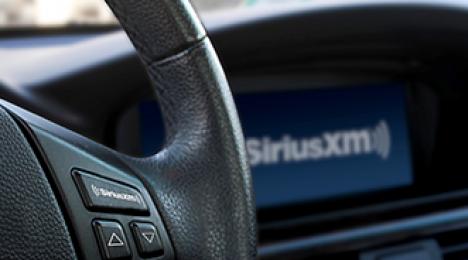
SiriusXM announced Friday at the NADA Convention and Expo in San Francisco that it has hit a milestone for its used-vehicle program.
There are now over 15,000 dealers enrolled in the SiriusXM Pre-Owned Program.
Through the program, customers purchasing any used vehicles with factory-installed satellite radio from a dealer enrolled in the SiriusXM Pre-Owned Program will receive a three-month subscription to SiriusXM’s “All Access” package.
“The SiriusXM Pre-Owned Program launched in the summer of 2011, giving auto dealers the opportunity to provide subscriptions to all of their customers purchasing satellite equipped vehicles. Major OEMs have supported the program with their franchise dealerships, and many of the nation’s top auto dealer groups have followed with 100 percent of their locations participating in the program,” said Joe Verbrugge, senior vice president and general manager of automotive remarketing and retail sales at SiriusXM. “We are thrilled that there are now more than 15,000 dealers that have taken advantage of this no-cost program, giving their customers access to SiriusXM’s unparalleled lineup of commercial-free music, plus premier sports, comedy, news, exclusive talk and entertainment.”
The “All Access” package includes Howard Stern, every NFL, MLB, and NBA game, every NASCAR race, plus NHL games and PGA TOUR coverage, as well as access outside the vehicle to SiriusXM Internet Radio on smartphones and other connected devices and online at siriusxm.com, the company explained.
On top of the pre-owned milestone, the SiriusXM Service Lane program has surpassed 6,000 dealers enrolled since the program launched in 2013.
Through this program, dealers can proved a two-month subscription to SiriusXM’s Select package to qualifying customers who have their satellite radio-equipped vehicles serviced.
SiriusXM has also tapped into the CPO market. The company has arrangements with major automakers to provide a 3-month SiriusXM subscription to customers buying certified vehicles from dealerships participating in those programs.
Dominion Dealer Solutions has announced that two of its divisions, Cross-Sell Reports and Dominion Dealer Specialties, have integrated Cross-Sell Interactive with Dominion Inventory Manager.
Dealers can now use the market-specific data provided by the integration to help choose the best selling vehicles and gauge which competitors are leading local markets. CSI helps make sense of market gains and losses, monitors the competition and measures a dealership’s local market performance.
“Dealers are missing the opportunity to really measure their dealership’s performance,” said Jennifer Ryan, Dominion Inventory Solutions’ product director. “This unique and exclusive integration gives our dealers the measuring stick they need to understand actual performance as well as make immediate adjustments to best manage pricing, stocking and merchandising of inventory.”
Dominion also announced this week the launch of model and department-specific reviews on its dealers’ websites. Using tools provided by the integration with Prime Response, dealers who purchase websites through Dominion can now display content-specific reviews on their Web pages or snippets in real time. The types of reviews are based on dealer preference and can include: vehicle model, dealership staff and/or department reviews.
“Consumers want to see ratings and reviews on dealership websites in the context most appropriate to them,” said Sean Stansell, product manager for Dominion Websites. “Service reviews belong on service pages. Model reviews belong on vehicle detail or model-specific pages. It’s what makes the most sense to a consumer, so that’s what Dominion Websites provides.”
In other Dominion-related news, the company’s equity mining solution, DealActivator, now features the ability to run soft credit pulls.
“This allows dealers to prequalify customers for more informed discussions as well as gather information regarding the equity potential of a conquest customer prior to approaching that customer in person,” said Alan Andreu, general manager of Dominion Dealer Solutions.
“The power of DealActivator’s soft credit pull is magnified by its new service page platform,” Andreu continued. “The upgraded service page is streamlined with the new customer summary page that allows for easy access to high-level customer information. New features such as equity search tools, geo-mapping and customer tracking allow dealers to market directly to these prospects with one-click personalized or template-based email, letters and phone scripts.”
For more information about Dominion’s variety of dealer offerings, visit their website at www.drivedominion.com.
AutoWeb announced the launch of its free vehicle search engine on Tuesday, outlining its aim at helping car shoppers decide which vehicle is right for them based on their desired search criteria.
Available search criteria on the site ranges widely, catering to both the budget-conscious to the highest possible end of the spectrum, and everywhere in between.
Users can search based on desired monthly payments, vehicle types, makes, models, total MSRPs and expected MPG ranges. The interface also allows the sharing of user favorites across multiple social media platforms, such as Facebook and Twitter.
If the user chooses, he or she can request a quote on a vehicle and the site will help the customer get in touch with a dealer.
“With 64 percent of consumers using online search engines to find a car, we pride ourselves on making the experience as convenient and intuitive as possible,” said Charlie Schiavone, AutoWeb’s general manager of product. “Our users find the car that best suits them, share it with friends and have fun searching for their new car in a way that, until AutoWeb, hasn’t been possible.”
AutoWeb expects to add used-vehicle searches by the end of late January, as well as auto news, industry trend information and vehicle reviews.
“Our content will be focused on bringing car shoppers real reviews by a team of professional automotive journalists to help consumers make a better purchasing decision after they used the AutoWeb search engine,” said Michael Harley, AutoWeb’s editor-in-chief.
CDK Global announced Tuesday another one of the several technology solutions it will debut at the 2015 NADA Convention & Expo in San Francisco this week.
One of these new tools will be Audience Management, a digital marketing package that helps dealers target customers via personalized, individual online shopping experiences. According to the company, the technology provided with Audience Management is on par with that of such renowned customer targeting companies such as Amazon, Netflix and Google.
The platform is capable of tracking individual shopper behavior both on and off dealership websites, learn from it, and deliver customized content to dealership visitors, on any device, according to CDK.
“Personalization is a good thing,” said Scott Matthews, president of CDK Digital Marketing. “If you’ve visited a website like Amazon and been offered a recommendation of what they think you’d like, that’s personalization. Customers get the content they want to see, making for a better shopping experience, and dealerships get to cater to an audience of one. It’s becoming a standard practice that customers expect and it’s time to apply this to the automotive retail space.”
Another announcement made by CDK this week outlined the release of Dealer Data Exchange (DDX), which the company says is designed to give dealers more control and visibility of the data they are sending to manufacturer and third-party vendors.
“Dealers need to know who is collecting their data and where it’s going,” said Howard Gardner, vice president and general manager of data strategy at CDK. “They’ve also asked us to help them better understand data security regulations and safe handling practices. With high-profile security breaches becoming a routine occurrence, the potential risks of data sharing with third parties have risen to an uncomfortable level. This means they need visibility of all connection points, and that’s what we’re working toward with DDX. No other product on the market has that capability.”
To learn more about these products, visit the DDX website or the CDK Global website. Both of these will be on display at the CDK booth at NADA this weekend.
AutoAlert revealed Tuesday that it will showcase its newest updates to its Deal Sheet tool at the 2015 NADA Convention in San Francisco this weekend.
Primary among the new features will be the new availability of vehicle history reports, allowing dealers using AutoAlert one-click access to such reports to prepare for appraisals.
In addition to the history reports, other new updates, according to AutoAlert, include a vehicle and MPG comparison tool as well as customizable email templates.
The vehicle and MPG comparison tool will assist dealers when comparing vehicle options with customers, allowing staff to remain knowledgeable about various vehicles and access information quickly to help consumers on the fly. The email template feature is aimed at creating personalized, vehicle-specific emails that can be sent directly to clients from Deal Sheet.
More information about AutoAlert can be found on its website.
Making its first investment in online retailing, Cox Automotive has introduced a new company to its lineup called MakeMyDeal, a communication platform that allows dealers and consumers to begin putting together a purchase deal online.
Shoppers get to begin setting up the deal from their home computer or wherever they so choose, while the benefit for dealers, the company says, is they maintain control of the deal structure.
Dealers can get the information they need from consumers and are able to work closely with the shoppers and manage the deal’s structure. Dealers are not required to honor any third-party price guarantee.
“There’s no question that online retailing is coming to automotive, but we firmly believe that the ‘shopping cart e-commerce’ model that works for books and electronics, doesn’t translate to automotive retail for the majority of car buyers,” MakeMyDeal founder and general manager said Mike Burgiss said in the product announcement released Tuesday.
“People will continue to buy cars from people, so we designed a platform based on our philosophy of connection commerce, which puts the relationship between the dealer and the consumer first while enabling the deal structuring process to take place online,” he added.
The news releases explains in six steps how MakeMyDeal works, as listed below:
- Shoppers visit dealership websites for any dealers who participate in the MakeMyDeal platform.
- Once they land on the VDP (vehicle details page) of a car they’re interested in purchasing, they can start personalizing the deal by using the MakeMyDeal self-penciling experience located next to the vehicle photos and advertised price.
- Shoppers setup an account for the MakeMyDeal platform to connect and communicate with the dealership around the terms of their car deal.Shoppers provide the following information to create a personalized deal structure and monthly payment estimate on their vehicle of interest:
— Purchase price offer (this is not included for single price inventory)
— Needed information to obtain a trade-in value
— Credit tier and desired length of term for financing
— Down payment amount
- After a shopper saves and submits a proposed deal, a dealership representative receives the details along with the shopper’s username and personal message to the dealership, which may include pertinent questions and details the shopper has shared about his/her buying situation.
- The shopper receives an alert from MakeMyDeal when the dealership sales representative responds to the offer by “accepting” or responding with an updated deal structure.
- At any point during the process, the shopper can decide to visit the dealership or schedule a test drive. When shoppers are ready to take the next step, they receive a MakeMyDeal Deal Summary, which includes instructions for completing the purchase in the dealership.
Development of MakeMyDeal & Its Goals
Prior to Tuesday’s announcement, Auto Remarketing talked with Burgiss about the development of MakeMyDeal, what the company aims to foster between dealers and consumers, what the future entail for this platform and more.
In developing the platform, Burgiss said they conducted focus groups, while also utilizing consumer and dealer research from Cox Automotive.
He pointed to data found in this research indicating that the four pain points of the car-shopping process for consumers are most often the following: price negotiation, arranging financing, trade valuation and taking care of paperwork.
The experience of working through those steps — which typically takes place at the dealership — can be “a stressful one,” for shoppers, Burgiss said.
“What MakeMyDeal is really all about is creating a consumer experience that addresses those concerns through a deal communication platform,” he said.
Taking care of those concerns online is something that can help alleviate that stress. In fact, Burgiss mentions in the news release: “MakeMyDeal bridges the online and offline experiences by enabling dealers and consumers to build meaningful business relationships and come together on the terms of the deal online. And it does that all while alleviating some of shoppers’ top frustrations and giving them an experience, an online experience, that they prefer.”
Going back to Burgiss’ thoughts on the “shopping cart e-commerce” model versus the “connection commerce” model, he explained why he believes the former doesn’t necessarily work in the car business.
For starters, cars are often the second, if not first, largest purchase for many people.
“The other reason that I believe people will continue to sell cars to people, not computers — in other words, connection commerce is the future, instead of shopping cart e-commerce — is because it is a very complicated transaction.”
A car deal, he said, has taxes, fees and can often include such considerations as debt-to-income ratio and payment-to-income ratio.
Putting together a car deal, Burgiss says, includes many elements that “would be very challenging” to navigate alone for a consumer “who doesn’t buy a car every day and doesn’t know how that process works.”
Platform Growth
Currently, there are approximately 100 dealers using MakeMyDeal and that number is “growing every day,” Burgiss said.
When asked about the initial reaction from these dealers, he said: “First of all, they tell us that they’re surprised at how open consumers are with them about their car-buying situation, what I call their ‘car-buying story.’”
Burgiss added: “When you let the customer tell you their car-buying story right there on your VDP, they’re very open with you. They’re very forthcoming about how much cash-down they have, about the trade-in condition of the vehicle that they really believe is the value of their car.”
He went on to mention that MakeMyDeal aims to solve the “relationship imbalance” that he believes exists on vehicle details pages.
“The VDP has a lead form that asks me for my information as a consumer. It makes me go first in the relationship. And what we’re doing is helping that relationship imbalance be solved by letting the dealer and the consumer connect in a way that doesn’t make the consumer go first in the relationship … selling cars is a relationship business. You can’t ask your customers to go first in the relationship when you’re in the position of selling.”
So far, dealers have been saying customers arrive at the store more relaxed and happier, he said. They’re primed for a test-drive and to finish that paperwork, Burgiss said.
“In other words, they’re mentally closed,” he said. “That phrase that dealers say to us quite often is that the customer is mentally closed when they get here. They haven’t signed any paperwork, but the online experience of coming to an agreement, coming together on the terms of the deal gets that car sold in the mind of the customer. And then it just becomes a process of completing the transaction.”
As far as where MakeMyDeal goes from here, the company has just begun a “very small” beta test of leasing and is preparing to start a beta test of aftermarket products. The latter will start with vehicle service contracts, where “the same approach applies,” Burgiss said.
“The dealer is in control of structuring the retail pricing of the vehicle service contract. They retail the service contract. We’re a platform for them to communicate that offer to the consumer. ”
Those expansions would be rolled out at a to-be-determined date later this year.
Pearl Technology Holdings has released a platform with several new tools aimed at helping dealers communicate with and purchase vehicles from consumers.
Dealer-branded widgets can be used within a dealer’s website to allow customers to submit information about their vehicle if they want to pursue a purchase offer or inquire about trade-in value. The tool also provides the dealer with a private label smartphone application that can be distributed to customers using Apple or Android platforms to facilitate its real-time bidding platform.
“Valuation widgets on dealership websites need a significant upgrade,” said Bruce Thompson, Pearl’s chief executive officer. “The current generation of car buyers wants the ability to buy and complete a transaction online. They do not want to spend hours at the dealership. Digital retailing is where our industry is headed and to get there a dealer must be able to accurately value the trade and communicate with the consumer efficiently.
“Aggregators like AutoNation and Sonic Automotive are quickly heading down a path to streamline the retail transaction to 30 minutes or less,” Thompson continued. “Pearl’s new tools give any dealer the ability to value a trade or simply give the consumer a cash offer in minutes. It’s a real-time bidding platform that has incredible functionality and is light years ahead of anything on the market today.”
Live notifications are sent to a dealer once a consumer submits their vehicle information, giving the dealer the opportunity to decide if they need more information before making an offer on the vehicle. Once decided, the dealer can either submit an offer to the customer via the application or request more information — if the consumer accepts the offer, details for drop-off instructions are given. If not, the customer can submit a counter offer.
Among others, Pearl will be on hand at the 2015 NADA Convention in San Francisco this weekend to display the technology live. For more information about Pearl or its offerings, visit its website.
Vehicle history report provider instaVIN recently released its free mobile application for Android devices to provide fast access to mobile history reports.
The company highlighted that users can quickly run a free VIN check and obtain an instaVIN Vehicle History and Title Report by scanning the VIN bar code, loading from existing photos or entering the VIN manually.
Officials from instaVIN said their original mobile VIN scanning solution is now available in the Google Play store for Android devices for free. The vehicle history app is also available in the iTunes store and optimized for iPhone 3GS or newer, iPod and iPad.
Reports from instaVIN can provide DMV title history, salvage, insurance total loss and other critical vehicle information to help identify title problems prior to purchase and expose the “worst of the worst” events that can affect a vehicles safety and value. This may help uncover potential buyer or seller fraud.
Dealers can use the instaVIN mobile app to scan VIN numbers and run reports when at auction and to access their instaVIN account. Existing account credits can be used to run reports and new history report credits can be purchased at www.instavin.com. Credits can also be purchased directly from within the app.
Officials also pointed out instaVIN reports include title data from NMVTIS (The National Motor vehicle Title Information System), which can provide real-time title and salvage information. More than 100 data points are checked on every report.
Furthermore, the company mentioned that instaVIN reports also may include additional sourced and proprietary information not available to other history report providers including theft data, sales listing information, open lien data with the financial institution disclosure, impound and towing events and minor accident data where available.
Reports from instaVIN are also compliant with California’s salvage sticker law, which mandates that dealers provide a NMVTIS based history report to buyers.
“instaVIN provides the most up-to-date title and salvage data in the industry, and when you compare to Carfax, instaVIN users can save money and get real-time information,” instaVIN chief executive officer Jim Irish said.