Daimler AG and Volkswagen of America have announced this week the separate recalls of several models under their respective umbrellas related to potential issues with Takata airbag inflators.
Separate from the airbag issues, General Motors has announced the recall of over 420,000 pickups and SUVs in the U.S. due to a potential issue with their brake pedals.
Citing notification by the National Highway Traffic Safety Administration about the potential defects related to Takata-sourced driver-side airbags in their vehicles, both Daimler and Volkswagen have decided to recall, collectively, approximately 1.52 million vehicles.
840,000 Daimler vehicles recalled
Auto Remarketing confirmed the Daimler recall with a spokesperson from Mercedes-Benz USA, who said that Daimler had issued a precautionary recall of approximately 705,000 Mercedes-Benz cars and about 136,000 Daimler vans in the United States for potentially defective Takata driver-side airbag inflators.
The affected models included are various 2005-2014 Mercedes-Benz car models including the SLK, C-Class, E-Class, M-Class, GL, R-class and SLS. Affected Daimler vans include 2007-2014 Dodge, Freightliner and Mercedes-Benz Sprinter models.
Mercedes-Benz says it is not aware of any incidents related to the Takata inflators in any of its vehicles.
680,000 VW vehicles recalled
Also citing the potential for defect in its Takata-sourced driver-side airbags, VW announced Wednesday the recall of the following 680,000 vehicles in the United States:
- Certain 2006-2010 model-year Volkswagen Passat sedan and wagon (German production)
- Certain 2012-2014 model-year Volkswagen Eos
- Certain 2010-2014 model-year Volkswagen Golf
- Certain 2010-2014 model-year Volkswagen Jetta SportWagen
- Certain 2012-2014 model-year Volkswagen Passat (U.S. production)
- Certain 2009-2014 model-year Volkswagen CC
GM recalls 426,573 pickups and SUVs
A General Motors spokesperson confirmed Wednesday that the company has decided that a defect that relates to motor vehicle safety, in this case an issue with the brake pedal, exists in certain 2015-2016 Chevrolet Silverado HD, GMC Sierra HD, and Chevrolet Tahoe police vehicles.
Totaling 426,573 vehicles in the United States (46,323 pickups and 564 Tahoes in Canada), these vehicles have a potential issue where the brake pedal nut may become loose, causing the brake pedal to loosen or become inoperative.
According to GM, there are currently no field reports of accidents or injuries due to the condition.
Subaru recalls 77,000 Tribecas
NHTSA has announced this week the recall of 77,000 Subaru Tribeca vehicles from model-years 2006-2014due to a possible malfunction of the hood safety system and hood lock system, causing the hood in affected vehicles to potentially open unexpectedly while driving.
Rapid Recon Inc. announced Monday that it has integrated recall management into its time-to-market reconditioning software for dealers.
According to Rapid Recon, the solution can move cars from the start to the finish of the recon process in three to five days. Rapid Recon’s new Open Safety Recall Management solution, under license from AutoAp, updates the safety recall status of vehicles in inventory inside of its reconditioning software, identifying open safety recalls from the time the car first enters inventory until the car is sold.
“Automating the identification of open safety recalls is a natural and vital step in preparing cars for sale,” said Dennis McGinn, the company’s chief executive officer. “We chose AutoAp Inc., based on their highly accurate recall data and proprietary daily recall verification processes.”
The company hopes that the new feature of the reconditioning software will help dealers reduce their recall liability, increase warranty revenue, improve customer safety, enhance market differentiation, optimize service bay utilization and reduce overhead costs.
“Dealerships find it difficult to stay on top of safety recalls, due to the size and complexity of the problem,” said Mark Paul, AutoAp’s chief executive officer. “With our proprietary processes, AutoAp generates the most-accurate, multi-brand safety recall status available, anywhere. We are excited to partner with Rapid Recon, so that we can reach more dealers even faster to help address this significant problem.”
To learn more about Rapid Recon, click here.
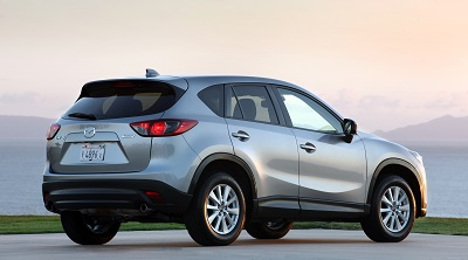
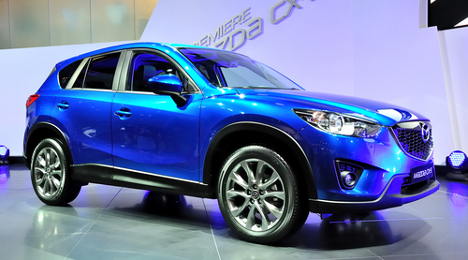
Mazda Motor Corp. filed a safety defect report with the National Highway Traffic Safety Administration to signify both a recall and a stop-sale of CX-5 vehicles from the 2014 through 2016 model years in both the United States and Canada.
OEM officials explained that the fuel filler pipe could rupture during a rear collision and could potentially cause fuel leakage.
Approximately 264,463 vehicles are included in the campaign in the U.S. while about 48,412 units are impacted in Canada.
“There are no reports of accidents or injuries occurring in the subject vehicles as a result of this condition,” Mazda said.
“If a customer has concerns about driving their vehicle before the repair is available, dealers will offer a free loaner, demo, or rental vehicle,” the automaker went on to say.
Citing a defect information report provided by Takata, Honda North America announced this week that it is recalling roughly 2.23 million Takata PSDI-5 driver-side front airbag inflators in both Honda and Acura vehicles.
One key takeaway from their announcement: the inflators will be replaced with parts manufactured by an alternative supplier, with repairs anticipated to begin this summer.
The models included in this recall in the United States include the following:
- 2005-2012 Acura RL
- 2007-2011 Honda CR-V
- 2007-2016 Acura RDX (early production MY 2016 vehicles only)
- 2007-2014 Honda Ridgeline
- 2009-2014 Honda Fit
- 2009-2014 Acura TL
- 2010-2014 Honda FCX Clarity
- 2010-2014 Honda Insight
- 2010-2013 Acura ZDX
- 2011-2015 Honda CR-Z
- 2013-2016 Acura ILX (early production MY 2016 vehicles only)
According to Honda, with this new action, the total number of Honda and Acura vehicles that have been or now are subject to recall due to needing to replace a Takata driver-side and/or passenger-side airbag inflator in the United States now totals approximately 8.51 million vehicles. The company says that no PSDI-5 inflator ruptures have been reported in either Honda or Acura vehicles.
Honda says that the affected vehicles will be accurately searchable on its Honda and Acura recall sites beginning on February 15.
In other Honda-related recall news, the company also announced this week that approximately 341,000 Accord sedans from model years 2008 to 2010 have been voluntarily recalled to replace their supplemental restraint system (SRS) electronic control units. Parts will not be available until fall.
Kelley Blue Book on the ‘potential liability’ for Honda dealers
Kelley Blue Book emailed commentary to media on Wednesday about news of Honda issuing a recall and stop-sale notice to dealers on 1.7 million units for a Takata airbag issue plus a warning to their stores of potential liability.
Auto Remarketing followed up with KBB’s senior director of automotive industry insights, Karl Brauer, to get a better idea of the situation.
“This is the first time I remember hearing that statement made from a manufacturer to its dealers,” Brauer said.
So what does this actually mean for Honda dealers? Brauer says that a dealer is much more likely to be held liable if something does go wrong with a vehicle they sold if it were to be retailed prior to its repair.
“Because the manufacturer is on record for making the statement, as with any case in liability and legal matters, there’s no clear-cut ‘A+B=C.’ It’s all a matter of weighting and arguments and evidence,” Brauer said. “But this just increases, by the very nature that Honda said they (dealers) would be liable, that increases their liability. Because now the manufacturer, who produces these cars, is on record saying, ‘you’re liable, too.’ That’s the kind of stuff a lawyer wants. That’s the exact kind of thing that a lawyer who is representing a client who is injured in an automotive-related issue wants to have.”
While that does create a record for the manufacturer to point to, should a recall-related accident happen and a consumer decides to sue, it still may not be a closed case against the dealer.
“The dealer can totally disagree, they can point to a lot of their own evidence that says they’re not liable, and who knows how the case would ultimately be decided by either a judge or a jury,” Brauer said. “But, again, just that statement now changes the nature of the argument because it’s been clearly stated by a manufacturer.”
One thing is for sure, though: The thought process behind how vehicle recalls are handled has elevated substantially.
“I think we all agree that there’s an increasing awareness of the entire concept of vehicle recalls,” Brauer said. “They’ve made a lot more headlines in the last five to 10 years, there’s been a lot better documentation about the kind of injuries and even fatalities that they’ve caused. So everyone knows more about them. And what this has resulted in is everyone from individual consumers up to government agencies being that much more focused on: What do we do about recalls? How do we most effectively manage them? How do we ensure that something is done about them? Because any kind of rudimentary analysis of recalls over the last 20, 30, 40 years shows that they tend to be fairly low priority.”
Brauer says he thinks a manufacturer holding a dealer more accountable for the backlash of safety recalls is simply them doing everything they can to try to handle the situation.
“I think the reason that you’re seeing Honda make a move like this is because they want to feel like they’ve done everything they can do. They can’t control the consumer,” he said. “But they can use whatever pressure that they’ve got at their command to influence themselves and their own engineers and their suppliers, like Takata, and also their dealers.”
Unfortunately, with parts availability continuing to be an issue, these vehicles are likely to spend a lot of time out of the marketplace.
“We’re looking at the end of summer as the time frame to get these replacement parts to dealers to fix the cars,” Brauer said. “So whether you want to wholesale it or you want to sell it to an end user, whether you’re a dealer who’s just going to wait or you’re a dealer that’s just going to try to get it to another person and let them deal with it, we’re talking seven months before those cars can actually get to an end user and be clear of the retailing system and in a private individual’s hands. And that’s really unfortunate because dealers don’t have unlimited space and unlimited funds to have unsellable cars sitting around.”
One thing that is on the minds of many in the industry is whether or not issuing a stop-sale order on vehicles with an open recall will become a new industry norm.
“I would hope that there would be a threshold level,” Brauer said. “And maybe what they need is a categorization system, like an alert level that goes from 1 to 4, 1 to 5 or whatever.”
Though it seems like a dismal situation, there is one major player in the automotive industry that does come out of this situation better than before if stop sales do become a more consistent element to the used-car industry: Mike Jackson. The head of AutoNation created a policy last year that shelved all vehicles with open recalls on any of his dealer’s lots until they have been repaired. And although that’s currently grounded over 15 percent of his inventory, he seems ahead of the game.
“I think it’s a good example of a major player in the industry using a combination of good sense and forward thinking to basically decide this is where the industry needs to go and we’re going to go ahead and get there ourselves without waiting for the industry,” Brauer said. “And of course, which is so often the case in situations like this, them going there speeds up the process and makes the destination that they got to appear that much more reasonable and wise and likely to the rest of the industry.”
Update: Honda's take
Auto Remarketing also reached out to Honda earlier today to verify if the company indeed does plan to hold dealers "liable" for the sale of vehicles, particularly used, with unrepaired open recalls. A spokesperson from American Honda Motor Co., said that it's been a long-standing policy for Honda to require dealers to have all vehicles with open recalls repaired prior to sale.
"For many years, our dealer agreements have required Honda and Acura dealers to complete any open recalls of which they have notice and ensure the vehicle is in proper operating condition prior to sale, whether new or used," the spokesperson said. "We have consistently reminded our dealers of these obligations for some time, including in stop sale orders."
In a development that prompted one Kelley Blue Book analyst to say, “people are in danger,” the National Highway Traffic Safety Administration said in documents released on Thursday that Continental Automotive Systems is recalling potentially up to 5 million air bag control units.
NHTSA officials indicated the affected units manufactured between Jan. 1, 2006 and Dec. 31, 2010 have a power supply component that may corrode and result in the failure of the air bag control units (ABCU).
“If the air bag control unit fails, safety systems such as seat belt pretensioners and air bags may not deploy in the event of a crash, increasing the risk of occupant injury,” NHSTSA said.
“Additionally, in some vehicles, the air bags may inadvertently deploy, increasing the risk of a crash,” the agency continued.
The regulator said Continental will notify the vehicle manufacturers that installed the air bag control units into vehicles. NHTSA noted the affected OEMs then will file recalls for these vehicles and notify their customers and replace the air bag control units.
NHTSA added Continental has not yet provided a notification schedule.
Industry reaction to another air bag issue
With the recall developments involving air bags manufactured by Takata Corp., still ongoing, KBB didn’t mince words when discussing this matter connected to Continental and potentially 5 million more vehicles.
“This is a very different issue than Takata, but the results are the same — people are in danger,” Rebecca Lindland, senior analyst for Kelley Blue Book, said in comments the company provided to the media.
“In this case the airbag isn't deploying, which is just as bad as an airbag spewing shrapnel everywhere,” Lindland continued. “Hopefully there's an immediate fix for this latest airbag problem.
“Automakers need to aggressively let owners know about the problem, and consumers need to proactively check to see if their vehicle is included once the models are identified,” she went on to say.
When the exact models are identified and eventually repaired, Eric Ibara shared an upbeat assessment. Ibara is the director of residual values for Kelley Blue Book.
“The silver lining for consumers is that once the recall fix is completed, there should not be any detrimental impact to their vehicle’s retained value,” Ibara said.
“It is somewhat unusual to see any impact to used-car values after recalls are announced, and in most cases, once the recall action is performed, the value of the vehicle continues to depreciate as if the recall never happened,” he added.
Furthermore, fellow KBB analyst Akshay Anand is looking for the matter involving Continental to handled better than what happened with Takata, which just released findings from an independent review panel that offered more than a dozen improvement suggestions.
“The Continental airbag issue has the potential to be serious, and hopefully they don’t follow Takata’s egregiously wrong route of ignoring the problem until they’re forced to address it,” Anand said.
“Continental, automakers, and the media all need to do their part to ensure consumers are aware of the situation,” Anand went on to say.
Timeline into Continental investigation
Among the documents NHTSA released on Thursday, the regulator shared the chorological series of events that have happened thus far involving Continental’s air bag control units.
Back on Jan. 30, 2008, NHTSA said Continental received an airbag control unit from Daimler AG that was removed from a vehicle whose owner complained of an illuminated airbag warning light. Officials reported that Continental analyzed the ACU and determined the application-specific integrated circuit (ASIC) was malfunctioning. Continental then sent the ASIC to Atmel Corp. for further analysis.
NHTSA continued that Atmel began an investigation and determined that due to variations in the manufacturing process of the ACU’s power supply component, corrosion in the semiconductor material could lead to swelling within the layers of the semiconductor. Atmel made this discovery in late March 2008.
Subsequently, the regulator noted that electrical connections might be interrupted, which could lead to a failure of the ASIC component.
“Thereafter, Atmel implemented two countermeasures to reduce the likelihood of the corrosion and a corrective action to prevent the corrosion from occurring in the future,” NHTSA officials said.
“Atmel and Continental notified their customers of the investigation results and Atmel’s countermeasures and corrective action,” they continued. “Continental, Atmel, and the various vehicle manufacturers continued to monitor and analyze field returns and determined that after the countermeasures were implemented, field returns for this ASIC issue reduced significantly.”
The next major development came in early 2011.
NHTSA determined that Continental became aware of two inadvertent deployments in the field, one from a Daimler vehicle and one from a Chrysler vehicle. The regulator indicated Continental, Atmel, Chrysler and Daimler continued to investigate this topic and the potential risk of an inadvertent deployment due to this ASIC issue.
Then in August 2011, NHTSA said that Continental concluded that the inadvertent deployments that occurred in the Daimler and the Chrysler vehicles were related to this ASIC issue.
Almost two years later — in March 2013 — NHTSA indicated that Daimler initiated a service campaign outside of the United States covering certain vehicles to address this ASIC issue.
Yet another OEM got involved in the matter last April.
American Honda Motor Co. requested that Continental conduct a download of an ACU from a 2008 Honda Accord that was involved in an accident on Oct. 26, 2013 and was the subject of a lawsuit. On July 21 of last year, NHTSA said Continental analyzed the ACU and determined that the ASIC was malfunctioning.
On that same day, NHTSA said it contacted Continental and requested that Continental conduct a download of an ACU from a 2008 Honda Accord that was involved in an accident on March 30 of last year.
Then on Aug. 18, NHTSA opened an investigation for Honda Accords from the 2008 through 2010 model years
On Sept. 9, NHTSA said Continental analyzed the ACU from the 2008 Honda Accord that was involved in an accident on March 30. On the same date, the regulator said Continental removed the ASIC from the ACU that was installed in the 2008 Honda Accord that was involved in an accident on Oct. 26, 2013.
Officials said the ASIC was sent to Atmel for further analysis and on Sept. 28 of last year, Atmel confirmed that the malfunction of this ASIC was related to this topic.
Yet another development began last Oct. 27. That’s when Mercedes-Benz USA filed a defect information report with NHTSA covering certain Mercedes Benz C-Class vehicles from the 2008 and 2009 model years as well as 2010 Mercedes Benz GLK-Class vehicles to address this ASIC issue.
Then this past Jan. 15, NHTSA said Honda notified Continental that it determined that a safety-related defect exists in the ACU of certain Honda Accords from the 2008 and 2009 model years due to the same defect covered in Mercedes-Benz USA’s defect report.
“For the approximately 3 million ACUs produced from 2006 until implementation of the countermeasures, Continental is aware of 521 field returns that were correlated to this ASIC issue,” NHTSA officials said.
“For the approximately 2 million ACUs produced after these countermeasures, Continental is aware of 81 field returns that were correlated to this ASIC issue,” they continued.
“Continental is not aware of any field returns for this ASIC issue after implementation of the final corrective measure,” NHTSA went on to say.
Toyota, Lexus and Mazda have all recently released information regarding airbag-related recalls, while Mazda has also issued a separate recall related to an issue with the fuel filler pipes in its recent CX-5 vehicles.
Let’s break them down by recall size.
Toyota/Lexus recall 320,000 Land Cruiser, 4Runner, Tundra, Sequoia, LX and GX vehicles
Toyota announced Tuesday that it is recalling 320,000 various vehicles from both the Toyota and Lexus lineups for potentially faulty curtain-shield airbags (CSAs).
The vehicles include model year 2003-2006 Toyota Land Cruiser, 2004-2006 Toyota 4Runner, 2005-2006 Toyota Tundra and Sequoia, 2003-2006 Lexus LX 470 and 2004-2006 Lexus GX 470 vehicles.
According to Toyota, the involved vehicles’ CSAs, due to improper programming in the airbag control modules, can possibly activate when not necessary, along with their seatbelt pretensioners.
All known owners of the involved vehicles will be notified by first class mail.
Mazda issues stop sale, recall for all 2014-2016 CX-5 vehicles (264,463 vehicles)
Mazda announced Monday that it had filed a safety defect report to NHTSA for possible issues with CX-5 vehicles’ fuel filler pipes, which could rupture during a rear collision and potentially cause fuel leakage.
The recall covers all 2014-2016 CX-5 vehicles, translating to approximately 264,463 vehicles affected by this issue in the U.S.
Mazda says there are no reports of accidents or injuries due to this issue.
The company has instructed its franchise dealers to issue a free loaner, demo or rental vehicle to customers with concerns about driving their vehicle before a repair is available.
Mazda recalls 19,000 2004-2006 B-Series trucks with Takata driver-side airbags
Mazda announced Monday it has decided to recall all 2004-2006 model year B-Series trucks that are equipped with Takata drive-side frontal airbag inflators.
Approximately 19,000 of these vehicles affected are located in the U.S., Puerto Rico and Saipan.
These same vehicles are already subject to a previous recall for their Takata-sourced passenger-side frontal airbag inflators.
Lexus recalls 5,000 2016 RX 350 and RX 450h vehicles
Lexus announced toward the end of January the recall of roughly 5,000 model year 2016 RX 350 and RX 450h vehicles for a potential issue with their driver’s knee airbag module.
The company says these modules may not have been properly manufactured, affecting the performance of the airbag and increasing the risk of injury in a crash. All known owners will be notified by Lexus via first class mail.
Sixteen percent of AutoNation’s used-vehicle inventory was unable to be sold at the end of last year due to its own internal policy to not sell any vehicles with open safety recalls. Add that to the less than 2 percent of their new-vehicle inventory affected by the same policy, this represents roughly 6 percent of all of AutoNation’s inventory that it had grounded at the close of 2015 for this reason.
Bill Berman, AutoNation’s executive vice president and chief operating officer, says this policy, which AutoNation put in place last year, has certainly impacted the company’s used-vehicle sales – but will prove to be worth it.
“We continue to implement systems and processes in support of our efforts to ensure no vehicle with an open recall is retailed,” Berman said. “We continue to believe the long-term safety benefits for our customers far outweigh the short-term impact to our results and further support the AutoNation brand promise.”
Pointing out that the recall policy has virtually no impact on new-vehicle sales, AutoNation chairman, chief executive officer and president, Mike Jackson, believes the short-term discomfort the recall policy is having will iron out within the first half of 2016 and will eventually be a selling point for its customers.
“It’s a significant impact on preowned. Just to discuss the issue for a moment, I think the auto industry really had some credibility issues it has to face up to,” Jackson said. “Everything from some of these horrific recalls we’ve had with significant loss of life to credibility issues around the Volkswagen situation. So we sit there and say, you know, what can we do on our part to make it better? So on preowned it’s a significant issue. On any given day 15 percent of our inventory has open recalls.
“These are significant safety recalls and we feel the time has passed that it’s appropriate to take a vehicle in trade with a significant safety recall and turn around the next day and sell it to a consumer,” he continued. “We’re the only one that’s done it, we think it’s a brand attribute, we will work to make it a brand attribute in 2016, and we feel in the long term it will be a tremendous advantage to us. In the meantime, it’s very disruptive to our used-car business because we see no way to get it below 15 percent with new recalls arriving every day. So we have to increase inventory to get to the same point.”
Although Jackson does say that the disruption from these recalled vehicles being grounded impacted used sales, he thinks there is a bigger issue for the industry that “pulls the rug out from under” AutoNation’s used-car inventory: new-vehicle incentives.
“I think the biggest threat to used-car values are additional incentives from the manufacturers, or additional discounts from us,” Jackson said. “That’s the big-picture issue. So it’s very interesting, our fourth quarter performance, where manufacturers are increasing incentives by $250 a car, us increasing our discount by $20 a car, that had an immediate impact on our used-car values. And then we had to discount anything that was relatively new versus the new vehicle on the showroom floor. It’s a double impact. It impacted our new-vehicle gross margin. It impacted our used-vehicle gross margin. That’s the biggest issue and that’s my greatest concern about over-production.”
Jackson said he hopes incentives won’t go further into the double-digit percentages than they currently are, which he said is roughly 10 percent, because it disappoints his dealer base and his customers by depreciating their trade-in values.
To check out AutoNation’s fourth-quarter and full-year sales results for 2015, click here.
Ford Motor Co. announced Tuesday that all Ford Rangers from model years 2004 to 2006 are now recalled for potentially faulty driver-side airbag inflators. This follows news of an estimated 5-million-vehicle expansion of the series of Takata airbag inflator recalls revealed Friday
Ford's action affects a total of 391,394 Rangers, 361,692 of which are in the United States and its territories while 29,334 are in Canada.
A release from Ford says that the company is aware of one report of a death related to a Takata airbag deployment.
The National Highway Traffic Safety Administration discussed the expanded Takata recall in a conference call with the media on Friday, pointing to the fatality of a South Carolina man whose death was linked to an airbag rupture during a wreck involving his 2006 Ranger in S.C. in late December.
According to Gordon Trowbridge, NHTSA's communications director, the recall expansion is due to both this fatality, which he classified as a "field rupture" involving a Takata SDI model inflator, as well as test data showing ruptures in Takata PSDI-5 model inflators.
“That makes that crash the ninth Takata-related fatality in the United States and the 10th globally,” Trowbridge said. “All of these deaths are tragic. There is nothing that we at NHTSA can say or do that will lessen the pain for the affected families. And this latest news is a sad reminder of the immense scope of this problem and why we need to take unprecedented steps to resolve it.”
The model year 2004-2006 Rangers were already under recall for defects in their Takata-sourced passenger-side airbag inflators.
In email correspondence with Auto Remarketing, Trowbridge said that NHTSA believes that Takata's recent filing involving its PSDI-5 model inflators will affect Honda, Audi, BMW, Mercedes Benz, Saab and Volkswagen. The filing involving its SDI model infaltors are expected to affect Audi, Daimler Trucks, Ford, Mazda and Volkswagen.
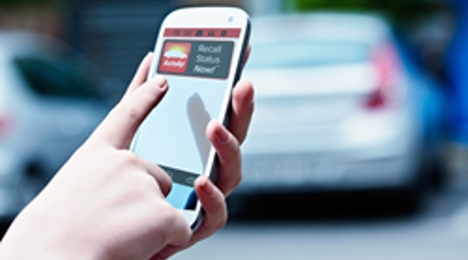
AutoAp leveraged its proprietary safety recall discovery and verification capability this week with the launch of what it’s calling Recall Status Now; a tool developers believe is the industry’s first real-time safety recall status verification mobile app.
AutoAp explained that its automated, multi-sourced and validated recall verification process can deliver more accurate and timely safety recall status updates than what is available from the National Highway Traffic Safety Administration or vehicle history report companies.
“Other recall lookup tools exist (including safercar.gov) that can check the VIN-specific safety recall status, but they have inaccurate recall information and/or significant recall data publishing delays that contribute to false-positive, or worse, false-negative safety recall status results,” company officials said.
The company said its level of accuracy can allow dealers to rely on Recall Status Now to make better business decisions at acquisition, either during the trade-in process or through wholesale channels.
“Taking an off-brand vehicle in trade and finding out it has open safety recalls will cost you to transport it to and from authorized repair, and add time getting it front-line ready,” company officials said.
“And, passing up buying an in-brand trade that has open safety recalls is flushing high margin service revenue down the drain,” they went on to say.
Officials went on to highlight the newest addition to AutoAp’s family of safety recall management solutions can enable dealers to scan a VIN with the mobile app, and quickly get its current, accurate safety recall status, that can be printed or emailed directly from the app.
Recall Status Now joins Dynamic Recall Management — AutoAp’s flagship daily inventory safety recall review service, which is currently selling into the franchised dealer, vehicle rental and fleet markets.
More details about the tool can be found at www.autoap.com.
Whew, what a day.
Several announcements were made Thursday regarding new and ongoing issues related to three different automakers — and they were quite substantial.
These evolving matters include an update on Volkswagen’s diesel situation, the final report on General Motors’ ignition switch compensations to those affected, and a civil penalty brought against Fiat Chrysler Automobiles by NHTSA.
Starting in Wolfsburg, Germany, Volkswagen AG hosted a conference call early in the day (EST), outlining its continued efforts to realign the company and its brands for increased economic efficiency and transparency to get it back on track financially and regain confidence with its customer base.
While VW AG’s leadership discussed several topics encompassing its current internal and external investigations into both its European CO2-emissions issues as well as its multi-national NOx-emissions issues, one key item of discussion will likely be most important to dealers in the United States: There is still no concrete emedy in place to fix the North American diesel vehicles.
According to a statement by VW, the company said that “due to far stricter nitrogen oxide limits in the United States, it is a greater technical challenge to retrofit the vehicles such that all applicable emissions limits can be met with one and the same emissions strategy.”
While VW officials noted their plans to have the European variants of the TDI engines repaired have been approved by the appropriate authorities and will be handled in various fashions over the course of 2016, VW’s plan for a North American remedy is still awaiting approval from the U.S. Environmental Protection Agency and the California Air Resources Board.
What VW did do, however, is accept the blame for the diesel deceit. A statement from the company explains how it all played out:
The information that has been screened to date has largely explained the origin and development of the nitrogen oxide issue. It proves not to have been a one-time error, but rather a chain of errors that were allowed to happen. The starting point was a strategic decision to launch a large-scale promotion of diesel vehicles in the United States in 2005. Initially, it proved impossible to have the EA 189 engine meet by legal means the stricter nitrogen oxide requirements in the United States within the required timeframe and budget. This led to the incorporation of software that adjusted nitrogen oxide emission levels according to whether vehicles were on the road or being tested. Later, when an effective technical process was available to reduce NOx emissions, it was not employed to the full extent possible. On the contrary, the software in question allowed the exhaust gas treatment additive “AdBlue” to be injected in variable amounts such that the NOx values were particularly low when vehicles were in the test bay, but significantly higher when vehicles were on the road.
Hans Dieter Potsch, the chairman of the supervisory board of VW AG, said that, “No business transaction justifies overstepping legal and ethical bounds.”
“I here and now guarantee that we will pursue our thorough investigation to its conclusion,” Potsch said. “I vouch for this personally, as does the entire supervisory board of Volkswagen AG.”
Final report on GM ignition switch compensation released
Kenneth Feinberg, the attorney heading the compensation process for General Motors, released his final report on Thursday, revealing how many claims were submitted and approved in the ignition switch settlement.
The findings of the report conclude that 124 people were killed in relation to the faulty ignition switches in GM’s compact vehicles. Another 275 were approved to receive compensation for their injuries. The total compensation for payouts from the GM fund that Feinberg administered come out to a total of $594.5 million.
A total of 4,343 claims were submitted to the automaker – less than 10 percent were deemed eligible.
Auto Remarketing reached out to GM on Thursday for an official comment on the findings but has not received a response at the time of this writing.
To check out a full breakdown of the findings, click here.
NHTSA imposes $70 million penalty against FCA
In other news related to recent manufacturer challenges, the U.S. Department of Transportation’s National Highway Traffic Safety Administration issued FCA a $70 million civil penalty on Thursday, citing the company’s failure to report legally required safety data as the impetus.
The penalty befalls FCA following its September admission that it has failed, over the course of several years, to provide Early Warning Report data to NHTSA as required by the TREAD Act of 2000. The administration uses this data, among others, to identify and investigate potential defects that may require a safety recall.
According to NHTSA, FCA has commissioned a third-party audit to determine the full extent of the reporting failures.
“Accurate, early-warning reporting is a legal requirement, and it’s also part of a manufacturer’s obligation to protect the safety of the traveling public,” said U.S. Transportation Secretary Anthony Foxx. “We need FCA and other automakers to move toward a stronger, more proactive safety culture, and when they fall short, we will continue to exercise our enforcement authority to set them on the right path.”
FCA isn’t alone in this realm, however – the company is the fifth automotive manufacturer to be penalized by NHTSA in the last 14 months for failure to meet early warning reporting requirements. These previous penalties have been issued to Honda, Ferrari, Triumph, Forest River and Spartan Motors.