Volkswagen has been fitting devices to diesel cars to enable them to pass emissions tests. The view of automotive engineers — a group to which I most certainly do not belong — is that when the problem is “fixed” the vehicles will run terribly.
But if owners attempt to ignore the issue, their cars will instead be pollution factories. As a result of this brazen deception of its customers, VW’s reputation has taken a potentially catastrophic hit.
Now the question to consider is how all of this will affect the secondary market for VWs?
In terms of the 482,000 diesel vehicles in the U.S. that are directly affected by the issue, market value is likely to suffer tremendously.
The ultimate value of these vehicles will depend on the level of utility that can be derived from their ownership after appropriate corrections have been applied. If the cars remain functional, they will presumably find a market.
If a “fixed” VW diesel offers a poorer driving experience than any other car on the road, however, the value of the sum of the parts will exceed the whole and the vehicle will likely be scrapped. Only time will tell the extent of the problem for the directly affected vehicles and their owners.
Of arguably greater material concern for auto financiers around the country is what happens to the valuations of the greater than 10 million gas-powered VWs on the roads of the U.S.
Our analysis here assumes that there is nothing functionally wrong with the vehicles in question. In other words, we assume that all scandals related to VW have already been made public and that similar deceptive devices were not fitted to gas-powered cars.
One way to assess the potential impact of the VW scandal is to consider similar reputational shocks that have occurred in recent history. The most obvious example of such an event was the spate of vehicle recalls that affected Toyota during the winter of 2009-2010.
What was initially reported as a trivial problem with floor mats jamming accelerator pedals in late 2009 became a major news story in February 2010. Vehicles with floor mats safely stowed in the trunk were involved in fatal crashes that were blamed on the occurrence of sticking pedals. The problem was clearly more pernicious than it was initially reported to be.
The chart below shows the interest in the Toyota recall event as measured by Google Trends. The initial flurry of interest occurred in September 2009 when the floor mat issue was first reported. The flood of interest came in February 2010 following the second recall.

It is a matter of debate whether the Toyota issues were more problematic than VW’s current woes, as we are assuming that there is nothing functionally wrong with gas-powered VWs. This was technically not true for Toyotas back in 2010. Several deaths were directly linked by authorities to the problems that triggered the Toyota recalls.
It has been argued that the VW scandal is actually more deadly in the sense that heightened pollution indirectly affected more people. Nevertheless, the Toyota scandal provides the most obvious benchmark to use in assessing the potential impact of an event that is unprecedented in nature and scale.
The following chart shows the observed secondary wholesale auction market prices of 2007 Toyota Priuses, sourced from NADA data. Bear in mind that the 2007 model Prius was only marginally impacted by the recalls — it was listed in the floor mat recall but was, apparently, unaffected by the later, more problematic recall activity.
We have detrended the data on observed prices relative to the initial MSRP or sticker price. The auction valuations tend to spike in the spring as dealers stock up each year for the summer selling period. However, the Toyota recall occurred in the aftermath of the Great Recession. Due to low anticipated demand during the summer of 2009, the spring spike for Prius was relatively muted though a small price bump was recorded.
With an improving economy in early 2010, coupled with rapidly rising overall used car prices, one might have expected dealers to bid up the price of Priuses. Instead, we observe absolutely no spring price spike.

By the start of the following selling season, we observe more “normal” behavior from the popular hybrid vehicle. It seems that by spring of 2011 the public’s interest in Toyota’s problems had faded. The cars remained popular and their prices quickly recovered their full value.
For gas-powered VWs, this analysis suggests that there will be little impact on secondary market value. Fortunately for Volkswagen, the scandal erupted in late summer and early fall.
By way of contrast, the timing for Toyota, strictly in terms of its impact on secondary values, could not have been worse. Public consciousness was at its highest point just as the new selling season was kicking off. Occurring in late September, it is conceivable that public interest in VW will fade to the point where March/April auction sales will be barely impacted. For those with a material interest in used VWs next spring, we advise close monitoring of Google Trends data. If scandals keep coming, if memories do not fade, VWs will sell at winter prices even though the snow is melting outside the auction house.
A further issue concerns the prices of other, unaffected vehicles. Will the VW shock have macroeconomic or industry wide reverberations? Let’s imagine for a moment that all major car manufacturers hold a joint press conference tomorrow where they all confess to the same sins as those committed by VW.
Following this imaginary event, would Americans then choose to drive less? We are not sure what is more fanciful – the notion of an industry-wide mea culpa or the concept of Americans opting en masse to utilize public transportation!
Because the total number of miles driven will be unaffected by the scandal, it should have no impact on overall used car values. If VW has a bad spring in secondary markets, therefore, we would expect valuations of other competitor brands to be marginally higher than they were otherwise likely to be.
For owners of cars directly affected by the recall, one hopes that they will be compensated for the loss in utility and value that their cars have clearly suffered. An event like this, while clearly not a good thing for other VW owners and their financiers, will likely have a much more muted impact.
Performance in next year’s spring market will help tell the complete tale.
Editor's Note: Additional developments in the VW emissions situation can be in this Auto Remarketing story, which was posted Wednesday.
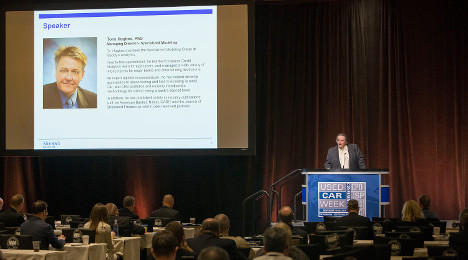
Tony Hughes is managing director of credit analytics at Moody's Analytics. As with any contributed content, the opinions expressed in this and other editorial columns are solely that of the author's and do not necessarily reflect those of Auto Remarketing or its parent company.
A recent study commissioned by the National Automobile Dealers Association reveals that vehicle trade-in values could decline by an average of $1,210 if legislation were to pass that forbade dealers from selling used-vehicles with open recalls.
The J.D. Power study, which NADA commissioned, is titled “An Economic Assessment of Trade-In Value Reduction Caused by Preventing Auto Dealers from Selling Passenger Vehicles with any Open Recall.”
It estimates that the value of some vehicles could decline by as much as $5,713.
The report was commissioned in response to proposed legislation earlier this year from Sen. Richard Blumenthal, D-Conn., titled as the “Used Car Safety Recall Repair Act,” that would ground used-vehicles with open recalls from being sold or leased until a remedy has been enacted. The act was voted down during a U.S. Senate Committee on Commerce, Science, & Transportation markup hearing this summer.
Jonathan Banks, the author of the report and the executive analyst at the Used Car Guide division of J.D. Power, says, among other issues, that the unknown amount of time to reach each individual remedy really throws a wrench in the pricing and remarketing process.
"Assuming a repair delay that is shorter than the actual repair delay is a risky proposition for a dealer, and thus they are more likely to act as if they believe the range of repair delays will be on the high end of the range of repair delays observed in the past for recalls of similar scale and complexity," Banks explained. "In a hypothetical scenario, a lack of clear information could reduce the trade-in value offered to a consumer by hundreds of dollars if a trade-in manager were to overestimate a 30-day recall delay by an additional 30 days."
The report reached that $1,210 average price decline by weighing the average based on both in-brand trade-ins and out-of-brand trade-ins, the latter of which has to factor in the additional costs incurred from holding a vehicle until the repair can be made by transporting the vehicle to an in-brand dealer.
If you’d like to download the full report, click here.
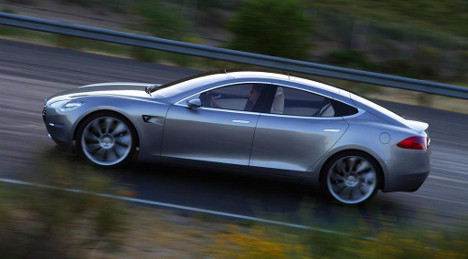
Reports surfaced late last week of Tesla’s voluntary recall of all 90,000 Model S sedans produced, but the recall is likely not going to impact the vehicle’s residuals or used prices as the automaker works on growing its certified pre-owned program.
In fact, when asked if this recent move will impact used pricing or residuals for these models, Larry Dixon, senior manager of market intelligence at NADA Used Car Guide, said “not at all.”
The recall is being conducted to check for a possible defect in the front seat belt assemblies, a Tesla spokesperson told Auto Remarketing on Monday. Most of the affected vehicles are in the U.S.
According to a Reuters report, the worldwide recall is being conducted in light of a single report to the automaker made earlier this month regarding a front passenger seat belt assembly breaking in a Model S in Europe.
Though Tesla said there have been no accidents or injuries related to the issue and that it expects the majority of the seat belts to be fine, the automaker has asked Model S sedan owners to bring their vehicles into a Tesla service center for an inspection of a bolt that attached the seat belt mechanism to the body of the car.
Since the voluntary recall was put into play because of a single report — and no known root cause has been identified — Auto Remarketing reached out to Autotrader to better understand if these quick-acting preventative measures are becoming the norm as high-profile recalls, such as the Takata airbag issus, have automakers on edge.
Michelle Krebs, Autotrader senior analyst, explained there definitely has been a shift in automaker reaction to vehicle issues as regulators and shoppers are becoming more aware of recalls due to recent media explosions.
“After the Toyota sudden acceleration, GM ignition and Takata airbag recalls, we generally have been seeing automakers react very quickly to recalls so as not to incur the wrath — and fines — of NHTSA and to prevent bad public image problems. Couple this with the fact that Tesla strives to set itself apart in all ways from other automakers and it is always in the limelight, it is not surprising that Tesla is moving swiftly to do a recall even after only one complaint,” Krebs explained.
She also noted it is important to keep in mind Tesla sales volume remains “miniscule” in comparison to some of these large automakers, so it is much easier to service all of its Model S customers as it doesn’t involve millions on vehicles on the road.
This type of recall also says a lot about Tesla’s relationship to its shoppers, as it seems very intent to make sure no other owners encounter the same problem, even though they aren’t even sure of the cause yet or if it is an issue in other vehicles.
“Tesla has a very personal relationship with its shoppers, indeed, as it can be because of its low sales volume and the exclusive nature of its expensive product,” said Krebs. “Clearly, Tesla wants to nip this in the bud, and it wants to demonstrate it can handle a product quality problem within its current direct-to-consumer business model.”
Dixon said this action is in line with the automaker’s “unique market position — a progressive, modern automaker that moves quickly and proactively to address consumer issues.”
Though the current number of Teslas on the road remains small, making recalls pretty simple to carry out, the automaker’s direct-to-consumer sales model might make recalls of a larger size difficult to complete. Though there are 125 Tesla service centers around the world, the automaker doesn’t have the network of franchised dealers most automakers normally utilize to service recalled vehicles.
Krebs shared this might pose a problem for Tesla down the road, especially in light of watching recent large recalls play out.
“As Tesla sales volume and product portfolio grow, recalls could be much more challenging without a network of dealers. Dealers have been critical on the front lines of big recalls like those of Toyota, General Motors, Takata and upcoming with Volkswagen diesels,” said Krebs. “Undoubtedly, Tesla is working on a plan for how it will service many more vehicles on the road and would deal with a recall situation.”
Dixon also said it doesn’t seem to be an issue at this point, also bringing up the fact that Tesla service employees make house calls, as well, but again, that could change as production numbers grow.
“Consumers can either bring affected cars to a Tesla service center, or a Tesla 'ranger' will come to customers to assess the situation,” said Dixon. “Tesla is also examining cars at their Supercharger stations, which are spread strategically across the country. As Tesla grows, however, large recalls could present more of a challenge.”
After the news came out on Friday, share price for Tesla dropped by 2.2 percent, but Krebs said this is to be expected, and the shift isn’t anything the company or investors should be concerned about.
“Tesla’s stock price rises and falls with every little bit of news that comes out, including this recall. Next week, it’ll be something else to move the stock. This recall and stock price drop won’t have any lasting impact,” Krebs said.
Dixon echoed that sentiment, sharing the recall will likely have no impact on consumer confidence toward Tesla.
“Telsa acted proactively based on one recorded case involving a improperly installed seat belt,” said Dixon. “Consumer confidence is typically affected by my larger recalls involving more serious issues/accidents with intense, prolonged media coverage. I believe Tesla's shares have recovered from Friday's dip.”
Those watching Tesla are paying much closer attention to the automaker’s operational numbers.
“More important to the value of the stock is that Tesla meets its sales delivery targets, its product roll-out promises and its financial objectives,” Krebs concluded.
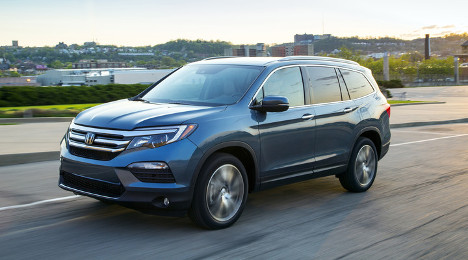
Honda announced Tuesday it will voluntarily recall roughly 35,000 model-year 2016 Pilot vehicles in the U.S. to update their combination meter software free of charge.
According to the company, no market occurrences have been reported related to this non-compliance issue which was discovered via internal testing.
Honda says that the software error in the combination meter may cause warning lamps to fail to illuminate if there is a problem with the system that communicates certain system errors to the combination meter. The condition, if present, would create a non-compliance with several of the National Highway Traffic Safety Administration’s Federal Motor Vehicle Safety Standards.
The company says the software update will correct the combination meter operation. Mailed notifications will be sent to customers beginning in late November. The affected vehicles can be identified here or by calling (888) 234-2138.
In other recall-related news, here’s a roundup of FCA US’s recalls announced within the last week:
Anti-lock Brake System Module Issue
- 275,614 2012-2015 Dodge Journey vehicles in the U.S.
- 78,148 are estimated to be in Canada
Occupant Restraint Control Module Issue
- 284,089 2003 Jeep Liberty and 2004 Jeep Grand Cherokee vehicles in the U.S.
- 13,411 are estimated to be in Canada
Heat-treating Issue
- 65,760 2015-2016 Ram 1500 pickups in the U.S.
- 16,647 are estimated to be in Canada
Air-conditioning System Issue
- 75,364 2015 Jeep Cherokee vehicles in the U.S.
- 7,571 are estimated to be in Canada
Two-hundred million dollars. That’s the high end of the fine that vehicle-part manufacturer Takata will have to pay the Department of Transportation’s National Highway Traffic Safety Administration for its indiscretions in violating the Motor Vehicle Safety Act with its handling of defective airbag inflators.
With an initial penalty of $70 million due in cash, the remaining $130 million imposed by the fine would become due if Takata fails to meet its commitments in remedying the situation or if additional violations of the Safety Act are discovered.
According to the U.S. Department of Transportation, this is the largest civil penalty in NHTSA’s history.
“For years, Takata has built and sold defective products, refused to acknowledge the defect, and failed to provide full information to NHTSA, its customers, or the public,” said Transportation Secretary Anthony Foxx. “The result of that delay and denial has harmed scores of consumers and caused the largest, most complex safety recall in history. Today’s actions represent aggressive use of NHTSA’s authority to clean up these problems and protect public safety.”
In addition to the fine, the consent order requires Takata to phase out the manufacture and sale of inflators that use phase-stabilized ammonium nitrate propellant, which DOT believes to be a factor in the explosive ruptures that caused seven deaths and nearly 100 injuries in the U.S.
The consent order also lays out a schedule for recalling the airbags that are still actively in use, unless the company can prove they are safe or show otherwise why it has determined its inflators are prone to rupture.
In addition to admitting to being aware of the defect and failing to issue a timely recall in the consent order, Takata will also experience what the DOT considers “unprecedented oversight” for the next five years, which will include an independent monitor selected by NHTSA to assess, track and report the company’s compliance with the phase-out schedule and the other requirements of the consent order while also overseeing what the DOT calls its Coordinated Remedy Program.
“Today, we are holding Takata responsible for its failures, and we are taking strong action to protect the traveling public,” said NHTSA Administrator Mark Rosekind. “We are accelerating Takata recalls to get safe air bags into American vehicles more quickly, ensuring that consumers at the greatest risk are protected, and addressing the long-term risk of Takata’s use of a suspect propellant.”
According to the DOT, a separate Coordinated Remedy Order was issued to Takata and the 12 other vehicle manufacturers involved in the existing Takata recalls.
The department said it directs those involved to prioritize their remedy programs based on risk and establishes a schedule by which they must have sufficient parts on hand to remedy the defect for all affected vehicles. The order establishes the aforementioned Coordinated Remedy Program which says NHTSA will oversee the supply of remedy parts and manage future recalls with the assistance of an independent third-party monitor.
Under the Coordinated Remedy Order, DOT says, vehicle manufacturers must ensure they have sufficient replacements on hand to meet consumer demand for the highest-risk inflators by June 2016, and provide final remedies for all vehicles — including those that will receive interim remedies because of supply and design issues — by the end of 2019.
Kelley Blue Book senior analyst Karl Brauer says this all sounds like a small step toward a solution instead of a be-all and end-all resolution.
“It’s interesting to see Takata fined while so many questions remain unanswered,” Brauer said. “We still don’t have confirmation on what exactly is causing the problem with these inflators, and we still don’t know the full extent of the vehicles involved. The recent recall of Takata airbags in new GM, Honda and Volkswagen models suggests there could be an ongoing problem with the bags’ fundamental design. This feels like a single step in a larger process, rather than a resolution to the issue.”
The five companies under Volkswagen’s umbrella that are involved in the sale of its V6 diesel engines in the United States received notification today from the Environmental Protection Agency alleging that their 3.0 liter V6 engines also contain defeat devices that circumvent EPA emissions testing.
Volkswagen later denied those allegations.
This second diesel-related notification of violation for the year — sent to Volkswagen AG, Audi AG, Volkswagen Group of America, Porsche AG and Porsche Cars North America — outlines that the diesel engines containing the alleged defeat devices from model year 2014 through 2016 vehicles emit up to nine times the EPA’s standard of nitrogen oxide.
This list, provided by the EPA, covers only vehicles of these models that include the 3.0 liter diesel engines, which it says includes approximately 10,000 vehicles already sold in the U.S. since 2014 along with an unknown volume of 2016 vehicles.
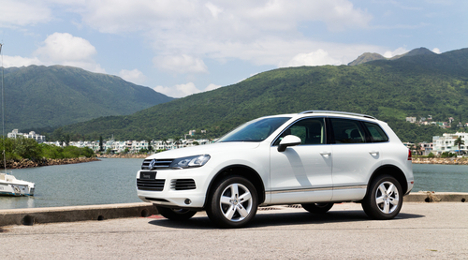
- 2014 VW Touareg
- 2015 Porsche Cayenne
- 2016 Audi A6 Quattro
- 2016 Audi A7 Quattro
- 2016 Audi A8
- 2016 Audi A8L
- 2016 Audi Q5
Both the EPA and the California Air Resources Board (CARB) have initiated investigations into the matter.
“VW has once again failed its obligation to comply with the law that protects clean air for all Americans,” said Cynthia Giles, Assistant Administrator for the Office for EPA’s Enforcement and Compliance Assurance. “All companies should be playing by the same rules. EPA, with our state, and federal partners, will continue to investigate these serious matters, to secure the benefits of the Clean Air Act, ensure a level playing field for responsible businesses, and to ensure consumers get the environmental performance they expect.”
What exactly is a “defeat device?” To catch you up, here is a description, provided by the EPA, describing the alleged violations in more detail:
As alleged in the NOV (Notice of Violation), VW manufactured and installed software in the electronic control module of these vehicles that senses when the vehicle is being tested for compliance with EPA emissions standards. When the vehicle senses that it is undergoing a federal emissions test procedure, it operates in a low NOx “temperature conditioning” mode. Under that mode, the vehicle meets emission standards. At exactly one second after the completion of the initial phases of the standard test procedure, the vehicle immediately changes a number of operating parameters that increase NOx emissions and indicates in the software that it is transitioning to “normal mode,” where emissions of NOx increase up to nine times the EPA standard, depending on the vehicle and type of driving conditions. In other tests where the vehicle does not experience driving conditions similar to the start of the federal test procedure, the emissions are higher from the start, consistent with “normal mode.”
VW's software on these vehicles includes one or more Auxiliary Emission Control Devices (AECD) that the company failed to disclose, describe and justify in their applications for certificate of conformity for each model.
Via an official statement, Volkswagen denied that its V6 TDI engines contain defeat devices. Here is the full statement:
"The United States Environmental Protection Agency (EPA) informed Volkswagen Aktiengesellschaft on Monday that vehicles with V6 TDI engines had a software function which had not been adequately described in the application process. Volkswagen AG wishes to emphasize that no software has been installed in the 3-liter V6 diesel power units to alter emissions characteristics in a forbidden manner," the statement said. "Volkswagen will cooperate fully with the EPA to clarify this matter in its entirety."
Porsche Cars North America issued its own official statement regarding the allegations toward the diesel variant of the Porsche Cayenne.
"We are surprised to learn this information. Until this notice, all of our information was that the Porsche Cayenne Diesel is fully compliant," the statement said. "Porsche Cars North America will cooperate fully with all relevant authorities."
Porsche issued another statement Tuesday evening: "Porsche Cars North America, Inc. today decided, in view of the unexpected U.S. EPA notice received yesterday, to voluntarily discontinue sales of model year 2014 through 2016 Porsche Cayenne Diesel vehicles until further notice.
"We are working intensively to resolve this matter as soon as possible. Customers may continue to operate their vehicles normally."
Industry comments
Responding to the EPA's announcement on Monday, Karl Brauer, senior analyst at Kelley Blue Book, calls to question VW’s previous claims that only a few people were aware of the issue.
“The official expansion of this problem from the Volkswagen brand, and a single Audi model, on to multiple Audi models and at least one Porsche, casts a darker shadow on the VW Group,” Brauer said. “It also makes any past claims of ‘a limited number of people’ involved in the deception appear even more outrageous. Volkswagen would do well to immediately and completely disclose all people and products involved in this deception, no matter how far-reaching. Repairing the automaker’s brand and regaining trust should be VW Group’s highest priority at this point, but it can’t begin until full and voluntary disclosure is achieved.”
According to KBB senior director of commercial insights Rebecca Lindland — also responding to the EPA announcement — this may also complicate VW’s compensation strategy for what may now be a more demanding demographic of car shoppers affected.
“This just makes official what we all suspected — no make or model was spared this treatment since the technology was shared across all diesel engines in the VW family,” Lindland said. “Not only will the potential fines be even greater than first calculated, but the cost of fixes will be as well.
“Whatever compensation they come up with may satisfy a VW Jetta owner, but is less likely to satisfy a Porsche Cayenne owner who paid so much more for their vehicle.”
Stay tuned to Auto Remarketing as we continue to follow the situation as the details come to light.
Dealers who handle older vehicles should take notice of a recall announcement from General Motors, which includes 1,283,340 sedans and coupes in the U.S. from model years 1997 to 2004.
Auto Remarketing reached out to GM on Tuesday for comment, and the automaker replied with the following statement:
General Motors is recalling 1,283,340 older sedans and coupes in the U.S. from the 1997 to 2004 model years because drops of oil may be deposited on the hot exhaust manifold through hard braking, which can cause engine compartment fires. GM is finalizing on a remedy. The company is aware of post-repair fires in some vehicles but no crashes or fatalities. There have been 19 reported minor injuries over the last six years.
The vehicles, which contain the 3.8-liter V6 3800 engines, include:
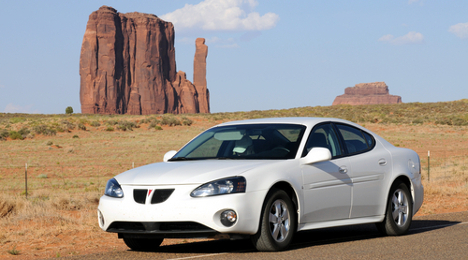
- 1997-2004 Pontiac Grand Prix
- 2000-2004 Chevrolet Impala
- 1998-1999 Chevrolet Lumina
- 1998-2004 Chevrolet Monte Carlo
- 1998-1999 Oldsmobile Intrigue
- 1997-2004 Buick Regal
GM added that the total number of affected vehicles in the U.S., Canada, Mexico and “exports” tallies up to 1,411,332 units.
At the time of this writing, no repair timeline for these vehicles was immediately available.
Toyota announced this week a recall for issues with the driver’s side power window master switch in certain models, impacting 2 million vehicles in the U.S.
And the safety recall affects 6.5 million Toyota vehicles worldwide.
In impacted vehicles, the power window master switch may have been manufactured with insufficient lubricant grease.
“If sufficient grease is not applied, under certain conditions the switch may develop a short circuit that can cause the switch assembly to overheat and melt. A melting switch can produce smoke and potentially lead to a fire,” the company said in the statement announcing the recall.
The involved vehicles include certain:
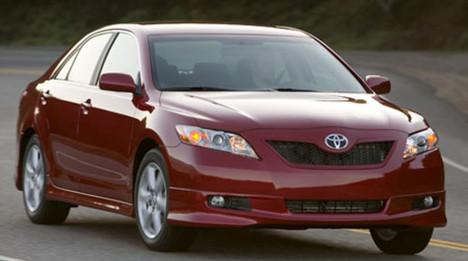
- 2007 and 2009 Camry and Camry Hybrid
- 2009-2011 Corolla
- 2008-2011 Highlander and Highlander Hybrid
- 2009-2011 Matrix
- 2006-2011 RAV4
- 2009-2011 Sequoia
- 2009-2011 Tundra
- 2006-2010 Yaris
- 2009-2011 Scion xB
- 2009-2010 Scion xD
Interestingly, Toyota previously recalled a group of 2007-2009 model-year vehicles for a similar conditions, and this safety recall serves to add vehicles not previously involved in the prior action that utilized an alternative lubricant application method.
Owners of the involved vehicles will be notified by mail. When owners bring their vehicles in, Toyota dealers will inspect the switch and apply heat-resistant grease. Then, if the switch is not operating normally, the switch circuit board will be replaced.
Dealers: do you have customers you would like to notify about their vehicle’s recall status, but you’re apprehensive to contact them due to being on the National Do Not Call Registry?
Rest assured: NADA Regulatory Affairs reminds dealers that the “do-not-call” rules do not prohibit dealers from calling consumers about vehicle recalls. As long as the defect repair work involves no cost to the customer, at least.
According to NADA, itself citing the Federal Communications Commission’s ruling from 2005, “calls that encourage the purchase of other goods and service ‘will be deemed a prohibited telephone solicitation.’”
NADA noted that this specific clarification only applies to the National Do-Not-Call rules and is not applicable to the separate restrictions of the Telephone Consumer Protection Act (TCPA) for text messages, pre-recorded calls, calls made to cellphones, or calls made using auto-dialers.
The association urges dealers to consult their legal counsel before making a decision regarding a recall-notification telephone strategy for its affected customers.
Strong dealer-consumer relationships increase recall repair rates
Anita Lienert, a correspondent for Edmunds.com, also shared in a post on the Edmunds site the results of a recent survey conducted by Public Opinion Strategies, on behalf of Auto Alliance and the Association of Global Automakers, suggesting that consumers who have established a relationship with a dealer participate in recalls more often than those who have not established that type of relationship.
Even though time is the only cost to the consumer for most recall repairs, the research sought to find out why roughly 25 percent of owners of recalled vehicles never complete the free repair of their vehicles.
According to the Edmunds post, one key finding from the survey found that many consumers are doing their own “risk assessments” when they receive a recall notice, deciding whether or not it’s worth their time to take their vehicle in for the remedies.
A statement from the Auto Alliance last week said that, “Many survey respondents showed a reduced likelihood to repair a recalled vehicle if they perceived the recall to be ‘low’ or ‘moderate’ risk, saying it seemed to be ‘no big deal.’ Used vehicle owners are less likely to be motivated to respond to recall communications, even when they are aware of a recall on their vehicle.”
According to the survey, consumers are more likely to heed recall repair notifications if the severity of the recall is high, if they are especially reminded that it is free, or if a reminder of open recalls is provided in their insurance renewal notices.
Dealers: Have you found any particularly potent way to convince your customers to bring their vehicles in for recall repairs? Let us know in the comments below or gives us a shout via social media via the links on the left of this page.
Matthias Mueller, Volkswagen AG’s chief executive officer, rallied the OEM's workforce on Tuesday, announcing to a group of over 20,000 employees at VW’s Wolfsburg, Germany plant that a plan is in the works to remedy the company’s recent diesel emissions scandal.
With a focus on regaining trust and transparency, a news release from the automaker said Mueller told his employees, referring to the group’s various international badges, “in this situation, where we are dealing with four brands and many model variants, care is even more important than speed.”
According to Mueller, the remedies for its customers, whom he says should hear from the company “over the coming days” if their vehicles are affected, have currently been drawn up and will “shortly” be presented to “responsible authorities.”
“In many instances a software update will be sufficient,” Mueller said. “Some vehicles, however, will also require hardware modifications. We will keep our customers constantly informed about the measures and arrange workshop appointments.”
How will fixes affect VW’s reputation?
Mark Dotson, a professor at the Western Michigan University Cooley Law School, said in an analysis from the unversity last week that beyond legal issues, VW’s reputation will rely heavily on how they fix the emission issue.
“Depending on Volkswagen’s fix, assuming the company can remove the emission problem with a modification, then exposure and liability will turn to how satisfied the customers are with the vehicle,” Dotson said. “This will be a test of consumer confidence with the company and its products.
“No doubt there will be class action lawsuits brought on by consumers emphasizing the fraud,” Dotson continued. “Damages on this could range from costs associated with additional emissions testing, decreased value of the vehicle due to the perception that the cars are environmentally unfit, to punitive damages because of the fraud. If there is one area of law, even though the loss here is economic in nature, where courts are most willing to impose penalties, whether by a jury’s determination or pursuant to a statutory consumer protection scheme, it is when it comes to fraud.”
While VW’s diesel range is much simpler in the United States than its counterparts across the pond, it’s still up in the air whether VW will take the less expensive route, employing a software adjustment that will cause the affected TDI engines to meet EPA emissions requirements at the expense of fuel economy and engine performance, or a more costly route by physically modifying the engines with something like urea injection that would help reduce NOx emissions.
“The software change is the least costly option for Volkswagen at this point, and has the potential to affect performance and fuel economy more than the more expensive route of adding urea injection,” noted Matt DeLorenzo, managing editor at KBB.com, in an analysis last week. “I find the use of the word refit interesting, as it implies a hardware change, whereas I think they will be updating the engine control module software to make the engine run in the compliant test mode all the time. The other question is whether or not the refit includes any changes to the catalyst itself to make it more robust.”
According to comments from Fitch Ratings last week, taking the less expensive route could result in much lower resale values and bolster owners’ civil cases against VW and extend the company’s reputational damage. While recalls have historically only affected used-car values in the U.S. for short periods of time, VW’s situation is unique: according to Fitch, “It remains to be seen whether the impact on used-car values could be greater because VW’s actions are being thought of as deceptive.”
Please continue to follow further iterations of Auto Remarketing in both print and digital editions as we continue to follow the political, financial and reputational impact of the developing situation with Volkswagen.