Last year, there was the ignition issue in older General Motors vehicles. Then earlier this year came faulty Takata airbags that impacted Honda as well as more than a half dozen automakers. Now in the past couple of days, Fiat Chrysler is buying back units and being forced to pay nine-figure penalties.
Recalls are keeping dealership service bays humming, lawmakers pontificating and perhaps pushing consumers to become numb about the importance of having these repairs completed.
“There’s no doubt automakers are feeling increased pressure to identify and address recalls than in years past,” Kelley Blue Book senior analyst Karl Brauer said on Monday in a message to Auto Remarketing.
“The high visibility of the airbag and ignition switch recalls have focused the government’s attention on this issue, and the $105 million fine FCA has been ordered to pay confirms the elevated scrutiny level and cost that automakers have to consider going forward,” Brauer continued.
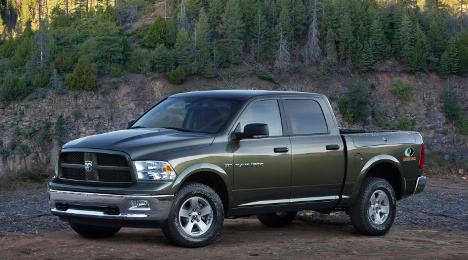
The latest development is the matter involving FCA US, which is being instructed to buy back a group of trucks and SUVs as part of a consent order with the National Highway Traffic Safety Administration announced over the weekend — an agreement that includes $105 million in penalties.
The agreement is so complicated that the automaker had to send a clarification on Monday to refute online reports that the OEM said were inaccurate.
In each of the campaigns mandated by NHTSA, FCA US indicated it will offer to owners whose vehicles have not yet been remedied, as an alternative remedy, to repurchase those vehicles at a price equal to the original purchase price less a reasonable allowance for depreciation plus 10 percent.
“However, customers responding to the recall may continue to keep their vehicles and have them repaired in accordance with the original recall,” Fiat Chrysler officials said.
As of Monday, the automaker determined repairs have been completed on more than 60 percent of the subject vehicles, leaving less than 200,000 eligible units.
“As is expressly provided for under the consent order, FCA intends that any vehicles repurchased will be remedied and resold,” OEM officials said.
In addition, FCA US is offering consumer incentives to encourage owners of vehicles subject to the structural reinforcement campaign to participate in the campaign.
With respect to the 1993 through 1998 Jeep Grand Cherokees that have been part of the recall infractions, too, the OEM said it is also offering to increase the trade-in allowance to be applied to the purchase of another FCA product, service or parts for those owners of these very old vehicles who would prefer this alternative over the installation of a trailer hitch.
Officials added all premiums paid to repurchase vehicles in the three recall campaigns and customer incentives will be applied as credits to the $20 million that FCA US has agreed to spend on industry outreach amounts included in the $105 million referred to in the consent order.
“While such amounts may exceed the $20 million, contrary to certain reports, FCA US does not expect that the net cost of providing these additional alternatives will be material to its financial position, liquidity or results of operations,” OEM officials said.
Looking at the incident in even more broad terms, KBB’s Brauer suspects Fiat Chrysler will sustain little damage from this matter when it comes to its used-vehicle operations as well as residual values.
“In other large recalls over the last five years, we’ve seen a relatively small impact on residual value,” Brauer said.
“I think the assumption is that while a recall may impact a large volume of vehicles, the fix is usually pretty quick and inexpensive on a per-vehicle basis,” he continued. “This means dealers or consumers can address the issue and have an otherwise problem-free car.”
A spokesperson for Fiat Chrysler Automobiles indicated to Auto Remarketing that exact details still are being finalized on what’s going to happen with the trucks and SUVs the OEM is being instructed to buy back as part of a consent order with the National Highway Traffic Safety Administration that was announced over the weekend — an agreement that includes $105 million in penalties.
NHTSA said its enforcement action stems from the automaker acknowledging violations of the Motor Vehicle Safety Act’s requirements to repair vehicles with safety defects. Along with the $105 million civil penalty and the vehicle buy-back program, regulators said FCA US will submit to what they called “rigorous federal oversight.”
The vehicles included in the buy-back program are:
— 2008-2012 Dodge and Ram 4500-5500 4×4 Chassis Cab
— 2008-2012 Dodge and Ram 2500 4×4, 3500 4×4, 3500 Chassis Cab 4×2; MY2008 Dodge 1500 Mega Cab 4×4
— 2009-2012 Ram 1500
— 2009-20011 Dodge Dakota
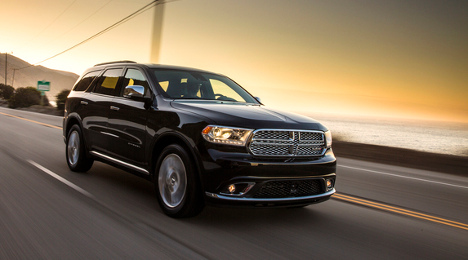
— 2009 Chrysler Aspen and Dodge Durango
The enforcement action comes after a July 2 public hearing at which NHTSA officials outlined problems with Fiat Chrysler’s execution of 23 vehicle safety recalls covering more than 11 million defective vehicles. Fiat Chrysler has since admitted to violating the Safety Act in three areas: effective and timely recall remedies, notification to vehicle owners and dealers and notifications to NHTSA.
In a consent order issued by NHTSA, regulators said Fiat Chrysler is committing to “take action to get defective vehicles off the roads or repaired.” According to NHTSA, the vehicles included in the buy-back program have defective suspension parts that could cause the vehicle to lose control.
FCA US spokesperson Eric Mayne told Auto Remarketing that potentially eligible customers will be advised of offer details.
“The offer is limited to unremedied vehicles, though customers with such vehicles may also opt for the remedy instead of the repurchase,” Mayne said.
Should those customers choose to make another purchase, Mayne indicated he didn’t have any details on how those units would be handled by grounding dealers — potentially to be certified or remarketed through the OEM’s wholesale channels.
Meanwhile, owners of older Jeep Cherokee models that NHTSA says are prone to deadly fires and have been the focal point of debate between the OEM and regulator either will have the chance to trade their vehicle in for above its market value, or will receive a financial incentive to get their vehicle remedied.
In a separate statement, the automaker said, “FCA US acknowledges the admissions in its consent order with the National Highway Traffic Safety Administration.
“We also accept the resulting consequences with renewed resolve to improve our handling of recalls and re-establish the trust our customers place in us,” the OEM continued. “We are intent on rebuilding our relationship with NHTSA and we embrace the role of public safety advocate.
“Accordingly, FCA US has agreed to address certain industry objectives, such as identifying best practices for recall execution and researching obstacles that discourage consumers from responding to recall notices,” the company went on to say.
NHTSA said that “unprecedented oversight” will span the next three years. Regulators explained that plan includes hiring an independent monitor approved by NHTSA to assess, track and report the company’s recall performance.
The automaker must pay a $70 million cash penalty — equal to the record $70 million civil penalty the agency imposed on Honda in January.
In addition, Fiat Chrysler must spend at least $20 million on meeting performance requirements included in the consent order. Another $15 million could come due if the independent monitor discovers additional violations of the Safety Act or the consent order.
“Fiat Chrysler’s pattern of poor performance put millions of its customers, and the driving public, at risk,” NHTSA administrator Mark Rosekind said. “This action will provide relief to owners of defective vehicles, will help improve recall performance throughout the auto industry, and gives Fiat Chrysler the opportunity to embrace a proactive safety culture.”
In commenting on the order, U.S. Transportation Secretary Anthony Foxx gave a warning to other OEMs, too.
“Today’s action holds Fiat Chrysler accountable for its past failures, pushes them to get unsafe vehicles repaired or off the roads and takes concrete steps to keep Americans safer going forward,” Foxx said.
“This civil penalty puts manufacturers on notice that the Department will act when they do not take their obligations to repair safety defects seriously,” Foxx added.
The entire consent order can be viewed here.
This action from NHTSA comes on the heels of Fiat Chrysler responding to an online report of hackers being able to take control of an SUV remotely by rolling out a voluntary safety recall to update software in approximately 1.4 million U.S. vehicles equipped with certain technology.
Fiat Chrysler Automobiles swiftly responded to an online report of hackers being able to take control of an SUV remotely through the radio system by rolling out a voluntary safety recall to update software in approximately 1.4 million U.S. vehicles equipped with this certain technology.
FCA US officials insisted the recall aligns with an ongoing software distribution that insulates connected vehicles from remote manipulation, which, if unauthorized, constitutes criminal action.
Further, the automaker indicated that it has applied network-level security measures to prevent the type of remote manipulation demonstrated in a recent report by WIRED, which detailed how hackers took control of a 2014 Jeep Cherokee.
FCA emphasized these measures — which required no customer or dealer actions — block remote access to certain vehicle systems and were fully tested and implemented within the cellular network on Thursday.
“The company is unaware of any injuries related to software exploitation, nor is it aware of any related complaints, warranty claims or accidents – independent of the media demonstration,” FCA US officials said.
Affected are certain vehicles equipped with 8.4-inch touchscreens among the following populations:
— 2013-2015 Dodge Viper specialty vehicles
— 2013-2015 Ram 1500, 2500 and 3500 pickups
— 2013-2015 Ram 3500, 4500, 5500 chassis cabs
— 2014-2015 Jeep Grand Cherokee and Cherokee SUVs
— 2014-2015 Dodge Durango SUVs
— 2015 MY Chrysler 200, Chrysler 300 and Dodge Charger sedans
— 2015 Dodge Challenger sports coupes
The OEM explained customers affected by the recall will receive a USB device that they may use to upgrade vehicle software, which provides additional security features independent of the network-level measures.
Alternately, customers may visit http://www.driveuconnect.com/software-update/ to input their Vehicle Identification Numbers (VINs) and determine if their vehicles are included in the recall.
Officials stressed that the security of Fiat Chrysler customers is a top priority, as is retaining their confidence in the company’s products. Accordingly, the OEM established a dedicated system quality engineering team focused on identifying and implementing best practices for software development and integration.
“The software manipulation addressed by this recall required unique and extensive technical knowledge, prolonged physical access to a subject vehicle and extended periods of time to write code,” officials said.
“No defect has been found. FCA US is conducting this campaign out of an abundance of caution,” they continued. “Customers are urged to acquire the software update.”
Individuals with questions or concerns can call the FCA US Customer Care Center at (800) 853-1403.
The National Highway Traffic Safety Administration is also reviewing the situation as its Office of Defects Investigation (ODI) is taking a look to see if this situation goes beyond Fiat Chrysler.
“ODI will also contact the manufacturer of the radio to determine whether similar units have been supplied for use in other vehicles,” officials said.
As alarming as WIRED online report might have been, Edmunds.com consumer advice editor Ron Montoya took a measure approach when sharing reaction to Fiat Chrysler’s moves.
“Today’s recall announcement essentially formalizes FCA's campaign to address the vulnerability exposed earlier this week. Like any recall, it's important for all affected owners to follow the instructions outlined by FCA. The company is making it easy for owners to download the fix and update the vehicles themselves with a USB flash drive,” Montoya said.
“It’s important to reiterate that there is no real safety threat to FCA owners,” he continued. “This week’s hack was an isolated incident that was performed on one specific vehicle and it was not something that could be replicated on a mass scale.
“Nevertheless, automakers recognize this as a very important issue and they’re proactively working to identify flaws in their own connected systems and address whatever issues they may find,” Montoya went on to say.
Following the recent recall news surrounding the various incidents related to Takata airbag inflator ruptures, it appears as though the National Highway Traffic Safety Administration is playing it extra careful with its recent investigation into another set of incidents involving airbag inflators from a different manufacturer.
NHTSA opened an investigation on Monday involving two separate incidents connecting air bag inflator ruptures involving equipment supplied by ARC Automotive.
Michelle Krebs, Autotrader’s senior analyst, commented on the potential negative effects bringing the woes of a second airbag manufacturer into the fold could have on the industry if the investigations lead to a recall.
“Problems with a second airbag component manufacturer could cause automakers big headaches, since there are so few suppliers of airbags and airbag components as it is,” Krebs said. “For consumers, it could slow the recall repairs even more with such a limited supply base.”
The first incident, which the Office of Defects Investigation received a complaint about in December 2014, occurred in 2009 due to a reported airbag inflator rupture in a 2002 Chrysler Town & Country minivan. According to NHTSA, ODI contacted Fiat Chrysler Automobiles to conduct a search for similar incidents and based on info obtained from FCA and the results of the search determined that the 2009 incident was a single, isolated event.
The second incident, which ODI received notification about last month via notification from Kia regarding a lawsuit, involves the alleged rupture of an airbag inflator in a 2004 Kia Optima in 2014.
According to NHTSA, the investigations made by ODI revealed that both the 2009 and 2014 incidents involved airbag inflators supplied by ARC Automotive.
NHTSA explains in its report that although the inflators involved with both incidents were made by ARC, it is not clear if there is a common root cause in these incidents. ODI’s investigation is, at this point, ongoing and seeks to collect all known facts from the involved suppliers and vehicle manufacturers. The current affected population, according to NHTSA, includes 420,000 model year 2002 Chrysler Town & Country vehicles and 70,000 model year 2004 Kia Optima vehicles.
To read the full NHTSA report, which explains the specific manufacturing processes and circumstances that may have led to the airbag ruptures, click here.
Karl Brauer, senior analyst at Kelley Blue Book, commented on the message these actions reveal about NHTSA’s goals.
“This sends a strong, and welcome, message from NHTSA that suspicious injuries from vehicle safety systems will be closely examined,” Brauer said. “Hopefully a new standard of investigative effort has been set by the government’s primary automotive safety agency.”
Brauer’s colleague and fellow KBB analyst, Akshay Anand, hopes that the NHTSA investigation doesn’t reveal a more serious underlying problem.
“Amidst the saga of Takata airbags, we can only hope the investigation into ARC doesn’t yield much,” Anand said. “It could be damaging if there is a second widespread airbag recall, and by now, many consumers have recall fatigue. As a result, NHTSA and other associations have two tasks on their hands: ensuring they conduct a thorough investigation, and if there are any potentially dangerous results, informing an increasingly information-saturated public that this in fact is something extremely serious.”
It appears as though some of the automotive manufacturers affected by the Takata airbag recalls have decided to utilize airbag parts manufacturers other than Takata to address the issue. For at least one make, it has decided to cease the use of Takata parts altogether.
That’s according to witness testimonies at Tuesday’s hearing of the Senate Commerce, Science, and Transportation Committee, where the committee hearing discussed the issue of recalls with witness testimonies from the National Highway Traffic Safety Administration and the Inspector General of the U.S. Department of Transportation as well as from representatives from TK Holdings (Takata), Fiat Chrysler Automobiles and Honda North America.
Sen. Bill Nelson, during his address to the committee, offered the following statement in regards to his staff’s months-long investigation of Takata.
“For years, it’s obvious that Takata did not put safety first,” Nelson said. “It appears that Takata knew, or should have known, as early as 2001 — that’s 14 years ago — that there were serious safety and quality lapses in its airbag production process. And you’d think that they would have stepped up their safety efforts at these plants after discovering those issues. No. And by the way, there are eight people dead,” Nelson said
“Instead, internal emails suggest they actually suspended global safety audits from ‘09 to ‘11 for cost-cutting reasons. And now the same company responsible for this disaster is the one making nearly all of the replacement airbags for most of the recalled vehicles. That doesn’t sit well with many Americans. And I think Takata has some serious explaining to do.”
Scott Kunselman, the senior vice president and head of vehicle safety and regulatory compliance at FCA US LLC, said that Fiat-Chrysler no longer plans to use Takata’s parts to fix the affected airbags.
“Today, I am pleased to share with the Committee that as of June 8, 2015, FCA is replacing all driver-side inflators involved in the recall with an alternate and permanent design provided by TRW,” Kunselman said. “Customers who receive the TRW inflator replacement will require no further action on their vehicles.”
Kunselman followed up by saying that the surplus inventory of Takata parts due to switching suppliers will be quarantined and returned from its dealers to Takata. FCA will also replace all previously replaced Takata airbag parts with new ones supplied by TRW.
“All of the approximately 50,000 customers who previously received a Takata inflator will be notified to return for the TRW update, as well,” Kunselman said.
Kunselman also mentioned that FCA has been working with Takata to develop improved versions of the passenger inflator designs, with an improved igniter material as well as a desiccant to address the issue of moisture exposure to the airbag propellants in hot and humid climates.
Rick Schostek, the executive vice president of Honda North America, also spoke at the hearing. In addition to mailing affected customers, Schostek says Honda has improved other measures to help the recall situation, including the following:
- Enhanced general recall website and created microsite dedicated to keeping customers informed and to make it easy for them to check vehicles for open recalls.
- Customer Relations department available to receive calls seven days a week.
- Bi-lingual regional advertising campaign (via radio and newspaper) initiated in March to urge customers to repair vehicles in nine states and two U.S. territories with most consistently high temperatures and absolute humidity.
- Targeted messages via social media.
Schostek said the following regarding Honda’s sources of parts for the airbag repairs.
“To accelerate the safety actions and increase the supply of airbag inflators, Honda proactively began searching for alternative supply solutions to more quickly facilities repairs of our older model vehicles,” Schostek said. “This effort led to agreements with Daicel, Autoliv and TRW Automotive to provide us with replacement parts in addition to Takata."
Schostek says that in recent weeks Honda’s dealers are averaging more than 50,000 repairs per week in light of the improvements and increased sources of parts.
“We have asked our dealers to expand service hours and to never turn away a customer with an affected vehicle,” Schostek said. “And we require dealers to check the VIN for every vehicle that comes into their dealership. To support this policy, in February we initiated a new system that alerts dealers whenever their staff fails to check the VIN of a car brought in for service to see if it has an open recall.”
Honda also holds a firm policy of offering a loaner vehicle or rental car free of charge to customers with affected vehicles that are being repaired or are waiting for a replacement part.
“Further, to prevent the possibility that any Takata airbag inflators under recall can be used as a replacement part, we’ve been searching salvage yards nationwide to find and secure recalled inflators,” Schostek said. “We have already identified many thousands of inflators from salvage yards that now never will be installed in another vehicle.”
Schostek continues to pursue other avenues, as well, including the pursuit of the harder-to-find older vehicles that may be affected.
“In some markets, we have enlisted a special investigative firm as part of our effort to contact hard-to-reach owners of older model vehicles affected by Takata airbag inflator recalls,” he said.
“For many reasons, it is particularly difficult to locate the owners of older vehicles and get the vehicles repaired,” he continued. “When I testified last November, I suggested that we find a way to tie the annual state vehicle registration process to a requirement that safety defects be addressed before completion of vehicle registration.
For more information about the recent Senate Commerce, Science, and Transportation Committee hearing, view the video and other notes here.
Separate announcements from both Honda and Toyota were released yesterday and today, respectively, identifying vehicles from their lineups that are affected by the Takata recall which was expanded toward the end of May.
Honda’s Monday announcement outlined that it will replace, free of charge, Takata passenger front airbag inflators installed in certain 2001-2005 Civic and 2003-2007 Accord models sold in the United States, adding 1.39 million passenger front airbag inflators not previously subject to either a recall or safety improvement campaign.
There is also no change to the national recall of driver front airbag inflators announced by Honda on May 28; here is a portion of the statement from Honda explaining the situation:
In its preliminary announcement on May 28, Honda stated that it would recall a more limited population of vehicles. That announcement, which was based on the specific regional nature of the defect determination made by Takata, indicated that approximately 350,000 additional passenger front airbag inflators would be added to inflators included in an earlier regional action (14V-700). However, the NHTSA subsequently interpreted the Takata defect determination as requiring a national recall and directed Honda to conduct a national recall. As a result, based on the Takata defect determination and the NHTSA's subsequent directive, Honda decided to conduct a national recall that will include approximately 1.39 million inflators not previously subject to recall or safety improvement campaign (this includes the estimated 350,000 inflators mentioned in the preliminary announcement). According to currently available information, this results in a total of approximately 2.3 million passenger front airbag inflators now requiring replacement in this action.
Importantly, approximately 915,000 of the affected Civic and Accord vehicles included in existing passenger front airbag inflator recalls and Honda's voluntary safety improvement campaigns (13V-132, 14V-349, 14-353 and 14V-700) will transition into the new recall. The same free repair – replacement of the passenger front airbag inflator – will be completed under the new national action.
NOTE: Today's announcement does not alter the nature or scope of the national driver front airbag inflator recall that also was announced on May 28, 2015.
Honda says registered owners of affected vehicles will be notified via mail within 60 days.
On the Toyota front, the company announced it is recalling approximately 1,365,000 additional 2003-2007 Corolla and Corolla Matrix; 2005-2006 Tundra; 2005-2007 Sequoia; and 2003-2007 Lexus SC430 vehicles that also may be affected by recalled Takata front passenger airbag inflators.
“Toyota’s focus remains on the safety and security of our customers, and we will continue to respond promptly to new developments so we can resolve issues for them as quickly, conveniently and safely as possible,” said Dino Triantafyllos, Toyota Motor North America’s chief quality officer.
Toyota says that all known owners of Toyota and Lexus vehicles affected by the recall will be notified by first class mail to return their vehicles to a Toyota/Lexus dealer, where the recalled airbag inflators will be replaced with a newly manufactured one.
As always, you can check for a vehicle recall on specific vehicles by searching the vehicle’s VIN on safercar.gov/vin.
The wholesale business is incredibly intricate, even when things are running smoothly. When you add another level of complexity that recalls necessitate, things can get tricky.
Auto Remarketing explored this angle recently from the auction’s point of view to see how it these businesses are handling what is turning out to be the biggest recall environment in our nation’s history.
The wholesale picture is not complete, however, without the voice of the consignors, who — to say the least — play an integral part in the business.
Dan Kennedy, General Motors’ manager of remarketing, offered some insight on how his company handles the rapid nature of today’s recall environment.
We asked him how often vehicles are required to be pulled from an auction lineup due to a sudden or unexpected recall.
“Yes, it happens,” Kennedy said. “At GM, we verify all vehicle eligibility prior to the actual sale occurring, checking for open non-discretionary recalls. If a vehicle is found with an open non-discretionary recall, the vehicle is immediately pulled from the sale and parked until arrangements can be made to have a local certified GM dealer complete the recall.”
Kennedy went on to reaffirm the importance of the auction-franchise connection.
“The auctions have relationships with local dealers that are certified to complete any open recall issue,” Kennedy said. “Typically we use these local dealers to complete the open recalls.”
In our previous story, AR was also curious about another key question in the recall environment impacting the wholesale business: who is responsible for fixing the recalls?
We asked the same question of Kennedy.
“The burden is on the vehicle manufacturer,” Kennedy said. “It is the manufacturer’s responsibility to ensure parts are available and a process is in place to repair/correct the non-discretionary recall action and return the vehicle to meet all requirements.”
Whether we like it or not, those in the automotive industry now live in the age of recalls. It’s a lingering thought in the minds of individuals on every end of the sales spectrum. And while recalls of any nature are anything but simple to manage on the front end, the waters tend to get muddier as time goes on and vehicle histories become more robust.
Perhaps one of the most complicated views you can take of recalls occurs while standing in the shoes of the wide variety of folks in the wholesale business, who deal with used cars whose characteristics can vary wildly.
So, in light of what is now the largest recall in our nation’s history, via the recall recently expanded by Takata for issues with its air bags, Auto Remarketing reached out to professionals in the field to see what they’re doing and what they think about the situation. Whose responsibility is it to fix these recalls? What happens when they’re detected during the auction process?
There is no blanket strategy to prevent recall penetration — the logistics, on every level, remain challenging. Despite the huge volumes of vehicles going through auction lanes on a daily basis, it seems perhaps the only way to handle these recalls, on the auction level, is on a case-by-case basis.
Unfortunate for everyone involved, at this stage in the game, it’s unclear just how much the expanded Takata recall will affect the auction industry. According to NADA Regulatory Affairs, with the current figure now being an estimated 33.8 million potentially affected vehicles across 11 vehicle manufacturers dating all the way back to the turn of the century, even Takata is still working toward figuring out which exact models and specific vehicles should be targeted.
Perhaps the biggest question for the auction business is who is responsible for fixing a recall? Does that responsibility typically fall on the shoulders of the consignors or the auction?
For Jim DesRochers, the vice president of Dealers Auto Auction of the Southwest and former NAAA president, that answer is everyone.
“I think it falls on everybody’s shoulders,” DesRochers said. “I think we have a tendency overall to do too much finger pointing. If you’re going to take those consignments and you understand that some of them are going to be recalls, you and your consigning partners actually have to work together, with the local dealerships, to try to get those done or accomplished, or work with your buyers to help them on the backside, if it’s still under warranty, to tell them what in fact you’re providing them.”
When it comes to deciding how to get a recall fixed, many in the industry do take on what DesRochers calls a “multipronged effort” to leverage relationships with local franchises to have repairs handled.
“We are lucky enough to be about three miles away from most major new-car store dealerships, so it wouldn’t be difficult to get the vehicles there fixed if we needed to,” said Britney Smith-Egbert, the fleet/lease manager at Dealers Auto Auction of Idaho.
Matt Arias, the co-chair of the NAAA Auction Standards Committee, shared with Auto Remarketing what the typical recall process looks like at the auction level.
“The typical flow would be that the auctions catch something and they flag it as something that would either require disclosure before the sale because it meets the disclosure requirement per NAAA Arbitration Policy or it’s caught after the sale by way of an auction’s post-sale inspection product or by the buyer themselves through their own detection methods,” Arias said. “And then that’s where the arbitration has to be verified. If the vehicle qualifies for arbitration then the auction will proceed with the arbitration with the buyer and the seller and hopefully work something out. If not, then the seller will get the car back.”
For some of the more severe recalls, one example being the one dealing with General Motors ignition switch issues, a manufacturer will issue a stop sale order for affected vehicles. And for the auction or consignor trying to sell them, those vehicles have to sit until they’re repaired.
But many open recalls don’t stop a vehicle from being sold at auction. According to Arias, some simply don’t have the ties to manufacturers, like franchises, that make it easier to be aware of recalls, whether it’s a wholesaler, independent consignor, bank repo or others. For many of these situations, the NAAA recommends the use of the SaferCar.gov website to get a better understanding, along with the other notification options provided by the NHTSA, including weekly reports and access to recall look-ups by make and model that list complaints, technical service bulletins, along with open and closed recalls.
“We’re stressing that because we want inspectors on the front end of the process to use that and also on the back end of the process, from an auction point-of-view, to use it as well, because we want to make sure that if a vehicle is in its inspection after the sale, the post-sale inspection, and they find a problem, that they categorize it properly,” Arias said. “Because it’s going to make a difference between the buyer and seller during the arbitration. If it’s something that can be covered by warranty then that’s awesome, nobody has to pay for it, except for the downtime.”
For many that find themselves in the situation where there’s an unexpected recall with a remedy that will take time to fix, this can kill the deal.
“What if he has a buyer for that vehicle right now and now he’s got to tell his retail customer, ‘I can’t sell it to you until the recall’s done.’ He may lose that customer,” Arias said. “That may influence his intent on keeping that vehicle.”
When asked if it was pretty typical of a recall situation to have a substantial wait time to receive parts and start repairs, DesRochers said that from his experience it’s been pretty challenging to get repairs done in a timely manner.
One specific example he shared hits close to home due to a repair delay with a vehicle he sold to a family member.
“And the reason I know this one, I’m personally involved,” DesRochers said. “I sold a car to my sister-in-law, so it’s very personal. And she has not been able to drive it for four months, and the parts aren’t due in for another two months. So there is a responsibility on our side to look at those recalls, and we’re starting to look at cars with recall issues on a one-on-one basis.”
According to DesRochers, many dealers know which vehicles are affected by recalls going into a sale and will avoid them so they don’t get caught up with a vehicle they can’t make a quick turnaround on.
“Buying dealers — they want to retail as quickly as possible,” DesRochers said. “They’re not going to buy into a market niche where they know that there’s air bag problems or starter switch problems or something with a backorder for the parts months away. They’re not going to tie up their capital. They may not be making it overtly known verbally but their buying habits, in fact, show that and reflect that.”
With many trends, though, there tend to be exceptions. According to Arias, he has seen dealers completely aware of a vehicle’s recall issues use the situation to their advantage.
“The auction buyers are very, very savvy,” Arias said. “In terms of relationships with the franchise dealers and the franchise dealers’ computers to see what’s going on. Absolutely that exists — there are some buyers that know that (there’s a recall) going into it. They may or may not admit it, depending on where the money is on that car. They might be able to get a better price knowing that and knowing that they’re at an advantage with the seller that just wants to get rid of it.”
Some auctions find it to be a safer practice to avoid the recalls altogether. Some smaller auctions, like the one DesRochers works at, will actually turn away a consignment if there’s too much there to fix. When asked if he were to be approached by a large consignment full of something like Takata-recalled vehicles, if he would consider working with the consignor to repair the vehicles for sale, he gave the following answer.
“No, I’d turn them away. The fact of the matter is I can do nothing about getting them fixed,” DesRochers said. “And believe me, if they could get them fixed quickly they would have already done it. And I’m not going to be part of the problem of putting out a defective product and hoisting it onto the next person down the line. It makes absolutely no sense for your professional credibility as an auction.”
There appear to be other options, though. According to Smith-Egbert, who operates in a state which she describes as having tough air bag laws, her business is considering taking a different approach.
“Right now we are trying to narrow down exactly what it is that is required of us by the state to make sure we cover all of our bases,” Smith-Egbert said. “One option that we are considering is adding a statement on our sale day bill of sale that says something to the effect that we aren’t obligated or responsible to disclose any open recalls.”
And all of these options seem reasonable and share their own merits. Whether or not you think it’s ethical to sell a used vehicle with an open recall, the consensus seems to be that it’s a good business practice to fix what you can and disclose what you can’t. And there’s certainly no shortage of resources to utilize to make sure your inventory is ready to go.
“We know most of the recall cars,” DesRochers said. “Most of the recall cars that you will see are rental cars or off-lease or whatever — the newer-type stuff. You get that in the pipeline pretty early. You don’t see that, historically, coming to the dealerships in trades. You pretty much have plenty of time to make decisions and plan.”
Only a little more than half of consumers who were made aware of a recall took their vehicle in for the necessary repairs.
That 56 percent of consumers, to be exact, is a reflection of Autotrader’s recent research announced by the company, which shows a mixed view of recalls from consumers.
Of the same group surveyed, 61 percent of the customers said they make an effort to stay informed about recalls on the vehicles they already own. In addition, only 35 percent said they research recalls on vehicles they’re shopping for.
“The huge number of high-profile recalls recently makes it even more imperative for automakers to get consumers to come into dealerships for repairs and for consumers to proactively check to see if their cars are recalled,” said Michelle Krebs, senior analyst at Autotrader. “The record-setting recall of vehicles equipped with potentially flawed Takata airbags could ultimately result in new approaches by the government and manufacturers on how recalls are addressed.”
This situation of the perceived ambivalence of consumers toward the recalls of vehicles they already own could be seen as an opportunity for dealers to reconnect with their customers who they are aware was sold a vehicle in the past with a current open recall.
It could also be seen as an opportunity to show your establishment’s proactivity by disclosing and repairing a previous recall for a vehicle prior to its sale to reaffirm for your customers that you’re in their corner and encourage future visits to your service bays.
The above study was conducted via a survey of just over 1,000 visitors to Autotrader’s website as part of a larger survey on shopper’s attitudes and opinions on a variety of automotive-related topics.
Penske Automotive Group's service and parts operations raked in roughly $260.3 million in overall retail automotive gross profit during the first quarter of 2015. This marked a 5.8-percent year-over-year increase and also accounted for 41.4 percent of the company’s gross profit mix in the quarter.
When asked how much of a tailwind recall services were adding the parts and service business at Penske, the group’s chairman, Roger Penske, said the results were a bit “lumpy.” But they certainly have provided a chance to connect with consumers.
“We looked at what the recall activity, how does it really impact us, and I think it goes from 5 to 10 percent of our business,” Penske said. “It’s kind of lumpy. You get a big surge of recalls, then you might not have any for three or four months."
Penske went on to point out that "any little defect that's found on an automobile" nowadays, ever since the General Motors' ignition switch recall, becomes its own recall due to the government safety regulations put in place by the NHTSA.
This was a sentiment shared by AutoNation’s chairman, president and chief executive officer Mike Jackson, who also said this quarter that the general consensus among automakers seems to be “if in doubt, recall.”
Penske is also one among many that sees the service push put on the industry by recalls as a part of the business that will persist for the time being.
“So we’re the depository for that work,” Penske said. “And I think we’ll continue to see that as part of our income stream on a going-forward basis.”
But the situation is not at all a doom-and-gloom condition to the Penske chairman, who sees a relationship-building and vehicle acquisition possibility with every recall the company sees come into its service bays.
“I think recall business is good,” Penske said. “We welcome it. I think that’s why we’ve committed to the large fixed operations that we have in order to be able to handle it as it comes in. And I think it also gives us the chance — think about this one — it gives us the chance many times to see vehicles which we haven’t seen. So, it gives us the chance to connect with a customer with an older vehicle and in many cases we’re converting those into used-car or new-car sales.”