Ford Motor Co. issued four safety recalls in North America on Wednesday. Only one accident and no injuries are known to be related to the recalls.
The vehicles recalled are as follows, according to Ford.
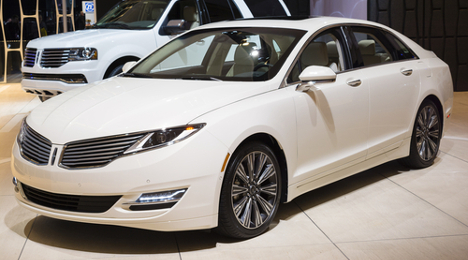
2015 Lincoln MKZ
A compliance recall is active for certain 2015 Lincoln MKZ vehicles made between Feb. 17, 2014 and March 19, 2015 at the Hermosillo Assembly Plant, numbering 22,616 units, which have a possible park lamp issue. When the headlamps are on, the park lamps are brighter than regulations allow, which may adversely affect the vision of oncoming drivers.
Ford said 21,435 of the vehicles are in the U.S., 1,066 are in Canada and 115 are in Mexico.
2015 Ford F-150
Ninety-one F-150s made between Jan. 30 and Jan. 31 at the Dearborn Truck Plant are being recalled for a potential underbody heat shield issue. For affected vehicles, the underbody heat shields may be improperly installed or missing, increasing fire risk. Seventy-three of the vehicles are in the United States, 18 are in Canada.
2014 Ford Focus, Edge, Escape & Transit Connect; 2014-2015 Ford Fiesta
Several Ford models are being recalled for a potential fuel pump issue. The vehicles include 50,157 total of the following: certain 2014 Focus, Edge, Escape and Transit Connect vehicles, as well as certain 2014-2015 Fiesta vehicles. These vehicles have a potential issue with the nickel plating on the fuel pump, which may cause it to seize and may cause the vehicle to not start or stall while driving, the latter increasing the risk of a crash.
There is currently one allegation of an accident that Ford is aware of that may be related to the condition. 45,505 of the vehicles are in the United States and federalized territories, 4,618 are in Canada and 34 are in Mexico.
2013-15 Ford Fusion & Lincoln MKZ; 2015 Ford Edge
Several Ford models are being recalled for a potential steering gear motor attachment issue. Totaling 518,313 units, the affected models include certain 2013-15 Fusion and MKZ vehicles as well as certain 2015 Edge vehicles. In what Ford calls corrosion states and provinces of North America, the potentially affected vehicles may have steering gear motor attachment bolts that may fracture due to corrosion cracking, resulting in the steering system potentially reverting to manual steering mode, making the vehicle more difficult to steer. 487,301 of the vehicles are in the United States and federalized territories; 31,012 are in Canada.
AutoNation hosted a conference call on Wednesday to recap its first-quarter performance, which was highlighted by a record Q1 earnings per share from continuing operations of $0.97, a 29-percent increase compared to 2014, as well as year-over-year net income gains and total revenue increases.
But perhaps a more telling note was spoken by the company’s chairman, chief executive officer and president, Mike Jackson, in regards to recalls, where he expressed dissatisfaction with the overall process of how they have been handled.
When asked if the market should expect the rate of recalls to remain high in the future and increase in perpetuity, Jackson’s not convinced they'll continue to be as large as they have been in the past, but he’s also not happy with the current process of how they are dealt with.
“I think it probably will be high, but whether it’s this high, I’m not convinced at all,” Jackson said. “These are two extraordinary recalls that are so broad and so old that to say we’re going to have these type of recalls, open-ended, I’m not necessarily there. But I think the feeling within the industry is, if in doubt, recall; recall the sooner the better.
“And certainly the whole process, somehow, some way, needs to be improved. It’s really broken the way it is today, almost dysfunctional. We get it all done at the end of the day, but it’s certainly not ideal, and certainly, the customers deserve something better than what’s going on today. But to say we’re going to be open-ended at this level I wouldn’t necessarily agree with that.”
According to AutoNation’s executive vice president and chief operating officer, Bill Berman, recalls represent 5.2 percent of the company’s customer care gross profit, which Jackson estimates to be roughly 25 percent of the increase in customer care gross profit since the spike in recalls began.
The two “extraordinary” recalls that Jackson mentioned are the company’s largest, the General Motors ignition switch recall and the Takata airbag recall. According to Berman, the company has repaired roughly 23,000 GM ignition switches and 48,000 Takata airbags. These repairs account for 60 percent (GM) and 20 percent (Takata), respectively, of the vehicles AutoNation would reasonably expect to execute based on retail sales history and industry standard completion rates, the company said.
Separately, discussing the acquisition front, Jackson also hinted that there are a lot of conversations ongoing, but didn’t want to nail down any sort of commitment to expansion until the deals were done.
“I think it’s fair to say that there is a lot of activity and a lot of discussion underway from willing sellers,” Jackson said. “And we’ll see if that leads to transactions.”
For a full listing of AutoNation's first-quarter results, click here.
The National Highway Traffic Safety Administration has announced several sizeable recalls that were reported to NHTSA in March, the majority of which have remedies planned for April. The following data is provided by the NHTSA.
Toyota Recalls
Toyota is recalling certain model year 2015 examples of the 2015 Camry, Camry Hybrid, Highland, and Highlander Hybrid as well as certain 2014-2015 RAV4 vehicles for a potential steering issue. Totaling 110,085 units, these vehicles may have a component of the electric power steering (EPS) electronic control unit (ECU) that may have been damaged during the manufacturing process, which, over time, may result in failure of the electric power steering system.
Toyota will notify owners and have dealers inspect the serial number of the EPS ECU or steering column assembly to see if the number is within the affected range; if it is, it will be replaced free of charge for the customer. The recall is expected to begin this month.
Another Toyota recall, totaling 2,497 units of certain model year 2012-2014 RAV4 EV vehicles manufactured between July 24, 2012 and August 29, 2014, have been recalled due to a software issue within a component of the Electric Vehicle Traction Motor Assembly, which may cause the electric propulsion motor to shift into neutral, resulting in a possible loss of drive power. Toyota will notify owners this month regarding this issue. The remedy is still under development but will be provided free of charge.
General Motors Recall
GM is recalling 87,063 units of certain model year 2013-2015 Chevrolet Malibu vehicles manufactured between October 24, 2011 and March 5, 2015. Affected vehicles have a potential issue with their slide or tilt switch where the roof panel may not be adequately recessed to prevent the switch from inadvertently being pressed, increasing the risk of a pinch injury. GM will notify owners and instruct dealers to update the Body Control Module (BCM) software to remove the auto-close feature for certain switch positions, free of charge to the customer. A notification schedule has not yet been released by GM at this time.
GM is also recalling certain model year 2015 Buick Encore vehicles, totaling 2,295 units, manufactured between November 27, 2014 and February 24, 2015, and 2015 Chevrolet Trax vehicles manufactured between November 8, 2014 and February 17, 2015. These vehicles may have a potential issue with the steering column assembly housing, which may contact the power steering printed circuit board, causing the circuit board to wear and resulting in the possibility of a sudden loss of electric power steering assist and increasing the risk of a crash. GM will notify owners and instruct dealers to replace the assembly, if necessary, free of charge to customers. GM has not yet provided a notification schedule.
BMW Recall
BMW of North America is recalling certain model year 2015 428i Convertible, 428i xDrive Convertible, 435i Convertible, and 435 xDrive Convertible vehicles, totaling 2,067 units, manufactured between October 22, 2014 and February 27, 2015. Due to a potential programming error, the driver’s front air bag deployment timing may be incorrect, increasing the risk of personal injury in the event of a crash. BMW will notify owners and instruct dealers to reprogram the air bag control module with the corrected version of the software, free of charge to the customer. The recall is expected to begin this month.
As always, if you’re curious if any of your vehicles may have potential recalls or you want to look up a specific vehicle, you can find out on the NHTSA’s website.
Have you ever wondered how recalls affect the opinions of visitors considering your vehicles?
As it turns out, although consumer perception can be affected based on the size or severity of a recall, how it is addressed and portrayed also plays a key role.
Market research firm Phoenix Marketing International (PMI) and Infegy, a social media intelligence technology provider, set out to study the effects of the massive number of recalls on consumer perception in their recent report, “The Impact of Automotive Recalls on Consumer Opinion.”
The findings from the report suggest that while recalls only have moderate effects on the perceptions of quality and desirability, negative feedback can continue to occur six months and longer after the recall makes the news.
The study includes PMI’s research of consumer reactions to more than 9,000 automotive ads as well as its Auto Audit, which is conducted continuously with consumers shopping for new vehicles. Infegy also collected data from social networks, blogs, news sites and community forums via its flagship product, Infegy Atlas, which analyses these areas to get an impression of consumer opinions.
One example, the 2014 recall of certain Takata airbags, affected nearly 11 million vehicles from nearly every automaker. Honda was hit the hardest in terms of sheer numbers in its public perception with this recall, with more than 5 million vehicles recalled.
However, the year-over-year perception of Honda vehicle quality for the vehicles that were actually a part of the recall remained flat, and the amount of negative sentiment toward Honda only increased by two points, showing just how unpredictable a recall’s impact on a brand’s reputation can be.
Mazda, which had the fewest vehicles recalled with issues related to Takata airbags, received the most attention in proportion to the number of vehicles it recalled (13 mentions for every 50 cars), simply because of how it handled the recall.
Unlike the other manufacturers involved, who recalled all potentially affected vehicles, Mazda limited its recall to the Southeast region of the U.S. due to the impact of humidity on the potential airbag failure. According to the report, this was seen as not being good enough by the general public.
“Manufacturers must go to great lengths to regain consumers’ trust when recalls occur,” said Dennis Syrkowski, the president of automotive for PMI. “Simply recalling vehicles in specific areas of the country where the defects are most likely, even if justified, can have a big negative impact on the public’s quality perception and overall opinion of a particular manufacturer.”
Other key findings, according to the report, are as follows:
- Recall impact on consumers buying a vehicle is less than on those who are not.
- Consumers shopping for luxury vehicles were more aware of brand recalls.
- Recall awareness for new-vehicle shoppers was relatively high, peaking at 50-60 percent of shoppers between April and July of 2014, when the recall announcements were at their highest.
- Consumers are becoming more aware of the role of suppliers in the design and assembly of vehicle components.
For more information, the report can be accessed and reviewed in full here.
Ford has announced three separate safety recalls for North America.
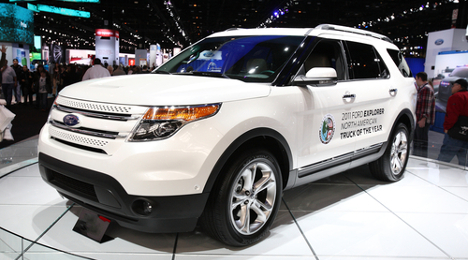
Most prominent among them is the recall of 212,911 units from certain 2011-2013 Ford Explorer and Ford Police Interceptor Utility vehicles that may have a potential issue with the spring that controls the interior door handles. The company says if the spring is unseated, the door may become unlatched in a side-impact crash and increase the risk of injury.
Ford says there are 194,484 of these vehicles in the Unites States and federalized territories. 12,392 are in Canada and 6,035 are in Mexico. All of the vehicles were built at the Chicago Assembly Plant between Feb. 1, 2011 and Jan. 31, 2012; June 1, 2012 to June 30, 2012; and Oct. 1, 2012 to Nov. 30, 2012. A release from the company states Ford is not aware of any accidents or injuries related to this condition.
The second Ford recall covers certain 2013-2015 Lincoln MKT limo and hearse vehicles in North America for a potential vacuum pump relay issue. Totaling 1,725 vehicles, the pump relay issue could result in an under-hood fire. The company is aware of two such fires but no accidents or injuries related to the condition. The affected vehicles were built at the company’s Oakville Assembly between Mar. 6, 2012 and Mar. 4, 2015; 1,586 of the vehicles are in the U.S., 139 are in Canada.
The third Ford recall is for certain 2011-2013 F-Series Super Duty ambulance vehicles and 2014-2015 F-Series Super Duty ambulance and emergency vehicles with the 6.7-liter diesel engine in North America for a potential exhaust gas temperature sensor issue. Totaling 6,472 units, the affected vehicles have a potential issue with the exhaust gas temperature sensors not functioning properly, which could cause the vehicle to incorrectly identify a high-temperature condition.
The company is not aware of any related accidents or injuries due to the condition, for any drivers or patients riding in the ambulances. The affected vehicles were built at the Kentucky Truck Plant between Feb. 22, 2010 and Feb. 1, 2015. 6,322 of the vehicles were sold in the United States, 96 in Canada and 54 in Mexico.
NHTSA Recall Bulletins
The National Highway Traffic Safety Administration has been made aware of several other recalls this month, including two from Mercedes-Benz USA and one from Toyota.
Mercedes-Benz is recalling certain model year 2015 CLS 400 and CLS 400 4matic, 2012-2015 CLS 550 and CLS 550 4matic, 2012-2013 CLS 63, 2014 CLS 63 and 2014-2015 CLS 63P vehicles for a potential issue of LED tail lights that may not light on the sides, reducing the rear-side visibility of the vehicle. Potential units affected tallies up to 30,141, the owners of which will be notified by Mercedes-Benz USA to receive an update to the lighting controller software, free of charge, at a dealer.
A smaller but potentially more serious Mercedes-Benz recall covers 3,039 certain model year 2015 C300 4matic and C400 4matic vehicles made between April 7, 2014 and July 25, 2014. These vehicles have a potential issue with their fuel delivery module which may be improperly secured to its fuel tank as well as a second potential issue of having electrical wires connecting to the fuel delivery module that may be pinched between the flange of the fuel delivery module and the tank.
According to the report, if the locking plate is not properly secured to the fuel delivery module it may become loose, and leak fuel, increasing the risk of a fire. If the electrical wires are pinched, the fuel pump may stop working, leading to a stall and increasing the risk of an accident. Mercedes-Benz will notify owners and instruct dealers to inspect the vehicles for the aforementioned issues and correct the issues, as necessary, free of charge to the customer.
For our readers on the Isle of Enchantment, Toyota is recalling certain model year 2012-2015 Yaris vehicles sold in Puerto Rico that were made between Aug. 31, 2011 and Feb. 9, 2015 that may have been manufactured with a roof headliner that does not provide the proper occupant protection in the event of a crash. The recall, which has a potential number of affected units totaling at 16,582, will contact owners and have dealers inspect and replace the headliner, if necessary, free of charge. The recall is expected to begin in mid-April.
The National Highway Traffic Safety Administration announced this week its receipt of an expanded air bag recall for certain Honda vehicles.
Added to the previous recall, notated as 14V-351, are vehicles as follows: certain 2001 Honda Accord, certain 2004 Honda Civic, and certain 2008 Honda Pilot vehicles. The potential issue with these vehicles, the same as the previous recall, is due to a possible issue with their air bag inflators during the deployment of the driver-side frontal air bag.
According to the NHTSA, in the event of a crash necessitating deployment of the driver-side frontal air bag, the inflator could rupture with metal fragments striking and potentially seriously injuring vehicle occupants. Honda plans to remedy the situation by notifying the vehicles owners and instructing dealers to replace the driver-side frontal air bags in all affected vehicles free of charge to the customer.
To check if a specific vehicle is subject to a recall, visit the NHTSA website.
The National Highway Traffic Safety Administration recently announced a handful of recalls of varying sizes that were originally reported to the organization toward the end of February.
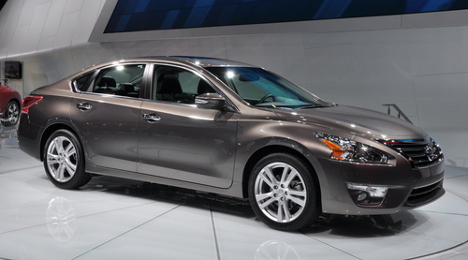
The largest among them includes a recall of 625,000 certain 2013-2015 model year Nissan Altimas with a possible hood latch issue and nearly 340,000 Jeep and Dodge vehicles with a possible fuel pump relay issue. The specific details of these recalls are as follows, according to data provided by NHTSA.
MY 2013-2015 Nissan Altima – 625,000 Potential Units
Nissan North America is recalling certain Altima vehicles manufactured between March 1, 2013 and Dec. 31, 2014. The affected vehicles’ secondary hood latch may bind and remain in the unlatched position when the hood is closed, leading to the possibility, if the primary latch is inadvertently released, that the hood could unexpectedly open while driving, resulting in an increased risk of an accident.
The manufacturer has not provided an exact remedy for this specific recall, but it should be noted that this is an expansion of a previous recall reported in September, notated 14V-565, which addressed the same issue for certain 2013 Altima vehicles and the manufacturer’s announced remedy was to notify owners with instructions to have dealers repair the issue.
MY 2012-2013 Jeep Grand Cherokee & Dodge Durango – 338,216 Combined Potential Units
Fiat Chrysler Automobiles is recalling certain Grand Cherokee vehicles manufactured between Sept. 17, 2010 and Aug. 19, 2013 equipped with a 3.6-, 5.7- or 6.4-liter engine and certain Durango vehicles manufactured between January 18, 2011 and August 19, 2013 equipped with either the 3.6- or 5.7-liter engine for the potential issue of fuel-pump relay failure.
The specific relay, inside of the Totally Integrated Power Module (TIPM-7), may fail, causing the vehicle to stall without warning and increasing the risk of an accident. Chrysler has announced a plan to notify owners and instruct dealers to replace the fuel pump relay with one external to the TIPM. The recall is expected to begin April 24.
MY 2015 Hyundai Genesis – 24,400 Potential Units
Hyundai Motor America is recalling certain Genesis vehicles manufactured between Feb. 21, 2014 and Jan. 24, 2015 for a potential issue involving water leakage into the rear combination lamp assemblies. This issue may cause an incorrect gear display on the instrument panel or a delay in the engagement of the selected gear when the vehicle is shifted from park to reverse or drive, increasing the risk of an accident due to the possibility of the vehicle traveling in an unintended direction due to the incorrect gear being displayed.
Hyundai plans to notify owners and instruct dealers to apply pads to prevent water intrusion into the combination lamp housing free of charge to the customer. A notification schedule has not been announced at this time.
MY 2015 Chevrolet Cruze – 1,773 Potential Units
General Motors is recalling certain Cruze vehicles manufactured between Feb. 4 and Feb. 9 for a potential issue with the left-rear or right-rear parking brake cable brackets, which may not have been properly fastened during the assembly process, resulting in the possibility of the fastening bolts backing out completely, causing the parking brake bracket to separate and the parking brake to not hold the vehicle in place. GM plans to notify owners and instruct dealers to inspect the parking brake bracket bolts and tighten them, if necessary, free of charge to the customer. The recall is expected to begin this month.
MY 2015 Dodge Challenger SRT & Dodge Charger SRT – 1,673 Combined Potential Units
Chrysler is recalling certain Challenger SRT and Charger SRT vehicles manufactured between Sept. 18 and Feb. 5 that are equipped with a 6.2-liter supercharged engine with a potential issue of O-ring seal and fuel rail crossover hose damage which may result in the fuel rail hose connection leaking fuel, potentially increasing the risk of a vehicle fire in the presence of an ignition source, such as a hot engine or exhaust components.
Chrysler plans to notify owners and instruct dealers to replace the engine fuel rail injector crossover hose free of charge to customers. The recall is expected to begin April 24.
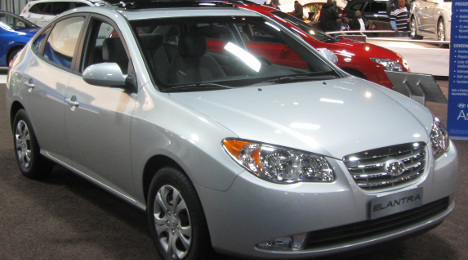
The National Highway Traffic Safety Administration said Hyundai Motor America is recalling more than 200,000 compact sedans to correct a steering issue.
NHTSA indicated the recall includes Elantra vehicles from the 2008 through 2010 and manufactured from June 1, 2008 to April 30, 2010. The campaign also covers Elantra Touring vehicles from the 2009 and 2010 model years and manufactured from Nov. 1, 2008 to April 30, 2010.
Officials explained that a total of 204,768 units contain an electronic power steering (EPS) electronic control unit (ECU) that may sense a discrepancy in the steering input signals and, as a result, disable the steering power assist.
“If power steering assist is lost, greater driver effort would be required to steer the vehicle at low speeds, increasing the risk of a crash,” NHTSA said.
The regulator noted Hyundai will notify owners, and franchised dealers will verify the proper operation of the electronic power steering and update the EPS control unit, free of charge.
The manufacturer has not yet provided a notification schedule, according to NHTSA.
In the meantime, owners can contact Hyundai customer service at (855) 671-3059 and mention recall No. 127.
On Wednesday, U.S. Transportation Secretary Anthony Foxx announced that the National Highway Traffic Safety Administration issued an order requiring Takata to preserve all air bag inflators removed through the recall process as evidence for both NHTSA’s investigation and private litigation cases.
Foxx added the order also ensures NHTSA’s access to all data from the testing of those removed inflators.
“This department is focused on protecting the American public from these defective air bags and at getting to the bottom of how they came to be included in millions of vehicles on U.S. roads,” Foxx said. “This preservation order will help us get the answers we need to accomplish those goals.”
Foxx also announced that NHTSA will upgrade the Takata investigation to an engineering analysis, a formal step in the agency’s defect investigation process.
Federal officials explained that upgrading the investigation is an important step in determining the actual cause of the air bag failures and the appropriateness of remedies, as well as determining whether Takata’s refusal to notify the agency of a safety defect violates federal safety laws or regulations.
Since 2008, NHTSA indicated automakers have recalled about 17 million vehicles with Takata air bags that can rupture when they deploy, producing fragments that can kill or seriously injure occupants.
In 2014, five automakers — BMW, Chrysler, Ford, Honda and Mazda — launched national recalls at NHTSA’s urging for defective driver-side air bags. Those five, plus General Motors, Mitsubishi, Nissan, Subaru and Toyota, are recalling vehicles for defective passenger-side air bags in areas of consistently high absolute humidity, which is believed to be a factor in the ruptures.
Under NHTSA oversight, Takata is testing air bag inflators to determine the scope of the defect and to search for the root cause. Officials noted that testing of thousands of air bags to date has not produced any evidence that the passenger-side defect extends outside the high-humidity zone.
NHTSA mentioned automakers have announced plans to form a testing consortium, and private plaintiffs have sought access to inflators in federal court to conduct their own tests.
Meanwhile, NHTSA has hired an outside expert with expertise in the use of propellants in air bags to examine the range of possible root causes, help monitor testing and advise the agency on any additional actions we should take.
“There is a strong public safety interest in ensuring that testing moves forward, and that NHTSA has access to all test data,” NHTSA administrator Mark Rosekind said. “We have worked closely with attorneys for private plaintiffs to construct this order so that it protects plaintiffs’ legal rights while also supporting our efforts to protect public safety.”
Among the key provisions of the order issued Wednesday:
— Takata is prohibited from destroying or damaging any inflators except as is necessary to conduct testing.
— Takata is required to set aside 10 percent of recalled inflators and make them available to private plaintiffs for testing.
— Takata is required to submit for NHTSA’s approval plans for gathering, storing and preserving inflators already removed through the recall process and inflators removed in the future, as well as written procedures for making inflators available to plaintiffs and automakers who request access.
Officials added that plaintiffs or automakers who seek access to inflators must submit to the terms of the preservation order, which grants NHTSA access to all testing data
“NHTSA retains the ability to collect inflators for its own testing if it determines such testing is necessary,” the agency said.
Separately, NHTSA late last week began levying $14,000 a day in civil penalties against Takata for failure to respond to requests for information about more than 2.5 million pages of documents it has produced under NHTSA orders.
The National Highway Traffic Safety Administration recently shared details about recalls from a half-dozen different makes, adding up to a little more than 200,000 units.
The largest portion of that figure is associated with a campaign to correct the system controlling airbags on the Jeep Cherokee from the 2014 and 2015 model-years. Officials indicated Fiat-Chrysler Automobiles are recalling 167,749 vehicles manufactured between Jan. 1, 2013 and Nov. 19 of last year.
NHTSA indicated the affected vehicles may experience unintended side curtain and seat air bag deployment during vehicle operation.
“If the air bags deploy unexpectedly during vehicle operation, it can increase the risk of personal injury and increase the risk of a crash,” the regulator said.
FCA informed NHTSA that it will notify owners, and dealers will re-flash the occupant restraint control module software, free of charge. The recall is expected to begin on March 26.
In the meantime, owners can contact Chrysler customer service at (800) 853-1403 and reference recall No. R05.
Next, NHTSA shared details of a pair of campaigns from Jaguar Land Rover North America for units that might have a braking system problem.
One recall is for 74,648 units — the Land Rover Range Rover from the 2006 through 2012 model-years. NHTSA said these vehicles manufactured from April 15, 2005, to September 4, 2012 potentially have one or two flexible front brake hoses that may rupture, causing loss of brake fluid.
“If one or both of the flexible brake hoses fails, the vehicle may require a longer distance to stop, increasing the risk of a crash,” federal officials said.
Meanwhile, that automaker has another campaign covering another 24,679 units, which cover Land Rover Range Rover vehicles from the 2013 and 2014 model-years. The agency noted these units manufactured between Aug. 16, 2012 and Jan. 8, 2014 may have a brake vacuum hose that may have been incorrectly routed, allowing a hole to be worn into it.
“If a hole is worn into the brake vacuum hose, a complete loss of braking assistance could occur, lengthening the distance required to stop the vehicle and increasing the risk of a crash,” NHTSA said.
Land Rover told NHTSA that it expects to begin both recalls on March 13. For the larger of the two campaigns, Land Rover will notify owners, and franchised dealers will replace the left and right front brake hoses, free of charge. For the other recall, Land Rover not only plans to notify owners, but franchised dealers will inspect the brake vacuum hose and correctly route it, as necessary, free of charge. Any brake vacuum hose that is damaged will be replaced, free of charge, according to the OEM.
Land Rover owners also can contact the manufacturer’s customer service at (800) 637-6837 and reference recall No. P052 or P054.
Jaguar Land Rover North America also posted one other recall, according to NHTSA; this one for Jaguar vehicles.
The automaker is recalling 4,787 units, the Jaguar XK from the 2012 through 2015 model-years. In the affected vehicles manufactured from March 4, 2011, to March 20, 2014, the front side lamps (parking lamps) may turn off after approximately 5 minutes. As such, these vehicles fail to comply with the requirements of Federal Motor Vehicle Safety Standard (FMVSS) No. 108, "Lamps, Reflective Devices, and Associated Equipment."
The regulator said, “If the parking lamps turn off, the vehicle will have reduced conspicuity, increasing the risk of a crash.”
NHTSA added Jaguar will notify owners, and franchised dealers will update software that controls the front side lamps, free of charge. The recall also is expected to begin on March 13.
Owners can contact Jaguar customer service at (800) 452-4827 and mention recall No. J049.
Finally, the last of the recent recalls announced by NHTSA comes from last year’s leader in campaigns — General Motors.
This recall is for only 5,876 units, the Buick Enclave, Chevrolet Traverse and GMC Acadia and equipped with Goodyear P255/65R18 Fortera HL tires.
NHTSA indicated these vehicles are equipped with tires that may experience tread cracking. As such, these vehicles fail to comply with the requirements of Federal Motor Vehicle Safety Standard (FMVSS) No. 110, "Tire Selection and Rims and Motor Home/Recreation Vehicle Trailer Load Carrying Capacity Information for Motor Vehicles with a GVWR of 4,536 kilograms (10,000 pounds) or Less."
“If the tire treads crack, a loss of tire pressure and possible tire failure may result, increasing the risk of a crash,” officials said.
GM will notify owners, and franchised dealers will replace the tires that were manufactured within a specific date range, free of charge. This manufacturer has not yet provided a notification schedule.
Owners may contact GM customer service at (800) 521-7300 for Buick (800) 222-1020 for Chevrolet or (800) 462-8782 for GMC. GM's number for this recall is 15025/15067.
“This recall is for Goodyear P255/65R18 Fortera HL tires installed as original equipment,” NHTSA said. “For tires that were purchased as replacement equipment, see recall 15T-002.”