As the company launched a new advertising campaign and forged a partnership to benefit independent repair shops, Carfax shared new research that showed more than 46 million vehicles nationwide have at least one safety recall that has never been fixed.
In fact, Carfax said 5 million of those units were bought and sold by potentially unsuspecting consumers in 2014.
One of the most alarming discoveries is that people driving or buying family-oriented vehicles — specifically minivans and SUVs — are most at risk. One in three minivans and one in five SUVs has an unfixed recall, according to Carfax.
“America’s cavalier response to manufacturer safety recalls is putting lives at risk,” said Larry Gamache, communications director at Carfax. “Every morning millions of people drive to work, school and other places in a potential ticking time bomb.
“Fires, crashes and serious injury are just a few consequences of letting recalls go unfixed,” Gamache continued. “The minor inconvenience that comes from having a recall fixed pales in comparison to what can happen if you don’t.”
While every state has a significant number of unfixed recalled cars, Carfax determined California, Texas, Florida, New York and Pennsylvania top the list.
However, analysts found the risk is greatest in West Virginia, Michigan, Mississippi, Wyoming and New Jersey, which have the highest ratios of unfixed recalled cars in the nation.
“Carfax and the auto manufacturers are working hard to help eliminate this problem,” Gamache said. “Car owners and buyers can easily find out about open recalls through the myCarfax app for free and on Carfax Vehicle History Reports.”
Latest Nationwide Ad Campaign to Connect More Shoppers with Carfax Advantage Dealers
In other company news, Carfax says it’s hard at work helping online used-vehicle shoppers easily find the right model and connect with Carfax Advantage dealers.
After almost a year, millions of people have found the car they want and avoided the ones they don’t by starting their used-car search with vehicle history at Carfax.com. Now, new ads from Carfax showing how simple vehicle shopping can be are airing nationwide.
“People invest hours looking for the perfect car, only to find out at the last minute it doesn’t have the history they want,” Gamache said. “At the all-new Carfax.com, we flip the script and let you choose the vehicle history you want first.
“In fact, Carfax Used Car Listings is driving a record number of ready-to-buy shoppers to Carfax Advantage Dealer websites and stores in its first year,” he added. “With a national ad campaign now in full swing and car buying season right around the corner, more people than ever will discover how easy it is to shop at Carfax.com.”
Gamache stressed that Carfax Used Car Listings is transforming how used-vehicle shoppers and dealers connect, as well.
Multiple contact methods for each dealership are found on both the search results and vehicle details pages. Interested buyers also can click through directly to the dealer’s website from Carfax.com, a benefit few other listing sites offer.
In addition, the company mentioned there are no ads or other distractions on Carfax Used Car Listings, and every vehicle listed for sale has a free Carfax Vehicle History Report.
In the latest Carfax ads, viewers get a peek into the Car Fox den to learn how Carfax helps reduce the time and headache often associated with online car buying. Car Fox shows a consumer how easy car shopping is when you start by choosing the vehicle history you want, such as no reported accidents, Carfax 1-Owner, service records and more.
The ads were created and produced with the help of Framestore and Y&R Midwest.
The spots can be viewed on the Carfax blog and YouTube channel.
Clear Tech Automotive Adds Carfax to Shop Management Software
Clear Tech Automotive Inc., a management system provider for independent shop owners based in Marietta, Ga., recently announced that it has become part of myCarfax. Clear Tech now offers the benefits that myCarfax Service Shops enjoy to its growing customer base, making it easier for shops using Clear Tech software to also join the program.
“We are extremely happy that Clear Tech joined myCarfax,” said Dale Lewis, owner of Dale’s Auto & Truck Service. “Having the myCarfax benefits incorporated into Clear Tech’s software is helping our technicians better serve our customers. By becoming more efficient and service oriented, we’re attracting new customers and making our loyal ones even happier.”
Clear Tech’s software will feature myCarfax benefits such as Carfax QuickVIN and Carfax Service History Check, which help dealers reach new service customers and increase retention and revenue.
Using Carfax QuickVIN, service techs can decode the VIN, vehicle engine information, and year/make/model simply by entering a license plate. And Carfax Service History Check shows a vehicle’s reported maintenance details. Both free services help shop owners and technicians increase car count, avoid parts-ordering errors, and make the best service recommendations to their customers.
“We’re constantly working to improve our software better to better meet the demands of our customers. Becoming part of myCarfax is another big step forward,” said Eric Iuni, founder of Clear Tech Automotive. “Direct access to the tools used by myCarfax Service Shops within our unique software system helps Clear Tech users increase their car count and input vehicle information quicker and more accurately.”
Clear Tech joins more than 33,444 software providers and service shops that are part of myCarfax. Membership is free and gives participating shops the benefits of being featured in the myCarfax app, as well as on Carfax Vehicle History Reports.
News coming out of General Motors to start the year was mixed, as the automaker managed to redeem all outstanding shares of its Series A Preferred Stock, but also faced another set of recalls due to lingering ignition switch issues.
The company began 2015 much in the same way it had spent most of 2014: announcing recalls. Last year, the company’s ignition problems contributed to a record record annual number of recalls for the automotive industry.
In the latest issue stemming from faulty ignitions, GM is recalling 83,572 full-size trucks from the 2011-2012 model year and 2007-2014 vehicles repaired with defective parts in the U.S. because certain vehicles may have an ignition lock actuator with an outer diameter that exceeds specifications, according to the company announcement sent to the NHTSA.
Potentially affected vehicles include certain Chevrolet Silverado light-duty and heavy-duty pickups as well as Avalanche, Tahoe and Suburban; GMC Sierra light duty and heavy-duty pickups, and Yukon and Yukon XL; Cadillac Escalade, Escalade ESV and Escalade EXT.
GM explained that the ignition lock actuators could make turning the ignition key difficult, and the ignition key could get stuck in the “start” position if the vehicle’s interior ambient temperature is sufficiently high.
“If the vehicle is driven with the key stuck in the ‘start” position, and the vehicle’s interior temperature cools or the vehicle experiences a significant jarring event, the ignition lock cylinder could move out of the 'start' position, rotate past the 'run' position, and move into the 'accessory' position. If this occurs, engine power, power steering and power braking will be affected,” company spokesperson Alan Alder said in a statement sent to Auto Remarketing.
Furthermore, he explained the timing of the key movement into the accessory position relative to crash sensing could result in the air bags not deploying in certain crashes.
The company contends fewer than 500 vehicles are expected to have the condition, and GM knowns of no crashes, injuries or fatalities associated with the issue that was initially discovered through the internal review following warranty parts returns.
But it wasn’t all bad news coming out of GM. The company also announced it has redeemed all 156.1 million outstanding shares of its Series A Preferred Stock from the UAW Retiree Medical Benefits Trust (UAW VEBA) and Canada Gen Investment Corporation for an aggregate liquidation amount of $3.9 billion, including accumulated dividends.
The shares had a liquidation preference of $25 per share and accrued cumulative dividends at a rate equal to 9 percent annually, the company said.
In association with the redemption of the shares, a reduction in net income attributable to common stockholders of approximately $0.8 billion will be recorded in the fourth quarter of 2014, which will be treated as a special item, according to GM management.
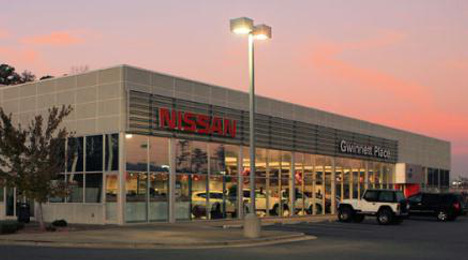
The National Highway Traffic Safety Administration handed out a six-figure civil penalty against a Georgia Nissan dealer for selling 28 recalled vehicles that did not have the recall remedy completed at the time the new models were delivered to customers.
Regulators said they first opened an investigation on Oct. 25, 2012 against Gwinnett Place Nissan located in Duluth, Ga., after receiving information suggesting the franchised store sold and delivered at least one new vehicle to a customer without having had all required safety recall repairs performed on that vehicle.
NHTSA issued an information request to Gwinnett Place Nissan six days after beginning the investigation. Gwinnett Place Nissan responded to this request on Nov. 19. NHTSA then issued an information request to Nissan North America on March 11, 2013, and the automaker responded to this request on April 5, 2013.
The vehicles involved were Nissan Quest units from the 2011 and 2012 model years.
The agency’s investigation determined that Gwinnett Place Nissan sold and delivered 28 recalled vehicles that did not have the recall remedy completed at the time the vehicles were delivered to the customers.
Since Gwinnett Place Nissan did not contest this finding, NHTSA concluded that Gwinnett Place Nissan was liable for civil penalties for violations of the National Traffic and Motor Vehicle Safety Act
Under a settlement agreement dated Nov. 24 and recently made public by NHTSA, Gwinnett Place Nissan paid compromised civil penalties in the amount of $110,000.
As one Kelley Blue Book analyst still questioned how the entire Takata faulty airbag saga will culminate, Chrysler Group joined American Honda in expanding an ongoing regional recall to replace front passenger-side air-bag inflators.
Chrysler’s newest campaign covers estimated 208,783 older-model vehicles originally purchased or ever registered in seven U.S. states and five territories.
Affected by this recall are the following vehicles, provided they were purchased, ever registered or still registered in Alabama, Florida, Georgia, Hawaii, Louisiana, Mississippi, Texas and the territories of American Samoa, Guam, Puerto Rico, Saipan and the U.S. Virgin Islands:
— 2003-2005 Dodge Ram 1500
— 2003-2005 Dodge Ram 2500
— 2003-2005 Dodge Ram 3500
— 2004-2005 Dodge Durango
— 2005 Chrysler 300, 300C, SRT8
— 2005 Dodge Magnum
— 2005 Dodge Dakota
OEM officials explained the vehicles are equipped with front passenger-side air-bag inflators from a product family code-named PSPI.
“Chrysler Group is unaware of any injuries or accidents involving PSPI inflators of the type covered by this campaign, nor has a Chrysler Group investigation identified a defect in these components,” the automaker said. “Further, laboratory tests on nearly 600 such inflators did not result in any failures.
“The inflators affected by this campaign differ in design and construction from PSPI inflators used by other auto makers. They also benefited from a more robust manufacturing process,” Chrysler added.
However, at the request of the National Highway Traffic Safety Administration (NHTSA), Chrysler indicated it is expanding its replacement action beyond its original scope of Florida, Hawaii, Puerto Rico and the U.S. Virgin Islands.
In compliance with regulations governing recalls, affected customers will be notified beginning Feb. 8. Service will be performed free of charge.
This recall covers an estimated 69,668 vehicles also affected by the initial regional recall. The additional five states and three territories accounts for an incremental gain of approximately 139,115 vehicles.
The regional recall, which remains under way, affects 371,309 older-model vehicles in Florida, Hawaii, the U.S. Virgin Islands and Puerto Rico.
Chrysler also mentioned a third similar recall also is ongoing. Chrysler is replacing passenger-side air-bag inflators from a product-family code-named SPI, in an estimated 149,150 model-year 2003 pickup trucks registered, ever registered or originally purchased in seven U.S. states and five U.S. territories.
The third action covers 39,409 vehicles also affected by the initial regional recall, according to the OEM, which added affected customers will be notified beginning on Jan. 19.
“Chrysler Group has not identified an inflator defect in any of its vehicles,” officials said.
“However, the company is committed — out of an abundance of caution — to replacing these components,” they went on to say about an estimated total of 617,573 older-model cars, trucks and SUVs.
Customers with questions or concerns can call Chrysler at (800) 853-1403.
The moves in Michigan come after Honda expanded its campaigns involving vehicles with these Takata airbags, pushing its overall total to above 5 million.
Despite the efforts by Chrysler, Honda and the other automakers who installed these faulty airbags in their vehicles, Kelley Blue Book senior analyst Karl Brauer remains unsure of how the entire situation will evolve.
“The expanded recall still focuses on high humidity areas, while confirmed fatalities related to these airbags have occurred outside these recall regions,” Brauer said. “The real question is: How confident can consumers really be if their vehicles are equipped with Takata airbags but are located outside of the recall areas? Is the potential for defective inflators in non-humid regions eliminated, or just delayed or reduced? And by how much?
“There are still far too many unanswered questions on this issue,” he concluded.
In the latest development associated with defective Takata airbags, Honda said earlier this week that the company will voluntarily expand a regional recall first initiated back in June into a national campaign affecting certain 2001 through 2011 Honda and Acura vehicles in the United States to replace the driver frontal airbag inflator.
Honda explained that it’s expanding this campaign to address concerns raised by its customers whose vehicles were not included in the regional campaign. With this expansion, officials indicated a total of approximately 5.4 million vehicles (including vehicles previously included in the regional action) will be covered by this new campaign.
The automaker pointed out that vehicles already repaired pursuant to the recall announced earlier this year will not require further repair.
Here is a summary of affected models as certain units are for specific vehicles only:
• 2001-2007 Honda Accord with 4-cylinder engines
• 2001-2002 Honda Accord with 6-cylinder engines
• 2001-2005 Honda Civic
• 2002-2006 Honda CR-V
• 2003-2011 Honda Element
• 2002-2004 Honda Odyssey
• 2003-2007 Honda Pilot
• 2006 Honda Ridgeline
• 2003-2006 Acura MDX
• 2002-2003 Acura TL
• 2002 Acura CL
As part of an ongoing industry investigation, Honda reiterated that it has been working in cooperation with Takata, the supplier of the airbag inflators, and the National Highway Traffic Safety Administration (NHTSA) to remove and test frontal airbag inflators installed in certain Honda and Acura vehicles in 11 U.S. states and territories, including Alabama, California, Florida, Georgia, Hawaii, Louisiana, Mississippi, South Carolina, Texas, Puerto Rico and the U.S. Virgin Islands.
“Honda has been participating in that investigation because of an apparent correlation between the long term exposure to high absolute humidity, which is common in most of those states and territories, and the possibility that a frontal airbag inflator produced by Takata could produce excessive internal pressure upon deployment and then rupture,” OEM officials said.
“If a driver frontal airbag inflator ruptures, metal fragments could pass through the airbag cushion material possibly causing serious injury or fatality to vehicle occupants,” they continued.
To date, Honda noted that Takata’s testing of driver frontal airbag inflators removed from vehicles subject to the earlier recall has not yet resulted in any abnormal deployments.
The OEM acknowledged that it is aware of a May rupture of a driver frontal airbag inflator in a vehicle in California that was not covered by any of the driver frontal airbag recalls initiated between 2008 and 2011.
“Neither Honda nor Takata has made a determination that a safety defect exists in the driver frontal airbag inflators that are installed in vehicles included in the expanded recall,” officials said.
“Honda hopes that the expansion of this action nationwide will both address customer concerns and further assist in the ongoing industry investigation of abnormal airbag deployments in the vehicles from all affected manufacturers,” they went on to say.
Honda maintained that it is announcing this action to encourage owners to take their vehicles to an authorized Honda or Acura dealer as soon as they receive notification from Honda or Acura. Mailed notification to customers in the original regional campaign began in September, and additional mailed notification letters will be sent to registered owners over time, prioritized by geographic area in the order of highest perceived risk.
The most-updated available consumer information about this action is obtainable at www.recalls.honda.com and www.recalls.acura.com or by calling (800) 999-1009 for Honda owners or (800) 382-2238 for Acura owners, and selecting option No. 4.
Nissan Recalling Nearly 134,000 Units
In other vehicle recall news, NHTSA reported that Nissan North America is recalling 133,592 units because of a possible fuel leak.
The vehicles included in the campaign are:
— 2012-2014 Nissan Juke
— 2012-2013 Infiniti M56 and QX56
— 2014-2015 Infiniti Q70 and QX80
Regulators indicated the fuel pressure sensors may not have been sufficiently tightened during production.
“As a result, the fuel pressure sensor may loosen with vehicle usage and cause a fuel leak,” officials said. “A fuel leak in the presence of an ignition source could cause a vehicle fire.”
Nissan told NHTSA it will notify owners, and franchised dealers will replace the fuel pressure sensors, as necessary, free of charge. The recall is expected to begin on or before Jan. 26.
In the meantime, owners can contact Nissan customer service at (800) 647-7261.
Honda and Toyota are leading a charge in calling for a coordinated industry-wide joint initiative to independently test Takata airbag inflators that have been the subject of recent recalls.
The companies said the goal of this initiative is to address affected automakers’ issues related to the airbag inflator recalls and supplement testing being undertaken by Takata in order to address customer concerns about safety.
“The safety, security and peace of mind for our customers are our highest priority, and I believe this is shared with all the other automakers. That is what this initiative is all about," said Simon Nagata, president and chief executive officer of Toyota Motor Engineering and Manufacturing North America.
“By combining our collective efforts behind a coordinated, comprehensive testing program, we believe we can achieve greater results. Together we will be better equipped to address this issue more rapidly for all customers,” Nagata contined.
Honda North America executive vice president Rick Schostek — part of the contingent grilled by the U.S. Senate Commerce, Science, and Transportation Committee back on Nov. 20 — took a similar stance about the initiative.
“We believe that the industry can achieve greater results by sharing information and putting its collective efforts behind the same objective third party testing program,” Schostek said. “Honda continues to quickly address the needs and concerns of our customers, and this industry-wide initiative will bring additional energy and focus to this effort.”
During the past year, officials recapped that a number of automakers, in collaboration with the National Highway Traffic Safety Administration and Takata, have announced recalls in the U.S. and Canada related to airbag inflators produced by Takata.
While the specific issue may vary depending on the inflator model, the automakers insisted the objective of seeking collaborative third-party testing is to ensure the inflators that require replacement are accurately identified and promptly fixed.
Toyota and Honda are seeking industry-wide coordination in support of a yet-to-be-named independent engineering analysis expert to test airbag inflators.
“Independent testing will allow the affected automakers to share test results and analyses, and better understand how best to implement recall repairs,” Toyota said.
In April of last year, Toyota pointed out that it launched a nationwide recall for Takata-produced front passenger airbag inflators in certain vehicles. This recall is still in effect today, and the company remains committed to addressing this issue for customers across the U.S. and Canada.
In October, Takata provided testing data to Toyota and NHTSA that suggested the risk was highest in areas of consistently high absolute humidity in the U.S. In response, Toyota intensified its recall efforts to reach more than 300,000 customers in those areas, and repairs have begun.
Beginning this month, Toyota said it will invite all automakers affected by the Takata airbag inflator issues to discuss the potential of a collaborative effort to source independent testing.
During that Senate hearing last month, Takata senior vice president for global quality assurance Hiroshi Shimizu said, “As we move forward, Takata will continue to cooperate closely with the automakers, with NHTSA, and with government regulators in Japan and around the world to address the potential for inflator rupturing. We will take whatever actions are determined to be necessary in the public interest and that will best advance the goal of safety for the driving public.”
And on Tuesday, according to a report from Reuters, Takata formed an independent quality assurance panel to be overseen by former White House chief of staff and U.S. Transportation Secretary Samuel Skinner.
The panel will audit and report on the company's manufacturing processes, according to the report.
Reuters also reported Takata appointed two former U.S. transportation secretaries, Rodney Slater and Norman Mineta, to serve as special counsels.
As federal regulators shared an update about the availability of parts to repair vehicles with faulty ignitions, General Motors announced its 79th recall of the year this week, detailing a campaign for more than 300,000 older sedans and SUVs because of a problem with their headlamps.
The affected models for possible intermittent or permanent loss of low beam headlamps include:
— 2006-2009 Buick LaCrosse
— 2006-2007 Chevrolet TrailBlazer and 2006 TrailBlazer EXT
— 2006-2007 GMC Envoy and 2006 Envoy XL
— 2006-2007 Buick Rainier
— 2006-2008 Saab 9-7X
— 2006-2008 Isuzu Ascender
“If the headlamp driver modules is not operating correctly, the low-beam headlamps and daytime running lamps could intermittently or permanently fail to illuminate,” GM spokesperson Alan Adler said in an email message. “This condition does not affect the high-beam headlamps, marker lamps, turn signals, or fog lamps.
“GM has not been able to confirm whether the HDMs in these vehicles caused any vehicle accidents,” Adler added.
The automaker indicated there are 273,182 units in the U.S. associated with this recall, and this campaign covers a total of 316,357 vehicles, including units in Canada, Mexico and exports from North America.
So far this year, the OEM has recalled 26,849,925 vehicles in the U.S. and 30,413,023 units worldwide.
NHTSA: Parts Available to Fix Faulty Ignitions
In related news, GM told the National Highway Traffic Safety Administration on Tuesday that the OEM has enough parts are available to fix all the faulty ignition switches that are covered by its recent recall of more than 2 million vehicles. NHTSA urges owners of unrepaired GM vehicles to immediately contact their local dealer to arrange a service appointment.
GM emphasized that many franchised dealers will help owners get their vehicles remedied after work and on the weekends.
Regulators contend there are nearly 1 million vehicles with these faulty ignition switches still in the vehicle, creating a danger of the airbags not deploying in the event of a crash. The involved vehicles are
— 2003-2007 Saturn ION
— 2005-2010 Chevrolet Cobalt
— 2006-2011 Chevrolet HHR
— 2007-2010 Pontiac G5
— 2006-2010 Pontiac Solstice
— 2007-2010 Saturn Sky.
Owners can also confirm whether their individual vehicle needs to be repaired under this recall or any other GM recall by using NHTSA’s free VIN look-up tool on safercar.gov.
At NHTSA’s direction, regulators indicated GM ramped up its production of replacement ignition switches in order to complete production of replacement parts ahead of its original goal of early November.
NHTSA also pushed the automaker to take steps to maximize the number of vehicle owners who bring in their vehicles for repair, including targeted outreach to non-English speakers, maintaining up-to-date information on its website as required by the consent order, and a combination of traditional and social media outreach, financial or other incentives, phone calls, and other approaches.
Consequently, the agency said GM has repaired nearly 60 percent of the affected vehicle population covered under the recall, but many others remain.
“Moving forward, NHTSA will continue to push the automaker to keep up the momentum and get the remaining vehicles fixed promptly,” officials said.
NHTSA went on to note that vehicle owners should contact their local dealers immediately to schedule an appointment to get the final remedy. Until the affected vehicle is fixed, owners should follow all of the interim safety steps advised by GM and keep in mind that the use of a single key is not a long term solution to the this serious safety problem.
For additional information, owners can visit www.gmignitionupdate.com or call (800) 222-1020.
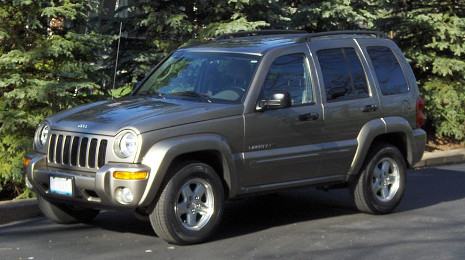
The National Highway Traffic Safety Administration sent a letter last week to Chrysler Group chairman and chief executive officer Sergio Marchionne describing what the agency deemed to be a “woeful” recall repair completion rate for older model SUVs whose fuel tanks may rupture if the vehicles are struck from behind.
The head of the automaker not only replied, but so did the OEM’s senior vice president vehicle safety and regulatory compliance, asserting Chrysler has made a much better effort to rectify the situation involving Jeep Liberty vehicles from the 2002 through 2007 model years and Jeep Grand Cherokee units from the 1993 through 1998 model years.
First, here’s part of what NHTSA deputy administrator David Friedman said in a two-page letter to Marchionne stemming from what Chrysler shared in its October recall update reports. Friedman indicated the material to the agency showed “a woeful” 3-percent repair rate out of more than 1.5 million affected vehicles included in the recalls.
“As you know, we recently shared ideas for steps Chrysler could take to get more people to repair their vehicles,” Friedman said. “At the National Highway Traffic Safety Administration’s request, Chrysler submitted an update on its rear structural reinforcement efforts, including current and planned outreach activities.
“However, given the low rates of repair that Chrysler has reported more than a year after the recall, significantly more aggressive steps are required,” he continued.
Friedman closed his letter by saying, “It is your responsibility to notify affected owners that parts are available and to ensure that dealers are effectively and accurately communicating with their customers.
“In the strongest possible terms I urge you and your dealers to work together to ensure that the safety risk to vehicle owners from this defect is clearly communicated and effectively and expeditiously addressed,” Friedman added.
A day later, Marchionne told Friedman and NHTSA that “be assured Chrysler Group takes seriously its commitment to motor vehicle safety. Accordingly, I feel compelled to deliver up-to-date information that should alleviate your concerns.”
That information came by way of a three-page rundown from Scott Kunselman, who oversees recalls for Chrysler.
Kunselman refuted NHTSA’s assertions by noting the automaker’s data as of last Friday. He indicated of the 852,140 total affected Jeep Liberty vehicles, 112,829 have had the recall completed, equating to a 13.2 percent completion rate. And, of the 746,588 total affected Jeep Grand Cherokee vehicles, 26,352 have had the recall completed, equating to a 3.5 percent completion rate.
While Kunselman acknowledged these completion rates “are not satisfactory” to Chrysler, he explained to regulators that historical data shows older vehicles experience a lower recall completion rate.
“Despite the challenge of recalling vehicles 7- to 21-years-old, Chrysler is committed to utilizing the outreach program across the entire affected vehicle population starting Dec. 1 in an attempt to reach every affected owner,” Kunselman said.
Since this campaign launched on Aug. 1, Kunselman told NHTSA that Chrysler has regularly communicated with its dealers and has twice requested each of its dealers to stock a minimum of seven parts for servicing Jeep Grand Cherokees, and five for Jeep Liberty models. The Chrysler exec said replenishment shipments are available on request in 48 hours or less, and warehouses are strategically located across the U.S. to effectively support on-time parts distribution.
Chrysler said more than 430,000 trailer-hitch assemblies are in the system, and 50,000 of these are currently in dealer inventories.
“As of Monday, all dealers will have inventory on site meeting or exceeding minimum requested requirements,” Kunselman said.
“The best evidence of the effectiveness of Chrysler's dealer communications and parts distribution network is the relative disappearance of customer inquiries related to parts,” he continued.
Prior to the Aug. 1 launch, the automaker indicated approximately 50 percent of customer inquiries to Chrysler's contact center related to these campaigns concerned parts availability.
Since Aug. 1, the ratio of these customer inquiries has dropped to 1 percent, according to the OEM.
“Also in its communications with dealers, the company has emphasized clearly the need to make the entire remedy process as convenient as possible for vehicle owners, and we will continue to emphasize this message,” Kunselman said.
Kunselman also reiterated that back on Oct. 21, representatives of Chrysler's vehicle safety office detailed for NHTSA the supplementary customer-outreach activities implemented, as well as those that are pending.
In addition to the outreach program, Chrysler’s pending actions include:
• Owner database enhancement (Dec. 8) will provide insights to identify the best channels such social media with which to provide supplemental information.
• Buy sponsored tiles for customer Facebook pages (Jan. 1)
• Distribution of a general public-service message reinforcing with customers the need to have recalls completed (Jan. 5)
• Enhance online presence with chat capability to answer questions and gather relevant feedback (Jan. 5)
Kunselman closed his update to NHTSA by pointing out how the age of some of these vehicles and the possible corrosion these units might have sustained is creating another challenge.
Due to the age of the vehicles, Chrysler expects that 3 percent to 6 percent of campaign vehicles would not be in a condition to support trailer hitch assembly installation as a result of accident damage, abuse, vehicle modification and/or corrosion.
Of the vehicles inspected to date, the OEM determined 0.6 percent have not received the repair due to accident damage, abuse, vehicle modification and/or corrosion.
Kunselman indicated Chrysler is currently studying this concern further and planned to follow up with NHTSA staff by Dec. 5.
“In conclusion, Chrysler is committed to working with NHTSA to improve customer understanding of the recall process and the need to have all affected vehicles repaired,” Kunselman said.
Industry observers cheered this week’s move by the U.S. Department of Transportation’s National Highway Traffic Safety Administration, which announced it is calling for a national recall of vehicles with certain driver’s side frontal air bags made by Takata.
Regulators explained this decision is based on the agency’s evaluation of a recent driver’s side air bag failure in a vehicle outside the current regional recall area and its relationship to five previous driver’s side air bag ruptures, all of which are covered by existing regional recalls.
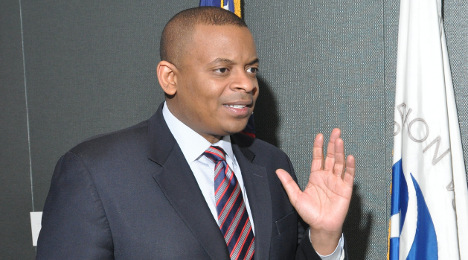
“By demanding this national recall, NHTSA has demonstrated once again that it will follow data and evidence to protect the lives of Americans on the road and to hold manufacturers accountable,” Transportation Secretary Anthony Foxx said.
NHTSA contacted Takata and the vehicle manufacturers this week to call for the national recall of these vehicles after evaluating a recent incident that involved a failure in a driver’s side air bag inflator outside an area of high absolute humidity.
Based on this new information, unless Takata and the manufacturers quickly agree to this recall, NHTSA insisted it will use the full extent of its statutory powers to ensure vehicles that use the same or similar air bag inflator are recalled.
As part of these efforts and its ongoing investigation into both the defect and the scope of the recalls, the agency also issued a General Order to Takata and all 10 of the vehicle manufacturers that use Takata air bag inflators — BMW, Chrysler, Ford, General Motors, Honda, Mazda, Mitsubishi, Nissan, Subaru and Toyota — requiring each manufacturer to file, under oath, a detailed report and produce all related documents about completed, ongoing or planned testing of Takata inflators outside the current regional recall areas.
NHTSA also is demanding this information to compel Takata and the affected industry to be frank with not only NHTSA, but also the American public, as to what testing and additional steps they have done and plan to do to control and mitigate the risk associated with Takata’s defective inflators.
After hearing the regulator’s demands, Kelley Blue Book senior analyst Karl Brauer said, “This is a good move by NHTSA because it acknowledges the problem as a systemic design issue, not a climate issue.
“While high humidity may accelerate the process it's hard to believe there's no risk in dry climates, especially with more than one Takata-related fatality occurring outside the previous recall zones,” Brauer continued.
Fellow Kelley Blue Book senior analyst Eric Ibara took a similar stance on NHTSA’s demands.
“Based on what we have seen so far with the Takata airbags, it appears that NHTSA is doing the right thing in calling for these potentially defective airbags to be replaced,” Ibara said.
“Given the apparent lethal consequences to its failure, it would be tragic to see fatalities continue in the future,” Ibara added. “However, it will be a huge challenge for all manufacturers affected to get notices out to current owners and to stock enough replacement airbags to handle the volume of vehicles affected in a timely fashion.”
Additionally, NHTSA issued a Special Order to Takata, the second the agency has issued to the manufacturer regarding this defect, compelling it to provide, under oath, documents and detailed information on the propellant used in Takata’s inflators.
In recent days, officials indicated Takata has publicly conceded that it changed the chemical mix of its air bag inflator propellant in newly designed inflators.
As part of its ongoing investigation, NHTSA said it will analyze the information received to determine if the chemical composition of Takata’s propellant mix may be a cause and/or contributing factor in the air bag inflator ruptures.
“We now know that millions of vehicles must be recalled to address defective Takata air bags and our aggressive investigation is far from over,” NHTSA Deputy Administrator David Friedman said. “We’re pushing Takata and all affected manufacturers to issue the recall and to ensure the recalls capture the full scope of the problems.”
In addition to the General Order and Special Order, NHTSA is issuing a Recall Acknowledgement Letter, a routine response to all Safety Recall Reports filed with the agency. The letter summarizes the details of the most recent report submitted by Takata regarding its defective passenger side air bag inflators and identifies the information gaps the agency is insisting Takata clarify to ensure it provides the full information required by law.
While NHTSA is not aware of either field incidents or test data suggesting that the problem affecting passenger-side air bags in the areas of persistently high humidity extends beyond those areas, officials from the agency emphasized they have been pushing the industry to perform testing to ensure that current recalls effectively cover vehicles with air bags that could be potentially affected by this defect.
“The information the agency receives from Takata and the manufacturers will provide further information and details needed to continue its investigation into this complex issue,” officials said.
Responses to the General Order and Special Order are due to NHTSA by Dec. 5.
Both Nissan and Honda have recently reported recalls related to passenger airbag issues — adding to the recent influx of such statements in light of the Takata airbag advisory.
In other words, the number of vehicles recalled because of faulty Takata airbags is growing — and expected to continue to expand as we head toward 2015.
First up, Nissan North America is recalling 52,738 certain model year 2003-2004 Nissan Pathfinders; 2004-2006 Nissan Sentras; 2003-2005 Infiniti FX35 and FX45; 2003-2004 Infiniti I35, and 2006 Infiniti M35 and M45 vehicles originally sold, or currently registered, in geographic locations associated with high absolute humidity.
The recall statement said upon deployment of the passenger side frontal air bag, excessive internal pressure may cause the inflator to rupture.
This may cause metal fragments to be dispersed, striking and potentially injuring the vehicle occupants.
The automaker pointed out this recall relates specifically to vehicles sold, or currently registered, in Puerto Rico, Hawaii, the U.S. Virgin Islands, Guam, Saipan, American Samoa, Florida and adjacent counties in southern Georgia, as well as the coastal areas of Alabama, Louisiana, Mississippi and Texas.
Nissan will be notifying owners, and dealers will replace the passenger air bag inflator, free of charge.
The manufacturer has not yet provided a notification schedule, and owners may contact Nissan customer service at 1-(800)-647-7261.
Honda Airbag Recalls in Humid Environment
Honda is also recalling units for the same issue and in similar areas.
American Honda Motor Co. (Honda) is recalling certain model year 2001-2005 Honda Civic, 2003-2004 Civic CNG and Element, 2002-2005 CR-V, 2002-2004 Odyssey, 2003-2005 Accord, Pilot, Civic Hybrid, and Acura MDX, 2005 Acura RL and 2006 Honda Ridgeline vehicles originally sold, or ever registered, in geographic locations associated with high absolute humidity, as well.
The company released in a Nov. 6 statement that most of these vehicles were included in a June 2014 safety improvement campaign but has been transitioned to a formal recall.
Specifically, vehicles sold, or ever registered, in Alabama, Florida, Georgia, Hawaii, Louisiana, Mississippi, South Carolina, Texas, Puerto Rico, U.S. Virgin Islands, Saipan, Guam, and American Samoa are addressed by this recall.
Once again, Honda cited the issue being possible rupture of the passenger side frontal air bag.
Honda will notify owners, as well, and dealers will replace the passenger side air bag inflator, free of charge.
The recall is expected to begin on Nov. 24.
No injuries or fatalities have been reported due to the Honda issue.