Along with instructing dealers to halt deliveries of the automaker’s new midsize pickup trucks, General Motors made three more recall announcements on Thursday and Friday, raising its campaign total for the year to 71 and including more than 29.9 million units worldwide.
On Friday, the two recalls to come from the automaker covered 379,401 cars and trucks in the United States with the total number of vehicles recalled in North America — U.S., Canada, Mexico and exports — totaling 524,384.
The majority of that figure — 290,107 units — includes the Cadillac SRX from the 2010 through 2015 model years along with the Saab 9-4X from the 2011 and 2012 model years. GM is making the recall for torque inspection of rear toe link adjuster lock nuts.
“Improper torqueing could possibly result in a loose joint and worn threads that could cause the toe adjuster link to separate,” the automaker said.
The OEM indicated franchised dealers will inspect for the condition and, if necessary, will remove them and install a new link assembly. The company added unsold vehicles are being checked for proper torqueing before being sold.
“A loose toe adjuster link can cause the vehicle to sway or wander at highway speed, activate the vehicle’s electronic stability control system, and cause excessive wear to the threads in the link,” GM officials said.
“Additionally, the rear suspension may make loud metallic noises, particularly when the vehicle is travelling over bumps or potholes,” they continued.
“If separation occurs while the vehicle is being driven, it would create sudden vehicle instability, increasing the risk of a crash,” officials went on to say.
GM acknowledged that it is aware of three crashes and two injuries as a result of this condition.
The automaker said it first reported this recall to the National Highway Traffic Safety Administration on Sept. 17.
Chevy Spark Recall
The other campaign GM announced on Friday covered 89,294 Chevrolet Spark models in the U.S from the 2013 through 2015 model years.
GM explained the recall was triggered because corrosion can cause the secondary hood latch striker to stick in the open position.
“If the primary latch is not engaged, the hood could open unexpectedly,” the automaker said.
“These vehicles, imported from South Korea, were manufactured with a secondary hood latch that may prematurely corrode at the latch pivot, causing the striker to get stuck out of position and preventing the striker from properly engaging the hood latch,” GM added.
OEM officials noted that about 13,000 of these unsold vehicles are being held at U.S. dealerships and will not be delivered until repairs are made.
The automaker indicated customers will be notified by letter about the recall, and franchised dealers will replace the hood striker when parts are available.
“GM is not aware of any crashes, injuries or fatalities as a result of this condition,” officials said.
The automaker added this recall was posted Friday on the NHTSA website.
Trouble with Chassis Control Module in Trucks & SUVs
Earlier in the week, GM posted a recall for 97,540 units from the 2013 and 2014 model years in the U.S. because the chassis control module may have a manufacturing defect. The total North American population, including the U.S., Canada, Mexico and exports, is 117,651.
Vehicles involved in this recall are:
— 2013-2014 Chevrolet Tahoe and Suburban
— 2013-2014 Cadillac CTS
— 2013-2014 GMC Yukon and Yukon XL
— 2013-2014 Cadillac Escalade and Escalade ESV
— 2014 Chevrolet Traverse
— 2014 GMC Acadia
— 2014 Buick Enclave
— 2014 Chevrolet Express
— 2014 GMC Savana
— 2014 Chevrolet Silverado HD
— 2014 GMC Sierra HD.
“If present, metallic slivers in the chassis control module could cause an electrical short within the module, resulting in the vehicle stalling or not starting,” GM officials said.
“This would lead to illumination of the check engine light, and/or a service trailer brake message,” they added.
GM explained franchised dealers will replace the chassis control module when parts are available.
“We do not have a timeline on that,” the automaker said.
“About 4,500 of these unsold vehicles are being held at U.S. dealerships and will not be delivered until repairs are made,” the company continued.
GM insisted that it knows of no crashes, injuries or fatalities related to this condition.
“About 1 percent of all vehicles recalled are believed to have the condition,” officials said.
Stop Delivery for Chevy Colorado and GMC Canyon
In other company news, GM told franchised dealers on Friday to halt deliveries of 2015 Chevrolet Colorado and GMC Canyon midsize pickup trucks. The automaker determined these vehicles contain driver airbag connections that were wired incorrectly during the manufacturing process.
“This condition affects the vehicles’ two-stage airbag system by reversing the deployment sequence and disrupting the deployment timing of the driver airbag stages,” GM officials said.
“This condition will cause the driver airbags to not function as designed,” they continued.
GM pointed out that the majority of affected vehicles are being held at the assembly plant or are in transit or unsold at dealerships. The automaker emphasized it is working to validate the correction for the condition.
“Once that service procedure is released to dealers, customer deliveries can resume,” officials said.
GM acknowledged a small number of vehicles have been sold. Those customers are being sent a FedEx letter and are being contacted by phone to bring their vehicles to dealers as soon as possible.
The OEM said the repair will be done at no change, and free loaner vehicles will be available.
“A safety recall will be conducted but population and other details are not known at this time,” officials said. “GM is aware of no crashes, injuries or fatalities related to this condition.”
General Motors rolled out an ambitious strategic plan on Wednesday, insisting that in 2015, about 27 percent of GM’s global sales volume is expected to come from products new or refreshed within 18 months.
Does it mean when that new metal becomes used — or more specifically, certified pre-owned — the growth prospects still will be as strong?
In what perhaps sheds some light on that question, Kelley Blue Book senior analyst Eric Ibara, who specializes in examining residual values, honed in on what he believes are the strong parts of the automaker’s lineup and where it still faces stiff challenges.
“Since emerging from bankruptcy, General Motors has based its comeback on superior products like the Corvette,” Ibara said in comments provided to the media. “Now the high-margin Tahoe, Suburban, Yukon and Escalade utilities will not only increase sales, but contribute to larger overall margins.
“In this market, the battle is never ending as the new front will be in pickup trucks,” he continued. “Colorado and Canyon are projected to do well, but Silverado and Sierra will have to defend their ground against not only the new aluminum F-150 but also against a resurgent Ram truck.
“Still, it can be argued that the GM lineup is the most competitive that it has been in a long time,” Ibara went on to say.
And that lineup likely is having an impact of what GM is doing in the CPO market.
According to the September data from Autodata Corp., certified sales for the OEM’s Buick, Chevrolet, GMC, Pontiac and Saturn brands reached 37,426 units in August, up 21.9 percent year-over-year. Yearly sales through eight months are up almost 10 percent at 255,077 units.
Elsewhere at GM, Cadillac had 1,848 certified sales in August (up 16.2 percent), and year-to-date CPO sales are at 13,720 (up 10.0 percent).
And speaking of Cadillac, GM reiterated the importance of moving the luxury brand’s headquarters to New York. Officials indicated Cadillac expects to introduce four new vehicles in North America in 2015, including the recently announced CT6. In addition, Cadillac plans to introduce nine new models in the next five years in China, which is expected to become the world's largest luxury car market later this decade.
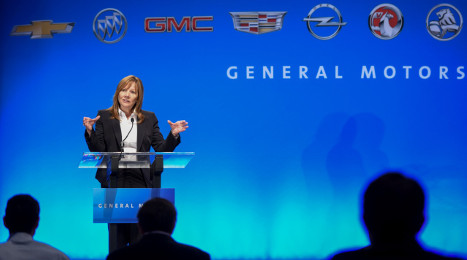
GM chief executive officer Mary Barra and her executive leadership team outlined the company’s strategic plan at a conference for investors and financial analysts on Wednesday at the company’s Milford Proving Ground.
“In the nine months that this leadership team has been together, we have spent a significant amount of time setting our goals for the future of GM and developing a specific action plan,” Barra said.
“Our strategic plan is a pathway to earn customers for life and create significant shareholder value in the process. Every chance to connect with a customer is an opportunity to build a stronger relationship,” she added.
GM’s strategic plan includes several major initiatives that the company anticipates will help it achieve 9- to 10-percent margins on an EBIT-adjusted basis by early next decade.
Both Kelley Blue Book senior analyst Karl Brauer and AutoTrader.com senior analyst Michelle Krebs emphasized how this plan is devised to get GM past the record number of recalls made so far this year, including all the controversy surrounding faulty ignition switches in older vehicles.
“Mary Barra and GM's management team are clearly ready to move past this year's recall issues and focus on the job of advancing the automaker’s long-term goals. Improved product lines in the United States and abroad, as well as increased global reach, will give GM an opportunity to grow its overall sales and profitability,” Brauer said.
“Barra's long-term plan calls for an investment in connectivity and autonomous technology, two areas every automaker has to take seriously over the next decade to stay competitive,” he continued.
“If Barra and her team can keep GM on the leading edge of this technology wave, while also managing fixed costs and maintaining the company’s overall product competitiveness, they should be able to achieve the financial goals set forth in this plan,” Brauer went on say.
Meanwhile, Krebs made the connection that potentially GM is taking a strategic page out of book of domestic rival Ford and how Blue Oval leadership steadied the automaker in the past decade.
“GM's new management team, on the job since January but focused on the recall fiasco, is finally getting around to setting a future course for the company. They are finally seeing firm deadlines for goals, such as improving operating margins and turning around Europe, that before were vague. They also are laying out an aggressive schedule of new products and technology,” Krebs said.
“Now the challenge will be for CEO Mary Barra and her lieutenants to stay the course and hold everyone accountable for meeting those goals. That's how now-retired Ford CEO Alan Mulally turned Ford around — with consistency, continuity, focus and accountability,” Krebs continued.
“In the past, GM has not held people accountable and has zigged and zagged on various courses. Let's see if this team will crack the whip,” she went on to say.
Auctions already house hundreds of vehicles for varying lengths of time as they prepare to move those units down the lanes for closed, open and special sales. With more than 37 million vehicles being recalled by automakers so far this year, some auctions are seeing their resources being stretched to accommodate the storage as those necessary repairs are completed.
Auction Broadcasting Co. conducts a factory sale for General Motors at its facility in St. Louis. It delighted ABC president Jason Hockett to learn that a group of 60 Chevrolet Cruze sedans was included in an August sale.
Hockett indicated that Chevy Cruze models as well as Impala sedans began to pile up at ABC St. Louis beginning in July because they were included in recalls issued by GM, which has led the pack in recalls in 2014.
“That was very encouraging to see those cars start to let up with the repairs being done,” Hockett said.
“The bad thing for GM and some of these other automakers is they’re going to have a lot more volume to sell in the last quarter of the year, which would not be favorable,” he continued.
Because of new wholesale rules orchestrated by manufacturers in conjunction with National Auto Auction Association members, these recalled vehicles can’t be sold during closed factory sales until the recall repairs have been completed. In times past, if the recall was associated with something cosmetic, the vehicle would have still been sold on the wholesale market with disclosures made about the condition.
But nowadays, all recalls are treated the same. If the vehicle is under an OEM recall, it stays parked at the auction until a franchised store can get parts and complete the repair.
At ABC St. Louis, Hockett indicated the facility has more than double the volume of units that will eventually make it through the GM factory sale.
Meanwhile, over at Manheim, spokesperson John Heid reiterated the policy the company has in regard to recalled vehicles that are to be wholesaled.
“Manheim takes vehicle disclosures at sale very seriously,” Heid said. “We adhere to the National Auto Auction Association policy that requires the seller to disclose any matters that relate to the safety or integrity of the vehicle at sale.
“Our goal is to ensure that every vehicle that runs through our auctions is represented accurately by each seller to buyers,” Heid went on to say.
Working With Franchised Dealerships
To the East, vehicle levels are starting to rise at Harrisburg Auto Auction, too. General manager Lynn Weaver indicated that even though a vehicle might be recalled, it doesn’t stop Harrisburg AA and other operations from going through the preparation process.
“The manufacturers or the remarketers have dictated that we can’t sell them until the recalls have been completed. Whether or not, we still have to pick the cars up for our client. We still have get them into the process as quickly as possible. If there is an outstanding recall, either they notify or we go into databases and look for our clients. We have to make sure those recalls are clear before we can sell the car wholesale,” Weaver said.
“The auction industry is getting involved with this directly whether they like it or not,” he continued. “We push it to the next level, which is the new-car dealer body in our local area and ask them to get these into the cue to get them fixed. That just depends on the volume and how many for this particular recall and how many cars they already have and whether parts are available.
“Most dealerships’ service business is a big and viable part of the operation, and to ask them to take these 10 cars this week and turn them around in a short time is next to impossible,” Weaver went on to say.
And if parts are on back order, that is holding the process back that much more.
“The franchised dealerships are doing the best they can. In some cases, these things get done in a couple of days. In some cases it’s taken almost a month. There’s some we don’t know when they’re going to get fixed because we don’t know when the parts will come,” Weaver said.
While that situation could create a significant level of frustration, Hockett acknowledged that auctions aren’t releasing their tension out on franchised dealerships, which in many cases are pressured by their own customer base to make repairs as quickly as possible.
“They really have been good. They know the problem. I don’t think there’s any kind of blame game at all. I think they’ve been very cooperative to work with,” Hockett said.
Potential Impact to Entire Remarketing Industry
With the industry breaking the record for the number of recalls in a single year, circumstances like what ABC St. Louis and Harrisburg AA are experiencing likely aren’t uncommon. Black Book senior vice president and editorial director Ricky Beggs explained that the situation leaves the wholesale market with a couple of big questions — how quickly can the vehicles be repaired and how quickly they can be sent down the lanes.
“Our only hope is two things,” Beggs said. “One is that they get all the parts to get them fixed all at one time. And the second piece I think the remarketers will be much more in tune with what’s going on and not just overload the market with those at one time. They’ll try to spread them out.
“It is a concern because the manufacturers that have some of these cars, at one time, they were able to actually sell them at a closed sale,” he continued. “But since some of their policies have changed, and they’re not able to sell them in a closed sale until they’re actually repaired. That’s delaying things a little bit. That’s keeping a few more in the pipeline that have to be remarketed. That’s a little bit of a concern.
“But I think the manufacturers will be very smart about it. The rental agencies that have these cars, I think they’ll be smart about it as well,” Beggs went on to say.
No matter how long it takes for the recall clog to clear at auctions, wholesale leaders are poised to respond.
“The auction world is very resilient. We’ll figure out how to handle this for our clients and the industry,” Weaver said.
Hockett added, “We’re grateful to have the cars and knowing that they’re there and will eventually sell. In the meantime, it’s a burden for the manufacturer and hopefully we can help them through this trial.”
As Toyota informed the agency it’s recalling approximately 690,000 pickups, the National Highway Traffic Safety Administration opened an official investigation of about 4.9 million Chrysler SUVs, trucks and vans stemming from a petition sent by the Center for Auto Safety (CAS).
NHTSA indicated in a notice posted on its website on Monday that the defect investigation stems from alleged failures associated with the Totally Integrated Power Module (TIPM) installed beginning in the 2007 model year. CAS alleges that TIPM failures have resulted in a wide array of incidents, including:
— Engine stall
— Airbag non-deployment
— Random horn, headlight, taillight, door lock, instrument panel and windshield wiper activity
— Failure of fuel pump shutoff resulting in unintended acceleration
— Fires
The petition includes a list of 70 complaints received by CAS that are allegedly related to Chrysler TIPM failures.
NHTSA officials indicated preliminary analysis of 63 complaints related to TIPM equipped vehicles identified 51 reports alleging incidents of engine stall (17) or no-start (34). They noted three complaints reported incidents of smoke (2) or fire (1).
“None of the reports provided alleged TIPM failures resulting in airbag non-deployment or unintended acceleration and none of the complaints alleged a crash,” NHTSA said.
In a supplement to the petition, CAS identified 24 crashes from NHTSA's Early Warning Reporting (EWR) database that it believes may be related to TIPM failure and requested that NHTSA review these as part of its petition evaluation.
As reported previously by Auto Remarketing, Chrysler notified NHTSA of a safety defect in the Totally Integrated Power Module-7 (TIPM 7) in approximately 188,723 Dodge Durango and Jeep Grand Cherokee vehicles from the 2011 model year and equipped with 3.6-liter and 5.7-liter engines.
According to Chrysler, some Jeep Grand Cherokee and Dodge Durango vehicles may experience a failure in the fuel pump relay within the TIPM, which can result in a no-start or stall condition.
NHTSA indicated 36 of the complaints submitted with the CAS petition involve 2011 Jeep Grand Cherokee and Dodge Durango vehicles equipped with 3.6-liter and 5.7-liter engines.
Toyota Recalls Tacoma
In other industry news coming to light on Monday, Toyota Motor Sales USA advised NHTSA of plans to conduct a voluntary safety recall of Tacoma 4×4 and Tacoma Pre-Runner pickup trucks from the 2005 through 2011 model year.
Covering about 690,000 pickups, Toyota explained the involved vehicles’ rear suspension system contains leaf springs that are constructed of either three or four leaves. The automaker said there is a possibility that a leaf could fracture due to stress and corrosion.
“If this occurs and the vehicle continues to be operated, the broken leaf could move out of position and contact surrounding components, including the fuel tank,” Toyota said. “If the broken leaf contacts the fuel tank repeatedly, it could puncture the tank and cause a fuel leak. In the presence of an ignition source, this could result in a fire.”
Toyota insisted it is not aware of any fires, crashes, injuries or fatalities associated with this condition.
Officials noted owners of the vehicles involved in this recall will receive a notification by first class mail, and franchised dealers will remedy the condition at no cost to the owner.
Detailed information is available to customers at www.toyota.com/recall and by calling the Toyota Customer Experience Center at (800) 331-4331.
Another Chrysler Recall
Meanwhile back from the OEM in Auburn Hills, Mich., Chrysler is voluntarily recalling an estimated 349,442 older-model vehicles to correct conditions that may cause ignition keys to become stuck or inadvertently move.
Chrysler investigated and found the ignition keys on certain 2008 model-year vehicles produced before May 12, 2008, may not fully return to the “ON” position after rotation to the “START” position during engine-startup. Instead, they may remain between the “START” and “ON” positions.
“If this occurs, windshield defroster and wiper function may be lost. Air bag function is not affected,” the automaker said.
Chrysler explained that less probable is the prospect that an ignition key may not fully return to the “ON” position after rotation to the “START” position and may inadvertently move through the “ON” position to “ACCESSORY” or “OFF.”
OEM officials said, “If this occurs, it may result in reduced braking power and a loss of engine power, power steering, and one or more of the vehicle’s safety features including front air bags.”
Among the vehicles subject to recall, Chrysler said it is aware of a single minor accident that was possibly related to either condition. The company is unaware of any related injuries.
The campaign is limited to 2008 Dodge Charger sedans, Dodge Magnum station wagons, Chrysler 300 sedans, Jeep Commander and Jeep Grand Cherokee SUVs. It covers an estimated 292,224 vehicles in the U.S.; 18,976 in Canada; 4,947 in Mexico; and 33,295 outside the NAFTA region.
All affected customers will be notified when they may schedule service, which will be provided at no cost to them. In the interim, owners of these models are advised to confirm their ignition keys are set in the “ON” position (1 o’clock) after starting their vehicles. This will assure engine power and intended functionality of all systems, including front air bags.
As a supplementary precaution, customers are advised to detach their ignition keys from key rings and other keys.
Owners with questions may also call Chrysler’s Customer Information Center at (800) 853-1403.
Ford announced on Friday that the automaker is recalling 850,050 vehicles in the U.S., Canada and Mexico because of potential issues with the restraints control module that could prevent the airbags from functioning correctly.
Blue Oval officials indicated this campaign covers Ford C-MAX, Fusion, Escape and Lincoln MKZ vehicles in North America from the 2013 and 2014 model years.
In the affected vehicles, Ford explained the restraints control module may experience a short circuit.
“If a short circuit occurs, the airbag warning indicator will illuminate,” the automaker said. “Depending on the location of the short circuit, the deployable restraint systems (such as airbags, pretensioners, side curtains) may not function as intended in the event of a crash, increasing the risk of injury.
“The short circuit may also affect the function of other systems that use data from the restraints control module, including stability control,” officials continued. “In these cases, the corresponding warning indicator lamps would also illuminate.”
Ford emphasized the company is not aware of any accidents or injuries related to this condition.
The OEM indicated that franchised dealers will replace the restraints control module at no cost to the customer.
The automaker shared where each model orginated:
— Certain C-MAX vehicles built at Michigan Assembly Plant between Jan. 19, 2012 and Nov. 21, 2013
— Certain Fusion vehicles built at Hermosillo Assembly Plant between Feb. 3, 2012 and Aug. 24, 2013
— Certain Escape vehicles built at Louisville Assembly Plant between Oct. 5, 2011 and Nov. 1, 2013
— Certain 2013-2014 Lincoln MKZ vehicles built at Hermosillo Assembly Plant between April 25, 2012 and Sept. 30, 2013
Ford acknowledged that it is aware of 746,842 recalled vehicles in the United States and federalized territories, 82,962 units in in Canada and 20,246 vehicles in Mexico.
While U.S. District Court Judge Jesse Furman ruled that General Motors must turn over more documents to plaintiffs’ attorneys seeking damages from the ignition switch recall campaign, the National Highway Traffic Safety Administration said the automaker is recalling another 132,921 vehicles.
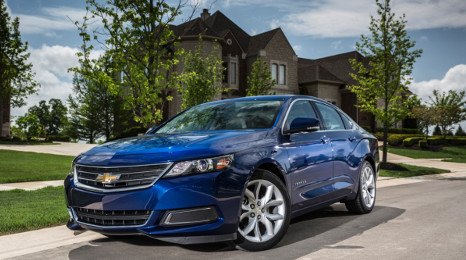
The latest recall covers the Cadillac XTS from the 2013 through 2015 model years and manufactured between Feb. 14, 2012 and Aug. 22. The recall also includes the Chevrolet Impala from the 2014 and 2015 model years and manufactured between Jan. 15, 2013 and Aug. 22.
In the affected vehicles, NHTSA indicated the electronic parking brake piston actuation arm may not fully retract causing the brake pads to stay partially engaged.
“Brake pads that remain partially engaged with the rotors may cause excessive brake heat that may result in a fire,” the regulator said.
GM told NHTSA it will notify owners, and franchised dealers will update the electronic parking brake software, free of charge. The recall is expected to begin this month.
In the meantime, owners can contact Chevrolet customer service at (800) 222-1020, or Cadillac customer service at (800) 458-8006 and reference recall No. 14471.
The latest recall pushes GM’s total amount of recalled vehicles in the U.S. to nearly 26 million.
Of course the highest profile campaigns are connected with defective ignition switches. The developing story took another turn last week as the Wall Street Journal reported that U.S. District Judge Jesse Furman directed GM to provide all documentation — including what it submitted to Congress and an internal investigation — to a panel of attorneys representing plaintiffs who have sued alleging economic losses, personal injury and deaths tied to the company's recall of older vehicles equipped with the switch.
One of those lead attorneys cheered the judge’s decision. Bob Hilliard, from the firm Hilliard Munoz Gonzales of Corpus Christi, Texas, currently represents 90 families of victims who were killed and more than 1,300 individuals who were injured in vehicles that allegedly had the defective ignition.
“GM has admitted it will not seek bankruptcy protection from post-bankruptcy injuries and deaths. Yet, GM refused to agree to participate in discovery and trial preparation,” Hilliard said. “This was a nonsensical position by GM and Judge Furman has determined that discovery should begin immediately.
“We have been ordered to begin a ‘reasonable yet aggressive schedule for discovery,’” Hilliard continued. “That tells me the court will insist this case move quickly and efficiently over the next few months.”
New Chrysler Recall for Grand Cherokee & Durango
In other recall news, Chrysler Group officials in Auburn Hills, Mich., said they are voluntarily recalling an estimated 230,760 SUVs to install new a relay circuit that improves fuel-pump relay durability.
The OEM indicated a routine internal data review discovered a pattern of repairs involving fuel-pump relays in certain 2011 Jeep Grand Cherokee and Dodge Durango SUVs.
“Further investigation revealed some relays are susceptible to deformation, which may affect fuel-pump function. Such a condition may prevent a vehicle from starting or lead to engine stall,” officials said.
“Chrysler Group is unaware of any accidents or injuries related to this condition,” they added.
The automaker explained the fuel-pump relay is located inside the Totally Integrated Power Module (TIPM), which also helps manage other vehicle functions.
“None of these other functions, including airbag deployment, is affected by the fuel-pump relay,” Chrysler added.
The recall covers an estimated 188,723 vehicles in the U.S.; 15,898 in Canada; 7,126 in Mexico and 19,013 outside the NAFTA region.
Chrysler Group will advise affected customers when they may schedule service, which will be performed at no cost.
Owners with questions may call Chrysler Group’s Customer Information Center at (800) 853-1403.
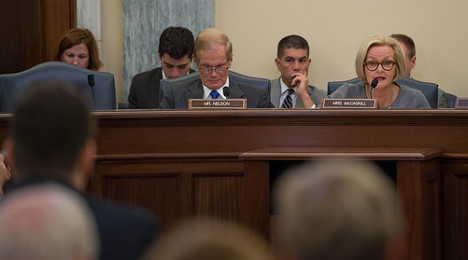
Sen. Claire McCaskill previously grilled General Motors chief executive officer Mary Barra about how the automaker investigated and recalled older vehicles with defective ignitions. Earlier this week, McCaskill took aim at David Friedman, deputy administrator of the National Highway Traffic Safety Administration, about the same issue.
During a Senate subcommittee hearing that lasted more than two hours, the Missouri Democrat questioned whether NHTSA is effectively operating as a needed “cop on the beat” when it comes to consumer safety.
McCaskill used a hearing of her consumer protection panel to examine implementation and enforcement of highway and vehicle safety laws and explore possible reforms as Congress works toward a long-term surface transportation bill. McCaskill pressed Friedman repeatedly on what tactics the agency is using to boost safety, and challenged him to take responsibility for NHTSA’s failures in safety oversight.
“We’re frustrated with you,” said McCaskill, a former prosecutor. “Nobody on this subcommittee believes that there aren’t people (at the agency) trying to do the right thing… but it’s hard to sit here and listen to you… Why you cannot take a measure of responsibility for that at this hearing has frankly got us scratching our heads. You want to obfuscate responsibility rather than take responsibility.
“How is the cause of an accident an optional question?” McCaskill continued, pointing out that a key question on causes of defects was optional. “You understand that reflects on a culture that's frightening, frankly. You understand I come from prosecutor background, and if you make the questions optional, that's never going to work.”
McCaskill and her fellow Senate lawmakers also touched on examples highlighted by the recent recalls at GM, saying, “The GM recall has shown us we still have serious deficiencies in how both automakers and auto safety regulators accomplish the task of ensuring the vehicles on the road are as safe as they can be.”
In his prepared remarks, Friedman defended the protocol NHTSA has in place, reiterating the role OEMs play in the entire process.
“The safety recall system established by Congress works most effectively when manufacturers make safety their top priority, root out safety problems at the earliest possible opportunity, and timely inform the agency,” he said. “Further, while every company has the right to challenge our conclusions about defects, when NHTSA raises serious safety issues with automakers, it is critical for them to work with us to quickly ensure the safety of their customers.
“In recent weeks, I have communicated these expectations directly to senior representatives of all major vehicle manufacturers as the agency works to establish a new normal when it comes to how all automakers deal with safety recalls,” Friedman continued.
With more than 250 million registered vehicles in the U.S., Friedman emphasized to lawmakers how challenging NHTSA’s responsibilities are and how resources to run the agency must be a priority.
“The data collection and analysis burden will only continue to grow and we look forward to working with Congress to ensure that NHTSA has additional resources to fulfill its safety responsibilities and respond effectively to emerging safety issues through these activities,” Friedman said. “We at the National Highway Traffic Safety Administration are dedicated to our mission of safety.”
Besides the back-and-forth dialogue between McCaskill and Friedman, witnesses at Tuesday’s hearing also included:
— Joseph Comé, deputy principal inspector general for audits and evaluations, Office of Inspector General, U.S. Department of Transportation
— Jacqueline Gillan, president, Advocates for Highway and Auto Safety
— Kendell Poole, chairman, Governors Highway Safety Association
— Robert Strassburger, vice president, vehicle safety and harmonization, Alliance of Automobile Manufacturers
This hearing also examined NHTSA’s implementation of highway and vehicle safety provisions of the Moving Ahead for Progress in the 21st Century Act (MAP-21), which included a number of reforms to safety programs — as well as McCaskill’s bipartisan legislation that would ban rental companies from allowing consumers to rent or sell vehicles that are under manufacturer recall. McCaskill challenged Strassburger on his group’s refusal to support the legislation, telling him she expects him to submit his own recommended language in short order if his group cannot find a way to support the bill.
McCaskill is chairman of the Senate Commerce Committee’s Subcommittee on Consumer Protection, Product Safety, and Insurance. The subcommittee has jurisdiction over several federal agencies, including NHTSA. As chairman, McCaskill held two hearings earlier this year on the GM recall of 2.6 million vehicles for defective ignition switches that have been linked to a number of deaths, and also held a hearing on rental car safety.
With the National Highway Traffic Safety Adminstration’s online database of vehicle recalls now up and running, the National Automobile Dealers Association is hosting a webinar with a top NHTSA official to highlight how stores can use this Web resource.
Designed for dealers and their staffs, NADA highlighted the safety recall webinar will review the purpose and history of federal safety recalls and how best to access VIN-specific recall information on NHTSA’s website. Set to be the lead speaker during this 30-minute session is Jennifer Timian, chief of the recall management division within NHTSA’s Office of Defects Investigations and Enforcement.
NHTSA rolled out this online database last month. Both dealers and consumers can use the site to find out if a vehicle is directly impacted by a recall.
In what also became effective in August under new a NHTSA mandate, all major light vehicle and motorcycle manufacturers are required to provide VIN search capability for uncompleted recalls on their own websites. Officials indicated this data must be updated at least weekly.
With all of those changes happening, NADA said, “The webinar will also touch on how recall determinations are made, how recall campaigns are conducted, and how NHTSA oversees the process.
“Dealership obligations, such as the new vehicle sales prohibition, will also be highlighted,” the association added.
The webinar will be moderated by Doug Greenhaus, NADA’s director of environment, health and safety. The session is scheduled for Wednesday at 2:30 p.m. ET. Dealers and their staffs can complete the registration here.
Association officials mentioned a webinar recording will also be made available on NADA University Online in late September.
The record-setting number of recalls this year keeps getting larger as Toyota and Ford rolled out campaigns impacting a combined total of approximately 200,000 units, the larger of the actions being Toyota's.
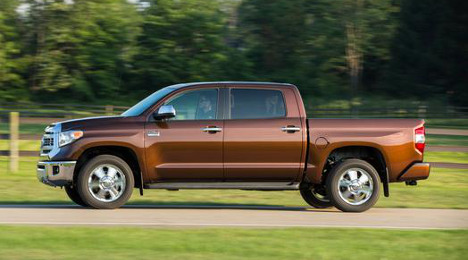
Starting with Toyota, the automaker said it will conduct a recall of approximately 130,000 Tundra Crew-Max Cab and Double Cab pickups from the 2014 model year.
“In the involved vehicles, due to the possible mis-installation of a garnish on the center pillars, the garnish could interfere with the side curtain-shield-airbags (CSA) in the event of a deployment, which may not allow the airbag to achieve its intended inflated shape,” Toyota said.
“Toyota is not aware of any crashes, injuries or fatalities caused by this condition,” the OEM added.
The automaker indicated owners of the vehicles involved will receive a notification by first class mail, and franchised dealers will inspect the center pillar garnishes. If either is not installed correctly, it will be replaced with a new one, according to officials.
Detailed information is available to customers at www.toyota.com/recall and by calling the Toyota Customer Experience Center at (800) 331-4331.
Meanwhile, the National Highway Traffic Safety Administration said Ford is recalling 70,209 small SUVs.
The campaign covers Ford Escape hybrid electric vehicles from the 2005 through 2008 model years manufactured from Oct. 13, 2003 to June 20, 2008. It also includes Mercury Mariner hybrid electric vehicles from the 2006 through 2008 model years manufactured from June 10, 2005 to June 20, 2008.
NHTSA indicated the coolant pump for the hybrid system may fail resulting in the hybrid electronics overheating.
“If the hybrid electronics system overheats, it may shut down the powertrain, resulting in a stall-like condition, increasing the risk of a crash,” the regulator said.
Ford told NHTSA it will notify owners, and franchised dealers will inspect and replace the original Motor Electronics Coolant (MEC) Pump with an improved brushless pump, free of charge. The recall is expected to begin on Oct. 27.
In the meantime, owners contact Ford customer service at (866) 436-7332 and reference recall No. 14S19.
Recalls and other safety matters will be the topic on Capitol Hill on Tuesday as a U.S. Senate subcommittee will conduct a hearing about NHTSA.
As Auto Remarketing investigated an area where the impact of recalls might be more pronounced for its special National Auto Auction Association Convention issue, both Fitch Ratings and NADA Used Car Guide released analyses on Tuesday stating that the effects from the record-setting year of campaigns might be muted.
First when considering vehicles included in rental fleets, Fitch recapped much of the depreciation analysis produced by Black Book Lender Solutions. As previously reported by SubPrime Auto Finance News, Black Book’s newest white paper dissected four significant recalls, including:
— Toyota Camry (gas pedal/unintended acceleration issue on 2008 and 2009 models)
— Chevrolet Cobalt (key ignition/unintended shut off on 2005-2007 models)
— Ford Escape (engine fire risk on 2013 models)
— Ford Explorer (Bridgestone-Firestone tire recall on the 2000 model)
Fitch mentioned Black Book’s study acknowledged material declines in Toyota's reputation in brand surveys following its recalls, as well as slippage in Toyota's hold of new-vehicle sales between 2009 and 2010.
“Yet, monthly depreciation rates on the Camry never exceeded the blended depreciation rates on similar- model, similar-year cohorts,” Fitch said. “In the Ford and GM cases, the study compared the depreciation rates of both newer and older model years relative to the model years affected by the recalls.
“Data generally showed no acceleration in valuation declines for any of the model years in the six-month period following the recalls,” the firm continued.
Acknowledging that this year’s record amount of recalls has created material disruptions and driven up operating costs for rental companies, Fitch projected the recalls should not be a major threat to the residual values of the affected vehicles within rental fleets.
“Steady residual values could keep the pain of the recent recalls limited to the incremental service costs that have already crimped second-quarter earnings reported by firms such as Hertz Corp. and Avis Budget Group. Consequently, Fitch expects the impact to the rental car firms' overall credit profiles to be modest,” analysts said in light of approximately 37.5 million vehicles being recalled globally, well above the prior record of 30.8 million recorded in all of 2004.
Fitch emphasized that residual values are important factors to consider at the end of the vehicle life, when rental car firms seek to dispose of vehicles that are not returned to manufacturers (risk vehicles).
“Rental car firms currently hold high proportions of risk vehicles in their fleets to provide flexibility in managing fleet levels and to take advantage of the robust used car market in the U.S. through various vehicle disposition channels,” Fitch said.
“Regardless of recall activity, Fitch expects residual values to come under pressure through the end of 2014 as significantly higher vehicle supply is expected to enter the used-car market from vehicles coming off lease and trade-ins,” the firm continued.
Looking at the topic from another angle, Fitch’s auto asset-backed securities residual value index — which tracks the performance of residual values in ABS transactions — recorded a gain of 5.76 percent in July, down from a gain of 8.38 percent the prior month.
The index has recorded gains in each month going back to May 2009, but Fitch expects the index to move lower in the latter part of the year.
“Expectations of used-car market softness are further confirmed by Black Book's used car depreciation rates, which are expected to rise to 13.5 percent in 2014, up from 12.8 percent recorded in 2013, but remain below the historical average rate of approximately 15 percent,” said Fitch analysts, which pointed out that Black Book uses 2- to 6-year-old vehicles in its overall depreciation trend summaries for consistent comparisons.
NADA UCG Recall Impact Analysis
Meanwhile, the analysts at NADA Used Car Guide released their own white paper on Tuesday. The document titled, The Impact of Vehicle Recalls on the Automotive Market, examined many of the same high profile recalls like Black Book’s efforts did. Unlike GM’s high-profile ignition recall that was for older units no longer in production, NADA UCG noted that Toyota’s campaigns of five years ago included prominent vehicles likely in late-model inventory.
Before the recalls, NADA UCG calculated that used Toyota cars and trucks carried prices nearly 40 percent higher than those of direct competitors. This metric meant that for the average $10,000 vehicle, a comparable Toyota carried a premium of $4,000.
“But as the recalls unfolded and media scrutiny intensified, Toyota’s advantage over the competition quickly deteriorated,” NADA UCG analysts said. “By April 2010, five months after initiating the first recall, Toyota’s competitive advantage had shrunk to 20 percent.
“By late 2010, Toyota recovered some of the ground it had lost, but the automaker’s used vehicle prices still have not regained their former position of dominance,” they continued. “When the dust settled, Toyota’s price advantage over its competition stabilized at around 30 percent, an outcome that reduced the spread between its used prices and those of a $10,000 rival by a considerable $1,000.”
Nonetheless, NADA UCG insisted that the effect of recalls on automaker market performance is determined by a variety of factors.
“History has shown that, by and large, brand reputation only tarnishes when recalls are tied to numerous injuries or deaths and media attention is widespread,” analysts said.
“As we saw with Toyota, significant and lasting damage can occur when these conditions are combined with events perceived as decidedly out of character for a manufacturer,” they continued. “Automakers strive for a reputation synonymous with quality, but ironically they suffer more from a recall event if consumers already perceive them in this light. Evidence suggests that model age also influences recall impact, which could be because older models are less associated with a brand’s current product image.
“We can say with confidence that future recalls will have a measurable impact on market performance, but it’s a bit more difficult to pinpoint the exact degree,” NADA UCG went on to say. “GM’s recalls are a perfect example. The manufacturer’s new vehicle sales and used vehicle prices have gone relatively unscathed, even though circumstances surrounding its recalls are somewhat similar to what Toyota experienced a few years ago.
“Above all, this report shows that the same factors cause recall-related brand damage, but individual circumstances determine the severity of the damage,” analysts added.
More Coverage from Auto Remarketing
The latest commentaries from Fitch and NADA UCG are just the latest reports Auto Remarketing has related to recalls and their impact in the used-vehicle market.
Auto Remarketing reached out to several auction leaders to get a sense of how these recalled units are clogging up the remarketing process. Auction Broadcasting Co. president Jason Hockett shared some first-hand experiences as did Lynn Weaver, general manager of Harrisburg Auto Auction.
The stories will be shared in the Sept. 15 edition of Auto Remarketing, which also will be distributed during NAAA’s Convention in Boston beginning on Sept. 23.
If you’re not going to be in Beantown for the event, be sure to claim your free subscription by going here or review the digital edition at digital.autoremarketing.com.