Ford issued six separate safety recalls this week for various models in their production lineup. The total recall number, based on totals provided by Ford with figures as of June 23, add up to 100,610 vehicles, with a possible overlap with two of the six recalls.
The majority of the recalls, 91,162 units, are vehicles that were sold in the United States and its territories. The remaining were sold in Canada (8,725) and Mexico (723). The recalls include some cross-platform models sold as Ford, Lincoln, police and commercial-use vehicles. No injuries or accidents have been linked directly to any of the recalls, according to Ford.
Below is a breakdown of the recalls:
Potential Halfshaft Disengagement (92,022 units): 2012-2014 Taurus/MKS/Interceptor, Flex/MKT, Edge/MKX (83,250 US, 8,173 Canada, 599 Mexico)
- Taurus/MKS: 2013-2014 vehicles with a 3.5L AWD powertrain built at Chicago Assembly Plant August 25, 2011 – November 30, 2013.
- Police Interceptor Sedan: 2013-2014 vehicles with 3.5L GTDI AWD, 3.5L & 3.7L TiVCT FWD & AWD powertrains built at Chicago Assembly Plant August 25, 2011 – November 30, 2013
- Flex/MKT: 2013-2014 with the 3.5L GTDI AWD powertrain built at Oakville Assembly Plant September 12, 2011 – November 29, 2013.
- Edge: 2012 – 2014 with the 2.0L GTDI FWD powertrain built at Oakville Assembly Plant September 2, 2010- November 29, 2013
- Edge/MKX: 2014 with the 3.5L & 3.7L TiVCT AWD powertrain built at Oakville Assembly Plant September 2, 2010 – November 29, 2013
Potential Junction Block Issue (5,264 units): 2011-2014 F59 Commercial Stripped Chassis (4,867 US, 397 Canada; potential overlap with Brake Caliper recall for US units)
- Affected Vehicles: 2011-2014 F59 Commercial Stripped Chassis vehicles built at Detroit Chassis Plant December 17, 2009 – April 30, 2014
Potential Issue with Panorama Roof Glass (2,124 units): 2014 Ford Escape (1,867 US, 143 Canada, 114 Mexico)
- Affected Vehicles: 2014 Ford Escape vehicles built at Louisville Assembly Plant October 15, 2013 – October 22, 2013
Potential Brake Caliper Issue (635 units): 2014 F53 Motorhome Stripped Chassis & F59 Commercial Stripped Chassis (All in US, potential overlap with Junction Block recall)
- Affected Vehicles: 2014 F53 Motorhome & F59 Commercial Stripped Chassis vehicles built at Detroit Chassis Plant February 14, 2014 – March 7, 2014
Brake Fluid Reservoir Cap Issue (368 units): 2014 Transit Connect (all in Puerto Rico)
- Affected Vehicles: 2014 Ford Transit Connect vehicles built at Valencia Assembly Plant March 1, 2014 – May 15, 2014
Potential Fuel Tank Issue (197 Units): 2014 Ford Fiesta (175 US, 12 Canada, 10 Mexico)
- Affected Vehicles: 2014 Ford Fiesta vehicles built at Cuautitlán Assembly Plant October 25, 2013 – February 27, 2014
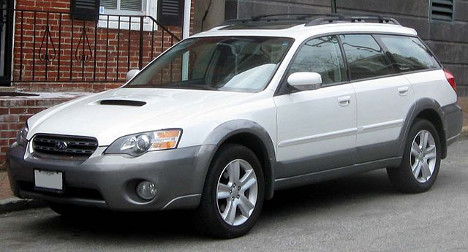
Long-time enemies of a vehicle’s current condition — corrosion and rust — created a recall of more than 660,000 units by Subaru of America.
The National Highway Traffic Safety Administration said Subaru is recalling four different models because of the possible excessive corrosion near the brake lines. The models included in the campaign are:
—2005-2009 Outback and Legacy
—2008-2011 Impreza
—2008-2014 Impreza WRX/STI
—2009-2013 Forester
NHTSA and the automaker believe there are 660,238 vehicles included for recall that currently are or formerly were registered in Connecticut, Delaware, Illinois, Indiana, Iowa, Maine, Maryland, Massachusetts, Michigan, Minnesota, Missouri, New Hampshire, New Jersey, New York, Ohio, Pennsylvania, Rhode Island, Vermont, West Virginia, Wisconsin and the District of Columbia.
“Salt water could splash on the brake lines through a gap in the fuel tank protector, resulting in excessive corrosion of the brake lines,” NHTSA said.
“Brake line corrosion may result in brake fluid leakage. Fluid leakage may result in longer distances being required to slow or stop the vehicle, increasing the risk of a crash,” the agency continued.
Subaru told NHTSA that it will notify owners, and franchised dealers will test the brake system by depressing the brake pedal and inspecting for brake fluid leaks.
If no brake fluid seepage is observed, officials said the affected areas will be rustproofed with anti-corrosion wax. If brake fluid seepage is observed, officials indicated the brake lines will be replaced followed by rustproofing with anti-corrosion wax.
NHTSA noted these services will be performed free of charge, and the automaker has not yet provided a notification schedule.
In the meantime, owners can contact Subaru at 1-800-782-2783 and mention recall campaign No. WQK-47.
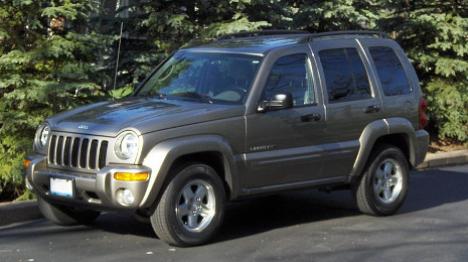
The clash between Chrysler Group and the National Highway Traffic Safety Administration over the recall involving 1993-2004 Jeep Grand Cherokees and 2002-2007 Jeep Liberty vehicles took another turn on Wednesday.
NHTSA officials issued a special order because they want to know why it’s taking what they consider to be a long time to repair 1.56 million vehicles in a recall that was announced last June. According to a NHTSA document from June 2012, the Office of Defects Investigation opened an analysis to investigate an alleged safety-related defect concerning fuel-tank system integrity in rear impacts or crashes in these SUVs.
The investigation revealed “numerous fire-related deaths and injuries, fires that did not result in deaths and fuel leaks in rear impacts.” NHTSA contends that the vehicles in question pose a risk to motor vehicle safety in rear-impact collisions due to possible malfunctions in the fuel systems.
Regulators wanted Chrysler to recall more than 2.7 million units, but the agency and the automaker agreed last June that a recall campaign would cover less than that amount.
But now, NHTSA is wary the OEM doesn’t have the parts to make these repairs at franchised dealerships. Regulators now are seeking answers to eight different questions, including data about how many of these units still are in operation, the rate repairs are being made and how additional parts are being manufactured.
Chrysler faces a deadline of July 16 to submit affidavits and other materials; otherwise, the automaker faces a $7,000 per day fine from NHTSA that can climb up to $35 million.
“NHTSA is therefore concerned that Chrysler does not have, and will not have, sufficient production capacity to ensure that enough hitches will be available to ensure that the recalled vehicles will be remedied expeditiously,” officials said in the special order to Chrysler. “For many owners, a recall remedy deferred by parts availability easily becomes a defect remedy denied. Moreover, additional delays in implementing this recall will inure to Chrysler’s benefit at the expense of vehicle owner safety.
“Although NHTSA acknowledges that recall campaigns may have low completion rates for any number of reasons, the agency has no intention of allowing Chrysler, or any other manufacturer, to delay recall completion to the detriment of safety,” officials continued. “NHTSA is therefore issuing this special order to obtain information regarding Chrysler’s data collection, planning and decision-making in regard to its implementation of the recall remedy in this case.”
In a message to Auto Remarketing, Chrysler said it welcomes the findings of NHTSA pertaining to the safety of these vehicles.
“According to the agency, after conducting and analyzing eight rear impact crash reconstruction tests, NHTSA informed Chrysler that ‘it did not have any reservations about implementation of Chrysler’s proposed remedy.’ This reflect Chrysler Group’s longstanding position — supported in the public record by real-world data — that the vehicles are not defective. They are among the safest in their peer groups and met or exceeded the standards in effect at time they were first sold. We remain unwavering in our commitment to design, engineer and build vehicles that afford outstanding customer safety and security.”
Chrysler insisted that this campaign has been conducted in close coordination with NHTSA.
“The agency has had full knowledge of our activities. Chrysler Group complied with all applicable regulations governing recalls, and has been working with NHTSA all along in this process,” OEM officials said.
Chrysler went on to mention that launching a safety recall demands complex engineering and close coordination with NHTSA well before an automaker accumulates replacement parts.
“To accommodate the high-volume production required for this campaign, Chrysler Group had to find and enlist multiple new supplier partners to supply volume of this part that far exceeded normal demand,” the company said.
“Parts production has commenced. Our supplier partners are committed to a work schedule of three shifts per day, six days per week, with occasional Sunday production,” the automaker added.
“Chrysler Group has already contacted affected customers and advised them of our intentions. They will be contacted again when the time is appropriate to schedule service. The cost of this work will be borne by the company,” the OEM concluded.
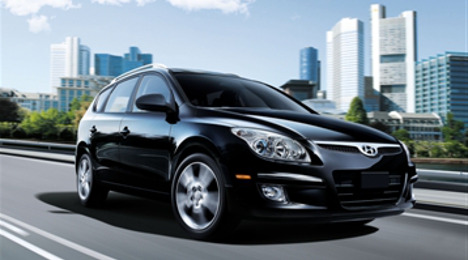
The National Highway Traffic Safety Administration said Hyundai Motor America is recalling 35,000 vehicles to fix a support bracket.
Included in the campaign are Elantra Touring vehicles from 2010 through 2012 model years. The units were manufactured from Dec. 15, 2009 through May 7, 2012.
NHTSA indicated the affected vehicles have a support bracket attached to the headliner that may become displaced during a side curtain airbag deployment.
“If the headliner support bracket makes contact with an occupant during a crash, it may cause a laceration injury,” officials said.
Hyundai told regulators that the OEM will notify owners, and franchised dealers will apply adhesive strips to the headliner, free of charge. The recall is expected to begin by mid-August.
In the meantime, owners may contact Hyundai customer service at (800) 633-5151 and reference recall No. 117.
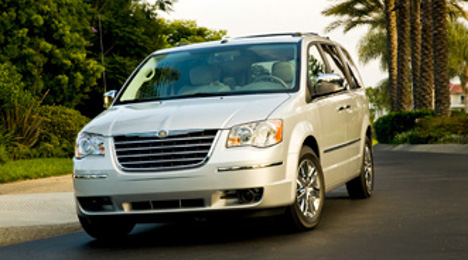
Chrysler Group is expanding a previous safety recall “out of an abundance of caution” to correct ignition switches in minivans and SUVs.
The automaker said today that it wants to install a more robust WIN module detent ring.
A previous recall in 2010 included 196,000 Chrysler Town & Country, Dodge Grand Caravan and Dodge Journey vehicles built Aug. 2, 2009 through June 17, 2010.
Today’s expansion includes an additional 695,957 vehicles manufactured on Jan. 29, 2007 through Aug. 1, 2009.
Chrysler indicated vehicles equipped with a FOB key may experience inadvertent ignition switch displacement from the “run” to “accessory” position while driving.
“If the switch is not fully engaged in the ‘on’ position of the detent ring inside the module, the spring-loaded switch may allow the key to spring past the ‘on’ position and into the ‘accessory’ position,” OEM officials said.
“This action will shut off the engine and passive restraint systems, including air bags,” they continued.
Chrysler noted the issue was originally identified through the company’s internal quality control research and customer input.
“Chrysler Group is unaware of any injuries related to the expansion,” the automaker said.
The OEM said its franchised dealers will, at no cost to customers, install the new WIN detent ring in affected vehicles.
Chrysler added that it will contact affected customers and advise them when service is available.
An estimated 525,206 vehicles are located in the U.S. while another 102,892 units are in Canada. The company said 25,591 units are in Mexico and 42,268 are outside the NAFTA region.
Customers with additional questions can call Chrysler Group’s Customer Assistance Center at (800) 853-1403.
Only a couple of hours after Kenneth Feinberg shared details of the automaker’s ignition switch compensation program on Monday, General Motors announced it will conduct six new safety recalls in the United States involving about 7.6 million vehicles from the 1997 to 2014 model years.
Add Monday’s recalls to the four campaigns GM detailed late last Friday covering more than 425,000 units, the OEM now is looking to repair about 29 million vehicles worldwide through iniatives announced since the beginning of the year.
The largest segment of the newest batch of recalls covers 6,805,679 vehicles in the U.S. The campaign stems from unintended ignition key rotation and includes:
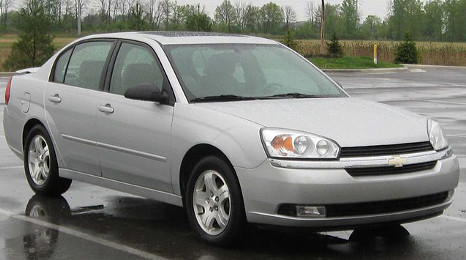
—1997-2005 Chevrolet Malibu
—1998-2002 Oldsmobile Intrique
—1999-2004 Oldsmobile Alero
—1999-2005 Pontiac Grand Am
—2000-05 Chevrolet Impala and Monte Carlo
—2004-08 Pontiac Grand Prix
The automaker is also recalling 554,328 Cadillacs for the same problem, the CTS from the 2003 through 2014 model years and the SRX from the 2004 through 2006 model years.
Among these recalled vehicles, GM said it is aware of seven crashes, eight injuries and three fatalities. The fatal crashes occurred in older-model full-size sedans being recalled for inadvertent ignition key rotation.
GM chief executive officer Mary Barra said there is no conclusive evidence that the defect condition caused those crashes.
“We undertook what I believe is the most comprehensive safety review in the history of our company because nothing is more important than the safety of our customers,” Barra said. “Our customers deserve more than we delivered in these vehicles. That has hardened my resolve to set a new industry standard for vehicle safety, quality and excellence.
“We have worked aggressively to identify and address the major outstanding issues that could impact the safety of our customers,” she continued. “If any other issues come to our attention, we will act appropriately and without hesitation.”
Until the ignition recall repairs have been performed, OEM officials explained it is very important that customers remove all items from their key ring, leaving only the vehicle key. The key fob, if present, should also be removed from the key ring, according to the automaker.
GM expects to take a charge of up to approximately $1.2 billion in Q2 for the cost of recall-related repairs announced in the quarter. This amount includes a previously disclosed $700 million charge for recalls already announced during the quarter.
Here is a rundown of the other recalls of U.S. vehicles GM announced on Monday:
—2,990 units including the 2011-14 Chevrolet Cruze, 2012-14 Chevrolet Sonic and 2013-14 Chevrolet Trax, Buick Encore and Verano: On certain vehicles, insulation on the engine block heater power cord (if equipped) may become damaged during very cold conditions.
—106 units including the 2014 Chevrolet Camaro and Impala, Buick Regal and Cadillac XTS: Some vehicles may not have had a “Superhold” joint fastener torqued to specification at the assembly plant.
—9,371 units equipped with an auxiliary battery including the 2007-11 Chevrolet Silverado HD, GMC Sierra HD: An overload in the feed may cause the under-hood fusible link to melt due to electrical overload, resulting in potential smoke or flames that could damage the electrical center cover and/or the nearby wiring harness conduit.
—181,984 units including the 2005-07 Buick Rainier, Chevrolet TrailBlazer, GMC Envoy, Isuzu Ascender, Saab 9-7x and 2006 Chevrolet TrailBlazer EXT, GMC Envoy XL: A possible electrical short in the driver’s door module that could disable the power door lock and window switches and, in rare cases, overheat the module.
When learning of all of the new recalls on Monday, Kelley Blue Book senior analyst Karl Brauer considered a question many dealers might be asking.
“So far these recalls haven’t impacted current sales and have had minimal impact on consumer perception,” Brauer said, “but we’re hitting unprecedented numbers and it’s reasonable for people to start asking, ‘When and where will it end?’
“It’s clear Mary Barra has decided this is going to be the defining factor in her tenure as CEO, and there are worse claims to fame then being adamant about vehicle safety,” Brauer continued. “Hopefully, in the long run, it's seen as a positive evolution for the company, though in the short-term it reflects a stark inability to identify safety flaws in a timely manner.”
Previous Recall for Compacts and Pickups
Late on Friday, GM outlined four safety recalls covering 428,211 vehicles in the United States. Here are those details:
—Dealers will replace the driver’s side air bag inflator in 29,019 Chevrolet Cruze sedans from the 2013 and 2014 model years. Officials said the inflator in the driver’s front air bag may rupture and/or the air bag may not inflate during air bag deployment.
“A rupture could propel metal pieces of the inflator into the vehicle cabin, possibly striking and seriously injuring the driver or other vehicle occupants,” GM said. “Additionally, if the inflator does not inflate the air bag, there is an increased risk of injury to the driver. GM is aware of one injury related to the issue.”
—Dealers will recalibrate transfer case control module software in 392,459 full-size pickup trucks and SUVs in the U.S. Affected are four-wheel-drive versions of the 2014 and 2015 Chevrolet Silverado and GMC Sierra, the 2015 Chevrolet Tahoe and Suburban and the 2015 GMC Yukon and Yukon XL.
“In these vehicles, the transfer case may electronically switch to neutral without input from the driver,” GM said. “If this occurs while a vehicle is in motion, no power will go to the wheels. If the vehicle is stopped or parked, it may roll away if the parking brake is not set. GM is not aware of any crashes or injuries related to this issue.”
—Dealers will inspect, and replace if necessary, the windshield wiper module assembly in 4,794 Chevrolet Caprice police cars and 2014 Chevrolet SS sport from the 2013 and 2014 model years.
“If the motor gear teeth become stripped, the wipers may not operate,” the OEM said. “GM is not aware of any crashes or injuries related to this issue.”
—Dealers will replace the two rear shock absorbers in 1,939 Chevrolet Corvettes with the FE1 or FE3 suspension from the 2014 model year. The reason for the recall is to repair a possible insufficient weld in the rear shocks that could lead to a fracture and/or reduce the shocks’ service life.
GM is not aware of any crashes or injuries related to this issue.
Feinberg Spells Out Compensation Program
During a press conference in Washington, D.C., attorney Kenneth Feinberg who GM retained back on April 1, shared details on Monday of the automaker’s ignition switch compensation program,. Here are some of the highlights:
—The program is purely voluntary as no individual is required to participate. Only if the individual is satisfied with the compensation provided, does he/she agree to waive their rights to litigate against GM.
—Feinberg retains complete and sole discretion over all compensation awards to eligible victims, including eligibility to participate in the program and the amounts awarded. By agreement, GM cannot reject the administrator’s final determinations as to eligibility and amount of compensation.
—The program has no aggregate cap. GM has agreed to pay whatever the administrator deems appropriate in each and every individual case.
—Individuals who previously settled their claims with GM before knowing of the ignition switch defect will be permitted to enter the program and may receive additional compensation.
—Contributory negligence attributed to the driver of the vehicle such as intoxication or speeding is irrelevant. The new program will not examine or evaluate any such contributory negligence.
—Claimants filing a claim with the administrator will be required to prove that the ignition switch defect in an “eligible vehicle,” as defined in the program, was the “proximate cause” of the death or physical injury in the accident.
—The program will recognize three different categories of eligible claims: individual death claims, individual claims involving the most serious physical injuries (quadriplegic and paraplegic injuries, permanent brain damage) and less serious physical injuries involving hospitalization or, in limited circumstances, immediate outpatient medical treatment.
—Eligible claims will be paid within 90 to 180 days from the time that a submitted claim is deemed “substantially complete” by the administrator.
—The program will begin receiving claims on Aug. 1 and all claims submitted to the administrator must be postmarked no later than Dec. 31.
“This program is designed to provide swift compensation to eligible victims of ignition switch defects in certain GM vehicles. We will work closely with all individual claimants and their lawyers in evaluating individual claims and reaching a determination as to eligibility and value as soon as possible,” Feinberg said.
“We have benefitted greatly in the design of this Program from the input and constructive advice received from lawyers representing claimants, non-profit public interest groups and GM itself,” he continued. “We are grateful for the cooperation we received. We have also relied upon certain previous compensation programs, such as the September 11 Victim Compensation Fund and One Fund Boston, in developing this compensation program.”
After Feinberg made his presentation, Barra shared her appreciation for the counsel’s efforts.
“We are pleased that Mr. Feinberg has completed the next step with our ignition switch compensation program to help victims and their families,” Barra said. “We are taking responsibility for what has happened by treating them with compassion, decency and fairness. To that end, we are looking forward to Mr. Feinberg handling claims in a fair and expeditious manner.”
Complete details of the compensation program can be found at www.gmignitioncompensation.com.
In an attempt to give the National Highway Traffic Safety Administration more funds and resources to handle the rising amount of vehicle recalls, the chairman of the U.S. Senate Commerce Committee introduced a bill that would create a federal vehicle usage fee.
Sen. Jay Rockefeller included this proposed fee within the Motor Vehicle Safety Act of 2014 when the West Virginia Democrat who heads this Senate committee introduced the measure this week. The proposed a $3 per vehicle fee beginning in 2015, rising to $6 a year later and then $9 in 2017.
Lawmakers contend the fee could generate $200 million in the first year of implementation, climbing to $280 million in later years and beyond especially when the fee is tied to the inflation rate determined by federal officials.
Rockefeller insisted part of the reason for this revenue stream to boost NHTSA is the millions of vehicles recalled this year alone by General Motors and other OEMs.
“If NHTSA doesn’t have the resources or capabilities to protect the driving public and fulfill its mission, then Congress must step in and give this agency what it needs to meet these critically important goals,” Rockefeller said.
“For the past 15 years many of us have attempted to bolster NHTSA’s authority, precisely to better prevent tragedies like the deaths caused by GM’s faulty ignition switches,” he continued. “While we’ve made some progress, ultimately we’ve been blocked from fully providing NHTSA with the adequate resources and authorities it needs. Everything we’ve learned in the past months through our committee investigation into GM has made it absolutely clear that it’s time to put our differences aside.
“We’ve got to act now and support NHTSA if we’re going to minimize the chances of another heartbreaking tragedy,” Rockefeller added.
The Senator went on to point out the Motor Vehicle Safety Act of 2014 now in the upper chamber aims to enhance NHTSA’s ability to carry out important safety programs and hold manufacturers and dealers accountable for the safety of their vehicles.
Specifically, Rockefeller’s legislation would:
—Gives NHTSA greater safety authority, including the authority to remove dangerous vehicles from the road and raise caps on civil penalties for safety violations.
—Increases funding for NHTSA’s chronically underfunded vehicle safety programs by authorizing appropriations for NHTSA.
—Prohibits dealers from selling used vehicles with known pending safety recalls without fixing the defect or making the consumer aware of the defect.
—Promotes greater transparency at NHTSA by requiring public availability of early warning data, improving consumer access to the vehicle safety database, and limiting the “revolving door” between NHTSA and the auto industry.
Sen. Chuck Schumer is urging the Federal Trade Commission to create another regulatory hurdle for dealers to clear in order to sell used vehicles, using an incident allegedly involving a truck sold by a CarMax store in California as leverage to further the campaign.
The New York Democrat sent a letter this week to the FTC asking the agency to immediately direct dealers that sell used vehicles to change any policy that may potentially allow the sale of recalled vehicles without first fixing safety defects.
Schumer noted the Motor Vehicle Safety Act prohibits franchised dealers from selling recalled new vehicles without first fixing the safety defects, but the legislation does not apply to dealers who also move used metal. Schumer added that if the FTC does not act to prevent used car dealers from selling defective vehicles, he will take legislative action to address this issue.
“Used cars that have a safety recall shouldn’t be sold to anyone until the recall is fixed, period,” Schumer said. “Far too many times we have seen the tragic and often fatal consequences when deficient cars are allowed on the road, and it’s time for the FTC to do everything it can to put a stop to it.”
Schumer’s letter comes as Consumers for Auto Reliability and Safety and other consumer groups have petitioned the FTC to investigate and take appropriate legal action regarding the advertising and sales practices of CarMax.
Those consumer groups also have helped a California state Senator revive her bill that would prohibit the selling, leasing, renting, loaning or otherwise transferring ownership of a used vehicle, if the dealer knows or should have known that the unit is subject to a manufacturer’s safety recall.
Lawmakers pushed Senate Bill 686 over to the Assembly’s Business and Professions Committee last summer where it didn’t come up for a vote. But that committee earlier this month heard from Sen. Hannah-Beth Jackson who sponsored the bill and brought a host of witnesses organized by Consumers for Auto Reliability and Safety to show support for the measure.
The committee heard from Angela Davidson, who told lawmakers she bought a 2010 Dodge Ram with her husband, Clarence, from a CarMax store in Irvine, Calif., on May 19. Davidson said she later learned the truck was recalled by Chrysler, and the repair hadn’t yet been completed.
According to the notice from the National Highway Traffic Safety Administration from last February, Chrysler recalled 278,222 units because the rear axle pinion nut may loosen due to an undersized pinion spline that can allow relative motion between the nut and companion flange.
“If the rear axle pinion nut loosens, the axle can lock up and cause a loss of vehicle control and/or a vehicle crash with little warning,” NHTSA said.
According to Davidson’s statement to the California Assembly, that’s exactly what happened even after taking the vehicle to a Chrysler dealership. On May 30, Davidson said the truck came apart when traveling through the Mojave Desert and exploded.
In a letter on behalf of CarMax to Assemblyman Susan Bonilla, who chairs the Business and Professions Committee, attorney Louie Brown of Kahn, Soares & Conway emphasized how the entire system is “broken.”
Brown wrote, “Manufacturer’s safety recalls should be taken seriously by manufacturers, dealers and consumers, which is why CarMax carefully advises its customers to register their vehicles with its manufacturer as soon as they purchase the vehicle so they can be apprised of any future recalls.
“Unfortunately, manufacturers do not permit independent auto dealers like CarMax to repair recalls,” he continued. “Further, the manufacturers do not even grant independent auto dealers like CarMax access to their internal databases in order to determine whether a vehicle is subject to a recall. Thus independent dealers are left to search a manufacturer’s website (which typically requires a person to register the vehicle and provide a name and both an email and physical address) or call a manufacturer’s franchisee and inquire about a vehicle’s recall status.”
Meanwhile back on Capitol Hill, Schumer closed his letter to FTC chair Edith Ramirez by again referencing the alleged California incident.
“The commission has a long and distinguished history of cracking down on deceptive sales practices and protecting consumers,” Schumer said. “If the allegations by Consumers for Auto Reliability and Safety prove to be true, I believe the commission should take swift and decisive action to rectify the inherently deceptive and dangerous practice of selling safety-compromised used cars that are under recall to unsuspecting consumers.”
The litany of recalls at General Motors this year may wind up costing the automaker a great deal financially, but GM’s stores may actually realize some pretty nice gains — including attractive offers on the dealership buy-sell front.
Haig Partners, which released The Blue Sky Report for the first quarter of 2014 on Wednesday, has found that the automakers’ recalls have yet to cause any slowdown in suitors looking to buy GM dealerships.
“While GM will be incurring extraordinary costs for the recalls, GM dealers stand to benefit from customers bringing vehicles in for repairs and trading in recalled cars for newer models,” said company president Alan Haig. “It’s early to call it a non-event, yet GM’s market share is stable, new unit sales are increasing, and its stock price is up from a year ago.
“We’re currently representing the seller of a very profitable GM dealership, and we believe it will trade for a franchise-record price.”
In the report, the firm would go on to shed more light on this GM store it is representing, which it said has hit record sales in profits in some months.
“Its peer stores have also been enjoying higher sales during this period. And dealership buyers who already own GM stores showed strong interest in the dealership as they saw the results of their own GM stores holding up well during this period,” the report indicates.
“At the current offer, we believe this transaction will represent one of the highest prices ever paid for a Chevrolet dealership,” it continues. “This is not to say that GM franchise values will remain steady if things get worse for GM, but so far, buyers appear to be largely unconcerned with the recalls.”
The report goes on to draw some parallels with a Toyota store it worked with amid the automaker’s accelerator pedal recall and the natural disasters that hit Thailand a few years ago.
This Toyota dealer was able to overcome the bad press facing the automaker and Toyota’s new-car supply shortage, all while still thriving.
The store report cut back on advertising and raised prices on limited inventory, and this allowed the dealership to maintain success even in a challenging time. This is something that GM dealers may be able to apply as challenges mount in Detroit, particularly as it relates to opportunities in the service department and the improved small-car lineup on the new-car side.
“GM dealers have a different set of challenges, but they may be able to turn the situation to their advantage as many customers who own these older, recalled vehicles will be coming to their showrooms and service departments,” the report said.
“Dealers will be able to generate incremental service revenue and will also work to convince many of these owners to purchase a new or used vehicle from them,” it continued. “We believe that GM’s small car products of today are more appealing and competitive than the GM products that were recalled.
“So while GM will bear the burden of potentially billions of dollars of recall expenses, its dealer base may end up making higher profits because of it.”
A Different View
In a similar report released earlier this week, Kerrigan Advisors presents another picture of the buy-sell picture for GM dealerships.
The firm released The Kerrigan Quarterly Blue Sky Report for Q1 2014 on Monday and inlcuded a blue sky chart for various non-luxury and luxury brands, including Chevrolet and Cadillac.
“Chevy, like all GM franchises, is being affected by the recalls. Some buyers avoid GM franchises due to the challenges of working with the factory,” the Kerrigan report said.
“That said, Chevy is still the second-largest franchise in the U.S. and buyers show interest.”
As for Cadillac, the report said: “Cadillac is considered a riskier luxury franchise by buyers. The brand experienced strong growth in 2013, but below market growth in the first quarter and the GM recalls are not helping the brand’s image.”
Potentially explosive airbags manufactured by Takata Corp. of Japan and used by more than a half-dozen automakers are forcing the National Highway Traffic Safety Administration to intensify an investigation of nearly 1.1 million vehicles.
NHTSA said that its Office of Defects Investigation received a complaint last August of a driver’s bag inflator rupture in a 2005 Honda Civic. In March, ODI officials indicated they received another complaint alleging a passenger’s bag rupture on a 2003 Toyota Corolla. Then in April, ODI received a third complaint alleging a driver’s bag rupture in a 2005 Mazda 6.
“There were three alleged injuries from these three incidents and all appeared to be minor in nature,” NHTSA officials said.
ODI noted that it then discussed these incidents with Takata, the supplier of airbags involved and with the affected vehicle manufacturers.
In the course of its review, NHTSA said Takata identified two other incidents, one involving a passenger bag rupture on a 2004 Nissan Sentra and another a driver’s bag rupture on a 2006 Dodge Charger. Toyota also provided another passenger’s bag rupture on a 2002 Toyota Corolla, according to NHTSA.
“Of note, all six incidents occurred in a high absolute humidity climate (Florida and Puerto Rico),” officials said. “By way of background, several manufacturers in recent years have conducted safety recalls of vehicles for rupturing airbags.”
In 2008 through 2011, NHTSA recapped,Honda conducted a series of recalls concerning driver’s bag inflator ruptures on various 2001 through 2004 vehicles. In 2013, Honda, along with Toyota, BMW, Nissan and Mazda, initiated safety recalls to address passenger bag ruptures in certain 2001 through 2004 models.
“None of these recalls were regional in nature or attributable to atmospheric conditions in field use,” federal officials said.
In response to the investigations, Takata government affairs specialist Mike Rains used a letter to the agency to recap a meeting the company had with NHSTA this past May.
“At that meeting, Takata pointed out that all six of the potentially relevant rupture incidents had occurred in either Florida or Puerto Rico. Takata also described the research being conducted to better understand the causes of those incidents,” Rains said.
“Among other things, Takata explained that Florida and Puerto Rico have exceptionally high levels of absolute humidity, and that exposure to that level of humidity, in conjunction with potential processing issues during certain manufacturing time periods that may influence aging stability, are the focus of Takata’s current research and investigation efforts,” he continued. “At that meeting, NHTSA indicated that it was willing to work with Takata as the company’s investigation proceeds over the next several months.”
Rains also acknowledged the airbags associated with these investigations were utilized by seven OEMs, including BMW, Chrysler, Ford, Honda, Mazda, Nissan and Toyota.
“Takata wants to assure you that it will work with each manufacturer that agrees to conduct a field action to develop a schedule for that action, based on parts availability,” Rains went on to say in the letter to NHTSA. “In addition, Takata plans to continue its wide-ranging investigative efforts to better understand the causes of these inflator incidents, and it will keep ODI informed of the progress of those efforts.”