Ignition keys inadvertently moving from the “run” into the “accessory” position already created recalls of more than 5 million General Motors vehicles. Now, the National Highway Traffic Safety Administration is investigating whether the same condition is plaguing more than 1.2 million Chrysler units.
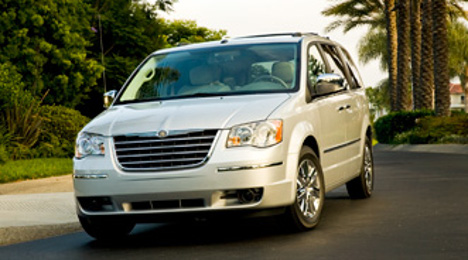
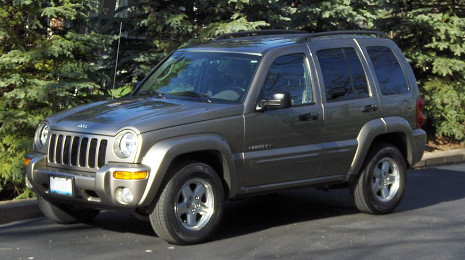
NHTSA posted details of two investigations on Wednesday. One investigation covers approximately 700,000 vehicles — the Dodge Grand Caravan and Journey as well as the Chrysler Town & Country from the 2008 through 2010 model years. The other investigation is for an estimated 525,000 Jeep units — the Commander from the 2006 and 2007 model years as well as the Grand Cherokee from the 2005 and 2006 model years.
In March 2011, NHTSA said Chrysler submitted a non-influenced recall for the Journey and Grand Caravan for inadvertent ignition key rotation from the rum position to the accessory position.
“According to Chrysler, when the vehicle is initially started and the ignition key is released from the start position, a spring force rotates the key back to the run position,” NHTSA said. “However, in some instances, the switch may over-travel leaving the ignition key between the run and accessory position.
“While in this intermediate position, harsh roadway conditions or driver interaction with the ignition key can cause the switch to move to the accessory position which may disable the frontal air bags in a crash where deployment is warranted,” the agency said.
NHTSA went on to note that a review of the Office Defects Investigation’s consumer database identified a number of owners alleging that the 2008 and 2009 vehicles may have a similar defect as the 2010 vehicles.
“In addition, some 2010 owners have reported that they have experienced the defect condition after the recall remedy was applied,” officials said.
In connection with the move associated with investigation of the Commander and Grand Cherokee, ODI officials said they have received at least 32 complaints alleging that while driving, the operator’s knee or leg can inadvertently contact the ignition key fob/chain causing the ignition switch to be turned to the off or accessory position.
“This causes the engine to shut off, affects the power steering and brakes, and may potentially result in the vehicle’s air bags not deploying during a frontal crash that would normally warrant deployment,” officials said.
When contacted by Auto Remarketing on Wednesday, the automaker said in a statement, “Chrysler Group is awaiting additional information from the National Highway Traffic Safety Administration. The company has begun its own investigation and is prepared to cooperate fully with the agency.”
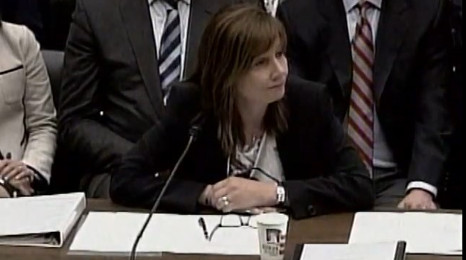
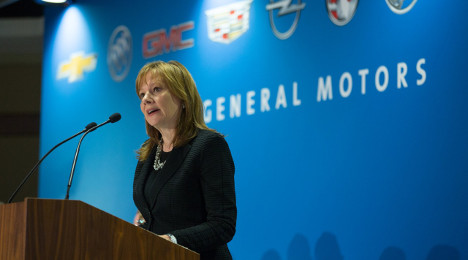
In the midst of U.S. House Representatives bombarding General Motors chief executive officer Mary Barra and former U.S. Attorney Anton Valukas with questions for more than two hours on Wednesday, one lawmaker wondered about the status of what he believed to be a key cog in rectifying older vehicles with faulty ignition switches — franchised dealers assigned to make repairs.
Rep. Michael Burgess of Texas — whose district includes the cities of Denton, Lewisville and Keller, all of which are northwest of Dallas — asked this question during the hearing hosted by the House Energy and Commerce Committee: “How are your dealers holding up under what must be a massive onslaught of people needing their cars fixed?”
Barra replied with a glowing assessment of the franchised dealers who have already repaired more than 100,000 vehicles with new ignitions.
“Our dealers are doing a tremendous job in terms of supporting the customer. We have many dealers who are reaching out. We had one dealer who had a customer who was several miles away. Their daughter had the vehicle and there wasn’t a dealership close by. The dealer went back and forth and got the vehicle and got the repair made,” Barra said.
“I can’t be more proud of how our dealers are supporting the customer,” she continued.
Burgess recalled that he was on this same committee when Toyota officials came to Capitol Hill to answer questions about recalls associated with unintended acceleration. He mentioned during that turbulent time five years ago, Toyota stores in his district extended service department hours to handle the extra work the campaigns created. Barra told Burgess and the rest of the committee that she’s spoken to hundreds of GM dealers who have extended hours of their service departments, too.
“The problem is getting the customer to come in and get the vehicle repaired. That’s why we’ve employed a lot of innovative ways to do that. That’s why the dealers are reaching out,” Barra said.
“We’ve done research to figure out which messages would be most compelling to have these individuals come in to have their vehicles fixed,” she continued. “The dealers are working to do specific arrangements with each individual to make it as convenient as possible to reduce the inconvenience.”
Burgess was one of the few lawmakers to bring up the dealer’s role in the situation. Most committee members chose to focus on the Valukas report and how GM plans to compensate families who have experienced loss as a result of these faulty vehicles.
Rep. Fred Upton, the House Energy and Commerce Oversight and Investigations Subcommittee chairman, also wondered if the depth of ignition problems goes well beyond the recall of the Chevrolet Cobalt and other discontinued models. Upton referenced the recall GM made earlier this week so the automaker can rework or replace ignition keys on about 3.16 million vehicles in the U.S. from the 2000 through 2014 model years.
The reason is because the ignition switch may inadvertently move out of the “run” position if the key is carrying extra weight and experiences some jarring event.
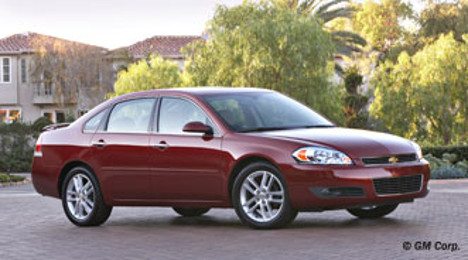
“To reiterate, nearly nine years ago, a GM employee suggested the stalling of a 2006 Impala was a serious safety problem and speculated that a ‘big recall’ was coming. So when was the recall for the ’06 Impala announced? … Two days ago, Monday,” Upton said.
“The recall announced on Monday makes it painfully clear this is not just a Cobalt problem,” Upton continued. “A culture that allowed safety problems to fester for years will be hard to change. But if GM is going to recover and regain the public’s trust, it must learn from this report and break the patterns that led to this unimaginable systemic breakdown.”
Industry Reaction
After watching Wednesday’s proceedings, Kelley Blue Book senior analyst Alec Gutierrez stressed that Barra has instituted significant changes at GM following the release of the Valukas report and her first appearance in front of Congress on April 1. Gutierrez noted the hiring of 35 safety investigators, the firing of 15 employees directly related to the issue among other actions.
During her second appearance in front of Congressional lawmakers, it was clear that while Mary Barra and GM are now doing and saying the right things, this issue is far from over and there remains many unanswered questions,” Gutierrez said. “Although this remains a serious issue for GM, the automaker will receive close scrutiny for some time to come, and consumer demand for GM products has remained quite strong. In fact, GM saw sales grow by more than 12 percent year-over-year in the month of May alone, outpacing growth in overall industry sales.
“Consumers have demonstrated that recalls do not factor as heavily into their purchase decision process, as we in the industry might seem to think,” he continued. “With GM’s reputation under the microscope as it tries to navigate the most serious safety crisis in its history and with more than 14 million vehicles recalled so far this year, GM remains the largest automaker in the U.S. and continues to enjoy healthy growth in the U.S. auto sector.
“Car shoppers are clearly distinguishing a difference between ‘new’ and ‘old’ GM, and we expect to see GM maintain stability in the marketplace provided that it remains proactive and on top of this very serious issue,” he went on to say.
In a message to Auto Remarekting, Gutierrez also touched on GM’s residual values, which KBB said are performing in line with the industry while showing no excess depreciation related to the recalls.
KBB also determined 1- to 3-year-old auction values of GM vehicles (model year 2011 to model year 2013) are currently 4.3 percent higher than they were at this time last year, adjusting for age and mileage.
“The overall industry, not including GM, is up 4.2 percent, indicating that GM is not showing any adverse impact related to the recalls at wholesale auctions,” Gutierrez said. “Auctions are a great indicator of what both consumers and dealers are willing to pay for these vehicles, since dealers will be likely to cut prices as consumer demand drops.
“With auction values holding steady, it appears as though consumer demand has not dropped significantly, which is why GM cars are still trending well relative to the rest of the industry,” he added.
General Motors chief executive officer Mary Barra is coming back to Capitol Hill on Wednesday to face more questions from a U.S. House Committee. This time, Barra won’t have to face lawmakers by herself. She will also have the investigator charged with finding out why the automaker fumbled the recall of vehicles with faulty ignition switches.
Barra often referenced the investigation conducted by former U.S. Attorney Anton Valukas during her previous Congressional hearing appearances on April 1 and 2. The resulting 325-page report left quite an impact at GM, including the dismissal of 15 employees.
According to prepared testimony Barra is scheduled to give during the hearing held by the House Energy and Commerce Committee, she said, “The Valukas report, as you now know, is extremely thorough, brutally tough and deeply troubling. It paints a picture of an organization that failed to handle a complex safety issue in a responsible way.
“I was deeply saddened and disturbed as I read the report. For those of us who have dedicated our lives to this company, it is enormously painful to have our shortcomings laid out so vividly,” Barra continued.
Beyond the dismissal of those GM employees, Barra intends to highlight the six other moves the automaker has made in response to the report findings, including an establishment of a compensation fund for families affected.
“I know some of you are wondering about my commitment to solve the deep underlying cultural problems uncovered in this report. The answer is I will not rest until these problems are resolved. As I told our employees, I am not afraid of the truth,” Barra said in her prepared testimony.
“We are a good company, but we can and must be much better. That’s my focus and that's my promise to you, our employees, our customers, our shareholders and the American people,” she went on to say.
Meanwhile, Valukas plans to share how he and his team uncovered a trail of missteps that created the ignition problems in the Chevrolet Cobalt and several other discontinued models.
“The story of the Cobalt is one of a series of individual and organizational failures that led to devastating consequences. Throughout the decade that it took GM to recall the Cobalt, there was a lack of accountability, a lack of urgency and a failure of company personnel charged with ensuring the safety of the company’s vehicles to understand how GM's own cars were designed,” Valukas said in his prepared testimony
“We found failures throughout the company — including individual errors, poor management, byzantine committee structures, lack of training, and inadequate policies,” he continued. “In our report, we review these failures, including cultural issues that may have contributed to this problem, and we provide recommendations to ensure that it never occurs again.
“Our role was to find the facts as to why this recall took far too long. I believe we have done so,” Valukas went on to say.
In a series of moves expected to push its recall-related costs for the second quarter up to $700 million, General Motors said on Monday that the automaker will rework or replace the ignition keys on about 3.16 million vehicles in the U.S. from the 2000 through 2014 model years.
The OEM explained it’s taking the steps because the ignition switch may inadvertently move out of the “run” position if the key is carrying extra weight and experiences some jarring event.
“The use of a key with a hole, rather than a slotted key, addresses the concern of unintended key rotation due to a jarring road event, such as striking a pothole or crossing railroad tracks,” GM said.
The automaker indicated only one of the models included in the U.S. recall of 3,160,725 cars is still in production — the previous generation Chevrolet Impala, which is sold to daily rental fleets as the Impala Limited.
The total North America population — U.S., Canada, Mexico and exports — is 3,360,555.
GM said this newest safety recall follows a review of ignition issues after the recall in February of 2.6 million Chevrolet Cobalts and other small cars.
“GM is aware of eight crashes and six injuries related to this recall,” officials said.
“If the ignition switch moves out of the ‘run’ position, there is an effect on power steering and power braking,” OEM officials continued. “In addition, the timing of the key movement out of the ‘run’ position, relative to the activation of the sensing algorithm of the crash event, may result in the air bags not deploying.”
The vehicles being recalled include:
— 2005-2009 Buick Lacrosse
— 2006-2014 Chevrolet Impala
— 2000–2005 Cadillac Deville
— 2004–2011 Cadillac DTS
— 2006–2011 Buick Lucerne
— 2004–2005 Buick Regal LS & GS
— 2006–2008 Chevy Monte Carlo
In these vehicles, GM explained the ignition switch may be unable to handle extra weight hanging on a slotted key. The automaker said it will add an insert to the ignition keys of the recalled vehicles to close the slot and leave a 4×6-millimeter hole through which the key ring could be attached.
“In vehicles where the key cover has been worn, new keys with holes instead of slots will be provided free of charge,” officials said.
The automaker indicated the rework of the keys — adding key inserts — at GM franchised dealerships is expected to begin in the next few weeks.
“Until the rework or replacement is completed, owners of the recalled cars are urged to remove additional weight from their key chains and drive with only the ignition key,” officials said.
In addition to the ignition key recall, GM also announced U.S. recalls for 165,770 vehicles in these five actions:
— 68,887 model-year 2013-14 Cadillac ATS and 21,863 model-year 2014 Cadillac CTS sedans.
In certain vehicles with automatic transmissions, the automaker said the shift cable may not be fully secured to the shifter bracket or transmission bracket.
“If the shift cable comes out of the brackets, the driver may not be able to shift the transmission in or out of gear,” officials said. “GM is unaware of any crashes or injuries related to this condition.”
— 57,192 model-year 2015 Chevrolet Silverado 2500/3500 HD and GMC Sierra 2500/3500 GMC Sierra HD units to inspect for proper attachment of power steering hose clamps to the power steering pump.
If the vehicle is driven with the clamp unattached, GM acknowledged the hose may disconnect from the pump or gear, causing a rapid loss of power steering fluid.
“This will result in loss of power steering assist and Hydro Boost powered brakes without warning,” the OEM said. “The vehicle would revert to manual brakes and manual steering. GM knows of no crashes or injuries from the condition.
Franchised dealers are to inspect power steering hose clamps in two locations to ensure they are properly attached.
— 16,932 model-year 2011 Cadillac CTS sedans with AWD.
On some vehicles, GM found a gasket leak where the constant velocity joint meets the rear propeller shaft that may cause the rear propeller shaft to separate or become loose, making contact with the vehicle floor above and causing the rollover sensor to deploy the roof rail air bags.
“GM is aware of 15 unintended deployments, but injury data is unclear,” officials said.
— 712 model-year 2014 Chevrolet Corvettes with optional competition sport seats because an unbelted child and door trim may block the passenger seat side air bag vent in a deployment.
GM said franchised dealers will replace the current air bag with a redesigned version.
“GM is unaware of any crashes or injuries related to this condition, but advises customers to not allow small children in the front seat until the vehicle is serviced,” officials said.
—184 model-year 2014-15 Chevrolet Silverado and GMC Sierra full-size pickups with vinyl floors and accessory all-weather floor mats purchased new with the vehicle.
The automaker determined the mats can slip under the driver’s feet because the vinyl floors have no attachments to secure them in place.
“Customers are advised take the floor mats to their dealer for a full refund. GM is unaware of any crashes or injuries related to the mats,” officials said.
GM said expects to take a charge of up to approximately $700 million in the second quarter for the cost of recall-related repairs announced in the quarter.
“This amount includes a previously disclosed $400 million charge for recalls announced May 15 and May 20,” officials said.
General Motors decided not to hesitate with a recall after the automaker discovered a problem with the ignition with new and late-model versions of the Chevrolet Camaro.
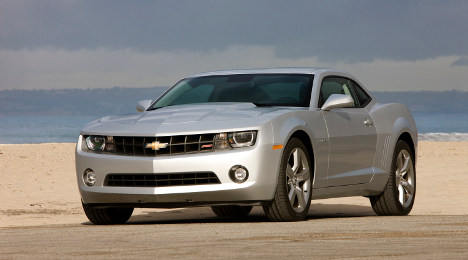
The automaker said it will recall all current generation Chevrolet Camaros because a driver’s knee can bump the key FOB and cause the key to inadvertently move out of the “run” position with a corresponding reduction or loss of power.
Officials explained the issue, which may primarily affect drivers sitting close to the steering column, was discovered by GM during internal testing following the ignition switch recall earlier this year.
“Discovering and acting on this issue quickly is an example of the new norm for product safety at GM,” said Jeff Boyer, vice president of GM Global Safety.
Boyer emphasized the Camaro ignition system meets all GM engineering specifications and is unrelated to the ignition system used in Chevrolet Cobalts and other small cars included in the major ignition switch recall.
“GM is aware of three crashes that resulted in four minor injuries that it believes may be attributed to this condition,” the OEM said.
The company indicated it will change the Camaro key to a standard design from one in which the key is concealed in the FOB and is opened by pushing a button.
“The change will make the ignition key and FOB independent of each other, so that inadvertent contact with the FOB won’t move the key from the ‘run’ position,” officials said.
There are 464,712 Camaros from the 2010 through 2014 model years in the U.S. included in the recall. Including Canada, Mexico and exports, the total recall population is 511,528.
Separately, GM also announced two safety recalls and one non-compliance recall involving a total of 65,121 vehicles in the U.S., all three of which were reported to the National Highway Traffic Safety Administration on Wednesday. Including Canada, Mexico and exports, the total recall population is 69,839.
“In all cases, customers will receive letters from GM letting them know when they can bring their vehicles into a dealership, where the recall repairs will be performed free of charge and courtesy transportation would be provided as needed,” the automaker said.
Here are the details of the other new recalls:
— 28,789 Saab 9-3 convertibles from the 2004 through 2011 model years for an automatic tensioning system cable in the driver’s side front seat belt retractor that could break.
“If the cable were to break, seat belt webbing spooled out by the driver would not retract,” GM said. “The convertibles and sedans were investigated at the same time, but the convertible parts were not identical to the sedan parts.”
The automaker indicated it has since learned of customer complaints to the NHTSA for the convertibles. GM explained franchised dealers will replace the driver’s side retractor in the recalled vehicles.
In addition, GM has issued a special coverage, so that if the same repair is required to the passenger side retractor it will be covered for the life of the vehicle. GM also extended the special coverage for passenger side belt retractors on the 2004 Saab 9-3 sedan from the original 10-year coverage to the life of the vehicle, like the convertibles.
GM said it is unaware of any crashes, injuries or fatalities due to this condition.
— 21,567 Chevrolet Sonics from the 2012 model year equipped with a six-speed automatic transmission and a 1.8-liter four-cylinder engine for a condition in which the transmission turbine shaft may fracture as a result of a supplier quality issue.
“If this were to occur in first or second gear, the vehicle could not upshift into third through sixth gears,” OEM officials said. “If the turbine shift fractured while in one of the higher gears, the vehicle would coast until it was moving slow enough to downshift into first or second gear.
“In both instances, a malfunction indicator lamp may illuminate. If driven in this condition for a long period of time, all forward gears may become inoperable,” they continued. “The engine would continue to run and all power accessories would function.”
GM indicated franchised dealers will replace the transmission turbine shaft. The company insisted it is unaware of any crashes, injuries or fatalities related to this condition.
— 14,765 model-year 2014 Buick LaCrosse sedans because a wiring splice in the driver’s door may corrode and break.
“That may communicate incorrect information to circuits that control the door chime and allow passenger windows, rear windows and the sunroof to function when the vehicle is turned off and the driver is not in the vehicle,” the automaker said.
“In addition, a chime will not sound when the driver’s door is opened if the key is in the ignition,” the company added.
Franchised dealers have been instructed to inspect the driver door window motor harness and, if necessary, replace an electrical splice.
Like the other campaigns, GM said it is unaware of any thefts, crashes, injuries or fatalities related to this condition.
Toyota Motor Sales said on Wednesday that it will re-notify owners of certain older vehicles involved in a safety recall first announced last April for the front passenger airbag inflators installed in several models. The automaker said it is modifying the remedy procedure.
OEM officials explained the 2013 recall remedy involved inspection of the front passenger air bag, and if equipped with an affected inflator, the inflator would be replaced with a newly manufactured one at no charge to the owner.
“Toyota has determined that the involved serial numbers provided by the supplier were incomplete, and did not include all of the potentially involved inflators,” the automaker said.
For vehicles which were inspected and did not receive a replacement inflator, Toyota will re-notify the owners and replace the inflator with a new one.
For vehicles which have not received the 2013 recall remedy previously, Toyota is changing the remedy from “inspect and replace the inflator if it is involved” to “replace the inflator with a new one.”
“The involved vehicles were equipped with front passenger airbag inflators which could have been assembled with improperly manufactured propellant. Improperly manufactured propellant could cause the inflator to rupture and the front passenger airbag to deploy abnormally in the event of a crash,” officials said.
Toyota said approximately 766,300 vehicles in the U.S. were covered by the 2013 recall, including vehicles that were previously inspected and already received a replacement inflator. This recall involves:
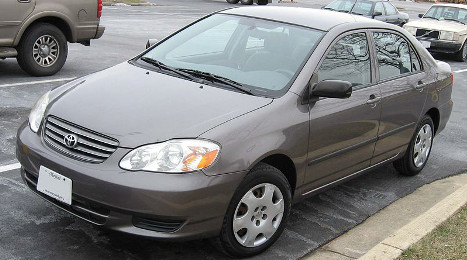
— 2003-2004 Toyota Corolla, Corolla Matrix and Tundra
— 2002-2004 Sequoia
— 2002-2004 Lexus SC 430 coupes
The automaker said owners of vehicles subject to this safety recall will receive an owner notification letter by first class mail.
Detailed information is available to customers at www.toyota.com/recall, the Toyota Customer Experience at (800) 331-4331, www.lexus.com/recall and Lexus Customer Satisfaction at (800) 255-3987.
At the same time chief executive officer Mary Barra faced General Motors shareholders during the company’s first annual meeting with her in control, Swapalease.com noticed in its latest report on vehicle incentives from May that one particular trend jumped out at site executives.
Despite all the attention associated with the automaker’s recalls, Swapalease reported that few GM brands are currently listed with a cash incentive.
Executives explained cash incentives are a normal practice in the world of sales, but what makes this report different is that the Swapalease.com marketplace involves person-to-person transactions.
According to incentives data from May listings, only 5 percent of vehicles with incentives were from GM. Swapalease executives believe the GM recalls in the news recently have had little impact on a person’s ability to attract someone else to take over their lease.
Overall, incentives in the Swapalease.com marketplace have fallen slightly from the same time a year ago. The average personal cash incentive offered came in at $2,215.56 at the end of May, compared with an average of $2,464.78 last year.
Swapalease.com executive vice president Scot Hall explained lessees typically offer a cash incentive as a way to sweeten the offer when looking to escape the contract.
“With manufacturers focused on more transparency, a larger number of recalls have been instituted since the recession,” Hall said. “We believe consumers are becoming immune to the issue of recalls in general.”
Supporting this theory, a recent customer survey conducted by Swapalease found that 90.4 percent of drivers believe recalls are a part of everyday life now, and they will not change their purchase decision.
Vehicles currently with the largest incentives include the Ford Expedition ($3,900), Mercedes R-Class ($3,000), and Nissan Murano ($2,500). Vehicles currently with the lowest incentives include the Volkswagen CC ($1,143), Ford Edge ($1,150) and the Chevy Volt ($1,663).
GM Stockholders Gather
Barra addressed stockholders at the company’s annual meeting on Tuesday, telling them the OEM is in the best position to meet and exceed competitive challenges despite the turmoil surrounding the recall for defective ignition switches.
“In every market, consumers have more and better automotive choices than ever before,” Barra said. “And the competition is only going to get tougher. This is a reality. Another reality is that GM is positioned to be stronger, leaner and more responsive than ever before.”
During the meeting, Barra reiterated steps the automaker is taking in response to the ignition switch recalls, and she again expressed her deepest sympathies to the victims and their families.
“I know there are no words that can ease their pain and grief,” Barra said. “I have and will be guided by two clear principles: To do right thing for those that were harmed and to make sure we accept responsibility for our mistakes and commit to doing everything within our power to prevent this sort of problem from ever happening again.”
And according to an online report, GM doesn’t plan to dismiss any more employees as result of the botched recall. During her town-hall style employee address at the GM Vehicle Engineering Center in Warren, Mich., last Thursday, Barra confirmed 15 individuals who were determined to have acted inappropriately are no longer with the company. She also mentioned disciplinary actions have been taken against five other employees as a result of finding from the investigation completed by former U.S. attorney Anton Valukas.
“We feel we’ve taken the appropriate actions as it relates to the ignition switch recall,” Barra told reporters before Tuesday’s shareholders meeting, according to this report from Reuters.
Two of the three domestic automakers made vehicle recalls last week, totaling about 120,000 units, most of which were included in four actions taken by General Motors.
GM added to its extensive list of campaigns by announcing three safety recalls and one non-compliance recall; all of which the automaker said were reported to the National Highway Traffic Safety Administration on Thursday.
“In all cases, customers will receive letters from GM letting them know when they can bring their vehicles into a dealership, where all repairs will be performed free of charge and courtesy transportation would be provided as needed,” GM officials said.
Here is a breakdown of the four newest GM recalls:
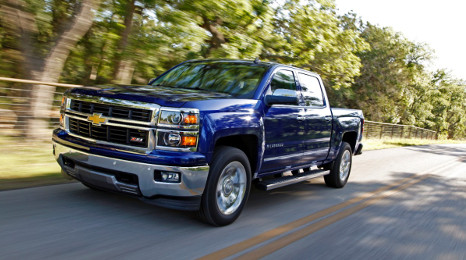
— 57,512 model-year 2014 Chevrolet Silverado LD, 2014 GMC Sierra LD and model-year 2015 Silverado HD, Tahoe and Suburban and 2015 GMC Sierra HD and Yukon and Yukon XL models. The reason is because the base radio may not work.
GM explained the condition is preventing audible warnings if the key is in the ignition when the driver’s door is opened. Nor would there be an audible chime if a front seat belt is not buckled.
“If they had this condition, the trucks would be out of compliance with motor vehicle safety standards covering theft protection, rollaway protection and occupant crash protection. Dealers will reprogram the radio control module free of charge. GM is unaware of any crashes or injuries related to this condition,” officials said.
— 31,520 model year 2012 Buick Verano and Chevrolet Camaro, Cruze and Sonic compact cars for a defect in which the shorting bar inside the dual stage driver’s air bag may occasionally contact the air bag terminals. If contact occurs, GM the air bag warning light will illuminate.
“If the car and terminals are contacting each other in a crash, the air bag will not deploy,” the automaker said.
Franchised dealers will replace the steering wheel air bag coil, which GM said will eliminate contact any between the shorting bar and the air bag terminals. Repairs will be performed free of charge.
“GM is aware of one crash with an injury where the relevant diagnostic trouble code was found at the time the vehicle was repaired,” officials said. “The company is aware of other crashes where air bags did not deploy but it is not known if they were related to this condition.
“GM conducted two previous recalls for this condition involving 7,116 of these vehicles with no confirmed crashes in which this issue was involved,” they added.
— 61 model-year 2013-2014 Chevrolet Spark and 2013 model-year Buick Encores manufactured in Changwon, Korea from Dec. 30, 2012 through May 8, 2013 because the vehicles may have a condition in which the front passenger airbag end cap could separate from the airbag inflator.
“In a crash, this may prevent the passenger airbag from deploying properly. GM is unaware of any crashes or injuries related to this condition,” officials said.
— 33 model year 2014 Chevrolet Corvettes in the U.S. because an internal short-circuit in the sensing and diagnostic module (SDM) could disable frontal air bags, safety belt pretensioners and the Automatic Occupancy Sensing module.
Franchised dealers will replace the SDM on the affected vehicles. GM said it is unaware of any crashes or injuries related to the condition.
Chrysler Recalls SUVs, Full-Size Vans
In one of its two recall actions, Chrysler Group is recalling an estimated 10,700 SUVs — most of which the OEM said were in dealer hands or in transit to dealers — to upgrade software that governs their cruise-control systems.
“A routine internal quality audit discovered that, when cruise-control is engaged, an acceleration initiated by the driver may be extended by about one second after the accelerator pedal is released. Vehicle speed then returns to the desired setting,” Chrysler said.
“In high-performance vehicles subject to the recall, the event may last up to two seconds before deceleration begins. But in all cases, brake application will cancel cruise-control,” the company continued.
“Brake function is never compromised and Chrysler Group is unaware of any related injuries, accidents, complaints or reported incidents,” the automaker went on to say.
Affected are certain 2014 Dodge Durangos and Jeep Cherokees, Grand Cherokees and high-performance Grand Cherokee SRTs assembled between Jan. 16 and April 17 of this year. An estimated 6,100 were in the U.S., 950 were Canada, 425 were in Mexico and 3,200 were outside the NAFTA region.
“More than half were in dealer hands or in transit to dealers as Chrysler Group was investigating,” officials said.
Customers will be contacted when they may schedule service, expected to be available soon. All related costs will be borne by Chrysler Group.
In the interim, Chrysler noted customers who are concerned may choose not to activate their cruise-control systems. Other features, such as forward collision warning, are unaffected because they function independently, according to the automaker.
Customers with additional questions may call Chrysler Group’s Customer Assistance Center at (800) 853-1403.
In another action from the automaker, the OEM is recalling an estimated 21,000 full-size vans — again most of which were in dealer hands or in transit to dealers — to inspect and replace, if necessary, various electrical components that support propulsion, airbag deployment and/or external lighting.
Chrysler explained warranty data identified a small number of cases in which blown fuses were linked to moisture exposure.
“In each case, moisture that was brought into the vehicle via wet footwear or other means had seeped into an in-cabin compartment that houses its battery and other components,” officials said.
“Chrysler Group is unaware of any related injuries or accidents. There are no issues with the vehicle’s imperviousness to rain, snow or ice,” they continued.
The automaker said the electrical components will be inspected for signs of corrosion. Moisture-resistant sealant will be applied to all components, whether replaced or not.
Affected are 2014 Ram ProMaster full-size vans. An estimated 17,700 are in the U.S., 2,400 are in Canada and 900 are in Mexico. Most were in dealer hands or in transit to dealers as Chrysler Group was investigating, according to the OEM.
“Affected customers will be advised when they may schedule service. All related costs will be borne by Chrysler Group,” officials said.
The authenticity of prepared remarks made by General Motors chief executive officer Mary Barra — voiced Thursday when the automaker released its internal investigation into the botched ignition switch recall — varies depending on the perspective of the analyst, consultant or lawmaker.
But one public relations consultant told Auto Remarketing that Barra missed the chance to address one important constituency — GM’s franchised dealers who are on the front lines of not only repairing recalled vehicles, but also dealing with possible public backlash about how the OEM fumbled the recall of older, discontinued vehicles that had faulty ignition switches that reportedly led to more than a dozen deaths.
David Johnson specializes in crisis communications and is chief executive officer of Strategic Vision, an Atlanta-based public relations and branding agency.
Johnson contends that GM has a long way to go in rebuilding its reputation because the public and others will be skeptical of the results of the internal investigation.
When asked by Auto Remarketing, Johnson said Barra has failed to address GM franchised dealers in her initial responses to the recall. Barra also didn’t reference dealers specifically during her prepared remarks on Thursday.
“I would recommend addressing them directly through video meetings with GM in which Barra explains in detail the way GM is handling this, reassuring the dealers the problems with the cars have been dealt with and they can sell the cars with confidence. Also let the dealers ask any questions that they desire addressed,” Johnson said.
“Then I would recommend more two-way communications between GM and the dealers. The dealers must feel confident with GM and be able to address issues consumers have. This means full disclosure and transparency with dealers,” he went on to say.
Employee Terminations and Victim Compensation
During her town-hall style employee address at the GM Vehicle Engineering Center in Warren, Mich., Barra did confirm 15 individuals who were determined to have acted inappropriately are no longer with the company. She also mentioned disciplinary actions have been taken against five other employees as a result of findings from the investigation completed by former U.S. attorney Anton Valukas.
“We have also made a number of personnel decisions. Some of these are tough calls, as you can well appreciate, and we held off making moves until this investigation was complete. But with the facts before us, we felt it was important to make a number of changes, and we have already done so,” Barra said.
“Fifteen individuals who we determined to have acted inappropriately are no longer with the company. Some were removed because of what we consider misconduct or incompetence. Others have been relieved because they simply didn't do enough: They didn’t take responsibility; didn’t act with any sense of urgency,” she continued.
“Disciplinary actions have been taken against five additional people as well. With these moves, I feel we have addressed the personnel issues in this matter,” Barra went on to say.
Furthermore, Barra said GM will implement a compensation program for those who have lost loved ones or who have suffered serious physical injuries as the result of an ignition switch failure in recently recalled vehicles.
“We are taking responsibility for what has happened by taking steps to treat these victims and their families with compassion, decency and fairness,” Barra said. “We made serious mistakes in the past and as a result we’re making significant changes in our company to ensure they never happen again.”
That program will be independently administered by Kenneth Feinberg. GM explained the program is expected to cover approximately 1.6 million model-year 2003-2007 recalled vehicles manufactured with an ignition switch defect and approximately 1 million model year 2008-2011 recalled vehicles that may have been repaired with a recalled ignition switch.
Pending the independent administrator’s development of final guidelines for the compensation program, GM currently expects the program will begin to accept claims on Aug. 1.
Barra noted that it is the OEM’s understanding that the administrator’s final compensation program guidelines will be developed in the coming weeks and will include details on where and how to apply for compensation.
Kelley Blue Book senior analyst Karl Brauer called the compensation package “the right thing to do even if GM is technically shielded from liability as a result of its restructuring in 2009.”
Brauer continued by saying, “Mary’s speech was a clear rallying cry to GM’s employees worldwide. She effectively balanced her pride in the company’s current product and performance against the need to do better in the key areas of safety, internal communication and accountability.
“Mary has consistently shown a genuine interest in addressing GM’s internal issues while also taking concrete steps to effect these changes. Seeing the automaker through this crisis would be difficult for any CEO, but thus far Mary has shown an impressive combination of leadership, empathy and resilience.”
Cobalt Trade Activity
Here’s another dealer-oriented twist to the ignition switch story. Ahead of Thursday’s investigation announcement, the team of data analysts at Edmunds.com looked at how Chevrolet Cobalt owners have behaved since the recalls were first announced in February. Edmunds.com found that the recalls may actually be helping to turn Cobalt owners into new-vehicle buyers — and GM buyers, at that.
Here are four conclusions Edmunds.com discovered:
• During the period from March through May, there were 21 percent more Cobalt trade-ins (buying new vehicles) than in the same period in 2013.
• It also seems that those former Cobalt owners are staying in the General Motors family. In May, 49 percent of people trading in a Cobalt for a new vehicle purchased a GM product. Analysts indicated that’s a higher automaker loyalty rate than before the recalls (and up from 47.5 percent in May 2013.)
• 46 percent of owners who traded in their Cobalt in May bought a new Chevrolet. That’s the highest brand loyalty rate since October 2012.
• The most popular car purchased with a Cobalt trade-in is the Chevrolet Cruze. In May, 22 percent of Cobalts traded in were exchanged for Cruzes. Edmunds.com pointed out that perhaps the level helped account for the 40-percent Cruze sales lift in May.
“The data suggests that for the most part, recalls have not discouraged Cobalt owners’ loyalty to GM and Chevy,” Edmunds.com senior analyst Jessica Caldwell said.
“GM has done a good job communicating new car deals to affected Cobalt owners, many of whom were probably getting close to buying a new car anyway. These deals look very appealing to outgoing Cobalt owners, especially if they personally haven’t had major problems with their GM vehicles in the past,” Caldwell went on to say.
While franchised dealers couldn’t activity market the incentive, the automaker is offering $500 to owners of vehicles involved in the recall toward the purchase or lease of a new GM vehicle.
Not Satisfied on Capitol Hill
If dealers have the opportunity to question Barra directly as Johnson recommended, they’ll have to get in line.
Sen. Claire McCaskill, chairman of the Consumer Protection Subcommittee who previously grilled Barra during a U.S. Senate hearing this spring, announced that she will hold a follow-up hearing later this summer despite the release of GM’s internal investigation
“I’m going to reserve judgment until I can take a closer look at the report — which I expect to find comprehensive and thorough — and I’m looking forward to getting a full briefing from Mr. Valukas,” said McCaskill, a Democrat from Missouri.
“I won’t be letting GM leadership, or federal regulators, escape accountability for these tragedies. That’s why I'll be holding a follow-up hearing later this summer to address unanswered questions. The families of those affected deserve no less,” McCaskill went on to say.
GM chairman Tim Solso said the automaker’s investigation confirmed that Barra, executive vice president and general counsel Mike Millikin as well as executive vice president of global product development, purchasing and supply chain Mark Reuss did not learn about the ignition switch safety issues and the delay in addressing them until after the decision to issue a recall was made on Jan. 31.
Still, Sen. Richard Blumenthal has more questions.
“The GM public relations campaign is pitching this report as an independent review. In truth, it seems like the best report money can buy. It absolves upper management, denies deliberate wrongdoing, and dismisses corporate culpability,” said Blumenthal, a Connecticut Democrat who wanted all of these recall units parked until repaired.
“By firing 15 people and committing definitively to establish a compensation fund, GM has taken more steps than it has been willing to do in the past, but today’s public relations campaign continues to leave critical questions unanswered. Most significantly, CEO Mary Barra could not answer why the defective ignition switch was changed but its number was kept the same,” he continued.
“Before accepting GM’s self-serving explanation that the cause was a failure of corporate silos or culture, rather than deliberate wrongdoing, I believe that federal investigators and law enforcement agencies must conduct an independent inquiry into GM’s conduct,” Blumenthal went on to say. “The Department of Justice must pursue a timely, vigorous criminal investigation. Congress must continue its inquiry, aggressively and promptly. And NHTSA must oversee the recall process to ensure more drivers are not harmed.”
The National Highway Traffic Safety Administration is investigating whether the recall Chrysler launched to correct airbag problems in 744,822 SUVs in fact corrected the defect in the vehicles.
Back on Nov 7, 2012, Chrysler issued a safety recall to address the possibility of an inadvertent air bag deployment (IABD) in Jeep Liberty vehicles from the 2002 and 2003 model years as well as Jeep Grand Cherokee vehicles from the 2002 to 2004 model years. The Liberty included was built through March 28, 2003 and the Grand Cherokee included was built through May 23, 2003.
NHTSA explained the recall was in response to the Office of Defects Investigation (ODI) during which data provided by Chrysler indicated that the air bag squib filter circuitry inside the Occupant Restraint Control (ORC) module can degrade.
“ORC degradation can result in an inadvertent air bag deployment, without a crash or impact, while the vehicle is being operated on the roadway,” agency officials said. “An IABD may result in injuries consisting of burns, cuts and bruises to the upper body region.
“Some owners have informed NHTSA that the air bag warning light (ABL) and/or chime activated just seconds prior to the IABD, while others informed that no ABL illumination occurred,” they continued.
NHTSA said the remedy Chrysler developed consisted of installing an in-line jumper harness with an integrated electrical filter for the circuits that connect to the air bag modules (squib circuits). This filter is intended to eliminate transient electrical spikes to the ORC, which Chrysler believes are responsible for the IABDs.
“In discussions with ODI, Chrysler reported it is aware of six vehicles that have had an IABD after the recall was conducted. In each case the remedy filter had been installed in the vehicle,” agency officials said.
“No crashes were reported. However, injuries consisting of cuts and burns were alleged. A recall query has been opened to investigate the effectiveness of the remedy for the recall,” they went on to say.