About a month after recalling more than 400,000 vehicles, Ford issued four more separate recalls of vehicles in the U.S., Canada and Mexico through campaigns that cover more than 1.4 million units.
The largest single campaign is for the Ford Escape and Mercury Mariner from the 2008 through 2011 model years. Ford said a total of 915,216 of these vehicles in North America are being recalled for a potential issue with the torque sensor within the steering column, which may result in the loss of electric power steering assist while driving.
“If this happens, the steering system defaults to manual steering mode, making the vehicle more difficult to steer, especially at lower speeds. This could result in an increased risk of a crash,” Ford spokesperson Kelli Felker said in a statement to Auto Remarketing.
“A potential issue with the torque sensor within the steering column could result in the loss of electric power steering. If this happens, the steering system defaults to manual steering mode, making the vehicle more difficult to steer, especially at lower speeds. This could result in an increased risk of a crash,” Felker continued.
The automaker indicated its franchised dealers will perform one of three service fixes, depending upon what diagnostic codes are shown when the vehicle is taken to the dealer. They will either update software for the power steering control module and the instrument cluster module; replace the torque sensor; or replace the steering column, which includes upgraded power steering control module software.
Affected vehicles were vehicles built between Aug. 18, 2006 and Sept. 11, 2010 at the Kansas City Assembly Plant.
As of May 19, Ford indicated 736,407 of these Escapes and Mariners are in the U.S. with an additional 4,471 units in the federalized territories. The Blue Oval said 134,568 units are in Canada while another 39,770 vehicles are in Mexico
“There may be additional vehicles affected in other markets,” Felker said.
The next largest recall is for the Ford Explorer from 2011 through 2013 models years. Ford said 195,527 units are being recalled in North America for a potential intermittent electrical connection in the steering gear that may result in the loss of electric power steering assist while driving.
“If this happens, the steering system defaults to manual steering mode, making the vehicle more difficult to steer, especially at lower speeds. This could result in an increased risk of a crash. If assist is lost, drivers will hear a chime and see a message in the instrument cluster,” Felker said.
“A potential intermittent electrical connection in the steering gear may result in the loss of electric power steering assist while driving,” Felker continued. “If this happens, the steering system defaults to manual steering mode, making the vehicle more difficult to steer, especially at lower speeds. This could result in an increased risk of a crash. If assist is lost, drivers will hear a chime and see a message in the instrument cluster.”
Like the largest recall, Ford said dealers will perform one of two service fixes on these Explorers, depending upon what diagnostic code is shown when the vehicle is brought to the dealer. They will either update software for the power steering control module or replace the steering gear.
“The most common fix is expected to be the software update,” Felker said.
As of May 19, the OEM determined 177,747 of these recalled Explorers are in the U.S. with an additional 1,280 units in the federalized territories. Another 11,923 units are in Canada with another 4,577 vehicles in Mexico.
These recalled Explorers were built between May 17, 2010 and Feb. 28, 2012 at the Chicago Assembly Plant.
“There may be additional vehicles affected in other markets,” Felker reiterated.
Switching away from SUVs, the next Ford recall is for 196,639 Taurus vehicles from the 2010 through 2014 model years. The campaign is to address a potential corrosion issue in the license plate lamp.
“When vehicles are operated in a high-corrosion environment associated with road salt use, a salt water mixture may get into the license plate lamp and lead to corrosion. The corrosion may cause a short circuit in the lamp, resulting in excessive heat and potentially a fire,” Felker said.
The automaker said dealers will replace the license plate lamp assembly on vehicles originally sold in or currently registered in corrosion states and regions at no cost to the customer. There are 183,422 vehicles in the U.S. and 13,214 units in Canada.
Affected vehicles were originally sold in or currently registered in the following states:
— Connecticut
— Iowa
— Minnesota
— Ohio
— Wisconsin
— Delaware
— Maine
— Missouri
— Pennsylvania
— District of Columbia
— Maryland
— New Hampshire
— Rhode Island
— Illinois
— Massachusetts
— New Jersey
— Vermont
— Indiana
— Michigan
— New York
— West Virginia
The recall also covers vehicles in these Canadian provinces:
— Ontario
— Quebec
— Prince Edward Island
— New Brunswick
— Nova Scotia
— Newfoundland
— Labrador
“Although this corrosion related condition is not expected to exist in non-corrosion states, under a separate program, customers in non-corrosion states will be notified. At the customer’s request, dealers will replace the license plate lamp assembly,” Felker said.
Finally, the last recall covers 82,576 driver’s side all-weather Ford floor mats that may be in some Ford Fusion, Mercury Milan, Lincoln Zephyr and MKZ vehicles from the 2006 through 2011 model years.
“If improperly installed, certain Ford all-weather driver’s side floor mats may come in contact with the accelerator pedal,” Felker said.
Ford indicated the recalled floor mats may have been supplied with some 2006-2011 MY Ford Fusion, Mercury Milan, Lincoln Zephyr and MKZ vehicles or purchased by owners of these vehicles from a Ford or Lincoln dealer.
Owners of affected Ford driver’s side all-weather floor mats will be asked to return their Ford all-weather mats to their dealer in exchange for a new set of mats.
The recent saga surrounding the ignition switch-related recall at General Motors has caused trouble for the automaker, consumers and dealers, but it probably won’t have any meaningful impact on the resale values on the millions of units involved.
That’s according to ALG, which shared a summary Tuesday morning of some GM resale analysis from its latest Industry Report that weighs the potential fallout from the ignition switch action.
And there doesn’t appear to be much resale damage on the horizon.
Since the February announcement of the recall — which includes the Chevrolet Cobalt, Pontiac G5, Saturn Ion and others — ALG indicated that the Cobalt, for instance, has only seen its transaction price decline $300 against the segment average, an amount the firm called “negligible.”
“Similar to Toyota’s widespread ‘unintended acceleration’ recall from 2009, GM has seen short-term impacts to its resale values,” said Eric Lyman, ALG vice president of editorial. “It’s unlikely there will be any long-term effects, however, and ALG has no reason to forecast lower values than previously projected.
“In fact, the data ALG has recorded since 1964 has proven that few ripples in the market have substantial long-term sales implications,” he continued. “We expect GM’s values to mimic what happened to Ford and Toyota after their mass recalls, with the affected vehicles hurting little more than GM’s reputation for several years.”
ALG then shared bit about the fallout from large recalls at Ford and Toyota. The Blue Oval dealt with troubles from the Explorer’s 2000 and 2001 Firestone Tire recall, which had a widespread result at the automaker: the entire lineup of Ford Trucks would then see their used-market values trail the industry through the middle part of that decade (in terms of ALG’s Brand Pricing Score).
Meanwhile, at Toyota, it has seen an 8-percent decline in its above-average resale value in the last five years, said ALG.
Here’s the kicker though. It wasn’t just the recalls that caused slower resale prices. ALG explained that “a more in-depth look at industry trends, including those of close competitors, indicates that larger shifts were in progress that may simply have been magnified by these events.”
At GM, specifically, the firm said it hasn’t found any resale “slumps” beyond the recalled units.
Granted, there have been additional recall actions taken since ALG went to press with the Industry Report, including a 2.7 million-unit action last week that ALG mentions in Tuesday's analysis. But the company said in that analysis it “has not issued any further adjustments to resale values. ALG will continue to monitor the situation and consider adjustments if market conditions change."
Additional GM recalls have surfaced since Tuesday's report was distributed to the media, including the 2.42 million units impacted in an announcement from GM on Tuesday. ALG said more time is needed to monitor the resale impact of that situation.
The announcement from General Motors on Tuesday saying the automaker would recall 2.42 million additional vehicles was met with mixed reaction in the auto sector, with some thought toward these actions being positive steps for the automaker’s safety efforts, amid worries and strong words suggesting this news is actually a troubling sign.
In comments that Kelley Blue Book provided to the media, KBB president Jared Rowe called GM’s move an “opportunity” for the company to shore up the safety of its vehicles.
“GM is taking this opportunity to 'clean house' as it relates to safety recalls. With all the media coverage on the major recall, this now gives them an opportunity to perform all the recalls on other vehicles as the reasons and brands/models will probably be lost within the broader message/discussion,” Rowe said.
“This is the new norm going forward with recalls as manufacturers and regulators are expected to have higher standards and immediacy moving forward. We are seeing Mary Barra follow through on her commitment that GM’s customer and safety expectations are a priority,” he added.
Meanwhile, a statement from AAA chief executive officer Bob Darbelne released Tuesday had a sharply different tone. In fact, Darbelne put AAA’s support behind a proposal in the U.S. Department of Transportation’s Grow America Act that would allow regulators to increase the maximum penalty from $35 million (the amount NHTSA fined GM last week for failing to report in a timely manner its ignition switch defect) to $300 million
“AAA acknowledges the step taken by General Motors today to recall 2.42 million more U.S. vehicles with safety failures that could put motorists in harm's way,” Darbelne’s statement read. “However, (Tuesday’s) action also highlights the disturbing number of potential hazards to drivers behind the wheel that have come to light this year.
“It is distressing to note that GM has so far recalled close to 15 million vehicles in 2014, which is nearly equal to the total vehicles (15.6 million) all manufacturers sold in the U.S.in 2013 alone. AAA believes last week’s $35 million fine assessed to GM for delays in taking action with ignition interlocks that have been attributed to the deaths of 13 motorists does not send a strong enough message,” Darbelne said.
“GM and other automakers need to clearly understand that risking consumer lives is unacceptable and the costs for doing so must be appropriately severe. AAA supports the proposal to increase the maximum fine NHTSA can impose from $35 million to $300 million,” he added.
‘Tougher Stance’ by Feds; More Actions to Follow?
The fact that the DOT is proposing such measures in the first place — Auto Remarketing’s recap of the Grow America Act and other efforts can be found here — illustrates a more hardline approach by regulators to reign in what they have found to be a problem in the auto industry.
Eric Ibara, director of residual value consulting at KBB, said new measures by regulators will likely lead to other automakers taking similar steps as GM in order to adapt to the new landscape.
“Mary Barra’s actions state that from this moment, GM will no longer tolerate defects that would have previously gone unreported. It is reassuring to see that her actions match her testimony and press releases, but the fact is that it is a reflection of a tougher stance being adopted by federal regulators,” Ibara said Tuesday.
“These actions obviously have financial consequences and GM’s stock price has dropped about 15 percent since the start of the year,” he continued. “In the long run, GM will be a stronger company once it gets past this crisis. I would expect other manufacturers to follow with their recall announcements as they adjust to the new standards in the industry.”
KBB analyst Akshay Anand, meanwhile, expressed the dual nature of what GM’s recent action really means for the automaker.
“On one hand, it's a positive we've seen so many recalls under the new GM regime. It means their safety folks are being proactive and not taking chances, especially in light of all that has gone on,” Anand said. “At the same time, every additional recall has the potential to tarnish GM’s image.
“We've seen consumers still remember recalls from the past of other large brands, and the sheer volume GM has recalled recently is getting to unprecedented levels,” Anand continued. “It's also worth noting a new GM product received a stop-sell, as most of the issues have been with older GM vehicles.
“Perhaps this is a catalyst for consumers finally saying enough is enough. Time will tell.”
Editor's Note: Staff Writer Nick Zulovich contributed to this report.
General Motors announced four separate recalls in the U.S. on Tuesday that include a combined total of roughly 2.42 million units. Most of the recalled models are comprised in the two significantly larger of the four actions. The complete list of the actions is below, as listed in the GM statement:
- 1,339,355 Buick Enclave, Chevrolet Traverse, GMC Acadia full-size crossovers from the 2009-2014 model years and Saturn Outlooks from 2009-2010 because front safety lap belt cables can fatigue and separate over time. In a crash, a separated cable could increase the risk of injury to front seat passengers.
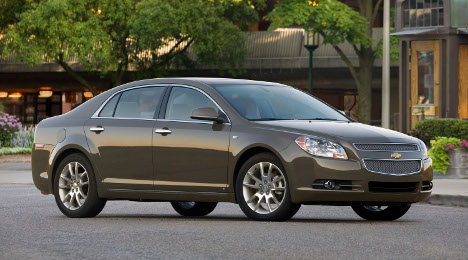
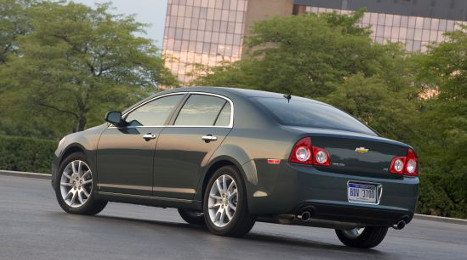
- 1,075,102 of the previous generation 4-speed automatic transmission Chevrolet Malibu and from the 2004-2008 model years and Pontiac G6 from the 2005-2008 model years because of a shift cable that could wear out over time, resulting in mismatches of the gear position indicated by the shift lever.
- 1,402 Cadillac Escalades and Escalade ESVs from the 2015 model year because an insufficiently heated plastic weld that attaches the passenger side air bag to the instrument panel assembly could result in a partial deployment of the air bag in the event of a crash.
- 58 Chevrolet Silverado HD and GMC Sierra HD full-size pickups from the 2015 model year because retention clips attaching the generator fuse block to the vehicle body can become loose and lead to a potential fire.
GM said there have not been any deaths associated with these recalls. The automaker added more details about the recalls in its statement, as well.
Starting with the action involving the full-size crossovers, GM has instructed dealers not to sell new or used versions of these vehicles until the fix is made. Explaining the issue, GM said: "In the full-size crossover recall, the flexible steel cable that connects the safety belt to the vehicle at the outside of the front outboard seating positions can fatigue and separate over time as a result of occupant movement into the seat."
Next up, GM shed more light on the Malibu and G6 actions: "The previous generation Malibu, Malibu Maxx and Pontiac G6 were added to an April 29 recall for certain 4-speed transmission Aura models from the 2007-2008 model year. The Malibu and G6 vehicles equipped with a 4-speed automatic transmission have a condition in which the transmission shift cable may fracture. When the fracture occurs, the driver may not be able to select a different gear, remove the key from the ignition or place the transmission in park."
When looking at the 4-speed Malibu and G6 vehicle population, GM said it has knowledge of 18 crashes and one injury, adding that dealers will replace the shift cable and attachment bracket for free for the customer.
As for the 2015 Escalade and Escalade ESV action, GM stopped sale of these vehicles. Through overnight letters, called and emails, GM warned the 224 customers who had taken delivery of these vehicles against letting people sit in the passenger seat until the fix was made on the vehicle. The automaker said it has no knowledge of any crashes or injuries associated with these involved vehicles.
"The passenger airbag module is attached to a chute adhered to the backside of the instrument panel with an infrared weld that was not sufficiently heated. The issue has been corrected at the supplier and Escalade production is under way at the Arlington, Texas Assembly Plant," GM explained.
Lastly, the heavy-duty truck recall includes no known related crashes or injuries.
"In the heavy-duty truck recall, certain 2015 model year Chevrolet Silverado HD and GMC Sierra HD model vehicles equipped with a 220 Amp Generator have a condition where the retention clips that attach a fuse block to the vehicle body can become loose, allowing the fuse block to move out of position and lead to a potential fire," GM said.
Hyundai Recall
In other recent recall news, Hyundai Motor Co. is recalling more than 140,000 certain model-year 2011-2014 Hyundai Tucson vehicles due to an air bag issue.
The recall affects 137,500 Tucsons in the United States and 3,500 in Puerto Rico.
According to the NHTSA recall statement, in the vehicles affected — which were manufactured between Jan. 3, 2011, and Dec. 23, 2013 — the air bag assembly installed in the steering wheel may come loose from its mounting.
"An air bag assembly that is not properly mounted may result in an increased risk of injury to the driver in the event of a crash," NHTSA reported.
The automaker says there have been no reports of accidents or injuries as a result of the defect.
The recall is expected to begin by the end of June, at which time Hyundai will notify owners, and dealers will inspect and tighten the bolts that secure the driver's air bag assembly, free of charge.
Owners may contact Hyundai customer service at (800) 633-5151. Hyundai's number for this recall is 118.
The $35 million fine generated by the consent order from the National Highway Traffic Safety Administration that General Motors agreed to on Friday didn’t surprise analysts from TrueCar and Kelley Blue Book.
Now what these industry observers are waiting to see is if the impact triggered by this ignition switch recall controversy will eventually work its way into the retail or wholesale markets.
“It’s such a dynamic story. Things seem to be moving constantly with more news coming out,” Larry Dominique, president of ALG and executive vice president of TrueCar told Auto Remarketing on Friday.
“The fine is certainly something that I don’t think is surprising a lot of people,” Dominique continued. “But I think GM has done a pretty good job of being transparent, being out there in front of things. The fact that they’ve been so vigilant in making sure that any issue that’s out there in the marketplace is being taking care of, either through service bulletins or through additional recalls, is really starting to show the change in the culture. That’s what (GM chief executive officer Mary Barra) needs to do, so I applaud them for that.
“That penalty in the context of the Justice Department fine against Toyota for $1.2 billion is a small number,” Dominique went on to say.
The penalty Dominique referenced came back in March. That’s when Toyota closed the book on a federal recall investigation that first brought plenty of negative attention to the OEM more than five years ago.
Toyota reached an agreement with the U.S. Attorney’s Office for the Southern District of New York to resolve its investigation initiated in February 2010 into the communications and decision-making processes related to the company’s 2009 and 2010 recalls to address potential “sticking” accelerator pedals and floor mat entrapment. Auto Remarketing’s recap of the development can be found here.
The enforcement action from NHSTA against GM included an agreement that the automaker will pay a $35 million fine, the maximum allowed by a federal regulatory agency and representing the single highest civil penalty amount ever paid as a result of a NHTSA investigation of violations stemming from a recall.
Also part of the agreement set forth in a consent order signed with NHTSA. The agency ordered GM to make significant and wide-ranging internal changes to its review of safety-related issues in the United States, and to improve its ability to take into account the possible consequences of potential safety-related defects. GM will also pay additional civil penalties for failing to respond on time to the agency's document demands during NHTSA’s investigation. Auto Remarketing’s complete report on that development is available here.
Eric Ibara, director of residual values for Kelley Blue Book, shared his assessment of what the NHTSA penalty against GM means.
“The announcement by the Department of Transportation is a statement that new rules are being enforced by the new sheriff,” Ibara said. “This has been known by the auto manufacturers as an unusually high volume of recalls to have already occurred this year.”
Like Dominique, Ibara credited GM management for the moves made since Barra took control of the OEM back in January.
“Mary Barra and her team have implemented structural changes to ensure this never happens again, and so far, vehicle values for GM models appear to be unaffected,” Ibara said.
“Sales are more mixed as GMC and Buick are up year-over-year, while Chevrolet and Cadillac are not. This is likely the result of new product launches within each brand, and time will tell if this disaster affects the GM brands in the long term,” he went on to say.
Dominique indicated TrueCar and ALG analysts are keeping a close watch of the situation involving GM, too. He remembered “some pretty quick changes on both the retail and wholesale value,” when Toyota became entangled in the unintended acceleration recalls. He noted that the vehicles involved in the ignition switch problem no longer are made by GM, creating a different set of circumstances.
“On the used-car side, we’re not seeing a reduction in values,” Dominique said. “We attribute that to a certain degree to the fact that most of this is with defunct brands and model names. The Cobalt doesn’t exist. Pontiac and Saturn don’t exist. It seem to us at least what we’re seeing on the wholesale market that not seeing a lot of people change their behavior for the other GM brands based on the recall.”
Meanwhile to keep the value as high as possible for those recalled vehicles still in operation, Jeff Boyer, vice president of global vehicle safety, who is assigned to integrate safety policies across the company offered an update on Friday on when replacement ignitions might be available.
"Given that the ignition switch was in very limited production for several years, GM’s supplier, Delphi, increased production, pulled machinery out of storage, and found new suppliers for some of the part components. The manufacturing process is now up and running; moreover, GM and Delphi have set up an enhanced quality assurance process to ensure quality and consistency of the final part," Boyer said.
"Parts production is running seven days a week in multi-shift operations," Boyer continued in a post on GM's blog FastLane. "We are buying new machinery and equipment to make parts quickly. We are working with Delphi to get two additional production lines up and running this summer. Our plan is to produce enough repair parts by October to fix the majority of the vehicles impacted by the ignition switch and ignition cylinder recalls."
General Motors said it came to an agreement with the National Highway Traffic Safety Administration on Friday for failing to report in a timely manner the ignition switch defect that’s resulted in the non-deployment of airbags in more than 2 million Chevrolet Cobalt and other GM models.
As part of this agreement, GM will pay a $35 million fine, the maximum allowed by a federal regulatory agency and representing the single highest civil penalty amount ever paid as a result of a NHTSA investigation of violations stemming from a recall.
Also part of the agreement set forth in a consent order signed with NHTSA, the agency ordered GM to make significant and wide-ranging internal changes to its review of safety-related issues in the United States, and to improve its ability to take into account the possible consequences of potential safety-related defects. GM will also pay additional civil penalties for failing to respond on time to the agency's document demands during NHTSA’s investigation.
“We have learned a great deal from this recall. We will now focus on the goal of becoming an industry leader in safety,” said GM chief executive officer Mary Barra, who faced two intense hearings on Capitol Hill last month. “We will emerge from this situation a stronger company.”
Working with NHTSA, GM said it has already begun reviewing processes and policies to avoid future recalls of this nature.
“We are working hard to improve our ability to identify and respond to safety issues,” said Jeff Boyer, vice president of global vehicle safety, who is assigned to integrate safety policies across the company.
“Among other efforts, GM has created a new group, the global product integrity unit, to innovate our safety oversight,” Boyer continued. “We are encouraging and empowering our employees to raise their hands to address safety concerns through our Speak Up for Safety initiative, and we have set new requirements for our engineers to attain Black Belt certification through Design for Six Sigma.”
Having signed this agreement, GM said it now has its sights set on effectively serving customers and completing the ignition switch recall.
“GM’s ultimate goal is to create an exemplary process and produce the safest cars for our customers — they deserve no less,” Barra said.
Federal law requires all manufacturers to notify NHTSA within five business days of determining that a safety-related defect exists or that a vehicle is not in compliance with federal motor vehicle safety standards and to promptly conduct a recall. GM admits in the consent order that it did not do so.
“Safety is our top priority, and this announcement puts all manufacturers on notice that they will be held accountable if they fail to quickly report and address safety-related defects,” said U.S. Transportation Secretary Foxx. “While we will continue to aggressively monitor GM’s efforts in this case, we also urge Congress to support our Grow America Act, which would increase the penalties we could levy in cases like this from $35 million to $300 million, sending an even stronger message that delays will not be tolerated.”
NHTSA said the action is historic in that the provisions of the Consent Order will be immediately enforceable in federal court if GM does not fully comply. The consent order will hold GM accountable, push the automaker to make needed institutional change, and ensure that replacement parts are produced quickly and recalled vehicles are repaired promptly.
“No excuse, process, or organizational structure will be allowed to stand in the way of any company meeting their obligation to quickly find and fix safety issues in a vehicle,” said NHTSA Acting Administrator David Friedman. “It’s critical to the safety of the driving public that manufacturers promptly report and remedy safety-related defects that have the potential to lead to deaths or injuries on our nation's highways.”
In the consent order, GM agreed to provide NHTSA with full access to the results of GM’s internal investigation into this recall, to take steps to ensure its employees report safety-related concerns to management, and to speed up the process for GM to decide whether to recall vehicles.
The consent order also requires GM to notify NHTSA of changes to its schedule for completing production of repair parts by Oct. 4. GM must also take steps to maximize the number of vehicle owners who bring in their vehicles for repair, including targeted outreach to non-English speakers, maintaining up-to-date information on its website, and engaging with vehicle owners through the media. The consent order requires GM to submit reports and meet with NHTSA so that the agency may monitor the progress of GM’s recall and other actions required by the consent order.
Both in 2007 and again in 2010, NHTSA reviewed data related to the non-deployment of airbags in certain Chevy Cobalt models but each time and determined that it lacked the data necessary to open a formal investigation. However, on Feb. 7, GM announced it would recall certain model vehicles for a defect where the vehicle’s ignition switch may unintentionally move out of the “run” position that could result in the air bag not deploying in the event of a crash.
Officials said GM had failed to advise NHTSA of this defect at the time of the agency’s earlier reviews.
After review and consultation by NHTSA, GM twice expanded the recall to include a total of 2,190,934 vehicles in the United States. The GM recall covers the 2005-2010 Chevrolet Cobalt, 2007-2010 Pontiac G5, 2003-2007 Saturn Ion, 2006-2011 Chevrolet HHR, 2006-2010 Pontiac Solstice and 2007-2010 Saturn Sky vehicles.
General Motors now is well above the 5-million mark for the number of recalled vehicles so far this year.
The automaker said Thursday it has informed the National Highway Traffic Safety Administration of five safety recalls covering about 2.7 million vehicles in the United States. The latest recalls involve:
— 2,440,524 previous generation passenger cars for tail lamp malfunctions
—111,889 previous generation Chevrolet Corvettes for loss of low-beam head lamps
—140,067 Chevrolet Malibus from the 2014 model year for hydraulic brake booster malfunctions
—19,225 Cadillac CTS 2013-2014 models for windshield wiper failures
— 477 full-size trucks from the 2014 and 2015 model years for a tie-rod defect that can lead to a crash
Add this list of recalled units to GM’s campaign to repair older vehicles with faulty ignitions — as well as nearly a half dozen other campaigns announced since this year began — and the sum rises above 5 million.
GM said it expects to take a charge of up to approximately $200 million in the second quarter, primarily for the cost of recall-related repairs announced in the quarter.
Last month, the automaker projected to take a charge of approximately $1.3 billion in the first quarter, primarily for the cost of recall-related repairs announced up to early April and related courtesy transportation. Officials said this amount includes the $750 million charge previously announced on March 31.
No matter the cost, GM reiterated its pledge to keep drivers of its vehicles safe.
“Customer safety is at the heart of how GM designs and produces vehicles, and these announcements are examples of two ways we are putting that into practice,” said Jeff Boyer, vice president of GM Global Vehicle Safety.
“We have redoubled our efforts to expedite and resolve current reviews in process and also have identified and analyzed recent vehicle issues which require action. These are examples of our focus to surface issues quickly and promptly take necessary actions in the best interest of our customers,” Boyer continued.
The largest recall involves model-years 2004-2012 Chevrolet Malibu, 2004-2007 Chevrolet Malibu Maxx, 2005-2010 Pontiac G6 and 2007-2010 Saturn Auras in U.S. to modify the brake lamp wiring harness.
GM explained that affected vehicles could have corrosion develop in the wiring harness for the body control module due to micro-vibration. The condition could result in brake lamps failing to illuminate when the brakes are applied or brake lamps illuminating when the brakes are not engaged.
Additionally, the automaker said cruise control, traction control, electronic stability control and panic braking assist operation could be disabled.
“GM is aware of several hundred complaints, 13 crashes and two injuries but no fatalities as a result of the condition,” OEM officials said. “The company issued a technical service bulletin in 2008 and conducted a safety campaign for a small population of 2005 model year vehicles in January 2009.”
The second safety recall covers 111,889 Chevrolet Corvettes from the 2005 through 2007 model years for potential loss of low-beam headlamp operation. Models from 2008 through 2013 will be covered under a customer satisfaction program. All repairs will be at no cost to customers.
“When the engine is warm, the underhood electrical center housing could expand, causing the headlamp low-beam relay control circuit wire to bend slightly,” GM officials said. “After the wire is repeatedly bent, it can fracture and separate. When this occurs, the low-beam headlamps will not illuminate.
“As the housing cools and contracts, the low-beam headlamp function may return,” they continued. “This condition does not affect the high-beam headlamps, marker lamps, turn signals, daytime running lamps or fog lamps. Loss of low beam headlamps when they are required could reduce the driver’s visibility, increasing the risk of a crash.
“GM is aware of several hundred complaints as result of the condition but no crashes, injuries or fatalities,” officials went on to say.
The third recall covers 140,067 Chevrolet Malibus from the 2014 model year with 2.5L engines and stop/start technology. These vehicles are subject to the disabling of hydraulic brake boost that can require greater pedal efforts and extended stopping distances.
The automaker indicated franchised dealers will reprogram the electronic brake control module.
“The issue was discovered in testing of a future model with similar technology,” OEM officials said. “GM is aware of four crashes but it is not clear that these are related to the condition. No injuries are known from those crashes.”
The fourth recall covers 19,225 Cadillac CTS from the 2013 and 2014 model years for a condition in which the windshield wiper system may become inoperable after a vehicle jump start with wipers active and restricted, such as by ice and snow.
“Potential lack of visibility could increase the risk of a crash. Dealers will replace the front wiper module free of charge. GM is unaware of any crashes or injuries due to the condition,” the automaker said.
The fifth recall involves certain 2014 Chevrolet Silverado and GMC Sierra light duty pickups and 2015 mode- year Chevrolet Tahoe SUVs. The tie rod threaded attachment to the steering gear rack in these vehicles may not be tightened to specification.
“With this condition, the tie rod can separate from the steering rack and a crash could occur without prior warning,” GM said. “Customers are being contacted and told to have their vehicles taken by flatbed to their dealer, where the inner tie rods will be inspected for correct torque, and, if necessary, the steering gear will be replaced.
“The repair procedure was being sent to franchised dealers and owner letters sent by overnight mail to customers on May 14. The issue was discovered and corrected during assembly after the small number of vehicles was released,” the automaker went on to say.
With recalls making headlines in a big way so far this year, officials both in Washington, D.C., and California are pushing for more regulation of automakers and dealers to enhance the process for repairing recalled vehicles and to keep units regulators deem to be unsafe off of the road.
Included in the Grow America Act — a $302 billion, four-year reauthorization proposal orchestrated by the U.S. Department of Transportation — are segments officials said will strengthen safety regulators’ ability to hold automakers accountable for defects that “can cost lives.”
Specifically, the act would:
— Establish harsher penalties for OEMs that refuse to address defective and dangerous vehicles and equipment that endanger the public.
— Provide the authority to require automakers to cease retail sale and/or require repair of vehicles or equipment that pose an imminent hazard to the safety of the public.
— Provide the authority to require rental car companies and used-car dealers to participate in recalls of defective and unsafe vehicles.
To ensure OEMs comply with safety standards, officials pointed out the Grow America Act increases the limit for civil penalties for violators from $35 million to $300 million. It also amends recall authority to require rental companies and dealers to fix vehicles before making them available to the public.
Officials added the act also would strengthen power held by the National Highway Traffic Safety Administration to respond quickly to remove “hazardous equipment” from the market, and to investigate incidents of noncompliance.
“As the nation’s top regulator of the automotive industry, we hold manufacturers accountable for defect and compliance issues regarding their products and are seeking to further our ability to do so in the future, including increasing civil penalty limits nearly 10 times to $300 million,” NHTSA’s acting administrator David Friedman said.
Bill Revival in California
Meanwhile on the other side of the country, a California state senator is looking to drum up more support for a measure she sponsored but lost momentum when it was considered by the state government’s other elected chamber.
Lawmakers pushed Senate Bill 686 over to the Assembly’s Business and Professions Committee last summer where it didn’t come up for a vote. But now state Sen. Hannah-Beth Jackson is receiving support from consumer groups to revive the measure so it can eventually get to the governor.
According to the bill, dealers would be prohibited from selling, leasing, renting, loaning or otherwise transferring ownership of a used vehicle, if the dealer knows or should have known that the unit is subject to a manufacturer’s safety recall.
This bill would similarly prohibit a rental company that retails used vehicles from selling or transferring ownership of the unit that is subject to a safety recall.
Those prohibitions would not apply if the defect was repaired as required. However, another element of the bill would prevent dealerships from listing the unit as certified if the dealer knows or should have known that the vehicle is subject to a manufacturer’s recall.
Both the California New Car Dealers Association (CNCDA) and the Independent Automobile Dealers Association of California (IADAC) made strong arguments against the bill last summer.
“SB 686 is not just premature and unnecessary but is also poorly conceived and ambiguous,” CNCDA said. “The bill fails to define manufacturer’s safety recall and other key terms. Additionally, it fails to specify when a dealer must verify a vehicle’s recall status or provide any protection for a dealer once an inquiry has been made. Without providing any clear avenues for dealers to comply with its provisions, SB 686 is problematic and creates havoc in the used car market as dealers and consumers struggle to discover the recall status of their vehicles.”
IADAC also stated the bill would open dealers to “numerous lawsuits if an honest mistake was made.”
Furthermore, the Consumer Financial Services Association (CFSA) also came out against SB 686. CFSA said the measure “would effectively establish a private right of action against a financial institution that holds the note on a said vehicle. Financial institutions have no way to protect themselves from the strict liability called for in SB 686 and this would have a chilling effect on the auto lending industry.”
Nevertheless, Jackson remains steadfast behind her bill.
“Californians who buy used cars should have the same confidence in the safety of the vehicles they’re buying as those who buy new cars,” Jackson said. “And until they’ve been fixed so that known safety defects have been corrected, recalled cars shouldn’t be on the road, and they shouldn’t be for sale. It’s as simple as that. This bill will prevent senseless tragedies and make our roads safer for all of us.”
As nearby General Motors continues to be impacted by recalls, its two chief rivals in the Motor City revealed substantial recalls of their own Friday.
Starting with Chrysler Group, its two actions impact around 784,000 units, the overwhelming majority of which are in a recall connected to power window-vent switch modules.
In that particular action, Chrysler said it is replacing window switches in roughly 780,000 minivans equipped with third-row power window vents. This follows incidents of overheating, the automaker said.
However, the automaker also said it does not know of any injuries or accidents related to this condition.
Included in the action are certain model-year 2010 through 2014 Dodge Grand Caravan and Chrysler Town & Country minivans, assembled between Aug. 25, 2010 and Oct. 31, 2013. Chrysler estimates that 644,850 are in the U.S., with 106,980 vehicles being in Canada. The automaker estimates 8,009 are in Mexico, and 20,638 vehicles are outside the NAFTA region.
"Affected customers will be contacted directly and advised when they may schedule service. Associated costs will be borne by the company," Chrysler said in a statement. "In the interim, customers may visit their dealers after May 14 to have the vent switches disconnected. This will eliminate any risks associated with the issue and affects only third-row window-vent operation. The switch is located on the driver's door."
In a separate action, Chrysler is recalling an estimated 4,141 electric cars to replace the power inverter module (PIM). This action is meant to prevent coolant seepage that could cause power loss while driving.
“A PIM alters electric current to accommodate battery-powered propulsion. A routine warranty data review prompted an investigation, during which Chrysler Group engineers discovered a PIM defect that may, over time, seep coolant onto electrical components, causing a short-circuit leading to power loss,” the company said in its statement.
“Chrysler Group is aware of five such incidents. The company is unaware of any related injuries or accidents.”
PIMs will be replaced in model-year 2013 and 2014 Fiat 500e cars that were assembled between Sept. 24, 2012 and April 4 of this year. All the affected customers are in the U.S.
"Affected customers, all of whom are in the U.S., will be contacted directly and advised when they may schedule service, the statement reads. "Associated costs will be borne by the company."
At Ford, meanwhile, the automaker is recalling a grand total of roughly 750,000 units in North America in two seperate actions. There is a great deal of overlap, and here's how that breaks down, as a Ford spokesperson explained to Auto Remarketing:
- In the first action, there is a total of approximately 692,500 units (as of April 28) of 2013 and 2014 model-year Ford Escape and Ford C-MAX vehicles being recalled for a possible restraint control module software issue. (65,000 are the C-MAX models, the rest being Escapes). There may be more vehicles in other markets that are impacted.
"As a result of the software issue, the deployment of the safety canopy may be delayed in certain rollover circumstances, potentially increasing the risk of injury," the spokesperson said in an emailed statement, indicating there have been injuries or accidents attributed to this condition.
The affected vehicles include certain 2013-2014 model-year Escape units built between Oct. 5, 2011 and Feb. 14 of this year at the Louisville Assembly Plant, as well as certain C-MAX units from the same model years built at the Michigan Assembly Plant from Jan. 19, 2012 through Feb. 24 of this year. Dealers will reprogram the module for customers for free.
- All of the Escape models in the first recall are also included in the second action, which just includes the Escape. This recall deals with a potential issue regarding exterior door handles that could bind.
Should this happen, Ford says, it may keep the door from latching properly.
"This may result in a door that is difficult to close, or potentially opens while driving, increasing the risk of injury to an occupant," the Ford spokesperson said. No accidents or injuries related to this condition, however, have been reported.
Dealers will inspect the four exterior door handles and reposition if needed. There are 692,700 units in North America potentially impacted by this condition, as of April 28. They include certain Escapes from the 2013 and 2014 model years built between Oct. 5, 2011 and April 10 of this year at the Louisville Assembly Plant. There may be more vehicles impacted in other markets.
General Motors informed the National Highway Traffic Safety Administration about two more recalls, including one campaign associated only with orphan brand Saturn.
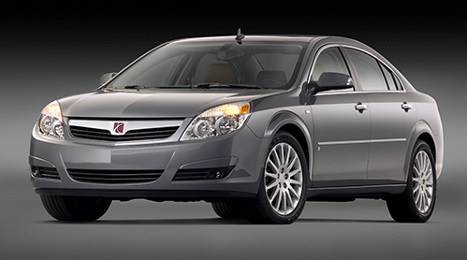
The two recalls cover more than 100,000 units. The larger of the two campaigns is for Saturn Aura vehicles from the 2007 and 2008 model years. A total of 56,214 units equipped with a four-speed automatic transmission were manufactured from April 24, 2006 through October 31, 2007.
In the affected vehicles, NHTSA said the transmission shift cable may fracture.
“If the transmission shift cable fractures while the vehicle is being driven, when the driver goes to stop and park the vehicle, the driver will not be able to shift the lever to the ‘Park’ position, or remove the ignition key,” federal officials said.
“If the vehicle is not in the ‘Park’ position there is a risk the vehicle will roll away as the driver and other occupants exit the vehicle or anytime thereafter,” they continued. “A vehicle rollaway increases the risk of injury to exiting occupants and bystanders.”
GM told NHTSA it will notify owners, and franchised dealers will replace the shift cable assembly and mounting bracket, free of charge. The manufacturer has not yet provided a notification schedule.
In the meantime, owners can contact the automaker at (800) 553-6000 and reference recall No. 14152.
Meanwhile, GM also informed NHTSA about another recall; this time for a series of 2014 models that might have fuel gauge problems. A total of 51,640 units are included in the campaign.
NHTSA said GM is recalling certain 2014 Buick Enclave, Chevrolet Traverse and GMC Acadia vehicles manufactured from March 26 through August 15 of last year.
“In the affected vehicles, the engine control module (ECM) software may cause the fuel gauge to read inaccurately,” officials said. “An inaccurate fuel gauge may result in the vehicle unexpectedly running out of fuel and stalling, increasing the risk of a crash.”
The OEM told the agency that it will notify owners, and franchised dealers will reprogram the ECM to correct the fuel gauge reading, free of charge.
Like with the Saturn campaign, the manufacturer has not yet provided a notification schedule.
Owners of these units can reference recall No. 14007 and contact Buick at (800) 521-7300, Chevrolet at (800) 222-1020 or GMC at (800) 462-8782.