Even as liability proceedings regarding the automaker’s ignition switch recall unfolded Friday afternoon in a U.S. Bankruptcy Court in Manhattan, analysis from both Kelley Blue Book and Edmunds.com show that shoppers don’t appear to be shying away models from General Motors.
New survey data of Kelley Blue Book website users indicated only 5 percent of new-vehicle shoppers say the recent GM recall caused them not to consider purchasing a Chevrolet, Cadillac, GMC or Buick model.
“Shoppers are willing to forgive, but not forget,” KBB analyst Arthur Henry said. “Most likely, GM is maintaining its shopping traffic on KBB.com from buyers who are looking to capitalize on any deals that may be offered or because none of the current recalled vehicles are a part of manufacturer’s current product portfolio.”
KBB broke down the percentage of new-car shoppers who remembered a recall by brand. The results went as follows:
—Toyota: 48 percent
—General Motors: 40 percent
—Chevrolet: 38 percent
—Ford: 11 percent
—GMC: 9 percent
—Honda: 8 percent
—Chrysler: 7 percent
—Tesla: 4 percent
—Jeep: 4 percent
—Saturn: 3 percent
—Buick: 3 percent
—Nissan: 2 percent
—Pontiac 2 percent
While shoppers are aware of major recalls on Toyota and GM models due to their publicity in the media, analysts pointed out consumers are still shopping those brands on KBB.com.
Chevrolet’s traffic on KBB.com grew 25 percent year-over-year and the brand saw a short-term dip of 14 percent from December to April, which KBB said can be attributed to news of the recall.
KBB senior analyst Karl Brauer explained this trend confirms Chevrolet is benefitting from recent high-profile vehicle launches, including the all-new 2014 Corvette, Impala and Silverado. Brauer added these models are helping the automaker remain top-of-mind among shoppers despite recalls on older, discontinued models.
“Whatever negative connotations GM has suffered from the recent recalls is minor when compared to the growing consumer interest the company has generated with its current line of compelling product,” he said
Even though Chevrolet is maintaining its overall stride in KBB.com share of traffic, the perception of Chevrolet’s reputation has declined from the first quarter of 2013 to the first quarter of this year, sitting below the average among non-luxury brands like Honda and Ford, according to survey data.
“This further suggests consumers are being won over by Chevrolet’s existing model offerings, regardless of the latest hit to its reputation,” Brauer said.
Meanwhile, Edmunds.com uncovered similar consumer trends when analysts reviewed traffic on their website.
A review of shopper consideration on Edmunds.com determined that the recalls have had very little — if any — impact on GM brands. A week-by-week comparison can be found below:
| Make |
1/5/2014 |
1/12/2014 |
1/19/2014 |
1/26/2014 |
| Buick |
1.5% |
1.5% |
1.6% |
1.6% |
| Cadillac |
2.1% |
2.2% |
2.4% |
2.2% |
| Chevrolet |
8.2% |
8.8% |
9.7% |
9.5% |
| GMC |
2.4% |
2.4% |
2.4% |
2.5% |
| |
|
|
|
|
| Make |
2/2/2014 |
2/9/2014 |
2/16/2014 |
2/23/2014 |
| Buick |
1.5% |
1.6% |
1.7% |
1.7% |
| Cadillac |
2.3% |
2.6% |
2.2% |
2.2% |
| Chevrolet |
9.2% |
9.1% |
9.6% |
9.4% |
| GMC |
2.3% |
2.4% |
2.5% |
2.6% |
| |
|
|
|
|
| Make |
3/2/2014 |
3/9/2014 |
3/16/2014 |
3/23/2014 |
| Buick |
1.7% |
1.6% |
1.6% |
1.7% |
| Cadillac |
2.1% |
2.1% |
2.0% |
2.0% |
| Chevrolet |
8.9% |
8.7% |
8.3% |
8.3% |
| GMC |
2.3% |
2.3% |
2.2% |
2.1% |
| |
|
|
|
|
| Make |
3/30/2014 |
4/6/2014 |
4/13/2014 |
4/20/2014 |
| Buick |
1.7% |
1.5% |
1.6% |
1.6% |
| Cadillac |
1.9% |
1.9% |
2.2% |
1.8% |
| Chevrolet |
9.1% |
8.7% |
9.3% |
8.7% |
| GMC |
2.2% |
2.2% |
2.1% |
1.9% |
| |
|
|
|
|
| Make |
4/27/2014 |
|
|
|
| Buick |
1.6% |
|
|
|
| Cadillac |
1.8% |
|
|
|
| Chevrolet |
8.3% |
|
|
|
| GMC |
2.0% |
|
|
|
“This analysis shows that shoppers continue to consider GM models at about the same level as before news of the recalls broke,” the Edmunds analysis said.
Legal Proceedings
Meanwhile, GM’s legal team was engaged on two fronts on Friday.
The automaker’s counsel participating in a proceeding in front of the same judge who oversaw GM’s bankruptcy in 2009. Judge Robert Gerber is now considering whether the automaker committed fraud in not disclosing potential awareness of ignition problems in discontinued models, allowing civil suits from more than 100 law firms to push forward.
At the same time, Bob Hilliard, a Texas lawyer and one of the nation’s key players in the pursuit of claims against GM, attended what he described as a requested “settlement meeting” with GM’s compensation attorney Kenneth Feinberg in Washington D.C.
During the full-day meeting, Hilliard, who represents 53 families who claim to have lost loved ones due to GM’s ignition switch as well as 273 injured victims, said he discussed with Feinberg full resolution of all claims.
“My numerous clients include those who have suffered serious injuries or the loss of loved ones. Each individual investigation has confirmed the accident scenario was caused by the defect in the GM vehicle,” Hilliard said.
Newest Recalls by Cadillac & Honda
The National Highway Traffic Safety Administration shared details about the newest recall coming from GM.
The automaker is recalling 50,571 Cadillac SRX vehicles from the 2013 model year. These units manufactured from May 29, 2012, through June 26, 2013, and are equipped with 3.6-liter engines.
“In the affected vehicles, in certain driving situations, there may be a three- to four-second lag in acceleration due to the transmission control module (TCM) programming,” NHTSA officials said.
“A three- to four-second lag in acceleration may increase the risk of crash,” they continued.
GM told NHTSA it will notify owners, and franchised dealers will reprogram the transmission control module, free of charge. The manufacturer has not yet provided a notification schedule.
In the meantime, owners can contact Cadillac customer service at (800) 458-8006 and reference recall No. 14132.
Furthermore, American Honda also announced a recall. Honda will voluntarily recall 24,889 Odyssey vehicles in the U.S. and another 1,501 units in Canada from the 2014 model year
OEM officials explained the recall stems from the need to replace the shorting coupler, an electrical component in the side curtain airbag system. The repair will be made free of charge.
“During assembly of the electrical coupler for the side curtain airbag on the passenger's side of the vehicle, it is possible that the shorting terminal, which is used to prevent deployment of the airbag before it is assembled into the vehicle, may have been damaged,” Honda said.
“A damaged shorting terminal may illuminate the Supplemental Restraint System (SRS) indicator as well as prevent the side curtain airbag from deploying during a crash, increasing the risk of injury,” the automaker continued. “No crashes or injuries have been reported related to this issue, which was discovered through warranty repairs.”
Honda is announcing this recall to encourage all owners that purchased an affected vehicle to take it to an authorized franchised dealer as soon as they receive notification of this recall from Honda.
Mailed notification to customers will begin on May 16.
In addition to contacting customers by mail, at that time, U.S. owners of these vehicles will be able to determine if their vehicles require repair by going to www.recalls.honda.com or by calling (800) 999-1009, and selecting option No 4.
Owners of these vehicles in Canada will be able to determine if their vehicles require repair by going to www.honda.ca/recalls or by calling (888) 946-6329.
As the automaker revealed a major reorganization of its engineering department, General Motors said today that the company has asked the bankruptcy court for the Southern District of New York to rule on whether the growing number of lawsuits alleging purely economic damages resulting from the ignition switch recall may proceed.
The automaker said the motion does not concern accidents or injuries. GM officials noted the motion “does not address any litigation involving an accident or incident causing personal injury, loss of life or property damage.”
Further, the OEM pointed out the motion “does not involve whether ‘New GM’ should repair the ignition switch defect. ‘New GM’ has committed to replacing the defective ignition switch as a result of the recall.
“The lawsuits that are the subject of this motion, most of which purport to be class actions, are brought by or on behalf of individuals who were not injured as the result of any failure of the ignition switch,” GM officials went on to say.
Along with the announcement sent to Auto Remarketing, GM spokesperson Jim Cain recapped the moves the automaker has made regarding the recall of older models such as the Chevrolet Cobalt and Saturn Ion that have ignitions known to slip into the accessory position while the vehicle is in operation.
“General Motors has taken responsibility for its actions and will keep doing so,” Cain said. “GM has also acknowledged that it has civic and legal obligations relating to injuries that may relate to recalled vehicles, and it has retained Kenneth Feinberg to advise the company what options may be available to deal with those obligations.”
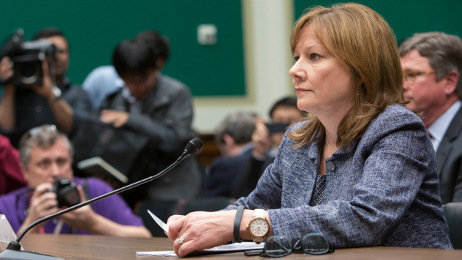
Just before chief executive officer Mary Barra made her first appearance at a Capitol Hill hearing about the recalls earlier this month, GM retained Feinberg as a consultant to explore and evaluate options in its response to families of accident victims whose vehicles are being recalled for possible ignition switch defects.
Barra described Feinberg as highly regarded for his handling of compensation issues related to 9/11, the BP oil spill in the Gulf of Mexico, and the Boston Marathon bombing.
“Mr. Feinberg is highly qualified, and is very experienced in the handling of matters such as this,” Barra said. “He brings expertise and objectivity to this effort, and will help us evaluate the situation and recommend the best path forward.”
Feinberg added, “My mandate from the company is to consider the options for dealing with issues surrounding the ignition switch matter, and to do so in an independent, balanced and objective manner based upon my prior experience.”
The latest legal development comes on the heels of GM winning a decision in federal court last week. U.S. District Judge Nelva Gonzales Ramos ruled in Corpus Christi, Texas, that the automaker did not have to ground these recalled vehicles and instruct owners not to drive them until repairs are completed, a decision that frustrated the attorney who brought the complaint.
“They made winning a hearing on technical legal arguments more important than saving their own customers’ lives,” said Bob Hilliard of Hilliard Munoz Gonzales. “GM celebrates winning on a technicality and feeling that they have permission to keep 2 million dangerous cars on the roads of America.”
GM Restructures Global Engineering for Cross-System Integration
In other company news released today, GM announced the restructuring of its global vehicle engineering organization to improve cross-system integration, deliver more consistent performance across vehicle programs and address functional safety and compliance in its vehicles.
“A vehicle is a collection of 30,000 individual parts. Fully integrating those parts into cohesive systems with industry-leading quality and safety is key in this customer-driven business,” said Mark Reuss, GM’s executive vice president of global product development, purchasing and supply chain.
The OEM explained global vehicle engineering is being restructured to form two new organizations: global product integrity and global vehicle components and subsystems.
According to the automaker, the global product integrity organization, which is effective immediately, will build on specific actions GM has taken in recent years to improve vehicle dynamics including ride and handling, steering and braking. GM said it is applying the same approach to overall quality and safety performance and ensure the highest levels of execution across all its vehicles.
Leading this new organization are:
— Ken Morris, currently executive director, global chassis engineering, has been named vice president of global product integrity. The newly created role and organization will include vehicle, powertrain and electrical systems engineering as well as vehicle performance, industrial engineering and validation. It also includes the recently formed global vehicle safety organization led by Jeff Boyer, who is overseeing the addition of 35 product investigators. GM noted supplier quality will now become part of the new global product integrity organization.
— Ken Kelzer, currently vice president of GM Europe powertrain engineering, has been named vice president of global vehicle components and subsystems. His new role and organization includes engineering operations, components development, advanced vehicle development and other engineering business initiatives.
Reuss indicated the global product integrity organization will use advanced analysis tools and processes to flag and prevent issues during vehicle development, while also mining field data to react quickly to safety and product quality issues customers may experience.
With the restructuring, John Calabrese, vice president of global vehicle engineering, has elected to retire after more than 33 years with GM.
Calabrese began his GM career in 1981 as an experimental engineer, and has served in a variety of leadership roles in engineering and purchasing. He will remain with the company through August to assist with the transition.
“Under John’s leadership, GM has developed industry-leading vehicles in practically every segment in which we compete,” Reuss said. “He raised the bar in engineering and has us well-positioned for the future. We thank John for his many contributions — and I thank him for his friendship — and wish him the best.”
The National Highway Traffic Safety Administration said Mazda North American Operations is recalling 109,000 Tributes from the 2001 through 2004 model years.
Officials indicated these recalled vehicles were manufactured between May 22, 2000 and Dec. 19, 2003 and were originally sold, or are currently registered in these locations:
—Connecticut
—Delaware
—Illinois
—Indiana
—Iowa
—Maine
—Maryland
—Massachusetts
—Michigan
—Minnesota
—Missouri
—New Hampshire
—New Jersey
—New York
—Ohio
—Pennsylvania
—Rhode Island
—Vermont
—West Virginia
—Wisconsin
—District of Columbia
“These vehicles may experience excessive corrosion at the forward attachment of the lower control arm,” NHTSA said. “A separation of the lower control arm can result in a significant loss of steering control, increasing the risk of a crash.
Mazda told the agency it will notify owners, and franchised dealers will install a newly designed reinforcement cross-brace, free of charge. The automaker noted parts are not currently available, but Mazda expects to send an interim notification around May 19.
“When parts are available, owners will be mailed a second letter to come in to have the part installed. If customers bring their vehicles to a dealer before reinforcement crossbraces are available, dealers will inspect the subframe and either inform customers that the vehicle is safe to drive until the remedy parts are available or provide a rental vehicle until parts are available if an immediate repair is needed,” NHTSA officials said.
In the meantime, owners can contact Mazda at (800) 222-5500 and reference recall No. 7514D.
Volkswagen of America informed the National Highway Traffic Safety Administration it is recalling four different 2014 models — a total of 26,452 units — to correct a fluid leak.
The models included in the recall are the 2014 Jetta, Beetle, Beetle Convertible, and Passat vehicles equipped with a 1.8T engine and torque converter automatic transmission.
“In the affected vehicles, the O-ring seals between the oil cooler and the transmission may leak fluid,” NHTSA said. “The leaking transmission fluid could contact a hot surface and result in a vehicle fire.
Volkswagen told NHTSA the automaker will notify owners, and dealers will replace the O-ring seals in the transmission oil cooler, free of charge.
The recall was expected to begin this week.
In the meantime, owners can contact Volkswagen at (800) 822-8987 and reference recall No. 38B9/9V.
As iSeeCars.com highlighted new research dissecting the timeliness of recalls and more, General Motors chief executive officer Mary Barra specifically mentioned two dealers and their recent actions during her prepared remarks at the 2014 Automotive Forum.
Midway through her first public comments since consecutive days of Capitol Hill hearings about how the automaker handled the recall of older models with faulty ignition switches, Barra praised the efforts of two stores in the Northeast that are helping the OEM navigate through all of the negative attention the campaigns have triggered.
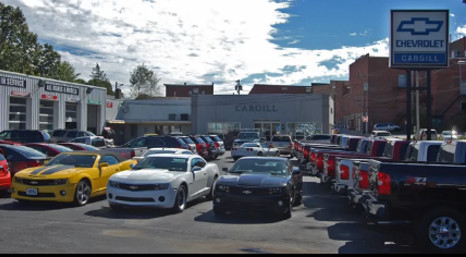
“I’m talking about dealers like Cargill Chevrolet in Putnam, Conn., which added 20 additional loaner cars to its fleet and called the owner of every single recalled vehicle in their area — whether Cargill had sold or serviced it, whether it was new or used,” Barra said. “They even delivered a loaner car to one customer who lives more than 50 miles from the dealership.
“Or Doan Chevrolet, near Rochester, N.Y., which has worked to ensure that every single employee — whether they work in sales, service, or support — is fully informed about the recalls,” she continued. “When a customer speaks to the dealership — in person or on the phone — he or she is assured of accurate and up-to-date information.”
“These are just a few examples of the commitment our dealers are showing. So, thanks to all the GM dealers who are living our values and putting the customer first in everything they do,” Barra went on to say. “All of us understand what is at stake here.”
Barra again praised GM’s franchised dealer body during an interview with NADA-TV also taped in conjunction with the forum that was orchestrated by J.D. Power and the National Automobile Dealers Association. She referenced a meeting she conducted with several dealer principals just before traveling to the Big Apple for the event leading up to the New York International Auto Show.
“They are such an asset. Think about it. They understand the communities. They have relationships with customers and others in the local community,” Barra said.
“As they know our products are really dedicated to understanding the technology of our products, and as our products are becoming technically sophisticated, the investment they’re making to make sure they understand the product is just going to better position not only the dealers but the company to succeed in the marketplace,” she went on to say.
The complete exclusive interview Barra had with NADA-TV can be viewed above.
iSeeCars.com Analysis of Recall Timeliness
Lawmakers questioned Barra extensively on two separate occasions as GM continues its own investigation as to why discontinued models were first recalled in February when some documentation shows problems dating back as long as 10 years ago.
In a new study, iSeeCars.com analyzed and compared automakers’ recall rates and recall timeliness over 10 year periods from 1985 to 2014, mainly 1985 to 1994, 1995 to 2004 and 2005 to 2014.
Analysts explained the recall rate measures the number of recalled vehicles for each vehicle sold — thus a low recall rate is more desirable. They noted recall timeliness looks specifically at the percentage of an automaker’s recall campaigns involving vehicles within their first three years; the higher the percentage, the more timely the manufacturer is in detecting problems and issuing the necessary recalls.
Between 1995 and 2004 as well as 2005 and 2014, iSeeCars.com noticed all manufacturers improved their recall rates with the exception of Subaru, Hyundai, Honda and Toyota.
On the other hand, from the time period of 1985 to 1994 and 1995 to 2004, the site determined only three automakers saw their recall rates improve.
In the most recent 10-year period from 2005 through 2014, analysts found that Mercedes-Benz boasted the best recall rate and Nissan had the best recall timeliness.
Mitsubishi Stands Out; VW, Kia and Nissan Show Fluctuations
The site indicated Mitsubishi has made major strides in improving recall rates and increasing recall timeliness in recent years.
The Asian OEM improved recall rates by 49 percent by going from recalling 177 vehicles for every 100 sold between 1995 and 2004 to recalling 90 vehicles per 100 sold between 2005 and 2014.
Analysts said Mitsubishi also increased the timeliness of recall campaigns by 22 percent.
Between 1995 and 2004, only 62 percent of Mitsubishi’s recall campaigns included vehicles within their first three years of operation. However, in the most recent 10 years, its timeliness improved to 84 percent.
At 0.26 vehicles recalled per unit sold, Nissan posted the lowest recall rate of the 15 manufacturers analyzed in the 1985 through 1994 time period. However, iSeeCars.com noted Nissan dropped significantly to the 11th place ranking in the 1995 through 2004 timeframe, then it jumps to fifth in 2005 through 2014 timeframe.
And, while its recall rate fluctuated, analysts determined Nissan’s timeliness percentage rose from 83 percent (1985-1994), to 84 percent (1995-2004), to 87 percent (2005-2014).
“Those figures actually brought Nissan from 11th place ranking for timeliness of recalls in the 1985-1994 time period to first place in the 2005-2014 timeframe,” the analysis from the site said.
While improving across the three 10-year periods, the site determined Volkswagen maintains a fairly high recall rate and ranking of being one of the least timely manufacturers to recall vehicles within the first three years. VW has a recall rate/timeliness percentage of 1.64/83 percent (1985-1994), 1.18/63 percent (1995-2004) and 1.08/77 percent (2005-2014).
“Kia, on the other hand, has seen both its recall rate and timeliness percentage drop significantly over 30 years, so while it is recalling less vehicles per unit sold, it is also taking more time to do it,” analysts said.
Phong Ly, chief executive officer and co-founder of iSeeCars.com, looked to explain what automakers’ recall rates and recall timeliness tell consumers.
“A lower recall rate could be an indication an automaker has relatively better manufacturing and quality control processes,” Ly said. “Recall timeliness could suggest the caliber of the procedure or system an auto maker has in place to detect problems after a vehicle has been produced. Both the recall rate and timeliness could also be an indication of a manufacturer’s risk tolerance or strategy.
“While the goal of automakers should be as few problems with vehicles as possible, it’s assumed that they’d like to see a trend of a low recall rate and high timeliness percentage,” Ly went on to say. “This allows consumers to trust that the automaker is not only producing safe vehicles, but acting rapidly to protect the public when a potential issue arises.”
As a group of six U.S. senators pressed Attorney General Eric Holder for an investigation of the automaker’s recalling of older models with problematic ignition switches, General Motors refuted reports that chief executive officer Mary Barra knew much earlier than Jan. 31 about significant issues.
Online reports surfaced based on the Congressional release of an internal GM email to Barra dated in 2011 referencing steering problems with the Saturn Ion, one of the models associated with the ignition switch campaign. The automaker emphasized what Barra told lawmakers in separate Capitol Hill hearings was true and accurate.
“The email to Mary Barra dated October 3, 2011 references a Saturn Ion steering issue — an issue completely separate from the ignition-related recalls,” GM spokesperson Kevin Kelly said in a message to Auto Remarketing.
“The email in no way contradicts Ms. Barra’s previous statements or testimony before the House or Senate subcommittees,” Kelly continued. “The email was among the thousands of documents GM willingly provided to the Energy & Commerce Committee of the U.S. House of Representatives upon the committee’s request.”
Barra, meanwhile, will be arriving in the Big Apple with even more pressure from U.S. lawmakers. When she takes her place as one the keynote speakers at the 2014 Automotive Forum in New York Tuesday, she will arrive knowing demands from those six U.S. Senators.
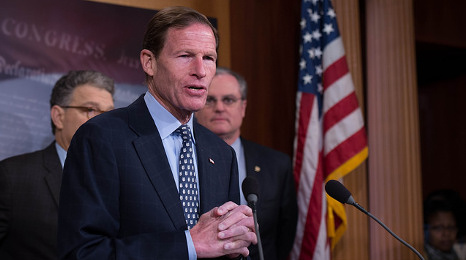
Led by Sen. Richard Blumenthal, five other senators joined in the signing of a document sent to Holder on Friday seeking that DOJ intervene and execute three demands, including:
— Requiring GM establish a fund to fully compensate victims
— Intervening in pending civil actions to oppose any action by GM to deny responsibility for damages
— Ensuring consumers are adequately aware of operating defective vehicles prior to repair
Along with Blumenthal, a Connecticut Democrat, the other lawmakers who sign the document for Holder included Barbara Boxer (D-Calif.), Bob Casey (D-Pa.), Mazie Hirono (D-Hawaii) and Edward Markey (D-Mass.).
“We write to request your immediate intervention and assistance on behalf of victims of severe damage — financial harm, physical injury and death — resulting from serious ignition switch defects in General Motors cars,” the senators said.
“Without your active involvement, they may have no meaningful remedy,” they continued. “Given the crucial role the United States government played in creation of the current General Motors Corporation, we believe the federal government has a moral, if not legal, obligation to take all necessary steps to protect innocent consumers.”
Barra was announced as one of the speakers at the 2014 Automotive Forum before any of the turmoil began over ignition switches in vehicles GM no longer manufacturers such as the Chevrolet Cobalt, Saturn Ion and Pontiac G5. Barra already has faced hearings orchestrated by the House and Senate and now is on tap to speak at this event leading up the New York International Auto Show.
Barra’s is scheduled to conduct a 40-minute question-and-answer session beginning at 4:05 p.m. ET.
Blumenthal has been outspoken about his frustration concerning GM’s approach to this recall. The lawmaker wants the automaker to ground more than 2 million units associated with the campaign until all repairs are completed. He repeated the request in a letter to Barra on Thursday.
“The New York Times represented that on several occasions, GM vehicles have shut down while in motion despite no added weight on the key. I spoke about another such instance on the Senate Floor last week. I am writing to ask that you keep your promise to me, to the Senate Commerce Committee, and the American people by doing the right thing and grounding these vehicles that are needlessly putting lives at risk,” Blumenthal wrote in the letter to Barra.
“Currently, the recall notices that GM has issued in no way convey the risk these vehicles pose to their drivers, passengers and other motorists on the road — and their ambiguous wording additionally fails to convey the serious safety threat that exists even under the conditions that you have described,” he went on to say.
Blumenthal also scoffed at GM’s move to put two automaker engineers on paid leave following a briefing from Anton Valukas, the former U.S. attorney overseeing an independent investigation into circumstances leading to the safety recall.
“This minor disciplinary step sadly neglects drivers still in serious danger,” Blumenthal said. “I welcome efforts to hold accountable the GM officials who caused injury and death in their cars, but GM must protect drivers still in serious danger by warning them to stop using these cars until repaired. GM should ground defective, dangerous cars before they lead to more death, injury and damage.”
The newest details shared by General Motors about its recall investigation turned up several noteworthy developments — suspended engineers, ignition lock cylinders and a $1.3 billion charge to its first-quarter accounting ledger.
On the same day the OEM made an addition to the repair order associated with the recall, increasing its costs for campaigns so far this year, GM chief executive officer Mary Barra confirmed two automaker engineers have been placed on paid leave following a briefing from Anton Valukas, the former U.S. attorney overseeing an independent investigation into circumstances leading to a safety recall of 2.6 million older vehicles for ignition defects.
“This is an interim step as we seek the truth about what happened,” Barra said. “It was a difficult decision, but I believe it is best for GM.”
Thursday’s development that the engineers had been placed on leave shows the continuing magnitude of the entire situation, according to Karl Brauer, senior analyst at Kelley Blue Book.
“Suspending these two engineers is another indicator of how seriously General Motors is taking this ignition switch recall,” Brauer said. “This action comes on top of CEO Mary Barra ordering an internal investigation and hiring a global safety chief, and it gives merit to her claims of a ‘new GM’ that won’t operate they way old GM did.”
Barra made the announcement as GM created what it dubbed a Speak Up for Safety program to recognize employees for ideas that make vehicles safer, and for speaking up when they see something that could impact customer safety
“GM must embrace a culture where safety and quality come first,” Barra said. “GM employees should raise safety concerns quickly and forcefully, and be recognized for doing so.”
Barra spoke at an employee town hall meeting on Thursday, announcing the internal Speak Up for Safety campaign. The campaign is intended to remove perceived and real barriers to candid conversations between employees and their leaders as a step to foster a “safety first” culture.
Reporting issues only matters if there is follow-up as Barra said the Global Vehicle Safety Group will be accountable to take action or close issues within a prescribed time period.
“We will recognize employees who discover and report safety issues to fix problems that could have been found earlier and identify ways to make vehicles safer,” she said.
The company said more details will be announced in the next 30 days.
Costs Grow as Recall Repair Orders Expand
In a separate announcement, GM informed the National Highway Traffic Safety Administration on Thursday that the automaker is adding ignition lock cylinders to its safety recall of 2.2 million older model vehicle in the United States.
GM told federal regulators the cylinders can allow removal of the ignition key while the engine is running, leading to a possible rollaway, crash and occupant or pedestrian injuries.
Furthermore, the OEM acknowledged the entire recall process is going to cost more than it originally estimated.
GM indicated Thursday that the company expects to take a charge of approximately $1.3 billion in the first quarter, primarily for the cost of recall-related repairs announced so far this year to date and related courtesy transportation. Officials said this amount includes the $750 million charge previously announced on March 31.
“On a preliminary basis, despite the $1.3 billion recall charge, GM currently expects to report solid core operating performance in the first quarter financial results,” officials said.
Part of that rising price tag includes the ignition lock cylinders discussed on Thursday.
GM emphasized that owners of manual transmission vehicles should be sure the ignition is in the “Off” position and set to reverse gear with the parking brake set before removing the key. Owners of vehicles with automatic transmission should be sure the vehicle is in “Park” before removing the key.
The OEM acknowledged that it is aware of several hundred complaints of keys coming out of ignitions.
“Searches of GM and government databases found one rollaway in a parking lot that resulted in a crash and one injury claim. The same searches turned up no fatalities,” GM said.
GM has decided to replace the ignition lock cylinders and cut and, if necessary, reprogram new keys.
The vehicles covered are model years:
— 2003-2007 Saturn Ion
— 2005-2010 Chevrolet Cobalt
— 2006-2010 Pontiac Solstice
— 2007-2010 Pontiac G5
— 2007-2010 Saturn Sky
— 2006-2011 Chevrolet HHR
As has been reported previously by Auto Remarketing, these vehicles were recalled in recent weeks for ignition switches that may fail to meet GM’s torque specification. The ignition switch may unintentionally move from the ‘run” position to the “accessory” or “off” position with a corresponding reduction or loss of power.
“This risk may be increased if the key ring is carrying added weight or if the vehicle goes off the road or experiences some other jarring event,” GM reiterated in Thursday’s announcement. “The timing of the key movement out of the ‘run’ position, relative to the activation of the sensing algorithm of the crash event, may result in the airbags not deploying, increasing the potential for occupant injury in certain kinds of crashes.
“Until recall repairs are made, it is very important that customers remove all items from their key rings, leaving only the vehicle key. If there is a key fob, it also should be removed from the key ring,” the automaker said.
Latest on the Wholesale Impact
In a blog post published on Wednesday, David Paris from NADA Used Car Guide offered an update on the wholesale price movement for the Chevrolet Cobalt.
Since recalled in early February, Price indicated wholesale prices for the Cobalt have remained strong, and over the course of this period, average AuctionNet prices for 2005-2010 model year Cobalts have increased by a range of 1 percent to 10 percent through the week of March 31 (on a two-week moving average basis).
Paris pointed out that Cobalt price movement has been directionally in line with the recent seasonally-induced rise in prices for all 2005-2010 model year compact cars. He back up his assertion by discussing 2010 model-year vehicles.
Since early February, NADA UCG determined average compact car wholesale prices have increased by 2 percent, and Cobalt prices have grown by an even better rate at 6 percent.
“Price movement for other recalled GM models have been more-or-less directionally similar to what’s been recorded on the Cobalt,” Paris said.
“When Toyota prices suffered due to the unintended acceleration recall of nearly 11 million vehicles worldwide back in 2009 and 2010, it took approximately three weeks to notice a change in used Toyota prices,” he continued. “During Toyota’s recall there was a haze of uncertainty as to what was causing the problem — was it a slipping floor mat, malfunctioning pedal or some sort of programming glitch? This uncertainty struck fear into the hearts of consumers, and prices ultimately suffered.
“GM, on the other hand, was able to identify the issue quickly and worked with suppliers to create a fix, which has helped to ease consumer fears,” he went on to say.
During his quarterly conference call on Monday, Manheim’s chief economist Tom Webb agreed with the assertions made by NADA UGC.
“The specific vehicles involved in the recall with regard to the ignition switch obviously are older, lower-priced units which are no longer in production. So the impact on prices is going to be relatively modest,” Webb said.
“I think the major issue in terms of overall residual pricing and how it will effect GM as a brand is the headline risk associated with this. In discussions with dealers so far, they’re obviously concerned about it, but I would say it’s not an overall issue — yet,” he continued.
“It does effect the defleeting of the rental risk pool as more units are put into service loaner and insurance replacement demand. It does have an effect there,” Webb added.
There’s no denying that vehicle recalls can be headaches for all parties involved — the manufacturers, dealers, prospective shoppers and drivers of the affected cars. And media coverage tends to convey as much.
But the proactive step, itself, of making a recall is actually positive and can promote vehicle safety in a time where that topic is a sensitive one, says Edmunds.com senior analyst Jessica Caldwell.
On Wednesday morning, after it was revealed that Toyota was recalling more than 6 million cars across the globe, Edmunds provided some insight from Caldwell on why taking these actions perhaps should be viewed with a different lens.
“The media tends to shine car recalls in a negative light, but this is really the behavior we want manufacturers to exhibit. It shows that they recognize a product flaw and that they want to correct it to protect the safety of current and future owners,” she said.
“Recalls do not make life easier for dealers who need to implement the fixes, nor do they make it easier for car shoppers who need to weigh one more consideration when they buy,” Caldwell added.
“But it’s always better to err on the side of caution, and given the sensitivity around auto safety in the last five years, it should be no surprise that we see as many recalls as we do today. This sort of openness ultimately helps to foster trust between manufacturers, dealers and shoppers,” she continued.
Likewise, ALG president Larry Dominique had a similar reaction as he shared his thoughts Wednesday about how the OEM quickly reacted.
“Given the high-visibility of news around vehicle recalls, Toyota’s proactive approach with this recall makes sense,” he said. “The way automakers handle recalls is critical to brand perception.”
Recall News Continues to Pour In
There’s little doubt the sensitivity around auto safety to which Caldwell refers has amped up a bit in recent weeks, given the well-documented and highly publicized issues involving General Motors.
Among the latest developments on that front was numerous news reports indicating that the National Highway Traffic Safety Administration fined GM $28,000 this week for not completly responding to all of its 107 questions by the Special Order deadline of April 3. And that tally climbs by $7,000 each day.
In a statement responding to this fine, GM said: “General Motors has worked tirelessly from the start to be responsive to NHTSA’s special order and has fully cooperated with the agency to help it have a full understanding of the facts.
“GM has produced nearly 21,000 documents totaling over 271,000 pages through a production process that spans a decade and over 5 million documents from 75 individual custodians and additional sources,” the automaker added. “Even NHTSA recognizes the breadth of its inquiry and has agreed, in several instances with GM, to a rolling production schedule of documents past the April 3 deadline.
“We believe that NHTSA shares our desire to provide accurate and substantive responses. We will continue to provide responses and facts as soon as they become available and hope to go about this in a constructive manner. We will do so with a goal of being accurate as well as timely.”
In other recall news, it was also revealed this week that Volkswagen had issued a stop-sale of about 25,000 cars from the 2014 model year, according to news first reported by Automotive News and later published by the Associated Press.
A Volkswagen of American spokesperson provided Auto Remarketing with the following statement: “VW is stopping the sale of approximately 25,000 2014 model year Jetta, Beetle, Beetle Convertible and Passat vehicles equipped with a 1.8-liter engine and automatic transmission for an automatic transmission oil leak. In these vehicles produced after February 1, 2014, we have found an O-ring that connects to the automatic transmission cooler is defective.
“To fix the issue, VW will replace the faulty O-ring with a new one, free of charge. No fires, accidents or injuries reported. We have asked our dealers to immediately stop the sale of any affected vehicles. We will officially notify NHTSA as soon as possible and will be in contact with customers impacted by this issue,” the statement continued.
On the dealer side, the National Automobile Dealers Association had this to share as a general statement on recalls, amid the news that has dominated headlines.
“To improve vehicle safety, NADA urges vehicle owners to have recalled vehicles fixed as soon as possible after receiving notice of a recall from the manufacturer,” NADA said in a statement.
“On average only 65-70 percent of vehicle owners have their recalled vehicles fixed, and our goal is to have 100 percent of recalled vehicles fixed. NADA urges every car owner who receives a recall notice to visit their local dealer and have the recalled vehicle inspected and fixed at no charge,” it continued. “Owners of pre-owned vehicles can contact their nearest authorized dealer who, using the VIN, can check the manufacturer’s database to determine if a recall has been issued and whether the repairs have been carried out.”
Toyota is recalling more than 6 million vehicles worldwide in five actions covering nearly 30 different models. Of those actions, two impact the U.S.
According to a statement from Toyota Motor Corp. posted to Bloomberg.com, the five recalls tally up to 6.76 million vehicles spanning 27 Toyota models, the Pontiac Vibe and Subaru Trezia. The statement explains that with some models included in more than one action, the official number of units to be fixed is 6.39 million. The automaker also said in the statement that it doesn’t know of any crashes, injuries or deaths from these issues.
Toyota Motor Sales USA provided Auto Remarketing a numbers breakdown of the five issues being addressed, only the top two of which impact the U.S.
Below are the global numbers of vehicles affected by these actions:
— Spiral cable: 3.5 million
— Seat track: 2.32 million
— Steering column bracket: 760,000
— Windshield wiper motor: 169,000
— Starter motor: 20,000
Here’s how that shakes out in the U.S., per a pair of statements this morning from Toyota Motor Sales USA. The Torrance, Calif.-based company’s statement said TMS has taken two actions and is recalling a litany of vehicles for the issues explained below:
Spiral cable: The recall involves 1.3 million vehicles that include certain model-year 2009-2010 Corolla, 2009-2010 Matrix, 2008-2010 Highlander, 2009-2010 Tacoma, 2006-2008 RAV4 and 2006-2010 Yaris vehicles.
“The driver’s airbag module in the involved vehicles is attached to a spiral cable assembly with electrical connections that could become damaged when the steering wheel is turned. If this occurs, the air bag warning lamp will illuminate,” TMS said in its statement. “In addition, the driver’s air bag could become deactivated, causing it to not deploy in the event of a crash.”
The company went on to note that it is not aware of any injuries or fatalities caused by the issue and said it is currently readying the remedy.
“For all involved vehicles, a Toyota dealer will replace the spiral cable with an improved one. Once preparations are complete, Toyota will send an owner notification letter by first class mail and the remedy will be provided at no charge,” the company said.
Seat track: For this issue, TMS is recalling approximately 472,500 vehicles that include certain model year 2006-2010 Yaris Hatchback vehicles (approximately 158,000); certain Model Year 2007-2010 Yaris Sedan vehicles (approximately 250,500); and certain Model Year 2008-2010 Scion xD vehicles (approximately 64,000).
“In the seat rail of the driver seat of the involved vehicles and also the front passenger seat of three-door models, the springs used for the mechanism which lock the seat rail in its adjusting positions could break,” TMS said.
“This can happen if the seat is adjusted forward and/or rearward with high frequency. If a seat rail spring breaks, the seat may not lock into the adjusted position. If the vehicle is operated with a broken seat rail spring, the seat could move in the event of a crash, increasing the risk of injury to the occupant,” it added.
There are two things a vehicle occupants may find if the issue has impacted his or her car, as listed by the company:
— If both of the springs have broken, the seat will not lock into the adjusted position.
— In limited instances, if a spring has broken and becomes stuck in the seat rail, the seat may only be capable of forward movement.
Toyota said it does not know of any accidents or injuries caused by this issue.
The company, again, is getting the fix for this issue ready. When that happens, impacted owners will be notified via first class mail. Once available, customers can have their seat track assembly replaced at no charge.
Ford announced two separate recalls on Monday, totaling more than 400,000 units in the U.S. and Canada.
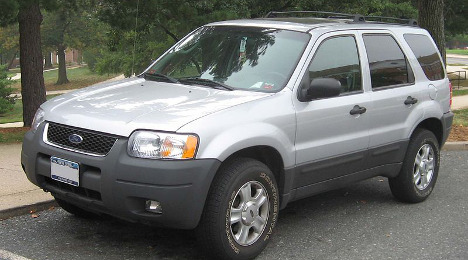
By far the larger of the two campaigns is for 385,762 Ford Escape vehicles from the 2001 through 2004 model years. Ford is making the recall to address a potential subframe corrosion issue that may cause the lower control arm to separate, potentially resulting in diminished steering control.
“We are aware of one crash that may be related to this issue, but no injuries,” Ford spokesperson Kelli Felker said in a message to Auto Remarketing.
“In some of the affected vehicles, a corrosion-related separation of the forward attachment of the lower control arm from the subframe may occur when vehicles are operated in high-corrosion environments associated with road salt use for an extensive time,” Felker continued.
“Separation of the lower control arm from the subframe may result in diminished steering control, increasing the risk of a crash. Dealers will install a reinforcement crossbrace,” she went on to say.
Affected vehicles include certain Ford Escapes originally sold or currently registered in high-corrosion states or provinces that were built during these specific dates:
• 2001 – 2004 Escape: built at Kansas City Assembly from Oct. 22, 1999 through Dec. 19, 2003.
• 2004 Escape: built at Ohio Assembly from May 1, 2003 through Jan. 23, 2004
Affected vehicles were originally sold in or currently registered in the following states: Connecticut, Delaware, District of Columbia, Illinois, Indiana, Iowa, Maine, Maryland, Massachusetts, Michigan, Minnesota, Missouri, New Hampshire, New Jersey, New York, Ohio, Pennsylvania, Rhode Island, Vermont, West Virginia and Wisconsin.
The Canadian provinces mentioned in the campaign are Ontario, Quebec, Prince Edward Island, New Brunswick, Nova Scotia, Newfoundland and Labrador
Ford indicated 348,804 units are in the U.S., 36,799 are in Canada and the remainder are in Mexico and federalized territories.
The other recall from the Blue Oval covers 48,960 vehicles, including the Ford Fusion, Lincoln MKZ, Ford Escape and C-MAX from the 2013 and 2014 model years.
Felker explained the campaign stems from the need to replace seat back frames to address a non-compliance issue with FMVSS 207/CMVSS 207.
“No accidents or injuries have been attributed to this condition,” Felker said.
“Certain front driver and passenger seatback assemblies may have been produced with sub-standard welds joining the seatback recliner mechanism to the seatback frame,” she continued. “Sub-standard recliner to seatback welds may not meet the requirements of FMVSS/CMVSS 207, potentially increasing the risk of injury in certain collisions.
Ford said franchised dealers will replace the suspect seatback frames and associated parts on the potentially affected vehicles.
Affected vehicles include certain vehicles built during these specific dates:
• Ford Fusion/Lincoln MKZ: built at Hermosillo Assembly Plant from Aug. 15, 2012 through Sept. 10, 2013
• Ford Escape: built at Louisville Assembly Plant from June 5, 2012 through Aug. 12, 2013
• Ford C-MAX: built at Michigan Assembly Plant from July 23, 2012 through May 28, 2013
As of March 31, 2014, there are a total of approximately 48,950 vehicles that may be affected (actual 48,960).
Of the total, Ford indicated 3,948 are C-MAX vehicles, 26,539 are Escape vehicles, 17,183 are Fusion vehicles, and 1,290 are MKZ vehicles.
The second recall includes 42,972 units in the U.S., 4,744 units in Canada and the remainder in Mexico and federalized territories.