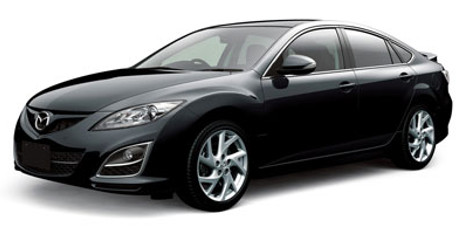
The National Highway Traffic Safety Administration said Mazda North America Operations is recalling 42,000 Mazda6 vehicles from the 2010 through 2012 model years and equipped with a 2.5L engine.
NHTSA explained that in the affected vehicles manufactured between Sept. 14, 2009 and May 2, 2011, spiders may weave a web in the evaporative canister vent hose, blocking it and causing the fuel tank to have an excessive amount of negative pressure.
“Negative pressure could cause the fuel tank to crack resulting in a fuel leak, increasing the risk of a fire,” federal officials said.
NHTSA said Mazda will notify owners, and franchised dealers will reprogram the powertrain control module and inspect and clean the canister vent line. If a web was found in the line, the fuel tank and check valve on canister vent line will be replaced. These repairs will be done free of charge. The recall is expected to begin this month.
In the meantime, owners can contact Mazda at (800) 222-5500 and reference recall campaign No. 7214C.
Cars.com pointed out the same spider problem also led to a recall announced in March 2011 affecting 52,000 model year 2009 through 2010 Mazda6 sedans.
On the same day that fellow domestic automaker Chrysler announced a recall of more than 860,000 SUVs worldwide, the new chief executive officer at General Motors faced a barrage of pointed questions from lawmakers on Capitol Hill for the second day in a row.
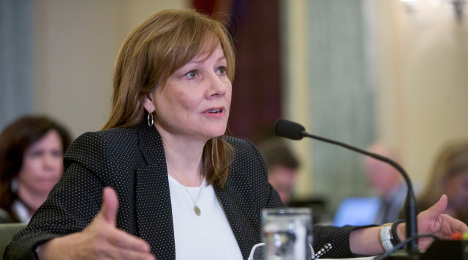
During a hearing on Wednesday orchestrated by the U.S. Senate Commerce Committee’s Subcommittee on Consumer Protection, Product Safety and Insurance, Mary Barra reiterated many of the same positions she articulated during a session in the U.S. House less than 24 hours earlier. The lawmakers are questioning the automaker’s role and response to problems with ignition switches in discontinued models that have been connected to at least a dozen deaths.
“The issues raised in the hearing were tough but fair,” Barra said in a statement after the Senate hearing. “I appreciate the intense interest by the senators to fully understand what happened and why. I am going to accomplish exactly that, and we will keep Congress informed.
“Meanwhile, we will continue doing all we can to repair our customers’ vehicles and rebuild their trust in GM,” she continued.
Nearly all the senators on the committee wanted to know why it has apparently has taken GM several years to conduct a recall of models such as the Chevrolet Cobalt when documents show that some OEM engineers possibly knew about the switches potentially turning into the accessory position and disabling key vehicle functions as long ago as 2005 — and possibly even earlier than that point.
“It took way too long for this to come to our attention and to do the recall. We’ve admitted that. We’ve apologized. It’s tragic there has been lives lost and lives impacted with this event,” Barra told the Senate committee.
Barra also had to defend another element of the entire recall campaign — why replacement ignition switches had the same part number as problematic parts, prompting the automaker to recall another 842,000 units this past weekend.
“I find it completely unacceptable that a part would be changed without a part number identifier being changed,” Barra said on Wednesday. “That is not a process of good engineering. That is not an acceptable process then and it clearly isn’t now. As we do our investigation we will deal with that situation because that’s not acceptable for good engineering principles.
“As I look at the culture of the company during this timeframe, this part was designed in the late ’90s. It went into production in ’03 and went out of production in ’11,” she continued. “The culture of the company at that time had more of a cost-culture focus. I can tell you we have gone through several things since the bankruptcy to create a new culture at General Motors to be focused on the customer, starting with rewriting our values.”
Like during the House hearing on Tuesday, Barra often repeated the ongoing efforts of former U.S. Attorney Anton Valukas to conduct “a thorough and unimpeded investigation of the actions of General Motors.”
Clearly frustrated by Barra’s line of responses, several Senate committee members wanted to know if the investigation and report generated by Valukas would be credible.
“I certainly know he is not going to compromise his reputation for General Motors,” Barra responded. “I have confidence in the fact he’s done other investigations in the past, and we’ve gotten to the truth by going to multiple sources. We will act on it including discharging people.”
Another element that raised the ire lawmakers on Wednesday was when Barra told House members that GM would release “appropriate” findings from Valukas’ report. Barra used a part of Wednesday’s hearing to clarify the company’s stance.
“When I said we would share what’s appropriate, we will share anything and everything that’s related to safety of our vehicles and safety of this incident,” Barra said. “We’ll share it with our customers. We’ll share that with you and our regulators. If we learn things that are broader from a safety perspective, we will share that.
“The only thing, and this is the reason I used what is appropriate, is if there is an issue of competitiveness because we’ve opened everything to Mr. Valukas. Also as an employer, we have responsibilities on privacy to some of our employees as part of our employee agreement. I have to respect that as well,” she continued.
“I appreciate the opportunity to clarify this. Anything remotely related to safety of vehicles or anything that could improve the process and what we could have done better with (the National Highway Traffic Safety Administration) will be readily shared in a transparent process,” Barra went on to say.
Chrysler Recalling SUVs
Before activities cranked up for its domestic counterpart on Capitol Hill, Chrysler Group announced Wednesday that will recall an estimated 867,795 SUVs to install a shield that protects their brake boosters from corrosion caused by undue water exposure.
Chrysler said it launched an investigation after receiving customer feedback about excessive brake-pedal firmness.
“The investigation discovered certain vehicles have brake boosters with small crimp joints, and these joints may exhibit corrosion when exposed to water,” automaker officials said. “Should water enter the boosters through corroded joints — a previously unseen occurrence — brake function may be compromised if the water freezes.”
“Absent water ingestion in sub-freezing conditions, a booster that exhibits corrosion will deliver brake function in compliance with federal safety standards,” officials continued.
Chrysler stressed that vehicles included in this campaign are equipped with a hydraulic boost compensation system that aids performance, even when booster vacuum levels are low.
“However, customers may experience excessive brake-pedal firmness,” Chrysler said.
The automaker added it is aware of one related accident and no injuries.
Chrysler will inspect the brake boosters on certain Jeep Grand Cherokee and Dodge Durango SUVs, model years 2011 through 2014. The boosters may be replaced if their capability has been reduced. All boosters will be equipped with a shield to insulate their crimp joints from water.
The cost of this work will be borne by Chrysler.
Officials calculated that affected customers include an estimated 644,354 in the U.S.; 42,380 in Canada; 21,376 in Mexico and 159,685 outside the NAFTA region.
They will be contacted with instructions to schedule service with Chrysler franchised dealers, officials said.
Customers who remain concerned can call (800) 853-1403.
Chrysler also mentioned brake boosters used in current production vehicles feature crimp joints treated with a special coating designed to resist corrosion.
Much to the frustration of lawmakers who are members of the U.S. House Subcommittee on Oversight and Investigations, General Motors chief executive officer Mary Barra could not give direct answers to pointed questions regarding the automakers handling of ignition switch problems in millions of recalled vehicles.
Barra often referenced the ongoing efforts of U.S. Attorney Anton Valukas to conduct “a thorough and unimpeded investigation of the actions of General Motors.”
When representative after representative wanted Barra to answer either “yes” or “no” as to when the OEM knew problems with ignitions in several discontinued models that weren’t recalled until several weeks ago, the GM boss who has been on the job only for a few months continued to point to the information the OEM is hoping to uncover that’s eventually led to a dozen deaths.
“I’m anxiously awaiting the results of his study,” Barra said several times throughout the course of the more than two hours she testified on Tuesday.
GM announced late last week that it’s expanded its recall to cover more than 2 million units to replace the ignition in units such as the Chevrolet Cobalt. Lawmakers wanted assurance the new parts meet the automaker’s specifications.
“We are working closely with our supplier,” Barra said. “Our executive director responsible for switches is personally looking at the performance of the switches, including 100 percent end-of-line testing to make sure the performance, the safety, the functionality of these switches are safe.”
Barra acknowledged a portion of the investigation GM already shared with the National Highway Traffic Safety Administration that showed the original switches didn’t meet specifications. One committee member asked why GM would even choose to use the part at all.
“I want to know that as much as you do,” Barra said. “That’s not how we do business today.”
Rep. Tim Murphy, a Pennsylvania Republican, opened Tuesday’s hearing by saying the purpose was for “restoring public trust — and giving the families of crash victims the truth about whether this tragedy could have been prevented and if future ones will be prevented.
“This investigation is only three weeks old. We are determined to find the facts and identify the problems so a tragedy like this never happens again,” Murphy continued.
Barra will be back on Capitol Hill today as the Senate conducts a similar hearing.
Analyst Reaction to Barra's Appearence
Even though there could be plenty of negative attention coming GM’s way, Edmunds.com senior analyst Jessica Caldwell isn’t yet aware of a significant consumer backlash.
“Publicity-wise, this has certainly been a trying month for GM, but you wouldn’t know it by looking at its sales,” Caldwell said. “Shoppers still see it as a trusted brand, and they’ve responded to GM's pricing programs and marketing messages throughout the month.
“In fact, shopper consideration for GM brands on Edmunds.com has remained relatively steady in the last 60 days,” she continued. “Nothing in our data shows that shoppers are shying away from new GM vehicles — at least for now.”
After watching the hearing, Kelley Blue Book executive editorial director and analyst Jack Nerad gave his assessment.
“Congressional representatives from both sides of the aisle were relentless in their questioning of GM CEO Mary Barra over the ignition-switch recall issue, but Barra held her ground, claiming that today’s General Motors is a different company from the one whose corporate culture allowed this issue to fester for a decade,” Nerad said. “She noted that GM had already commissioned a full, outside investigation into the issue, but many lawmakers were not satisfied with that as an answer to questions about what did GM know and when did it know about the problem.
“Barra promised that GM would not make the same decisions in the future that it had in the past,” he continued.
Nerad’s KBB colleague, senior analyst Alec Gutierrez, noted that Barra appeared committed to doing the “right thing” during her House testimony.
“We still have much to learn about why GM is only now addressing a decade old design flaw in their ignition switch from the late-model vehicles but Ms. Barra stated time and time again that the new GM will do whatever is necessary to make things right for the customer moving forward,” Gutierrez said. “Of the most damning evidence that some within GM approved of redesigning the ignition switch without changing the part number, Ms. Barra commented that she found this practice unacceptable and would do whatever necessary to ensure the series of events that led us to where we are today never happens again.
“The big unanswered question will be how consumers react to the recall and if they will buy into GM’s newfound focus on safety, but if retail sales volume is any indication, it appears as though consumers continue to have faith in GM,” Gutierrez went on to say.
“GM saw retail sales volume improve by 7 percent this month, outpacing the overall industry average growth pace. While this process is far from over, Mary Barra looks to be committed to getting GM through this crisis by focusing on quality and transparency in a way that they never have previously,” he added.
With General Motors chief executive officer Mary Barra about to face Congressional hearings about the automaker’s handling of recalls, analysts from both AutoTrader.com and iSeeCars.com each conducted investigations to gauge what kind of impact these kinds of campaigns are having.
First, the AutoTrader.com team wanted to see how or if the recent high profile recalls have impacted consumer perception. More specifically, the site conducted a quick poll consisting of a single question survey on AutoTrader.com from March 21 through March 27 to see if the recalls were causing shoppers to lose confidence in the industry’s ability to ensure safe vehicles.
Among those who participated and were aware of the recall:
• 53 percent of AutoTrader.com visitors polled said that they are less confident in the ability of the automotive industry to ensure safe vehicles.
• 39 percent of AutoTrader.com visitors polled said that the recalls have had no effect on their confidence in the automotive industry to ensure safe vehicles.
• 8 percent of AutoTrader.com visitors polled said that they are more confident in the ability of the automotive industry to ensure safe vehicles.
“With so much news circulating around a few big recalls, it makes sense that over 50 percent of shoppers have less confidence right now in the automotive industry’s ability to ensure safe vehicles,” said Mark Strand, market intelligence manager at AutoTrader.com.
“However, history suggests that consumers have a short memory when it comes to recalls and do not seem to hold on to negative perceptions that would influence future purchases of a particular brand,” Strand continued.
Meanwhile, analysts from iSeeCars.com took a long-term view of the issue, too, when they did an extensive study this week.
For a wide array of automakers, the site analyzed recall data from the National Highway Traffic Safety Administration and compared it to sales data for the same period between 1980 and 2013.
“Factoring in the manufacturer’s sales allowed us to make an apples to apples comparison across larger and smaller manufacturers and to ensure a fair assessment for both,” iSeeCars.com analysts said.
“Just to clarify, when the rate says 0.38, this means that for every 100 cars sold, 38 were recalled,” they went on to explain.
The chart below tracked the findings:
|
|
1985-1994
|
1995-2004
|
2005-2014
|
|
Manufacturer
|
Rate
|
Rank
|
Rate
|
Rank
|
Rate
|
Rank
|
|
Mercedes-Benz
|
0.45
|
6
|
0.52
|
2
|
0.38
|
1
|
|
Mazda
|
0.40
|
4
|
1.00
|
8
|
0.55
|
2
|
|
Kia
|
0.54
|
9
|
0.96
|
7
|
0.68
|
3
|
|
BMW
|
1.31
|
13
|
0.90
|
5
|
0.87
|
4
|
|
Nissan
|
0.26
|
1
|
1.20
|
11
|
0.90
|
5
|
|
Mitsubishi
|
0.84
|
12
|
1.77
|
14
|
0.90
|
6
|
|
Subaru
|
0.68
|
10
|
0.84
|
4
|
0.92
|
7
|
|
General Motors
|
0.46
|
7
|
1.02
|
9
|
0.96
|
8
|
|
Chrysler Group
|
0.33
|
3
|
1.82
|
15
|
0.98
|
9
|
|
Volkswagen
|
1.64
|
14
|
1.18
|
10
|
1.08
|
10
|
|
Hyundai
|
1.67
|
15
|
0.83
|
3
|
1.15
|
11
|
|
Ford
|
0.52
|
8
|
1.40
|
12
|
1.31
|
12
|
|
Volvo
|
0.73
|
11
|
1.49
|
13
|
1.32
|
13
|
|
Honda
|
0.42
|
5
|
0.94
|
6
|
1.41
|
14
|
|
Toyota
|
0.26
|
2
|
0.26
|
1
|
1.67
|
15
|
In the past four days, General Motors expanded its recall to cover more units with potential faulty ignitions and announced campaigns for two newer models, including one associated with an abrupt stop-sale. That’s added more than 2 million units to the over 3 million units the automaker has recalled since the entire ignition turmoil first surfaced about a month ago.
Developments such as these ones prompted CNW Research to reconstruct recall data as far back as 1971 to determine the consumer appeal impact.
Since 1971, CNW found that there have been 66 million vehicles recalled industrywide, counting only what the firm deemed to be “major events.” In the same timeframe, CNW determined a diminishing number of new-vehicle intenders say they will avoid the recalled model in favor of an alternative.
After reviewing the information and including it in his March Retail Automotive Summary, CNW president Art Spinella said, “it becomes clear that Americans are becoming increasingly callous toward recalls.”
Spinella mentioned that recalls back in the 1970s and 1980s ended up being quite important.
“For example nearly 40 percent of potential GM product buyers said they would alter their new-vehicle choice because of an engine mount failure that received significant media attention,” he said.
“By 2004, the impact of a faulty and dangerous tailgate malfunction was able to impact on 16 percent of those planning to buy a new GM pickup with barely 22 percent of new-truck shoppers even aware of the recall,” he continued.
Spinella pointed to three reasons why this shift in consumer behavior has occurred.
“First, corporate responses have moved from immediate denial of a problem or minimization of the fault to almost instant immediate corporate reaction (Toyota’s new quality chief, for example) and GM’s CEO apology,” he said.
“Second, conventional media no long plays a recall story for days or even weeks as was the case in the past,” he continued. “Third, with incentives at growing levels and marketing dollar to back up awareness of those deals, consumers take their eyes off of the recall ball and instead look for a deal.”
More Ignition Switch Developments
The newest recall announcement from GM might be pushing CNW to consider another recall impact analysis.
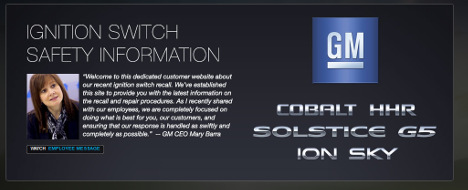
Late last Friday, GM said it will replace the ignition switch in all model years of its Chevrolet Cobalt, HHR, Pontiac G5, Solstice and Saturn Ion and Sky in the U.S. since faulty switches may have been used to repair the vehicles.
The parts are at the center of the company’s recently announced ignition switch recall, which originally extended through the 2007 model year.
Officials indicated about 95,000 faulty switches were sold to dealers and aftermarket wholesalers. Of those, about 90,000 were used to repair older vehicles that were repaired before they were recalled in February.
“Because it is not feasible to track down all the parts, the company is taking the extraordinary step of recalling 824,000 more vehicles in the U.S. to ensure that every car has a current ignition switch,” the automaker said. “GM is unaware of any reports of fatalities with this group of vehicles where a frontal impact occurred, the front air bags did not deploy and the ignition is in the ‘accessory’ or ‘off’ position.”
As with the earlier recalls, GM explained that if the torque performance is not to OEM’s specification, the ignition switch may unintentionally move from the “run” position to the “accessory” or “off” positions, leading to a loss of power. The automaker pointed out the risk may be increased if the key ring is carrying added weight or if the vehicle goes off road or experiences some jarring event. The timing of the key movement out of the “run” position relative to when the sensing algorithm of a crash may result in the air bags not deploying, increasing the potential for occupant injury in certain kinds of crashes.
Until the recall has been performed, customers are urged to remove all items, including the key fob, from their key rings, leaving only the vehicle key.
“We are taking no chances with safety,” GM chief executive officer Mary Barra said. “Trying to locate several thousand switches in a population of 2.2 million vehicles and distributed to thousands of retailers isn’t practical. Out of an abundance of caution, we are recalling the rest of the model years.
“We are going to provide our customers with the peace of mind they deserve and expect by getting the new switches into all the vehicles,” Barra continued..
GM records indicate the service parts may have been used for ignition repairs in:
—2008-2010 Chevrolet Cobalts
—2008-2011 Chevrolet HHRs
—2008-2010 Pontiac Solstice
—2008-2010 Pontiac G5
—2008-2010 Saturn Sky
Owners who may have had a suspect part installed will receive a letter the week of April 21. GM dealers will replace their ignition switch free of charge as parts become available. Customers who paid to have their ignition switches replaced will be eligible for reimbursement.
Dealers, distributors and other parts customers were to be told about the recall beginning Monday.
“The expansion of GM's ignition switch recall shows the automaker wants to address every potentially affected vehicle,” Kelley Blue Book senior analyst Karl Brauer said. “This move continues the proactive stance Mary Barra and GM have displayed since the recall first broke in February. It seems highly unlikely these later models would be impacted by the faulty ignition switch plunger, but it’s possible, and GM appears focused on removing any chance of this problem occurring in the future.”
Jack Nerad, executive editorial director and senior analyst for Kelley Blue Book, shared a similar take on the situation.
“The latest action by General Motors makes clear that it is pulling out all the stops in making certain that this problem comes to a quick end,” Nerad said. “By replacing switches that have potentially been replaced, it demonstrates that this is not business as usual for GM.”
Three More Separate GM Recalls
Meanwhile, GM also made two other recall announcements late last Friday and another one on Monday.
GM will conduct a safety recall of 2014 Chevrolet Silverado 1500 and GMC Sierra 1500 pickups, and 2015 Chevrolet Suburban and Tahoe and GMC Yukon and Yukon XL SUVs equipped with a 6-speed automatic transmission.
The recall will involve approximately 490,200 trucks and SUVs.
GM determined that these vehicles may have a transmission oil cooler line that is not securely seated in its fitting.
“If the line is not securely seated and transmission oil leaks from the fitting, the oil could contact a hot surface and result in a vehicle fire. GM is aware of three incidents and no injuries,” officials said.
GM dealers will inspect the fittings for leaks. GM anticipates mailing the first owner letter the week of April 28, 2014.
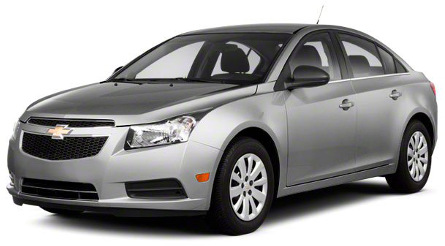
Furthermore, GM is recalling certain 2013 and 2014 Chevrolet Cruzes with 1.4L turbo gasoline engines to replace a right front axle half shaft that can fracture and separate without warning during normal driving.
“The interconnecting tubular bar on the front right axle half shaft on some of these vehicles may not meet GM specification and could fracture and separate. If this occurs while driving the vehicle, steering and braking control would be maintained. However, the vehicle would lose power to the wheels and would coast to a stop,” officials said.
“If a vehicle with a fractured half shaft is parked on an incline without the parking brake applied, the vehicle could move unexpectedly, resulting in a possible crash or injury to pedestrians,” the continued.
GM is aware of several dozen half shaft fractures through warranty data covering about 172,000 cars and about 2,500 service parts in the U.S. that were used to fix Cruzes with manual transmissions that were recalled in September 2013.
“GM is unaware of any crashes or injuries related to this condition. Repairs will be made free of charge,” officials said.
Before making the official recall announcement, reports surfaced last Friday that GM told its dealers to stop selling this Cruze model. But then by the end of the day, GM revealed the recall.
Finally, GM informed the National Highway Traffic Safety Administration on Monday that it would recall more than 1.3 million vehicles in the U.S. that may experience a sudden loss of electric power steering assist.
“If power steering assist is lost, a message displays on the Driver Information Center and a chime sounds to inform the driver,” officials said. “Steering control can be maintained because the vehicle will revert to manual steering, but greater driver effort would be required at low vehicle speeds, which could increase the risk of a crash.
Models subject to safety recall are the:
— Chevrolet Malibu: All model-year 2004 and 2005, and some model-year 2006 and model-year 2008 and 2009 vehicles
— Chevrolet Malibu Maxx: All model-year 2004 and 2005, and some 2006 model year
— Chevrolet HHR (Non-Turbo): Some model-year 2009 and 2010 vehicles
— Chevrolet Cobalt: Some model-year 2010 vehicles
— Saturn Aura: Some model-year 2008 and 2009 vehicles
— Saturn ION: All model-year 2004 to 2007 vehicles
— Pontiac G6: All model-year 2005, and some model-year 2006 and model-year 2008 and 2009 vehicles
— Service parts installed into certain vehicles before May 31, 2010 under a previous safety recall
Depending on the vehicle, GM said will replace free of charge either the power steering motor, the steering column, the power steering motor control unit or a combination of the steering column and the power steering motor control unit. Customers who previously paid for repairs of these parts would be eligible for reimbursement.
In addition, 309,160 non-turbocharged Chevrolet HHRs from the 2006-2008 model years (and several hundred 2009 models) and 96,324 Saturn IONs from the 2003 model year that are not subject to these recalls will be given lifetime warranties for replacement of the electronic power steering motor.
“With these safety recalls and lifetime warranties, we are going after every car that might have this problem, and we are going to make it right,” said Jeff Boyer, vice president of GM global vehicle safety. “We have recalled some of these vehicles before for the same issue and offered extended warranties on others, but we did not do enough.”
The 2004-2007 Saturn ION, the 2009-2010 Chevrolet HHR and the 2010 Chevrolet Cobalt are included in previously announced recalls for ignition switches that may not meet GM specification for torque performance.
The automaker indicated repairs for the ignition switch and power steering assist may require separate dealership visits depending on parts availability.
GM expects to take a charge of up to approximately $750 million in the first quarter, primarily for the cost of recall-related repairs announced in the quarter. This amount includes a previously disclosed $300 million charge for three safety actions announced on March 17 and the ignition switch recall announced Feb. 25.
Barra Coming to Capitol Hill
Late on Monday, GM released the written testimony Barra is scheduled to give today during a hearing orchestrated by the U.S. House Committee on Energy and Commerce Subcommittee on Oversight and Investigations. It’s the first of two days lawmakers are expected to question the new GM boss.
“More than a decade ago, GM embarked on a small car program. Sitting here today, I cannot tell you why it took years for a safety defect to be announced in that program, but I can tell you that we will find out,” Barra is expected to tell Congress. “When we have answers, we will be fully transparent with you, with our regulators, and with our customers.
“As soon as l learned about the problem, we acted without hesitation,” she continued. “We told the world we had a problem that needed to be fixed. We did so because whatever mistakes were made in the past, we will not shirk from our responsibilities now and in the future. Today’s GM will do the right thing.
“That begins with my sincere apologies to everyone who has been affected by this recall, especially to the families and friends of those who lost their lives or were injured. I am deeply sorry,” Barra goes on to say.
The rest of what Barra’s written testimony can be found here.
In a message to Auto Remarketing late Friday, General Motors confirmed another widely reported negative development for the domestic OEM — that it issued a stop sale of the Chevrolet Cruze from the 2013 and 2014 model years equipped with 1.4-liter turbo engines.
GM spokesperson Alan Adler indicated the bulletin sent to franchised stores late on Thursday covers about a third of the Cruzes in dealer inventory.
“We will share an updates as they become available,” Adler said with offering any further specifics as to why the vehicles no longer should be sold.
This development comes just days before new chief executive officer Mary Barra will testify on Capitol Hill. Both the U.S. House and Senate are planning hearings in regard to the recall of older vehicles with ignition problems that led to a dozen deaths because the units stalled unexpectedly and disabled airbags.
“With GM still in the midst of trying to resolve the recall related to faulty ignition switches on the Chevrolet Cobalt and other legacy models, the last thing they need is a major issue with one of their current high volume production models, in this case, the Chevrolet Cruze,” Kelley Blue Book senior analyst Alec Gutierrez said.
“Although details as to why they have halted sales on the 1.4 liter turbo Cruze remain scarce, it does appear as though GM is being very proactive by issuing a stop sale on one of their most popular models,” Gutierrez said. “This could be an example of how the ‘new’ GM will handle potential safety issues moving forward. Rather than sweep this one under the rug until the ignition switch news stories subside, they have decided to tackle the issue head on to ensure potentially unsafe vehicles don’t end up in the driveways of unsuspecting consumers.
“The stop sale could impact GM’s sales performance in April if not resolved quickly, although it is far too early to gauge the total scope of the impact until additional details are known,” he went on to say.
Along with the recall of 1.6 million older models for that ignition problem, GM also recently announced a campaign covering more than 1 million late-model Cadillac and Buick vehicles as well as Chevrolet and GMC cargo vans.
Furthermore, Barra tapped 40-year GM veteran Jeff Boyer for the newly created position of vice president of global vehicle safety whose first priority will be to quickly identify and resolve product safety issues.
“The timing of this stop sale order might appear unfortunate given the publicity surrounding GM's ignition switch recall, but it actually illustrates a new approach by the automaker,” KBB senior analyst Karl Brauer said.
“Rather than waiting for a full understanding and planned fix for the Cruze, GM is apparently stopping sales at the first sign of a problem to remove the potential of endangering customers. With the recent appointment of a global safety chief, it’s possible we’ll see more of these pre-emptive moves by General Motors,” Brauer went on to say.
Toyota Recalling Older Avalons
In other recall news, Toyota Motor Sales USA announced last week that it will conduct a voluntary safety recall of approximately 119,000 Avalon sedans from the 2003 and 2004 model years.
In the involved Toyota Avalon vehicles, officials explained certain circuits within the airbag control module may be susceptible to damage if exposed to electrical noise from other electrical components.
“In some instances, front airbag(s) and/or seat belt pre-tensioners could inadvertently deploy,” Toyota said.
“Dealers will remedy the condition by adding an electrical noise filter to the airbag control module,” the automaker continued.
Toyota indicated owners of vehicles subject to these recalls will receive a notification by first class mail.
Detailed information is available to customers at www.toyota.com/recall and by calling the Toyota Customer Experience Center at (800) 331-4331.
Tesla Reinforces Model S Safety Equipment
Tesla took steps to improve the safety of its all-electric vehicles to the point the National Highway Traffic Safety Administration closed an investigation last week without asking the OEM to make recall of the 2012 and 2013 Model S.
Tesla raised the vehicle’s ground clearance and added protective plates for the lithium ion battery pack that powers the vehicle.
“Tesla’s revision of vehicle ride height and addition of increased underbody protection should reduce both the frequency of underbody strikes and the resultant fire risk,” NHTSA said.
Last year, two vehicle fires stemming from puncture damage to the battery pack triggered the NHTSA investigation, prompting Tesla to defend the vehicle’s safety and eventually resulting in the recent action
“As the empirical evidence suggests, the underbody shields are not needed for a high level of safety. However, there is significant value to minimizing owner inconvenience in the event of an impact and addressing any lingering public misperception about electric vehicle safety,” Tesla chairman and CEO Elon Musk wrote in a blog post on the company’s website.
“With a track record of zero deaths or serious, permanent injuries since our vehicles went into production six years ago, there is no safer car on the road than a Tesla. The addition of the underbody shields simply takes it a step further,” Musk continued.
Starting with vehicle bodies manufactured as of March 6, Tesla indicated all vehicles have been outfitted with a triple underbody shield. Tesla service will also retrofit the shields, free of charge, to existing vehicles upon request or as part of a normally scheduled service.
It’s a move Brauer cheered.
“Tesla has added substantial protective measures to the underbody of the Model S. This combination of upgraded materials should further reduce the chance of a battery pack puncture. Given that no punctures have been reported over the past four months, even without the added protection, this fix should eliminate the potential of a battery-pack fire under all but the most extreme circumstances,” Brauer said.
And Gutierrez echoed many of the points mentioned by his KBB colleague.
“Tesla’s decision to add a shield over their battery pack demonstrates that they are committed to ensuring the safety of the Model S for the long term. This should help to further reduce the chance of a fire by protecting the battery pack from being punctured should a Model S hits debris similar to the previously reported cases that resulted in fires last year,” he said.
“Although NHTSA’s investigation remains underway, it’s good to see that Tesla has been hard at work trying to find ways to further reduce risk for owners of their flagship product,” Gutierrez added.
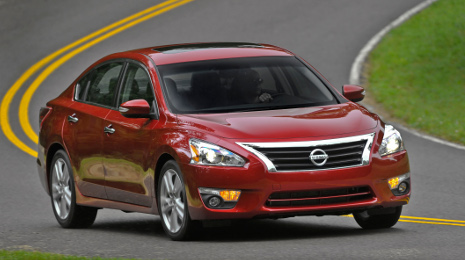
The National Highway Traffic Safety Administration said Nissan North America is recalling nearly 1 million units to correct a software issue associated with the airbag system.
The vehicles included in the campaign are Nissan’s Altima, LEAF, Pathfinder and Sentra from the 2013 and 2014 models years, the 2013 NV200 also known as the Taxi as well the 2013 Infiniti JX35 and 2014 Infiniti Q50 and QX60 vehicles.
NHTSA indicated the total amount of vehicles to be recalled totals 989,701.
“In the affected vehicles, the occupant classification system (OCS) software may incorrectly classify the passenger seat as empty, when it is occupied by an adult,” federal officials said.
“If the OCS does not detect an adult occupant in the passenger seat, the passenger airbag would be deactivated,” they continued. “Failure of the passenger airbag to deploy during a crash (where deployment is warranted) could increase the risk of injury to the passenger.”
Nissan told NHTSA it will notify owners, and franchised dealers will update the OCS software, free of charge. The recall is expected to begin in the middle of next month.
In the meantime, owners may contact Nissan at (800) 647-7261.
As Capitol Hill hearings about the recalled units get closer, NADA Used Car Guide indicated wholesale prices for vehicles included in the General Motors ignition switch controversy haven’t moved much beyond industry averages.
Analysts told Auto Remarketing on Wednesday that prices for the 2005 through 2007 Chevrolet Cobalt changed little based on data through March 17. The range went from a 0.7-percent dip for the 2007 model to a 0.6-percent uptick for the 2006 model.
NADA UCG also mentioned price movement for other recalled models — including the Chevy HHR, Pontiac G5 and Saturn Ion — has been similar to what’s been recorded on the Cobalt, “meaning, there’s been no evident drop-off. Prices have either been flat or up.”
By comparison, analysts pointed out prices for all 2007 model year compact cars fell by 1.8 percent.
“So Cobalt prices haven’t moved any more acutely than prices for the compact car segment as a whole,” NADA UCG said.
“Again, please keep in mind the low starting price associated with older vehicles leads to more pronounced changes in percent terms,” analysts continued. “Also note that the more extreme change in overall compact car segment prices could be due to changes in mix (meaning, a larger proportion of cheaper or rougher condition models being sold at auction).
“Similar to what was stated last week, it doesn’t appear as if GM’s ignition switch recall has had a discernable impact on wholesale auction prices of affected models to date,” they went on to say.
NADA UGC also reiterated that outside of industry media, the GM recall of more than 1.3 million older units doesn’t seem to be getting much play.
“Headlines continue to be dominated by Malaysia Airlines Flight 370 and Russian action in the Ukraine. This is likely helping recalled model prices at the moment,” analysts said.
That media attention is likely to change next week when GM chief executive officer Mary Barra testifies during hearings hosted by both the U.S. House and Senate.
Sen. Claire McCaskill of Missouri is chairman of the Senate Commerce Committee’s Subcommittee on Consumer Protection, Product Safety and Insurance. The subcommittee has jurisdiction over several federal agencies, including the National Highway Traffic Safety Administration.
“We have to get to the bottom of this,” McCaskill said. “We need to find out who dropped ball and put millions of Americans at risk. We also need to make sure that General Motors and federal regulators are doing everything they can to prevent more tragedies like this now and in the future.”
Barra has apologized multiple times for the entire situation, which has been tied to more than 12 deaths. This week, the automaker rolled out a special website dedicated to the recall. Vehicle owners who visit www.GMIgnitionUpdate.com will find details about the vehicle recalled, when replacement parts will be available and phone numbers owners can call to ask more questions.
“Our focus is on making this recall go smoothly for all of you who are affected and to make sure we improve our process so this does not happen again,” Barra said Wednesday in a blog post on the automaker’s website.
If there is going to be any impact on the wholesale values of models included in General Motors’ recent ignition-switch recalls, it will likely occur either this week or next, NADA Used Car Guide’s Larry Dixon told Auto Remarketing in an interview Thursday afternoon.
If it doesn’t happen during this time frame, it likely won’t happen at all, barring some unforeseen developments like another expansion in the recall or additional deaths revealed.
Dixon was talking with Auto Remarketing about his recent post to the Used Car & Truck Blog, where he dissects the potential wholesale price movements stemming from the GM ignition recall actions that have impacted around 1.6 million units.
As the post outlines and Auto Remarketing has reported, GM first recalled 2005 through 2007 model-year Chevrolet Cobalts and the 2007 model-year Pontiac G5 cars in February to correct a condition with the ignition switch that may allow the key to unintentionally move or switch to the “accessory” or “off” position, turning off the engine and most of the electrical components on the vehicle.
Then, GM would broaden the scope of the action two weeks later, recalling these models for the same issue: model-year 2006 and 2007 Chevrolet HHR and Pontiac Solstice vehicles; model-year 2003 through 2007 Saturn Ion vehicles; and 2007 Saturn Sky vehicles. All told, there were more than 1.3 million vehicles in the U.S. impacted by these two February ignition-switch announcements.
(All of these models have been discontinued, Dixon said, and the Pontiac and Saturn brands were cut from GM's lineup years ago. Additionally, GM brought about three unrelated recalls on Monday after an internal safety review that followed the ignition-switch actions).
Dixon said in the blog said this recall doesn’t seem to have had any “discernable impact” on used values of the vehicles invovled in the ignition-switch recalls. When asked why, he explained that there has to be a “bright media spotlight” on a recall — i.e. large, national mainstream media exposure — for used-car values to be impacted. That kind of media exposure has only recently started to ramp up, hence why any impact (if it’s going to happen) will occur in the next week or so.
To give a bit of recent historical context, Dixon gave the example of the Toyota unintended acceleration recalls in 2009 and 2010 — which included nearly 11 million cars around the globe — where it took three weeks after the largest of the actions for significant used pricing impacts to surface.
Granted, that recall was much larger, but had similar media exposure as GM’s, Dixon notes.
In the blog, Dixon also breaks down the current movement in wholesale values of models affected by the ignition switch recall.
Interesting enough, the 2005–2007 Cobalts (which have the most units included) saw their AuctionNet prices climb by 4 percent to 14 percent through the week of March 10 (on a two-week moving average basis).
Dixon says this movement has been on par directionally with what’s been happening with all 2007 model-year compact cars: a seasonally induced 7-percent hike. (He stressed that low prices of older cars tends to result in “more pronounced changes in percent terms.”)
“Price movement for other recalled models — Chevy HHR, Pontiac G5, Saturn ION, etc. — has been more-or-less directionally similar to what’s been recorded on the Cobalt (meaning, there’s been no evident drop-off; prices have either been flat or up),” Dixon said in the post.
“Going forward, it wouldn’t be surprising to see prices of affected models shift downward in reaction to the recall, especially if the intense media spotlight on the subject persists for an extended period of time,” he added.
Dixon's full blog post can be read here.
As the recall scrutiny coming against General Motors intensifies and two German automakers outlined separate smaller campaigns, Toyota closed the book on a federal recall investigation that first brought plenty of negative attention to the OEM more than five years ago.
On Wednesday, Toyota said it reached an agreement with the U.S. Attorney’s Office for the Southern District of New York to resolve its investigation initiated in February 2010 into the communications and decision-making processes related to the company’s 2009 and 2010 recalls to address potential “sticking” accelerator pedals and floor mat entrapment.
As part of the agreement, Toyota will make a payment totaling $1.2 billion.
“At the time of these recalls, we took full responsibility for any concerns our actions may have caused customers, and we rededicated ourselves to earning their trust,” Toyota Motor North America chief legal officer Christopher Reynolds said. “In the more than four years since these recalls, we have gone back to basics at Toyota to put our customers first.”
“We have made fundamental changes across our global operations to become a more responsive company — listening better to our customers’ needs and proactively taking action to serve them,” Reynolds continued:
“Specifically, we have taken a number of steps that have enabled us to enhance quality control, respond more quickly to customer concerns, strengthen regional autonomy and speed decision-making.,” he said. “And, we’re committed to continued improvement in everything we do to keep building trust in our company, our people and our products. Importantly, Toyota addressed the sticky pedal and floor mat entrapment issues with effective and durable solutions, and we stand behind the safety and quality of our vehicles.
“Entering this agreement, while difficult, is a major step toward putting this unfortunate chapter behind us. We remain extremely grateful to our customers who have continued to stand by Toyota. Moving forward, they can be confident that we continue to take our responsibilities to them seriously,” Reynolds went on to say.
Some industry analysts have compared all of the turmoil Toyota faced with this incident to what GM might encounter regarding the recall of more than 1.3 million older vehicles because of ignition switch issues that have led to more than a dozen deaths, according to federal investigations. New GM chief executive officer Mary Barra is reportedly going to testify at an upcoming congressional hearing as lawmakers and regulators want to know why the OEM reportedly knew about problems almost 10 years ago but didn’t take action until last month.
“The timing of this settlement is interesting because it means the government will finalizing the last major automotive recall, Toyota’s unintended acceleration, just as it gears up for the next big recall related to GM’s ignition switch,” Kelley Blue Book senior analyst Karl Brauer said.
“The cases are similar because they both involve a long, established history of vehicle incidents that took years to identify and address,” Brauer continued. “While the $1 billion price tag represents a costly resolution, Toyota can put this issue behind it to fully focus on current and future challenges in a highly competitive market.
“Conversely, GM is just getting started on its path to resolution and will probably be working to resolve the ignition switch recall for some time,” he added.
Campaigns from Porsche & Volkswagen
Meanhile, Volkswagen recently notified the National Highway Traffic Safety Administration of an upcoming voluntary safety recall affecting approximately 150,201 Volkswagen Passat vehicles from the 2012 and 2013 model years.
The automaker said it is possible that, in instances where the hood is closed roughly (or dropped from a certain height), the resulting vibration and/or impact can cause a low-beam headlight bulb to lose electrical contact.
“If this happens, a warning in the instrument cluster will immediately alert the driver. Failing illumination of the low beam bulb may lead to reduced visibility of the vehicle,” VW said.
The automaker said there have been no crashes or injuries reported regarding this issue.
Volkswagen plans to notify all owners of affected vehicles and will instruct them to arrange for an appointment with an authorized franchised dealer.
At no cost to customers, dealers will install an improved bulb fitting. Additionally, the hood bumpers will be inspected and, if necessary, adjusted or replaced to help prevent the hood from contacting the headlight assembly if the hood is dropped during closing.
“Volkswagen considers the safety and satisfaction of its consumers and passengers to be a top priority,” the company said.
Meanwhile, according to the Kicking Tires blog from Cars.com, Porsche is taking a major step to protect owners of the 2014 911 GT3.
According to the post, Porsche first investigated the cause of engine fires in two European editions of this model and told owners of all 785 vehicles worldwide to stop driving their vehicles. The report indicated the engine fire resulted from loose fasteners on the engine's connecting rods — part of what fastens the base of the rod to the crankshaft — which allowed oil from the crankshaft bearings to leak.
Now, Cars.com reported that the automaker says it will replace the engines in all of those vehicles.
Cars.com noted Porsche called the move a “corrective action derived from intensive internal analyses.” No recall has been issued by NHTSA.
Toyota Recaps Recent Moves
Turning back to the settlement announced by Toyota, officials highlighted the substantive actions the company has voluntarily taken since the recalls for unintended acceleration include:
• Launching rapid-response teams to investigate customer concerns quickly.
• Committing $50 million in 2011 to launch Toyota’s Collaborative Safety Research Center in Ann Arbor, Mich., to partner with more than 16 universities and institutions across North America on safety advances that will be shared to benefit the entire auto industry and society.
• Expanding its network of field quality offices to improve customer responsiveness.
• Enhancing regional autonomy, including naming the first American CEO of Toyota’s North American Region as well as chief quality officers for North America and other principal regions — all of whom have direct lines to president Akio Toyoda.
• Improving its quality control process.
• Extending the new vehicle development cycle by four weeks to help ensure reliability and safety.
Under the agreement, Toyota explained the U.S. government agrees to defer prosecution and then dismiss its case, as long as Toyota makes the required monetary payment, abides by the terms of the agreement and continues to cooperate with regulators.
The automaker added the agreement also provides for an independent monitor to review policies and procedures relating to Toyota’s safety communications process, its process for internally sharing vehicle accident information and its process for preparing and sharing certain technical reports.
Toyota said it will record $1.2 billion in after-tax charges against earnings in the fiscal year ending March 31 for costs relating to the agreement.
Strong Reaction From Federal Officials After Agreements
Along with the $1.2 billion penalty, the Department of Justice announced a deferred prosecution agreement with Toyota under which the company admits that it misled U.S. consumers by concealing and making deceptive statements about two safety issues affecting its vehicles, each of which caused a type of unintended acceleration.
“Rather than promptly disclosing and correcting safety issues about which they were aware, Toyota made misleading public statements to consumers and gave inaccurate facts to members of Congress,” Attorney General Eric Holder said.
“When car owners get behind the wheel, they have a right to expect that their vehicle is safe,” Holder continued. “If any part of the automobile turns out to have safety issues, the car company has a duty to be upfront about them, to fix them quickly, and to immediately tell the truth about the problem and its scope. Toyota violated that basic compact.
“Other car companies should not repeat Toyota’s mistake: a recall may damage a company’s reputation, but deceiving your customers makes that damage far more lasting,” Holder went on to say.
Transportation Secretary Anthony Foxx insisted that safety is his department’s top priority.
“Throughout this recall process, NHTSA investigators worked tirelessly to make sure that Toyota recalled vehicles with defects causing unintended acceleration, and to determine when they learned of it, and as we learned today, they succeeded in this effort in spite of extraordinary challenges,” Foxx said.
“Today’s penalties follow NHTSA’s own record civil penalties of more than $66 million — together, they send a powerful message to all manufacturers to follow our recall requirements or they will face serious consequences,” he added.
U.S. Attorney Preet Bharara for the Southern District of New York closed with a strong opinion about what prosecutors believe Toyota did.
“Toyota stands charged with a criminal offense because it cared more about savings than safety and more about its own brand and bottom line than the truth,” Bharara said “In its zeal to stanch bad publicity in 2009 and 2010, Toyota misled regulators, misled customers, and even misstated the facts to Congress.
“The tens of millions of drivers in America have an absolute right to expect that the companies manufacturing their cars are not lying about serious safety issues, are not slow-walking safety fixes and are not playing games with their lives,” Bharara went on to say. “Companies that make inherently dangerous products must be maximally transparent, not two-faced. That is why we have undertaken this landmark enforcement action. And the entire auto industry should take notice.”