Until Tuesday, the only comments new General Motors chief executive officer Mary Barra made about the massive recall of older models because of problem ignitions came through the automaker’s public relations department. Then for a few minutes at GM’s headquarters, Barra faced the press in what might be a prelude to the scores of questions likely to come.
“I want to start by saying again how sorry I am personally and how sorry General Motors is for what has happened,” Barra said according to this report from Bloomberg. “Clearly lives have been lost and families are affected, and that is very serious. We want to just extend our deep condolences for everyone’s losses.”
Barra likely will be talking about the recall for some time as a congressional hearing is ahead as well as investigations by the National Highway Traffic Safety Administration and the Department of Justice. Regulators and lawmakers all want answers about exactly when GM knew about the problems with recalled units such as the Chevrolet Cobalt, Pontiac G6 and Saturn Ion and why official announcements didn’t come until last month for models that haven’t been manufactured for several years.
Karl Brauer, senior analyst for Kelley Blue Book, cheered Barra for facing a throng of reporters on Tuesday.
“While it arrived much sooner than anyone predicted, this recall crisis is an opportunity for GM’s Mary Barra to step up and resolve the issue in a very public and progressive manner,” Brauer said.
“Her proactive stance thus far, which includes creating a new global vehicle safety chief and stating she is willing to testify before Congress, indicates she recognizes this opportunity and is willing to embrace it,” he continued. “As a critical first step in Barra’s role as CEO it will set the tone of her leadership, as well as the automaker's image, going forward.”
In that same Bloomberg report, Barclays auto analyst Brian Johnson said how Barra how she handles this crisis will define her as CEO.
“This is the Tylenol moment for her, where the company is either seen as quickly and thoroughly addressing the issue or seen as dragging its feet and denying reality,” Johnson said in a Bloomberg interview from Chicago. “She was kind of quiet the first week, but this week they seem to be stepping up.”
With automaker officials also reportedly meeting with congressional staff members today, General Motors chief executive officer Mary Barra named a new vehicle safety leader whose first priority will be to quickly identify and resolve product safety issues.
Tapped for the position effective immediately is Jeff Boyer, who has been named to the newly created position of vice president of global vehicle safety.
The OEM said Boyer, who has spent nearly 40 years in a wide range of engineering and safety positions at GM, will have global responsibility for the safety development of GM vehicle systems, confirmation and validation of safety performance, as well as post-sale safety activities, including recalls.
Officials indicated Boyer will provide regular and frequent updates on vehicle safety to Barra, senior management and the GM board of directors.
“Jeff’s appointment provides direct and ongoing access to GM leadership and the board of directors on critical customer safety issues,” Barra said. “This new role elevates and integrates our safety process under a single leader so we can set a new standard for customer safety with more rigorous accountability.
“If there are any obstacles in his way, Jeff has the authority to clear them. If he needs any additional resources, he will get them,” she continued.
From an industry analysis perspective, Kelley Blue Book executive market analyst Jack Nerad shared these thoughts on the appointment: “The appointment of Jeff Boyer to the new position of vice president of global vehicle safety is another indication of how seriously General Motors and CEO Mary Barra are in dealing with the safety recalls that have recently engulfed the company.
“There is no doubt that the GM wants to send a strong message that this is not business as usual. Instead it signals the company is changing its ways in identifying and dealing with potential safety issues,” Nerad continued.
Boyer will report to John Calabrese, vice president of global vehicle engineering and become a member of global product development staff, led by Mark Reuss, executive vice president of global product development, purchasing and supply chain.
“Nothing is more important than the safety of our customers in the vehicles they drive,” Boyer said. “Today’s GM is committed to this, and I’m ready to take on this assignment.”
Boyer began his GM career in 1974 as a co-op student and has held several senior engineering, safety and process leadership positions, including the role of a total vehicle integration engineer. His most recent position since 2011 was executive director of engineering operations and systems development.
Before that juncture, Boyer served as executive director of global interior engineering and safety performance where he was responsible for the performance and certification of GM vehicle safety and crashworthiness.
Boyer’s appointment comes as Bloomberg reported here that GM officials are meeting with congressional staff members today. The report stated the U.S. House Energy and Commerce Committee called the meeting to discuss GM’s admission that the automaker knew of flaws for more than a decade before recalling six U.S. models because of ignition problems, according to Bloomberg sources who asked not to be identified because the talks are private.
General Motors rolled out three separate recalls on Monday as a result of the request by new chief executive officer Mary Barra for a comprehensive internal safety review following the ignition switch recall that’s created so much turmoil for the domestic OEM.
Included in GM’s newest campaigns are:
— 303,000 Chevrolet Express and GMC Savana from the 2009 through 2014 model years with gross vehicle weight under 10,000 pounds
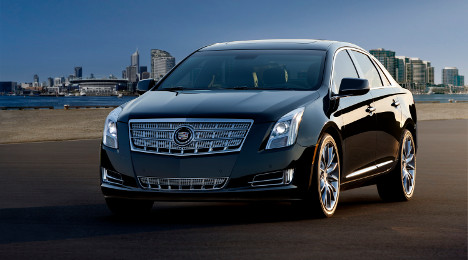
— 63,900 Cadillac XTS full-size sedan from the 2013 and 2014 model years
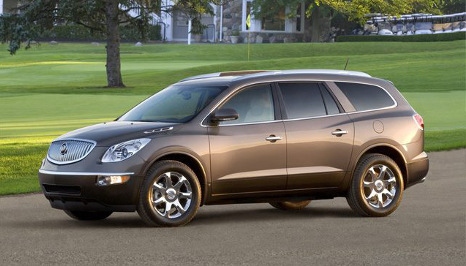
— 1.18 million Buick Enclave and GMC Acadia models from the 2008 through 2013 model years, Chevrolet Traverse from the 2009 through 2013 model years, and Saturn Outlook from the 2008 through 2010 model years
“I asked our team to redouble our efforts on our pending product reviews, bring them forward and resolve them quickly,” Barra said. “That is what today’s GM is all about.”
GM explained the full-size vans with gross vehicle weights of 10,000 pounds or less do not comply with a head impact requirement for unrestrained occupants, requiring a rework of the passenger instrument panel material.
The automaker indicated unsold vehicles have been placed on a stop delivery until development of the solution has been completed and parts are available. Customers will be notified at that time. Repairs will be made at no charge to customers.
In the XTS, the OEM said a brake booster pump can create positive pressure within the wiring harness attached to the pump relay. This pressure can lead to the dislodging of a plug in the brake booster pump relay, allowing corrosive elements to enter the connector and form a low-resistance short that could lead to overheating, melting of plastic components and a possible engine compartment fire.
GM said it is aware of two engine compartment fires in unsold vehicles at dealerships and two cases of melted components.
With respect to the Enclave, Traverse, Acadia and Outlook, the OEM determined the vehicles are equipped with a service air bag warning light in the driver information center.
Officials said ignoring the service air bag warning light will eventually result in the non-deployment of the side impact restraints, which include driver and passenger seat-mounted side air bags, front center air bag (if equipped), and the seat belt pretensioners.
To repair the condition, GM said franchised dealers will remove the driver and passenger side air bag wiring harness connectors and splice and solder the wires together.
“Today’s announcement underscores the focus we’re putting on the safety and peace of mind of our customers. We are conducting an intense review of our internal processes and will have more developments to announce as we move forward,” Barra said.
GM expects to take a charge of approximately $300 million in the first quarter primarily for the cost of the repairs for the three safety actions and the previously announced ignition switch recall.
Fitch: Greatest Recall Risk to GM Is Reputational
Before Monday’s announcement, Fitch Ratings analysts in Chicago said GM’s recall of faulty ignition switches in 1.6 million vehicles primarily presents reputational risk for the company, although follow-on costs could mount
“A federal probe examining the length of time it took GM to announce the recall and the near-continuous stream of negative headlines related to it could exacerbate the situation. We do not currently expect the recall to have an effect on GM's ratings or Outlook, but we are monitoring the situation closely as more information becomes available,” Fitch analysts said.
“We believe direct costs associated with the recall, along with any associated fines, will likely be manageable and will not affect the company's credit profile. The cost of the part itself is estimated to be low and changing the switch should be a simple and relatively quick process. We estimate that the cost of the recall could be less than $100 million. We also view GM's offer of a $500 incentive toward the purchase of a new vehicle as having a limited financial impact on the company as well,” they continued.
Fitch estimated that any potential fine from the National Highway Traffic Safety Administration would probably be capped at $35 million, which the firm views as quite manageable given the company’s cash generating capabilities.
“Legal costs associated with lawsuits that are likely to be filed are unknown and could pose more of a risk,” Fitch said. “Lawsuits tied to accidents that occurred prior to GM’s 2009 bankruptcy may be considered prepetition claims, but the actual impact on GM will depend on how the courts view these claims and what legal avenues might be available to plaintiffs. Any settlement costs could be significant as well. GM will also incur legal costs associated with its own internal investigation into the matter.”
Fitch went on to contend that the longer term impact to the brand will largely depend on the company’s handling of the situation.
“The vehicles affected by the recall have all been out of production for a number of years, and there are no indications that any vehicles currently in production have similar issues,” Fitch said.
“However, potential customers could be concerned about the internal workings of the company that led to the apparent delay in deciding to recall the vehicles. GM’s management will need to convince potential customers that the internal issues that led to the recall delay have been rectified.
“Indirectly, another cost of the recall is the time that senior management will spend focusing on it. GM currently has several significant restructuring actions underway globally, as well the launch of key new vehicles,” analysts went on to say. “The recall is likely to divert some management attention away from these other important activities at a critical time for the company. That the company's top senior leaders are relatively new to their positions could add to the challenges.”
Honda Odyssey Recall
Meanwhile, Honda said this past weekend that it will voluntarily recall 886,815 Odyssey minivans from the 2005 through 2010 model years in the United States to replace the fuel strainer, free of charge.
“Prolonged exposure to acidic chemicals, which are present in some car wash formulas and the general environment, along with high ambient temperatures, may cause the cover of the fuel strainer to deteriorate prematurely, resulting in cracks in the material,” Honda officials said.
“Cracks in the cover of the fuel strainer, which is located on the top of the fuel tank, could lead to a fuel smell being present or, in extreme cases, to leaking fuel, increasing the risk of fire. Honda is not aware of any crashes, injuries or fires related to this issue, which was discovered during warranty repairs,” they continued.
Since these vehicles are no longer in production, the OEM indicated that updated fuel strainers will not be available in sufficient quantity until the summer.
As a result, officials said owners of included vehicles will be informed of the recall in an initial notification letter to be sent in late-April to early-May, and at that time, owners of vehicles from the affected model years will also be able to determine if their specific vehicles will later require repair by visiting www.recalls.honda.com or by calling (800) 999-1009 and selecting option No 4.
Honda added a second notification letter will be sent to owners in the summer when updated parts become available for their specific vehicles, inviting them to schedule an appointment for repair at their local Honda dealer.
Two Recalls from Chrysler
Chrysler Group recently announced two separate recalls, covering about 70,000 units.
The larger of the two campaigns is for approximately 49,400 full-size cars to inspect and replace, if necessary, various headlamp components.
The OEM explained customer service data led Chrysler engineers to investigate reports similar to those that prompted a 2012 recall. The campaign involved police vehicles equipped with jumper harnesses and other components that overheated.
“Chrysler Group was not aware of any related injuries or accidents in the 2012 campaign, nor is the company aware of any injuries or accidents involving the current recall,” officials said.
Chrysler said will inspect and replace, if necessary, headlamp jumper harnesses and bulbs, or headlamp assemblies, on certain model-year 2011 and 2012 Dodge Chargers equipped with halogen headlamps. Repair costs will be borne by the company.
Affected are approximately 43,450 vehicles in the U.S., 2,850 in Canada, 375 in Mexico and 2,700 outside the NAFTA region.
Furthermore, Chrysler is recalling another approximately 19,500 cars to upgrade their transmission software.
The automaker said its engineers launched an investigation after reviewing reports that some vehicles equipped with dual dry clutch automatic transmissions would not shift readily out of park and/or their transmissions did not receive, or were slow to receive, an intended gear selection.
Chrysler said it is unaware of any related injuries or accidents.
“The investigation discovered the function of one microcontroller component may be compromised by certain temperature extremes. A software update resolves the issue,” officials said.
Affected are certain 2014 Fiat 500L models, of which approximately 20 percent are in dealer hands.
Repair costs will be borne by the company. Affected customers — approximately 18,100 in the U.S. and 1,400 in Canada — will be contacted and advised when to schedule service.
“Of the total, an estimated 200 vehicles may require shift-module replacement to ensure hardware-software compatibility,” officials said.
Chrysler indicated that customers with questions about either recall can call (800) 853-1403.
As published reports indicate the Department of Justice is preparing a criminal investigation of General Motors and the recall of more than 1.3 million older, discontinued models because of ignition problems, the automaker is offering $500 to owners of these units to put toward the purchase or lease of a new vehicle.
But what about the units that might be in dealer inventory? There could be dozens of these units sitting on “value auto” lots of franchised groups or at buy-here, pay-here stores that cater to deep subprime buyers who might be a good fit for a Chevrolet Cobalt, Pontiac G6 or Saturn Ion — some of the models included in GM’s campaign.
Edmunds.com senior analyst Jessica Caldwell told Auto Remarketing on Wednesday that, “I don’t know how well informed people are about the situation, especially considering that these are older cars so they’re not necessarily commanding top dollar anyway. For example, the Saturn Ion goes back as far as 2003 so you’re talking about an 11-year-old vehicle. How much are you really going to be able to take off the resale value than what it costs at this moment?
“You mention buy-here, pay-here; people who are in that situation usually that’s their only option to buy a car so there’s not as much selection or flexibility in pricing because they’re kind of boxed in,” Caldwell continued. “I wouldn’t necessarily suspect a huge hit on some of these residuals just because these vehicles are so much older. The Cobalt, for example, was a compact car, not a $100,000 car to start with so it’s rather devalued at this point anyway.”
Auto Remarketing posed a similar question to Kelley Blue Book senior market analyst Alec Gutierrez, who offered some specific figures for used-car managers to consider.
“We don’t believe that this offer or the recall itself will have much, if any, impact on the values of impacted vehicles in the long term,” Gutierrez said. “With that being said, dealers with inventory currently on their lot might see a short-term drop in what consumers are willing to pay for these vehicles, at least until we are sure that the fix being implemented completely addresses the issue at hand.
“In other words, we may see a short-term dip in values for these vehicles, likely less than 3 percent, but long term we don’t expect to see sustained downward pressure on these values,” Gutierrez said.
More Details of $500 Offer
Details of GM’s plan to give $500 to these vehicle owners came to light when the National Highway Traffic Safety Administration posted GM’s responses to regulators’ questions on the agency’s website on Wednesday.
The OEM told NHTSA this offer toward the purchase or lease of a new Chevrolet, Buick, GMC or Cadillac vehicle is valid only until April 30. Meanwhile, the automaker is still making plans to offer repair services at franchise dealerships to replace the ignition body.
OEM officials said recall announcements went out to vehicle owners this week, repeating recommendations to use only the key itself be used in the ignition. Investigations determined extra weight on key rings may allow the key to unintentionally move or switch to the “accessory” or “off” position, turning off the engine and most of the electrical components on the vehicle.
GM expanded this noteworthy recall on Feb. 25. In addition to 2005 through 2007 Chevrolet Cobalts and Pontiac G5 as well as the Pontiac Pursuit that’s sold in Canada only, GM separately recalled 2003 through 2007 Saturn Ions, 2006 through 2007 Chevrolet HHRs, and 2006 through 2007 Pontiac Solstice and 2007 Saturn Sky models.
The affected U.S. vehicle population, including those vehicles first recalled on Feb. 13, totals 1,367,146.
But that amount isn’t a new list for the business development centers at GM dealerships to leverage to move new metal.
In a message to Auto Remarketing, GM spokesperson Alan Adler said, “In keeping with our commitment to help customers involved in this recall, a special $500 cash allowance is available to purchase or lease a new GM vehicle.
“We have been very clear in our message to U.S. dealers that this allowance is not a sales tool and it is only to be used to help customers in need of assistance. Neither GM nor its dealers will market or solicit owners using this allowance,” Adler said.
More Government Investigations & Potential Impact
On Wednesday, Bloomberg reported the Department of Justice is opening a criminal investigation into how GM handled this recall as data about problems with these vehicles reportedly dates back almost 10 years. That development comes on the heels of NHTSA seeking answers to more than 100 questions that had to be met before a deadline that would have triggered a $35 million fine as well as the U.S. House Energy and Commerce Committee organizing a future hearing on Capitol Hill.
“GM is under a microscope,” Caldwell said. “Following bankruptcy, a lot of people have strong opinions about that company that they might not have about other auto companies. Also with the new CEO, Mary Barra, I think she’s also very scrutinized like Marissa Mayer at Yahoo. Sort of every move she makes is widely reported. I think everyone is looking at this very closely.”
In the Bloomberg report published here, AutoPacific analyst Dave Sullivan took a similar view.
“Barra is getting her feet thrown right into the fire,” Sullivan told Bloomberg. “There’s no way she is going to come out of this looking like some kind of hero. The best thing is to be honest and upfront and hopefully put this to bed as quickly as possible.”
Despite the recent news, Caldwell indicated Edmunds.com search traffic of users looking at Chevrolet models hasn’t waned since the recall.
“It seems as if people are still interested in the brand. They’re not necessarily departing in droves away from it. But it does seem like this whole situation is gaining steam.” Caldwell said. “I think a lot of folks tune out recalls until they hit this fever pitch. When you start hearing of a Department of Justice investigation, I think that’s when people start to tune in a little bit more.
“The next few weeks, we’ll see if there will be any impact. Other companies have gone through this. While they may feel the pinch in the short term, it seems like there isn’t any real long-term effect,” she continued.
Gutierrez expects a similar fate for GM like what happened to Toyota as it navigated the unintended acceleration turmoil seven years ago.
“GM’s decision to offer a $500 cash allowance for owners of recalled GM products is one that is well-intended, but not likely to make much of an impact on the perception of their brand or the likelihood of a current owner to remain in the fold,” he said. “For those already considering a new GM this is certainly an added bonus, but is likely not enough to make a significant difference to those that worry about the longevity and reliability of GM’s current and future products.
“This seems similar in scale to the Toyota and Ford/Firestone recalls of the past. In each of those cases, values took a short-term hit before rebounding and leveling off long term,” Gutierrez added.
General Motors already has a list of demands from the National Highway Traffic Safety Administration about its recent recall for discounted models with faulty ignitions. Soon, both the automaker and the regulator will be compelled to answer questions on Capitol Hill.
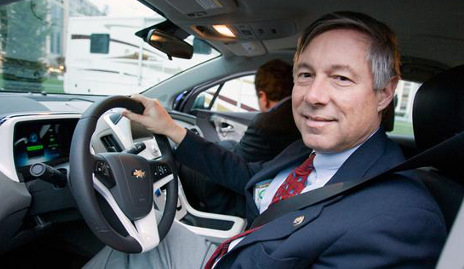
U.S. House Energy and Commerce Committee chairman Rep. Fred Upton, a Republican from Michigan, announced late Monday that the committee has opened an investigation into the response by both GM and NHTSA to consumer complaints related to problems with ignition switches in certain vehicles.
GM has already recalled of six vehicle models to correct the problems and stated that the defects may have been linked to 31 frontal crashes and 13 fatalities.
While the recalls were first announced last month, Upton noted a recent New York Times report claims NHTSA has received a large number of complaints expressing safety concerns and describing these problems spanning the past 10 years.
It has been more than a decade since the enactment of the Transportation Recall Enhancement, Accountability, and Documentation (or TREAD) Act, which was passed by Congress to enhance the federal government’s ability to protect against auto safety defects.
Upton authored the TREAD Act after spearheading an extensive investigation into the Ford-Firestone tire malfunctions as then-chairman of the Oversight and Investigations Subcommittee. The legislation was intended to improve communication between auto manufacturers and the federal government and increase NHTSA’s ability to collect and analyze information about potential threats. In light of GM’s safety problems, the House Energy and Commerce Committee will seek a progress report on the TREAD Act’s implementation and pursue answers relating to the complaints filed with NHTSA, the response, and the eventual recalls.
“To better protect the public, I sponsored the TREAD Act back in 2000 so that regulators and companies could better identify safety defects in vehicles before they escalated into an ongoing problem. Congress passed this bipartisan solution with the intention of exposing flaws and preventing accidents and fatalities. Yet, here we are over a decade later, faced with accidents and tragedies, and significant questions need to be answered,” Upton said.
“Did the company or regulators miss something that could have flagged these problems sooner? If the answer is yes, we must learn how and why this happened, and then determine whether this system of reporting and analyzing complaints that Congress created to save lives is being implemented and working as the law intended,” he continued.
“Americans deserve to have the peace of mind that they are safe behind the wheel. We plan to seek detailed information from both NHTSA and GM and will hold a hearing in the coming weeks,” Upton went on to say.
Auto Remarketing published details here about what NHTSA is seeking from GM about how problems were discovered and reported.
When Chrysler Group notifies approximately 18,700 owners of certain Jeep Grand Cherokee and Dodge Durango SUVs from the 2012 and 2013 model years about a recall announced last week, the automaker will have to follow a new protocol established by the National Highway Traffic Safety Administration.
NHTSA explained that all OEMs now must use a distinctive label on required mailings that notify owners of recalled vehicles or equipment. Federal officials explained the requirement was introduced to help owners instantly distinguish important recall notices arriving in their mailboxes from other assorted correspondence and avoid mistakenly discarding critical safety notices.
“Recalls only work if consumers are aware of them,” U.S. Transportation Secretary Anthony Foxx said. “This new label will allow consumers to quickly recognize recall notices mailed to their homes so they can act quickly to get their vehicles, child restraints, tires, or other motor vehicle equipment fixed.”
These special notices will be used soon, as Chrysler is recalling approximately 25,250 SUVs to improve pedal feel during certain aggressive braking maneuvers.
Chrysler indicated a supplier raised a concern about the performance of a component that accommodates Ready Alert Braking, a Chrysler safety system that primes brakes for optimal response when making a sudden stop.
“Brake function was neither lost nor out of compliance with regulation, but pedal feel was not consistent with customer expectations,” the automaker said.
“Chrysler Group is unaware of any related injuries or accidents,” the OEM continued. “An investigation discovered brake-fluid flow was being restricted too much. A software update optimizes flow and restores appropriate pedal feel.”
Affected are certain Jeep Grand Cherokee and Dodge Durango SUVs from model-years 2012 and 2013 — approximately 18,700 in the U.S., 825 in Canada, 530 in Mexico and 5,200 outside the NAFTA region.
Chrysler Group will notify affected customers when to schedule service. Repair costs will absorbed by the company.
Customers who remain concerned can call (800) 853-1403.
When U.S. owners receive a mailed notice about this Chrysler recall, NHTSA officials emphasized the material is supposed to help protect consumers from “misleading sales and marketing materials that mimic, in their wording and presentation, legitimate safety recall alerts from manufacturers that can lead owners to purchase costly products and services that have no connection to a legitimate safety recall.
“As always, NHTSA will monitor for inappropriate materials and will work closely with state and other federal authorities, including the FTC, to address enforcement issues,” the agency went on to say.
Federal officials pointed out the new label on safety recall notices is one of many new tools designed to improve recall notification for consumers.
NHTSA also launched an app for Android devices that can provide users free access to key safety information, including recalls and safety performance.
The new Android SaferCar app, which joins the iOS app for the iPhone, iPad and iPod Touch released last year, can help consumers find recall information and up-to-date vehicle safety information, search the agency’s 5-Star Safety Ratings for vehicles by make and model and subscribe to automatic notices about vehicle recalls, among other features.
NHTSA acting administrator David Friedman said the app can make it simple to submit complaints to NHTSA regarding possible safety problems with a particular vehicle. Friedman mentioned app users can receive important news and information from NHTSA on tire and child seat recalls, as well.
“NHTSA plays an important role in investigating potential safety defects, overseeing all safety recalls and warning the public of potential safety issues involving vehicles, car seats, tires and other equipment,” Friedman said.
“By providing new and convenient tools for consumers, we hope to empower owners to take action to ensure their vehicles and loved ones are safe,” he added.