Recall Masters has a new partnership to integrate its real-time vehicle recall lookup solution into Record360’s vehicle condition reporting app. And this collaboration aims to help dealers and rental agencies avoid claims disputes when putting drivers in vehicles during recalls.
The enhanced transparency and real-time recall updates are brought by the integration, following new legislation concerning vehicle safety recalls passed just last summer.
Lawmakers addressed rental car agencies need to fix any and all open safety defects before renting out vehicles to customers.
The legislation established a fine of $5,000 if a consumer is put into a rental or loaner vehicle with an outstanding recall, Recall Masters explained in a news release announcing the partnership.
“Countless damage disputes impact relationships, customer satisfaction, and cause negative reviews,” said Recall Masters president Chris Miller. “Vehicle condition and claims management processes is dependent on paper or low-fidelity digital reporting and Record360 fills the gap with a modern solution.”
Dealerships and car rental agencies can automate their asset management by digitizing vehicle conditions reviews via Record360’s condition reporting software.
The software is designed to help prevent customers being put into a rental or loaner vehicle with an existing recall, as well as end customers’ ability to claim they did not cause damage to a loaner or rental.
“Our integration with Record360 ensures that the user is informed of any open recall in real-time while the initial inspection is done. This helps build trusting relationships between automotive dealers or car rental agencies and their customers,” added Miller.
RepairPal.com released analysis on Tuesday that blends together the site’s data with information from the National Highway Traffic Safety Administration to find the cities most impacted by vehicle recalls.
The site organized user data relating to owner inquiries website user activity by ZIP code seeking repair information during the past five years along with recall data collected from NHTSA to compare against the top researched vehicles in each specified metropolitan area.
The area most impacted by recalls turned out to be Pittsburgh, with data suggesting 60.85 percent of vehicle researchers in the Steel City area seeing a recall.
“Pittsburgh's affinity for Chevys may be partially to blame for their high recall score,” site officials said. “In particular, two of the vehicles RepairPal users in this city researched most frequently include the 2008 Chevrolet Cobalt and the 2006 Chevrolet Aveo — both of which were hit with relatively large recalls in the past five years.”
Pittsburgh was followed by the New York City metropolitan area with a rate of 60.13 percent. In New York, RepairPal users more frequently research commonly recalled vehicles like the Honda Accord and CR-V, as well as the Toyota Corolla and Camry.
"In addition, the BMW 325i seems to have a surprising following in this region. The fact that it was part of a recall twice — in 2013 and in 2016 — didn’t help New York's score here,” site officials said.
The third metro area most affected by recalls was Edison, N.J., with 59.90 percent, followed by Newark, N.J., with 59.12 percent and Boston with 59.06 percent.
Some of our lowest recall scores came from out West, as RepairPal.com found that Seattle residents saw the lowest recall rates at 42.62 percent, followed by Portland, Ore., at 42.68 percent and Las Vegas at 46.27 percent.
Some other notably low recall rates were found in the Virginia area, with Richmond and Virginia Beach showing scores of 46.47 percent and 46.70 percent, respectively.
To view more of the report along with the methodology of compiling the data used, go to this website.
Millions of vehicles in the U.S. and Canada have been recalled because of the Takata airbag saga, plus a wide array of other issues.
Now Daimler made the move to recall more than 3 million vehicles in Europe to fix emission issues stemming from the diesel engine in certain Mercedes-Benz models.
The Daimler board of management on Tuesday approved a comprehensive plan for diesel engines with the objective of investing about 220 million euros. The plan comprises a substantial expansion of the current service action for vehicles in customers’ hands as well as a rapid market launch of a completely new diesel engine family.
Since March, Mercedes-Benz has offered its customers of compact-class cars an improvement in NOx emissions for one engine version. The automaker indicated approximately 45 percent of those vehicle have been updated. A voluntary service action is also being carried out for V-Class customers — with approximately 75 percent of the vehicles in Germany.
In order to effectively improve the emissions of additional model series, Daimler decided to extend the service action to include more than three million Mercedes-Benz vehicles. For this purpose, the company’s engineers are making use of latest knowledge gained during the development of the new family of diesel engines.
The measures to be taken for nearly all EU5 and EU6 vehicles in Europe will be carried out in close cooperation with the German regulatory authorities, according to a news release from Daimler.
The company emphasized that the service actions involve no costs for the customers. The implementation of the measures will be starting in the next weeks. Due to the large number of vehicles, this will continue over a longer period of time.
“The public debate about diesel engines is creating uncertainty — especially for our customers. We have therefore decided on additional measures to reassure drivers of diesel cars and to strengthen confidence in diesel technology,” said Dieter Zetsche, chairman of the board of management of Daimler AG and head of Mercedes-Benz Cars.
“We are convinced that diesel engines will continue to be a fixed element of the drive-system mix, not least due to their low CO2 emissions,” Zetsche added.
Another development in the ongoing Takata airbag recall saga might mean some vehicles at the auction you frequent — or perhaps even units already in your dealership inventory — could be equipped with airbags that need replacing.
The National Highway Traffic Safety Administration on Tuesday said 2.7 million vehicles from Ford, Nissan and Mazda have an additional inflator type that will pose a safety risk if not replaced. Officials explained new Takata test data identified this expansion of the ongoing recalls, which have led to the repairs of more than 8.1 million units so far.
The agency noted this development is the first recalled inflator type that uses a desiccated phase-stabilized ammonium nitrate (PSAN), but this is not a recall for all desiccated PSAN inflators.
“Currently, there are no reports of injuries or fatalities resulting from the rupture of a desiccated PSAN inflator,” NHTSA said in a document sent to Auto Remarketing. “In fact, currently there are no known ruptures of this inflator with this desiccant, though the testing data clearly shows that the propellant is degrading and is on the path towards ruptures in the future.
Most of the units included in the latest development are from Ford — about 2.2 million units — according to federal officials.
“We’re aware of Takata’s submission, and we have been in regular contact with the agency on the issue. Importantly, we aren’t aware of any incidents, and test data doesn’t suggest any issues,” Ford said in a statement sent to Auto Remarketing without disclosing the specific models that are included. Blue Oval officials have five days to reply to NHTSA’s announcement.
Meanwhile, Nissan was more specific in its statement to Auto Remarketing.
The automaker said approximately 626,805 Nissan Versa hatchbacks and sedans from the 2007 through 2012 model years in the U.S. and Canada are affected with approximately 515,394 units being sold in the U.S.
“Although there have been no known incidents associated with this specific inflator type, Nissan Group is implementing this recall out of an abundance of caution,” the OEM said.
“Nissan Group is committed to the safety and security of our customers and their passengers,” the company continued while adding that owners of affected vehicles will be notified within the next 60 days with additional instructions.
The remaining units — about 6,000 — are from Mazda.
And federal officials acknowledged their work involving Takata appears to be far from being completed.
“NHTSA’s investigation remains active. Additional desiccated inflators are still being investigated to determine whether or not they are defective,” officials said. “Bottom line: If there are inflators out there that are unsafe, NHTSA expects their recall.
“It’s important that the public check for recalls and get the free air bag replacement if their vehicle is affected,” they went on to say while noting that Takata is required to prove the safety of these inflators by the end of 2019.
Dealer Marketing Services, the makers of ProMax Unlimited, recently released Recall Check, a new feature for the platform that tracks open recalls.
Recall Check was designed to monitor a dealer’s entire inventory for open recalls.
“Recall Check gives our dealer customers a foolproof way to track all pertinent recall information and use it to generate service business and protect their dealership from liability,” ProMax chief executive officer John Palmer said in a news release.
Recall Check is powered by the provider of automotive recall news and data Recall Masters, which draws on a comprehensive OEM database.
“As the automotive market evolves, Recall Masters is continually evolving our systems and database to provide the most valuable information possible to promote sound dealership business initiatives and consumer safety,” Recall Masters chief executive officer Christopher Miller said.
“The integration with ProMax’s Recall Check feature allows their customers to easily access unique recall data and information through the existing ProMax workflow. ProMax dealers can focus on efficiently managing recalls and attending to the needs of consumers through a familiar, proven platform. The partnership with ProMax is one more step in the right direction to ensure consumer safety and to mitigate the risk of automotive-related injuries.”
The new solution uses an automatic nightly process and checks for recalls anytime a trade is booked in or a vehicle is delivered.
“Recall Check is a tool that can be leveraged in a number of ways,” added ProMax chief operations officer Shane Born. “The automatic monitoring ensures that all recall information is available; dealers can craft different strategies based on their local laws and individual prerogatives. Savvy dealers can use Recall Check to better evaluate trades, book in inventory, or funnel customers to their service lane in some instances. There are also options to print recall disclosure forms on sold vehicles. It has everything a dealer needs. There are a lot of possibilities.”
Additionally, all recall information obtained by Recall Check is tracked across several reports dealerships can access at their leisure.
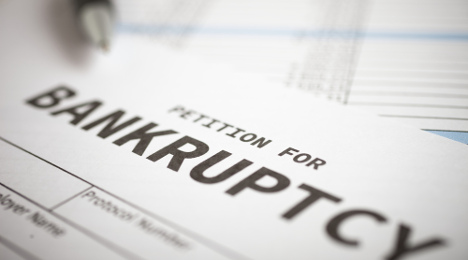
As expected, embattled airbag maker Takata late on Sunday filed for bankruptcy protection in the United States and confirmed plans to sell many of its assets to Michigan-based Key Safety Systems (KSS).
Company news releases indicated Takata’s Chapter 11 bankruptcy process in the U.S. will be completed in the first quarter of 2018 as an agreement in principle to sponsor a restructuring plan for the sale of substantially all of Takata’s global assets and operations to KSS for an aggregate purchase price of approximately $1.588 billion, subject to certain adjustments at closing.
While a myriad of tasks need to be completed in both the U.S. and Japan, dealerships, auctions, wholesalers and vehicle owners who have a model with a defective airbag, the road ahead still remains uncertain.
“This will be a long process under the best of circumstances, and Takata going bankrupt, though not surprising, only adds to a potential increase in the time it takes to replace tens of millions of airbags,” Karl Brauer, executive publisher for Autotrader and Kelley Blue Book, said in commentary provided to the media.
“It’s likely every automaker involved in this recall will have to subsidize the process because the value of Takata’s assets isn’t enough to cover the costs of this recall. There are still far more questions than answers on this topic,” Brauer continued.
Under the agreement, KSS said it will acquire substantially all of Takata’s assets, except for certain assets and operations that relate to the company’s manufacturing and sale of phase-stabilized ammonium nitrate (PSAN) airbag inflators. It is expected that Takata’s PSAN-related operations will be run by a reorganized Takata following the transaction closing and eventually will be wound down.
Takata added that it expects to continue to meet demand for airbag inflator replacements without interruption.
No matter what the parts companies are declaring, Autotrader executive analyst Michelle Krebs reiterated points she also made as serious conjecture about Takata’s bankruptcy plans began to surface earlier this month.
“Owners of cars with recalled Takata airbags should be assured, even though Takata has filed for bankruptcy, the manufacturer of their vehicles ultimately is responsible for providing replacement airbags,” Krebs said in the same commentary.
“Owners need to contact their dealer for free repairs. The replacement airbags may not be immediately available, but they should get their name on a list for when they become available,” she continued.
Meanwhile, another wrinkle in the entire matter is the civil lawsuits. Peter Prieto is the court-appointed chair lead counsel for the consumer plaintiffs in the Takata Airbag Product Liability Litigation.
“We do not expect a Takata bankruptcy to have an impact on claims pending against auto manufacturer defendants for their role in the airbag scandal,” Prieto said. “Settlement agreements with Toyota, Subaru, BMW and Mazda have already received preliminary approval from the MDL Court, and will accelerate the removal of dangerous airbag inflators from 15.8 million vehicles and compensate consumers for economic losses associated with the recall.
“We will continue fighting for our clients and prosecuting claims against Honda, Ford, Nissan, as well as Takata, to make sure all affected consumers receive the recourse they deserve,” he added.
Prieto mentioned preliminary approval was granted on June 12 to class action settlement agreements that resolve economic loss claims against BMW, Mazda, Subaru and Toyota. The settlements are pending in the Southern District of Florida as part of the multidistrict litigation currently being overseen by Judge Federico Moreno. A final approval hearing will be held on Oct. 25.
Nonetheless, the top executives at KSS and Takata conveyed upbeat messages about how their companies are moving forward.
“Takata has deep management talent, a dedicated work force and a long history of exceptional customer service,” KSS president and chief executive officer Jason Luo said. “Although Takata has been impacted by the global airbag recall, the underlying strength of its skilled employee base, geographic reach and exceptional steering wheels, seat belts and other safety products has not diminished.
“We look forward to finalizing definitive agreements with Takata in the coming weeks, completing the transaction and serving both our new and long-standing customers while investing in the next phase of growth for the new KSS,” Luo continued.
Takata chairman and CEO Shigehisa Takada added, “KSS is the ideal sponsor as we address the costs related to airbag inflator recalls, and an optimal partner to the company’s customers, suppliers and employees. The combined business would be well positioned for long-term success in the global automotive industry.
“Throughout this process, our top priorities have been providing a steady supply of products to our valued customers, including replacement parts for recalls, and a stable home for our exceptional employees. This agreement would allow that to continue,” Takada went on to say.
And as the company navigates bankruptcy in the U.S. as well as what’s known as civil rehabilitation proceedings in Japan, Takata pointed out that Japanese OEMs have committed to provide Takata with “valuable accommodations and liquidity enhancements.” What’s known as debtor-in-possession (DIP) financing includes a commitment for up to a $227 million revolving credit facility.
Upon approval by the supervisor appointed by the Tokyo Court and approval by the Delaware Court, officials explained financing in Japan and the accommodations and additional liquidity support from the customer group in both Japan and the U.S., along with Takata’s cash flow from operations, are expected to provide Takata with sufficient liquidity to continue to operate its business and serve automotive customers globally in the ordinary course and without any significant disruptions.
“The commencement of civil rehabilitation proceedings in Japan and the Chapter 11 filing in the U.S. should have no effect on the ability of drivers to get replacements for recalled Takata airbag inflators free of charge,” the company said.
As advocates say “hundreds of thousands” of drivers are behind the wheel of vehicles with defective airbags in places like Riverside County in California, multiple online media reports surfaced this week that the maker of those defective airbags — Takata — is expected to file for bankruptcy this month.
The development didn’t necessarily surprise analysts from Kelley Blue Book and Autotrader, but they pondered the question about how automakers and dealerships move forward with this recall campaign if Takata is out of the picture.
“This is the largest, most expensive recall in the history of the automotive industry. Takata’s bankruptcy was almost a foregone conclusion, but the need to replace tens of millions of airbags remains," said Karl Brauer, executive publisher for Autotrader and Kelley Blue Book.
“It’s likely that process will continue throughout Takata’s bankruptcy proceedings and will take years to complete. Its cost will reach far beyond Takata, weighing on the financials of nearly 20 automakers,” Brauer continued.
“It’s a textbook case of what happens when a small number of suppliers service the entire global auto industry. In theory that system saves everyone money, but when a problem like this flares, there’s no escaping the impact,” he went on to say.
Minimizing that impact is the goal of organizations like Airbag Recall: Southern California, a coalition launched this past March in Los Angeles. The aim is to educate communities across southern California about the life-threatening danger posed by unrepaired, recalled airbags.
The group’s latest effort was concentrated in Riverside County, which officials said has an especially high risk due to high temperatures and humidity that exacerbate the defect in the airbag inflator.
“Less than one year ago, a member of our community lost her life when the recalled airbag in her vehicle exploded like a grenade, spraying sharp, metal shrapnel at her face, neck and chest,” Riverside mayor Rusty Bailey said in a news release. “We must work together to address the hundreds of thousands of vehicles that contain defective airbags in Riverside and prevent additional tragedies from occurring on our roadways.”
Michelle Krebs, executive analyst for Autotrader, pinpointed what industry segment must step up now in order to quell concerns that individuals like Bailey are raising.
“Ultimately the responsibility for the Takata airbag recalls rests with the automakers who must figure out how to replace the flawed airbags,” Krebs said. “Presumably, Takata will continue manufacturing airbags throughout the bankruptcy proceedings.
“Longer term, the question is whether Takata, with a new owner, can rebuild trust with automakers to build future business. That will be a daunting task,” she continued. “A plus for Takata is the fact that the number of airbag suppliers has dwindled to a mere few.”
Akshay Anand, executive analyst for Kelley Blue Book, made a couple of additional points about the matter.
“Replacing defective airbags is still the most important issue for manufacturers on the Takata front, and the most important issue for this story as a whole,” Anand said. Beyond that, Takata faces a massive uphill climb, both from a financial and brand image perspective.
“Now that the company’s credibility has been shot, it’s possible the brand may never recover and get back to where it once was,” Anand went on to say.
ELEAD1ONE recently announced a partnership with automotive recall news and data provider Recall Masters to integrate real-time vehicle recall lookup data into the company’s lane management application Service1One.
Getting recall status information via the app during the mobile check-in process not only saves time during the initial inspection stage but prevents potential upsets between dealers and their customers, according to ELEAD1ONE.
“Trust can be a hard thing to establish with service customers. To discover that their vehicle needs to stay in longer for a recall repair – or even worse – that they have a recall which the dealership failed to repair, is not exactly great for customer relations,” Recall Masters president Chris Miller said in a news release.
“Our integration with ELEAD1ONE’s Lane Management Application enables the dealership to inform customers about any open recall in real-time while the initial check-in and inspection are done. This then helps build trusting relationships between automotive dealers and their customers.”
The Service1One lane app provides advisors with customer service tools designed to streamline the lane process.
On the app, advisors can quickly access customer appointment information, service history, pricing menus, inspections and real-time recall information.
Additionally, the line items on the RO Summary Estimate can be easily added or removed so that customers always get an accurate quote.
“We all know that service lanes can get hectic. Our aim is to provide dealers with the tools to increase service efficiency and give customers the ultimate service experience,” said ELEAD1ONE partner Bill Wittenmyer. “With the huge level of vehicle recalls, informing customers of any that affect their vehicle can be a major pain point for most auto dealers. Service departments will greatly benefit from real-time recall status information integrated with our Service1One Lane Management App.”
For more information about ELEAD1ONE’s or the Service1One app, visit http://www.elead-crm.com/products/service/automotive-service-management-service1one/.
The latest development in the Takata airbag story arrived on Thursday and included four automakers, nearly 16 million vehicles and more than $500 million in settlements.
According to a news release, plaintiffs in the Takata Airbag Product Liability Litigation filed class action settlement agreements resolving claims against Toyota, Subaru, Mazda and BMW that will accelerate the removal of dangerous airbag inflators from 15.8 million affected vehicles while also compensating consumers for their economic losses.
The agreement was filed in the U.S. District Court for the Southern District of Florida, Miami Division as part of the multidistrict litigation currently being overseen by Judge Federico Moreno.
Officials explained the proposed settlements totaling $553 million will provide numerous benefits to current and former owners and lessees of the affected vehicles. A portion of the settlement fund is devoted to address the low number of vehicles that have received the recall remedy since the National Highway Traffic Safety Administration (NHTSA) first announced recalls of defective Takata airbags.
As of April 28, according to NHTSA, recall completion rates of total affected airbags were:
— Toyota: 31.89 percent
— Subaru: 31.37 percent
— Mazda: 18.16 percent
— BMW: 16.48 percent
According to the settlement, the lawsuit alleged that these airbag inflators could, upon deployment, rupture and expel debris or shrapnel into the occupant compartment and/or otherwise affect the airbag’s deployment. This settlement does not involve claims of personal injury or property damage, but did show a breakdown of how much each automaker is paying:
— BMW: $131,000,000
— Subaru: $68,262,257
— Mazda: $75,805,050
— Toyota: $278,500,000
Among the benefits provided for in the settlements is a new independent outreach program that seeks to dramatically increase recall remedy completion rates. The program will regularly contact class members through direct mail, phone calls, email, internet ads and social media to educate them about the settlement and incentivize them to receive the recall remedy and exercise their rights under this agreement.
The settlements also provide several other elements, including:
— Compensation to class members for their economic losses resulting from the recall in the form of reimbursement for reasonable out-of-pocket expenses.
— A possible residual distribution payment of up to $500.
— Requirements to provide rental cars to the most at-risk class members while they wait for their recall remedies
— The provision of a customer support program for repairs and adjustments on the replacement inflators, including an extended warranty.
“This agreement achieves our goals of educating consumers about the urgent need to have their recall remedies completed while providing them compensation for their economic losses,” said Peter Prieto, court-appointed chair lead counsel, who along with other members of the plaintiffs’ leadership, negotiated the settlement on behalf of consumers.
“The low number of recalls to-date demonstrates the need for a settlement of this type, and we look forward to accelerating the removal of defective Takata airbags from the roads,” Prieto continued. “We appreciate the efforts of Toyota, BMW, Mazda and Subaru to do right by their customers in reaching these agreements, and we look forward to the court’s approval so implementation can begin soon.”
Officials pointed out that economic loss claims pending against Ford, Honda and Nissan will continue to be prosecuted.
Vehicles subject to this agreement include 9.2 million Toyota vehicles, 2.6 million Subaru vehicles, 2.3 million BMW vehicles and 1.7 million Mazda vehicles. The breakdown of specific models is as follows:
Toyota
2002-2004 Toyota Sequoia
2002-2005 Lexus SC430
2003-2004 Toyota Tundra
2003-2007 GM-Pontiac Vibe
2003-2007 Toyota Corolla (JPN)
2003-2008 Toyota Corolla (NAP)
2003-2008 Toyota Matrix
2004-2005 Toyota RAV4
2005-2006 Toyota Tundra
2005-2007 Toyota Sequoia
2006-2010 Lexus SC430
2006-2011 Toyota Yaris (HB)
2006-2013 Lexus IS
2007-2012 Lexus ES350
2007-2012 Toyota Yaris (SDN)
2008-2014 Lexus IS-F
2008-2015 Scion xB
2009-2013 Toyota Corolla (JPN)
2009-2013 Toyota Corolla (NAP)
2009-2013 Toyota Matrix
2010-2015 Lexus IS250C/350C
2010-2016 Toyota 4Runner
2010-2017 Lexus GX460
2011-2014 Toyota Sienna
2012 Lexus LF-A
2014-2015 Lexus IS250/350
2014-2017 Toyota Corolla (NAP)
2015-2017 Lexus RC350/300/200T
2015-2017 Lexus RC-F
2016 Scion iM
2016-2017 Lexus IS350/300/200T
2017 Lexus GX460
2017 Toyota 4Runner
2017 Toyota iM
Subaru
2003-2006 Subaru Baja
2009-2013 Subaru Forester
2004-2011 Subaru Impreza (including WRX/STI)
2003-2017 Subaru Legacy
2003-2017 Subaru Outback
2006-2014 Subaru Tribeca
2012-2014 Subaru WRX/STI
2005-2006 Saab 9-2X
Mazda
2011-2014 Mazda2
2010-2013 Mazda3
2003-2013 Mazda6
2006-2007 MazdaSpeed6
2007-2012 Mazda CX-7
2007-2015 Mazda CX-9
2004-2006 Mazda MPV
2004-2011 Mazda RX-8
2004-2009 Mazda B-Series
BMW
2006 and 2008-2013 BMW 1 Series
2014-2017 BMW 2 Series
2000-2017 BMW 3 Series
2014-2017 BMW 4 Series
2001-2003 and 2009-2017 BMW 5 Series
2012-2017 BMW 6 Series
2011-2017 BMW X1
2007-2017 BMW X3
2014-2017 BMW X4
2000-2004 and 2006-2017 BMW X5
2007-2017 BMW X6
2014-2017 BMW I8 EV
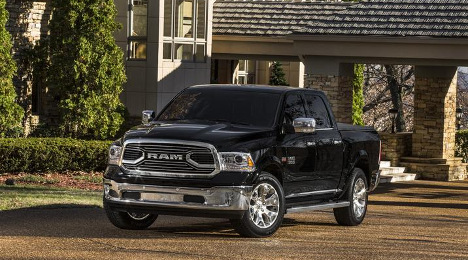
Fiat Chrysler said on Friday that the automaker is voluntarily recalling an estimated 1 million trucks in the U.S. and more than 200,000 units in Canada to reprogram computer modules that help control restraint-system deployment in rollover situations.
Affected vehicles are certain 2013 through 2016 Ram 1500 and 2500 pickups, and 2014 through 2016 Ram 3500 pickups. The automaker said their occupant restraint control modules will be reprogramed with software that affords more robust sensor performance.
The OEM explained its own investigation identified a population of vehicles equipped with modules featuring certain types of sensors. If such a vehicle were subjected to a significant underbody impact, officials found that its module may erroneously conclude the sensor has failed and then activate an instrument-cluster warning light.
The automaker indicated the error code associated with the warning may temporarily disable side air bag and seat belt pretensioner deployment for that ignition cycle, which would then be unavailable in the event of a vehicle rollover. The company pointed out pretensioners reduce seat belt slack during impacts, thereby reducing forward movement of the occupant’s head and torso.
“Deployment suppression is a feature of restraint systems. It serves as a potential safeguard against inadvertent system activation, should a sensor failure actually occur,” the OEM said.
If the warning light is illuminated, Fiat Chrysler noted normal restraint-system function may be restored by turning the vehicle’s ignition to “off,” and then to “on/run.”
“Function restoration may be verified by the absence of a warning light,” the company added.
However, FCA is urging affected customers to follow the instructions on their recall notices. The company is aware of one fatality, two injuries and two accidents that may be related.
The company went on to mention the recall also affects an estimated 216,007 vehicles in Canada, 21,668 in Mexico and 21,530 outside the NAFTA region.
“Affected customers will be advised when they may schedule service,” OEM officials said. “As always, the company urges all customers to use seat belts when operating or riding in any motor vehicle.”
Customers with questions may call the FCA US Customer Care Center at (800) 853-1403.