New York attorney general Eric Schneiderman reached settlements with 104 franchised and independent dealerships, according to an announcement released on Friday.
Empire State officials said vehicles were sold to New Yorkers without disclosing that the units were under recall for “dangerous unrepaired safety issues” such as unintended acceleration, airbag problems, vehicle fires, steering and brake loss and more.
New York’s top law enforcement official indicated the settlement also requires the dealers to provide consumers with advance notice of any existing and unrepaired recall, among other measures.
An investigation by the AG’s office identified dealers that advertised vehicles with unrepaired safety recalls, and officials monitored vehicles covered by safety recalls
As part of the settlements, the participating dealers are required to adhere to a set of guidelines in order to alert consumers that their vehicles may have unrepaired recalls, including the following:
• Dealers that advertise used vehicles online must include information that enables consumers to check the recall status of advertised vehicles; that information includes the SaferCar.gov website operated by National Highway Traffic Safety Administration.
• Dealers who advertise in print or other media must also disclose in the advertisement that the vehicle is subject to a safety recall.
• Dealers must place a decal notice in the window of used cars that include information that allows consumers to check the recall status of the vehicles, including the SaferCar.gov website and mobile application operated by NHTSA.
• Two days prior to any sale, dealers must provide consumers with a copy of the NHTSA recall status report for a vehicle with an unrepaired safety recall, and obtain a written acknowledgment from the consumer.
• Dealers must send notices to customers who have purchased vehicles with unrepaired safety recalls that are still unrepaired, from January 2016 to present. Manufacturers’ franchise dealers must also cover up to five days of a loaner car for consumers if their vehicle requires repairs that will take longer than one day.
Each dealer will also pay a fine of $1,000 to New York State.
“The safety recalls we uncovered were serious — and potentially deadly,” Schneiderman said. “Consumers deserve to know of any unresolved safety issues before buying a car for themselves or their family. I am pleased that thanks to our investigation and today's settlement, more New Yorkers will finally receive the critical safety information they need to make an informed decision.
“I encourage all auto dealerships across the state to follow our guidelines to ensure that they too uphold the highest standards of consumer safety. This is an important first step towards making all cars on New York’s roads safer,” he added.
The list of 104 dealerships is as follows, broken down by the AG regional offices that reached the settlements.
BINGHAMTON REGIONAL OFFICE – 15
1. Butler Auto Sales, Sidney
2. Chambers & O’Hara Truck Center, Sidney
3. North Norwich Motors & Trailer Sales, North Norwich
4. SHB Associates LLC (Serafini Nissan Volvo), Vestal
5. VanDervort Service Center, Vestal
6. Ridge Road Imports, Lansing
7. Milller Motor Car Corp., Vestal
8. Royal Ford, Royal Chrysler, Owego
9. Gault Auto Mall, Endicott
10. Gene Balmer’s Auto Sales, Elmira
11. Jeff Kies Auto Sales, Apalachin
BROOKLYN REGIONAL OFFICE – 2
1. Compass Luxor
2. Hamilton Avenue Auto Sales
BUFFALO REGIONAL OFFICE – 12
1. Basil Ford
2. SCGA Holdings, LLC DBA Castilone Chrysler Dodge Jeep & Ram
3. CrazyCheapCars
4. Northtown Automotive Companies
5. Landmark Chevrolet
6. Olean Class Cars
7. Ontario Sales
8. Pellegrino Auto Sales
9. Riverfront Auto Sales
10. Shults Management Group
11. Superior Auto Sales
12. V&A Enterprises, DBA Buffalo Auto Group
HARLEM REGIONAL OFFICE – 4
1. Best Auto Group, Bronx
2. Boston Road Best Motors, Bronx
3. New York Motors Group Solutions, Bronx
4. Manhattan Chrysler Jeep Dodge Ram, New York
NASSAU REGIONAL OFFICE – 1
1. LA Auto Sales
POUGHKEEPSIE REGIONAL OFFICE – 5
1. Hudson Valley Auto Sales
2. Ruge’s Automotive
3. Autos by Joseph
4. Frank Siena Auto Sales
ROCHESTER REGIONAL OFFICE – 16
1. Auction Direct USA
2. Best Value Auto
3. Cavallaro Neubauer Chevrolet Buick
4. Doan Buick
5. Doan Chevrolet
6. Doan Kia
7. Good Buy Auto
8. J & J Auto
9. Pioneer Truck Sales
10. Pool Auto Sales
11. Ralph Honda
12. Santa Motors
13. Stone Road Auto
14. Tiffany Transportation Services
15. Websmart Auto
16. Websmart Imports
SYRACUSE REGIONAL OFFICE – 25
1. Bill Rapp (2 Dealerships)
2. Bridgeland Auto Brokers
3. Cortland Used Cars
4. Liverpool World Car
5. Par-K Enterprises
6. TDK Property Company of Oneida,
7. TDK Property Co.
8. TRK-2 Operating Company
9. Tecforce Automotive, LLC
10. Drivers Village (13 Dealerships)
WATERTOWN REGIONAL OFFICE – (15)
1. FX Caprara Dealerships (14 Dealerships)
2. Waite Motor Sales
WESTCHESTER REGIONAL OFFICE (8)
1. JC Lopez Auto Sales, Port Chester
2. Croton Auto Park, Croton-on-Hudson
3. New Rochelle Chevrolet, New Rochelle
4. The Rivera Auto Group, Inc. d/b/a Rivera Toyota, Mt. Kisco
5. Rockland Motors, West Nyack
6. Rye Subaru, Rye
7. Saw Mill Auto Sales, Yonkers
8. Westchester Auto Exchange, Cortlandt Manor
It’s likely not unique that a Volkswagen dealership would turn a 2015 model manufactured by its parent automaker. But for the stores that have one of the roughly 12,000 diesel units now cleared by regulators to be retailed, what will be unique about those deliveries is they will be recorded as a new-vehicle sale, not used or even certified pre-owned.
Auto Remarketing obtained confirmation from VW on Thursday about that permission the automaker recently received.
“Volkswagen has been working with the Environmental Protection Agency and California Air Resources Board on a program to enable our VW and Audi-branded franchise dealers to sell 2.0L TDI vehicles with Generation 3 engines once they have received approved emissions modifications,” the automaker said.
“This is in accordance with the terms of our 2.0L TDI settlements in the United States,” the OEM continued. “We are still finalizing the details of this program and will provide more information on its implementation at the appropriate time.”
So the roughly 12,000 vehicles that have been sitting in inventory since the entire “Dieselgate” matter began more than 18 months ago now might be delivered if that dealership can find a buyer.
And with regard to the diesel units previous owners might have returned back to the automaker, VW said in the same statement sent on Thursday, “If they are customer buybacks that are then modified, they will be sold as pre-owned.”
Along with finding a solution for those units with 2.0L TDI engines, back on Feb. 1, VW announced that it had reached proposed agreements to resolve outstanding civil claims regarding approximately 78,000 affected 3.0L TDI V6 diesel engine vehicles in the United States.
“With the court-approved 2.0L TDI program well under way and now this proposed 3.0L TDI program, all of our customers with affected vehicles in the United States will have a resolution available to them. We will continue to work to earn back the trust of all our stakeholders and thank our customers and dealers for their continued patience as this process moves forward,” Hinrich Woebcken, president and chief executive officer of Volkswagen Group of America, said in a news release at the time of the announcement.
It’s been quite a journey for the automaker since the controversy surfaced in September 2015.
Along with vehicle buybacks, Volkswagen on Jan. 11 agreed to pay penalties and fines totaling $4.3 billion to resolve criminal and federal environmental and other civil claims against the company relating to the diesel matter as well as to roll out a series of measures to further strengthen its compliance and control systems, including the appointment of an independent monitor for a period of three years.
And then on Thursday, New York attorney general Eric Schneiderman announced that Volkswagen, Audi and Porsche, as well as their American subsidiaries, have agreed to pay more than $157 million to 10 states — including $32.5 million to the Empire State — to settle the environmental lawsuits first filed last summer by New York and Massachusetts challenging the companies’ secret use of unlawful “defeat device” software in their diesel vehicles.
The settlement marks the first time New York and the other settling states — all of which have adopted California’s stringent vehicle emission standards — have secured environmental penalties from a manufacturer under their own state auto emissions laws.
Here’s a statistic that might startle auctions and dealerships in the Golden State and beyond.
Southern California leads the nation in fatalities caused by defective airbags, according to Airbag Recall: Southern California, a group that comprises community organizations, public interest groups, private companies, elected officials, faith communities and other concerned parties unified in the effort to raise consumer awareness about the ongoing airbag inflator recall.
With claims such as that one as a backdrop, Silicon Valley tech startup Recall Masters explained that it is using digital forensics — the process of culling, processing and organizing enormous quantities of unstructured recall data — to identify hundreds of thousands of problem vehicles per month.
Recall Masters claims to have compiled these five achievements:
* Identified 63 million vehicles in open recall since 2000.
* Gotten hundreds of thousands of recalled vehicles into dealerships for repairs — reducing the danger on America's roads.
* Plugged 46 data sources into its system, making it the most comprehensive recall database in the world.
* Been the first software company to digitize “don’t drive” and “stop sale” recall tracking into its SaaS API and batch processing platforms.
* Generated millions of dollars in revenue without any outside funding.
Airbag Recall: Southern California asserted that at least 11 Americans — including three Californians — have been killed by defective airbag inflators, and approximately 180 Americans have suffered serious injuries, including cuts or lacerations to the face or neck, broken or fractured facial bones, loss of eyesight and broken teeth. The group insisted the risk for serious injury or death is particularly acute in southern California due to high temperatures that exacerbate the defect in the airbag inflator.
A new community mobilization effort organized by Airbag Recall: Southern California is educating communities across the region about the magnitude of the recall and helping affected drivers schedule life-saving, free repairs with local dealerships, where replacements parts are available for higher-risk vehicles.
“In southern California, many of us drive or ride in a car every day, several times a day. If your vehicle contains a defective airbag, this part of your daily life could threaten your life,” said Kenn Phillips, president and chief executive officer of Valley Economic Alliance, an organization whose mission is to elevate the economic vitality and stability of a five-city region including Burbank, Calabasas, Glendale, Los Angeles and San Fernando.
“To confront this issue head-on, the Valley Economic Alliance has partnered with auto body shops throughout the area to check drivers’ vehicles for outstanding recalls and to educate them on how to get their airbags replaced free of charge at a local dealership,” Phillips continued. “Our organization is committed to supporting outreach efforts throughout Southern California and to helping prevent another deadly accident caused by a defective airbag inflator.”
Gil Dyer, board director of the Latin Business Association, mentioned another component of the matter that’s making repairs to these recalled vehicles more complicated.
“It is critical that information about the airbag recall reaches all residents of the greater Los Angeles area, regardless of the neighborhood they live in or the language they speak,” Dyer said. “We must work together with local organizations to educate drivers about the airbag recall and to assure them that their privacy will be protected throughout the airbag repair process.
“Regardless of your immigration status or what type of vehicle you drive, visit AirbagRecall.com today. If your vehicle is impacted by the airbag recall, a dealership will fix it for free — no questions asked,” Dyer went on to say.
The U.S. Department of Transportation said the number of recall campaigns and total amount of vehicles impacted reached new highs in 2016.
DOT officials tabulated that there were 927 recall campaigns last year, involving a total of 53,194,177 vehicles. The tally marked the third year in a row recalls surpassed the 50-million mark. That string started when recalls jumped from 20,260,191 units in 2013 to 50,227,771 units the following year.
Fueling last year’s recall spike was the fallout from faulty Takata airbags. On Feb. 27, the Justice Department said Tokyo-based Takata Corp., one of the world’s largest suppliers of automotive safety-related equipment, pleaded guilty to one count of wire fraud and was sentenced to pay a total of $1 billion in criminal penalties stemming from the company’s conduct in relation to sales of defective airbag inflators.
According to admissions made during the course of the guilty plea, from 2000 through and including 2015, DOJ officials said Takata carried out a scheme to defraud its customers and manufacturers by providing “false and manipulated” airbag inflator test data that made the performance of the company’s airbag inflators appear better than it actually was.
The Justice Department went on to say that even after the inflators began to experience repeated problems in the field — including ruptures causing injuries and deaths — Takata executives continued to withhold the true and accurate inflator test information and data from their customers.
Meanwhile, the amount of recalled cars on the road has increased 34 percent since last year and one in four vehicles Americans drive has open recalls, according to research data that Carfax released last month.
Carfax estimates that there are more than 63 million recalled vehicles now in use across the country — and many throughout the Gulf Coast states, in particular.
The amount of recalled cars on the road has increased 34 percent since last year and one in four vehicles Americans drive has open recalls, according to research data that Carfax released on Thursday.
Carfax estimates that there are more than 63 million recalled vehicles now in use across the country — and many throughout the Gulf Coast states, in particular.
The annual research suggests this issue affects about one in three cars in Texas. It has the highest rate in the nation.
States following with the most open recalls include Hawaii, Mississippi, Louisiana and Alabama.
“Reducing the number of open recalls on the road is an ongoing effort. Safety is our number one concern,” Carfax communications director Larry Gamache said in a news release.
“Carfax, manufacturers and government are working together to make it easier for drivers to get accurate information and timely alerts about open recalls. It may be inconvenient, but people driving recalled cars should make getting them fixed a high priority.”
Additionally, the new data suggests that family life may be a factor for some vehicle owners not being aware of a recall or going to get it fixed.
Carfax said it found that family-oriented vehicles such as minivans and SUVs are most likely to have unfixed recalls.
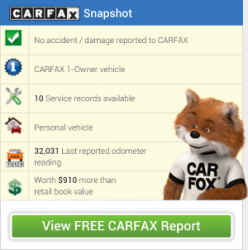
Carfax and DealerSocket have expanded their partnership, and now more than 4,000 Carfax dealer websites powered by the automotive technology platform now are upgraded with Carfax Snapshot.
Carfax Snapshot puts key vehicle history information directly on the search results and vehicle details pages.
With information such as reported accidents, number of owners, service records and open recalls online shoppers can quickly identify if a vehicle has the right history for them.
Online shoppers can view Carfax Reports purchased by dealers for free on dealer websites created by DealerSocket.
“Transparency is a requisite for success in the current used car marketplace,” DealerSocket director of product management Aaron Schinke said in a news release. “Having an additional layer of vital Carfax information on our dealers’ websites with the Carfax Snapshot tool helps ensure transparency and build trust for each transaction. It’s another step in our efforts to provide dealers with the most innovative and versatile website solutions available today.”
Dealers who want to add Carfax Snapshot to their website can contact their Carfax representative or website solution provider.
In other news from the company, Carfax announced Advent Resources has fully integrated its dealer management system with myCarfax Service Shop tools.
“This integration is another example of our efforts to deliver maximum value to Advent DMS clients,” said Advent Resources chief executive officer Tim Gill.
“Working with Carfax and the myCarfax Service Shop program, we’re putting trusted information about past maintenance in the hands of service writers to better serve their customers. We fully expect this enhancement will have a net positive impact on operations efficiency and service revenue.”
Dealerships using the Advent DMS can take advantage of free resources such as Carfax Service History Check and Carfax QuickVIN by joining the myCarfax Service Shop program.
Carfax QuickVIN helps avoid parts-ordering errors and increases ticket averages. Carfax Service History Check shows a vehicle’s reported maintenance history on myCarfax.com and sends alerts regarding vehicle maintenance recommendations and recalls.
Dealers interested in using the Advent DMS integrated with the myCarfax Service Shop tools can visit www.adventresources.com.
CarMax and two dealer groups have agreed to settle Federal Trade Commission charges that they touted how rigorously they inspect their used vehicles, yet the regulator claimed the dealers failed to adequately disclose that some of the vehicles were subject to unrepaired safety recalls.
The FTC indicated on Friday that the proposed consent orders will prohibit CarMax as well as Asbury Automotive Group and West-Herr Automotive Group from making unqualified inspection or safety-related claims about their used vehicles if any are subject to open, or unrepaired, safety recalls.
Also, following a public comment period, the FTC has approved final consent orders in similar cases against General Motors, Jim Koons Management, and Lithia Motors that were settled earlier this year. An Auto Remarketing report about that matter can be found here.
The FTC’s complaint against CarMax cites its claims about rigorous used-car inspections, including its “125-plus point inspection” and that its vehicles undergo, on average, “12 hours of renewing — sandwiched between two meticulous inspections.” The complaint also notes a TV commercial touting a team inspection and reconditioning, which included a message that appears for three seconds in tiny type at the bottom of the screen stating, “Some CarMax vehicles are subject to open safety recalls.”
Despite highlighting their inspections, the FTC alleged that CarMax failed to adequately disclose that some of the vehicles had open recalls. These recalls included defects that could cause serious injury, including the GM key ignition switch defect, as well as the Takata airbag defect.
Similarly, the FTC’s complaint against Asbury Automotive Group, which also does business as Coggin Automotive Group and Crown Automotive Group, alleged that the company made claims such as: “Every Coggin Certified used car or truck has undergone a 150 point bumper-to-bumper inspection by certified mechanics. We find and fix problems — from bulbs to brakes — before offering a vehicle for sale.”
However, as alleged, the FTC said Asbury advertised some certified used vehicles without adequately disclosing that some of the vehicles were subject to open recalls, including one that could cause fuel to leak and the engine to misfire or stall, and one that could cause a car to move in an unexpected or unintended direction.
The FTC’s complaint against West-Herr Automotive Group, the largest auto group in New York, cites claims about vehicles backed by the “West-Herr Guarantee” and touting a “rigorous multi-point inspection with our factory trained technicians.” However, the complaint alleged again that the company failed to properly disclose that some of the vehicles were subject to recalls for defects that could result in serious injury.
Under the proposed consent orders, CarMax, Asbury, and West-Herr are prohibited from claiming that their used vehicles are safe, have been repaired for safety issues, or have been subject to an inspection for safety-related issues, unless they are free of open recalls, or the companies clearly and conspicuously disclose that their vehicles may be subject to unrepaired recalls for safety issues and explain how consumers can determine whether a vehicle is subject to a recall for a safety issue that has not been repaired, and the claims are not otherwise misleading.
The proposed orders also would prohibit the dealers from misrepresenting whether there is or is not an open recall for safety issues for any used motor vehicle, whether they repair such vehicles, and any other material fact about the safety of the used vehicles they advertise for sale. The proposed orders also would require the companies to inform recent customers, by mail, that vehicles they bought as far back as July 1, 2013, may be subject to open recalls.
In a commission statement regarding the six auto recall advertising cases, the FTC noted that its orders “will help empower consumers to make more informed and safer purchasing decisions in a market that, absent a change in federal law, continues to include cars subject to open recalls.”
The FTC vote to issue the statement was 3-0.
The FTC vote to issue the administrative complaints against CarMax, Asbury Automotive Group, and West-Herr Automotive Group and to accept the consent agreements was 3-0.
The FTC will publish a description of each consent agreement package in the Federal Register shortly. The agreements will be subject to public comment for 30 days, beginning today and continuing through Jan. 17, after which the FTC will decide whether to make the proposed consent orders final.
Interested parties can submit comments electronically for CarMax, Asbury Automotive Group and West-Herr Automotive Group by following the instructions in the “Invitation To Comment” part of the “Supplementary Information” section.
The FTC vote approving the final consent orders against GM, Jim Koons Management and Lithia Motors, and letters to commenters was 3-0.
The U.S. Department of Transportation’s National Highway Traffic Safety Administration recently issued an amended order to continue the acceleration of recall repairs for millions of U.S. vehicle owners affected by the Takata air bag inflator recalls.
Officials explained the Amended Coordinated Remedy Order sets requirements for when automakers must have replacement parts available for customers and sets progress and completion deadlines for replacements of the defective parts which have been responsible for 11 deaths and approximately 180 injuries in the United States.
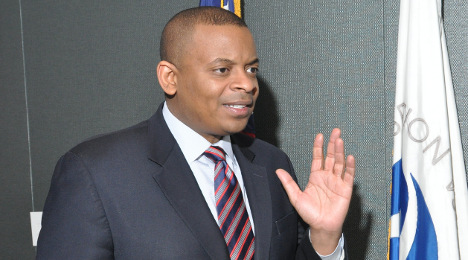
“The Department of Transportation is maintaining its aggressive oversight of the efforts to recall Takata air bags as quickly as possible,” U.S. Transportation Secretary Anthony Foxx said. “The amended order will speed up the availability of replacement air bags, and continues to prioritize the highest risk vehicles to protect the traveling public.”
NHTSA indicated the Amended Coordinated Remedy Order issued to Takata and the 19 affected automakers requires replacement parts to be obtained on an accelerated basis and made available first to the riskiest vehicles. The order sets new requirements for automakers to certify to NHTSA when they have obtained a sufficient supply of replacement parts to begin repairs, and requires automakers to coordinate consumer messaging using best practices identified by NHTSA, industry and the Independent Monitor of Takata and the Coordinated Remedy Program.
The regulator emphasized this action builds on the Coordinated Remedy Program initiated in November of last year, incorporating the additional tens of millions of inflators recalled or scheduled for future recall since that date, most of which were included in the May recall expansion.
“NHTSA is doing everything possible to make sure that there are no more preventable injuries or deaths because of these dangerous air bag inflators,” NHTSA Administrator Mark Rosekind said. “All vehicle owners should regularly check their vehicles for recalls at SaferCar.gov and go get them fixed at no cost as soon as replacement parts are available.”
Officials tabulated there are currently 46 million recalled Takata air bag inflators in 29 million vehicles in the United States. Under the Amended Consent Order issued to Takata in May, automakers will be required to recall additional inflators over the next three years, ultimately affecting approximately 64 to 69 million inflators in 42 million total recalled vehicles.
Ultimately all frontal Takata inflators using non-desiccated phase-stabilized ammonium nitrate (PSAN) will be recalled, according to NHTSA. The full list of vehicles that are currently affected or will be affected by future Takata recalls is available here.
Under the Coordinated Remedy Program, NHTSA has committed to seeking a 100-percent recall completion rate from the vehicle manufacturers to protect the motoring public. As of Dec. 2, automakers reported they have so far repaired approximately 12.5 million inflators.
Before establishing the schedule for the expanded Takata inflator recalls announced in May, NHTSA and its independent expert reviewed the findings of three independent research organizations into the Takata air bag ruptures and confirmed the findings on the root cause of inflator ruptures.
“A combination of time, environmental moisture and cycling high temperatures contribute to the degradation of the ammonium nitrate propellant in the inflators,” officials said. “Such degradation can cause the propellant to burn too quickly, rupturing the inflator module and sending shrapnel through the air bag and into the vehicle’s cabin.”
The regulator went on to stress the recall and remedy schedule mandated by NHTSA ensures that vehicles with defective air bag inflators are recalled and have replacement parts available before they present a significant risk to vehicle occupants.
“This is the largest and most complex safety recall in U.S. history,” officials said.
NHTSA has worked to increase consumer awareness of the recalls and encourage vehicle owners with open recalls to take action. The agency launched its Safe Cars Save Lives campaign in January, and conducted a five-state, 10-city bus tour —through the highest risk areas for Takata air bag ruptures — to find vehicle owners with open recalls and raise awareness of the SaferCar.gov VIN lookup tool.
The Takata recalls currently cover frontal inflators that do not include a chemical desiccant that absorbs moisture. There have been no reported ruptures of desiccated inflators due to propellant degradation.
Under the Amended Coordinated Remedy Order and the May Consent Order, Takata and automakers that use desiccated PSAN inflators are required to research their safety. Absent proof that the desiccated PSAN inflators are safe, they will also be subject to recall.
Officials added Takata is required to prove the safety of these inflators by the end of 2019.
Consumers can find complete information about the Takata air bag inflator recalls here.
With recalls very much in the news these days, dealers and drivers alike may be wondering about automakers’ track records when it comes to such actions.
Using new-vehicle sales data as well as recall data from the National Highway Transportation Safety Administration from the last three-plus decades, iSeeCars endeavored to find out.
The Boston-based automotive data and research company focused on three metrics for 18 automakers:
—Recall rate: How often a manufacturer produces a vehicle with a defect relative to the number of vehicles sold
—Recall timeliness: How quickly and willing an automaker is to identify problems and initiate a recall within three years of vehicle sale
—Recall proactiveness: The extent to which cars recalled were the result of the manufacturer’s own investigations
Porsche, it turns out, has had the lowest recall rate, while Tesla was tops in timeliness and initiated the highest number of its own recalls.
Looking just at the Big Three, however, General Motors scored the best in those areas.
Recall rates
Between January 1985 and September 2016, Porsche recalled 531 cars for every 1,000 sold — well below the industry average. Volkswagen, on the other hand, came in last on the list, with 1,805 recalls per 1,000 sold.
If you’re wondering how that’s possible, it’s because a vehicle can be recalled multiple times for different reasons.
Volkswagen’s ranking surprised Phong Ly, chief executive officer of iSeeCars,
“VW cars are usually highly rated — Audi was Consumer Reports’ top-rated brand in 2016,” he said.
But VW showed a consistently high recall rate during the study period, and that’s not even counting the fallout from Dieselgate.
Mercedes-Benz, Kia, Tesla and Mazda followed Porsche with the next-lowest recall rates.
Reasons for a recall
While a majority of cars are recalled for issues with potentially dire consequences (death, injury, crash, accident or fire), some recalls are for relatively minor issues.
While GM ranked sixth for recall rate, 90.1 percent of the cars it recalled for were issues with possible dire outcomes. Volkswagen, on the other hand, had the worst recall rate but a lower percentage of vehicles with severe issues (77.6 percent).
And Volvo, which had a rate above the industry average of 88.1 percent, had the lowest number (71 percent) of cars recalled for potentially dire issues.
Tesla, Hyundai, Nissan, Honda and Kia had the highest percentage of vehicles that were recalled for potentially dire problems.
Response time
Industry-wide, manufacturers issued a recall within the first three years 66.6 percent of the time. Tesla (which has only been selling cars since 2008) ranked highest at 100 percent, with Porsche, Jaguar Land Rover, GM and Nissan occupying the next four spots. At the bottom of the list was Mazda at 48.4 percent.
When iSeeCars looked at recall timeliness in five-year segments, some interesting findings emerged.
“When you break the data down, it’s easy to see that timeliness dropped substantially with each five-year segment,” Ly said. “This is largely indicative of NHTSA’s increased push on manufacturers to issue recalls for cars that have been on the road for many years. Takata’s massive airbag recall affected numerous automakers, and so did Mazda’s ignition switch issue.”
Looking at the most recent five-year period, Volvo was the most improved; its timeliness went up 100 percent from 66 percent in the previous five-year stretch. But Mazda’s timeliness fell significantly, from 100 percent between 2002 and 2006 to 22 percent from 2012 to 2016. And while GM’s timeliness ranked highest, its timeliness fell to 51 percent in the most recent five-year period.
Taking control
Recall campaigns can result from investigations initiated by either an automaker or the NHTSA. Proactivity is a measure of the former.
While it’s not surprising that Tesla ranked highest in proactivity since it has only been selling cars for eight years, it is interesting to note that Ford ranked last, with only 29.6 percent of cars recalled during the past 31 years resulting from problems the automaker found on its own and well below the industry average of 46 percent.
Of the 20 recall campaigns that each affected more than 1 million Fords, 18 were initiated by the NHTSA.
Ly summarized how consumers can use this information in their car-buying decisions.
“With this approach, consumers can have increased confidence that they’re buying from a manufacturer that will likely respond more swiftly to address safety issues and protect its customers,” he said.
See more from iSeeCars by clicking here.
Autotrader senior analyst Michelle Krebs scanned several recent headlines, which included a Volkswagen engineer pleading guilty for his role in a conspiracy to cheat U.S. emissions tests as well as Wells Fargo agreeing to a record fine from the Consumer Financial Protection Bureau. Krebs then arrived at a succinct conclusion.
“The feds are cracking down hard on companies for cheating of all kinds as of late,” she said in a message to media outlets, including Auto Remarketing.
According to a press release from the Department of Justice, Volkswagen engineer James Robert Liang pleaded guilty on Friday for his role in a nearly 10-year conspiracy to defraud U.S. regulators and the automaker’s U.S. customers by implementing software specifically designed to cheat U.S. emissions tests in hundreds of thousands of Volkswagen “clean diesel” vehicles.
Justice Department officials said Liang’s plea agreement provides that he will cooperate with the government in its ongoing investigation.
Liang, of Newbury Park, Calif., pleaded guilty today to one count of conspiracy to defraud the United States, to commit wire fraud and to violate the Clean Air Act. He was indicted under seal on June 1 by a federal grand jury, and the indictment was unsealed on Friday.
According to the plea agreement, from 1983 until May 2008, Liang was an employee of VW, working in its diesel development department in Wolfsburg, Germany. Liang admitted that beginning in about 2006, he and his co-conspirators started to design a new “EA 189” diesel engine for sale in the United States According to Liang’s admissions, when he and his co-conspirators realized that they could not design a diesel engine that would meet the stricter U.S. emissions standards, they designed and implemented software to recognize whether a vehicle was undergoing standard U.S. emissions testing on a dynamometer or being driven on the road under normal driving conditions (the defeat device), in order to cheat the emissions tests.
Officials said Liang admitted that he used the defeat device while working on the EA 189 and assisted in making the defeat device work. In May 2008, Liang moved to the United States to assist in the launch of VW’s new “clean diesel” vehicles in the U.S. market, according to the plea agreement. While working at VW’s testing facility in Oxnard, Calif., he has held the title of leader of diesel competence.
According to the plea agreement, employees of VW and its U.S. subsidiary met with the EPA and the California Air Resources Board (CARB) to seek the certifications required to sell each model year of its vehicles to U.S. customers. Liang admitted that during some of these meetings, which he personally attended, his co-conspirators misrepresented that VW diesel vehicles complied with U.S. emissions standards and hid the existence of the defeat device from U.S. regulators.
Jack Nerad, executive editorial director and executive market analyst for Kelley Blue Book’s KBB.com, asked a question after seeing the Justice Department’s announcement.
“The guilty plea by Volkswagen engineer James Liang begs the question: will there be other indictments in the case? By his own testimony, Liang didn’t work alone, so there is a strong possibility of other indictments and possibly a conspiracy indictment that could affect a much broader swath of VW engineers and management,” Nerad said.
“The question remains how high on the executive chain the investigation will discover wrongdoing,” he continued. “At the same time, this scandal has evolved into criminal proceedings, the car-buying public has demonstrated few changes in behavior toward the Volkswagen brand in the United States.
“Given the short memory of the buying public, the scandal is unlikely to have far-reaching effects on VW sales, but for the moment it is a major distraction,” Nerad continued.
Meanwhile a couple of days earlier, the CFPB handed out a $100 million penalty to Wells Fargo for activities not related to auto financing — rather, what the regulator deemed to be “widespread illegal practice of secretly opening unauthorized deposit and credit card accounts.”
Spurred by sales targets and compensation incentives, the bureau said employees boosted sales figures by “covertly” opening accounts and funding them by transferring funds from consumers’ authorized accounts without their knowledge or consent, often racking up fees or other charges.
Krebs summarized the events this way:
“(The) plea by a Volkswagen engineer involved with the diesel emissions cheating scandal — unlikely the last plea we’ll see from this debacle — comes on the heels of Wells Fargo firing 5,300 employees for setting up phony bank accounts and the revelation that Fiat Chrysler executive Reid Bigland is being investigated for possibly cheating on sales reports,” she said.
“These events should serve as a warning to all companies to make sure they are operating on the up-and-up, because the feds are showing no mercy,” Krebs went on to say.