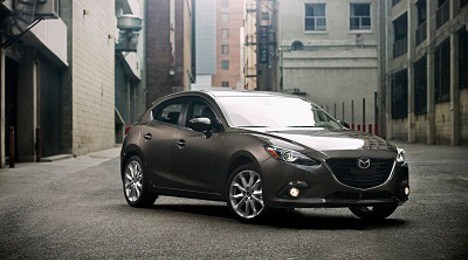
While the automaker contends there is a heightened public awareness of vehicle recalls, Mazda North American Operations acknowledged recall repairs remain comparatively low.
To help both vehicle owners and franchised dealers, the OEM on Tuesday launched the new Mazda Recall Information Center — a website designed to help customers easily confirm if their vehicle is affected by a recall and provide a convenient way to schedule an appointment for recall repairs.
Developed in partnership with Minacs Marketing Solutions, the automaker’s recall solution at Mazdarecallinfo.com focuses on both owner and dealer engagement to ensure recall repairs are completed in the most expedient manner.
Mazda officials highlighted their new Recall Information Center provides customers and dealers with:
—up-to-date recall and special service programs (SSP) information
—a mobile-friendly, convenient way to search for recalls and SSPs applicable to their vehicle, by inputting a vehicle identification number (VIN)
—quick access to online repair appointment scheduling, using Mazda's Service Schedule
—a dedicated landing page for each dealer
“In addition to the new Recall Information Center, Mazda is aggressively working to train additional service technicians,” Mazda senior vice president of U.S. operations Robert Davis said.
“We have created online classes and virtual classrooms to further train our outstanding technicians to help speed the repair time and enhance the customer’s experience when they bring in their vehicle,” Davis continued.
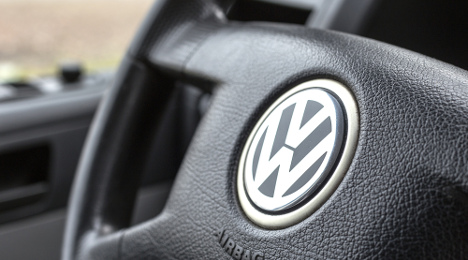
Volkswagen Group of America previously made arrangements for restitution with owners of vehicles involved with “Dieselgate.” On Thursday, the automaker released its plans to rectify the situation with its franchised dealerships.
Volkswagen announced it has reached an agreement in principle to resolve the claims of VW-branded franchise dealers in the United States relating to TDI vehicles affected by the diesel matter and other matters asserted concerning the value of the franchise.
The company said it has agreed to make cash payments and provide additional benefits to the dealers to resolve alleged past, current and future claims of losses in franchise value. Volkswagen and the dealers’ counsel will now work to finalize details of the proposed settlement, including how to apportion payments to dealers in the appropriate manner.
OEM officials indicated details of the agreement in principle are still under discussion and are expected to be finalized at the end of September. They pointed out any proposed agreement will become effective only after approval by the court, and the parties have agreed to keep further terms confidential as they work to finalize the agreement.
Under the agreement, Volkswagen added that it will consent to the certification — for settlement purposes only — of a class of VW-branded franchise dealers in the United States as of an agreed-upon date.
“We believe this agreement in principle with Volkswagen dealers is a very important step in our commitment to making things right for all our stakeholders in the United States,” said Hinrich Woebcken, chief executive officer of the North American Region for Volkswagen.
“Our dealers are our partners and we value their ongoing loyalty and passion for the Volkswagen brand,” Woebcken continued. “This agreement, when finalized, will strengthen the foundation for our future together and further emphasize our commitment both to our partners and the U.S. market.”
Early indications are that VW dealers welcomed the OEM’s move.
“Our clients recognized the best solution would be one that not only allows them to recoup lost franchise value and continue to employ thousands of American workers, but one that also charts a strong course for the recovery of the Volkswagen brand in the United States,” said Steve Berman, managing partner of the dealers’ counsel Hagens Berman.
“Now that there is a path forward for dealers, they can continue to work proactively to take great care of their customers, who are also VW customers.” Berman added.
Analyst reaction to VW offer
Kelley Blue Book senior analyst Rebecca Lindland sympathized with VW dealers that have been caught in the conflict between the automaker and federal regulators.
“The dealers are VW's front line in this matter, so getting them compensated is critical,” Lindland said. “Not only do they represent the company to the owners, they're also impacted financially since they're hamstrung on what products they can sell.
“So this is a very important settlement, and hopefully it will be enough to keep dealers and their employees afloat until this entire matter is resolved,” she continued.
Kelley Blue Book analyst Akshay Anand elaborated about what could be another positive step to smoothing over the entire situation.
“Reaching an agreement with dealers is yet another step in fixing the ‘Dieselgate’ mess,” Anand said.
“As time passes, news and buzz about the scandal seems to be waning, which is great for VW,” Anand went on to say. “There is still much more to be done, but over time, it seems Volkswagen may be able to move on and get back to focusing on what truly matters — building cars.”
Matt DeLorenzo, managing editor of Kelley Blue Book’s KBB.com, chimed in about what the agreement means for consumers.
“This really has no direct impact on owners of VW diesels, since it’s a compensation plan for the dealers who have been unable to sell 2015 models on the ground,” DeLorenzo said. “Unless or until there is a fix, the cars that have not been certified by government can’t be sold.”
FTC’s warning about false claims to vehicle owners
And speaking of those potential customers, the Federal Trade Commission and the National Automobile Dealers Association are collaborating on a webinar for dealers “not to make false claims” about the involved units.
The FTC recently asked NADA to provide its members with material that cautions sellers of certain VW and Audi diesel vehicles (including dealers of other brands) not to make false claims regarding the recent proposed consent orders concerning those vehicles that the Volkswagen has entered into with the FTC, other governmental agencies, and owners and lessees of the vehicles.
The FTC spelled out several concerns through a post on its business blog. The regulator indicated other companies have been reaching out to owners with alternate offers, which have included:
—Falsely implying that the offer is part of the pending $10 billion settlement
—Falsely telling owners they have to spend compensation under the settlement on a new VW or Audi
—Using “Act now!” tactics to lock owners into a separate deal before owners have the full picture of what they stand to gain as part of the $10 billion settlement.
“It’s unwise for anyone — including independently owned VW dealers — to make separate offers,” the FTC said. “The ultimate choice is the owner’s, of course. Our advice to them is to investigate their options before making a decision.”
Details of the proposed settlements are available at VWCourtSettlement.com.
In order to enhance dealers’ understanding of both the VW buyback program that is part of the proposed settlement and the one set forth by the FTC, NADA has arranged for the FTC to present information on these topics in an NADA University Online webinar that will take place on Sept. 8 beginning at 1 p.m. EDT.
Dealers and their representatives can go here to register.
Recall Masters, a provider of automotive recall news, data, training and communications, finalized an integration on Tuesday with Auto Rental Systems (ARS), a cloud-based loaner vehicle management system, in an effort to help dealers manage their loaner and rental fleets.
The companies explained the ARS Recall module can perform a nightly scan of all fleet units in the system and alert dealers to any new and outstanding recalls. The new add-in module is designed to eliminate the need for dealers to manually check on recalls for their inventory of vehicles.
Here’s how the process is geared to operate:
When a new recall is found, the recall data is downloaded to the system and linked to the vehicle by VIN. The dealership is then alerted via a summary email report and the vehicle is flagged in the system. When the required recall work is completed, the repairs can be logged and the vehicle can be placed back in service.
Just as the system maintains the rental history of all vehicles, it also maintains the history of all recall and warranty work performed by the dealer.
“Our customers’ needs continually change and we know we have to listen and respond. Recalls are coming like a tidal wave and our dealers just do not have the time to address this increased volume efficiently,” said Laura Tierney, sales manager for ARS.
“We have partnered with Recall Masters, the best in the industry, and with the ARS Recall module we take on the recall management work for them which allow our dealers the freedom to do what they do best: service customers,” Tierney continued.
At every touch point from vehicle sales to loaner cars and inventory management, automotive repair scheduling and service lane visits to auto rental and corporate fleets, Recall Masters insisted it now places actionable information at the fingertips of automotive sales and service centers, as well as consumers, nationwide.
“We are continually evolving our systems and database to provide the most relevant information possible to consumers and their automotive service providers,” Recall Masters chief executive officer Christopher Miller said. “One big key to keeping customer satisfaction high while servicing a vehicle is the overall convenience factor.
“To address this, most manufacturers offer service loaner vehicles for customers to drive while they perform the required repairs,” Miller continued. “As these recall customers can arrive already upset about the state of their vehicle, and can be rather emotional, it is vital to ensure a great customer experience.
“Our integration with the leading loaner car management system is just one more step in the right direction to ensure consumer safety and to mitigate risk of automotive-related injuries,” he went on to say. “Greater recall awareness and proactive management helps automakers protect their brand and build trusting relationships between dealers, rental car agencies, auto auctions and consumers alike.”
To learn more about Recall Masters complete beginning-to-end solution, schedule a demo or receive a free trial call (888) 651-4480, email [email protected] or visit www.recallmasters.com.
To learn more about ARS’ cloud-based loaner vehicle management system, get additional information of get a free trail, call (513) 334-1040, email: [email protected] or visit www.ARSloaner.com/RM/
While the industry and consumers alike are reeling from the massive Takata airbag recall, another airbag manufacturer has come under heightened scrutiny after one of its products was linked to the death of a Canadian driver last month.
The National Highway Traffic Safety Administration opened an inquiry into Tennessee-based ARC Automotive last summer based on two reported rupture incidents in the U.S. that caused injury to vehicle occupants.
Now, the NHTSA is upgrading its investigation after learning of a July 8 fatal collision in Newfoundland and Labrador that was determined to have resulted from an ARC airbag rupture.
“It was a low-speed collision and was considered survivable,” a representative for Transport Canada said in emailed comments to Auto Remarketing. Medical examiners determined that the driver’s death resulted from the rupture of the driver airbag, the representative added.
After Transport Canada learned of the two previous rupture incidents in the U.S., the agency invited investigators from the NHTSA to accompany its own investigators on a site visit to Newfoundland and Labrador.
“Based on what it has learned in the preliminary evaluation and initial investigation of the new incident, NHTSA is upgrading its investigation to an engineering analysis, during which it will gather additional information and direct the collection and testing of inflators as part of its effort to determine the root cause of the rupture incidents,” the NHTSA confirmed in emailed comments to Auto Remarketing.
The July 8 fatality involved a 2009 Hyundai Elantra equipped with a single-stage driver airbag inflator manufactured at ARC’s China facility a year prior.
One of the 2015 incidents involved a 2002 Chrysler Town & Country minivan that used a dual-stage airbag inflator. The other involved a 2004 Kia Optima sedan that used a single-stage inflator. Both driver airbag inflators were manufactured at ARC’s Knoxville, Tenn., facility.
During the initial phase of its investigation, the NHTSA identified two additional vehicle manufacturers affected by the faulty ARC inflators: General Motors and Hyundai.
While Takata and ARC airbag inflators both use ammonium nitrate as a propellant, there are design differences between the two components, and excess humidity is not believed to trigger ruptures in the latter.
The NHTSA explained that the ARC inflators are a hybrid design using high-pressure stored gas and a small amount of ammonium nitrate to inflate the air bags.
“The small amount of ammonium nitrate in the ARC inflators is stored within a hermetically sealed chamber of inert gas, and the moisture penetration that is a key component of the root cause of the Takata ruptures is not a factor in this investigation,” the agency said.
Based on the age of the vehicles involved in the two U.S. incidents, the NHTSA has focused its investigation on single- and dual-stage inflators manufactured by ARC from the start of production through September 2004. It is estimated that about 8 million inflators, both single- and dual-stage, were manufactured for use in vehicles produced by Chrysler, GM, Kia and Hyundai for sale or lease in the U.S during that time frame.
The U.S. market model 2009 Hyundai Elantra did not use the single-stage driver airbag inflator produced by ARC in Canada, the NHTSA said. It is not known if any of the inflators made in China were used in vehicles produced for sale or lease in the U.S.
The NHTSA’s probe will now focus on determining the entire population of ARC-manufactured driver airbag inflators, both single- and dual-stage, identification of affected vehicle manufacturers, and whether any single-stage driver airbag inflators made at ARC’s China facility were used in vehicles produced for sale or lease in the U.S.
Additionally, the NHTSA will conduct a program to recover the subject ARC inflators from vehicles in the field for additional testing and analysis.
Representatives from both the NHTSA and Transport Canada did not speculate on whether they foresee a recall. The agencies noted they were cooperating in their investigations.
An email to ARC Automotive was not immediately returned.
Jaguar Land Rover North America has begun mailing notifications to owners of certain 2009-11 Jaguar XF and 2007-11 Land Rover Range Rover vehicles that their vehicles are affected by the ongoing Takata airbag recall.
For the first phase of this recall, which includes about half of the 108,000 Jaguar and Land Rover vehicles affected, vehicle owners who are or have ever been registered in the following areas are encouraged to visit www.SaferCar.gov and enter their vehicle identification number to find out if their vehicle is included in this recall at this time:
—U.S. States: Alabama, California, Florida, Georgia, Hawaii, Louisiana, Mississippi, South Carolina and Texas
—U.S. Territories: Puerto Rico, American Samoa, Guam, the Northern Mariana Islands (Saipan) and the U.S. Virgin Islands
As parts become available later this year, affected owners will be notified by a second mailing and instructed to schedule an appointment to take their vehicle to a Jaguar or Land Rover retailer who will replace the front passenger airbag module at no charge.
In the meantime, owners of potentially affected vehicles may contact the Jaguar Land Rover North America Customer Relationship Center for further information by calling (800) 637-6837 (Option 9 for Land Rover) or 1-800-4JAGUAR; visiting www.LandRoverUSA.com or www.JaguarUSA.com; or writing to:
Jaguar Land Rover North America, LLC
ATTN: Customer Relationship Center
555 MacArthur Blvd., Mahwah, NJ 07430
Given the scope of the recall, replacement parts are not immediately available for the affected vehicles. Jaguar Land Rover said it is working closely with its suppliers to produce components for this repair as quickly as possible.
Affected vehicles are being prioritized for repair — split into four separate phases — based on geographic zone and vehicle age. Priority is being given to areas with high humidity.
Additional phases of this recall will be added through 2019 based on risk-assessed priority. Notifications will continues as the recall is expanded to other geographic zones or vehicle age groups.
This recall is part of the May 4 expansion of the largest and most complex safety recall in U.S. history, affecting roughly 68 million cars and trucks on the road that are fitted with Takata non-desiccated ammonium nitrate airbag inflators.
Additional remaining affected vehicles will be addressed at a later date, as per the National Highway Transportation Safety Administration (NHTSA) specific priority scheme. It may be noted that no current model-year Jaguar or Land Rover vehicles are affected.
At issue in the recall are Takata airbag inflators that don’t contain a drying agent (i.e. a desiccant). Prolonged exposure to combined high heat and humidity can cause the affected inflators to degrade, increasing the risk that the front passenger airbag module inflator housing may rupture and deploy abnormally in the event of a crash, potentially resulting in metal fragments striking the passenger or other occupants. In the U.S., 10 deaths have been linked to these faulty airbags.
It’s not just the retail operations of dealerships that are being impacted by the Takata airbag stop-sale.
There is also a “backlog” of cars that would otherwise be hitting the wholesale market, KAR Auction Services chief executive Jim Hallett said during his company’s earnings call Wednesday.
KAR is the parent company of auction company ADESA. During the Q&A portion of the company’s call, Hallett was asked by an analyst if the stop-sale grounding much of the used-car inventory for dealers was affecting KAR’s business in a measurable way.
“I’m not sure how we can quantify it. I can tell you, we do have some vehicles sitting in our inventory that are on recall … the vehicles in our inventory were really at the direction of the seller,” Hallett said.
“Some of these sellers want to hold the vehicle until the recall is completed. Other sellers will sell the vehicle with an announcement that it does have an open recall. And then obviously there are some cases where there are laws that prohibit you from selling cars at all, which are the rental vehicles.
“In terms of the dealers, and you talk about the stop-sales, I do believe their inventory is backing up on the dealers’ lots,” he said. “And I believe that there were a number of vehicles that the dealers were not able to ship to the auction, and as a result, there is a backlog. The good news is, at some point in time, the backlog will get released and these vehicles will make their way to the physical auction.”
Until then, they have to play the waiting game.
Much like the dealers and dealer groups.
At Penske Automotive Group, CEO Roger Penske said in last week’s quarterly call that about $57 million of the group's U.S inventory right now is on a stop-sale related to the ongoing Takara airbag recall situation.
At Asbury Automotive Group, the retailer is being affected to the point that some company stores are running out of available space to park impacted vehicles.
According to Asbury chief operating officer Hult, stop-sales tied up 10 percent or roughly $16 million of Asbury’s inventory in the second quarter. That’s up from $14 million in the first quarter.
About a third of the automotive group’s more than 80 stores are affected by stop-sales. At some stores, as much as 40 percent of inventory is impacted.
“We’ve been told by our partners that they’re going to take care of the customers first, inventory second,” Hult said. “We are being compensated.”
As far as how the OEMs are making up for vehicle depreciation, that varies, he said.
“Every OEM is different. On some of them, there will be no economic impact. On others, there will be probably some loss that we’re going to suffer by the time we get these lots cleared.”
How fast the lots get cleared, of course, depends on how fast the replacement airbags arrive. Recent estimates indicate that only a fraction of the 70 million or so recalled vehicles in the U.S. have been repaired.
“They’re (the airbags) coming in on a very light flow, but not what we expected by this point. And what we’ve heard most recently is we shouldn’t expect to see them in any kind of volume until later in the third quarter, potentially early fourth quarter,” Hult said.
Craig Monaghan, president and chief executive officer, chimed in on a scenario in which “40 percent of your inventory is on stop-sale, and we’re running out of space.
“In some cases, we’re looking for nearby lots to park these vehicles,” he said. “It has become very disruptive. But they are vehicles that, when we get the airbags, that we think are going to be very marketable. So we are holding on to them for the most part, and we’re just going to ride this thing out.”
The situation is similar over at Sonic Automotive. Executive vice president of operations Jeff Dyke pointed out he’s been with the dealer group for 11 years and can’t remember a quarter when a single factor impacted used-vehicle retail sales as much as the stop-sales associated with the Takata situation.
“We can’t get the airbags in fast enough to get them out on the lot and ready for sale so it's certainly playing an issue here,” Dyke said.
“We are starting to see the light at the end of the tunnel,” he continued. “Hopefully in particular with BMW and Honda, we’ll get that cleaned up here in the coming months and put this behind us. But it certainly has been a bit of a challenge for the stores.”
Moving to AutoNation, CEO Mike Jackson said roughly 20 percent of used-car inventory is on hold due to open recalls, 75 percent of which are Takata-related.
He believes that used inventory on hold will peak toward the end of the year, but the thing is, VIN numbers of impacted vehicles are still coming in.
The good news, Jackson said, “is that devices are beginning to arrive. And we’re at the point with certain manufacturers where we can batch-order devices and not go VIN by VIN. And we’ll begin to repair those vehicles, we’ll begin to sell those vehicles and we’ll begin to recognize the compensation that is due on those vehicles from the manufacturers … that would tend to say the worst is over.”
However, Jackson said, there were millions more Takata airbag-affected vehicles announced in the second quarter. And AutoNation does not have the VINs on those yet, Jackson said. Those are scheduled to arrive in the second half of the year, with parts coming in the first half of 2017, he said.
In other words, the coast isn’t clear. As Jackson said, “we’re going to repeat this whole movie over again for this next wave.”
Staff Writers Sara Schweiger and Nick Zulovich contributed to this report.
Asbury Automotive Group is being affected by stop-sales related to the ongoing Takata airbag recall to the point that some company stores are running out of available space to park them.
The company on Tuesday reported a 4 percent dip in used vehicle retail revenue during the second quarter, with unit sales down 5 percent on a same-store basis.
However, “With better used vehicle management, we were able to improve our gross profit per unit by $114 to $1,769, our highest level in a year,” David Hult, executive vice president and chief operating officer, said during a conference call in which company executives discussed quarterly earnings.
According to Hult, stop-sales tied up 10 percent or roughly $16 million of Asbury’s inventory in the second quarter. That’s up from $14 million in the first quarter.
About a third of the automotive group’s more than 80 stores are affected by stop-sales. At some stores, as much as 40 percent of inventory is impacted.
“We’ve been told by our partners that they’re going to take care of the customers first, inventory second,” Hult said. “We are being compensated.”
As far as how the OEMs are making up for vehicle depreciation, that varies, he said.
“Every OEM is different. On some of them, there will be no economic impact. On others, there will be probably some loss that we’re going to suffer by the time we get these lots cleared.”
How fast the lots get cleared, of course, depends on how fast the replacement airbags arrive. Recent estimates indicate that only a fraction of the 70 million or so recalled vehicles in the U.S. have been repaired.
“They’re (the airbags) coming in on a very light flow, but not what we expected by this point. And what we’ve heard most recently is we shouldn’t expect to see them in any kind of volume until later in the third quarter, potentially early fourth quarter,” Hult said.
Craig Monaghan, president and chief executive officer, chimed in on a scenario in which “40 percent of your inventory is on stop-sale, and we’re running out of space.
“In some cases, we’re looking for nearby lots to park these vehicles,” he said. “It has become very disruptive. But they are vehicles that, when we get the airbags, that we think are going to be very marketable. So we are holding on to them for the most part, and we’re just going to ride this thing out.”
The settlement plan involving Volkswagen and Audi 2.0L TDI vehicles in the United States cleared another hurdle on Wednesday when Judge Charles Breyer of the U.S. District Court for the Northern District of California granted preliminary approval of the agreement reached on June 28 with private plaintiffs represented by the Plaintiffs’ Steering Committee (PSC) to resolve civil claims associated with “Dieselgate.”
The automaker indicated individual class members will now receive notification of their rights and options under the agreement. Volkswagen will begin the settlement program immediately after the court grants final approval to the class settlement, which is anticipated on Oct. 18.
Under the proposed settlement, eligible customers will have two choices:
1. They can sell back their vehicle to Volkswagen or terminate their lease without an early termination penalty.
2. Keep their vehicle and receive a free emissions modification, if approved by the U.S. Environmental Protection Agency (EPA) and the California Air Resources Board (CARB).
Customers who select any of these options under the settlement will also receive a cash payment from Volkswagen.
“Volkswagen appreciates the constructive engagement of all the parties, under the direction of Judge Breyer and with the active participation of special master Robert Mueller III, as the settlement approval process moves forward,” the OEM said.
“The parties believe that the proposed settlement program will provide a fair, reasonable and adequate resolution for affected Volkswagen and Audi customers,” the company added.
The vehicles associated with this settlement include:
2013- 2015 VW Beetle
2010-2015 VW Golf
2009-2015 VW Jetta
2012-2015 VW Passat
2010-2013; 2015 Audi A3
Breyer articulated a similar stance when issuing the court’s decision this week.
“Just a little over 10 months ago, the public learned of Volkswagen’s allegedly deliberate use of a defeat device — software installed in certain Volkswagen- and Audi-branded turbocharged direct injection (TDI) diesel vehicles that was designed to cheat emissions tests and deceive state and federal regulators — in nearly 500,000 cars sold in the United States,” Breyer wrote. “Consumers filed hundreds of lawsuits which have been assigned to this court as a multidistrict litigation (MDL).
“After five months of intensive negotiations, and with the assistance of a court-appointed settlement master, plaintiffs and defendants Volkswagen AG, Audi AG and Volkswagen Group of America Inc. (collectively Volkswagen) reached a settlement that resolves consumer claims concerning certain 2.0-liter diesel TDI vehicles,” the judge continued.
“The settlement is sufficiently fair, adequate and reasonable to the 2.0-liter diesel engine vehicle consumers to move forward with class notice,” Breyer went on to note.
Breyer added that the court set a deadline of Oct. 4 for class members to file a notice of intent to appear at the final fairness hearing.
More information about the program can be found at www.VWCourtSettlement.com.
Coinciding with software provider Recall Masters enhancing its tracking solution, J.D. Power through its SafetyIQ platform combed through data generated by the National Highway Traffic Safety Administration. Analysts found that more than 45 million vehicles subject to safety recalls issued between 2013 and 2015 are still un-remedied.
On Monday, J.D. Power described the situation created by a record number of vehicle safety recalls, parts shortages and inaction on the part of the owners of recalled united as leaving automakers and dealers with “a serious challenge.”
During the past 20 years, J.D. Power indicated more than 437 million vehicles have been affected by safety recall decisions in the U.S. In 2015 alone, more than 51 million vehicles were the subject of safety recalls, more than in any previous year.
By analyzing NHTSA and proprietary J.D. Power benchmarking data using its SafetyIQ platform, analysts identified that primary factors impacting completion rates for those recalls are vehicle age, vehicle type, overall population of recall and type of recall.
“The steady surge in recalls, combined with NHTSA's stated goal of 100 percent recall completion rates, have made the number of un-remedied recalls still on the road a critical statistic for automakers and dealers," said Renee Stephens, vice president of U.S. automotive at J.D. Power.
“By understanding the behavioral trends of vehicle owners, as well as recall completion rates among different vehicle and recall types, as an industry we can better tailor communications to improve those completion rates,” Stephens continued.
The following four points are the key findings in the J.D. Power SafetyIQ analysis. All data is based on recall decisions made from 2013-2015, as reported through six quarters of completion information.
1. Un-remedied vehicles more common in older models: The total recall completion rate for vehicles with model years between 2013 and 2017 is 73 percent. This compares with a completion rate of just 44 percent for vehicles manufactured between 2003 and 2007.
2. Vehicle type plays a big role in recall completion: Among vehicle segments, large/work vans have the highest overall recall completion rate at 86 percent, followed closely by compact premium SUVs at 85 percent. This contrasts with the mid-premium sports car segment, which has a completion rate of just 31 percent, and with large SUVs, which have a completion rate of 33 percent.
3. Larger populations present bigger completion challenges: The completion rate for individual recalls affecting more than 1 million vehicles is 49 percent. This reading compares with a 67 percent completion rate for individual recalls affecting less than 10,000 vehicles.
“It is sometimes difficult to obtain parts to launch large campaigns,” J.D. Power said. “In addition, customers can more easily receive a targeted communication method, such as a phone call, with a smaller population of vehicles.”
4. Powertrain and electrical system recalls most likely to get fixed: Of the major safety components, the groups with the highest recall completion rates are powertrain (71 percent), electrical (62 percent) and hydraulic brakes (66 percent). Airbags and suspension issues have the lowest completion rates at 47 percent and 48 percent, respectively.
“By better understanding the specific factors driving recall compliance among vehicle owners, manufacturers and dealers can better tailor their communications and manage the recall process much more efficiently,” Stephens said.
“This is a critical level of intelligence for the industry, which we believe will ultimately help reduce the number of un-remedied vehicles still on the road,” Stephens went on to say.
For more information on J.D. Power SafetyIQ, visit www.jdpower.com/safetyiq.
Recall Masters adds tracking to its software system
As J.D. Power shared its data analysis, Recall Masters added “Don’t Drive” and “Stop Sale” recall tracking into its software system, claiming to be the first software company to digitize this data into its SaaS API and batch processing platforms.
The company emphasized the tracking of recalled vehicles has greatly increased in the United States and new severity warnings such as “Don’t Drive” recalls are increasingly published in the news so as to inform consumers.
For example, certain vehicles with Takata airbags become more susceptible to malfunction as they age, which has prompted a public notice by NHTSA warning consumers to “Don’t Drive” these vehicles until the requisite repairs are made, especially in high-humidity states. Subaru also recently issued a “Don’t Drive” recall for steering column malfunctions.
Recall Masters is now tracking and making this vital information available for instant lookup via its API and data processing service.
“Recalls have become such a widespread problem across the United States that a Silicon Valley Big Data approach is needed to tackle the problem, and that is where Recall Masters comes in,” Recall Masters chief executive officer Christopher Miller said.
At every touch point from vehicle sales, to inventory management, repair scheduling and service lane visits, to rental and corporate fleets, Recall Masters highlighted that it now can place actionable information at the fingertips of automotive sales and service centers, as well as consumers, nationwide.
“As the government, manufacturers, automotive repair centers and Big Data software companies like Recall Masters better unite to tackle the recall epidemic faced across the United States and beyond, we are continually evolving our systems and database to provide the most relevant information possible to consumers and their automotive service providers,” Miller said.
“The addition of ‘Don’t Drive’ and ‘Stop Sale’ recall tracking into our data set is just one more step in the right direction to ensure consumer safety and to mitigate risk of automotive-related injuries,” he added.
To learn more about Recall Masters’ complete solution, schedule a demo or receive a free trial, call (888) 651-4480; send a message to [email protected] or visit www.recallmasters.com.
Not long after Volkswagen made some progress in satisfying “Dieselgate” issues with federal regulators, the automaker is now facing lawsuits filed by three highly populated states that reportedly have more than 50,000 of these vehicles — New York, Massachusetts and Maryland.
On Tuesday, the attorneys general from those three states announced lawsuits against Volkswagen as well as Audi and Porsche, saying the automakers fitted vehicles with illegal “defeat devices” that concealed illegal amounts of harmful emissions and then allegedly attempted to cover up their behavior. The action came from New York attorney general Eric Schneiderman, Massachusetts attorney general Maura Healey and Maryland attorney general Brian Frosh.
“The allegations against Volkswagen, Audi and Porsche reveal a culture of deeply rooted corporate arrogance, combined with a conscious disregard for the rule of law and the protection of public health and the environment,” Schneiderman said. “These suits should serve as a siren in every corporate board room, that if any company engages in this type of calculated and systematic illegality, we will bring the full force of the law — and seek the stiffest possible sanctions — to protect our citizens.”
These lawsuits by the New York, Massachusetts and Maryland attorneys general offices follow a nine-month-long investigation by a coalition of more than 40 states and other jurisdictions led by New York, Massachusetts and four other states. New York State’s Department of Environmental Conservation, Massachusetts’ Department of Environmental Protection and Maryland’s Department of the Environment provided important assistance with the investigation, according to officials.
The complaints allege, in detail, a cover-up that Volkswagen and Audi allegedly managed for nearly 18 months. The cover-up followed a study by researchers at West Virginia University that alerted federal authorities that these diesel vehicles emitted much more nitrogen oxides (NOx) when driven on the road than they did when undergoing emissions testing on test equipment used by the U.S. Environmental Protection Agency (EPA) and the California Air Resources Board (CARB) to test the amount of air pollutants emitted.
It hasn’t even been a month since Volkswagen agreed to two related settlements — one with the United States and the state of California and one with the Federal Trade Commission.
Federal officials explained that Volkswagen and related entities have agreed to spend up to $14.7 billion to settle allegations of cheating emissions tests and deceiving customers. They indicated VW will offer consumers a buyback and lease termination for nearly 500,000 units with 2.0 liter diesel engines from the 2009 through 2015 model years that were sold or leased in the U.S.
VW reacted to the lawsuits from New York, Massachusetts and Maryland, calling them “regrettable.”
In a message sent to Auto Remarketing, the automaker said, “The allegations in complaints filed by certain states are essentially not new and we have been addressing them in our discussions with U.S. federal and state authorities.
“Volkswagen continues to work cooperatively with the U.S. Department of Justice, the Environmental Protection Agency and the California Air Resources Board on a comprehensive national resolution of all remaining environmental issues arising from the diesel matter,” the company continued.
“To date, Volkswagen has agreed to buy back or modify affected 2.0L TDI vehicles, establish a $2.7 billion environmental remediation trust for the benefit of all 50 states, and invest $2 billion for infrastructure to increase the use of zero emission vehicles across the United States,” the company went on to say.
“It is regrettable that some states have decided to sue for environmental claims now, notwithstanding their prior support of this ongoing federal-state collaborative process,” VW added.
The trio of attorneys general claimed there are more than 25,000 VW diesel units associated with the matter in New York while another 15,000 are in Massachusetts and 12,935 are in Maryland.
“Volkswagen, Audi and Porsche defrauded thousands of Massachusetts consumers, polluted our air, and damaged our environment and then, to make matters worse, plotted a massive cover-up to mislead environmental regulators,” Healey said. “With today’s action, we want to make clear to all auto manufacturers that violating laws designed to protect our environment and our public health is unacceptable and will be punished with significant penalties.”
Frosh added, “Maryland has worked tirelessly, through Maryland’s Healthy Air Act and Clean Cars Act, as well as stringent regulations adopted by the Department of the Environment, to clean our air.
“As our complaint sets out, Volkswagen, Audi and Porsche installed defeat devices in their cars to trick regulators and to deceive the public; they did so knowing that their conduct was illegal and their misconduct has hindered our efforts to clean the air and to clean the Chesapeake Bay,” Frosh went on to say. “Their disregard for the health of our citizens and their disregard for our environment must be punished.”
The lawsuits allege that, after the EPA and CARB contacted Volkswagen and Audi about the discrepancies revealed by the West Virginia University study — which the companies fully knew were caused by their defeat devices — Audi and Volkswagen:
—Tried to cover up the problem through sham recalls that they knew would not meet the required standards
—Repeatedly failed to disclose to regulators the true reason — the defeat devices — for the discrepancies
—Only confessed to the defeat devices when they knew the regulators had them pinned to the facts
The lawsuits allege this cover-up was orchestrated and approved at the highest levels of the company, up to and including the former chief executive officer Martin Winterkorn.
“Throughout this entire course of alleged illegal conduct, in which dozens of employees, officers and senior executives were involved, the investigation found no evidence that a single Volkswagen, Audi or Porsche employee came forward to blow the whistle,” the attorneys general said.
“As alleged in the complaints, Volkswagen’s response to the scandal shows that the company has not reformed its corporate behavior,” they continued.
A copy of the complaint can be found here.