On Thursday, more details emerged as to which specific makes and models are associated with the ongoing Takata airbag recall.
Coming on the heels of a U.S. Senate report detailing how new models are being assembled with airbags that eventually will need to be replaced, the National Highway Traffic Safety Administration posted recall documents connected with six automakers. The announcements covered nearly 2 million units. Auto Remarketing gathered the announcements.
General Motors: 1,400,000 units including:
2007-2011 Cadillac Escalade
2007-2011 Cadillac Escalade ESV
2007-2011 Cadillac Escalade EXT
2007-2011 Chevrolet Avalanche
2007-2011 Chevrolet Silverado 1500
2009-2011 Chevrolet Silverado 2500
2009-2011 Chevrolet Silverado 3500
2007-2011 Chevrolet Suburban
2007-2011 Chevrolet Tahoe
2007-2011 GMC Sierra 1500
2009-2011 GMC Sierra 2500
2009-2011 GMC Sierra 3500
2007-2011 GMC Yukon
2007-2011 GMC Yukon XL
Volkswagen: 217,000 units including:
2004-2008 Audi A4
2005-2011 Audi A6
Mercedes-Benz: 199,705 units including:
2008-2011 C300
2008-2011 C350
2008-2011 C63
2010-2011 E350
2011 E550
2010-2011 GLK350
2011 SLS
BMW: 91,806 units including:
2007-2011 BMW X5
2008-2011 BMW X6
2010-2011 BMW X6 Active Hybrid SAC
Jaguar: 20,016 units including:
2009-2011 Jaguar XF
Daimler Vans USA: 5,100 units including:
2009 Dodge Sprinter 2500
2009 Dodge Sprinter 3500
2009-2011 Freightliner Sprinter 2500
2009-2011 Freightliner Sprinter 3500
2010-2011 Mercedes-Benz Sprinter 2500
2010-2011 Mercedes-Benz Sprinter 3500
On the same day the Senate report came to light, Ford announced specifics of nearly 2 million units that have faulty Takata air bags.
“Ford is committed to providing our customers with top-quality vehicles. We are equally committed to addressing potential issues and responding quickly,” OEM officials said.
Meanwhile with GM facing an airbag recall of similar scale to the Blue Oval as well as its foreign competitors such as Toyota and Honda, the automaker highlighted that it launched a specific website for this campaign at gmtakataairbag.com. GM rolled out a similar strategy stemming from the ignition issue in older models.
“GM believes that its 2007-2011 trucks and SUVs do not pose an unreasonable safety risk at this time,” the automaker said. “This is based on no inflator ruptures during an estimated 44,000 crash deployments as well as analysis of parts returned from the field, and can be explained by the unique Takata inflator made for GM’s vehicles and features unique to GM trucks and SUVs.”
What’s concerning Kelley Blue Book analyst Michael Harley most, however, is not that there are vehicles from GM, Ford and others that have these problematic Takata airbags; rather, that new units are rolling off the assembly with parts that have been proven to be faulty.
“The admission that four automakers are knowingly selling defective vehicles with a potentially deadly flaw is astonishing ― these vehicles will need to be recalled in just 18 months,” Harley said.
“On one hand we have a government-ordered stop sale for an ongoing emissions violation, which isn’t linked to a single death,” he continued. “On the other hand, we have a government agency comfortable putting additional consumers behind airbags that have already killed nearly a dozen people in the U.S.”
Dealerships and auctions now aren’t the only businesses that must keep close watches for recalled vehicles.
The U.S. Department of Transportation’s National Highway Traffic Safety Administration announced that beginning on Wednesday rental car agencies must fix any and all open safety defects before renting out vehicles to customers.
The regulator explained Secretary of Transportation Anthony Foxx and NHTSA administrator Mark Rosekind have long advocated for safe rental cars free of open recalls, and the new legislation requiring it was recently passed by Congress in the Fixing America’s Surface Transportation (FAST) Act of 2015.
“When a family picks up a rental car on vacation, they should be able to expect it is free of any known safety defect,” Foxx said. “I thank Congress and the safety advocates who helped turn this common-sense idea into law.”
Federal law now prohibits any company or dealer with fleets greater than 35 vehicles to rent unrepaired recalled vehicles. The rule also extends NHTSA’s recall authority to cover rental car companies for the first time, giving the safety agency power to investigate and punish violators.
The legislation was championed by the family of Raechel and Jacqueline Houck, sisters who died in a rental vehicle that was under a safety recall but had not been repaired.
“This law gives NHTSA one more tool to protect the safety of U.S. motorists,” Rosekind said. “It’s critical that every recalled vehicle, whether new, used, rented or leased, is repaired as soon as possible. Rental agencies operate some of the largest fleets, so this law will go a long way in ensuring the cars and trucks on the road are safe.”
In 2014, the regulator said there were close to 900 recalls affecting 51 million vehicles nationwide. NHTSA has stated it will seek 100 percent remedy completion rates in open recalls.
Not to ruin the holiday weekend for used-car managers or auction personnel, but Auto Remarketing collected announcements from automakers and the National Highway Traffic Safety Administration this week indicating the specific Takata airbag recalls for more than 8 million units in the U.S.
Recall campaigns include vehicles from Honda, Chrysler, Toyota, Mazda, Nissan, Subaru, Mitsubishi and Ferrari. It’s all part of the matter that NHTSA previously estimated to include nearly 60 million vehicles. Here are the latest developments:
Toyota: 1,584,000 units including:
2009 – 2011 Corolla, Matrix
2006 – 2011 Yaris
2010 – 2011 4Runner
2011 Sienna
2008 – 2011 Scion xB
2007 – 2011 Lexus ES
2010 – 2011 Lexus GX
2006 – 2011 Lexus IS
Honda: 2.2 million units including:
2003-2006 Acura MDX
2005-2011 Acura RL
2009-2011 Acura TSX
2010-2011 Acura ZDX
2008-2011 Honda Accord
2010-2011 Honda Accord Crosstour
2006-2011 Honda Civic
2005-2011 Honda CR-V
2003-2011 Honda Element
2010-2011 Honda FCX Clarity
2007-2011 Honda Fit
2010-2011 Honda Insight
2002-2004 Honda Odyssey
2003-2011 Honda Pilot
2006-2011 Honda Ridgeline
Chrysler: 4.3 million units including:
2007-2009 Chrysler Aspen SUVs
2005-2012 Chrysler 300 sedans
2008-2012 Dodge Challenger coupes
2006-2012 Dodge Charger sedans
2005-2011 Dodge Dakota pickups
2004-2009 Dodge Durango SUVs
2005-2008 Dodge Magnum station wagons
2004-2008 Dodge Ram 1500 pickups
2005-2009 Dodge Ram 2500 pickups
2006-2009 Dodge Ram 3500 pickups
2007-2010 Dodge Ram/Ram 3500 cab chassis
2008-2010 Dodge Ram/Ram 4500/5500 cab chassis
2007-2012 Jeep Wrangler SUVs
2006-2009 Mitsubishi Raider pickups
2008-2009 Sterling/Bullet 4500/5500 cab chassis
Subaru: 88,131 units including:
2003-2004 Subaru Baja
2003-2004 Subaru Legacy
2003-2004 Subaru Outback
Mazda: 236,280 units including:
2007-2011 Mazda CX-7
2007-2011 Mazda CX-9
2009-2011 Mazda MAZDA6
Nissan: 402,450 units including:
2005-2008 Infiniti FX35
2005-2008 Infiniti FX45
2003-2004 Infiniti I30
2003-2004 Infiniti I35
2006-2010 Infiniti M35
2006-2010 Infiniti M45
2007-2011Nissan Versa
Mitsubishi: 38,628 units including:
2006-2007 Mitsubishi Lancer
2006-2007 Mitsubishi Lancer Evolution
Ferrari: 2,820 units including:
2010-2011 Ferrari 458 Italia
2009-2011 Ferrari California
According to data collected by J.D. Power and released Tuesday through its SafetyIQ program, consumer complaints about vehicle software have been growing steadily over the past several years, and 2016 is already on pace with the record-setting level of 2015.
So far this year, J.D. Power determined that consumers have filed 202 formal complaints with the National Highway Traffic Safety Administration pertaining to software that controls the technology prevalent in vehicles. NHTSA had received 204 software-related complaints during the same time a year ago, and logged a total of 615 for the full year in 2015, surpassing the previous annual record of 505 set in 2014.
During the past five years, consumers have registered 2,011 complaints related to automotive software with the NHTSA.
“Consumer complaints are the canaries in the coalmine for automobile manufacturers when it comes to anticipating future recalls and longer-term customer satisfaction,” said Renee Stephens, vice president of U.S. automotive at J.D. Power. “Software-related problems have become much more prevalent and, if not addressed, could begin to erode consumer trust in new automotive technology.
Using SafetyIQ, an online application developed by J.D. Power that integrates NHTSA data with J.D. Power automotive data, investigators can see a connection between the complaints lodged and recall decisions. For example, the number of recalls is on the rise as well, up 45 percent between 2014 and 2015.
To date, 189 separate software recalls have been issued in the past five years, impacting more than 13 million vehicles. According to analysis by manufacturers, 141 of these recalls presented a risk of crashing and 44 had a potential consequence of injury. Powertrain, electrical systems, engine cooling and vehicle control systems are the top areas for software complaints and recalls.
“Using this information from owner complaints, automakers can quickly identify whether the problem crosses model lines, components or even other companies with similar components/suppliers, and can begin to address the breadth of the concerns,” Stephens said. “Not every complaint registered by consumers becomes a recall, but they are all very important to manufacturers.”
Once complaints become a recall, by definition they involve a potential safety concern. At this point, only half of the vehicles affected by a software recall have been remedied; the other half may still be on the road.
J.D. Power also mentioned that Technical Service Bulletin (TSB) trends are a further indication of the increasing concerns raised about automotive software.
TSBs represent communication from the manufacturers to their dealer bodies on the recommended repair procedure for a consumer issue raised. Manufacturers typically only use this form of communication if they've received many complaints, particularly if these complaints do not seem to be addressed through regular warranty repairs.
The latest SafetyIQ information showed that TSBs pertaining to software issues increased from an average of 58 per year between 2006 and 2010 to an average of 160 per year from 2011 through 2015.
Still, J.D. Power emphasized that software upgrades aren’t infallible.
For example, the J.D. Power 2016 Vehicle Dependability Study (VDS) found that one third of owners reporting a navigation system problem had a software upgrade within the past six months; however, 55 percent of these consumers said the upgrade did not fix the problem at all.
“Even though there is an increasing potential to correct issues using software upgrades, consumer experience has been mixed,” Stephens said. “Some owners are either not aware of the upgrades available or have reported limited success."
With the amount of electrical componentry continuing to increase in vehicles — particularly as the industry is on its way to fully autonomous capability — J.D. Power asserted the trend of rising complaints, recalls and TSBs is both expected and worrisome.
“Understanding and addressing the complaints quickly is paramount, particularly as more vehicle functions are controlled by software,” analysts said. “Having the right tools to see and react to these trends can help ensure a safer environment as these vehicle capabilities increase.”
For more information on J.D. Power SafetyIQ, visit www.jdpower.com/safetyiq.
Of the more than 35,000 vehicles serviced each day by Valvoline Instant Oil Change, nearly 1 in 4 has an open manufacturer recall, according to an analysis by Carfax.
Thanks to a partnership between the two companies, Valvoline will now check vehicles serviced at any of its locations for open recalls using myCarfax.com to send a courtesy email to customers if any recalls are found.
“The sheer number of our customers who are driving vehicles with open recalls is surprising, and we’re happy to do our part to help,” said Rob Stravitz, vice president of marketing for Valvoline. “We have a great partner in Carfax that is a leader in the effort to keep people informed about open recalls. Powered by VIN-specific open recall information from myCarfax.com, this customer service initiative is a quick, easy and trusted way for us to contact affected customers and uphold our commitment to their safety.”
Carfax data suggests there are more than 47 million vehicles in the U.S. with unfixed recalls. Because drivers often are unaware of recalls on their vehicle, a link in the email they receive will take them to myCarfax.com so they can see more recall details and get notified of future recalls after setting up a free account.
“Staying informed about recalls and taking action on them is vital to maintaining the safety and performance of our vehicles,” said Vern Poyner, general manager at Carfax. “Almost 3 million people already turn to myCarfax.com for open recall information and other vehicle maintenance needs. Working with VIOC to alert their customers about safety recalls is a total team effort that will help keep our roads safe.”
AutoLoop LLC, a provider of auto industry marketing and customer relationship management solutions, has partnered with Recall Masters Inc. to help streamline the recall lookup process and help bridge the recall-service gap.
Recall Masters, which provides automotive recall news, data, training and communication, will be integrated into AutoLoop’s Fixed Ops Suite, resulting in what the companies say is the industry’s first totally integrated, end-to-end service platform that will enable real-time recall lookup of vehicles during service appointment schedule as well as during the check-in and inspection process.
“Since the start of 2014, there have been more than 100 million vehicle recalls in the United States, just shy of half of all vehicles on the road today. Most of these affected vehicles have yet to be repaired and these open recalls represent a unique market opportunity to grow sales and service revenue, drive up each dealership’s CSI and restore the brand’s integrity in the eyes of the consumer,” said AutoLoop chief operating officer Matt Rodeghero. “Recall Masters has been revolutionizing the auto dealer recall process for years and promises to be an invaluable addition to our comprehensive Fixed Ops Suite.”
The AutoLoop Fixed Ops Suite allows dealers to immediately present precise, all-inclusive quotes to customers who are scheduling online or over the phone, or who are being checked in on the service drive. And at every point along the way, the system alerts dealers to all possible profit opportunities — now including real-time recall lookup of vehicles from Recall Masters.
“Getting a customer to accept the work depends entirely on the service team having the right information at the right moment — both manufacturers and dealers realize how critical this is,” said Rodeghero. “But due to technology limitations, there were just too many service systems in use and too much invaluable data being overlooked. By bringing these systems together, AutoLoop and Recall Masters plan to help manufacturers bridge that critical gap, improving access to information by making technology truly work for the dealerships.”
“With the unprecedented level of vehicle recalls, reaching out to and informing customers of any that affect their vehicle can be a major pain point for most auto dealers. Customers don’t typically enjoy having to take their vehicle in for service in the first place. Having to stay even longer for a surprise recall repair is not exactly great for customer relations,” said Christopher Miller, president of Recall Masters.
“Our relationship with AutoLoop ensures that the dealer’s customers know about any open recall in real-time while scheduling their appointment or during the check-in and inspection process, which builds trust and strengthens relationships between automotive dealers and their customers.”
Even before the National Highway Traffic Safety Administration expanded the Takata airbag inflator recall earlier this month, several of the large publicly traded dealer groups were encountering the rippling impact observers such as Kelley Blue Book described.
Leaders from AutoNation, Asbury Automotive Group and Sonic Automotive each touched on how they’re handling the challenges of stop-sales preventing prime pieces of their used inventories from being turned as well as agitated customers calling their service departments inquiring when replacement parts would be available to complete repairs.
“Our thought process is this: If there’s a safety issue on a stop-sale car, we’re not going to retail it or wholesale it,” Sonic president and chief executive officer Scott Smith said when the group hosted its first-quarter conference call.
“We’re not going to go to sleep at night with that on our minds,” Smith said before trying to recall reports of a teenage girl who died when her airbag unexpectedly deployed during a minor accident.
“That’s not going to happen with us,” Smith added.
AutoNation chairman, chief executive officer and president Mike Jackson reiterated the policy the company has taken on recalled vehicles. Last September, AutoNation rolled out a strategy not to sell, lease or wholesale any new or used vehicle that has an open safety recall. AutoNation has since modified its position by sending some recalled units to auction.
“We can’t ignore the mother of all recalls here. Takata is a very difficult situation in that you have a safety device that in minor crashes is causing serious injury if not death, and there are tens of millions of vehicles involved,” Jackson said.
“On Takata, we’re in the early innings,” he continued. “We will adapt as best we can to manage this situation. I would say as far as retailing any vehicle with an open recall, that’s out of the question. We have started to auction vehicles with very clear disclosure, with stickers on the car that make it absolutely clear what’s open as far as a recall.
“They have gone to wholesale auctions, and that will help us manage the overhang and is probably the missing piece of the puzzle to make this all work smoothly that we can stand on our brand principle,” he went on to say.
Asbury chief operating officer and executive vice president David Hult estimated that 10 percent of all the used vehicles in the group’s inventory are impacted by recalls. Hult was asked to project how that impacted the group’s sales results.
“I’m not sure how to quantify what we would have sold had we not had it, but it’s fair to say we did miss opportunities because of them,” Hult said.
The Asbury executive acknowledged the assistance the group has received from automakers such as Honda and Acura that have thousands of units involved in stop-sale actions.
“To touch on the inflators that are coming in, we have started to receive them in small quantities from Honda and Acura so far and not from any of the European brands,” Hult shared when Asbury conducted its call in late April. “We’re told later in this quarter we'll start to see more significant volume from both Honda and Acura with those inflators, so we think that'll pick up fairly quickly in the second quarter and it'll be a little bit slower roll for the Europeans.
“Mid- to late summer is our best guess, and they’re going to service the states with the hot and humid weather first,” he continued. “So potentially it could certainly go into fourth quarter or first quarter next year depending upon where the stores are located."
When the Takata recall expansion was announced, Kelley Blue Book analyst Mark Williams told Auto Remarketing about the “bind” dealers are likely to face for several months. Takata is required to make a series of safety defect decisions that will support vehicle manufacturer recall campaigns of an additional estimated 35 million to 40 million inflators, adding to the already 28.8 million inflators previously recalled.
“Dealerships are just going to need to be prepared to have angry customers and be very patient because this isn’t something that’s going to be solved overnight. In fact, it could be months, potentially even years to get all of it resolved,” Williams said.
Evidently dealer groups such as AutoNation are navigating the situation successfully.
“Our decision not to retail vehicles with open recall has resonated very well for the brand with customers,” Jackson said. “Even though it makes life (for dealership personnel) more complicated, truly the company is not putting them in a position of selling vehicles to consumers that have things like an exploding Takata airbag.”
Parts, parts, parts.
Much has been said and written recently about our nation’s vehicle recall policy. And while it’s regrettable that a great deal of the conversation has been overly negative, needlessly controversial and — at times — unfairly accusatory, the silver lining is that the discussion has prompted an increase in consumer awareness of the issue, which we all know from experience is desperately needed to increase the recall completion rate.
But at the same time, many have lost sight of the core issue at hand, which is what to do with recalled vehicles while consumers and dealers are awaiting replacement parts from the manufacturers. Because when we're talking about recalls, parts are everything.
Let's take a step back and consider what the world would look like if all needed repair parts were immediately and readily available for every vehicle recall.
If parts were available, then everyone — dealers, manufacturers, regulatory agencies like the National Highway Traffic Safety Administration (NHTSA) and the United States Department of Transportation (DOT), and safety advocates — would be in lockstep in stressing the urgency of having consumers bring their vehicles into local dealerships for repairs as soon as possible. Everyone would be working together to improve consumer outreach and awareness, because consumer apathy would be the only obstacle in the way of achieving our shared goal of a 100-percent recall completion rate.
Unfortunately, that's not the world in which we live. Parts are not always available. And manufacturer delays in providing repair parts have become the core problem in recall policy.
These delays prevent timely repairs of the vehicles. And delays between the time a manufacturer announces a recall and when parts are available are responsible for driving consumer apathy toward recalls. Consumers simply become numb to all the notices they receive.
But the biggest consequence is that manufacturer delays force us all — dealers, regulators, safety advocates and consumers alike — to consider what to do with recalled vehicles from the time the recall is announced to when the repair can be completed.
Which leads to the question every consumer wants answered: Should I continue to drive my recalled vehicle in the interim?
This is a vitally important question. Fortunately, there are federal agencies responsible for providing those answers: DOT and NHTSA.
Congress has entrusted NHTSA, a division of DOT, with reviewing all manufacturer-identified defects in order to determine how severe each is in terms of risk to the driving public. And for every vehicle recall that is issued, NHTSA — working with the vehicle manufacturer — makes such an assessment.
—Does NHTSA have full authority to determine which defects pose such an immediate and severe risk to drivers and passengers that affected vehicles should be parked and not operated until repairs can be made? Yes. Transportation Secretary Anthony Foxx has acknowledged in writing that NHTSA “may require a manufacturer to advise owners not to drive their vehicles until a safety-related defect or noncompliance is remedied.”
—Has NHTSA exercised this authority? Yes. In fact, a recent study revealed that such “do not drive” recommendations were issued in 6 percent of all vehicle recalled issued from 2000 to 2013.
—Were NHTSA and DOT ever asked specifically whether consumers with recalled Takata airbag inflators or faulty GM ignition switches should stop driving these vehicles until repairs could be made? Yes.
—Did NHTSA or DOT issue “do not drive” recommendations for these affected vehicles? No. In fact, NHTSA explicitly told Congress that it did not believe such action was necessary for vehicles with recalled Takata airbags. The DOT said the same thing regarding GM ignition-switch recalls — that it was “not necessary” for consumers to stop driving affected vehicles if drivers took certain precautions.
While everyone may not agree with the answers to some of these questions, DOT and NHTSA thoroughly considered these questions and made these calls. Their decisions shouldn't lead us to play politics with this issue, and we shouldn't react by accusing one another of being anti-consumer or anti-safety.
Because the truth of the matter is that we all want to get 100 percent of recalls fixed 100 percent of the time, period. How do we get there? More parts, and more consumer awareness. And we all have to work together to get there. Our customers deserve nothing less.
Jeff Carlson is the current chairman of the National Automobile Dealers Association.
Possibly the death nail in Takata’s airbag inflator business could mean major headaches for franchised dealers and their service departments.
Under the Amended Consent Order issued to Takata this week, the National Highway Traffic Safety Administration (NHTSA) is expanding and accelerating the recall of Takata air bag inflators. The company is required to make a series of safety defect decisions that will support vehicle manufacturer recall campaigns of an additional estimated 35 million to 40 million inflators, adding to the already 28.8 million inflators previously recalled.
NHTSA officials explained on Wednesday afternoon that these expansions are planned to take place in phases between now and December 2019. The expansions mean that all Takata ammonium nitrate-based propellant driver and passenger frontal air bag inflators without a chemical drying agent, also known as a desiccant, will be recalled.
The decision follows the agency’s confirmation of the root cause behind the inflators’ propensity to rupture. Ruptures of the Takata inflators have been tied to 10 deaths and more than 100 injuries in the United States.
As horrific as those death and injury numbers are, the sheer volume of vehicles to be repaired from most major automakers left Kelley Blue Book analyst Mark Williams searching for answers as to what complications might be ahead for franchised dealerships.
“I think it’s going to be really challenging for the dealers,” Williams told Auto Remarketing less than an hour after NHTSA made its announcement on Wednesday afternoon.
“If we just look at what’s happened with the initial 28 million, it took (regulators and automakers) a while to come up with a strategic plan on how they were going to help dealers,” Williams continued. “Obviously, there’s going to be a big financial hit. They’re doing a stop-sale on any of those vehicles in addition to the fact that there are depreciation costs when those vehicles are just sitting on the lot. That’s something dealers are going to have to account for in addition to the frustrations that anybody who currently owns those vehicles is going to have.
“Obviously there’s no real solution that’s in place,” he went on to say. “I would expect that the dealers are going to be in a bind at this point.”
Williams mentioned that some dealer support has come from automakers such as Honda and Acura. He noted that in March those OEMs offered franchised dealerships with financial assistance while vehicles with stop-sale designation still sit on the lots and floor plan books.
If dealers are looking for assistance from regulators, perhaps they should consider what NHTSA Administrator Mark Rosekind said when taking a handful of questions following his prepared remarks at the agency’s headquarters in Washington, D.C.
“I’m going to make this one personal,” Rosekind began. “My family has a vehicle with a Takata inflator sitting in our driveway. I fully understand the frustration. We are checking weekly to see when those parts are going to be available.
“We have previously suggested to talk to your dealer to try and get a loaner and to be in contact as much as you can,” he continued. “At the very least, I would say owners should be checking every week to see when supplies are available. Then get that inflator replaced as soon as possible. Make sure you’re in touch with that dealer at least once a month that the pressure is on for them to see what they could do.
“We have recommended trying to find a loaner,” Rosekind reiterated. “I have tried every which what to look at the Safety Act. NHTSA has no authority to require that loaners be made available. If there was any way we could have done that we would have. Honestly I tell my wife and kids the same thing I’m telling everybody, for all of the frustration we need to figure out to make sure you’re safe. We’ve got to stay vigilant so as soon as it’s available it gets fixed.”
Unlike the tragic circumstances involving General Motors with ignitions in older models or Toyota with units involved with unintended acceleration, Williams pointed out how franchised dealers from nearly all brands are going to be facing these challenges.
I think it’s a little bit more complicated here. Not to downplay any of the other ones, obviously there were deaths with the other safety recalls as well,” Williams said. “But with this one it does get a little bit more complex because we’re talking multiple OEMs in the industry. This is not only a GM issue or a Toyota issue or a Honda issue. This is essentially an automotive industry issue.
“Hopefully we’ll see the industry as a whole band together and support any initiatives that help a lot of the OEMs get out of this bind,” he continued. “Takata is only going to be able to do so much. I know they’re already reaching out for sponsors to get some help with supply issues along with some capital. But I would imagine that once all of this is done, I don’t foresee Takata playing in the inflator space anymore.”
Williams also sympathized with the plight dealers are likely to face.
“Just looking back to the Volkswagen occurrence that’s just happening now, too, I’m sure there are a lot of frustrations at the dealer level,” he said. “This is on a much larger scale with many more brands involved and a lot more vehicles that are impacted. It’s going to be extremely tough. I think there’s going to be a lot of frustrations on both sides, from the consumer as well as the dealer. Dealerships are just going to need to be prepared to have angry customers and be very patient because this isn’t something that’s going to be solved overnight. In fact, it could be months, potentially even years to get all of it resolved.”
More details from regulators
NHTSA indicated that the agency and its independent expert reviewed the findings of three independent investigations into the Takata air bag ruptures and confirmed the findings on the root cause of inflator ruptures. A combination of time, environmental moisture and fluctuating high temperatures contribute to the degradation of the ammonium nitrate propellant in the inflators. The agency explained such degradation can cause the propellant to burn too quickly, rupturing the inflator module and sending shrapnel through the air bag and into the vehicle occupants.
“The science clearly shows that these inflators become unsafe over time, faster when exposed to humidity and variations of temperature,” Rosekind said. “This recall schedule ensures the inflators will be recalled and replaced before they become dangerous, giving vehicle owners sufficient time to have them replaced before they pose a danger to vehicle occupants. NHTSA will continue to evaluate all available research and will act quickly to protect safety.”
NHTSA noted that it will also consult with affected vehicle manufacturers before revising the Coordinated Remedy Order that governs the accelerated program to obtain and install replacement inflators. The Coordinated Remedy Program will continue to ensure that replacement inflators will be made available to highest-risk vehicles first.
The revised Coordinated Remedy Program, to be announced this summer, will detail the updated vehicle prioritization schedule and the schedule by which manufacturers are required to procure sufficient supply of replacement parts to conduct the required recall repairs.
This is the largest and most complex safety recall in U.S. history. Under the Coordinated Remedy Program, NHTSA and manufacturers have committed to seek a 100 percent recall completion rate.
“Everyone plays a role in making sure that this recall is completed quickly and safely, including manufacturers, suppliers and vehicle owners themselves,” Rosekind said.
Additional impact
Beyond what dealerships might be facing, KBB touched on Takata’s long-term prospects.
“It’s hard to imagine Takata surviving this recall. But if the company fails, it will only lengthen the time it takes to resolve this issue,” Kelley Blue Book senior analyst Karl Brauer said.
Chip Magid, a partner at the international law firm Dorsey & Whitney who works out of its Washington, D.C. office, helps his clients to reduce their liability risks and to navigate the federal regulatory system, particularly in connection with the U.S. Consumer Product Safety Commission. Magid has been following this large recall closely, considering the political aspect of the development.
“The recall expansion focuses on newer air bag inflators that don’t appear to pose a safety threat at the moment. But NHTSA has determined that the inflators will degrade over time – particularly in warm and moist environments. So Takata has agreed to recall airbags by region, starting with the warmest and most humid areas, where degradation will occur fastest,” Magid said.
“A typical recall involves products shown to pose an immediate risk of harm. This recall expansion is somewhat unusual, in that NHTSA has determined that a problem is likely to occur at various points in the future and is acting prophylactically,” he continued. “The inflators in some of the newly recalled airbags aren’t expected to degrade to the point of posing a safety risk for a decade or two. But NHTSA’s taking no chances, and has directed that all of the non-desiccated airbags be recalled by the end of 2019.
“NHTSA is under tremendous pressure from Congress to show that it is acting in the public interest and is not too cozy with industry. This recall expansion is another manifestation of NHTSA’s response to that pressure,” Magid went on to say.
One of the largest recent recall campaigns not associated with Takata air bags nor Volkswagen’s diesel units came to light late on Friday as Fiat Chrysler Automobiles is voluntarily recalling an estimated 811,586 midsize SUVs and full-size cars in the U.S.
The automaker explained the move is being made to reduce the effect of potential driver error by enhancing warnings and transmission shift strategy.
An investigation by FCA and the National Highway Traffic Safety Administration found some drivers have exited their vehicles without first selecting “PARK.”
“Such behavior may pose a safety risk if a vehicle’s engine is still running,” the automaker said.
The OEM acknowledged it is aware of 41 injuries that are potentially related.
“The vehicles involved in these events were inspected and no evidence of equipment failure was found,” FCA said.
The automaker explained the vehicles affected by this recall are equipped with electronic shift levers that return to the same position after each manipulation. Gear-selection is conveyed to the driver by multiple sets of indicator lights, not gear-selector position.
“And unless due care is taken, drivers may draw erroneous conclusions about the status of their vehicles,” the automaker said.
FCA emphasized the vehicles also deliver warning chimes and alert messages if their driver-side doors are opened while their engines are still running and “PARK” is not engaged.
“However, the investigation suggested these measures may be insufficient to deter some drivers from exiting their vehicles without selecting “PARK,” so FCA US will enhance the warnings and transmission-shift strategy on these vehicles,” the company said.
FCA added the enhancements will combine warnings with a transmission-shift strategy to automatically prevent a vehicle from moving, under certain circumstances, even if the driver fails to select “PARK.”
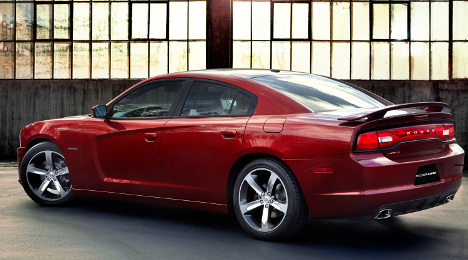
Affected by this campaign are certain Dodge Chargers and Chrysler 300 sedans from the 2012 to 2014 model years. Also included are Jeep Grand Cherokee SUVs from the 2014 and 2015 model years.
Also subject to recall are an estimated 52,144 vehicles in Canada, 16,805 in Mexico and 248,667 outside the NAFTA region.
“Affected customers will be notified when service becomes available. In the interim, FCA US urges customers to follow the instructions in their owners’ manuals,” the company said.
To address customer-satisfaction issues, the automaker began equipping the Charger and 300 with a new shift-lever design in model-year 2015. The Grand Cherokee’s shift-lever was updated in model-year 2016.
Customers with questions may call the FCA US Customer Care Center at (800) 853-1403.