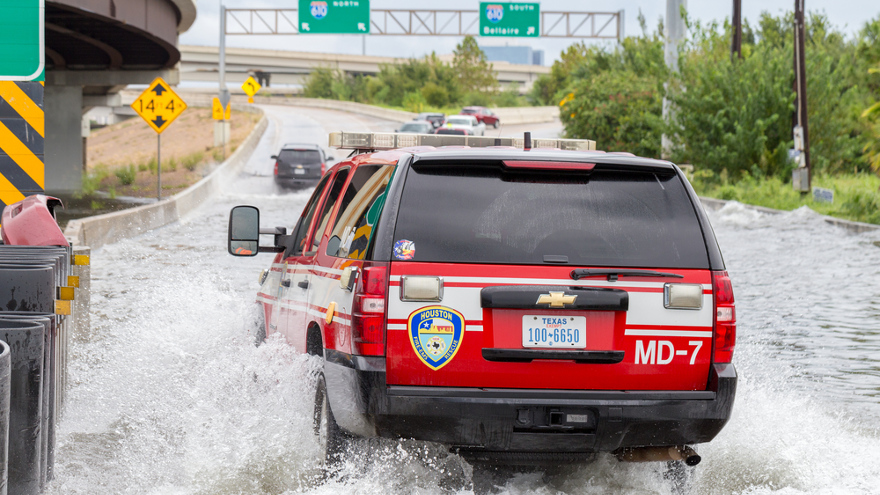
With the industry still sifting through units impacted by Hurricanes Florence and Michael, Carfax shared new information on Thursday, highlighting how many vehicles damaged by flooding remain operation.
Compared to this point last year after Hurricanes Harvey and Irma hit the U.S., Carfax reported 478,000 flooded vehicles on the road; a figure that represents a 47-percent spike year-over-year.
Carfax indicated Texas, Florida, Pennsylvania, Kentucky and Louisiana are the states where flood-damaged vehicles are most prevalent.
Carfax added that the specific cities where the highest penetration of flooded units remain in operation include Houston, New York, Miami, Philadelphia and Dallas.
“Flooded cars rot from the inside out, likely causing safety, health and financial problems for unsuspecting buyers of these waterlogged wrecks,” Carfax said.
This summer, U.S. Senate Minority Leader Charles Schumer delivered a letter to the Federal Trade Commission to outline his significant concerns about what the New York lawmaker dubbed, “hurricane cars.”
Schumer fears scores of vehicles damaged during previous hurricanes currently are in dealership inventory. Therefore, the powerful Senator wants the FTC to increase the regulatory capability of the Used Car Rule already in place in an effort to keep flooded vehicles from being retailed.
“While the FTC has been sounding the alarm on ‘hurricane cars,’ consumers are still at risk of being duped and burdened by a financial road of ruin if they unknowingly buy one,” Schumer said in a news release distributed back in July. “That’s why the FTC needs to drive forward with more than a consumer warning and hit the gas on a plan that uses the ‘Used Car Rule’ already on the books to ensure that the sticker slapped on every used car in a lot details a robust ‘flood check.’”
To help dealers spot flood-damaged vehicle, AutoCheck Auctions offered more than a dozen recommendations after Florence deluged the Carolinas in September.
Before Michael ripped through the Florida Panhandle, Georgia and other parts of the Southeast, Cox Automotive estimated at least 20,000 units likely were damaged.
It’s been about two weeks since Hurricane Florence lashed the Carolinas with rain measured in feet in some places. Now the task given to the wholesale industry — contending with flood-damaged vehicles — is gaining steam.
To accelerate catastrophe response in the Carolinas and Virginia, Insurance Auto Auctions (IAA), a business unit of KAR Auction Services, announced the expanded launch of its IAA Tow App. This enhanced technology utilizes complex data analytics and the latest mobile technology to streamline the dispatch and towing cycle of salvage vehicles.
During natural disasters and catastrophic events, IAA recovers flood-damaged and total-loss vehicles on behalf of their insurance customers, clearing roadways for recovery vehicles and expediting the claims process for policy-holders.
The company indicated the second phase of IAA Tow App has been deployed to towing and hauling contractors transporting vehicles impacted by Hurricane Florence and the resulting flooding.
“One of our primary commitments is to quickly and efficiently transport customer assets to our facilities. This is particularly important during catastrophic events when impacted vehicle volumes surge,” said John Kett, president and chief executive officer of IAA.
“By digitizing and automating a historically cumbersome, paper-driven assignment process, our towing partners can better manage their assignments and loads,” Kett continued. “And by accelerating recoveries, we can inventory, process and auction salvage vehicles faster to help our customers and the communities we support get back on their feet.”
The IAA Tow App utilizes inventory management software to automatically push tow assignments directly to IAA contracted towers with capacity on their tow trucks or haulers. When a tow truck driver accepts an assignment, the app can open the mobile device map function to provide driving instructions.
Once assigned vehicles are located, drivers can check in and quickly complete the entire transport process via the app — from location, to pick-up, to drop-off at an auction facility or holding yard.
“We’ve leveraged the best mobile technology and fueled it with home-grown engineering and data from across the KAR platform to deliver a fast, simple and intuitive resource for our partners,” said John Krupnik, senior vice president and chief technology officer at IAA.
“The app also allows us to deliver real-time tracking and recovery information to our customers so they can monitor the location and status of their assets anytime, anywhere.”
IAA has a catastrophe response team prepared year-round to respond to natural disasters. In advance of Hurricane Florence and its subsequent flooding, IAA secured nearly 1,100 acres available to store recovered vehicles, obtained commitments from over 1,300 towers and has more than 400 IAA team members ready to respond.
IAA has 16 branches in Virginia, North Carolina, South Carolina and Georgia with capacity for the anticipated vehicle volume as a result of Hurricane Florence and historic flooding. All IAA branches, including Wilmington, N.C., are open and fully operational.
Watching for flood units in the lanes
Meanwhile, AutoCheck Auctions acknowledged the sometimes flood-damaged units still make their way to the block. To help dealers and consignors, AutoCheck Auctions vice president Jamye Carpenter shared company plans in a message to Auto Remarketing.
AutoCheck Auctions is currently working on a special report called The Florence Report that will be provided at no additional cost to its auction customers.
“This report will be made available as part of our ongoing effort to provide critical data, helping to protect both auctions and their dealer customers from undisclosed problem vehicle,” Carpenter said.
“It is important to note that the Florence Report will not indicate that a car has flood damage. This report will alert you to the fact that a particular vehicle was registered in one of the flood impacted ZIP codes, prompting you to take a closer look at that vehicle for potential flood damage,” Carpenter continued.
If you find a vehicle has flood damage, Carpenter asked customers to report this information to AutoCheck Auctions by calling (800) 332-2608 or sending a message to [email protected].
Carpenter also offered these tips for spotting a flood-damaged vehicle, including
1. Check the outside body panels for waterlines.
2. Check the carpet, upholstery, and inside doors for mud, dirt, damp feeling and discoloration.
3. Check beneath the vehicle's carpet to see if the pad beneath the carpet is damp.
4. Check for dirt buildup around seat tracks.
5. Check under the dash and in the glove box for dirt or dampness.
6. Look at the owner's manual. Check to see if the paperwork was ever wet.
7. Waterlines could be visible inside the car. Look at the seats, inside doors and door jams.
8. Smell the inside of the vehicle. A musty or damp smell can be a good indicator of flood damage. Is there an over powering use of air freshener?
9. Make sure all the dash lights are working properly. Do the turn signals work?
10. Check under the vehicle for corrosion, flaking metal underneath.
11. Check inside the engine compartment for waterlines, dirt or mud.
12. Are the headlights or taillights fogging?
13. Check the air cleaner for water.
14. Check the oil to see if there's a copper or milky color which could indicate water damage inside the engine.
15. Look for water in the spare tire compartment.
16. Look inside the trunk for dampness, dirt or mud.
Retail challenges, too
On the retail side of the industry, Auto Remarketing connected with Hendrick Automotive Group on Sept. 21 to gauge how Florence impacted operations within the dealer group and how Hendrick prepared ahead of the storm’s arrival.
A Hendrick spokesperson said via email that the retailer took a proactive approach and began closing stores in towns near the Carolina coasts early in the week of Sept. 10-14.
Employee safety being the top priority, the automotive group wanted enough leeway for team members in those areas (specifically: Wilmington, N.C.; Jacksonville, N.C.; Charleston, S.C.) to evacuate, per the recommendation from authorities.
The proactive response to the storm is par for the course for the Hendrick group, which has dozens of stores in the Carolinas.
During events like these, there is constant and strategic communication and coordination between the retailer’s management in Charlotte and the teams at individual dealerships.
Ahead of such storms, stores in affected areas do what they can to secure vehicle sand facilities ahead of time, plus any nearby objects that could cause damage, the spokesperson said.
The protocol for post-storm is to abide by the steps given by local authorities as team members re-enter and assess damage.
Sharing more details on the response to Florence, Hendrick also closed dealerships further inland in the middle to later part of the Sept. 10-14 week. Some have since reopened.
Here’s a breakdown by market, according to the group:
North Carolina
Fayetteville: Closed Sept. 12. Re-opened Sept. 18.
Raleigh-Durham area: Closed 6 p.m. (ET) Sept. 12. Re-opened Sept. 17
Greensboro: Closed 2 p.m. (ET) Sept. 14. Re-opened Sept. 17.
Charlotte-Concord area: Closed 2 p.m. (ET) Sept. 14. Re-opened Sept. 17.
South Carolina
Easley: Closed 2 p.m. (ET) Sept. 14. Re-opened Sept. 17.
Fort Mill: Closed 2 p.m. (ET) Sept. 14. Re-opened Sept. 17.
As of Sept. 21, the exact damage was still to be determined, but the Hendrick spokesperson said the Wilmington and Jacksonville stores were the hardest hit, with other areas incurring minor impact.
In those highly impacted areas, flooding had made it difficult to get to those stores. The group hoped to have those operating again soon, as of Sept. 21.
To meet increasing buyer and seller demand in Germany, Copart has established a second location in Germany that is located near the city of Leipzig.
The company announced Monday that its second location in Germany can store up to 4,500 vehicles and will hold bi-weekly auctions on Thursdays at noon.
“We are proud to open our second location in Germany,” Copart Germany managing director Alain Van Munster said in a news release. “With our proximity to Leipzig, we are able to more efficiently serve a substantial portion of the German market.
Our location is also closer to our members in Poland and Eastern Europe, who represent an important buyer base for our vehicles," Van Munster continued.
Copart subsidiary opens new Wisconsin facility
Meanwhile, another addition to Copart comes from its National Powersport Auctions (NPA) subsidiary in Wisconsin.
NPA, a Copart platform, has opened the doors to NPA Madison — a new 66,000 square-foot size facility in DeForest, which is just outside of Madison.
Located at 6474 Blanchars Crossing, the new location’s first live auction was scheduled to take place on Thursday at 9 a.m. CT.
“Why did we choose Madison? To make it easier for our dealers to do business with us. Madison is the state capital and is near Chicago, Minneapolis and Milwaukee. This puts us much closer to our customers in the region and makes buying and selling through NPA more convenient,” NPA chief operating officer Jim Woodruff said in a news release.
“NPA’s new Madison location reduces the time to auction for all NPA stakeholders in the region. There are several flights between Madison and our other locations, making this new location readily accessible for out of state Buyers and Sellers,” Woodruff continued.
Given the location of the new auction, Woodruff said that he expects live auctions held at the facility to have a diverse mix of units totaling 600 between 800.
The National Auto Auction Association has seen four states that are reclassifying vehicles that previously have been given a clean title as a salvage unit.
As of Aug. 8, NAAA said the locations now following this protocol include Nevada, Ohio, Virginia and Wyoming. The association explained that upon transfer of ownership, some jurisdictions have begun branding/notating previously issued clean titles as salvage titles based on JSI (junk, salvage and insurance) reporting in the National Motor Vehicle Title Information System (NMVTIS).
As part of the Anti-Car Theft Act of 1992, NAAA pointed out that various entities (including salvage pools/auctions) are required to report to NMVTIS inventory that comes into its possession that meets the federal definition of “salvage” or “junk.” The association added that insurers are required to report all total losses.
“These reporting requirements were implemented to prevent bad actors from utilizing the VINs and/or titles of severely damaged or destroyed vehicles in order to obtain clean paperwork to create cloned vehicles,” NAAA officials said, adding more explanation directly from NMVTIS, which stated:
“Both the Department of Justice and the state and local law-enforcement community are concerned that a significant number of these junk and salvage automobiles purchased from salvage pools have their VINs or titles used to create cloned vehicles, or otherwise make stolen vehicles appear legitimate. Such entities must report all salvage or junk vehicles they obtain, including vehicles from or on behalf of insurance carriers, that can reasonably be assumed to be total loss vehicles.”
NAAA acknowledged a question that auctions and dealers are likely asking. If the vehicle was required to be reported to NMVTIS, why didn’t the vehicle already have a salvage title?
NAAA officials explained that the federal definition of “salvage” and “junk” that would trigger a reporting requirement is not the same as states’ definitions for salvage/junk that would trigger a title branding/notation. NAAA reiterated states are not required to brand titles based on NMVTIS reporting. However, the association said some states are choosing to do so as they have modernized their operating systems and pulled NMVTIS information into their normal process flow for title issuance.
To clarify the point further, NAAA pointed to more details from NMVTIS, including:
“The Department of Justice recognizes that many state laws have differing requirements and definitions of terms of such as ‘junk’ and ‘salvage.’ The NMVTIS requirements do not alter these state laws and the state laws do not prevail over federal definitions and requirements. The information reported to NMVTIS is not required to be used by any future state that titles a vehicle included in an auto recycler, junk or salvage yard report. The NMVTIS reporting requirements do not replace or negate any state reporting requirements.”
NAAA closed its latest update on the matter saying that the association “is working with the industry on this issue.”
If auctions experience any issues regarding this title matter, they are asked to contact Tricia Heon at NAAA by sending a message to [email protected].
The National Insurance Crime Bureau (NICB) looked at the cost of replacement parts for the Top 10 stolen vehicles from the 2016 model year and uncovered how lucrative illegal operations can be that chop up these units — and potentially take away business from your dealership’s service drive.
NICB insisted that expensive parts will continue to drive thefts as criminals steal cars and trucks to strip them and sell the parts on the black market.
Thefts of vehicles in the U.S. rose again last year by more than 4 percent, according to preliminary 2017 crime data from the FBI. Officials indicated many of the vehicles that are recovered are missing wheels and rims or other key parts, while ones that are never recovered end up in chop shops where they are quickly dismantled and sold piece by piece.
The NICB pulled average OEM part prices from a database of more than 24 million vehicle damage appraisals generated for insurance claims from 2016 and 2017. Parts such as bumpers, doors, fenders, hoods and headlights were on the list. Major components like the engine and transmission were not included.
Here are three examples of what bureau officials found:
—The 2016 Toyota Camry, the most stolen 2016 model in their latest “Hot Wheels” report, had 15 commonly replaced components valued at nearly $11,000. That’s not including labor.
—The 2016 Nissan Altima had 14 standard components worth more than $14,000, including a single headlamp assembly valued at more than $1,000.
—And the 2016 GMC Sierra pickup truck included a $1,100 headlamp and a rear bumper worth more than $1,100. The 20 standard components rang in at more than $21,000.
“For the professional theft ring, stealing and stripping vehicles for parts has always been a lucrative business,” NICB senior vice president and chief operating officer Jim Schweitzer said. “On today’s cars and trucks, the parts are often worth more than the intact vehicle and may be easier to move and sell. That’s why we see so many thefts of key items like wheels and tires and tailgates…there’s always a market for them.
“We support law enforcement efforts, especially the auto theft task forces that focus on these kinds of theft rings,” Schweitzer continued. “Shutting down a theft ring and a chop shop can have a major impact on reducing thefts in a community.”
The NCIB shared more details in an infographic available here as well as a video that can be seen here or through the window at the top of this page.
An auction operator who likely saw at least some of the rain from Hurricanes Harvey and Irma spelled out his five points to consider as the industry watches for flood-damaged vehicles.
Chris Tomchay, co-founder and chief operating officer of The Appraisal Lane and co-owner of the Georgia-Carolina Auto Auction, shared his five thoughts as estimates approach 1 million units being impacted by the consecutive Category 4 hurricanes to touch the U.S.
“Apart from the basics, there are other telltale signs that dealers and private parties should pay attention to when it comes to signs of hurricane-related damage,” said Tomchay, whose auction is located 70 miles northeast of Atlanta. “Information is power, so arm yourself with as much knowledge as possible to avoid getting burned on the bottom line.”
Here are Tomchay’s five additional tips:
1. A clean history report doesn’t always mean a clean vehicle.
With widespread hurricane damage in Florida and Texas in recent months, and with Tropical Storm Nate now bearing down on the Gulf Coast, Tomchay explained that it’s important to note that dealers can’t always trust a clean vehicle history report.
“Sometimes there is lag time in the reporting of flood damaged cars to vehicle history reporting organizations. Even 60 or 90 days, at this juncture, is enough time for a vehicle that would otherwise been deemed as ‘salvage’ or ‘totaled’ to be sold to an unsuspecting buyer,” he said.
2. There’s a big difference between salt water and fresh water damage.
While fresh water submersion means damp upholstery or wet engine components that could ultimately be dried and restored, Tomchay pointed out salt water damage is something altogether different.
“Salt causes significant corrosion which, in the long run, can cause big problems to the major components of a car, including the steering and electrical systems, the transmission, the undercarriage, the fuel system, the body panels, and much more,” Tomchay said.
He added that while some waterlogged vehicles with minor damage can represent a good value, it’s important to know the type of water that caused the damage.
3. Flood damaged vehicles can break the bank — but they can also come at a value.
Tomchay acknowledged that certain flood damaged vehicles represent a value depending on the extent and type of damage.
“I’m all for buying a car at ($0.50) on the dollar if it was submerged to the floor in fresh water, or purchasing a vehicle for ($0.75) on the dollar if it was stranded on a ship in a salt water port and the manufacturer merely voided the exterior paint warranty,” he said. “It really depends on the situation.”
4. Beware of out-of-state registrations.
If a vehicle that is registered in a known hurricane-havocked region suddenly shows up for sale in your Northeast or Midwest market, Tomchay recommended that dealers should be extra diligent — particularly now.
“Take a little extra time to evaluate the vehicle using The Appraisal Lane’s SMART tips,” he said. “It could wind up saving you thousands of dollars in the end.”
5. Flood damage isn’t the only hurricane damage.
Tomchay also mentioned small sized hail on a light colored exterior could go unnoticed, as could sand blasting from high winds.
“Be sure to closely inspect a car’s exterior in proper lighting, preferably in sunlight and from various angles,” he said. “If you’re still unsure, solicit an inspection from a qualified body repair shop.”
Tomchay concludes that if dealers are still uncertain when it comes to evaluating a potential hurricane damaged vehicle, or off-brand/one-off inventory, a community approach to appraisals is best — one that connects you with expert appraisers in real time, backed by cash offers.
“Evaluating vehicles based on the law of averages is particularly risky, not to mention trying to evaluate vehicles that may have been damaged during this volatile hurricane season,” he said.
The Appraisal Lane — a Silver Sponsor at Used Car Week which begins on Nov. 13 in Palm Springs, Calif. — consists of vehicle appraisers whose singular responsibility is to evaluate thousands of vehicles each month across all makes and models. The company’s mobile app can connect dealers with a larger community of appraisers and buyers to receive real time cash offers on inventory.
For dealers interested in more information about The Appraisal Lane, visit www.theappraisallane.com or send a message to [email protected].
Nick made the trip to Washington, D.C., this week for NIADA’s National Policy Conference and connected with NIADA president David Andrews and Kathy Collins, who is the industry relations manager at CARFAX.
We discussed how independent dealers are faring this year and how the industry is handling thousands of vehicles damaged by Hurricanes Harvey and Irma.
Check out the conversations below.
Download and subscribe to the Auto Remarketing Podcast on iTunes or on Google Play.
You can also listen to the latest episode in the window below. All episodes can be found on our Soundcloud page or by visiting www.autoremarketing.com/ar-podcast. Please complete our audience survey; we appreciate your feedback on the show!
As passionate as Jim Hallett spoke about the ways KAR Auction Services is geared up to handle the wholesale market workload coming because of Hurricane Harvey, the company’s chairman and chief executive officer emphasized more than anything during an exclusive conversation with Auto Remarketing on Friday how the well-being of nearly 1,000 employees in the impacted region trumped it all.
While KAR wasn’t aware of any employees being injured, Hallett shared that some individuals initially ended up in shelters after being rescued by emergency personnel. That stark reality is giving KAR’s team some profound perspective as Insurance Auto Auctions braces to process thousands of damaged units and ADESA prepares for the likelihood more units will be coming down the lanes at physical facilities or online.
“I think you start with a good word, horrific. First and foremost, we’re talking about lives here. We’re talking about people losing their lives in this event. Losing their homes and their entire belongings. When you think about it, it’s just really devastating,” Hallett said.
“We’re truly committed to our employees and truly committed to the community,” he said later during the phone conversation. “We want to help these employees and want to help these communities rebuild. We’re going to work with local officials to help people get re-established. This is a big comeback here.
“I want to tell you how proud I am of this organization and how proud I am of all of our employees throughout KAR, all of KAR, all of our business entities. It’s unbelievable the number of employees we’ve had say, ‘How can I help?’ These are employees not anywhere near Houston; employees that are scattered around the country and North America who are stepping up,” Hallett went on to say.
“That’s such a refreshing feeling and speaks to the culture at KAR,” he added.
KAR also is organizing programs so its employees can volunteer as well as donate financially.
“We want to take care of our own but also want to be able to help the community, as well,” Hallett said. “It makes me very proud as CEO of this company to know we have a culture that cares, not only cares about ourselves but cares about each other and our community. At the end of the day as tough as this is and difficult as it is, it’s going to make our company even stronger.”
Stronger plan at IAA
Also participating on the exclusive call was John Kett, who is chief executive officer and president of Insurance Auto Auctions. While IAA and its insurance company clients are still gathering information, Kett acknowledged the damage from Harvey is likely to surpass what the company handled during Hurricane Katrina and Superstorm Sandy.
“We’re really going to focus on the recovery,” Kett said. “At IAA, that’s really where we begin to help. We’re helping to get those vehicles off the streets and out of people’s yards and helping the insurance companies settle claims so they can help their policyholders begin to rebuild their lives. First and foremost, that’s what we provide in an event like this.”
Kett highlighted how IAA has modified its disaster response, using the experiences gained through Katrina, Sandy and Hurricane Matthew last fall. One component of the enhanced planning Kett explained is how IAA already identified key personnel who will be a part of handling tasks associated with natural disasters like hurricanes. He indicated members of that team headed for Texas even before Harvey finished dumping more than 50 inches of rain in some locations near Houston.
Kett noted that IAA also has improved its database of pre-screened tow truck operators as more than 1,000 units are set to pick up damaged vehicles in the region. He also touched on how IAA is making sure additional employees have temporary housing accommodations and plenty of fuel is available for equipment. It’s all part of mobilizing as much as possible for when the real heavy-lifting beings.
“Our approach is getting people there, getting equipment and getting capacity. We have a plan throughout the flood-prone areas to have additional real estate available. The size and scale of this were far beyond our normal planning horizon so we’re adding hundreds of acres as we speak,” Kett said.
“We’ve done a much better job of being ready. We worked through our plans during the non-catastrophe part of the year so when the storm does hit we can just put those plans into motion,” he continued.
And once IAA coordinates with insurance companies and salvage units are to be sold, the company already has plans in motion for those tasks, too.
“Once it’s time to begin to liquidate, another thing we bring to the table is we’ve got an extensive buyer base both domestically and internationally. We’ve got buyers in 110 countries. They like this type of inventory,” Kett said. “We’re already beginning to build marketing campaigns to make them aware so they’re ready when we’re able to begin selling these vehicles.”
Meeting needs of dealers & consignors
Not far off from his emphasis on the well-being of employees, Hallett also described how the entire KAR family of companies is looking to cater to the needs of dealers as well as consignors since Harvey is leaving the wholesale market in a unique position. For example, additional off-lease volume no longer is likely to be troublesome.
“This is a big opportunity for the remarketing customers. I think this is really going to help many these captive finance companies and leasing companies to be able to move some of these what I call young vehicles, 3-year-old, off-lease cars with 40,000 miles on them, and move them into the Houston market and have a great outlet for these vehicles,” Hallett said.
“I do believe we were concerned about some price erosion with oversupply of off-lease cars,” he continued. “I think there may even be an opportunity for the price to stabilize if not improve a little bit. That’s not just in the Texas market. That could affect prices across the country.”
While hundreds of KAR employees have been impacted by Harvey, Hallett wanted the entire industry to know KAR is “open for business.” The company indicated usual activities at ADESA, IAA and AFC operations in Texas and beyond are on schedule.
“We want our customers to know, both sellers and buyers, that we are absolutely going to do everything we can to support their selling and buying activities in every possible venue we have, including our physical auction footprint, our online nationwide private label business through OPENLANE and TradeRev that allows dealers to buy vehicles as well as AFC that provides the liquidity to buy these cars,” Hallett said.
“We’re not going to take advantage of the situation,” he added. “We’re not going to increase prices because of demand. We’re going to be very fair and understanding. We’re going to do business as usual without putting any extra burden on the buyers and sellers. We’re going to assist them in any way we can.”
Copart on Friday launched the newest version of the Copart Mobile App, available for Apple iOS and Android devices. The Copart Mobile App is designed to give buyers the ability to attend Copart’s live auctions from anywhere.
With this new update, Copart said buyers will enjoy a faster, easier user experience.
“Each new iteration of the Copart Mobile App provides another level of value to our buyers in more than 150 countries and territories using the app,” Copart chief executive officer Jay Adair said in a news release.
“We are seeing tremendous usage rates, with more than 80 percent of those who download the app using it every three days, and the majority of those using it daily,” Adair continued.
With the Copart Mobile App update, Copart buyers get access to the following features:
—Upload licenses using the Copart license uploader
—Scan bar codes using the new lot scan feature to get vehicle details at Copart locations
—Choose a preferred language with new multi-language options available in the app settings
—Access updated search filters with the Copart smart search tool
—View vehicle videos and extended notes now available in the app
In 2013, Copart launched its first iPhone app as well as its first iPad-optimized app, providing Copart buyers with a convenient tool to view vehicles, join live online auctions and place bids. In 2015, the company launched the Android version, expanding its reach to an even broader digital audience.
Since then, the app continues to be a product of innovation and refinement. In addition to updating its mobile app, this year Copart launched an updated, mobile-responsive version of its website, Copart.com. The enhanced website is 10 times faster than the previous version.
“Through buyer surveys, website feedback forms and app store reviews, we can pinpoint our buyers' needs and update our app and website to stay ahead of the game,” said Michelle Hoffman, Copart’s vice president of marketing.
To learn more, go to at Copart.com/mobile.
Copart now has 200 physical location to facilitate its online salvage auction endeavors. The latest one came aboard on Thursday, representing the company’s 15th location in California.
Copart opened its newest location in Wilmington, Calif., as now the company operates seven locations in southern California.
“More than three decades ago, Copart opened its first yard in California, so it’s only fitting that the landmark opening of our 200th location is also in California,” Copart chief executive officer Jay Adair said in a news release. “I’m extremely proud of the hard work that has gotten us here, and I look forward to continued success.”
In 2002, Copart expanded to 100 locations in the United States. One year later, it opened its first international location in Canada. Today, Copart has operations in 11 countries across five continents.
“A growing global presence is a win for both our sellers and buyers. For our sellers, it improves cycle time and reduces costs. For our buyers, it increases access to a greater volume and variety of vehicles,” Copart president Vinnie Mitz said.
Through Copart’s multi-channel online platform, sellers are linked to potential buyers, and bidders can view location information, search vehicles, place bids and participate in live online vehicle auctions on their mobile devices, tablets and computers.
In addition to conducting online vehicle auctions, Copart is a proud community partner. Visit TeamCopart.com for a glimpse into the many ways that the company supports local, regional and national charities, law enforcement and first responders.