DealerRater recently announced that LotShot, previously a web-only photo review application, is now available as a feature in the DealerRater for Dealers app for iOS.
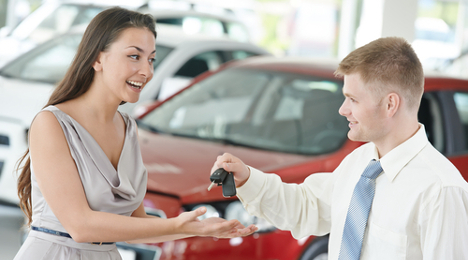
Considered to be easier to use than ever before, LotShot can allow salespeople at DealerRater Certified Dealerships — which currently stands at more than 5,600 stores in the U.S. and Canada — to snap and share customer photos at vehicle delivery, email them to a customer and “dramatically” improve their chances of receiving a review.
The site insisted nearly 50 percent of all LotShot review requests made by dealership salespeople to their vehicle-buying customers result in a review on DealerRater.
“Purchasing a car is a significant event and LotShot has proven to be both a fun way to share the moment and a very effective way to quickly earn a review,” DealerRater chief executive officer Gary Tucker said.
“Adding LotShot to our smartphone-based employee app streamlines the picture-taking, sharing and review invitation process,” Tucker added.
In a social media-powered consumer economy, DealerRater highlighted that studies have shown that photos perform best for likes, comments and shares compared to text, video, and site links. In addition, product and service reviews that include customer pictures greatly improve review credibility.
Photo reviews on DealerRater earn more than twice the amount of helpful votes from consumers compared to plain text reviews.
“LotShot is simply cool,” said Chuck Prosch, fleet/Internet manager at Pearland, Texas-based Strickland Chevrolet, a two-time DealerRater Texas Dealer of the Year and Consumer Satisfaction Award winner.
“I don’t know anyone who doesn't like to see a picture of themselves with their new vehicle,” Prosch continued.
DealerRater emphasized the LotShot app capability is simple to use. A dealership salesperson opens LotShot on their smartphone, takes or uploads a photo, enters the vehicle-buyer’s name and email address, previews the note and sends the photo along with DealerRater review completion instructions.
“What we have found with LotShot is that customers not only get back to us about the experience they had with their salesperson,” added Prosch, “but they also share LotShot photos with family and friends, adding to the positive feeling they have about our team members."
The DealerRater for Dealers app for iOS is included in Certified Essentials, the company’s reputation-management toolkit. The iOS version of the app is available for immediate download by DealerRater Certified Dealers.
An Android version of the app will be released soon. Certified Dealers can sign up to be notified when it becomes available.
For more information on LotShot, visit info.dealerrater.com/Lotshot.
Arriving just a couple of days after video advertising technology firm Pixability detailed how many monthly views automotive content on YouTube generated in 2015, social video analytics company OpenSlate pinpointed the Top 10 automotive brands that enjoyed an average subscriber growth rate of 27.3 percent in January.
OpenSlate indicated general automotive content YouTube channels generated a total of 111 million monthly views and boasted 5.3 million total subscribers, averaging about 53,000 subscribers per channel.
The firm determined the Top 10 automotive channels are associated with a wide array of badges with an average of 29,400 subscribers.
That Top 10 according to OpenSlate, which also noted recent monthly growth, includes:
1. Infiniti Europe: 90.70 percent
2. Mini USA: 44.90 percent
3. Chevrolet Canada: 31.70 percent
4. Kia Motors Worldwide: 28.10 percent
5. Ford UK: 17.90 percent
6. Jaguar UK: 16.80 percent
7. Toyota Global: 13.70 percent
8. Scion USA: 10.70 percent
9. Subaru Canada: 9.60 percent
10. Mazda USA: 9.50 percent
As Auto Remarketing previously reported, Pixability’s Get Behind the Wheel: Auto in the Premium Video Ecosystem study released Monday said that auto-related YouTube content generated 2 billion monthly views in 2015 and that annual views climbed 42 percent between 2014 and 2015.
For much of the late 2000s and in the early portion of this decade, monthly views of auto content averaged 500,000 or fewer, though slowly but surely rising. It eventually eclipsed the 2 billion monthly view mark.
The Pixability study also says that there has been stronger interest in searching for the term “car review” on YouTube over the past five years than on Google.com.
Senior editor Joe Overby contributed to this report.
A vast majority of consumers said they would not buy another vehicle from a dealership after their data had been compromised, according to a recent survey given to both dealers and buyers.
The second annual dealership survey by Total Dealer Compliance also showed that fewer than a third of dealers employ a network engineer with computer security certifications/training.
“As car dealerships continue to be a real target for cybercriminals, with fewer data-protection measures in place than most other industries, we set out to discover the effect this is having on a car dealership’s bottom line,” Max Zanan, president of TDC, said in a news release. “Our report discovered that more than 70 percent of dealers are not up to date on their anti-virus software, and nearly a third of consumers lack confidence that their personal data is secure when purchasing a vehicle.”
Highlights from the survey given to dealers include:
— Nearly 85 percent have a contract with a 3rd party vendor to handle more complex IT work.
— Only 30 percent of dealers employ a network engineer with computer security certifications/training.
— Only 25 percent hired a third party vendor to try to hack into their networks to test their vulnerability.
— More than 80 percent employ an IT engineer to handle basic day-to-day work.
— More than 70 percent of dealers are not up to date on their anti-virus software.
Highlights from the consumer survey include:
— Nearly 33 percent of consumers are not confident in the security of their personal and financial data when making a purchase at a dealership
— Just under 84 percent of consumers will not go back to buy another vehicle from a dealership after their data has been compromised
TDC recommends that dealerships should regularly conduct IT vulnerability scans, Windows security checks, provide online courses on networking, as well as implement a solid computer security policy. TDC conducts vulnerability scans by using independent “White Hat” hackers to discover a dealership’s cyber vulnerabilities and based on those vulnerabilities discovered, create policy.
“Car dealerships need to put procedures in place to help prevent cybersecurity attacks. We help dealers focus on social engineering and how not to fall victim to hacking,” Zanan said. “As ever, our report turns a spotlight on the hot topic of data security, revealing the necessity of having strict policies and procedures in place that are being adhered to by all employees to ensure consumer confidence and loyalty.”
The distance between Dallas — where mobile marketplace startup 5miles is based — and the headquarters of the National Independent Automobile Dealers Association in Arlington, Texas is about 20 miles, give or take.
But the path that 5miles took to the auto industry was serendipity.
The startup soft-launched the local marketplace app in August 2014 before a full-scale launch in January 2015.
After its first full year of operations, the company analyzed activity on the app, where individuals can buy and sell everything from reptile tanks to steel drums, while also browsing listings for jobs, housing and services.
5miles wanted to figure out how, exactly, people were using the app.
What they discovered was unexpected.
“Much to our amazement, we went from becoming, really, a ‘clean out your closet, clean out your garage app’ to noticing more and more cars being listed and sold,” Rick Cantu, general manager at 5miles said by phone Wednesday at the NIADA Convention.
“So, being inquisitive data analysts that we are, we dove a little deeper into the numbers and we started noticing that a lot of independent dealers were using our app — some exclusively, others in conjunction with other marketing channels to move their inventory,” he said.
“And then we started running some more numbers and we realized, ‘Holy Toledo, we have over 150,000 searches for cars on our app every day,’” Cantu said.
At that point, he said, the 5miles team realized they needed to learn more about the car business, given the traction it had made among independent dealers and car buyers, alike.
“We’re a mobile media company. We don’t know anything about cars,” Cantu said.
So, following this organic growth into the car sales community, 5miles put together a team to conduct research, focus groups and begin talking with dealers to learn more. 5miles, Cantu said, wants “to be a part of the industry.”
The company added staff with experience in the car business to reach out to independent dealer community.
By hiring people from the dealership community, 5miles sought to find out how a dealership’s operations work. Heck, they also wanted to learn the lingo (alphabet soup, anyone?). The 5miles team also checked out auctions around Dallas to learn more about how dealers acquire inventory.
Cantu said that one of first dealers 5miles met with had sold 140 cars through the app and had 40 listed. The dealer, Cantu said, was actually selling a non-automotive item, simply as an individual, and the lightbulb went off.
“And he thought, ‘what would happen if I started listing my inventory on the app?’” Cantu said. “And lo and behold, he started getting offers.”
It was the chance to meet with dealers that drew 5miles to the NIADA Convention. They posted up in a booth to get dealers’ thoughts on what was needed in the app and what was beneficial about the app, which has had nearly 9 million downloads to date.
Room to grow
As far as expansion, 5miles started in a few markets in its home state of Texas before implementing a “bicoastal” strategy, moving into San Francisco, Los Angeles, Miami and Tampa.
The company first focused its marketing in the South and Southwest and plans for its next area of growth to be the Eastern Seaboard and the Midwest.
“I like to call them the Southwest Airlines cities, where there might be an NFL team there or they’re big enough that they have good sized airports, and then we kind of fill in with adjacent markets or connecting markets beyond that,” Cantu said.
He said people have realized that they can use 5miles to not only sell that old set of golf clubs, but pricier items like cars, as well.
“I believe that this user base that we have may have included a whole bunch of salespeople from the car lots who realized here’s yet another marketing channel that’s available to me and I don’t have to take pictures and transfer them to a laptop and upload them to a website,” he said. “I can do everything from the power of my smartphone.”
Making it safe
The world of peer-to-peer buying has the potential to make one feel uneasy or even unsafe. However, Cantu said 5miles has implemented measures to keep the app “clean and healthy.”
How exactly?
A company spokesperson that users are “triple-verified” through email, phone and social media, and this verification is shown on the user’s profile. There are also peer-to-peer ratings and reviews incorporated into the app “to help users feel more confident that the people they are trading with are real, not scammers,” the spokesperson said.
Additionally, 5miles takes measure to protect the privacy of users. It limits the amount of personal information shared by the seller, the spokesperson said, and the in-app chat feature gives users the option to communicate without sharing personal contact information.
There are also features currently in the works to give users some reassurance when they meet face-to-face for the transaction.
‘Transact with their neighbors’
Cantu said part of what sets the app apart is that it is “multi-category,” offering products, services and jobs. It is also “hyper-local,” in that the goal is to transact within a five-mile radius (hence the name).
That said, you can expand the parameters of a search beyond five miles.
“If you want to drive across town to find something, go ahead,” Cantu said. “But our belief is that people want to shop close to their neighborhood and transact with their neighbors as much as possible.”
At this point, the company is getting 5,000 additional car listings and 1,500 cars sold each day. And there are 150,000 vehicle searches per day.
“We’re here because we have a tidal wave of demand from our users,” he said, “and we want to connect those users with the independent dealer industry.”
When I think about advertising trends that automotive dealerships should adopt, my thoughts immediately jump to social media.
Let’s be honest: Social media is a hard sell. It’s nearly impossible to track its ROI.
It’s tough to manage well and can take up an enormous amount of time. But with people spending more hours online than ever before, your dealership cannot afford to dismiss social media as an important marketing vehicle.
Instead, take a few minutes to learn about the channel and discover the recommendations from our marketing team at NCM Associates.
Facebook is home base, especially for women.
The largest social media space in the world, Facebook serves content to an estimated 1.04 billion users daily. Yes, that’s with a B.
A 2015 study from Pew Research Center found that 62 percent of the world’s entire adult population uses the social media platform, and it is most popular with women (77 percent of online women regularly use Facebook).
The numbers certainly suggest that Facebook is a universal social hub, but our marketing team proposes that many users 25 and younger maintain a profile, but rarely post on it. It’s actually trending older.
Facebook’s older- and woman-focused demographics shouldn’t discourage automotive dealerships from having a strong presence there. If anything, this is a phenomenal opportunity for you to reach female decision-makers. Just do it in a way that resonates with the audience.
Here’s an example. Do you have a car seat safety program? Post an infographic about the essential elements of car seat safety. Share a compelling video about the dangers of driving unrestrained children.
And remember: One of the best things about social media is that you don’t have to create all the content yourself! Feel free to share great work from other organizations; just be sure to give them the appropriate recognition.
Next, use social media (and regular press) to publicize a child safety seat inspection day — this brings an online audience into your dealership.
Not only have you done a public service and received great press, you’ve brought online customers to the lot and deepened their trust in your business. Even if they don’t purchase the day of the event — and they probably won’t— where do you think they’ll go when the family car needs to be replaced?
Surprise! Google+ isn’t dead.
I’ll be honest: I can’t think of a single Google+ page that I’ve visited in the last three years. There was a lot of excitement when the search giant announced its privacy-focused social media platform, but it just couldn’t compete against the Facebook juggernaut. Most people abandoned their “circles” within a year or two.
Our marketing team is currently ramping up its efforts in this channel. And the key to their strategy is regularly updating Google+ content. Why should you do this?
Even though most customers have abandoned the space, Google cleverly has tied its page rankings with it — Google+ carries significant weight when it comes to search engine optimization (SEO) and organic search position.
How do you use it? Google+ operates very similarly to Facebook, and visual content such as video and photos perform well. Short, digestible news is good, too.
Because G+ trends technical, consider sharing information about franchise innovation. It’s a fantastic spot to share content appealing to gearheads.
The easiest way to incorporate Google+ into your social media mix is to select a few Facebook posts to tweak and share on Google+. (NCM Marketing advises: Never share identical posts across platforms.)
When you have an active Google+ account along with a verified business profile, you can create a well-organized network of Google-based content and information for your customers.
LinkedIn – Where the wealthy spend their time.
I’m not going to lie: I love LinkedIn. There’s fantastic content related to the business and financial world, and I’ve found insightful articles about management and leadership. I’m in good company, too: About 25 percent of adult Internet users frequent the business networking and publishing site.
Nearly half of those people earn annual household incomes of $75,000-plus. LinkedIn also trends older, with the bulk of its users falling between 30 and 49 years old.
So, what does this mean for your auto dealership? A couple of things.
First, LinkedIn in one of the best resources available to recruit manager- and executive-level staff. Join one of the many automotive groups to find talent; at the very least, you’ll gain useful guidance and insights.
In terms of retail advertising, LinkedIn isn’t always a good fit for dealerships. However, if you sell a high-value luxury line, establishing a presence here could work; the users certainly can afford your product.
Make sure not to sell, though; the best way to interact with your potential clients would be to share interesting news about the franchise and its products. Think of it this way: You’d never ask for a job at a networking event, so don’t try to sell a car on LinkedIn, the social media equivalent.
Twitter: Young, hip and urban.
Twitter offers excellent marketing opportunities for dealerships in major metropolitan areas wanting to attract a younger customer base. (Millennials, anyone?) About a fifth of the world’s adult population uses Twitter, and it is widespread with youth living in cities.
It moves fast, though. So, if you’re going to use Twitter, make sure you understand tweeting conventions, study up on hashtags, and have enough agility to respond quickly to trends and changes.
So, where are all the kids?
Kids are all over the place. Instagram and Pinterest are very popular with the youth demographic, and they’ve captured roughly a quarter of adult users.
Snapchat, Kik and WhatsApp are typical messaging apps used by teens and young adults. While these are resources that replace smartphones’ built-in text-messaging functions, youth-focused retail brands are starting to produce content solely on Snapchat.
Should you use them? Maybe. First, consider your audience. If you sell vehicles that appeal to the youth market, it might be worth it. Second, consider your time and staffing.
Our marketing team believes that expansion into these social media channels should only happen after dealerships have successfully started and managed a robust social media program in the major channels: Facebook and Google+, and LinkedIn and Twitter, if applicable to your market.
Every dealership needs a strong social media presence. It helps create a connection between you and your customers, and it helps them develop loyalty to your business. But you need to be a savvy social media marketer.
Establish a presence in the places that matter, and ensure that you’re producing quality, engaging content. Once you’ve accomplished that, carefully consider the other, less-popular option: If they fit with your target market demographic, go for it. If not, walk away with confidence.
Trevor Robinson is NCM Associates’ director of retail solutions, training and development.
The shopper is on your dealership lot.
Game over, right? The shopping and research process: done and done.
Not anymore it isn’t.
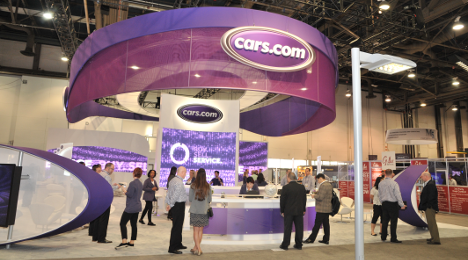
In an interview here at the NADA Convention & Expo, Jeni Pecard of Cars.com said that, “because of these mobile devices and having this information available to you at all times, the consumer journey has changed.”
And the online-to-offline window of that journey is “pretty tight,” she said.
“People are using their mobile devices all the way up until they walk up to the desk and they’re ready to buy,” said Pecard, manager of site analytics at Cars.com.
Pecard was talking with Auto Remarketing about the company’s new Lot Insights product, which is designed to give dealers a better picture of what consumers are doing on their mobile phones while they are at or near their dealership.
Lot Insights is one of two products Cars.com released at NADA, both of which not only tackle different stages of car ownership, but do so with mobile in mind.
Cars.com may have started in the car listings space, but it’s clear the company’s approach goes far beyond that.
In a news release at the convention, chief executive officer Alex Vetter called his company “the trusted bridge between consumers and local dealers,” and said that Cars.com strives to serve as relationship-builder through all car ownership stages.
These days, a big part of that ownership lifecycle and buying process centers on mobile.
In addition to Lot Insights, Cars.com officially debuted Sell & Trade at NADA, which gives consumers a way to sell their cars through an app and gives dealers a way to stock up used-car inventory.
Through the Quick Offer mobile app, consumers can upload information on the car they wish to sell and get real-time online offers from dealers in their area.
Meanwhile, dealers can tap into the Quick Offer for Dealers mobile app to bid on cars.
Auto Remarketing talked to Cars.com senior director of product Joe Oliveri last July about Sell & Trade, which Cars.com had been piloting for six months at that point.
At NADA, Oliveri provided an update. He said the company continued to test Sell & Trade since the summer, rolled out to some larger markets in January and then ultimately conducted the big launch at the convention.
“This is one way to provide transparency to the consumer, and bring that component of the transaction online,” Oliveri said of Sell & Trade. And help the process run quicker, he added.
Seems to be a common theme in the business, as more of the processes move towards digitalization and expediency.
Just take a look around the expo hall at NADA.
“There are companies here that are looking to bring some of that transaction online, and it’s going to continue to become an element of what consumers want,” Oliveri said. “Cars.com feels like this is our first step, at least, to help make it easier for the consumer, but also bring a very qualified — in this case, it’s called a seller or a buyer — to the dealership’s store.”
Say the consumer is already at the store. And like many of us, they’re tethered to that smartphone.
Cars.com addressed that through the Lot Insights product. It provides analytics on mobile shoppers’ activities at or near a dealership lot.
“Lot Insights is a report that really helps dealers understand consumer behavior from a mobile perspective,” Pecard said.
“The whole game has changed with the advent of mobile, so we wanted to start sharing information with the dealers about what they’re doing while they’re looking at their phones on the lot,” she added.
So, what are consumers looking at? Inventory, for one.
In fact, Pecard said more than half are still browsing inventory while they’re on the lot. Beyond that, many also are checking out dealership information.
But here’s where the data gets even more pivotal.
Citing a third-quarter Cars.com Behavioral Analytics on Mobile Study, Pecard said that when shoppers are at a dealership, not even half are checking out the store they’re visiting and eight in 10 of these folks are checking out the competition.
Statistics like those underscore the importance of mobile, which has become a big part of the strategy at Cars.com and, really, a focal point for car-buying in general.
This is evident in both Lot Insights and Sell & Trade.
“Mobile is at the epicenter of our lives,” Vetter said in the news release. “It only makes sense to develop solutions that meet the needs of today’s consumers and advertisers, and Sell & Trade does just that. As the automotive industry continues to shift into a mobile-first world, Cars.com is committed to lead the way.”
Vetter adds: “Lot Insights is a game-changer. We are the first in our space to quantify mobile shoppers on dealership lots across the country and capture their shopping behavior. This is a great first step for the industry to start advancing the attribution conversation and evolve marketing strategies and analytics to align with today’s consumers.”
Third-party automotive websites are improving satisfaction by capturing the attention of vehicle shoppers through increased use of the visual Web and its streamlined approach to site navigation, according to the J.D. Power 2016 Third-Party Automotive Website Evaluation Study released on Thursday.
The study, now in its fourth year, measures the usefulness of automotive third-party websites during the new- and used-vehicle shopping process by examining four key measures in order of importance:
— Information and content
— Appearance
— Navigation
— Speed
Satisfaction is measured on a 1,000-point scale.
While the impact of appearance on third-party auto website satisfaction has increased at a steady pace to 24 percent in 2016 from 21 percent in 2013, J.D. Power found there exists a significant 83-point gap in satisfaction between third-party sites and manufacturer sites (742 versus 825, respectively).
Appearance is the highest-scoring measure for auto manufacturer sites and second lowest for third-party sites, according to the study.
“The common bond among top-performing third-party auto sites is a heavy reliance on the ‘visual Web,’ with its very streamlined, easy-to-use site navigation features,” said Arianne Walker, senior director of marketing analytics at J.D. Power.
“Expectations continue to increase not only because auto manufacturers have such visually stimulating sites but because websites in many categories have focused on enhancing visual aesthetics and easy navigation,” Walker continued. “If third-party sites want to maintain and increase their usage among shoppers, they need to consider the impact appearance has on satisfaction and continually work to improve the look and feel of the website to keep up with the ever changing expectations of shoppers.”
J.D. Power highlighted a trio of other key findings of the 2016 study, including
1. Visual Web influences site preference
The study found that the highest-scoring third-party auto websites employ heavy use of visual Web design elements such as edge-to-edge imagery, cleaner spacing and aesthetically pleasing call-to-action colors.
2. Expert reviews must cover the basics
J.D. Power said content is king when it comes to satisfying shoppers on third-party sites, which includes ratings and reviews. Shoppers told J.D. Power the most important content to cover in an expert review is safety (38 percent), performance (24 percent) and functionality (11 percent).
3. Satisfaction drives loyalty and advocacy
The study determined that 83 percent of highly satisfied shoppers (overall satisfaction scores of 901 or higher) using third-party websites say they “definitely will” return to the website in the future, and 81 percent say they “definitely will” recommend the site, while only 3 percent of displeased shoppers (scores of 500 or less) say they “definitely will” return and only 2 perent say they “definitely will” recommend.
Study rankings
In 2016, overall satisfaction with automotive third-party websites averaged 751. TrueCar ranked highest at 795, followed by Carfax (793) and Cars.com (775).
The 2016 Third-Party Automotive Website Evaluation Study is based on evaluations from more than 5,000 new- and used-vehicle shoppers who indicate they will be in the market for a vehicle within the next 24 months. The study was fielded in January.
Websites evaluated in the study were selected based on meeting the following criteria:
— Must be an automotive third-party site
— Have the ability for consumers to shop for both new and used vehicles
— Be among the most frequently visited sites based on behavioral data.
Complete rankings were as follows:
TrueCar: 795
Carfax: 793
Cars.com: 775
CarGurus: 770
Autotrader: 768
Carsforsale.com: 760
NADAguides: 756
Edmunds.com: 755
The Car Connection: 755
Kelley Blue Book: 754
Industry average: 751
U.S. News Best Cars: 749
CarsDirect.com: 747
Car and Driver: 742
Autoblog; 739
Motor Trend: 739
Autobytel: 738
eBay Motors: 717
Autoguide: 710
InternetAutoGuide: 704
An online vehicle shopping website set to debut this summer named its chief executive officer on Monday whose previous industry experience includes time at companies such as JM Family Enterprises.
Taking over the role effective immediately for GoGoCar is Stanley Thomas, co-founder and managing principal of T3, an automotive consulting firm that helps startups, medium-sized growth companies and large enterprise companies grow their teams, solutions and revenue in the automotive space.
GoGoCar founder Tony Urrutia hired T3 Consulting Group to help launch the company, which says it’s “on a mission to change the way consumers buy and dealers sell vehicles online.”
After being instrumental in the planning of the company, GoGoCar is asking Thomas to be responsible for the strategic direction of the new company, as well as developing and securing funding, building strategic partnerships, hiring and managing the GoGoCar team, and finally launching and introducing the new platform to the industry.
GoGoCar emphasized that consumer frustration with the current vehicle-buying process and the growing importance of online research and negotiations are creating a unique shift in the automotive landscape.
According to a recent Accenture survey of more 10,000 vehicle buyers, three-quarters of the respondents stated “if given the opportunity, they would consider making their entire car-buying process online, including financing, price negotiation, back-office paperwork and home delivery.”
GoGoCar insisted it is committed to “making this need a reality” by introducing a platform that can give customers the ability to complete all research, paperwork and negotiations online, and only visit the dealership to either test drive or take ownership of their vehicle.
“Our vision is to simplify the car buying process for the buyer, save consumers money, and ultimately change the entire new car buying and selling process forever,” Urrutia said.
“With his vast network of automotive partnerships, negotiating and team-building skills, and strategic business expertise, Stan is clearly the right choice for bringing this next big disruptor to the forefront of our industry,” Urrutia added.
In addition to his role as CEO of GoGoCar and managing principal of T3 Consulting Group, Thomas has held management and executive positions with automotive companies such as DealerUps, eCarList and JM Family Enterprises.
“As an industry we’ve needed something like GoGoCar for a long time. Consumers are changing the way they want to interact with dealers when buying a vehicle, and we all need to adapt to fit the new model,” Thomas said. “I’m honored to help bring this next big wave to the dealership buying process.”
For more information on the launching of GoGoCar in summer, visit www.gogocar.com.
Digital marketing company LotLinx announced Tuesday it has expanded its “deep-linking” technology to Facebook, aiming to lead low-funnel car shoppers on the social media site to their local dealers’ vehicle detail pages.
According to LotLinx, its technology uses proprietary shopper data from LotLinx sites, a dealer’s own site, and Facebook-provided Polk data to build a customer audience for each dealer.
The company says that after testing the tool for a year their results show that this type of targeting, paired with LotLinx’ VIN-specific ads, can be more than five times as efficient as Facebook targeting alone.
“It’s LotLinx’ mission to scour the online universe for low-funnel, high-quality car shoppers and send them directly to dealer’ websites,” said Denise Chudy, chief executive officer at LotLinx. “We’re now expanding our technology on to the Facebook platform to help our dealer customers maximize their opportunity to connect with VINtenders in their market.”
For more information about LotLinx, visit its site here.
Social media users are bombarded with advertisements and promotions — some obvious, some subtle. But in the automotive landscape, which manufacturers are doing it best? And what about offline, in perhaps the oldest form of promotion: word of mouth?
Engagement Labs, a technology and data company, set out to figure that out and released its findings on Thursday.
If you’ve been seeing a lot of hype about Nissan on Facebook, or BMW on Twitter, or Mercedes-Benz on Instagram, that’s no accident — and those three brands were ranked highest in each of those three respective social media platforms.
As for best brand being talked about via word of mouth? Tesla Motors took the top rank, according to Engagement Labs.
"In a competitive field such as the automotive industry, brands have a tough time standing out,” said Bryan Segal, Engagement Labs’ chief executive officer. "While social media provides an excellent avenue to differentiate one's brand from the competition, it's just as important for brands to understand the power of its offline conversation impact. According to Engagement Labs' data, while many economic automotive brands perform well on social media, they are not creating offline conversations at the scale some luxury automotive brands are."
Here are the full rankings, based on data from Engagement Labs:
Top 10 U.S. Automotive Brands for Social Media & Word of Mouth
| Ranking |
Facebook |
Twitter |
Instagram |
WOM Sentiment |
| 1 |
Nissan |
BMW |
Mercedes-Benz |
Tesla Motors |
| 2 |
Dodge |
Nissan |
Dodge |
Ferrari |
| 3 |
Ram Trucks |
Dodge |
BMW i |
Subaru |
| 4 |
Dodge Challenger |
Mercedes-Benz |
Chevrolet |
Porsche |
| 5 |
Kia Motors |
Ram Trucks |
Mercedes-Benz AMG |
Audi |
| 6 |
Subaru |
Jeep |
Ram Trucks |
Infiniti |
| 7 |
GMC |
Jaguar |
Jeep |
Corvette |
| 8 |
Jeep |
Subaru |
Bentley Motors |
Lincoln |
| 9 |
Tesla Motors |
Acura |
Volvo |
Lexus |
| 10 |
Acura |
Audi |
Nissan |
Cadillac |
According to Engagement Labs, they reached these findings using its proprietary eValue social media measurement tool and TalkTrack, a measurement source of word of mouth conversations from the Keller Fay Group, an Engagement Labs company.
Segal commented on the performance of luxury brands such as Tesla, Ferrari and Porsche, among others, in the word of mouth results.
"Known for their stellar aesthetics and high-end performance, it is no surprise to see luxury automotive brands place higher amongst offline conversations in regards to sentiment," Segal said. "However, luxury appeal is not the only factor in positive word of mouth conversations. For example, Subaru, which recently received high Consumer Reports ratings, also performed well offline. There is an opportunity for Subaru to take this positive momentum to social media to amplify discussion around the brand, both online and offline."