As car buyers turn to the Web for vehicle research, maintaining a social media presence is becoming more and more important for dealerships.
And results from the fifth annual Digital Air Strike Automotive Social Media Trends Study reinforce this notion.
The study results — which will be covered by Digital Air Strike’s co-founder and chief executive officer Alexi Venneri on Wednesday via webinar — highlight consumer behaviors on social networks, review sites and mobile devices related to the car shopping, buying and service experience.
And as many in the industry already know, the majority of car buyers are turning to the Internet for the bulk of their auto research needs. According to the study, which includes findings from 2,000 car buyers and 2,000 service customers, 75 percent of car buyers and 68 percent of service customers say Internet research, including social media and review sites, was the most helpful medium when picking a dealership to visit.
Further enforcing the importance of a stellar online rep is this stat: The Digital Air Strike survey showed 50 percent of recent car buyers and 69 percent of service customers said they only visited one dealership before buying or getting their vehicle services. In other words, consumers on doing their research online, not in person.
Venneri said, "This year's study reveals that consumers are more engaged than ever before in terms of using social media and review sites as the primary tools to select a dealership. Facebook continues to grow in importance as a go to 'local marketing/advertising' partner for dealerships. Finally, the study provides an indicator of emerging social networks and review sites that are moving from challenger to top tier sites for car shopper/buyer/owner consideration."
The study also delves into the changing consumer expectations of dealerships and their sales service regarding social media presence, online reputation and mobile and digital engagement. The consensus: dealers have to meet customers where they are, and this includes social.
In fact, this marks the third year the study has shown buyers ranking social networks and review sites are more important than dealership websites when trying to select a dealer to visit.
Fifty percent of car buyers listed review sites as the most influential dealership selection tool, while only 16 percent cited the dealership’s website as most influential, which is down 19 percent year-over-year. This goes to show the dealer must look beyond his or her store’s URL to engage customers in the vehicle research process.
And those scores on review sites are getting more and more important. According to the study, 97 percent or service customers and 96 percent of car buyers feel a dealership needs to have at least a four-star rating or higher to have a “good rating.”
Also interesting is car shoppers willingness to travel to a dealership that looks superior on the Web. Digital Air Strike found that 75 percent of car buyers and 63 percent or service customes would travel up to 60 miles to do business at a dealership with good reviews, “stressing the importance of a positive online reputation and how it can in essence expand a dealer's primary market area,” the company said.
As for which review sites are the most important in consumers’ eyes, Cars.com and Edmunds.com came in as the most helpful review sites, following by Google+ and Yelp. Facebook rounded out the top five.
Speaking of Facebook, the study showed that the social media site’s ads continue to gain steam with usage and consumer awareness growing. According to the study results, 66 percent of car buyers, shoppers or owners who have seen a Facebook ad they have clicked on it. This is up 33 percent year-over-year.
Utilizing your dealership’s social media presence to the best of its ability requires dealers to think outside the box when it comes to shopper engagement. For example, advertising vehicle incentives and coupons on social media, which Digital Air Strike explained can be a “big draw.”
The study showed that 45 percent of car buyers and 30 percent of service customers said they would "check-in" at a car dealership on Facebook to take advantage of various promotions.
To grow their customer bases, attract more shoppers on the Web and keep their current customer-base's interest, dealers and stores' digital experts need to focus on growing their online reputations, with a focus on review sites and innovative, engaging social media content.
For more tips on how to engage customers through social media, be sure to check out Digital Air Strike's workshop, "Selling Used Cars Social," at the upcoming CPO Forum, part of the upcoming Used Car Week Conferences.
Results from eBay Motors’ Future of Automotive Shopping Survey show that nearly 70 percent of consumers have searched for dealership information via their mobile device.
Company officials also pointed out the survey findings indicated consumers — especially younger drivers ages 18 to 29 — expect technology be used to enhance the vehicle-buying experience and are more likely to adopt mobile and online tools to purchase cars, trucks and automotive parts and accessories.
“Mobile is increasingly changing the way consumers shop — whether it’s for a vehicle or parts and accessory,” eBay Motors general manager Sree Menon said.
“Today’s consumer — especially millennials — are embracing technology to enhance their own car shopping experiences,” Menon continued.
“At eBay, we’re continuing to arm automotive dealers and P&A sellers with the tools needed to evolve their business,” Menon went on to say. “We are focused on how we can leverage technology to help sellers create a personalized experience that meets consumers’ ever-changing needs.”
Today’s vehicle shopper is becoming increasingly dependent on technology. In fact, one eBay a car or truck is bought via mobile every five minutes.
Research indicated that consumers are interested in using all available mobile and online resources to make the most informed decision when researching or buying a car as the survey showed 21 percent of 18-29 year olds are interested in trying “augmented reality” when shopping for a vehicle
Women are buying more automotive parts online
With the rise in fitment capabilities, eBay Motors noted more and more consumers purchase P&A online. In fact, on eBay, three P&A are sold every one second.
When it comes to fixing, modifying or upgrading a vehicle, more women prefer to source their part or accessory online. As a whole, eBay Motors thinks today’s shopper is more likely to perform the installation as opposed to paying a professional.
Here are seven other trends listed as findings from latest eBay Motors study:
— 41 percent of women have purchased auto parts (brakes, wheels/tires, interior/exterior components, etc.) online
— Nearly half (47 percent) of consumers have purchased automotive parts online
— 64 percent are DIYers (Do It Yourself) who installed the parts they bought online themselves
— 22 percent are DIFMers (Do It For Me) who bring their parts to an auto shop or dealership
— 14 percent are both DIYers/DIFMers
— 23 percent of the consumers that have not purchased automotive parts and accessories online are likely to do so in the future
— 53 percent of consumers living in the South — included Alabama, Kentucky, Mississippi, Tennessee, Arkansas, Louisiana, Oklahoma and Texas — are more likely to purchase automotive parts and accessories online
The survey conducted in May, collected responses from more than 1,000 U.S. vehicle owners — 50 percent male responses and 50 percent female responses — to determine consumer shopping habits in order to inform what the future of the automotive retail experience looks like.
“eBay Motors is committed to being the leading vehicle, parts and accessories destination, where shoppers can discover and purchase virtually any vehicle they want or parts that they need to modify, repair, and personalize their rides,” site officials said.
PureCars has been purchased by Raycom Media, the privately owned broadcast company announced Tuesday.
PureCars, an automotive digital advertising platform, is set to run as a separate entity within Raycom. It will keep its Atlanta development campus as well as its Charleston, S.C., and Milwaukee offices.
Raycom Media operates 51 TV stations throughout the U.S. And if that name sounds familiar to sports fans, the company owns Raycom Sports, among other properties.
“We are excited that PureCars is now part of the Raycom Media team,” said Raycom Media president and chief executive officer Paul McTear. “We are impressed by the leadership, people and technology PureCars brings to the table and are eager to provide our customers with a market-leading advertising solution that crosses the TV and digital divide.”
PureCars CEO and founder Jeremy Anspach said: “Since our first meeting, Raycom Media stood out as a partner that was aligned philosophically and brought real strategic value to the table.
“I’m proud of the deficiencies we have been solving in the automotive business and the direct impact we have made in helping dealers connect with buyers in a more efficient way using digital advertising. With Raycom, we have more data, resources and reach to help our customers market their inventory with smarter, more efficient advertising solutions,” added Anspach, who is a speaker at this year's CPO Forum during Used Car Week.
PureCars chief operating officer Sam Mylrea added: “Shoppers today are not loyal to just one source of media — they bounce from TV to web to social media and often use all mediums at once.
“It’s time for an advertising platform that understands a fluid approach is one that will win the final sale, and PureCars is excited to be part of that solution with Raycom Media,” Mylrea said.
After reading this headline, you may be saying to yourself, "What is a 'phablet?'"
Or holding back a chuckle at the silly sound of the word.
While either of those might be an appropriate response, a "phablet" — a smartphone with a screen size of 5.5 inches or larger, nearing the size of a tablet — is the source of media for a large constituent of mobile users.
And, according to the J.D. Power 2015 Automotive Mobile Site Study, the satisfaction with OEM and third-party automotive websites is higher across all aspects of the online experience among shoppers using them.
"Automotive manufacturer and third-party website designers should be mindful of growing phablet usage and take advantage of the larger screen by displaying more content and adding detail to maximize shopper satisfaction and drive more traffic to dealer showrooms," said Arianne Walker, senior director of automotive media and marketing at J.D. Power. "The time spent on mobile devices for automotive shopping is increasing, and this trend of buying and using phablets is expected to continue."
Breaking down the numbers, the study shows that vehicle shoppers using "phablets" are more satisfied with their individual website experiences than those who use smaller smartphones (797 versus 771, respectively, on a 1,000-point scale).
There are also significant satisfaction gaps in individual study measures for shoppers using larger or smaller smartphones, including satisfaction with information/content (796 versus 769), navigation (783 versus 758), appearance (816 versus 791) and speed (794 versus 767).
Acura, TrueCar shine in website rankings
Looking directly at the ratings of manufacturer-branded and third-party website rankings, on the same 1,000-point scale, Acura ranked the highest (812) in overall customer satisfaction index scores of OEM sites while TrueCar ranked the highest (776) among its third-party rivals.
Here are the top three for each segment:
Manufacturer-branded mobile site rankings
- Acura (812)
- Infiniti (809)
- Fiat (808)
Third-party mobile site rankings
- TrueCar (776)
- CarGurus & Yahoo! Autos (both 744)
- U.S. News Best Cars (742)
Want to check out the full J.D. Power Automotive Mobile Site Study? Click here.
There’s a new product called LotMonkey that launched in September and provides an application where dealers can create on-the-lot marketing materials more effectively. That includes things like license plate inserts, window stickers, windshield graphics and more.
In the news release announcing the new company was an interesting thought on increased digitalization, stated as follows: “As the auto industry continues to be impacted by online sales platforms, it’s imperative that dealerships translate the e-shopping experience to the lot by merchandising their inventory in an organized and resourceful manner. Using LotMonkey is the first step in helping dealers quickly adapt to changing customer needs and wants.”
LotMonkey was founded by John Wingle, who was also the founder of in-dealership merchandising company OnSight Solutions.
We asked Wingle about the importance of seamlessly translating the online experience to the in-store experience. He points out that for most of the retail world (outside of the auto business), the online model was built to be similar to the in-store model when it came to merchandising. That in-store model was tidy, organized and clearly marked, he noted, and the online model was built to reflect that.
And while he says the online experience in the auto world has a strong level of organization and easily found pertinent information, like photos and vehicle details, the same can’t necessarily be said of the in-store experience.
“Looking how it works on a dealership lot, many times there’s no direction, other than if you’re going to talk to a salesperson, on where you should even look for a particular make and model vehicle,” he said. “So, the idea behind LotMonkey — and OnSight Solutions — was, ‘OK, let’s create an environment on the lot that kind of replicates that experience that they had online.’”
To put it differently, merchandise vehicles on the lot with the same information you would include on the vehicle details page online. Doing so, he said, “really creates an easier way for a customer to navigate that lot — and, importantly, hone in on something that they’re interested in: a vehicle.”
This story appears in the Oct. 1 edition of Auto Remareketing, our look at Digital Trends, Tools & Strategies on the retail side of the used-car market.
You really can’t get away from smartphones. Go ahead. Try. You’ll see them everywhere: on the subway, at the park, in the classroom, sometimes at the dinner table.
They’re also really prevalent in the car-shopping environment, including the used-car marketplace, where some two-thirds of shoppers are browsing used cars on a mobile product, according to LotLinx.
Auto Remarketing asked Sean Stapleton of VinSolutions about mobile’s role in the used-car retail environment, and whether it’s being utilized as more of a research tool, advertising tool, sales platform or some/all of the above.
“All of the above. Mobile is omnipresent. It’s everywhere,” said Stapleton, vice president of sales and marketing for VinSolutions.
“Shoppers are using multiple mobile devices to shop. Customers are relying on mobile-friendly dealer websites to get one-click directions to the showroom right from their mobile phones. Dealers are using mobile as an opportunity to connect with shoppers and initiate the sales process,” he continued.
“Basically, mobile is enabling dealers to be everywhere their customers are, which allows them to better meet their customers’ needs,” Stapleton continued. “Mobile allows dealers to develop stronger relationships with their customers, as they can better listen to their customers and deliver the content they want, when and where they want it.”
We posed the same question to Denise Chudy, the co-founder and chief executive officer of LotLinx.
“We see that 65 percent of shoppers are looking at used-car listings on a mobile device. Mobile is one trend where I believe dealers are leading,” Chudy said. “So often our industry is typified as a laggard. Not with mobile!
“Dealers got the magic of mobile early, understanding that mobile is a strong marketing platform as well as an effective platform for communicating with shoppers,” she added.
One such retailer that has apparently captured the strength of mobile is Montrose Automotive Group out of Akron, Ohio.
Aytomic, Montrose Auto Group ‘incubate’ homegrown media app
Engaging tech-savvy customers. Bolstering service and sales opportunities.
Aytomic Technology and the Montrose Automotive Group had these simple, yet simultaneously difficult, goals in mind when they set out on a collaborative effort over a year ago to craft Montrose’s branded dealer mobile application.
But why shoot for an app? Why not just make the dealer websites as mobile friendly as possible? Shawn Inks, the co-founder and vice president of sales at Aytomic, says that’s simply not good enough.
“Hands down, you could have the best mobile website in the world but the functionality does not compare to having a mobile app,” Inks said. “There’s just so much more you can do on an app than you can on a mobile website.”
Checking out the Montrose mobile app, you’ll notice a few features pretty quickly. You can check the new and used inventory for each of the group’s 13 dealership locations. You can request test drives. You can evaluate trade-ins and save your favorite vehicles for later perusal.
If you’re a dealer, you may be saying to yourself, “Hey, my site can do all of those things, too!” You’d probably be right, but that’s not the point. According to Inks, whose company prides itself on user experience and user design, it’s all about the customer experience.
“It has to be super simple,” Inks said. “Some of the most popular and most innovative apps out there, at the end of the day, they’re super simple for the average user. And that’s so important when you’re dealing with the mobile space.”
And that points to one major drawback of mobile-friendly websites: they can be clunky. They don’t always render correctly because there are just too many phones and browsers to take into account. With a mobile application, not only are you designing it specifically for compatibility with a variety of cell phone operating systems, but you’re also occupying what Inks considers prime “real estate.”
“The real estate on our phone, it’s so limited,” he said. “By getting a dealership’s brand on there, that’s a very valuable piece of real estate.”
When weighing whether or not your dealership would benefit from a mobile app, it’s important to find out how many of your customers would benefit from it, specifically. According to Inks, while working with Montrose, they found that roughly 42 percent of customers visiting the group’s websites were using a mobile device.
Following field testing that began at the end of 2014 and a complete roll out of the app in April of this year, Montrose has been experiencing heavy traffic via its app. According to Inks, over 55 percent of the group’s customer base is using the app on a month-to-month basis. And out of those customers, roughly 40 percent are used-car shoppers.
Staying connected
While presenting inventory for interested shoppers and connecting them to dealer personnel is certainly a beneficial goal of the app, the customer engagement doesn’t end after a vehicle is sold. The app also has a “My Garage” function, which allows customers to register the vehicle they bought and sign up for service notifications, reminders and other such promotions.
“If I could get anything across, the application is for both engaging sales and service opportunities,” Inks said, “and then, most importantly, strengthening the relationship between the customer and the dealership.”
Speaking with John Thompson, the social media and Internet marketing manager at Montrose, the app has already begun to help both the sales and service sides of their business.
“I would have to say the service scheduling has been a big weight lifted off our advisers’ and our receptionists’ shoulders that handle the servicing schedules, for just standard oil changes, tire rotations, things of that nature,” Thompson said.
“On a sales side, what has really been a godsend with this application for us from a dealership standpoint is the ability for a customer to come in after hours, on a Sunday afternoon, Sunday evening, 6 to 7 p.m., when they don’t want to be bothered by sales people,” Thompson continued. “They can gather the information via the VIN number, the stock number, they can look up the car right then and there.
“We’ve got stickers promoting (information to) download the app to gather the sales price, Carfax report, all that pertinent information to those customers as they walk the lot.”
Another nifty feature from the app, benefitting customers and employees alike, is the “Your Sales Representative” feature. Safer than handing out a card, the feature lets customers select their preferred salesman within the application, helping them both stay in contact with one another.
“Not all salespeople are created equally, right? But what this can do for an organization is it can level your playing field for your salespeople, because the fortune in sales is the follow up. We all know that,” Inks said. “And following up with those customers in a timely basis, reminding them of opportunities, reminding them of inventory availability, that’s huge.
“And if the dealership knows that every customer that’s showed interest in a vehicle on the app is going to be presented with options for other available vehicles that might fit their needs, or price drop alerts, or reminders for new inventory, it’s creating that almost-automated follow-up system that levels a little bit of the playing field for the dealership to really make sure that the customers know that there are options for them to come by.”
And creating that engagement, keeping customers informed, according to Inks, that’s what it’s all about.
“It’s not about selling customers anymore,” he said “It’s really about informing them. And if they have the information that they need, then they’re going to come back to the company that they feel the most comfortable doing business with. So it’s about creating a good experience.”
This story appears in the Oct. 1 edition of Auto Remareketing, our look at Digital Trends, Tools & Strategies on the retail side of the used-car market.
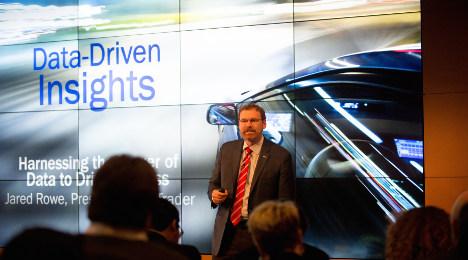
When it comes to digital marketing and the changes it has undergone over the years, Jared Rowe boils it down to three phases.
The first, he said — at least from the vantage point of the Cox Automotive Media Division he heads up — was the “inventory discovery” phase, where dealers began putting their vehicles online.
Phase two centered on “price discovery.” Work in that area, in particular, has ramped up in recent years, including at Cox Automotive’s Kelley Blue Book, where Rowe was previously president.
“I think where we’re at right now is kind of transitioning into phase three, and it’s one of the things that I get very excited about and I’m very passionate about,” Rowe continued. “Because I think the next phase we’re really entering into is about dealer discovery.
“Now, we’re seeing an awful lot of work going on right now in the industry, and a lot of innovation around the retail environment and the retail experience — having dealers differentiate themselves on something other than pure product and pure price. Ultimately, we believe this is not a commodity marketplace; we believe that this is a matchmaker marketplace.
“And when we think about what that really means, we think that it’s a new and unique opportunity for dealers to really merchandise themselves,” he said.
This won’t come as a surprise, Rowe notes, but consider this: there is a good bit of pressure on margins in both the new and used-car business. Interestingly enough, he adds, the industry has simultaneously seen narrower pricing bands — in other words, there isn’t as big a gap between listing price and transaction price.
So, when it comes to “building value in the sale,” he added, “a lot of it is going to fall upon the unique selling proposition of the dealer going forward.”
As such, Rowe said that Cox Automotive and his own division, in particular, are honing in on helping dealers “merchandise who they are,” in addition to merchandising product and price.
Next step in evolution
There’s a timeline from LotLinx that runs down the past couple of decades and how the digital car marketplace has evolved during the time.
The timeline, titled “Internet Automotive Marketing 1994-2015,” includes everything from the launch of Amazon in 1994 and the first online car database in 1996 to the debuts of the first dealership websites (1998), eBay Motors (2000) and the iPhone (2007).
Auto Remarketing asked LotLinx co-founder and chief executive officer Denise Chudy where she thinks some of the immediate next steps in this evolution might be on the used-car side.
She named three immediate developments that she believes could boost the used-car business. First, she said, is “increased distribution of VINs to every nook and cranny of the Web where a user gives a signal for the make, model and geo they are looking to buy.”
Chudy added: “Car shoppers reveal these three shopping criteria in the searches they conduct, the pages they view, the pictures they select, etc. Using technology to merchandise your VINs to sense and respond to these declarations will result in relevant VIN displays and focused traffic driving efforts.”
The second change that would help is to for dealers to keep closer tabs on “how their inventory is being ‘leveraged’ throughout the Web,” Chudy said.
“It is always amazing to see a dealer pay to have a VIN — which is their asset, by the way — displayed on the VDP of a third-party site that aggressively cross promotes competitive products. Dealers need to take back control of their VINs, and develop promotion plans that maximize the dealers own profits,” she added.
The third change is: “Better correlation of days on lot to VDP views.”
Chudy notes: “If a VIN doesn’t have VDP views, it is invisible to the world since 95 percent of car shoppers use digital to shop for a vehicle … We see savvy dealers understand that VDPs are simply product pages, and as marketers of VINs, dealers need to attract an audience to actually see the product in order to move it off the lot. Thus, an important evolution in the digital space for the pre-owned industry is to look at advertising one car at a time, by monitoring and exploiting VDP views VIN by VIN — which we call VINvertising.”
Be social
When Auto Remarketing asked Sean Stapleton of VinSolutions (another Cox Automotive company) about new channels dealers are using to sell used vehicles, he said it’s not so much about new channels, per se, but rather new ways dealers are using these channels.
He gives the example of Twitter.
“Twitter is a channel some dealers have been using for promotion or advertising. However, now we’re seeing dealers using video on Twitter to actually sell their inventory,” said Stapleton, who is vice president of sales and marketing at VinSolutions. “Dealers are posting videos of used cars on their lot, giving users a virtual tour of the car that they can easily watch right from their Twitter accounts.
“Providing this kind of transparency and enhanced user experience increases trust, which drives engagement and improves sales,” he added.
In that same vein, Stapleton said that many salespeople are crafting their own personas in social media, beyond the dealership’s social footprint. This helps them form a deeper connection with the consumer, he said.
“These salespeople are ahead of the game. They’re not just interacting with their customers; they’re creating and nurturing a personal connection that enhances customer retention and loyalty,” Stapleton said. “They’re providing a one-on-one experience that doesn’t require meeting the customer on the lot.”
That lends itself to the final point Stapleton makes: meet the customer where they are (i.e. social media) and take a proactive approach to reach them. The dealers managing to do this are the successful ones in the digital environment, he said.
“They realize their customers are on Twitter, and as such, they’re bringing their inventory directly to the customer. They realize there’s value in initiating relationships in the space where customers currently are. They’re not sitting back, waiting for shoppers to come to them,” Stapleton said.
“They’re getting out there and engaging their customers in the places and ways their customers prefer. To be successful today, you need to focus on the experience, not just the content,” he added. “After all, customers will remember the experience much longer than they will the content.”
This story appears in the Oct. 1 edition of Auto Remareketing, our look at Digital Trends, Tools & Strategies on the retail side of the used-car market.
The online marketplace billing itself as the “first startup to take on, and successfully disrupt the pre-owned industry” has moved into the Washington, D.C. metro area. That company is Beepi, a car-buying and -selling tool that is expanding across the country and is now in 13 markets. But the peer-to-peer marketplace also has, well, peers.
Vroom, an online direct-to-consumer used-car retailer, announced Wednesday it is planning to open a “reconditioning and fulfillment center” in Indiana in December, which will be its second such facility. And Thursday, Shift revealed its iPhone app where consumers can “assess and sell cars based on market pricing and conditions.”
Online hubs like these and even a carmaker like Tesla, which has expanded into the certified pre-owned market, appear to have their sights set on similar targets: generally speaking, an online, direct-to-consumer method of selling used cars.
However, one might argue that the larger and perhaps more important trend goes beyond the increasing footprint of the direct-to-consumer online model. Consider the overall investment in the digitization of the used-car market, both by the industry and dealers themselves — as well as by so-called disrupters.
That includes everything from capital investments in startups (like the $54 million equity funding Vroom announced in July) to the investments in technology platforms specific to pre-owned and tech-savvy standalone used-car outlets from major dealer groups.
The increased digital focus on used cars runs from well-established players like Cars.com — whose Sell & Trade program allows consumers to transition out of their ride in the manner they see fit, while also generating used inventory for dealers — to relative newcomers like CarStory, whose InLine CarStory Market Reports embed vehicle research directly into the VDP to keep the customer engaged longer on the dealer website.
So, how can dealers take advantage of the fact that within the used-car environment, more of the research, shopping and even purchasing processes are being taken care of digitally?
That’s one question Auto Remarketing posed to Cox Automotive Media Division president Jared Rowe in a recent interview.
“One thing is that in the digital environment, we’re able to learn more about consumers and about what they want than we’ve ever had before,” Rowe said. “So, we know more about what consumers really want. We just have to be willing to tailor the in-dealership experience, and be willing to tailor how we handle these consumers to what they’re asking for.”
Knowing more about these shoppers gives the industry more information about how it can conduct more efficient customer management and get as much value from the transaction as possible, he said.
“This isn’t just about the sale,” Rowe said. “This is about building a relationship that will stand the test of time because we all know that our best customers are the customers that come back to us.”
Next, he said, it’s about maximizing the resources available to you.
“The second thing is, we have more tools available to us to digitize elements of the transaction than ever before,” Rowe said. “So, when we think about what consumers have told us about, say, finance and how they’d like the finance process to begin online, and they’d like to really start to tailor the negotiation basically to their terms, and how they start to interact with the dealer, the interesting thing in my mind is we have more tools as an industry available to us than ever before to connect with consumers in this way and not give up what we value most.
“Because ultimately, the big shift that I see occurring here is that simply trying to control the consumer through this process is becoming increasingly difficult,” he added. “But if we’re able to connect with them in the way that they want to be connected with and give them tools so that they can find the inventory that they want, they understand what pricing looks like relative to the market and relative to them.
“They understand what their financing options are – and not just the loan, but also the other products and services in F&I, because those are intensely valuable, and consumers tell us that they’re valuable … so introducing them to consumers upfront feels awkward and feels a little different for us as an industry because so much of our sales process has been predicated on control, but by meeting the consumer where they want to be met, we actually gain control and we gain control through trust,” Rowe said.
“And if trust is too squishy of a word for folks to even feel good about, then actually we gain control through shared context,” he said. “Because we won’t have this information disadvantage on either side, and that’s ultimately what we see consumers wanting to do – is to not have an information disadvantage, and the way we can go about solving this is actually doing it in a way where we can promote the products and services that are valuable to us.”
With Dealer Car Search’s new “website texting” feature for its website customers, the company aims to improve the line of online communication between customers and the dealership.
That’s according to Rick Wilson, the chief executive officer at Dealer Car Search, whose website texting solution links interested customers online directly to a salesperson in the office or on the lot.
"The bottom line is consumers only want to interact with the dealership after they have first searched the website and found the car in which they are interested,” Wilson said.
By offering access to website texting buttons on search results pages and vehicle detail pages, Wilson believes this is the best time to connect customers to the dealership as well as providing them with improved service quality.
Dealer Car Search says that customers can initiate the texting feature from desktop, tablet or smartphone using a round robin system that cycles text leads through a rotation of salespeople.
“So far the results have been astounding and many participating dealers are seeing an immediate increase in consumer engagement in the form of increased leads and sales,” Wilson said.
For more information on the solution, visit the Dealer Car Search site here.
DealerRater.com broke its monthly record in August, reporting nearly 60,000 consumer review submissions to the site last month.
The total number of reviews for August, coming in at 59,814, represented a 69-percent increase over August 2014’s results.
“August was our biggest month ever for submitted reviews,” said Gary Tucker, the company’s chief executive officer. “The dramatic increase in reviews submitted to DealerRater.com reflects how consumers are embracing third-party reviews during the shopping process and sharing their experiences afterwards. DealerRater is meeting a consumer need, not unlike how Twitter and Facebook have shaped the way people share information with one another.”
According to the company, the sharp increase in submitted reviews is partly due to products like ReviewBuilder, which is part of its DealerRater Certified Dealer Program suite, and LotShot, a photo review application. DealerRater’s partnership with Autotrader also allows site visitors the ability to read and write DealerRater reviews.
The company also recently announced a partnership (coined as the Hyundai Advantage Program) between J.D. Power, DealerRater and Hyundai North America, that invites new Hyundai owners to review their dealer on the site. According to the company, the program has delivered its dealers a 366-percent increase in submitted reviews since January.
According to Tucker, every review is reviewed to be certain it’s been submitted by an actual person.
“Our reviews average more than 100 words, so people are telling a story that will help interested shoppers make a connection with a dealer and an employee at that dealership, and select the best dealership and salesperson for them,” Tucker said. “DealerRater.com specializes in one industry — automotive — making for an exceptional customer experience for those writing and reading reviews about car dealers. We recently surpassed 2 million reviews and expect to reach 3 million sometime next year.”
Going by DealerRater’s numbers, the site averages 2,000 reviews a day. For more information, visit the company’s site here.