Black Book pinpointed three reasons why its Used Vehicle Retention Index for November dipped noticeably compared to the previous month.
On Monday, analysts said their November index came in at 114.0, which represented a 1.4% decline from the October reading of 115.6.
Black Book executive vice president of operations Anil Goyal explained what triggered the wholesale price movement.
“The index has been relatively stable over the last two years,” Goyal said in a news release. “However, the combination of easing demand, high levels of inventory and increased incentives on new vehicles has led to additional softness beyond seasonal decline in the fourth quarter for the used-vehicle market.”
The Black Book Used Vehicle Retention Index is calculated using Black Book’s published wholesale average value on 2- to 6-year-old used vehicles, as a percent of original typically equipped MSRP. It is weighted based on registration volume and adjusted for seasonality, vehicle age, mileage and condition.
The index dates to January 2005 when Black Book published a benchmark index value of 100.0 for the market. During 2008, the index dropped by 14.1%.
During 2011, the index rose strongly from 113.3 to 123.0 by the end of the year as the economy picked up steam and used-vehicle values rose higher.
The index continued to remain relatively stable, rising slightly until May of 2014 when it hit a peak of 128.1. During 2018, it rose from 114.1 to 116.3.
To obtain a copy of the latest Black Book Wholesale Value Index, go to this website.
As part of our collection of podcasts originating from Used Car Week 2019, Black Book executive vice president of operations Anil Goyal returned for another episode.
Nick asked for a comparison of Black Book’s initial forecast for wholesale values to where they might land as 2019 closes as well as how the firm is involved with combating fraud in the automotive industry.
To listen to this episode, click on the link available below.
Download and subscribe to the Auto Remarketing Podcast on iTunes or on Google Play.
For just the third time this year, analysts at J.D. Power Valuation Services spotted a downward move of its monthly index.
J.D. Power’s Used Vehicle Price Index dipped by 2.2% in October. The softening placed the index 1.8% below September of last year.
When looking at volume, analysts shared in the November Used Car and Light Truck Guidelines Industry Update that wholesale October volume on average came in 5.2% greater than during the same period in 2018.
J.D. Power noted the volume of mainstream vehicles has grown by 4.9%, while premium volume has increased by 6.9%.
“At an industry level, used-vehicle prices are expected to finish out 2019 slightly up relative to 2018 — prices peaked in August, and we expect they’ll continue to decline for the remaining months,” said David Paris, executive analyst at J.D. Power Valuation Services.
“Incentives, used-vehicle supply and credit conditions are expected to apply downward pressure on used-vehicle prices, but the impact of other factors like gas and home prices, and labor conditions may support used-vehicle prices in the near term,” Paris continued in a news release.
Autumns have been atypical in the auction lanes in recent years with wholesale prices behaving in ways not usually seen.
Well, this fall has returned to more traditional patterns, according to the latest Black Book Market Insights report.
In fact, Black Book executive vice president of operations Anil Goyal said, “Truck segments declined more than car segments last week. In the previous three-week period, values of full-size pickups have declined at the steepest rate seen this year.”
According to the volume-weighted data contained in the report, overall car segment values decreased by 0.58% last week. In comparison, car values softened by 0.75% on average during the prior four-week period.
Among cars, analysts noticed values of sporty cars, prestige luxury cars and sub-compact cars declined the most, dropping by 0.93%, 0.91% and 0.88%, respectively.
Over the truck side, Black Book reported that its volume-weighted data showed overall truck segment values (including pickups, SUVs, and vans) slid by 0.83% last week. That’s slightly higher than the four-week average when the decline came in at 0.74% on average.
Analysts mentioned values of full-size crossover/SUVs and compact luxury crossover/SUVs sunk the most, softening by 1.30% and 1.20%, respectively.
And those previously mentioned full-size pickups? Black Book reported values for those units ticked down another 0.73% last week.
Turning next to what Black Book representatives in the lanes shared, the rundown from nearly 60 sales nationwide began with comments from an auction owner in Washington, who said: “We are experiencing a very typical fall market even though we haven’t seen a typical fall market in several years. Things have softened but overall the market is doing relatively well.”
Here is a rundown of the other anecdotes Black Book assembled:
— From Ohio: “It was an interesting day as it seemed there was no in-between, depending on the lane you were on. They were either selling most everything or virtually nothing.”
— From California: “Still a pretty active sale in spite of the dealers’ ongoing complaints about a tough retail market.”
— From Georgia: “The condition of the vehicles was poor, and there were more damaged vehicles. Even the less expensive units struggled to get bids.”
The Manheim Used Vehicle Value Index did something in October that Cox Automotive analysts determined the wholesale market metric had not done in 33 months.
For the first time since January 2017, the index posted a year-over-year decline.
Manheim determined wholesale used vehicle prices (on a mix-, mileage- and seasonally adjusted basis) increased 0.29% month-over-month in October. That movement brought the index to 140.3. However, the October reading also represented a 0.4% decrease from a year ago, and halting that 33-month streak.
“Weekly Manheim Market Report (MMR) prices continued to exhibit an accelerating depreciation pattern that began in September and peaked midway through October,” Cox Automotive analysts said in their latest index update.
They indicated 3-year-old vehicle values in aggregate were down 4% for the month, when prices normally decline by 1.5% to 2%.
“The above-average depreciation trend occurred in all major market segments,” Cox Automotive said. “As a result of this higher depreciation, prices in aggregate relative to the beginning of the year are now lower than either of the last two years.”
On a year-over-year basis, analysts noticed most major market segments saw seasonally adjusted price declines in October. Luxury cars outperformed the overall market, gaining 1.5%, while most other major segments underperformed the overall market. Compact cars paced the decreases with a drop of 6.1%, followed by vans at 5.3% and pickups at 2.4.
Midsize cars (down 1.6%) and SUVs/CUVs (down 1.4%) posted similar movements.
“Last year, especially October, continues to be a tough comparison for prices as we reached a record in the Manheim Index because of abnormally strong consumer demand in the fall related to tariff fears and rising interest rates,” Cox Automotive said.
“A year ago, dealers were willing to spend a record amount for used-vehicle inventory to take advantage of very strong new and used-vehicle demand,” analysts added.
Cox Automotive also mentioned price declines within rental-risk units.
Analysts determined the average price for rental risk units sold at auction in October softened 1.6% year-over-year. Rental risk prices dropped 4.8% compared to September.
Cox Automotive added that the average mileage for rental risk units in October (at 48,100 miles) was up 3% compared to a year ago and up 2% month-over-month.
One of Black Book’s representatives stationed in the lanes put it this way: “Quite simply, the buyers were not in a buying mood.”
As a result, analysts reported the highest weekly decline since January in the latest installment of the Black Book Market Insights.
“The used market continues to be soft. Particularly, full-size pickups declined sharply in October, after registering strong retention trends in the year through September,” Black Book executive vice president of operations Anil Goyal said in the report.
According to volume-weighted data, analysts determined overall car segment values decreased by 0.51% last week. Surprisingly, that reading is slightly less than the four-week average, which represented a decline of 0.59%.
Among cars, Black Book noticed the sub-compact and luxury car segments values decreased the most, sliding by 1.03% and 0.67%, respectively.
Again based on volume-weighted information, analysts found overall truck segment values (including pickups, SUVs, and vans) dropped by 0.66% last week. That figure topped the four-week average decrease of 0.58%.
In the truck space, the sub-compact crossover and compact van segments paced the decreases, softening by 1.64% and 2.15%.
Getting back to the anecdotes Black Book collected from the lanes, here is the rundown from representatives stationed at nearly 60 sales nationwide:
— From Washington: “We had a good selection of units, but the sold prices are down on a good percentage of them.”
— From Michigan: “Prices are under pressure from increased inventory and slow retail. Retail here has been negatively affected by the GM strike.”
— From Tennessee: “Small cars along with small SUVs are doing well but the more expensive vehicles do not sell.”
— From Georgia: “It was a tough day today despite normal attendance and almost 3,000 vehicles. Quite simply, the buyers were not in a buying mood, which produced more no-sales and if-sales than I have seen in a very long time.”
Black Book is seeing its Used Vehicle Retention Index return to a seasonal pattern.
Analysts released their index reading for October on Monday, indicating that the newest observation came in at 115.6. That figure represented a 0.3% dip from September when it was 115.9.
“In the last couple of years, the used-vehicle values held up unusually high until late in the year. However, the market trend this year is consistent with typical seasonality patterns,” Black Book executive vice president of operations Anil Goyal said in a news release.
“Interestingly, the truck segments are now seeing larger declines as opposed to sedans,” Goyal continued. “As supplies of used crossovers and pickup trucks continue to increase, the demand will need to be stronger for values in these segments to stay stable.”
The Black Book Used Vehicle Retention Index is calculated using Black Book’s published wholesale average value on 2- to 6-year-old used vehicles, as percent of original typically equipped MSRP. It is weighted based on registration volume and adjusted for seasonality, vehicle age, mileage, and condition.
The Index dates to January 2005 when Black Book published a benchmark index value of 100.0 for the market. During 2008, the index dropped by 14.1% while during 2016, the index fell by just 6.4%.
During 2011, the index rose strongly from 113.3 to 123.0 by the end of the year as the economy picked up steam and used vehicle values rose higher. It continued to remain relatively stable, rising slightly until May of 2014 when it hit a peak of 128.1.
To obtain a copy of the latest Black Book Wholesale Value Index, go to this website.
Ruggedness, durability and iconic design.
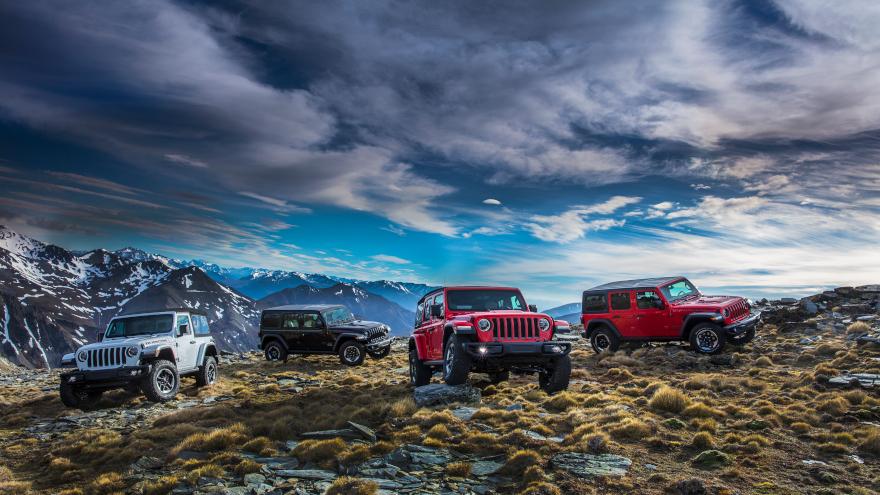
Those are reasons why Jeep Wranglers are known for retaining their value, said iSeeCars chief executive officer Phong Ly.
“Because of Jeep’s loyal following, their demand outstrips supply in the used-car marketplace, leading to high resale values.” Ly said in a news release.
Jeep models account for the top two spots on iSeeCars list of vehicle models that depreciate the least and most after five years. The four-door Jeep Wrangler Unlimited offers the lowest five-year depreciation, and its two-door counterpart, the Jeep Wrangler, comes in a close second.
Why does it matter? Understanding a vehicle’s resale value is important in helping new and used car shoppers make an informed purchase decision, according to iSee Cars.
“If you plan on trading in or selling your next vehicle at around the five-year mark, a car that retains most of its value can lessen the expense of your purchase,” Ly said.
Ly continued, “Conversely, if you are a used-car shopper, choosing a car that has already taken a depreciation hit can provide you with a significant deal.”
For the study, iSeeCars.com analyzed more than 6.9 million new cars from model year 2014 sold in 2014, and more than 800,000 used cars from the same model year sold between January and October 2019.
Four pickup trucks made the list. They include the Toyota Tacoma at No. 3, the Toyota Tundra at No. 4, the Honda Ridgeline at No. 7, and the Nissan Frontier at No. 9.
“Toyota and Honda are known for their reliability, and their reputation for dependable pickups helps aid their resale value,” Ly said. “The Honda Ridgeline is also unique in that it’s the only pickup truck that has the ride comfort of a crossover, while the Nissan Frontier is sold in lower volumes so it has a lower supply in the secondary marketplace.”
The Toyota 4Runner midsize SUV came in at No. 5. It depreciates 36.5% after five years.
“The Toyota 4Runner is a body-on-frame SUV, which means it’s built like a truck and has truck-like durability,” Ly said. “Since its release in 1984, the 4Runner has amassed a loyal following, and its ruggedness and reputation for being a reliable vehicle help contribute to its value retention.”
Three sports cars round out the list of cars that best hold their value: the Porsche 911 at No. 6, the Nissan GT-R at No. 8, and the Subaru Impreza WRX at No. 10.
“The Porsche 911 is an iconic and beloved sports car that will always be in demand as a dream car for many consumers,” Ly said. “The Nissan GT-R and the Subaru Impreza WRX are popular sports cars that are produced in low supply, so there is a great demand for them in the secondary marketplace.”
Which cars depreciate the most? In iSeeCars examination of the cars that depreciate the most after five years, the highest depreciating vehicles lose between 37.3% to 45.6% more of their original value compared with the average vehicle. A mix of luxury sedans and electric vehicles depreciate the most, with the Maserati Quattroporte losing the most with an average of 72.2% of its value. That amounts to $95,393, according to iSeeCars.
Five additional luxury sedans in addition to the Quattroporte make the list of highest depreciating vehicles, including the BMW 7 Series at No. 2, the BMW 5 Series at No. 5, the Acura RLX at No. 6, the BMW 6 Series at No. 8, and the Jaguar XJL at No. 9.
“Luxury cars have steep depreciation because owners likely trade them in when they become outdated and used car buyers don’t want to pay a high premium on a dated model,” Ly said. “Additionally, they are expensive to maintain and the high cost of ownership impacts resale value.”
Alternative-fuel vehicles making the list of highest-depreciating vehicles include the electric Nissan LEAF at No. 3, the BMW i3 at No. 4, the Ford Fusion Energi plug-in hybrid at No. 7, and the Chevrolet Volt plug-in-hybrid at No. 10.
“Previous government incentives contribute to the steep depreciation of electric and plug-in hybrid vehicles because their resale value is based off their lower post-incentive sticker price,” Ly said. “Outdated technology also contributes to their dramatic depreciation as well as range anxiety.”
With only a couple of months remaining in the year, J.D. Power Valuation Services is holding steady on its forecast for where wholesale prices are likely to land by the time 2019 finishes.
Reiterating its forecast even though six consecutive months of index increases came to an end in September, analysts said used-vehicle prices are expected to remain “relatively strong” as the year concludes. J.D. Power Valuation Services expects used prices for vehicles up to 8 years in age to increase by about 1% to 1.5%.
“From where prices are currently through the remainder of the year, we are expecting a mild decline, which barring any serious weather impact or economic changes should hold true,” analysts said in their latest installment of Guidelines.
“Used supply will be mixed, positive for cars, negative for SUVs and trucks,” analysts continued in the report. “The impact of other factors including gas prices, home prices and labor conditions are expected to be neutral-to-supportive of used prices.”
As mentioned, J.D. Power Valuation Services pointed out the used-vehicle market slowed in September following six straight months of index increases. As a result, the J.D. Power Valuation Services Used Vehicle Price Index declined by 1.8% relative to August as the September reading came in at 121.8.
Through September, analysts computed that used-vehicle prices are, on average, 1.7% higher than during the same nine-month period in 2018.
“Prices continue to be supported by high levels of clean late-model used units entering the market at attractive price points relative to comparable new models, as well as increased dealer demand for used vehicles,” analysts said in the report.
In September, J.D. Power Valuation Services determined wholesale prices declined by an average of 2.9%, a figure in line with to the previous five-year average for the period — a 2.4% drop.
At the segment level, analysts indicated declines on the mainstream side of the market fell in the 2% to 3% range except for midsize vans.
“The September period is generally one of the toughest times of the year for midsize van prices, historically this has been the time when rental companies cycle out midsize van units after the summer rental season ultimately increasing wholesale volume for the segment and depressing prices for the short term,” analysts said.
“Premium prices were generally stronger than their mainstream counterparts, premium SUV prices performed better than premium cars,” they continue.
In terms of individual segment performances, J.D. Power Valuation Services discovered year-to-date mainstream passenger car price increases continue outpacing their SUV counterparts.
“Affordable small, compact and midsize car segment prices have increased the most, prices for the group are up by 6% to 9%,” analysts said.
“Mainstream SUV segment prices have also increased, however not nearly to the same degree as passenger car,” they continued.
As for the luxury side of the market, J.D. Power Valuation Services mentioned premium segment prices are down throughout the space, except for large premium cars, “however, losses are accelerating for this segment.
Analysts added, “Premium segments continue to feel the pressure of elevated levels of wholesale volume returning to the market.”
The last time Black Book saw a weekly wholesale price decline this significant, individuals might have still had their New Year’s resolutions top of mind.
And decreases might intensify as Black Book’s newest Market Insights report showed declines for both cars and trucks at much higher levels than the previous four-week averages.
“Used-vehicle values experienced the steepest decline of any week since January of this year,” said Anil Goyal, Black Book’s executive vice president of operations.
“The sentiment appears to be negative, setting the expectation for the market to drop more,” Goyal added in the latest report.
Volume-weighted, analysts indicated overall car segment values decreased by 0.65% last week. In comparison, car values dropped by 0.52% on average during the previous four-week period.
Among cars, Black Book determined values of sub-compact cars and sporty cars declined the most, sliding by 1.24% and 1.10%, respectively.
Again, based on volume-weighted information, analysts noted overall truck segment values (including pickups, SUVs, and vans) decreased by 0.77% last week. That’s much above the four-week average decline that analysts pegged at 0.48% during the prior four-week stretch.
In truck space, values of midsize crossover/SUVs and minivans softened the most, dropping by 1.28% and 1.20%, respectively.
As Goyal referenced, the anecdotes that Black Book collected from its representatives stationed at nearly 60 sales nationwide reflected the prospect of steep value declines ahead. Here is the rundown:
— From Pennsylvania: “The demand is still there for the nicer vehicles. As for the others, it is all about the price they are offered for.”
— From Georgia: “The volume of vehicles was up, but attendance was down, leading to more no-sales this week than last week. There were more rough units in the lanes than usual.”
— From Tennessee: “Dealers continue to describe a tough retail market, resulting in a lot of no-sales.”
— From California: “The values are coming down. but overall it was a good sale for a fall market.”