CARFAX announced this week that its vehicle history database now includes more than 30 billion records.
According to a news release, the 30 billionth record loaded into the CARFAX database is an “offered for sale” record on a 2020 Kia Telluride. The company said this Telluride is a one-owner, well-maintained, certified pre-owned SUV that has had no accidents or damage reported to CARFAX.
The company highlighted this milestone came from one of the more than 131,000 sources that report vehicle information directly to CARFAX.
CARFAX was founded in 1984 to combat odometer fraud and said it took more than 15 years to reach 1 billion records. CARFAX said it now loads a billion records about every five months.
“The amount of information we’re loading daily is staggering,”, CARFAX general manager of data Faisal Hasan said. “On average, we load more than 6.6 million records every single day. That can be anything from open safety recalls to vehicle registrations to new accident information.
“The largest percent of the data we’re loading today is service and maintenance records. We are uniquely positioned because of these records to help people at every stage of the car ownership experience, from shopping to servicing to selling,” Hasan added.
Accident history is the No. 1 thing used-car shoppers look for in a vehicle’s history, according to CARFAX.
The company said that although Americans are driving less because of the COVID pandemic, and accidents were down in the second half of last year, car dealers should know whether a vehicle has sustained damage.
“Otherwise they could be overpaying by hundreds, if not thousands, of dollars — directly affecting their bottom line,” CARFAX said in a news release.
To see if damage has been reported to CARFAX, dealers can use the CARFAX Vehicle History Report, which can also help them determine the severity by digging a little deeper into the damage history. A CARFAX Vehicle History Report shows dealers accidents and damage that have been reported to CARFAX.
But most reports also show where the impact was and how severe the damage was.
CARFAX estimates that approximately 40% of vehicles on U.S. roads, or about 110 million cars, have sustained damage during their lifetime. According to CARFAX data, one in four cars are sold within a year of the incident.
Shoppers have a good reason for looking at accident history. The average impact on retail price is about $500.
But that average impact on wholesale price is more than $1,000. And if the vehicle has sustained severe damage, the average impact on wholesale value is nearly $2,300.
History-Based Value is a free valuation tool from CARFAX that takes into account vehicle-specific information, such as accidents, to calculate pricing.
“Historically, there was just an accident reported,” said John Pitre, chief operating officer at Motor City Auto Center in Bakersfield, Calif.
Pitre also said, “We wouldn't keep a vehicle that just showed a basic accident because we didn't know, on a scale of one to 100, whether it was a two or a 99 in terms of the damage. Now we're actually able to determine where on the vehicle the accident occurred and how severe it was. In many cases, we're now keeping those vehicles and disclosing that information to subsequent buyers.”
With a CARFAX Vehicle History Report, dealerships can more easily find and assess damage and find the best inventory at acquisition at the right price. The company said that with the tool, dealerships can build consumer confidence and increase transparency when consumers come in to buy a car.
Byers Chevrolet in Grove City, Ohio has been in business for more than 123 years. “So reputation is everything in a small community,” said general manager Jeremy Francis.
“We want to keep that,” Francis said. “When we're going over the CARFAX with the customer, I think it gives a lot of ease to the customer’s purchase experience when you have that disclosure of where the impact was, the severity, and what was impacted. We want to be completely transparent and let the customer make an educated decision while giving them the confidence in knowing that the repairs were done correctly.”
There's a new player in the vehicle-history space.
VINData Products, led by veterans of this space, has launched a vehicle history service designed for a wide scope of the used-car business: commercial users, dealers, auctions and consumers, alike.
Edie Hirtenstein and Adam Siner joined the Auto Remarketing Podcast earlier this week to share the story behind VINData History Reports and what sets the company apart.
To listen to the entire conversation, click on the link available below, or visit the Auto Remarketing Podcast page.
Download and subscribe to the Auto Remarketing Podcast on iTunes or on Google Play.
National Insurance Crime Bureau’s communications vice president Brooke Kelley says insurance companies and agents will be available to help those feeling the impact of the recent Hurricane Barry.
“However, when tragedy strikes, criminals have the tendency to swoop in and scam consumers, especially when it comes to the resale of flooded vehicles,” Kelley said in a news release.
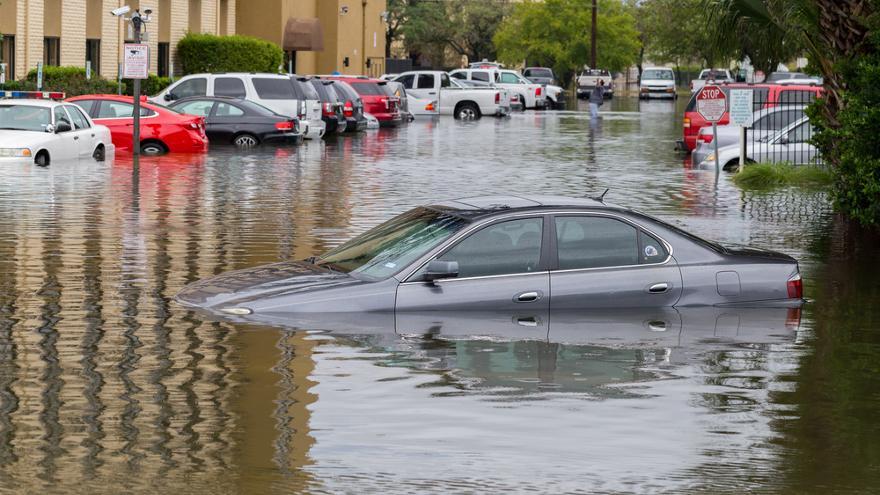
Around the nation, Barry-flooded vehicles could soon appear for sale, according to NICB, which adds that especially if the price looks too good to be true, consumers should not hurry to buy a used vehicle.
In the coming weeks and months, vehicle buyers should stay aware: Thousands of Barry-damaged vehicles could reappear for sale in their areas, according to NICB. A vehicle owner or shady dealer might clean up a damaged vehicle that was not insured and put it up for sale, with no disclosure of the flood damage, the bureau said.
NICB recommends that buyers have a reputable technician or repair facility check the vehicle before making the sale final.
Recent news articles have reported on the issues involved with checking vehicles for flood damage. But NICB has some tips of its own for consumers:
— Check carefully for water stains, mildew, sand or silt under the carpet, floor mats, and dashboard. Also check in the wheel well where the spare is stored. Fogging inside the headlights and taillights is another bad sign.
— Do a smell test. If you notice a heavy aroma of cleaners and disinfectants, beware. That could be a sign of someone attempting to hide a mold or odor problem.
— Obtain a vehicle history report or check a database service such as NICB's free VINCheck database.
— Take the vehicle to a trusted mechanic who can look at its mechanical and electrical components, as well as systems containing fluids, for water contamination.
— Use NICB’s social media hashtag #insurancecrime for tips as the recovery progresses in the Southeast.
NICB’s VINCheck information is available for free as a public service to consumers. It is made possible through the cooperation of participating NICB member companies.
With VINCheck, car buyers can see whether a vehicle has ever been declared as "salvage" or a total loss by an NICB member that participates in the program. Salvage data from insurers representing about 88 percent of the personal auto insurance market is provided to the program. It also shows an alert to users in the event a vehicle has been stolen and is still unrecovered.
NICB works with its member companies, law enforcement, and auto auction companies after a disaster to identify vehicles with an insurance claim filed. Parts companies buy most of the vehicles. Then those companies dismantle them and re-sell usable parts that did not get flood damaged.
The Vehicle Identification Number of Barry-damaged vehicles will be searchable through VINCheck and the National Motor Vehicle Title Information System (NMVTIS) database.
The VINCheck database contains only salvage, stolen vehicle or total loss records that participating member companies make available. NICB says that before users take any action, they should independently verify the accuracy of any information obtained through VINCheck.