Frazer Computing is making sure its dealer management system can help buy-here, pay-here dealerships with two critical functions — potentially selling parts of their portfolio as well as texting with their customers.
Most recently, AGORA, a Texas-based provider of technology solutions for the financial services industry, on Monday finalized an integration functionality relationship with Frazer.
Through the integration with AGORA, dealerships on Frazer can have their loan information concurrently available on AGORA where they can securely select loan pools forbidding or financing from more than 60 finance companies that acquire loan pools or finance them on the AGORA platform.
The entire placement, bidding, and acquisition of loan pools are completed inside the AGORA platform, without exposing private customer data, transaction activity, and collection notes to outside parties.
AGORA founder and chief executive officer Steve Burke said, “By establishing this first of many DMS integrations, dealers can seamlessly and securely make their portfolios available for sale or financing — avoiding unsafe emails and data files.
“Data files will go the way of the dinosaur, Blockbuster, BlackBerry and any other companies that failed to recognize the need for innovation. Data files have been eliminated by the Frazer integration, and dealers now have more liquidity than ever before,” Burke continued.
Since its launch in April of last year, AGORA’s flagship loan exchange platform has rapidly evolved in the secondary market for auto loans, allowing buyers and sellers to publish and exchange loan data directly in an efficient and secure environment without the need for intermediaries or brokers.
“We are always working to deliver increased value to our customers. We believe this could be one of the most popular integrations we have ever added for our buy-here, pay-here customers,” said Michael Frazer, president of Frazer.
Burke shared that AGORA is honored to have Frazer as its first integration, and the AGORA development team is putting the finishing touches on integrations with other leading DMS providers.
Management expects that in the next few weeks AGORA will be fully integrated with DMS providers covering more than 75 percent of the dealerships nationwide.
Burke added, “Soon all dealers will be asking 'Does my DMS do this?’”
AGORA was created in response to the many friction points and inefficiencies that exist in the manner that auto loan portfolios currently trade – namely poor and inconsistent data, lack of transparency from the brokers that previously dominated the market and heightened regulatory concerns over unsecured transmission of personal consumer data.
“Our integration partnership between Frazer and AGORA helps create a seamless suite of products and services to dealers from loan origination through loans sales — creating speed, efficiency, security and liquidity benefiting the entire market,” Burke said.
Visit www.agoradata.com for more information.
And Frazer recently integrated with another BHPH dealership service provider.
Textmaxx Pro, an award-winning business texting solution that is part of the Leedom Group of companies recently announced it has completed a full integration with Frazer Computing.
“We are extremely excited about our full integration with the Frazer DMS platform. This partnership will bring a best-in-class solution to their dealers and provide robust capability to harness SMS messaging across all phases of operation including sales, service and collections,” said Chris Leedom, founder and chief executive officer of Textmaxx Pro. “We are pleased to serve the Frazer universe of dealers with another incredible product that will help them succeed.”
Textmaxx Pro can enable a broad menu of SMS messaging options including broadcast texts, text communication with a single customer, and a broad menu of predesigned reminders and messages.
Frazer dealers will even be able to text enable their existing dealership landline as a result of this integration.
“We are very excited about this partnership,” Michael Frazer said. “We have really beefed up the texting capabilities within Frazer as part of this new integration. And we know that whenever Frazer gets together with a Chris Leedom company it means great things for our customers.”
Dealers can learn more about the integration by contacting Dave Leedom at Textmaxx Pro by texting keyword “FRAZER” to 95000 or by visiting http://textmaxxpro.com.
More dealer assistance is set to arrive this summer, especially for buy-here, pay-here operators who have to juggle the end-to-end process of finding inventory, reconditioning vehicles and finalizing deliveries.
Stemming from dealer feedback to make a challenging audit process easier, NextGear Capital will be introducing a self-reconciliation tool that is designed to save dealers time and provides them with greater control over their vehicle audits. Combined with other recent audit process improvements, NextGear Capital insisted dealers will be able to experience up to 80 percent fewer audit-related interruptions and have the ability to reconcile units seamlessly from their devices.
With a mobile-first solution for reconciliation, the company highlighted dealers are empowered to take charge of their audits through a simple three-step process via NextGear Capital’s Account Portal. After logging in, dealers select a vehicle, take four photos, then submit them to clear outstanding audits in real-time.
Randy Dohse, NextGear Capital senior vice president of operations, explained this process can significantly reduce the amount of time it takes to resolve audits and allow dealers to avoid floor planning delays.
“After hearing dealer opinions on the audit process from our annual client survey, we were determined to make streamlining the entire auditing experience one of our top priorities,” Dohse said in a news release.
“We wanted to build more trust with dealers through increased transparency and simplify the overall experience to return time back to them so that they can focus on their business,” he continued. “Improving customer experience and addressing customer feedback with effective solutions are critical components for any business.”
NextGear Capital emphasized that dealer feedback was crucial in determining where improvements to the auditing process could be made. After conducting a comprehensive survey to gauge dealer feedback, results showed that the audit process was one of the more time-consuming tasks of daily floor plan management.
These results inspired NextGear Capital to further improve the auditing experience for dealers everywhere.
“None of us love the audit process. So I was very straightforward with our account rep and actually they had one of the regional guys fly in to talk to us about what we were feeling and what we were experiencing, and why that was such an issue for us,” said Heather Moreno, owner of Lightning Motorsports in Grand Prairie, Texas.
“They listened, they made changes, they’ve streamlined the audit process, they’ve worked with the auditors and I have found NextGear Capital to be incredibly responsive,” Moreno continued.
Efforts to streamline the auditing process have changed the way dealers interact with NextGear Capital. Beyond the transparency and flexibility that the account portal’s self-reconciliation tool provides, dealers now can get twice as much time to fully clear an audit, streamlined notifications and the ability to advise on scheduled vacation and auction days, all of which can be easily done from a smartphone or tablet.
“When we revised our audit reconciliation process, we knew that we were tackling a major pain point for dealers,” said Lucas Hancock, NextGear Capital senior director of risk.
“Empowering dealers to self-reconcile units combined with the most flexible auditing process in the market will positively transform how we communicate with and conduct business with dealers for the foreseeable future,” Hancock went on to say.
For dealers who are constantly on the go, NextGear Capital reiterated that the self-reconciliation tool and audit improvements can provide the benefit of a flexible and efficient process, with fewer interruptions and more time to get everything done.
Dealers also can receive improved visibility through the “My Audits” tab in their account portal dashboard, which will show units that need to be verified, audit due dates and potential financial impact if no action is taken.
My Audits is set to launch this summer, with additional self-reconciliation features to follow.
“Access to an industry-best combination of improved flexibility, functionality and convenience on audit processing means dealers have more time to concentrate on dealership sales and operations,” NextGear Capital said.
For more information about NextGear Capital’s self-reconciliation tool launching later this year or the audit process, visit www.nextgearcapital.com or contact a local NextGear Capital representative.
For operators looking for capital or how to handle the long-term future of their independent dealerships, perhaps Kelemen & Co. might be a financial resource to tap.
On Tuesday, Kelemen, a private equity merchant bank that invests in mid-market companies and also offers tailored corporate advisory services, announced the launch of an $80 million investment program dedicated to mid and large independent dealers. The program will have $80 million in total equity commitments in a permanent capital vehicle, which is provided from Kelemen’s private capital and family office investor network.
“We are much more than just a source of capital, our deep operating expertise will help growth-minded independent car dealers be more creative in their marketing, increase sales velocity, improve operating cash resources and leverage technology for a better customer experience resulting in a lower cost of capital and better operating metrics,” said Greg Kelemen, founder and managing partner.
Kelemen is intrigued by data from Manheim, which stated nearly 40 million used vehicles were sold in 2016, constituting $760 billion in retail sales.
“Of the 40,000 independent car dealerships in the U.S., many facing management transition have few choices to sell their business or obtain growth capital,” Kelemen said.
“Kelemen has the talent, resources and experience to be a long-term partner to these transitioning management teams and will fill the exit strategy gap thereby allowing managers to continue their legacy of customer and community service,” he went on to say.
Through the equity in this program and additional debt financing, Kelemen expects to invest more than $200 million in independent dealers, mainly in the United States over the next two years.
The launch of the investment program also launches a new retail industry investment business for Kelemen.
For more details, go to www.kelemenandco.com.
Ken Shilson, president of the National Alliance of Buy-Here, Pay-Here Dealers, reported that more than 50 percent of the surveyed attendees who came to the recent Fall BHPH Conference had never been to an NABD event previously.
Evidently, those operators left Orlando, Fla., as quite satisfied customers.
“Attendee evaluations unanimously indicated that the program will help them succeed in 2018 and beyond,” Shilson said. “Our speakers and sponsors did an outstanding job and made the event one of the most popular conferences in our 20-year history.”
At least one of those attendees appears to be ready to come to future NABD conferences, as well.
“It was great. I found out I’ve been operating in the dark for a few years now. I will never miss it anymore,” said Ivan Tello of Irotema Holdings in Land O’Lakes, Fla.
Vincent Lewis of Crown Auto Sales & Finance of Charlotte, N.C., added, “The NABD Conference organizers truly understand the needs of the dealers. The BHPH business is a very diverse business.”
The three-day event with the theme, “Opportunity Knocks – Best Ways to Respond,” began with a session orchestrated by Shilson and NABD’s Ingram Walters that also featured BHPH Hall of Fame inductions of Rick Potter and Stan Schwarz, who made life-long contributions to the BHPH industry and were inducted posthumously.
The conference included 14 different concurrent workshop Sessions covering inventory acquisition and financing, national reconditioning survey results, ways to increase sales, F&I products for success, GPS collection tools, DMS software solutions, capital acquisition, integrated technology solutions, regulatory protection by state dealer associations, an accounting/tax update, maximizing recoveries, best underwriting practices and collection “hot spots” to avoid.
All these workshops were interactive so attendees could ask questions and get answers on these important topics.
“Great training. I came last year, and it is one of the best, more educational conferences I have attended,” said Kim Frederick of Motory Group in Gainesville, Fla.
“Don’t be good, be better. The NABD will help you and your business be better," said Irma Gamboa of Fresh Start Finance in El Paso, Texas.
Thomas Rainey, of McNair McLemore, Middlebrooks & Co., in Macon, Ga., added, “Very educational and informative. Learned a lot and realized there is a lot I need to learn.”
The event also featured a “first timer” reception with more than 150 attendees.
Another highlight was the charity auction of a customized golf cart donated by Manheim. The proceeds from the auction went to the hurricane relief fund established by the National Independent Automobile Dealers Association and the Texas Independent Automobile Dealers Association for the benefit of victims of these recent natural disasters.
NABD announced that a portion of the conference proceeds will be donated to the relief fund, too.
“The NABD Orlando conference continues to bring important information and training to the buy-here pay-here dealer attendees. As the industry continues to mature, the relationship between vendors and dealers becomes more critical. Thanks to NABD and NIADA for making conferences like this possible,” said Bill Murphy of Collateral Protection Insurance and Associates of Huntsville, Texas.
Conference presentations, photos and more are now available on NABD’s website at www.bhphinfo.com.
When compiling the 19th version of the buy-here, pay-here industry benchmarks, Ken Shilson noticed a metric climb to a level never seen previously — the allowance for bad debts.
On one hand, the president of Subprime Analytics and the National Alliance of Buy-Here, Pay-Here Dealers acknowledged the figure could be viewed negatively because of how much operators are financing to their customers nowadays. But Shilson also emphasized how the growth in the allowance for bad debts actually can help BHPH dealers in an important way — preparing them for significant changes coming in association with accounting mandates for this item.
As has been mentioned in BHPH Report previously, the upcoming changes in accounting regarding the allowance for losses could influence capital providers and operators.
This past summer, the Financial Accounting Standards Board (FASB) issued an accounting standards update the organization explained was designed to improve financial reporting by requiring timelier recording of credit losses on loans held by financial institutions and other organizations. And those organizations can include related finance companies that hundreds of BHPH dealers use as the conduit to originate and maintain their portfolio of contracts on the streets.
Because it’s such a monumental shift, the FASB indicated that the new rule doesn’t go into practice until the end of 2020, giving operators several years to prepare for the change.
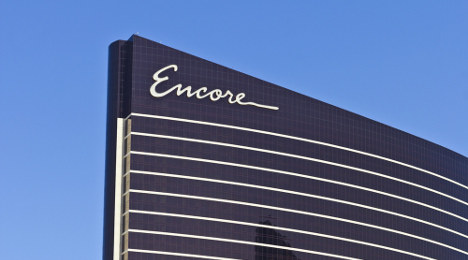
But at least to a degree, Shilson is seeing dealers prepare for the change since the allowance for bad debt reached an all-time high, according to the industry benchmarks he will present during the 19th annual BHPH Conference at the Wynn/Encore in Las Vegas on May 23 through 25. Shilson mentioned the benchmarks are even more robust this year because the data supporting the metrics is derived not only from Subprime Analytics’ pool of operators, but also the 20 groups hosted by NCM Associates as well as the National Independent Automobile Dealers Association.
It’s that fact that prompted Shilson to emphasize how he believes the latest benchmark in allowance for bad debts and upcoming accounting changes are so closely tied.
“Everybody needs to understand the new standard and everyone needs to understand how it’s going to affect them in their borrowing relationship. That needs to happen now because you don’t want to blindside your lender. You don’t want to wake up and have to apply the standard and then figure out your equity just disappeared,” Shilson said.
To help operators understand these changes, Shilson is bringing to this year’s conference a pair of executives who in his opinion are “two of the smartest guys on this subject that I know.” Set to appear during panel discussions and what NABD is dubbing its “Solutions Hall” are John Donaldson of Ace Motor Acceptance and Ronnie Lee of RSM.
“Those two guys really understand it,” Shilson said about the knowledge Donaldson and Lee have to convey to conference attendees about the relationship between operators and capital providers is likely to change because of these accounting changes.
This year’s conference also includes 12 interactive workshops that will be covering:
—An accounting/tax update
—Capital
—Compliance hot topics
—A current developments update
—Getting your best customers back
—Reconditioning best practices
—Keeping customers paying and increasing recoveries
—Sourcing and financing the right inventory
—Technology solutions for GPS
All of the educational sessions will be at Encore this year which was recently renovated and won the Travelers Magazine award as the finest hotel in Las Vegas. All the Encore rooms are suites and NABD secured $209 discounted room rates with no resort fees while supplies last.
Shilson emphasized the prices for accommodations “make this fabulous facility affordable to everyone.”
Attendees may register online at www.bhphinfo.com or by calling (832) 767-4759.
Advanced Lending & Portfolio Services (ALPS), a division of Westlake Financial Services, tried to make it a simple process for a buy-here, pay-here operator to cash in on his way to departing the space.
Earlier this week, Westlake ALPS announced the acquisition of a $14.7 million bulk auto-loam portfolio, which consisted of more than 2,230 BHPH vehicle installment contracts from a company located in Savannah, Ga.
“The owner wanted to exit the buy-here, pay-here market, so we assessed his needs and quickly developed a strategy for him to accomplish this goal,” said Todd Laruffa, assistant vice president and division head of ALPS. “Our entire closing process was completed on-site within one week.”
Westlake ALPS explained it was able to close by acting fast and flying the team to Savannah to work the deal on-site in order to meet the seller’s needs.
“The purchase price on this deal generated a full pay-off for the senior lender, which proves Westlake ALPS to be a viable option for senior lenders to liquidate account receivables without the burden of a runoff scenario,” said Ian Anderson, group president of Westlake Financial Services.
Dealerships, brokers and finance companies interested in learning more about Westlake ALPS are invited to contact ALPS directly at (888) 937-2577.
The National Alliance of Buy-Here, Pay-Here Dealers recently announced the details of its 19th annual BHPH Conference at the Wynn/Encore in Las Vegas on May 23 through May 25. NABD president Ken Shilson explained that the theme of this show is “The Changing World of Buy-Here, Pay-Here,” because the event will focus on how operators can compete successfully in the highly competitive subprime auto finance market of today.
The show will begin at 1 p.m. on May 23 with a first-time attendee reception. This reception will be followed by general education sessions that will feature critical decisions for success, a legislative and regulatory update, an evolutionary view of wholesale acquisition and a benchmarks/trends update.
The opening afternoon will conclude with a gala welcome reception with more than 130 exhibitors in what NABD claims will be the largest trade show in BHPH history.
The next day will open with a networking breakfast with attendees and exhibitors. The general education sessions will resume on the morning of May 24 at 9 a.m. with a keynote presentation titled, “Embracing Change” by nationally recognized motivational speaker Richard Flint.
The morning sessions will conclude with a best-operating practices panel and a technology solutions showcase featuring innovative new technology to improve efficiency and profits.
After lunch on May 24 and continuing through the following morning, 12 interactive workshops will begin covering:
—An accounting/tax update
—Capital
—Compliance hot topics
—A current developments update
—Getting your best customers back
—Reconditioning best practices
—Keeping customers paying and increasing recoveries
—Sourcing and financing the right inventory
—Technology solutions for GPS
Shilson said these sessions will allow attendees to ask questions and find solutions to the biggest challenges facing the subprime finance market of today.
“Not only is the BHPH industry different but so is this conference,” he said. “The general education sessions will alert attendees to the biggest challenges they must solve to compete more successfully. Our workshops and the ‘Solutions Hall’ are filled with experts that can help provide the best answers for those challenges.
“This show is a must-attend for both new and experienced operators who need to adopt the changes required to operate successfully today,” Shilson went on to say..
On May 25, breakfast and lunch will be held in the ‘Solutions Hall” to facilitate networking between attendees, experts and sponsors.
All the educational sessions will be at Encore this year which was recently renovated and won the Travelers Magazine award as the finest hotel in Las Vegas. All the Encore rooms are suites and NABD secured $209 discounted room rates with no resort fees while supplies last.
Shilson emphasized the prices for accommodations “make this fabulous facility affordable to everyone.”
Attendees may register online at www.bhphinfo.com or by calling (832) 767-4759. Sponsors who are interested in exhibiting should call the NABD office while space is still available.
“Anyone who is seeking to improve their BHPH business in 2017 is encouraged to attend,” reiterated Shilson, who went into more detail in an online video available here.
In the latest installment of the annual Best of BHPH issue of BHPH Report, we go behind the scenes with some of the leading companies in the used-car space and their top executives with a few Q&A features.
Next up in this series is Russ Algood, chief executive officer of Ace Motor Acceptance Corp.
BHPH Report: How eager or hesitant had dealers been to sell off their paper in 2016 and why?
Russ Algood: Overall, I would say they’ve become a little less eager to sell paper off to where they no longer participate in it. Over the past couple of years leading up to this one, we’ve seen the bulk purchasers get pretty aggressive on their pricing. It seemed like this year they’ve modified that back some. Still pretty good pricing but not as strong as it was.
Dealers are still more willing to sell paper when they need to raise capital. For a little while there, you were seeing some dealers sell paper because they were getting paid so much for it and it just made sense to sell it rather than keep it.
We’ve also seen this year a lot more dealers reaching out to us to satisfy their capital needs.
BHPH Report: How prudent and wise have operators been with their lines of credit and floor plan in 2016?
Russ Algood: I can really only speak to our dealers, but our dealers have been very successful this year. They’ve had good years. They’re operating within their lines, meeting their requirements generally speaking.
Overall, I’d have to give them a good rating for how they’re handling it. One thing is a lot of times when dealers first get availability for extra capital, they do have a tendency to maybe want to loosen their underwriting standards and put more on the books. They have to be careful not to do that. Or as they grow and they get more accounts that they’re servicing, they need to be sure they have the collections staff necessary to work the collections on a larger portfolio.
There are also some dealers who want to get financing on their portfolio because they want to open a second lot or add four bays on their service department, things like that.
BHPH Report: How will the new accounting standard for reserving for credit losses impact how working capital can be obtained?
Russ Algood: The standards don’t go into effect for several years yet, so it’s a little hard to say how banks will react. With the new standards, dealers will have to set up more reserves than they do now, which will have an effect on decreasing earnings or decreasing equity or both. They may just set up a one-time charge to kick their reserve up, which really hits equity. Or if they gradually do it, it’s going to impact earnings over time.
A lot of lenders have debt ratios where they’ll only loan you three times the equity you have. Overall, it’s going to lead to a tightening of the credit market. To some extent, it’s a little hard to say how some lenders will react. In our case, the way we underwrite for our BHPH in a Box program, it will have no effect at all.
BHPH Report: What industry trends are you planning to watch closely in the New Year?
Russ Algood: There’s a couple of things we’ve been seeing that we think will actually lead to an increase in the buy-here, pay-here business. One is several of the subprime lenders have either exited the market altogether or they’ve discontinued doing business with independent dealers, things like that, which is leading toward less availability for just straight subprime.
We’ve also seen over the past year or so, our buy-here, pay-here delinquencies have been going down. To the extent that delinquencies and losses in subprime continue ticking up nationwide will push more customers to the buy-here, pay-here dealers.
We look at this as something that will lead to an increase in the buy-here, pay-here business.
Additional pieces from this series can be found below:
4 questions with Ace Christian of the Arizona Independent Automotive Dealers Association
4 questions with Bill Caan, national sales manager at CalAmp
4 questions with NCM Associates’ Brent Carmichael
In the latest installment of the annual Best of BHPH issue of BHPH Report, we go behind the scenes with some of the leading companies in the used-car space and their top executives with a few Q&A features.
Next up in this series is Brent Carmichael, executive conference moderator of 20 Groups at NCM Associates.
BHPH Report: What’s your assessment of what it’s been like for the typical BHPH dealer in 2016?
Brent Carmichael: It’s been a lot tougher. Subprime is still the main competitor for us. They’re still really aggressive even though we’re starting to hear that it’s starting to taper off in some areas. But most of them are still pretty aggressive.
The regulatory side of the business obviously has a lot of dealers concerned. The general feel is that lot traffic is down, so there’s not as many people in the market overall. There are just fewer customers to sell to at this point.
From a collections standpoint, there is a little heightened level of frustration with getting customers to pay and pay on time. There seems to be more of a lackadaisical attitude with the customer base as far as making their payments. I think a lot of that’s driven by they have more options now than they ever have before. If they don’t like the car or are having issues with the car or don’t like the way they’re being treated from a collections standpoint, they’ll just give up and go somewhere else to buy a car. It’s been tougher this year than it has the past couple of years, that’s for sure.
BHPH Report: How much more receptive to new ideas have dealers been in your 20 Group meetings this year?
Brent Carmichael: They’re much more receptive. They’re still looking for that silver bullet. Some of them who were kind of closed-minded in the past about changing their business model are starting to look at different business models.
As an example, some used to say that they would never take on a subprime retail environment and now they’re looking at doing that. Some are looking at a higher (actual cash value) car. They are probably more open-minded to change now than they’ve ever been because they realize the subprime thing is not going to go away. The competitive market is going to be there. In the past, we’ve been able to sit back and ride it out for 18 months or maybe two years at the most. But we’re going on year three, and it doesn’t look like it’s going anywhere. Now they’re looking at anything they can do differently. They might even look at something completely different.
Some are even looking to get out of the business at this point, that now might be a good time to exit the business with the current environment and what the future might hold.
BHPH Report: How difficult has it been for operators to work with their customers to keep them current on their contracts?
Brent Carmichael: That’s something we’ve always had the ability to do. We can set our policies and procedures so we can let them be as delinquent as we want to and work with them as much as we can, obviously unless there’s some sort of bank covenant or line of credit covenant that might restrict some of that.
Again, we’ve had dealers in the past who were pretty strict on their collections guidelines who now have opened up and are willing to adjust accounts or accept deferred payments if it’s necessary to keep the customers. They’ve become more open-minded and understanding the value of a customer is probably higher now than it’s ever been. They’re trying to help everyone who is at least trying to make their payments. Some of the customer base hasn’t taken as much pride in ownership as they have in the past, so dealers are more open to working with the ones who are really trying.
Back when I used to be a dealer, we expected the payment to be made on or before the due date. Now we understand that life issues happen and work with customers more than we have in the past.
BHPH Report: What industry trends are you watching as we go into 2017?
Brent Carmichael: With the new ruling against the CFPB and how it’s structured, how that’s going to shake out, I don’t know when we’ll see any benefits of that in the near future. But that’s something that obviously could impact the landscape moving forward.
I think the main focus for most dealers believe it or not is just back to basics more than anything else. They might not be looking to buy the next latest, greatest thing, rather looking internally and making sure they’re doing everything from a blocking-and-tackling standpoint.
Inventory used to be a big issue but it’s not so much anymore. I’m hearing from dealers currently in the group that auction prices are down, so that’s starting to look up for us. There is starting to be some inventory freed up, so that should be a positive going into 2017.
Still the regulatory environment, exactly what rules are we supposed to follow and how we’re supposed to play by them, that’s probably the biggest concern moving forward.
Additional pieces from this series can be found below:
4 questions with Ace Christian of the Arizona Independent Automotive Dealers Association
4 questions with Bill Caan, national sales manager at CalAmp
In the latest installment of the annual Best of BHPH issue of BHPH Report, we go behind the scenes with some of the leading companies in the used-car space and their top executives with a few Q&A features.
Next up in this series is Ace Christian, chair of Arizona Independent Automotive Dealers Association and owner of Rock Solid Auto Center
BHPH Report: How would you describe the competition your dealership has faced from subprime finance companies working with other stores?
Ace Christian: In 2016 and over the last 30 months, we have seen a lot of competition from subprime finance companies working with other independent and franchise dealers. Consumers with FICO scores between 500-600 used to be our target customers, but today we are lucky if we see 400-500 scores coming to our store.
We have also noticed that customers who have already purchased from us are returning cars earlier than in the past. Our static pool bell curve for repos was at its best between 18-26 months. Today that has changed to where customers are returning vehicles between 8-16 months because they have more options, and subprime finance companies don’t seem to care if the customers return vehicles to us in order to purchase a new car.
So, all that being said, we are seeing a slight slowdown in revenue. The first quarter of this year was not as we hoped it would be. It was better than the year before, but still not as good as 2011-2012. However, in the last six months, we have seen some customers coming back, and some of them have current repos from these subprime companies. I’m not saying that we are seeing a shift, because it’s still too early to tell. If this period of competition is nearing its end, subprime lenders may push hard one more tax season before they exit. If we see a 20-30 percent increase in sales (back to our normal 55-60 sales per month) this next tax season, I will be more inclined to say the tide is turning.
BHPH Report: How difficult has it been to maintain underwriting standards knowing what the competition might be doing?
Ace Christian: This is a good question because it has been a roller coaster ride when it comes to underwriting. We first realized that we were having issues when sales started to fall back in 2013. As we reviewed our whole portfolio and noticed customers were returning vehicles faster, we initially thought we should just sell more cars to replace them. However, this was easier said than done because of our underwriting guidelines. We just weren’t seeing the same types of customers coming in and shopping like we had in previous years.
After a few months and attending some conferences, we realized that competition from subprime companies had arrived, and they were taking our customers on the front end and the back end. Well, our first response was to reach down into the subprime market and buy deeper. We realized after a short period this was not working and we needed another plan. So we decided to reduce our sales goals, lower our overhead costs and reduce staff so we could maintain our underwriting guidelines. We had a decision to make — keep selling at the rate of 55-60 a month or reduce down to 45-50 a month. We decided to be conservative and take the latter.
Even doing that caused us in some months to take more risks on deals we normally wouldn’t do. Otherwise we would have only sold 30 cars in those months. Our decision to reduce cost and sell less was based on how the loans were performing from 18 months ago when we realized that subprime was not backing down and was becoming more aggressive. So we have looked harder at all deals coming in and have reduced our ACVs significantly compared to where we were 30 months ago, so that our risk was reduced.
BHPH Report: What’s it been like to acquire inventory that will turn?
Ace Christian: I’ve been known to say, “When the auction prices get out of line, recycle, recycle, recycle.” Most of the cars we are selling have been from our efforts to recycle the cars charging off to get the most out of the vehicles we have already invested in. As I said earlier, with cars being returned within an 8-16 month period, we have no choice but to reinvest into these cars and resell what we have. We have seen repos coming back needing more reconditioning, but not any more than the cars purchased at auction. There has been some increase in the selection of cars, and auctions seem to be heavy with inventory. Even so, prices have not fallen as much as they should have based on inventory levels, so we are being selective when we do purchase and reinvesting in what we already own. There has been a lot of competition at the auction for the cars we sell, and it doesn’t seem to be slowing down.
BHPH Report: What aspect of your dealership business do you want to improve most in 2017?
Ace Christian: Of course, sales are the No. 1 improvement we would like to make in 2017. If we are unable to do that because of competition, we will continue to reduce costs and improve our processes. We have also invested a lot of time in the last two years becoming compliant in all areas of our business, and we will continue to focus on that. Even though we are small, no one in the BHPH industry should take the government lightly.
Our new objective is on reducing our costs even further and becoming more productive in our processes. The cost of doing business seems to be a big concern for everyone I talk to. Of course, if you’re not selling what you would normally sell, you must trim the fat as much as you can in 2017.
One of the biggest improvements we made at our dealership was implementing SecureClose, an automated closing solution that uses a computerized avatar to walk car buyers through the paperwork and virtually record and store the entire transaction in the cloud. SecureClose helped with our compliance goals, but it also significantly reduced our costs and streamlined our processes. In 2017, we expect to become fully paperless with most of our processes thanks to products like SecureClose. Paperless processes seem to be where this industry is moving, and I have seen significant cost savings in the systems we are using now.
Long story short, until the competition exits our industry and we start to see our customers come back, we must look at our business from a 30,000-foot level and ask ourselves whether we are being as efficient as we can and learn about the technology available today to help lower our costs and improve our processes. No one can really say how much longer we will be in this situation, but when the tide turns and you’ve already tightened up your costs and streamlined your business, you will be in a much better position than dealerships who ignored all the warning signs.