For the smallest buy-here, pay-here and independent dealerships, perhaps their best opportunity to secure funding through the latest round of the Paycheck Protection Program (PPP) arrives on Wednesday.
According to an announcement from the White House on Monday morning, the Biden administration has instituted a 14-day period, starting Wednesday, during which only businesses with fewer than 20 employees can apply for relief through the program.
The White House announcement indicated a pair of year-over-year gains made by the program, including:
— The share of funding going to small businesses with fewer than 10 employees is up nearly 60%
— The share of funding going to small businesses in rural areas is up nearly 30%
In explaining the decision, the White House announcement said, “They are Main Street businesses that anchor our neighborhoods and help families build wealth. And while the Biden-Harris administration has directed significantly more relief to these smallest businesses in this round of PPP than in the prior round, these businesses often struggle more than larger businesses to collect the necessary paperwork and secure relief from a lender.
“The 14-day exclusive application period will allow lenders to focus on serving these smallest businesses,” the announcement continued. “The Biden-Harris administration will also make a sustained effort to work with lenders and small business owners to ensure small businesses take maximum advantage of this two-week window.”
During the week of Feb. 8, the U.S. Small Business Administration (SBA) said it hit a major milestone of approving $104 billion of PPP funds to more than 1.3 million small businesses during the latest round of loan bookings.
Other highlights from this round include:
— Reaching more of the smallest businesses with 82% of all loans going to businesses requesting less than $100,000
— Reaching rural communities in a meaningful way with 28% of businesses that have received funding this round are in rural communities
— Increasing partnerships with Community Development Financial Institutions (CDFIs) and Minority Depository Institutions (MDIs) who are trusted agents in extending economic relief to minority communities and underserved populations
The SBA said it is also following through on its commitment to take additional steps toward improving the speed to resolve data mismatches and eligibility concerns so that small businesses have as much time as possible to access much-needed PPP funds, while maintaining the integrity of the program.
SBA officials explained three important changes will:
— Enable lenders to directly certify the eligibility of borrowers for first draw and second draw PPP loan applications with validation errors to ensure businesses who need funds and are eligible receive them as quickly as possible
— Allow lenders to upload supporting documentation of borrowers with validation errors during the forgiveness process
— Create additional communication channels with lenders to assure we are constantly improving equity, speed, and integrity of the program, including an immediate national lender call to brief them on the platform’s added capabilities
“We are pleased that the Paycheck Protection Program is targeting the smallest of small businesses and providing economic relief at a crucial time in American history,” SBA senior advisor to the SBA administrator Michael Roth said in a news release posted on Feb. 11.
“The SBA has achieved another major milestone to provide critical recovery capital to America’s small businesses by approving 1.3 million PPP loans totaling $104 billion in the current round,” Roth continued. “While we are excited that we are doing a better job of reaching the hardest-hit industries and communities, we are committed to taking additional steps to ensure that there is equitable access for underserved businesses and that we are leading with empathy to support small businesses in a difficult spot.”
For the first time, America’s Car-Mart president and chief executive officer Jeff Williams joined the Auto Remarketing Podcast.
Williams highlighted how well the chain of buy-here, pay-here dealerships has pivoted its operations to meet protocols triggered by the pandemic as well as how the company is planning to celebrate its 40th anniversary later this year.
To listen to the entire conversation, click on the link available below, or visit the Auto Remarketing Podcast page.
Download and subscribe to the Auto Remarketing Podcast on iTunes or on Google Play.
Buy-here, pay-here dealership expert and senior consultant for AMS Consulting Gene Daughtry returns for another podcast episode to share some of the most valuable lessons he and independent operators learned during the pandemic.
Daughtry also has a handful of suggestions to help owners start 2021 positively.
To listen to the entire conversation, click on the link available below, or visit the Auto Remarketing Podcast page.
Download and subscribe to the Auto Remarketing Podcast on iTunes or on Google Play.
Bankruptcy metrics came in mixed for September as the coronavirus pandemic continues to influence how cases move through the system.
But the head of the American Bankruptcy Institute offered three elements that could create “a dramatic climb in filings in early 2021.”
According to data provided by Epiq Systems, ABI indicated commercial Chapter 11 filings totaled 747 in September, a 78% increase above last September’s total of 420 filings, However, overall September business filings totaled 2,677, a decrease of 16% compared to the 3,190 business filings registered in September of last year.
ABI said total U.S. filings registered 39,701 in September, dropping 35% from last September’s total of 61,156. Officials determined the 37,024 consumer filings in September marked a 36% decrease from the consumer total of 57,966 compiled during the same month a year ago.
After reviewing the latest information among other economic conditions, ABI executive director Amy Quackenboss offered this forecast
“Families and businesses are faced with growing financial challenges because of the economic uncertainty due to the COVID-19 pandemic and mounting debt loads,” Quackenboss said in a news release.
“While fluctuating market conditions and high filing costs continue to be a challenge for struggling consumers and companies seeking the financial fresh start of bankruptcy, the expiration of government stabilization programs, high unemployment and a precarious financial outlook for many sectors will likely lead to a dramatic climb in filings in early 2021,” she said.
Looking at data through the first three quarters of the year, officials found that total U.S. bankruptcy filings softened 28% during the first nine months of the year. The 420,048 filings dropped from the 580,625 filings completed during the same span in 2019.
ABI mentioned the 394,618 total noncommercial filings through the first three quarters of the year also represented a 28% decrease from the noncommercial filing total of 551,082 compiled during the first nine months of last year.
Officials added commercial bankruptcy filings during the first nine months of the year dipped 14% to 25,430 from the 29,543 filings during the same period in 2019.
ABI went on to point out that the average nationwide per capita bankruptcy filing rate for the first nine months of 2020 decreased slightly to 1.81 (total filings per 1,000 population) from the 1.84 rate for the first eight months of the year.
Officials said the average daily filing total in September came in at 1,891, marking a 25% drop from the 2,527 total daily filings registered in September of last year.
States with the highest per capita filing rates (total filings per 1,000 population) through the first nine months of this year included:
1. Alabama (4.05)
2. Delaware (3.68)
3. Tennessee (3.59)
4. Mississippi (3.09)
5. Nevada (2.96)
ABI has partnered with Epiq Systems, a leading provider of managed technology for the global legal profession, in order to provide the most current bankruptcy filing data for analysts, researchers and members of the news media.
The week closed with some positive news for dealerships that received a Paycheck Protection Program (PPP) loan of $50,000 or less.
Late Thursday, the U.S. Small Business Administration, in consultation with the Treasury Department, released what officials described as a simpler loan forgiveness application for operators who received that amount of funds.
Leadership of both the SBA and the Treasury Department said this action is designed to streamline the PPP forgiveness process to provide financial and administrative relief to America’s smallest businesses while also ensuring “sound stewardship” of taxpayer dollars.
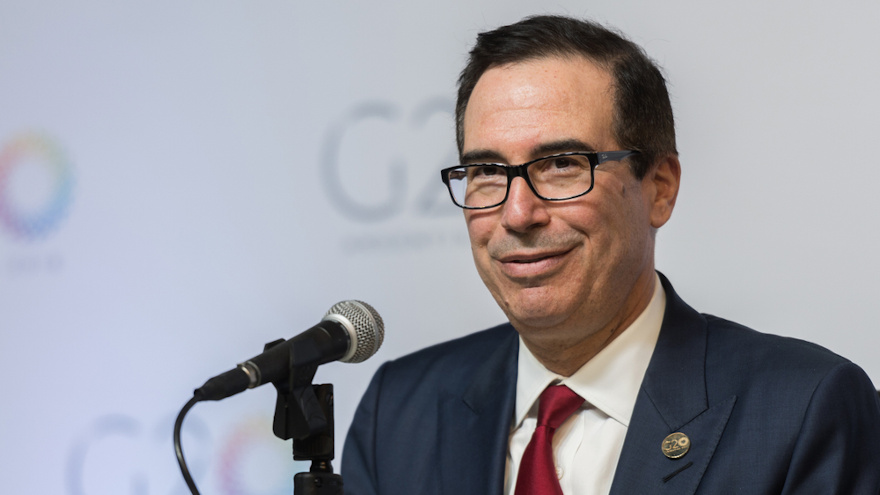
“The PPP has provided 5.2 million loans worth $525 billion to American small businesses, providing critical economic relief and supporting more than 51 million jobs,” Treasury Secretary Steven Mnuchin said in a news release. “Today’s action streamlines the forgiveness process for PPP borrowers with loans of $50,000 or less and thousands of PPP lenders who worked around the clock to process loans quickly.
“We are committed to making the PPP forgiveness process as simple as possible while also protecting against fraud and misuse of funds. We continue to favor additional legislation to further simplify the forgiveness process,” Mnuchin added.
SBA and Treasury also noted that they tried to ease the burden on PPP lenders, allowing lenders to process forgiveness applications more swiftly.
“Nothing will stop the Trump Administration from supporting great American businesses and our great American workers. The Paycheck Protection Program has been an overwhelming success and served as a historic lifeline to America’s hurting small businesses and tens of millions of workers. The new form introduced today demonstrates our relentless commitment to using every tool in our toolbelt to help small businesses and the banks that have participated in this program,” SBA Administrator Jovita Carranza said.
“We are continuing to ensure that small businesses are supported as they recover,” Carranza went on to say.
A coalition of more than 100 trade associations — including the American Bankers Association, Consumer Bankers Association and Texas Bankers Association — previously asked federal lawmakers that (PPP) loan of less than $150,000 would be forgiven when operators only had to answer a single, simple question to confirm the funds were used in accordance to PPP guidelines.
The National Association of Federally-Insured Credit Unions (NAFCU) president and chief executive officer Dan Berger offered this reaction to the streamlined forgiveness process for PPP loans below $50,000.
“We appreciate the SBA and Treasury’s commitment to streamlining the PPP loan forgiveness process, and the agency’s new forgiveness application for loans under $50,000 is a strong step in the right direction,” Berger said in a news release.
“PPP loans have been critical in helping main street small businesses and our local communities meet the challenges posed by the coronavirus pandemic. NAFCU looks forward to continuing to work with the SBA and Treasury to streamline the PPP loan forgiveness process,” he added.
SBA said it began approving PPP forgiveness applications and remitting forgiveness payments to PPP lenders for PPP borrowers on Oct. 2.
“SBA will continue to process all PPP forgiveness applications in an expeditious manner,” the agency said.
Go to this website for the simpler loan forgiveness application.
Imagine as an independent dealer who received a Paycheck Protection Program (PPP) loan of less than $150,000, you only had to answer a single, simple question to confirm the funds were used in accordance to PPP guidelines. And then the loan would be forgiven.
A coalition of more than 100 trade associations — including the American Bankers Association, Consumer Bankers Association and Texas Bankers Association — is asking federal lawmakers for that exact process.
The groups recently sent a letter to Congressional leadership calling for passage of bipartisan legislation to streamline the PPP forgiveness process for the smallest loans.
“We ask that Congress immediately pass these much-needed bipartisan pieces of legislation, supported by a third of the Senate and 77 members of the House of Representatives, that would streamline the forgiveness process for mom-and-pop businesses who received Paycheck Protection Program loans during these unprecedented times,” the associations wrote. “Expediting the loan forgiveness process for many of these hard-hit businesses would save more than $7 billion and hours of paperwork.”
The groups also pointed out that nothing in proposed legislation prevents the audit of PPP loans less than $150,000 for fraud.
The Treasury Department tried to answer several common questions through this online guide. But the coalition is still seeking assistance because of the extreme need many small businesses currently face.
“Small business owners are working day and night to remain afloat, take care of their employees and their communities, and keep their doors open. However, the interruption of state reopening plans, coupled with concerns of lower sales for months to come, have put small business owners in an increasingly daunting situation,” said Kevin Kuhlman, vice president of federal government relations for the National Federation of Independent Business (NFIB).
“Small businesses need additional financial assistance to survive,” Kuhlman continued. “In addition to allowing for a second draw of Paycheck Protection Program loans, this bill would expand loan uses and simplify the loan forgiveness application process. Our research shows that more than 20% of small businesses do not believe they will survive another six months under the current economic conditions.
“We urge members of Congress to sign onto the discharge petition and provide small business owners with the vital financial assistance they need,” he went on to say.
And other service providers that independent dealers often use also are calling for reinforcement of PPP, too.
The American Institute of CPAs (AICPA) also recently renewed its call for swift passage of legislation to extend and expand the PPP.
“From the beginning, we have advocated for the support of small businesses, their survival and their ability to employ people,” said AICPA president and chief executive officer Barry Melancon. “It’s apparent that to increase the odds of many small businesses getting through this crisis, more governmental support is essential.”
Erik Asgeirsson, president and CEO of CPA.com, the AICPA’s business and technology arm, added, “Money still remains unspent from the last PPP authorization, but businesses can’t currently tap those funds. We need to allow new loan applications and add additional resources to help small businesses during this critical time.”
August consumer bankruptcy filings decreased both year-over-year and month-over-month. The head of the American Bankruptcy Institute explained why that movement happened.
Before getting into the reasoning from executive director Amy Quackenboss, ABI shared data this week provided by Epiq Systems that showed the 36,877 consumer filings in August represented a 42% drop from the consumer total of 63,132 cases registered during the same month last year.
Furthermore, according to the newest data, the 39,349 total U.S. bankruptcy filings completed in August marked a 41% decline from last August’s total of 66,530 filings.
“A number of key factors continued to keep bankruptcy filings from overwhelming the court system,” Quackenboss said in a news release. “The CARES Act helped businesses and consumers initially weather the economic shock of the pandemic, collection, eviction and foreclosure activity was largely suspended, and quarantining measures presented challenges for struggling debtors to meet with attorneys.
“However, with the expiration of government stabilization programs, elevated unemployment levels and growing economic uncertainty, we anticipate a dramatic climb in filings later this year,” she continued.
Perhaps what’s already happening on the commercial side is reinforcing Quackenboss’ projection.
Data from Epiq Systems indicated that commercial Chapter 11 filings in August increased 17% year-over-year, rising from 450 filings to 526 cases. But overall commercial filings in August totaled 2,472 cases, marking a 27% drop year-over-year from the 3,398 filings in August 2019.
Looking at the data from a sequential comparison, Epiq Systems determined that the August tally represented an 8% decrease from the 42,865 total filings in July. The 36,877 consumer filings in August also marked an 8% decrease from July’s consumer total of 40,085.
ABI went on to note that the August business filings dropped 11% to 2,472 from July’s business total of 2,780.
Dissecting the Epiq Systems information further, the average nationwide per capita bankruptcy filing rate in August came in at 1.84 (total filings per 1,000 per population), a slight decrease from the filing rate of 1.89 during the first seven months of the year.
The average total filings per day in August stood at 1,874, a decrease of 38% from the 3,024 total daily filings in the same month last year.
States with the highest per capita filing rates (total filings per 1,000 population) in August included:
1. Alabama (4.16)
2. Tennessee (3.65)
3. Delaware (3.49)
4. Mississippi (3.21)
5. Georgia (3.02)
ABI has partnered with Epiq Systems, a leading provider of managed technology for the global legal profession, in order to provide the most current bankruptcy filing data for analysts, researchers and members of the news media.
While overall bankruptcies remain lower year-over-year, a rise in a portion of commercial filings during July has the leader of the American Bankruptcy Institute (ABI) concerned about what might be happening later this year.
According to data provided by Epiq, ABI said total commercial Chapter 11 filings in July 2020 increased 52% from the previous year. Officials determined commercial Chapter 11 filings totaled 643 in July, climbing from the July 2019 total of 423.
Conversely, ABI found that total commercial filings decreased 17% in July 2020, as the 2,768 filings were down from the 3,314 commercial filings registered in July of last year.
Officials pointed out the 42,861 total bankruptcy filings in July 2020 were down 33% from the 64,345 total filings registered last July. They added total consumer filings dropped 34% in July, as the 40,093 filings fell from the 61,031 consumer filings posted in July of last year.
When looking at the data on a sequential comparison, the increases are more prevalent.
ABI indicated July’s commercial Chapter 11 filings represented a 6% increase from the 609 filings in June. The organization said total commercial filings ticked up 2% above the June commercial filing total of 2,713.
And officials went on to say that total bankruptcy filings in July represented a 1% increase over the 42,425 total filings recorded in June. And total noncommercial filings for July also marked a 1% rise from the June 2020 noncommercial filing total of 39,712.
“As the government considers renewing or bolstering lifelines to help stabilize the economy, the financial uncertainty due to the COVID-19 pandemic is weighing on families and businesses,” ABI executive director Amy Quackenboss said in a news release.
“We anticipate filings increasing in the next few months as more households and companies seek the shelter of bankruptcy amid intensifying financial distress,” Quackenboss continued.
ABI acknowledged Congress is currently considering another economic stimulus package as important aid provisions of the Coronavirus Aid, Relief, and Economic Security Act (CARES Act) have expired.
Officials reiterated the weekly unemployment bonus of $600 established by the CARES Act ended on July 31, and the deadline for businesses to apply for a Paycheck Protection Program loan was Saturday.
Turning back to the latest data, ABI mentioned the average nationwide per capita bankruptcy filing rate in July came in at 1.89 (total filings per 1,000 per population), a slight decrease from the filing rate of 1.92 during the first six months of 2020.
Officials added average total filings per day in July were 1,948, a 33% decrease from the 2,925 total daily filings in July 2019.
States with the highest per capita filing rates (total filings per 1,000 population) in July included:
1. Alabama (4.31)
2. Tennessee (3.75)
3. Delaware (3.70)
4. Mississippi (3.35)
5. Georgia (3.12)
ABI has partnered with Epiq, a leading provider of managed technology for the global legal profession, in order to provide the most current bankruptcy filing data for analysts, researchers and members of the news media.
What Congressional lawmakers and the White House do in the coming days to enhance federal assistance to help consumers and businesses get through the coronavirus pandemic are likely to impact bankruptcy filings, according to the executive director of the American Bankruptcy Institute (ABI).
According to data provided by Epiq, ABI reported that bankruptcy filings declined in June as well as through the first half of the year. But ABI executive director Amy Quackenboss can see a scenario where the trends reverse.
“Businesses and consumers continue to navigate a challenging economic course as a result of the financial crisis due to the COVID-19 pandemic,” Quackenboss said in a news release. “As government lifelines to help stabilize the economy begin to expire, bankruptcy provides a shield for households and companies facing intensifying financial distress. We anticipate filings to begin increasing as a result.”
Epiq’s data showed total bankruptcy filings decreased to 298,080 during the first six months of 2020, representing a 23% decrease from the 388,594 total filings during the same period a year ago.
Officials indicated total consumer filings registered a 24% decrease as the 280,649 filings during the first half of 2020 declined from the 368,953 filings during the first six months of last year.
ABI went on to note that the 17,431 total commercial filings for the first half of 2020 represented an 11% drop from the commercial filing total of 19,641 for the first half of 2019.
Looking just at June, officials found that total bankruptcy filings dropped 31% to 42,416 from the 61,102 total filings in June of last year.
Noncommercial bankruptcies for June decreased 32% to 39,719 from the 58,005 filings last June.
On the business front, ABI recapped that total commercial Chapter 11 bankruptcies for June were 609, representing a 44% increase from the 424 commercial Chapter 11 filings in June of last year.
According to Epiq’s data, there were a number of notable Chapter 11 cases filed in June, including two more Catholic Dioceses, numerous large energy-related cases including Chesapeake Energy, and a number of well-known national companies such as 24 Hour Fitness, General Nutrition, Libbey Glass and Chuck E. Cheese.
Officials added more than one-half of the Chapter 11 cases filed during the month were actually associated cases filed by the subsidiaries of a larger financial group.
ABI pointed out that total commercial bankruptcies slipped to 2,697 filings in June, a 13% decrease from the 3,097 registered during June of last year.
Also of note, officials determined the average nationwide per capita bankruptcy filing rate for the first six calendar months of 2020 decreased slightly to 1.92 (total filings per 1,000 per population) from 1.98 for the first five months. The average total filings per day in June were 1,928, a 37% decrease from the 3,055 total daily filings in June of last year.
States with the highest per capita filing rate (total filings per 1,000 population) through the first six months of 2020 included:
1. Alabama (4.46)
2. Delaware (3.89)
3. Tennessee (3.88)
4. Mississippi (3.49)
5. Georgia (3.25)
ABI has partnered with Epiq, a leading provider of managed technology for the global legal profession, in order to provide the most current bankruptcy filing data for analysts, researchers and members of the news media.
Dealer Profit Pros founder and president Kenny Atcheson understands two situations facing dealerships today. Operators likely have many questions about how they should steer their stores through the coronavirus pandemic, and they are watching expenses even closer than usual.
To help on both fronts, Atcheson is organizing a conference call aimed at addressing a half dozen pressing questions. And for Cherokee Media Group e-newsletter subscribers, he is also offering a 50% discount to participate.
“As you know, we are living in unprecedented times. Even if your business was able to stay open, companies that employ your customers may have closed, leaving you without a market to sell to. Or the uncertainty of potential customers able to make payments later has you concerned,” Atcheson said. “As a country we’ve experienced recessions and crises in the past, but this is a unique situation that requires unique solutions.”
During the call set for 11 am (ET) on Aug. 4 and titled, “Present and Post Pandemic Blueprint: What to Do Now, Coming Out of the Pandemic and Afterward,” Atcheson plans to offer suggestions in response to questions such as:
• Should I turn advertising down, off, or ramp it up?
• What type of marketing is beneficial right now?
• How do I get the best bang for my buck since I have to be really efficient with money right now?
• How do I handle customers in such a unique climate?
• How do I inspire employees to get through the current crisis and work hard — maybe for less money?
• What type of communications should we send customers right now?
Special guest Jim Jackson, an expert on leadership and team motivation also will join the event. Jackson will unearth how to lead during tumultuous times like these and keep your team inspired.
“This event will not be an infomercial for a product or service for sale. This is an invitation-only paid event with a 100%, no questions asked, money-back guarantee. If you are not thrilled with the event, you will gleefully receive your money back from us,” Atcheson said.
And as a free bonus, dealers who register also can get their Trust Factor Score (TFS). Atcheson explained business’ customized TFS will reveal areas where you can build more trust in an understandably untrusting world.
“Having the trust of potential customers speeds up the sales process, saves salespeople time and aggravation, makes the process more fun and profitable, leads to short-term and long-term advantages over your competition, and makes all your marketing more effective. Your score is determined based on 24 trust signals that include online and offline elements that affect your profitability,” he said.
To register or get more information, go to www.DealerProfitPros.com/event or call (702) 625-1818. This event will be a conference call, so participants can listen while at your desk, at home, or driving. (Use coupon code 50 to save 50%).