 The business of sales continues to evolve. While every business needs to facilitate sales, there’s a movement toward non-traditional methods. Think about it: when you want to buy a car, a house, a new suit or the latest gadget, who do you call? Oh wait, you don’t call anyone? You do research on Google. You search on Amazon. You check online reviews. You ask friends and family what they think and call out to your network on Social Media for feedback.
That right there is what’s called The New Sales and it’s how we consume things today. It’s how everyone consumes things today, including your customers.
Still aren’t convinced? Look at these latest tidbits from Forrester Research:
- The growth of e-commerce is expected to outpace sales growth at bricks-and-mortar stores over the next five years, reaching $414 billion in sales by 2018.
- Buyers engage twice as much with online content today than they did a year ago.
- Smartphones and tablets are boosting the amount of time consumers spend online.
- Increased spending by digital natives—consumers who grew up using the Internet from their earliest years—will also contribute to the growth as they move into their prime spending years. Consumers between 25 and 33 years old (Gen Y) already spend more online than any other age group.
In The New Sales environment, buyers begin their purchase journey online. If you’re a salesperson or you employ salespeople, you need to be online too.
Networking is the New Sales
With continuing pressure on the sales professional as we know it, it’s time to look at your sales practices to see where they can be improved to accommodate this shift. Especially when we talk about customer retention. The role of the salesperson quickly morphs into a customer service position because we’re able to effectively communicate and influence throughout the buying cycle of that repeat customer…and of course, by extension, their network.
We now live in a world where your revenue is determined by the value you bring and the customer experience you create. If the death of the traditional sales pro is upon us, how can you pivot and make it rain again?
Evolve Your Positive Attitude
How often you sell is directly proportionate to how often you being your A-game. There’s a headspace you need to be in to perform. Sometimes we isolate. The noise in our head tells us we’re “not good enough” or we’re “never going to succeed”…yada, yada, yada.
My friend, Mike Correra (@MiketheCarGuy1) manages Raceway Ford in Riverside, CA. Mike has doubled his business since last year, all through recognizing early-on that the customer was online and he needed to be there to facilitate their purchase. Mike’s a master at Social Selling, he never stops learning and the key to his success is this:
“Positivity in selling is more than just a ‘good mood’; it is about believing fully in yourself, your process and your product. When you do, you project a confident, positive image to your customers and they feel good about working with you.”
Develop a Referral Mindset
“You will get all you want in life, if you help enough other people get what they want.” ~Zig Ziglar
If you want to get referrals, you have to give referrals. Every successful salesperson devotes part of their day to prospecting. Utilize Social channels to reach out, connect and network.
Leverage Social Media to Sell More
I meet people everyday who bristle at the idea of using Social networks to grow their business. Some think it’s quaint and “old skool” to stay exactly where they are and not participate in the most valuable tool out there for salespeople: Social Media.
Showing disdain for Social Media is like bragging that you can’t read.
If you don’t know where to start, ask me. I’m just like you. I came from auto retail, spending most of my time managing car dealerships. In 2008, I had (like all of us did) a very challenging time trying to figure out how I would make a living. Having always been a natural networker, I came to Social Media with a goal to develop my referral network even further. I realized I liked the marketing side of it, and now here I am helping others do the same.
A goal properly set is halfway reached. If networking is the new sales then isn’t it time to take the steps necessary to adapt?
Author information
Kathi Kruse is an Automotive Social Media Marketing Expert, Blogger, Speaker, Coach, Author and Founder of Kruse Control Inc. Born in the heart of Los Angeles to a family of “car people”, Kathi’s passion for the car business spans a 30-year career managing successful dealerships in Southern California. Kathi is the author of “Automotive Social Business – How to Captivate Your Customers, Sell More Cars & Be Generally Remarkable on Social Media”. Her Kruse Control Blog is the leading Automotive Social Media blog in the US.
The post Is Networking the New Sales? 3 Ways to Get Your Game On appeared first on Kruse Control Inc.
 If you don’t know what Social Media marketing success looks like and you hire or promote an employee to do your Social Media marketing, how will you know for sure if your Social Media strategy is right and the results are successful?
There is a direct correlation (although neither side may realize it) between a boss’ approach to Social Media and an employee’s level of Social Media marketing expertise.
Very often, I witness a “shared delusion” between boss and employee that culminates, at its best, with sad maneuvers and at its worst, harmful consequences. Does this scenario sound familiar to you?
While training and guidance are imperative, not everyone seeks it out. Without quality information and solid Social Media strategy, you and your company may be headed for The Social Media Perfect Storm.
The Business Owner Weather Front
Picture this: The boss has been hearing that he needs Social Media for his business. He hears a lot of information and chatter but doesn’t really know where to start because he’s:
- Not a regular user of Social Media
- Doesn’t have access to the latest trends in consumer shopping behavior
- Has been given all sorts of information from vendors who want his account
- Decides the easiest solution is to ask an employee to do the marketing
The Employee Hurricane
The employee works for the above mentioned boss. She already has a full-time job doing something important. How do we know this? Because she’s been working there for a few years and she’s one of the main components in the daily operating machine.
She hears the boss needs someone to do Social Media marketing. She’s active on social sites personally, so, as a way to increase her value to the company, she volunteers to add the business’ marketing to her list of duties. She sees the endeavor as “free” (just like her boss) because you don’t have to pay to be on social sites.
The Social Media Perfect Storm
The boss thinks that Social Media marketing is free so why not let the employee manage it. What has he got to lose?
Plenty. The days of unicorns, rainbows and easily making a mark through Social Media are over. Putting someone in charge of your marketing who has little or no experience guarantees disaster. Neither the boss nor the employee have a concrete way of proving success. Both disorders come together to form the perfect storm.
To create the Social Media Perfect Storm takes a rocky foundation and some misplaced hope. Hope is not a Social Media strategy.
Two real-life examples of The Social Media Perfect Storm
1. The car dealer’s duplicate content blog.
There’s a recent post on a Subaru dealer’s blog that’s an entire NY Times article…verbatim. Yes, that means they copied an article word-for-word from the New York Times website. When you copy the first paragraph and do a Google search for that phrase, the New York Times article is in first position…with the dealership’s blog showing up 7th of 7 listed. What could possibly go wrong?
- Harmful: The dealership website is penalized by Google for duplicate content.
- How to avoid it: Blogs are about adding your voice to the conversation. Using a short excerpt from the article is fine but write your own opinion and your own story.
- Bad Branding: The dealership is in New York and the NY Times article talks about New Hampshire.
- How to avoid it: As a local business, you must keep your audience engaged. The dealerships’ ideal buyers are 4 hours from New Hampshire. Don’t spend time and effort talking about subjects that aren’t relevant to your audience.
- Syndication: publishing this type of content on social channels only enhances the negative effect.
- How to avoid it: When you plagiarize, sooner or later, you get caught. I’m sure this dealer and his employee had no intention of plagiarizing but ignorance is not a defense.
2. The Social Media strategy fail on a dealership’s Facebook page.
The dealer’s page is filled with pictures of what they sell. A steady stream of vehicle images is not a strategy. Remember, you’re competing with their friends, their family and other pages they’ve liked for space in users’ newsfeeds. Product images do not stand out in the newsfeeds of your fans. In fact, they scroll right past them, giving you a lower and lower rank in Facebook’s algorithms.
How to avoid it: Relevant content to your ideal customers is still what drives engagement, leads and sales. When you share only posts about the products you sell, you sell yourself very short. People want to know more about what it’s like doing business with you.
In this case, it seems clear the boss is not aware of what Facebook marketing success looks like. The employee is doing his or her best with what they’ve learned so far and that is shared delusion.
To avoid The Social Media Perfect Storm, think long and hard about who you have managing your marketing. Seek guidance from an expert to help you make your decision and, once the decision is made, get further assistance with a ongoing support. There’s absolutely no reason to fly blind in a storm. The beacon you need is there, just keep your compass pointed North!
Author information
Kathi Kruse is an Automotive Social Media Marketing Expert, Blogger, Speaker, Coach, Author and Founder of Kruse Control Inc. Born in the heart of Los Angeles to a family of “car people”, Kathi’s passion for the car business spans a 30-year career managing successful dealerships in Southern California. Kathi is the author of “Automotive Social Business – How to Captivate Your Customers, Sell More Cars & Be Generally Remarkable on Social Media”. Her Kruse Control Blog is the leading Automotive Social Media blog in the US.
The post The Social Media Perfect Storm and How to Avoid It appeared first on Kruse Control Inc.
 If you’re like many business owners or managers, navigating Social Media for business can be a mystery. It’s difficult to know where to start or which platform to leverage. Many are looking for ways on how to succeed on Instagram and I found one car dealership who’s not only figured it out but who’s had great results.
While Facebook is usually the best platform to start your Social Media marketing (because it’s the biggest and Facebook ads can’t be beat for generating traffic, leads and sales), there will soon come a time that you’ll want to venture out into the other channels. Instagram is ideal for many businesses and it can be very confusing, especially if you aren’t a regular user. The results (re: ROI) you get are a direct consequence of a winning (or losing) content strategy.
I have a client who’s been able to quickly get the results they wanted and I’d like to share some of the simple yet profound actions they took to get there. Like so many other endeavors, it’s not so hard once you know what you’re doing.
RC Lacy Ford Lincoln Subaru is located in the small town of Catskill, NY. They’ve been in business since 1914 (yes, 100 years) and the 3rd generation of the Lacy family now owns/manages it. They’re unique in that they understood quickly how valuable social and online marketing can be and they’ve just recently started utilizing Instagram to show another side of their business’ personality.
Lacy’s staff includes an Internet Sales Director, a Business Development Center with four team members who develop leads and a Marketing Manager who handles all Social Media content and community management. Lacy’s has a solid content strategy: they tell the story of their dealership, what it’s like to buy there (why people buy from them) and they provide valuable information to help customers solve problems.
Instagram is an image-driven platform and as such, the content you share must tell a story through the image. If you’re thinking about leveraging it and want to know how to succeed on Instagram or want to improve on what you’re doing, check out Lacy’s profile. How can you tell your story with images?
Lacy’s Instagram Content: Telling Their Story
Lacy’s heritage (for Throwback Thursday). It gives the viewer an idea of just how long they’ve been selling and servicing cars:
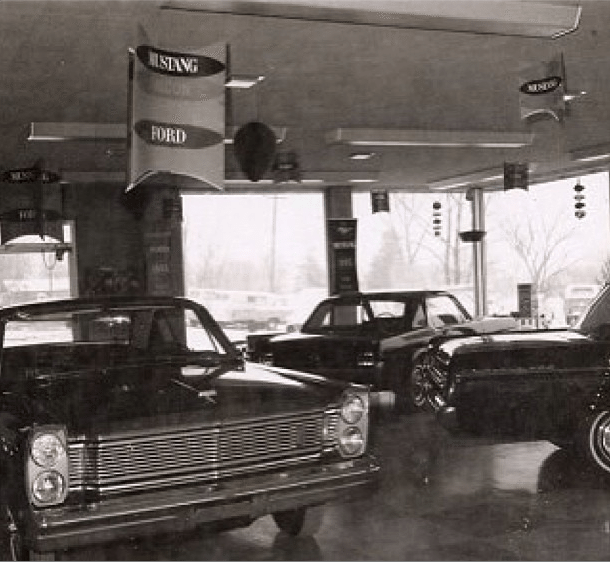
Lacy’s Showroom 1968
This vintage ad for another #TBT Throwback Thursday. It shows their employee-centric approach to customer service and their consistent message of “Service Comes First” beginning all those years ago:
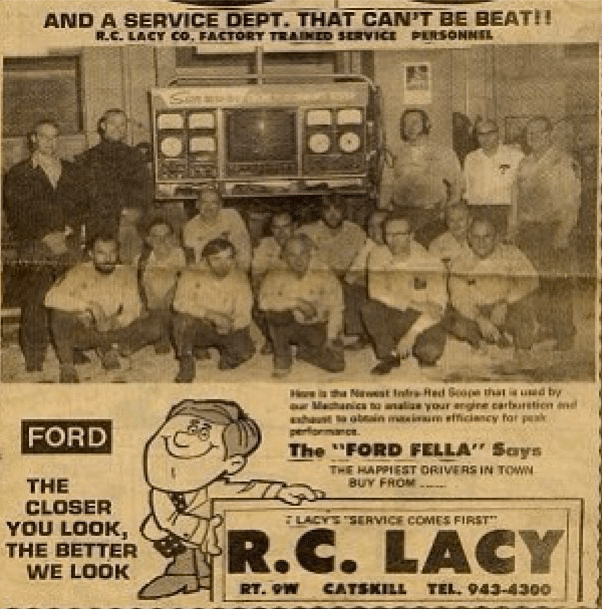
Lacy’s Ad c. 1970’s: “And a Service Dept. that Can’t Be Beat!”
Lacy’s place in the community. Dealership personnel are on the volunteer Fire Dept. and they regularly host events:

Catskill NY Fire Dept Truck in Parade
Lacy’s “You’re Always Welcome” customer experience. This customer’s pet named “Angie” visits regularly!

Angie dropped by today to say hi!
Lacy’s facility expansion. Growth is a great indicator of successful business practices. They also like to keep everyone up-to-date:

The New Subaru Building with Dan Lacy
This is a nice example of their simple yet profound strategy. What looks like a random shot of Lacy’s salesperson enjoying his coffee and some sunshine, turned into a lead for Lacy’s. A customer saw this picture on Instagram. She’d been looking for a Subaru Impreza and came down to make a deal:
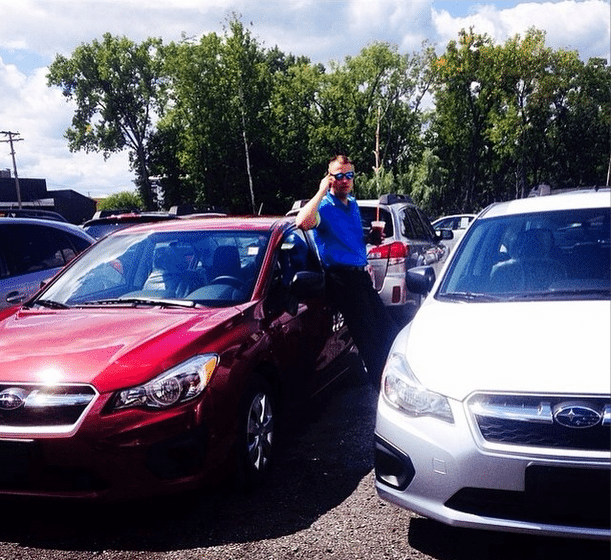
Leads happen in the most amazing ways!
It’s not easy knowing how to succeed on Instagram for business. Start with a solid content strategy with an end goal of developing relationships that turn into leads. Think about ways your business can show another side of its personality. Customers are out there looking for reasons to buy from you. Make it easy by standing out on Instagram.
Author information
Kathi Kruse is an Automotive Social Media Marketing Expert, Blogger, Speaker, Coach, Author and Founder of Kruse Control Inc. Born in the heart of Los Angeles to a family of “car people”, Kathi’s passion for the car business spans a 30-year career managing successful dealerships in Southern California. Kathi is the author of “Automotive Social Business – How to Captivate Your Customers, Sell More Cars & Be Generally Remarkable on Social Media”. Her Kruse Control Blog is the leading Automotive Social Media blog in the US.
The post How to Succeed on Instagram: An Informal Case Study appeared first on Kruse Control Inc.
 Social Selling is fundamentally the process you use to help social buyers become customers. There are many strategies and tactics that lead up to the sale but ultimately it’s how you leverage your expertise and provide value that wins it.
I was at my local health foods store doing my weekly shopping. A vendor was camped out near the check out offering samples of an energy bar. He asked if I’d like a sample. I’ve tried that brand and I don’t like them so I politely said no. He asked again, “Are you sure? They’re great.” I said no again, with a smile. Then he said, “They’re better than what you have in your basket.” I turned around and asked, “Are you judging me? ’cause it sounded like you’re judging me and ain’t nobody got time for dat.” To which he replied, “I was just trying to warn you.” So much for using humor to deflect an inexperienced salesperson.
Sales is an artful skill that many do not possess. Having started my career in the car business in sales, I’ve always had compassion for those trying to make their way – and this situation was no different. However, this energy bar vendor had no idea that I had tried his brand and didn’t like it. He didn’t know that, with food allergies, I’ve done my homework on what I can put in my body and his brand wasn’t for me. It was all about him and his product instead of about me (potential buyer) and my preferences.
Sales is about listening and asking questions to help the prospect decide. Beyond sales is Social Selling and it takes considerable understanding of the modern, connected customer to succeed.
A social salesperson makes the customer his or her focus. He or she must comprehend the role of content and how it’s used to tell a powerful story of why people buy from you. Social Selling involves growing your social connections and getting your potential customers to know, like and trust you.
Social Selling = Teaching + Listening + Asking
These 3 drivers will get your Social Selling machine up and running:
Teach
Educating buyers is your key to reaching them. The modern, connected buyer is looking for trustworthy information and YOU need to be the one providing it.
- Share relevant content on the Social channels where you customers spend time and where you feel comfortable.
- Leverage your expertise by publishing blog posts answering the questions your customers ask.
Listen
Pay attention to the subtleties in your conversations. Find common ground and shared interests with potential buyers. Become adept at recognizing leads.
- Hootsuite and Tweetdeck allow you to follow Twitter hashtags or keywords in conversations in your market area. Look for places where you can deliver value.
- Utilize Facebook Graph Search to find groups and individuals you’d like to prospect.
- Sign up for LinkedIn Premium to take full advantage of Advanced Search.
Ask
Asking questions to facilitate the buy is as important as asking for the sale. Develop rapport with your buyer. Don’t sell something, solve something.
Asking for the sale is difficult for most salespeople, online or offline. They’re afraid of seeming pushy, greedy or unlikable. It’s never necessary to be pushy or aggressive in order to close someone. If you’ve done a good job in Social Selling, the close will follow naturally and will seem like the next logical step.
- Establish a Social presence.
- Map out who you want to connect with and who in your network can refer you.
- Publish useful content that leverages your expertise and signifies you as a trusted resource.
- Engage in conversations and develop leads by asking thoughtful questions.
- Ask for the sale.
Author information
Kathi Kruse is an Automotive Social Media Marketing Expert, Blogger, Speaker, Coach, Author and Founder of Kruse Control Inc. Born in the heart of Los Angeles to a family of “car people”, Kathi’s passion for the car business spans a 30-year career managing successful dealerships in Southern California. Kathi is the author of “Automotive Social Business – How to Captivate Your Customers, Sell More Cars & Be Generally Remarkable on Social Media”. Her Kruse Control Blog is the leading Automotive Social Media blog in the US.
The post 3 Drivers in the Social Selling Machine and How to Leverage Them appeared first on Kruse Control Inc.
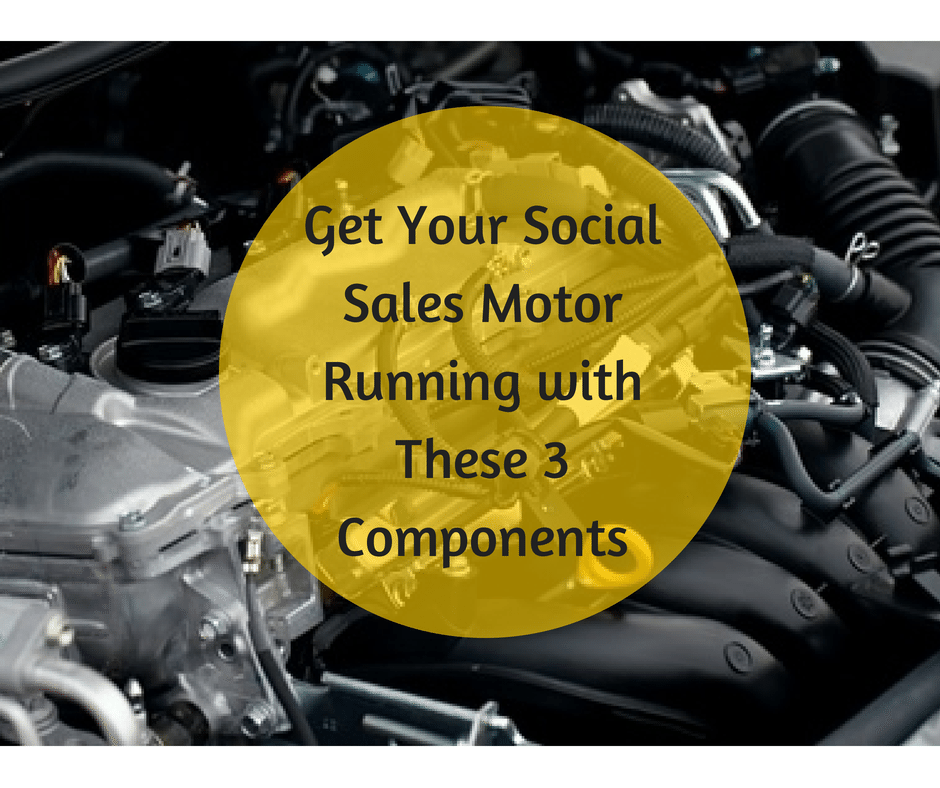 Have you ever popped open the hood of your car and wondered what the heck is going on under there? It’s a jumbled-up mess of hoses, wires, metal and funky black stuff that, for most people, is pretty confusing. Social Media and Social Sales can be just as, if not more confusing. A lot of salespeople take a look and say, “How the heck does all this work together to make something run?”
The principle behind the internal combustion engine is this: If you put a small amount of high-energy fuel in a small, enclosed space and ignite it, an incredible amount of energy is released.
The principle behind Social Sales is similar: create a spark in yourself and your sales team. Add fuel by providing helpful information and expertise. Then compress it in a trusted network to drive traffic, leads and sales.
Get your Social Sales motor running with these 3 components:
1. Spark
Is there a spark in your sales’ teams engine? The spark they need is motivation and inspiration. Allow them to leverage their individual expertise by creating a presence for themselves on Social Media.
- Identify social channels where ideal customers spend their time.
- Educate your salespeople how to create a memorable online presence.
- Inspire them to become good listeners.
- Help them brand themselves on social channels so they know why people buy from them.
- Encourage them to be the first one in the relationship to provide value.
2. Fuel
Highly relevant content that illustrates the right message is what fuels Social Sales. Your business and your team gain search visibility and influence while creating a lasting impression in the buyers’ mind. Content on your blog that’s published on Social Media channels ignites the Social Sales engine:
- Everyday stories illustrating your customer’s experience and how you helped them
- Topics that educate and inform your customer during their shopping process
- Customer testimonials
- Product Information
- Industry news
3. Compression
With your spark and fuel ready to go, you can create a cycle that allows you to set off “sales explosions” many times per day, and if you can harness that energy in a useful way, what you have is the core of Social Sales!
- Take 30 minutes per day (minimum) interacting with your network.
- Join Groups on LinkedIn where your customers spend time and start solving, not selling.
- Tweet useful content at least 6 times per day and network with those who retweet you or comment.
- Twitter prospecting – follow hashtags and/or conversations in your geographical area and see where you can help.
- Share your relevant content on Facebook. Listen for opportunities to network, provide value and generate leads.
Social Sales can be as confusing and frustrating as working on a high-performance engine. But it’s not getting any easier, folks. Dive in now, get yourself familiar with the Social web and networking. You’ll be that much farther than the other guy and you might just leave him in the dust.
Author information
Kathi Kruse is an Automotive Social Media Marketing Expert, Blogger, Speaker, Coach, Author and Founder of Kruse Control Inc. Born in the heart of Los Angeles to a family of “car people”, Kathi’s passion for the car business spans a 30-year career managing successful dealerships in Southern California. Kathi is the author of “Automotive Social Business – How to Captivate Your Customers, Sell More Cars & Be Generally Remarkable on Social Media”. Her Kruse Control Blog is the leading Automotive Social Media blog in the US.
The post Get Your Social Sales Motor Running with These 3 Components appeared first on Kruse Control Inc.
 We live in interesting times. I’ve been blogging about the power of Social Media for business for 5 years and I’m just now starting to hear from a lot of owners and managers who want to get real and leverage its advantages. Social has shifted in those 5 years and it’s only become more prevalent. But how do you know for sure it’s right for your business?
This week I spent some time with a Ford dealer 20 group and I’m impressed with their knowledge and use of online marketing. Social Media is a big component of their marketing plans and they were asking all the right questions. When you do Social Media marketing for a living (like me), there are many times when you feel like you’re the only one singing from the song book. This week strengthened my faith.
One Ford dealer has a salesperson at his dealership who sells 40 cars a month. She used to sell 15 cars a month. I asked him, what made the difference? “Social Media.” That dealer now requires his salespeople to learn social media and encourages them to emulate her. Not everyone gets it immediately because it’s hard. However, with strong leadership and staying open to learning, they’ll eventually become a social business.
I had some great questions come up in the meeting and I’ll share one of the stand outs with you because it may apply to your business, no matter where you are or what you sell. The question was,
“I’m a Ford dealer in a small mid-west town. Do I really need social media and if so, why?”
The answer is YES for these 4 main reasons:
1. Qualified, relevant content – supported by Facebook ads – drives traffic, leads and sales.
If your ideal customers spend time on Facebook, that’s where your attention should focus. 84% percent of automotive shoppers are on Facebook. 38% of consumers will consult social media in making their next car purchase. No matter where you are, if you’re business sells to consumers, social media is how to reach them.
Facebook ads can help you grow your likes, promote your content to increase engagement and generate leads to convert sales on your website. Blasting messages is not how we sell to the modern consumer. Reaching your target audience with information they WANT to know about paves the way to the sale.
2. SEO and Social Media are no longer separate.
To drive traffic, generate leads and convert sales through your website, you must have quality content on your site. No matter where you are or what you sell, Google has told us that fresh, relevant content ranks higher when it’s shared and engaged with on social sites (aka: social signals). “Syndicating” your quality blog content on social media increases online authority and moves you into the top positions on search. Quality content means answering the questions your customers are asking and telling the story of why people buy from you.
3. Semantic Search.
When the Google Hummingbird update launched, conversations took the place of keywords in the new algorithm. Semantic search means that now Google looks for the meaning behind the words your prospects enter into their search query. The most qualified and successful searches are driven by conversations. Where do you have those conversations? Social Media.
No matter where you are or what you sell, conversations are taking place around the products and services your sell. Use the power of Social Media for business deliberately. Research and determine the questions your prospects ask, incorporate them in your content and invite conversations via Social Media.
4. Social Selling.
The top salespeople have already created their own online presence and their own referral network. I mentioned above how just one salesperson was able to go from 15 cars to 40 cars a month using social media to leverage her expertise and become a trusted authority. No matter what you sell or where you are, people want to buy from an expert they can trust. Your customer is online, your products are online, why aren’t your salespeople online?
Author information
Kathi Kruse is an Automotive Social Media Marketing Expert, Blogger, Speaker, Coach, Author and Founder of Kruse Control Inc. Born in the heart of Los Angeles to a family of “car people”, Kathi’s passion for the car business spans a 30-year career managing successful dealerships in Southern California. Kathi is the author of “Automotive Social Business – How to Captivate Your Customers, Sell More Cars & Be Generally Remarkable on Social Media”. Her Kruse Control Blog is the leading Automotive Social Media blog in the US.
The post The Power of Social Media for Business–No Matter Where You Are appeared first on Kruse Control Inc.
 “Selling to people who actually want to hear from you is more effective than interrupting strangers that don’t.” ~Seth Godin
Everyone wants to be cool. Who remembers when they were younger how great it felt to listen to the same music as your friends? Music brings people together. Discoveries happen. You realize, “Wow, I found somebody that’s just like me.”
I was a cheerleader in high school. One of the gals on our squad had an awesome convertible land yacht. We’d all pack into that car and drive around town blasting our music, singing to the top of our lungs. We were pretty cool.
Remember that scene in Wayne’s World where Wayne jumps into Garth’s sky-blue AMC Pacer and pops in the tape? Everybody’s on cue, including each audience member, for head-bangin’ to Bohemian Rhapsody.
That’s exactly the way your ideal customers tune into your content. When the content you create and publish connects them to your brand or your employees, there’s a sense of community that develops. Your message resonates with those most likely to buy from you.
There are songs which touch us throughout our lives. Each time we hear them, we go right back to those feelings that connected us to that song in the first place. My husband Scott’s favorite song was Bob Dylan’s “Like a Rolling Stone“. When he passed away suddenly in 1995, I turned to music to help me grieve. I even made the playlist for his funeral because it gave me a sense of relief hearing “his” music. We blasted that song ’til the roof came off the church. I can’t hear it today without thinking of him.
What “songs” do your customers want to listen to you?
What helps them…what resonates with them? The quality content you publish reinforces your message. The customer thinks, “Wow, I found a brand that’s just like me.”
Quality content is what gets potential leads interested in your company.
It’s important to remember that not everyone likes the same kind of music. Not everyone is your customer. You do yourself and your business a disservice by not defining your ideal customers. When you describe them down to every detail, it’s easier to tune into their frequency, create quality content and speak the language of sales.
Your marketing results will suffer when you try to reach too large of a swath of audience. You’ll be interrupting strangers that don’t want your product instead of selling to people who actually want to hear from you!
Listening is the new prospecting.
You must identify with your tribe…the tribe that buys your product or service. Just like those songs we heard that made us part of the cool kids, today’s customer wants to feel like they’re part of something.
- Listen to understand and tune into their frequency
- Publish quality content
- Engage to create relationships and tribe members
- Convert tribe members into customers
And let the music of sales begin!
Author information
Kathi Kruse is an Automotive Social Media Marketing Expert, Blogger, Speaker, Coach, Author and Founder of Kruse Control Inc. Born in the heart of Los Angeles to a family of “car people”, Kathi’s passion for the car business spans a 30-year career managing successful dealerships in Southern California. Kathi is the author of “Automotive Social Business – How to Captivate Your Customers, Sell More Cars & Be Generally Remarkable on Social Media”. Her Kruse Control Blog is the leading Automotive Social Media blog in the US.
The post Tune Into the Frequency of Your Customers for More Leads and Sales appeared first on Kruse Control Inc.
 I don’t know what it is lately but there sure seems to be a lot of online reputation fails being played out on Social Media.
This latest round started with the 18-minute Comcast customer service call that was heard ’round the world. The customer service agent was clearly using sales tactics to “retain” the customer when all the customer wanted to do was cancel his service. The PR nightmare that happened after only served to confirm what the call illustrated.
Comcast issued a statement that it was very embarrassed by the way the employee spoke to this customer. “The way in which our representative communicated with them is unacceptable and not consistent with how we train our customer service representatives,” the statement said. “We are investigating this situation and will take quick action.”
During the ensuing media frenzy, The Verge put out a call and sought out current and former Comcast employees, hoping to shed light on the inner workings of the largest broadcasting and cable company in the country. More than 100 employees responded, including one who works in the same call center as the rep in the recording.
These employees told The Verge the same stories over and over again: customer service has been replaced by an obsession with sales, technicians are understaffed and tech support is poorly trained, and the massive company is hobbled by internal fragmentation.
Not long after the Comcast debacle, a New York-based cupcake food truck was tweeting their offensive anti-semitic views regarding the conflict in Israel and Gaza. They apparently didn’t get the memo that, as a business who likes to sell cupcakes to people, you never talk about religion, sex or politics in social situations (Twitter). Proving cupcakes are not so sweet after all, the food truck instantly earned some Twitter hate for its disturbing tweets.
And then the piece de resistance: The car dealer who was forced by the Florida DMV to refund his customer $400 after they failed to repair her car. The dealer complied with the DMV’s order, however he decided it was a good idea to refund her...in pennies.
Never underestimate the power of committed people with a cause…on Social Media.
Social Media simply amplifies what’s happening. What would compel a business owner to deliberately harm their online reputation by refunding a customer in the most offensive way possible? In this world of everyone observing your every move via social channels, it makes you scratch your head, right? In this case, the story was so outrageous that it made its way to large media outlets. Everybody loves a good story about a bad car dealer.
The dealer’s Facebook Page is filled with snarky comments about how they’ll never do business with them and/or never come back. Some comments are actually pretty funny (although if I was this dealer, I wouldn’t be laughing). Like this one:

I can’t quite figure it out. Why would a business owner invite this online reputation fail knowing the world is uber-connected through technology? This dealer clearly does not know why people choose to buy from him and seems carefree about customer retention. Perhaps he thinks every sale is just a transaction.
The one fatal error…
What’s consistent with all of these examples is that customer retention doesn’t seem to be on their radar. When your operation behaves as though each sale is the last, where will your business be in 5 years?
Why do your customers come back?
Many businesses talk about customer retention but how many actually make it part of their culture?
I’ve often said that with every piece of content you share on Social Media, before you hit send, stand back and ask yourself, “Would I follow this {person/brand} based solely on this {tweet, Facebook update or blog post}?” When you know what connects your customers to your brand, you know why people come back.
Sometimes, it’s hard to know for sure why customers come back. Good news! You have a built-in mechanism at your fingertips to find out for sure:
Ask your customers why they come back.
- “Why did you come back and buy from us again?”
- “What is it about us that you like?”
- “How do you make your decisions to purchase from us?”
- “Who in our organization stands out to you and keeps you coming back?”
- “When was the first time you realized we were the best place to buy?”
It may be because of the relationship they have with one or more of your employees. It may be they identify with your brand and that creates connection. Whatever it is, make sure you learn as much as you can about it so you can reinforce it with your staff and leverage it in your marketing and ads.
This week my client, Lexus of Lehigh Valley, released a beautiful video that speaks to their dealership brand, their core beliefs and their values. It’s 2:14 minutes of gorgeous images and true transparency that shows “Why people come back.” Peter Cooper (the dealer principal) lives and breathes his brand. He’s passionate about making the car buying experience pleasurable. He knows exactly why people come back and instills it throughout his organization.
Identify why people come back. Develop it in your marketing message and let it permeate throughout your company culture. You just might keep the pipeline full of repeat business.
Here’s Lexus of Lehigh Valley’s video:
Author information
Kathi Kruse is an Automotive Social Media Marketing Expert, Blogger, Speaker, Coach, Author and Founder of Kruse Control Inc. Born in the heart of Los Angeles to a family of “car people”, Kathi’s passion for the car business spans a 30-year career managing successful dealerships in Southern California. Kathi is the author of “Automotive Social Business – How to Captivate Your Customers, Sell More Cars & Be Generally Remarkable on Social Media”. Her Kruse Control Blog is the leading Automotive Social Media blog in the US.
The post How to Annihilate Your Online Reputation With One Fatal Error appeared first on Kruse Control Inc.
 Social Selling looks a lot like traditional selling. We build relationships and establish a mutual exchange of value. Social is the new channel we use to communicate with the modern buyer.
Social Selling allows you to be the first to provide value. Being first gives you leverage ahead of the sale, increases your chance to participate and eventually close the sale.
Why is Social Selling so important?
1. It drives revenue.
2. You don’t really have a choice.
Four facts of the modern buyer:
The same old selling model won’t work with today’s modern buyer. Most salespeople are selling like it’s 1999. “We want to sell you our stuff at our price.” To close sales with the modern buyer means to meet them where they are, deliver useful information that helps them decide and offer assistance when they’re ready to buy.
Could your business be alienating modern buyers and sending them to your competitor?
6 Ways to Alienate the Modern Buyer
1. No established Social Media presence. Every business and their sales team need to be where their buyers are. A socially connected modern buyer will look for you during their shopping process. If you’re not there, they move on to your competitor.
2. No quality content that helps the buyer get smarter. These shoppers are digitally driven; they aren’t interested (yet) in talking with your salespeople. They’re looking for answers to their questions. Quality content when they’re getting ready to buy brings them to you through search. Your expert answers and information make sure that when they do buy, they’re set up for success.
3. Trying to sell something to someone who doesn’t know you. Only 0.3% of cold calls result in an appointment. In fact, a University of North Carolina study showed that 80% of people will NOT buy as a result of cold calling. Social Selling affords you the opportunity to get to know your ideal customers before they buy. It’s much easier to sell to someone who’s seen what they like and are coming back for more.
4. Sticking your head in the sand about your online reputation. Recently a car dealer in Florida was contacted by the DMV who was following up on a complaint from one of their customers. The DMV ruled in the customer’s favor and instructed the dealer to refund her $400. He decided it would be a good idea to refund her in pennies. No matter how right you think you are, there’s no good reason to behave this way. After the story was told on the local news, and then the national news, the dealer’s Facebook page is now filled with consumer reactions (none that are positive). Today’s modern buyer sees everything that happens.
5. Salespeople aren’t part of the online conversations prior to the sale. I know many salespeople who’ve taken their own steps to create a referral network for themselves. The majority of businesses out there have not realized the power they have in their people. Many act in fear by not making social forums available to salespeople and not providing the training needed to succeed in Social Selling.
6. Your website says, “Buy our stuff at our price, right now!” Your website needs to welcome modern buyers with the information they’re seeking. Give them options and a reason to stay on your site. Awesome Social Media marketing campaigns that drive users to your site will fail if your site doesn’t have what the buyer is looking for and blasts them in the face with old-timey advertising.
Author information
Kathi Kruse is an Automotive Social Media Marketing Expert, Blogger, Speaker, Coach, Author and Founder of Kruse Control Inc. Born in the heart of Los Angeles to a family of “car people”, Kathi’s passion for the car business spans a 30-year career managing successful dealerships in Southern California. Kathi is the author of “Automotive Social Business – How to Captivate Your Customers, Sell More Cars & Be Generally Remarkable on Social Media”. Her Kruse Control Blog is the leading Automotive Social Media blog in the US.
The post 6 Ways to Alienate The Modern Connected Buyer #SocialSelling appeared first on Kruse Control Inc.
 Blogging for business is front and center in today’s marketing world. Written content (ie: your blog) is a tremendous way to create influence and foster visibility, build a strong community around your brand and generate traffic, leads and sales.
The best way to draw traffic to your blog is simply to write useful stuff that real people want to read. You don’t just need to have a blog. You also need to update it–often. Nobody will visit your blog if you don’t post anything there. It sounds simple, and it’s not easy.
I speak to people often who agree they need to be on social media and institute blogging for business. But just because you think you need to do it, doesn’t mean it’s right for you. Many times people get into it and realize there are too many obstacles in their operation.
How do you know if your business is ready? Let’s explore these 8 reasons you should NOT be blogging for business:
1. Your culture is not ready for prime time.
You really need to be open for business. For years, many companies have stayed in the shadows with cultures that are not ready for the klieg light of online marketing and blogging for business. Take a hard look at what you’ve got. If your culture lacks authenticity, transparency and trust, you’re not ready.
2. Your salespeople have no idea why people buy from them.
Individual salespeople need a powerful personal brand. Why? Because if they don’t differentiate themselves, they look like everyone else. When your salespeople don’t know why people buy from them, your customers won’t either.
3. You’re a bad storyteller.
A great story can make or break your blog post. Scientifically speaking, a story is the only way to activate parts in the brain so that a listener turns the story into their own idea and experience. We become alive when we tell stories. To tell great stories means to know your audience.
4. You think social media is a fad that wastes time.
Yes, this is still happening. If you’re still on this sunken ship, forget about blogging for business. If you’re ready to wake up and smell the coffee, good morning! Chances are one or two of your salespeople have already made their way online, trying to generate their own leads. Blogging for business is your next best step to leverage what your salespeople are doing.
5. Your salespeople think blogs are stupid.
Or they’re embarrassed, not motivated, and/or lazy. Develop a training program to awaken their potential. Blogging for business is best done in numbers. Crowdsourcing content from your “teachers” translates into gold for your customers.
6. You’re uncomfortable interacting with consumers online.
People spend time online researching to make informed decisions about what you sell. When was the last time you bought something without researching it first online? Now’s the time to reach out and be there for your prospects. No one ever sold anything without talking to the buyer first.
7. You have no one to manage content, edit and syndicate your posts.
If you want to start blogging for business, then it’s time to re-allocate some of your advertising expense over to personnel. I’ve audited client’s marketing spend many times. We’ve not only found ways to afford social media and blogging for business but also discovered many expenditures that were not getting them where they needed to be.
8. You have no clear digital marketing plan.
Inbound marketing includes blogging for business, SEO, social media, landing pages, lead generation, traffic, calls to action, and email marketing.
Even though it’s widely known that fresh, relevant content is required to get your business to rank higher in search, many SEO providers don’t offer content creation as part of their strategy. Still more offer content but no human wants to read it because it’s written strictly for Google search bots.
Even if you have to hire an expert to help you design and implement a clear digital marketing plan, it would be worth it to understand the components needed to reach your business’ goals. You’ll know exactly where to spend money and how to allocate human resources. When you know more you can do better.
Author information
Kathi Kruse is an Automotive Social Media Marketing Expert, Blogger, Speaker, Coach, Author and Founder of Kruse Control Inc. Born in the heart of Los Angeles to a family of “car people”, Kathi’s passion for the car business spans a 30-year career managing successful dealerships in Southern California. Kathi is the author of “Automotive Social Business – How to Captivate Your Customers, Sell More Cars & Be Generally Remarkable on Social Media”. Her Kruse Control Blog is the leading Automotive Social Media blog in the US.
The post 8 Reasons You Should NOT Be Blogging for Business appeared first on Kruse Control Inc.