Executives from 700Credit recently released QuickScan, a mobile document verification and fraud detection platform that can provide dealerships with real-time confirmation of the legitimacy of a customer’s driver’s license and identity.
The provider of credit, compliance, soft pulls and identity verification and fraud detection solutions said QuickScan can be particularly helpful when used to verify the identities of remote vehicle buyers. It also can be utilized in the store.
Ken Hill, managing director of 700Credit, explained this tool can be combined with the best practice of a soft pull prescreen which will deliver a more complete “picture” of the consumer.
Here’s how it works.
QuickScan sends a secure link to the consumer’s mobile device that walks them through the process of taking a picture of the front / back of their driver’s license, along with a selfie image. Their identity is then validated (or invalidated) in real time and the results are available in both 700Credit’s web portal and our mobile application.
“According to the Federal Trade Commission (FTC), retail businesses lose billions of dollars annually when fraudsters purchase or return goods by using counterfeit driver’s licenses as identity. Fraudsters have become increasingly sophisticated and are able to replicate driver’s licenses, that are NOT embedding state-of-the-art security features implemented by individual States,” Hill said in a news release.
“The QuickScan platform will help dealers detect fraud at the top of the sales funnel to protect their dealerships,” he went on to say.
To learn more, visit https://www.700credit.com/identityverification/quickscan.
Recent developments from both federal- and state-level law enforcement include matters associated with refunds connected to guaranteed automobile protection (GAP) as well as a dealership defrauding consumers.
Connected to industry-wide compliance challenges highlighted multiple times by Allied Solutions, Colorado attorney general Phil Weiser recently announced that his office secured $4 million in refunds for Colorado residents who were entitled to refunds of GAP fees from Bellco Credit Union and Canvas Credit Union.
According to a news release, an investigation by the Consumer Protection Section in the Colorado Department of Law revealed that Bellco and Canvas historically were not refunding unearned GAP fees owed to consumers after either the retail installment contract was paid off or the vehicle was repossessed.
In the settlement, Bellco and Canvas also agreed to refund GAP fees to consumers in a timely manner in the future.
“When hardworking Coloradans pay for GAP coverage, they deserve to receive what they are owed,” Weiser said in the news release. “My office will continue to hold accountable companies that violate the law and leave Coloradans without the money they were due.”
This latest settlement is part of Weiser’s broader efforts related to GAP, resulting in total refunds to consumers of $23.5 million.
Allied Solutions discussed how credit unions and other finance companies can avoid these pitfalls both through this podcast recorded during Used Car Week 2022 in San Diego as well as this free, in-depth webinar.
Wisconsin dealer sentenced in federal court
U.S. Attorney Gregory Haanstad of the Eastern District of Wisconsin recently announced that John Solberg of Suamico, Wisc., was sentenced to 30 months in federal prison by Senior United States District Judge William Griesbach.
According to court records, Solberg established Backwoods Bargains, an independent dealership located in Suamico in 2012. Ultimately, the dealership was renamed Standard Pre-Owned, and Solberg opened a second location in Kaukauna, also named Standard Pre-Owned.
While operating his dealerships, court records indicated Solberg developed a scheme to defraud individuals that listed their vehicles for sale on Craigslist.
Officials said Solberg would contact these individuals and offer to sell their vehicles on consignment from his lots.
Court records indicate that Solberg then would sell the consignment vehicles without paying the owners of the vehicle and would provide fraudulent vehicle titles to the purchasers.
“At sentencing, Senior Judge Griesbach noted the serious nature of Solberg’s scheme based on the emotional and financial toll he imposed on his victims,” officials said in the news release. “He also questioned whether Solberg truly accepted responsibility for his criminal acts.”
Though Solberg requested a sentence of probation, the judge determined that a 30-month term in federal prison was required to address the magnitude of the crime and to send a message to Solberg and others that taking advantage of people will result in serious consequences.
After serving his prison sentence, officials said Solberg will spend three years on supervised release.
The court also ordered Solberg to pay approximately $290,000 in restitution to his victims.
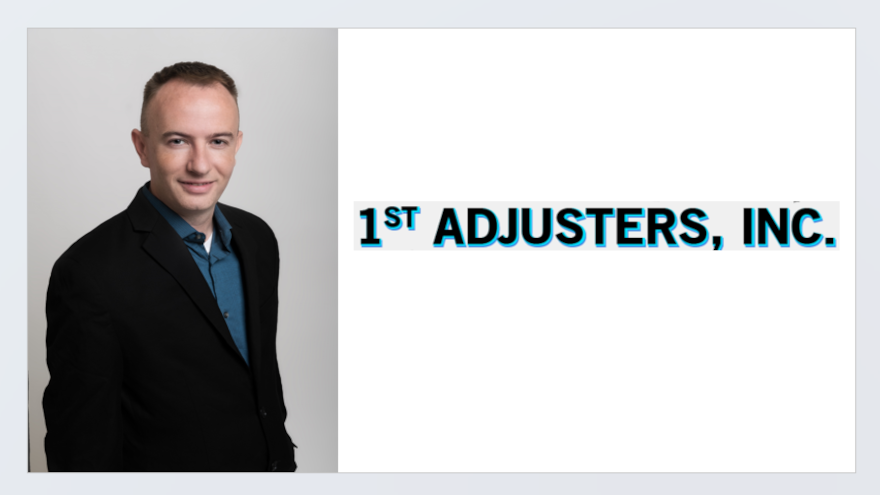
James Waldron recently recovered more than just a high-line Mercedes-Benz. The CEO of Texas-based 1st Adjusters helped to lead federal officials to quite a fraud scheme that included several other luxury vehicles.
Advantage Automotive Analytics recapped the incident for SubPrime Auto Finance News after the risk mitigation company and GPS provider included Waldron in a panel discussion during last month’s BHPH Summit hosted by the National Independent Automobile Dealers Association.
First, a little background about Waldron, who has been in the collateral recovery industry for more than 25 years, having started in New York before moving to Texas, where he formed his own company. Today, his company is a professional full-service collateral recovery company headquartered in Austin, Texas, with nine offices in Austin, Dallas, San Antonio, Houston, Del Rio / Eagle Pass and Corpus Christi.
Waldron said 1st Adjusters was contracted to repossess a high-end, late-model Mercedes-Benz. Given the vehicle’s value and other considerations, Waldron, a licensed private investigator, took on the recovery himself.
“Fortunately, the vehicle had been equipped with an Advantage GPS unit and we were able to get a good location,” Waldron said.
This vehicle was sold through a dealership, financed by a third-party finance company and rushed at the customer’s insistence. Many “bells and whistles” were added, including an extended service contract. The first-payment default resulted in the repossession order.
“Because of the Advantage’s GPS data, we were able to locate the vehicle efficiently,” he said. “That’s a real plus for us when it comes to being profitable.”
In this case, not only was Waldron able to locate the Mercedes, he saw something suspicious. The apartment lot where he found the vehicle also had other late-model vehicles, each had temporary plates. These included three Mercedes, a BMW, and a Jaguar. Turns out all the vehicles were purchased fraudulently.
“What was very concerning to me was that inside the one vehicle I recovered was a folder loaded with stolen IDs, credit cards, and other personal information,” he said. “Think about a large binder, the kind you might use to collect and secure a baseball card collection. In the one binder, I found 167 real IDs. The other vehicles had the same type of binders in them as well. I never got into those.”
Waldron was shocked when he phoned the dealership that sold one of the cars financed by a third-party finance company. After finding a manager, he was told, “Oh, that vehicle was fully funded. We don’t know anything else.”
As disheartening as that was for Waldron, contacting the county sheriff may have been worse.
“He got on the case relatively quickly but told me that his department was understaffed and did not have the resources to investigate what was obviously organized fraud activity,” Waldron said. “The IDs included a federal ID, and I called authorities. The Feds were at my door in 37 minutes. That gave me some hope.”
Part of what makes 1st Adjusters successful, Waldron noted, is that his company is willing to do “door knocks.” His employees take the time to try to make contact with the car buyer or at least with whoever answers the door. Many lenders do not want to do door knocks, as they typically cost more and may lead to an altercation.
“We’re paid when we locate and recover the vehicle for our client,” he said. “We do what we know works.”
A longtime member of the American Recovery Association, Waldron said the work the association has done to raise awareness of the challenges facing recovery professionals, as well as legislative and regulatory advocacy, has been tremendously helpful to agents across the country.
Waldron noted that dealers must take an active role in preventing fraud and what amounts to vehicle theft.
“They must abide by the Red Flag rules,” he said. “It’s incumbent on dealers and lenders to verify stips, use technology like GPS and the data the units generate to combat a growing and expensive problem.”
“We encourage dealers and lenders to include GPS disclosure language in the original contract, even if a unit isn’t installed,” he said. “Often, if there are consistent late payments or the customer reacquires the vehicle after a repo, the dealer or lender should put a GPS on the vehicle at that time, and there is no legal disclosure issue.”
Fraud affects everyone, Waldron noted.
“I have to say that after what I saw in that vehicle with the IDs, credentials, credit cards, and gift cards that were removed from mailboxes, I stopped mail coming to my home. I use a PO box.”
Waldron shared this recent success story that exemplifies the challenges dealers, finance companies, and recovery agents face in an environment with an ever-more sophisticated criminal element as well as intensifying operational factors.
Increased insurance rates, difficulty securing insurance, higher recovery equipment costs, difficulty hiring and keeping quality employees, and rising diesel prices have left many repossession agents with no other option than to exit the business, Waldron said. Today, fewer businesses are handling more repos, even though repos generally have declined during and after the COVID-19 pandemic.
“GPS limits the number of addresses we have to check,” Waldron said. “The quicker and easier we can secure the collateral, the fewer expenses we incur. Regardless of how much our expenses are, we’re only paid what was agreed on upfront. If we don’t secure the unit, we don’t get paid.”
The Justice Department described another notable fraud incident this week that could have permeated through the wholesale, retail and finance spaces.
A federal grand jury in Chicago returned an indictment, which was unsealed on Wednesday, charging three Illinois men with operating an odometer and title fraud scheme that involved hundreds of used vehicles over the course of what officials said were “many years.”
According to court documents, Laith Ghzo, of Oak Lawn, Hussein Ghzo, of Palos Heights, and Musab Sawai,of Worth caused the mileage of hundreds of used vehicles to be rolled back and altered title documents to reflect the false, low mileage. Officials said those used vehicles were then sold to unsuspecting wholesale buyers and ultimately consumers, who paid more for those vehicles than they would have paid if they had known the truth about the vehicles’ mileages.
The Justice Department said Laith Ghzo and Hussein Ghzo are charged with conspiracy to make counterfeit securities and commit mail fraud, making counterfeit securities and mail fraud. Sawai is charged with conspiracy to make counterfeit securities and mail fraud.
Officials said the defendants made their initial court appearances this before U.S. Magistrate Judge Jeffrey Cole of the U.S. District Court for the Northern District of Illinois.
If convicted, the Justice Department said Laith Ghzo and Hussein Ghzo face a maximum penalty of 20 years in prison for each mail fraud count, and Sawai faces a maximum penalty of five years in prison for conspiracy.
A federal district court judge will determine any sentence after considering the U.S. Sentencing Guidelines and other statutory factors, according to a news release.
Principal Deputy Assistant Attorney General Brian Boynton, head of the Justice Department’s Civil Division, U.S. Attorney John R. Lausch Jr. for the Northern District of Illinois, acting inspector in charge Kai Pickens of the U.S. Postal Inspection Service Chicago Division and acting administrator Ann Carlson of the National Highway Traffic Safety Administration (NHTSA) made the announcement.
The NHTSA Office of Odometer Fraud Investigations and the Postal Inspection Service are investigating the case.
“An indictment is merely an allegation and all defendants are presumed innocent until proven guilty beyond a reasonable doubt in a court of law,” officials said.
Federal authorities secured at least one conviction of an individual orchestrating a complex fraud scheme that could have impacted your dealership or finance company.
According to a news release from the U.S. Attorney’s Office for district of South Carolina, Quinae Shamyra Stephens, of Douglasville, Ga., was sentenced last week to more than 18 years in federal prison after she was convicted by a jury for multiple charges relating to a multi-state identity theft and fraud ring she was running with her son.
Officials explained Stephens was sentenced after being convicted for:
—Conspiracy to commit wire fraud and bank fraud
—Identity theft
—Aggravated identity theft
—Access device fraud
—Interstate transportation of a stolen vehicle
—Felon in possession of a firearm or ammunition
Prosecutors said evidence presented to the court showed that sometime before late August 2021, after abandoning a stolen U-Haul van nearly half a dozen states away from where it was due to be returned, Stephens decided to enlist her son, Deandre Copes, also of Douglasville, on a multi-state criminal journey to Florida.
With a loaded semi-automatic handgun in her waistband, officials said Stephens travelled down the East Coast in a second stolen U-Haul van stocked with dozens of fraudulently obtained identities and the equipment necessary to steal more identities, make fake credit cards and print bogus checks.
The U.S. Attorney’s Office pointed out that Stephens was prohibited from possessing the firearm and ammunition due to four state felony convictions for fraud-related crimes, and she was on probation for two of these offenses when she committed the crimes in this case.
Officials indicated Stephens was ultimately stopped by members of the Latta Police Department due to Stephens’s suspicious behavior when she stopped near a bank in Latta, S.C. They said a search of the van revealed more than a dozen identification documents, including several with Stephens’s picture in various names.
Police also found a device for re-encoding credit cards with different account information and more than 25 debit and credit cards, most in the name of individuals other than Stephens or her son.
Further forensics investigation by the Secret Service revealed that Stephens would download instructional material from the dark web related to credit card fraud and identity theft, and used software form the dark web to procure personally identifiable information. The laptop also contained instructional material and files that could be used to create fake banking websites to steal account information.
“Identity theft is a threat to every citizen, and the personal information of its victims can live on the dark web forever. The nearly two-decade federal prison sentence this Office sought and received showcases just how seriously we take these crimes,” U.S. Attorney Adair Boroughs said in the news release.
“Stephens’s conduct here was especially heinous. She was a four-time felon who enlisted her son in a multi-state fraud scheme involving stolen vehicles, false identities, the dark web, obstruction of justice, and a loaded weapon. I want to especially thank our local and federal partners who worked tirelessly to ensure the jury conviction and sentence in this case,” Boroughs continued.
According to the news release, the court rejected Stephens’ attempts to use a sovereign citizen defense, which asserts that federal courts lack jurisdiction over individuals. The court acknowledged this was a frivolous defense that has been rejected throughout the country.
United States District Judge Sherri Lydon sentenced Stephens to 224 months in federal prison, to be followed by a five-year term of court-ordered supervision. There is no parole in the federal system.
Stephens was also ordered to pay restitution to her victims. Stephens’ son, who testified at Stephens’ trial, was previously sentenced to time served after pleading guilty to conspiracy to commit wire fraud and bank fraud.
“This case originated due to great police work by the Latta Police Department in identifying suspicious activity being conducted by the defendants in this case,” said John Hirt, Special Agent in Charge of the Columbia Field Office for the U.S. Secret Service. “We appreciate that the Latta Police Department then included the U.S. Secret Service in their investigation. I commend the diligence and hard work of the Secret Service personnel involved in this investigation.
“I also commend the great work of the U.S. Attorney’s Office from the District of South Carolina in prosecuting this case. The sentence given in this case exemplifies that the U.S. Government takes the crime of identity theft seriously, and we will not tolerate people that lie, cheat and steal,” Hirt added.
At her sentencing, the news release mentioned Stephens received sentencing enhancements for being a leader in the criminal enterprise and for obstruction of justice.
The court also heard evidence that Stephens fraudulently obtained several Paycheck Protection Program (PPP) loans in her name, and in the names of others. PPP loans consists of more than $640 billion in forgivable government-backed loans to small businesses for payroll, mortgage interest, rent and utilities as a result of COVID-19.
“The defendant in the case receiving this sentence is a testament to what partnerships can accomplish: local and federal agencies working together for a common goal to protect innocent victims and bring wrongdoers to justice,” said Zane Bryant, interim chief for the Latta Police Department.
CreditMiner and TransUnion now are working together to stop auto finance fraud from happening, beginning with what can happen at dealerships.
Last week, the firms announced a new partnership to protect the automotive industry from high dollar losses from synthetic fraud via an application programming interface (API).
CreditMiner and TransUnion said through a news release that dealerships nationwide now can identify fraudsters, potentially eliminating losses by properly identifying high risk consumers.
“Incidence of synthetic fraud in auto lending has grown faster than any other financial sector as we emerge from the pandemic, nearly a 30% increase since Q1 2021.” said Satyan Merchant, senior vice president and automotive business leader at TransUnion. “The rapid growth of synthetic fraud — which is defined as building a fake identity over a period of a year or more — is becoming a complex issue.
“Synthetic fraudsters look like real people with great credit scores and well-established employment, which makes it very difficult for dealership personnel to identify,” Merchant continued.
CreditMiner chief operating officer explained Sam Vukas that the company’s tool, IDENTIFY, encompasses various driver’s license verification integrations as well as the use of mobile phone selfie biometrics.
“This solution utilizes the vast combination of technologies TransUnion brings to the table to protect dealerships from sophisticated thieves,” Vukas said in the news release.
Ken Luna is vice president of strategic partnerships for CreditMiner.
“We realized that the growth of synthetic fraud in the automotive industry was continuing to grow so we decided to focus our API efforts in the dealership arena and the vendors that serve them,” Luna said.
“What we like about TransUnion was they are ranked by Javelin, an independent agency, the top fraud prevention solution in the industry,” he continued. “These solutions are already being used in the lending industry but are not prevalent at the dealership level where most of the transactions occur, whether it be online or in person.”
This monthly installment of the Auto Remarketing Podcast focused on fraud with two experts from Point Predictive tackled the world of credit washing.
Justin Davis and Frank McKenna recapped what credit washing is and how it can impact auto financing, as well as a recent case that triggered a major indictment stemming from an investigation that began within a bank’s underwriting department.
To listen to the conversation, click on the link available below, or visit the Auto Remarketing Podcast page.
Download and subscribe to the Auto Remarketing Podcast on iTunes or on Google Play.
For the monthly installment of the Auto Remarketing Podcast about fraud with Point Predictive, we tackle taxes since consumers had to complete their state and federal filings by April 18.
Point Predictive’s Justin Davis and Frank McKenna recapped some of the most frequent tax-connected schemes they’ve seen as well as looked ahead toward the “Fraud Friday” portion of this year’s Non-Prime Auto Financing Conference hosted by the National Automotive Finance Association.
To listen to this conversation, click on the link available below, or visit the Auto Remarketing Podcast page.
Download and subscribe to the Auto Remarketing Podcast on iTunes or on Google Play.
CreditMiner and TransUnion are working together in an attempt to keep fraud from infecting dealerships.
The companies announced a new partnership this week that enables them to offer the automotive industry cutting-edge fraud prevention technologies via their API capabilities.
CreditMiner and TransUnion said dealerships across the nation can protect their bottom line from costly fraud by removing suspected synthetic identities from pre-screen campaigns and flag suspected synthetic applicants for additional vetting.
“Incidence of synthetic fraud in auto lending has grown faster than any other financial sector as we emerge from the pandemic, nearly a 30% increase since Q1 2021,” said Satyan Merchant, senior vice president and automotive business leader at TransUnion.
“The rapid growth of synthetic fraud — which is defined as building a fake identity over a period of a year or more — is becoming a complex issue,” Merchant continued in a news release. “Synthetic fraudsters look like real people with great credit scores and well-established employment, which makes it very difficult for dealership personnel to identify.”
Ken Luna is vice president of strategic partnerships at CreditMiner.
“We realized that the growth of synthetic fraud in the automotive industry was continuing to grow so we decided to focus our API efforts in the dealership arena and the vendors that serve them,” Luna said.
“What we like about TransUnion was they are ranked by Javelin, an independent agency, the top fraud prevention solution in the industry,” Luna continued. “These solutions are already being used in the lending industry but are not prevalent at the dealership level where most of the transactions occur, whether it be online or in person.”
CreditMiner chief operating officer Sam Vukas added a preview of what to come at the company beyond this partnership.
“The synthetic fraud score is just the first step for us battling synthetic fraud at the dealership level,” Vukas said. “An even more intense and focused API offering we are calling IDENTIFY will be released in early 2022 that includes various driver’s license verification integrations as well as the use of mobile phone selfie biometrics.
“This solution will be a combination of technologies from multiple credit bureaus to keep dealerships in front of these sophisticated thieves,” he went on to say.
The Department of Justice made a pair of announcements last week, with one involving Santander Consumer USA and the Servicemembers Civil Relief Act (SCRA).
According to a news release, the finance company’s Chrysler Capital division has agreed to pay more than $134,000 to settle a federal lawsuit alleging that the company denied early vehicle lease terminations to servicemembers who qualified for them under SCRA.
The Justice Department previously settled an SCRA lawsuit against Santander in 2015 for repossessing the vehicles of 1,112 servicemembers without a court order.
Officials reiterated that the SCRA permits servicemembers to terminate their vehicle leases early without penalty after entering military service or receiving qualifying military orders for a permanent change of station or to deploy to another location.
This settlement, which must be approved by the U.S. District Court for the Northern District of Texas, resolves a lawsuit filed in September by the Department of Justice. The lawsuit alleges that Santander unlawfully denied early vehicle lease terminations to 10 servicemembers.
Under the proposed settlement, Santander must pay $94,282.62 in compensation to the 10 aggrieved servicemembers and a $40,000 civil penalty to the U.S. Treasury.
The Justice Department recapped that its investigation, which began in 2019, stemmed from a complaint submitted by U.S. Army Captain Eric McDowell.
Officials said McDowell entered into a three-year lease in October 2017 for a Jeep Grand Cherokee, but he learned in May 2019 that he was going to be deployed to Afghanistan. In August 2019, officials said McDowell returned the vehicle to Santander and tried to terminate the lease, but the company denied his termination request.
The Justice Department said it was not until February 2020, after the United States had opened its investigation and six months after McDowell returned his vehicle to the dealership, that Santander finally approved the lease termination, voided early termination charges and refunded the lease amounts that had been paid in advance.
“Captain McDowell faced significant stress during his deployment to Afghanistan as a result of this six-month delay,” DOJ officials said in their news release. “The department’s investigation uncovered nine additional servicemembers whose SCRA rights it alleges Santander violated.”
As part of the agreement, officials said Santander has also updated its SCRA procedures and training.
“The civil rights of servicemembers who sacrifice so much for our country must be respected,” said assistant attorney general Kristen Clarke of the Justice Department’s Civil Rights Division. “We are committed to ensuring that those serving in our nation’s military receive the full range of benefits and protections that they are entitled to under the Servicemembers Civil Relief Act.”
Acting U.S. Attorney Prerak Shah for the Northern District of Texas added, “Given all our veterans put on the line when they deploy or change station, the last thing they should have to worry about is their car lease.
“The Servicemembers Civil Relief Act is designed to ease the financial burdens associated with active duty military service. We are determined to uphold this important law,” Shah went on to say.
3 plead guilty to conspiracy to defraud financial institutions & other credit issuers
In another development, Justice Department officials in Raleigh, N.C., said North Carolina residents Shawn Franklin, Anthony Maryland and Sabrina Wiggins Branch pleaded guilty last week to defrauding financial institutions and other lenders by using synthetic identities to obtain credit cards and consumer loans with no intention of payment.
Officials said their scheme included the purchase of two vehicles.
According to court documents and the government’s factual representations in open court, Franklin began using synthetic identities in 2012. By coupling his own name and date of birth with a nine-digit number that looked like a Social Security Number, Franklin created a new credit profile, otherwise known as a Credit Privacy Number (CPN).
“Individuals, like Franklin, with poor credit scores built fresh credit histories by adding a CPN as an authorized user to credit accounts belonging to other individuals with good credit scores,” the Justice Department said in another news release.
“These ‘trade lines’ enhanced the CPN’s creditworthiness, scamming lenders and credit card issuers into believing the CPN applicants have the ability and intent to pay-off indebtedness. Individuals using CPNs, however, lack the ability or intent to pay-off the loans and credit card balances,” officials said.
Along with the vehicle purchases, officials said the trio also ran up approximately $650,000 in fictitious charges through merchant accounts associated with Wiggins’ retail store in Wilmington’s Independence Mall.
The Justice Department said all three individuals pleaded guilty to conspiracy to commit bank and wire fraud and faces a maximum penalty of 30 years in prison when sentenced.
Officials added that Franklin also pleaded guilty to aggravated identity theft for his use of the names and personal identifiers of 10 NC Medicaid recipients. He faces an additional mandatory two years in prison, consecutive to any other term imposed.