The Federal Trade Commission is looking to raise awareness about identity theft and for good reason. The regulator said reports about any type of identity theft topped the list of consumer complaints submitted to the FTC through the third quarter of 2020.
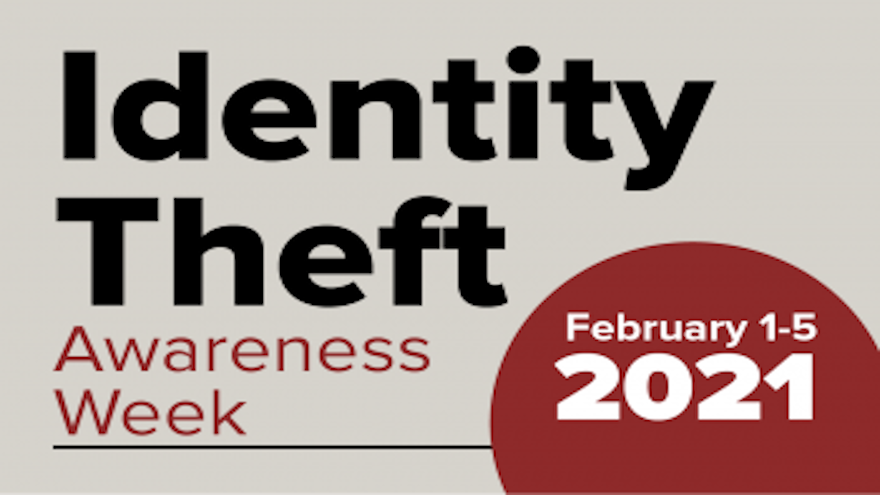
In an effort to help consumers and the financial services companies that provide them with critical credit resources, this week the FTC is launching Identity Theft Awareness Week. The timeframe includes a series of events to highlight steps consumers can take to help reduce their risk of identity theft and recover if identity theft occurs.
The FTC explained that identity theft happens when someone steals personal information about an individual such as a Social Security Number or credit card information, and uses it to commit fraud, which can happen in auto financing.
As part of Identity Theft Awareness Week, the FTC will participate in webinars and other events to highlight what individuals can do to protect personal information, red-flag warning signs of possible identity theft and steps to take if identity theft happens to you.
The full list of events is available at ftc.gov/IDtheftweek, along with details on how to participate and tips on how to reduce the risk of identity theft.
Alleged fraudsters tried to cultivate quite a scheme in the Garden State during a two-year timeframe.
Last week, New Jersey attorney general Gurbir Grewal announced that nine individuals have been charged with conspiring to use stolen identities to obtain New Jersey digital driver’s licenses which they used to fraudulently purchase and finance vehicles and watercrafts worth more than $1.3 million at dealerships in New Jersey, Pennsylvania, New York, Connecticut and Massachusetts.
According to a news release, the defendants allegedly obtained New Jersey digital driver’s licenses from the Jersey City and North Bergen Motor Vehicle Agencies using the stolen identities of U.S. citizens in Puerto Rico and fake Puerto Rico driver’s licenses, along with other false documents, including Social Security cards, debit cards and birth certificates.
From February 2017 through December 2018, they allegedly fraudulently purchased, financed, titled and/or transferred 26 vehicles and three watercrafts with trailers — one boat and two jet skis — using the fraudulently obtained New Jersey driver’s licenses and the identities and credit of the victims in Puerto Rico.
The attorney general reported 10 vehicles were recovered in the U.S., but it is believed the other units were shipped overseas, including seven known to have been shipped to the Dominican Republic.
“The charges are merely accusations and the defendants are presumed innocent unless and until proven guilty beyond a reasonable doubt in a court of law,” the attorney general’s office said in the news release.
Officials said eight of the nine defendants allegedly personally obtained New Jersey driver’s licenses using stolen identities and made fraudulent purchases of vehicles and/or watercrafts in New Jersey or other states. They added that the ninth defendant allegedly conspired with the others in the document fraud and was involved in receiving and transferring stolen vehicles and watercrafts.
Six of the defendants are charged with theft by deception for allegedly personally making fraudulent purchases in New Jersey, according to officials.
After buying a vehicle on credit, officials said the defendants allegedly would “wash” the vehicle title by creating a fraudulent lien release or fraudulent title indicating there was no lien on the vehicle. The fake document was used to obtain a clean title in another state. That clean title was then used to transfer ownership to another individual, often within the conspiracy, allowing the vehicle to be shipped overseas.
The defendants were charged in “Operation Export,” an investigation by the Division of Criminal Justice Specialized Crimes Bureau that began with a referral from the New Jersey Motor Vehicle Commission’s Security and Investigations Unit.
The Motor Vehicle Commission (MVC) alerted the attorney general’s office after discovering that the Puerto Rico driver’s licenses used by the defendants to obtain New Jersey digital driver’s licenses were fraudulent.
“Within the span of two years, these defendants allegedly purchased over $1.3 million worth of vehicles and watercrafts using stolen identities and fraudulently obtained New Jersey digital driver’s licenses. They then shipped a number of the stolen vehicles overseas,” Grewal said in the news release.
“This case highlights that fraud involving official documents frequently is tied to larger criminal conspiracies, including identity theft and financial fraud, among other illegal activities. That is why we will remain vigilant with our partners at the Motor Vehicle Commission, who alerted us to the document fraud underlying this interstate and international criminal scheme,” Grewal continued.
Federal law enforcement agencies in New Jersey and other states also said they have uncovered the same or similar criminal activity and are pursuing charges against several of the same defendants, as well as additional defendants.
The United States Attorneys’ Offices for the District of Massachusetts and Northern District of Ohio also announced charges stemming from an investigation by U.S. Homeland Security Investigations’ Document and Benefit Fraud Task Force.
The New Jersey attorney general’s office has worked cooperatively with the federal agencies, according to the news release
“Identity theft is an ever-present threat, and when criminals are able to convert stolen identities into powerful identification documents, such as driver’s licenses, the potential for fraud and harm to victims grows exponentially, as this case illustrates,” said director Veronica Allende of the New Jersey Division of Criminal Justice.
“I commend the staff in our Specialized Crimes Bureau for skillfully and diligently following every lead, across state and even international borders, to uncover this far-reaching conspiracy. I also commend our partners at the MVC for triggering this investigation by discovering the initial document fraud,” Allende continued.
The New Jersey MVC explained that it uses a two-pronged strategy to reduce the incidents of fraudulent documents being used to acquire New Jersey driver’s licenses.
Officials conduct commission-wide training in advanced fraudulent document identification and assign a team of trained investigators to examine the authenticity of suspect documents. When investigators detect an increase in the appearance of certain fraudulent documents, such as counterfeit Puerto Rico driver’s licenses, MVC field investigators give these documents greater scrutiny as they are presented in licensing centers.
“This is a reminder that a big part of our job at the New Jersey Motor Vehicle Commission is to prevent fraud, including identity theft,” MVC chief administrator Sue Fulton said. “I commend our Security and Investigations team for their diligence and skill in helping launch the investigation that ultimately put a stop to this.”
The following nine defendants were charged as indicated by the New Jersey Division of Criminal Justice in Operation Export:
Taina Perez of Methuen, Mass.
Reyfy Gonzalez of Fort Lee, N.J.
Jose M. Irizarry of New Haven, Conn.
Ricardo Acevedo of Lawrence, Mass.
Andy Mazara of Lawrence, Mass.
Tirson Ruiz of Lawrence, Mass.
Alvaro Alvarez-Capio of Lowell, Mass.
Willie Samuel-Baldayaquez of Newark, N.J.
Guillermo Alex Cruz-Guerrero of Ohio
Point Predictive finalized four different relationships this month with a variety of auto-finance industry companies that plan to use the firm’s products to curb fraud.
The company that offers machine learning solutions now is working with MidAtlantic Finance, TCI, Nicholas Financial and Tricolor Auto.
The newest development arrived on Monday when Point Predictive announced that MidAtlantic Finance has selected the company’s scoring solutions to help improve underwriting decisions prior to funding contracts. MidAtlantic Finance plans to use two scoring solutions from Point Predictive: Auto Fraud Manager to score applications for risk of early payment default, fraud and material misrepresentation, as well as IncomePass to assess borrowers’ stated incomes for validity for improved application streamlining.
“In our retrospective testing with Point Predictive, we saw significant lift of the solutions to help us achieve multiple business gains,” MidAtlantic vice president Michael Pereira Jr. said in a news release. “In the highest risk scores, we were able to identify loans that have a significantly higher risk of early payment default due to fraud or material misrepresentation. We can use those high scores to scrutinize those deals more carefully.
In the low risk scores, we found loans had significantly lower rates of risk and default,” Pereira continued. “We can use those low scores to clear loan stipulations, route loans for faster funding and in general make the whole funding process easier for our dealers and customers. Our plan is to integrate those scores into our existing processes and internal scores to achieve those benefits across all loans going forward.”
To Point Predictive, the addition of MidAtlantic to the consortium is growing proof that shared intelligence and artificial intelligence is the future of auto-finance fraud and risk mitigation.
“We’re proud to partner with MidAtlantic,” Point Predictive Tim Grace chief executive officer said. “Our consortium data and AI scoring will enable them to identify significantly more early payment default before funding and. just as important, they will help them understand which deals have low risk of misrepresentation and default so they can proceed down a faster path to funding.
“Better targeting is the key to profitability and growth and that’s exactly where we aim to help MidAtlantic,” Grace added.
MidAtlantic said it will use Point Predictive’s Auto Fraud Manager to helps address the $7 billion-dollar annual problem of misrepresentation and fraud in the auto finance industry.
Point Predictive reiterated that Auto Fraud Manager uses machine learning to mine historical data from applications across the industry to precisely pinpoint where fraud is happening and how it is perpetrated.
More than 70 million applications have been evaluated and scored by the system, which is continuously learning new patterns as they emerge.
Additionally, MidAtlantic will use Point Predictive’s IncomePass — a solution that can provides an instant assessment of the accuracy of an applicants stated income.
Point Predictive said that finance companies have found that IncomePass can help them automatically identify and clear stated incomes on up to 80% of their applications without costly database checks and onerous requests for documentation such as pay stubs, which are subject to high rates of forgery
Nicholas Financial picks Point Predictive
Another finance company to select Point Predictive as a service provider is Nicholas Financial, which specializes in subprime contracts.
Like MidAtlantic, Point Predictive said Nicholas Financial will use Auto Fraud Manager as well as IncomePass
“Point Predictive is excited to partner with Nicholas Financial to help them achieve better relationships with their borrowers and their dealer network,” Grace said. “Our solutions help lenders reduce their risk of early defaulted loans by up to 50% and, in the process, help them streamline an additional 30% of their loans for reduced stipulations and friction in the lending process.
“By better targeting risk, the end beneficiaries are their dealers and borrowers who can see a reduction in the time it takes to fund loans,” Grace continued.
Nicholas Financial chief executive officer Doug Marohn explained why he believes solutions from Point Predictive will further enable to deliver on the company’s strategy to provide their customers and dealers a quick, easy and hassle-free funding process.
“At Nicholas Financial, we understand that ensuring risk control while providing great customer service is a delicate balancing act. We’ve been able to successfully mitigate and price for risk by identifying fraud throughout the underwriting and funding process,” Marohn said.
“In the current market, managing fraud and early payment default risk is critically important; we need to know who we can trust, and who we cannot. We believe Point Predictive will help us become even more effective in doing just that,” he went on to say.
Tricolor Auto goes with Point Predictive
Point Predictive’s active month began with the company announcing Tricolor Auto will use its Auto Fraud Manager solution to improve risk identification during the underwriting process.
“We are delighted to have Tricolor join our growing list of lenders that are leveraging the power our Ai,” Grace said. “Our unique approach of combining Artificial + Natural Intelligence (Ai+Ni) and harnessing the power of our proprietary consortium data has proven to work time and time again for lenders across the risk spectrum.
Our testing with Tricolor showed that we were not only able to help them better streamline low-risk applications for quicker funding, but we could also help them identify high-risk applications that might require more scrutiny for potential fraud or misrepresentation,” Grace continued.
“In the end, this will result in lower early payment defaults and more pull through, since they can potentially avoid costly and time-consuming stipulations when the risk is low,” he went on to say.
Tricolor is enjoying success as a subprime auto-finance provider that specializes in working with Hispanic consumers, receiving designation as a Community Development Financial Institution (CDFI) by the U.S. Treasury Department last year.
“Tricolor’s focus has always been to use advanced data analytics and Ai technologies to deliver high quality used vehicles at affordable loan rates for low income families,” Tricolor chief risk officer James Li said. “Point Predictive’s solution fits right into that strategy because of the unique insights their consortium and Ai bring to our decisions.
“With their scores, we can instantly assess the risk of both misrepresentation and the related probability of default,” Li continued. “This helps us make more informed fraud management decisions about each loan application — which ones can be queued for streamlined processing and which one we might need to take a closer look at.
“Ultimately, we will fund more loans, faster and more safely, to worthy borrowers,” Li added.
Origination platform opts for Point Predictive
Finance companies aren’t the only organization aligning with Point Predictive.
Point Predictive also a new standard integration with TCI, a leading loan origination platform provider, to help lenders and finance companies better address the rising risk that they face with fraud and misrepresentation.
As part of this standard integration, Point Predictive’s full suite of artificial intelligence solutions can be delivered to TCI’s customer base of more than 500 finance and lending companies. The integration with TCI now means that all TCI customers will have quick access to solutions to help them better address fast-growing types of fraud such as synthetic identity fraud, income fraud and auto lending fraud.
“TCI is committed to delivering state-of-the-art capabilities to our lenders,” TCI president Bill Nass said. “Right now, fraud and risk are at the forefront of every lender’s mind; with the solutions provided by Point Predictive, we can help lenders rest a little easier.
“Point Predictive solutions will help our customers decide instantly, before they make decisions to fund loans, which applications contain accurate information and which ones do not,” Nass continued. “Partnering with Point Predictive gives our lenders instant access to Point Predictive’s multi-billion attribute fraud consortium and cutting edge Ai+Ni technology.”
Point Predictive explained that its suite of AI machine learning scores and fraud alerting technology will give financial services companies using TCI’s loan origination system the ability to streamline applications for loans and new accounts by precisely identifying which applications contain misrepresentations. In most cases, Point Predictive said it is able to help lenders and finance companies identify a majority of their fraud risk in the riskiest 10% of their total application pool so they can perform greater due diligence on those applications prior to funding.
At the same time, lenders can also use the technology to auto clear and remove burdensome friction from up to 30% of their applications that contain virtually no risk of fraud or misrepresentation.
“We’re excited that TCI completed the standard integration of the Point Predictive Ai auto loan application, dealer and income risk management products. We know finance companies and lenders want easier access to solutions in real-time that can help them immediately reduce fraud risk with low false positives,” Grace said.
“With a respected solution provider like TCI, we can now easily provide access to our powerful scores and alerts to many finance companies that grapple with fraud issues each and every day but may not have the technology resources to implement quickly,” he continued.
TCI’s clients will have access to a full suite of risk scoring technologies including Auto Fraud Manager, Auto Fraud Alert, IncomePass and SyntheticID Alert.
For more information about leveraging Auto Fraud Manager, Auto Fraud Alert, IncomePass or SyntheticID Alert, contact Point Predictive at [email protected].
New York authorities recently indicted a pair of former managers at an Empire State Hyundai dealership, alleging they defrauded the franchised store and JPMorgan Chase of more than $1.5 million.
Westchester County District Attorney Anthony Scarpino Jr. announced that James Castellano of Valley Stream, N.Y., and Israel Viloria of New Rochelle, N.Y., were indicted and arraigned on charges stemming from a fraudulent auto crimes scheme involving a New Rochelle, N.Y., dealership.
According to a news release, both Castellano and Viloria were charged with the following three counts:
— Two counts of grand larceny in the second degree, a class C felony
— One count of a scheme to defraud in the first degree, a class E felony
Castellano alone also was charged with:
— 20 counts of falsifying business records in the first degree, a class E felony
— One count of grand larceny in the second degree, a class C felony
— One count of criminal tax fraud in the third degree, a class D felony (under New York Tax Law)
Authorities recapped that Castellano was employed as the office manager and Viloria was employed as the used-car manager for New Rochelle Hyundai.
The indictment alleges, from approximately Sept. 28, 2016 through July 14, 2017, the two men were engaged in a scheme to defraud JPMorgan Chase out of more than $700,000 and New Rochelle Hyundai out of more than $500,000.
As part of their scheme, they illegally sold vehicles owned by New Rochelle Hyundai through Global Auto Sales, a dealership owned in part by Viloria, and kept the proceeds of these sales.
Officials said Castellano and Viloria perpetrated this scheme by listing, in New Rochelle Hyundai’s records, details of vehicle that were not owned by the Hyundai dealer. By doing so, the dealership’s bank, JPMorgan Chase, made business funds available for the purchase of these vehicles. That cash flow into New Rochelle Hyundai accounts helped to cover up the actual theft of vehicles that Viloria and Castellano were selling on the side, according to New York authorities.
In addition, the district attorney charged Castellano with stealing approximately $300,000 by depositing checks made payable to New Rochelle Hyundai into his personal bank account. These checks were supposed to have been received by New Rochelle Hyundai for the sale of vehicles owned by the dealership.
Officials added Castellano also failed to pay taxes on this money for tax year 2017.
The case is being prosecuted by the Economic Crimes Bureau of the Westchester County District Attorney’s Office.
New information released this week by the Federal Trade Commission reinforced how widespread fraud is — and not just in the auto-finance industry.
The FTC’s Consumer Sentinel Network received 3.2 million reports in 2019, including nearly 1.7 million fraud reports as well as identity theft and other reports. The Consumer Sentinel Network is a database that receives reports directly from consumers, as well as from federal, state and local law enforcement agencies and a number of private partners.
Officials said consumers reported losing more than $1.9 billion to fraud in 2019, with nearly $667 million lost to imposter scams alone. While scammers target consumers using every possible method of communication, the FTC said phone calls were the most common.
The regulator indicated the most common type of fraud reported to the FTC in 2019 was imposter scams; government imposter scams, in particular, were the most frequently reported, and up more than 50% since 2018.
Of all reports received, the FTC noted the top categories included identity theft, imposter scams, telephone and mobile services, online shopping and credit bureaus.
A small percentage of consumers who reported they encountered a fraud over the phone said they actually lost money. When they did, the FTC found the median individual loss was more than $1,000.
The FTC reiterated that it uses the reports it receives through the Sentinel network as the starting point for most of its law enforcement investigations, and the agency also shares these reports with more than 2,500 law enforcement users around the country.
“While the FTC does not respond to individual complaints, Sentinel reports are a vital part of the agency’s law enforcement mission,” officials said.
For the second time this month, the Justice Department announced prison punishments for charges related to fraudulent auto financing.
Not long after getting a judge to sentence a Wisconsin man in connection with a Ponzi scheme fueled by luxury vehicles, officials announced details involving seven defendants for their roles in a bank fraud conspiracy they described as “conversions” and connected with more than 80 fraudulently obtained auto loans to create $1.7 million in bank and credit union losses.
The Justice Department said Michael Miller and Melvin Goode Wentt have been sentenced while four other co-defendants previously pled guilty. One defendant is awaiting extradition from the United Kingdom, according to a news release.
“These defendants’ ‘creative financing’ company specialized in ‘auto loan conversions,’ which was simply fraud,” U.S. Attorney Byung J. “BJay” Pak said. “This scam was designed to trick lenders, which in this case were mostly credit unions, into granting loans for sham car sales.
“While the businesses in their scheme may have been make-believe, the federal sentences they received are very real,” Pak continued.
According to Pak, the charges and other information presented in court, the defendants and their co-conspirators started the fraud scheme by incorporating businesses that, by name, appeared to be dealerships but, in fact, were just shell corporations.
Pak noted these fake companies had names like Premier Luxury Motors, Platinum Motors Auto Sales, and 5-Star Motorsports, but they had no employees, no cars, no car lots, and no dealership licenses.
After establishing the fake companies, the Justice Department said the conspirators recruited individuals to apply for auto financing with banks and credit unions. The applicants would claim that they were purchasing a vehicle from one of the fake companies and would supplement their applications with fake vehicle purchase orders created by the conspirators.
If a check was issued to the applicant, the proceeds would be deposited into financial accounts opened by the conspirators and held in the names of the fake companies, according to the information presented in court.
Then the conspirators and the applicants would then split the money and never pay back the finance company. Because there were no cars to repossess, the finance company would be left with nothing, according to the Justice Department.
Officials recapped the scheme spanned approximately four years. Over that time, the conspirators sought more than 80 auto loans, totaling approximately $2.7 million in attempted fraud, and actually obtained about $1.7 million.
A jury convicted Miller and Goode Wentt of conspiracy and bank fraud on May 14. The defendants in this case received the following sentences:
— Giovanni “Riq” Cartier of Austell, Ga., was sentenced to four years, nine months in prison, to be followed by three years supervised release, and was ordered to pay $1,706,342.74 in restitution. Cartier pleaded guilty to bank fraud conspiracy on April 18, 2018.
— Melvin Goode Wentt of Brooklyn, N.Y., was sentenced to two years, ten months in prison, to be followed by five years of supervised release, and ordered to pay $765,603.25 in restitution.
— Michael Miller of Sandy Springs, Ga., was sentenced to two years in prison, to be followed by five years of supervised release, and ordered to pay $316,826 in restitution.
— Rhaine Yamabushi of Florence, S.C., was sentenced to one year and a day in prison, to be followed by three years of supervised release, and ordered to pay $164,995 in restitution. Yamabushi pleaded guilty to bank fraud conspiracy on Dec. 6, 2018.
— Vladimir Marcellus of Ventura, Calif., was sentenced to three years probation, with 240 days of home detention, and ordered to pay $164,995 in restitution. Marcellus pleaded guilty to bank fraud conspiracy on April 27, 2018.
— Kirk Evans of Ellenwood, Ga., was sentenced to three years probation, with six months of home detention, and ordered to pay $47,799 in restitution. Evans pleaded guilty to bank fraud conspiracy on April 18, 2018.
This case was investigated by the Federal Bureau of Investigation and U.S. Postal Inspection Service.
Assistant U.S. Attorneys Samir Kaushal and John Ghose prosecuted the case.
“Bank fraud is not a victimless crime and these defendants will now have time to reflect on their choice to obtain these fraudulent auto loans,” said Chris Hacker, special agent in charge of FBI Atlanta. “The FBI treats these types of financial crimes very seriously and warns anyone considering this type of criminal activity to also consider the fate these defendants face as a deterrent.”
David M. McGinnis, U.S. Postal Inspector in charge of the Charlotte Division, added, “The defendants carried out a scheme to fraudulently obtain millions of dollars in loans to enrich themselves. The sentences handed down in this case will hold these individuals accountable for their criminal misconduct.
“Postal Inspectors will continue to work with our law enforcement partners to detect, investigate and mitigate the effects of these types of financial crimes,” McGinnis went on to say.
Another fraud incident recently surfaced involving two dealerships with the investigation spreading into two states.
The Arizona Department of Transportation’s Office of Inspector General made an arrest following an investigation that revealed a Nissan dealership employee stole a customer’s identity to purchase a vehicle at another store.
According to a news release, state officials said the scheme began last March. They said Randall Cepi concocted a scheme to use the personal information of a customer at Tate’s Auto Group Nissan where he was employed in Winslow, Ariz., to purchase a 2007 Chevrolet Corvette from a dealership in Flagstaff, Ariz.
Arizona officials said the victim came into the Nissan dealership where Cepi worked and bought a new half-ton pickup. About a week later, Cepi used her personal information to obtain a loan to buy the Corvette. He arranged to have the victim’s signature forged on the dealership and financing documents, according to the news release.
A few weeks later, officials said the victim became aware of the scheme when she received insurance and financing information for a vehicle she did not purchase. She filed a complaint with ADOT’s Office of Inspector General, and detectives with the dealer investigation unit opened an investigation.
The dealership in Flagstaff was made aware of the situation and called Cepi, demanding that he return the Corvette. Instead, he abandoned the sports car at the dealership in Winslow where he worked and disappeared.
While searching for Cepi, ADOT detectives brought the case before a grand jury where the felony warrant was issued.
Officials said Cepi was found working at a dealership in Gallup, N.M., where he was arrested by local authorities on July 29. He will be extradited to Arizona to face charges of fraud schemes and forgery, theft of means of transportation and taking the identity of another.
In addition to identity theft, detectives with ADOT’s Office of Inspector General also investigate fraud involving vehicle title and registration, licensed and unlicensed dealers and support investigations by state, local and federal law enforcement.
Chief fraud strategist Frank McKenna described the fourth gathering of the PointPredictive Fraud Consortium Roundtable earlier this month just ahead of the National Automotive Finance Association’s Non-Prime Auto Finance Conference as the best one yet.
Besides more than 50 attendees from 21 auto finance companies — including five of the top 10 market leaders — McKenna shared with SubPrime Auto Finance News why the industry is uniting to combat a growing problem.
“It was so much more interactive,” McKenna said in a phone interview following the gathering in Plano, Texas. “When we started the consortium meetings, people were a little shy or maybe didn’t know a lot about fraud, but they were interested. They were less able to share best practices and experiences.
“But at this meeting, there was a lot of collaboration,” he continued. “Everyone was talking, everyone was interacting, trying to figure out what the other lenders were doing to stop fraud and what fraud trends they were seeing. It’s been remarkable to see the transformation of the industry. As soon as they start getting together, they realize the value of working together. The mood was really energetic and participatory.
McKenna and PointPredictive partners including defi SOLUTIONS and Digital Matrix Systems discussed rising fraud trends and potential collaboration on how to best address those issues from an industry perspective.
During the roundtable sessions, finance companies identified their three biggest fraud concerns for 2019. McKenna shared that attendees could use their smartphone to participate in surveys that generated immediate results.
Finance companies in attendance identified their first concern as the dramatic increase in deceptive credit washing where individuals overwhelm creditors with false claims of identity theft to remove legitimate trade lines from their credit. Their second biggest concern is the dramatic rise in synthetic identity which is largely driven by individuals using credit protection numbers (CPNs) to create new credit files under false pretenses. Their third biggest concern is the ongoing and systematic fraud by dealers that results in higher levels of first and early payment default.
The event also included guest speakers, including Sgt. Darren Schlosser from the Houston Vehicle Fraud Task Force and Matt Pannell, former special agent with the Social Security Administration, who shared insights into the growth of synthetic identity fraud and credit repair fraud that are sweeping the nation.
“Synthetic identity is being driven largely by unscrupulous credit repair companies that are convincing ordinary people to commit criminal acts,” Schlosser said. “Using so-called CPNs to apply for credit under false pretenses is a crime and I’m seeing an alarming increase in the number of vehicle financing fraud cases where this is occurring.
“I believe collaboration between lenders, law enforcement, car dealerships and others is important in preventing this type of fraud from growing,” he continued.
At the roundtable, McKenna also provided insight into fraud trends by presenting results from analysis conducted on more than 70 million historical auto loan applications.
The analysis showed that auto lending fraud risk has risen by at least 38% in the past seven years and that fraud origination risk is expected to reach $7 billion in 2019. The analysis further showed a dramatic 140% increase in synthetic identity risk patterns in auto applications since 2016.
McKenna’s research demonstrated that the drivers behind the rising levels of fraud risk were the growth in sharing of fraud methods on social media, the increase in financing to borrowers with lower credit ratings and the billions invested in fraud controls by other industries which have had the effect of pushing fraudsters toward auto finance companies and dealers.
“We appreciate the collaboration that PointPredictive enables through their consortium in addressing our key fraud pain points at these roundtables,” said Jorge Arenado, associate vice president of originations at Westlake Financial. “Their focus on both first- and third-party fraud, and not just identity theft, helps the auto lending industry target all the fraud we experience including income misrepresentation, dealer fraud, straw borrower and fraud ring activity.
“The chance to discuss all of these issues with our peers is a big benefit in helping us shape our future fraud strategies,” Arenado continued.
Mickey Watts is senior vice president at Anderson Brothers Bank and a board member of the NAF Association, which also included a special Fraud Friday segment again this year at its annual conference.
“We learn quite a bit from the PointPredictive roundtable each year,” Watts said. “As fraud continues to morph and change, we are able to meet and discuss the changing fraud patterns with other lenders and discuss best practices and how to use the PointPredictive products to our best advantage.”
During the event, PointPredictive showcased its solutions, including:
—Synthetic ID Alert, which can alert finance companies to potential synthetic identity issues.
—Auto Fraud Alert, which can provide 100 alerts and red flag indicators to finance companies based on comparing and validating information a lender receives on an application against data assets managed by PointPredictive
—Income Validation Alert, which can enable lenders to streamline their income assessment of borrowers.
“Our use of PointPredictive solutions has changed our company’s awareness around stopping fraud and misrepresentation within our portfolio,” said Eric Lin, general manager of Universal Finance Company. “The consortium roundtable event is a unique advantage to us and the industry in the fight to protect against financial losses of this kind.”
PointPredictive’s roundtable continues to grow as more finance companies collaborate to address fraud.
“The growth of our consortium and record attendance this year indicates that we’re on the right track in our approach to help solve auto lending fraud,” PointPredictive chief executive officer Tim Grace said. “When we launched the auto fraud consortium two years ago, our mission was to bring the industry together in the same way we did in the past at other companies to address fraud in mortgage and credit card.
“Since fraudsters and unscrupulous dealers attack lenders serially, it is only through collaboration that the industry can address the issue,” Grace continued. “Our solutions are now scoring over 1.5 million new auto applications every month using shared machine learning models. We’re very proud of our growth and the positive effect we are having in the industry.”
Glenn Munro, executive vice president of defi SOLUTIONS, a PointPredictive partner that provides turnkey access to those PointPredictive solutions through the defi SOLUTIONS Loan Origination System, also addressed the attendees.
“We partner with PointPredictive because we have a common belief that shared fraud intelligence and scoring in real-time is the best way to combat the problem. PointPredictive is doing this the right way,” Munro said.
For further information on PointPredictive solutions or to join future Auto Lending Fraud Roundtables, contact PointPredictive at [email protected].