Consumers involved in an auto finance regulatory matter more than two years old will soon begin to receive refund checks from the Federal Trade Commission for an average amount of $380.
The FTC said it is mailing 288 checks totaling more than $109,000 to people who paid an up-front fee to Regency Financial Services, which the regulator said promised to get them better terms for their auto financing. According to the FTC, the company and its chief executive officer, Ivan Levy, did not provide the promised services and failed to honor their “money-back guarantee.”
In July 2015, the defendants agreed to pay money to settle the lawsuit. The settlement banned them from telemarketing, and from selling debt relief products or services.
Affected consumers will receive full refunds based on information they reported to law enforcement.
Nearly two years ago, Levy and Regency Financial Services settled the complaint where the FTC alleged that they violated the FTC Act and Telemarketing Sales Rule by promising consumers services to stop the repossession of their vehicles, and to obtain lower interest rates and monthly installment payments for an upfront fee of $499. The FTC’s complaint also alleged the company failed to honor its “money-back guarantee.”
In addition to the bans on telemarketing and debt relief services, the defendants also agreed to a judgment of $330,000 to redress the victims of their scheme. The settlement order also prohibited the defendants from misrepresenting the terms or rates that are available for any loan or extension of credit and the ability to improve a consumers’ credit rating.
Along with planning a workshop to examine financial issues and scams that can affect military consumers, the Federal Trade Commission said this week it is moving “aggressively” to implement presidential directives aimed at eliminating wasteful, unnecessary regulations and processes.
Acting chairman Maureen Ohlhausen acknowledged excessive regulation and bureaucracy can create significant burdens on the public, while diverting scarce resources from the agency’s core mission to protect consumers and promote competition.
“I welcomed the president’s directive, and we’re already working hard to achieve it,” Ohlhausen said. “The FTC will continue to pursue the right answer for consumers, but we will work hard to get there as efficiently as we can.
“We are focusing our resources where they will do the most good for the public and eliminating wasteful, legacy regulations and processes that have outlived their usefulness. American taxpayers deserve and expect nothing less from us,” she continued.
Though only in the early days of the new administration, the FTC highlighted that the following initiatives are already underway:
1. New groups within the Bureau of Competition and the Bureau of Consumer Protection are working to streamline demands for information in investigations to eliminate unnecessary costs to companies and individuals who receive them.
2. Both enforcement Bureaus are reviewing their dockets and closing older investigations, where appropriate.
3. The entire agency continues to work to identify unnecessary regulations that are no longer in the public interest.
4. The Bureau of Consumer Protection is actively reviewing closed data security investigations to extract key lessons for improved guidance and transparency.
5. The Bureaus of Consumer Protection and Economics are working together to integrate economic expertise even earlier in FTC investigations to better inform agency decisions about the consumer welfare effects of enforcement actions.
6. Because the agency said great ideas often come from within, Ohlhausen established a new capability within her office to collect and review ideas on process streamlining and operational efficiency opportunities from across the agency.
These initiatives are only the first steps, according to Ohlhausen, who added, “improving efficiency and productivity never stops in the private sector, government should operate no differently.
“I intend to keep focused on this issue, working collaboratively with career staff and agency leadership to identify and implement further streamlining and process improvements,” she went on to say.
Military workshop
The FTC announced today that it is hosting a workshop in San Antonio on July 19 to examine financial issues and scams that can affect military consumers, including active duty servicemembers in all branches and veterans.
Officials indicated the workshop also will mention FTC resources available to military consumer advocates and representatives on financial readiness and fraud prevention, including the FTC’s Military Consumer Toolkit, available at Military.Consumer.gov. The toolkit can allow personal financial managers, counselors and others in the military community to share practical financial readiness tips and can be individually customized and easily shared on social media.
“Servicemembers and veterans have made great sacrifices to serve our country,” Ohlhausen said. “Protecting military consumers through law enforcement and education is a top priority of the commission.”
The FTC’s Military Consumer Financial Workshop: Protecting Those Who Protect Our Nation will bring together military consumer advocates, consumer groups, government representatives (local, state, and federal), military legal services and legal clinics (including those at universities), all service branches, and industry representatives.
Topics of discussion at the daylong event include:
• Auto purchase, financing and leasing
• Student and other lending, including installment credit practices
• Information security issues
• Financial literacy and capability, including identity theft and financial resources
• Avoiding scams
Panelists interested in participating in this workshop should email any relevant information to: [email protected].
The workshop, which is free and open to the public, will take place at Trinity University’s Chapman Auditorium in San Antonio. A detailed agenda will be published at a later date.
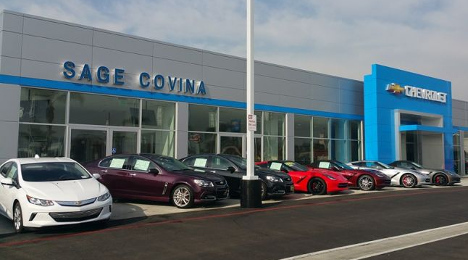
The Federal Trade Commission announced on Tuesday that the Sage Automotive Group — which includes nine Los Angeles-based dealerships, its holding and management companies and two individuals — has agreed to pay more than $3.6 million in order to settle charges that it used deceptive and unfair sales and financing practices, deceptive advertising and deceptive online reviews.
Officials said the proposed settlement order, which will be filed in the U.S. District Court for the Central District of California for approval, will prohibit the defendants from making misrepresentations relating to their advertising, add-on products, financing, and endorsements or testimonials.
The proposed order will also bar the defendants from engaging in other unlawful conduct when a sale is cancelled, such as failing to return any down payment or trade-in or seeking legal action, arrest, repossession or debt collection unless the action is lawful and the defendants intend to take such action. It also prohibits them from violating the Truth In Lending Act and Regulation Z, and the Consumer Leasing Act and Regulation M.
In a statement sent to SubPrime Auto Finance News, Sage Automotive Group said it fully cooperated with the FTC over the course of “many” years and the review of “thousands” of pages of advertising and other documents.
“Though Sage considered the FTC’s allegations to be without merit and overreaching, to avoid the overwhelming cost of protracted litigation, Sage agreed to settle the action with an agreement to stand by the company's commitment to follow the law and to pay, to consumers and not to the government, approximately $276,000 per named entity, which amount is consistent with FTC settlements reached with other targeted auto sector enterprises throughout the country,” the dealer group said.
“Despite the FTC's allegations, Sage Automotive Group believes that it has always met its regulatory responsibilities and looks forward to continuing to provide outstanding sales and service to its customers,” the group went on to say.
The matter first surfaced publicly last September when the FTC filed its court action. It turned out to be FTC’s first charge against a dealer for “yo-yo” financing tactics: Using deception or other unlawful pressure tactics to coerce consumers who have signed contracts and driven off the dealership lots into accepting a different deal.
The FTC also alleged that the defendants packed extra, unauthorized charges for “add-ons,” or aftermarket products and services, into car deals financed by consumers.
According to the FTC’s complaint, the defendants enticed consumers, particularly financially distressed and non-English speaking consumers, into their dealerships with print, internet, radio and television ads that make an array of misleading claims, including that vehicles are generally available for the advertised terms and that consumers can buy vehicles for low prices, finance with low monthly payments, or make low down payments. Other allegedly misleading claims include that consumers can finance the purchase of vehicles — when in fact they are lease offers — and that the defendants will pay off consumers’ trade-in vehicles, despite the fact that consumers ultimately are responsible for paying off any amount owed on the trade-in.
The FTC also alleged that the defendants use phony online reviews to tout their dealerships and discredit negative reviews that highlighted their unlawful practices. They and their employees or agents allegedly posted positive, five-star online reviews that purport to be from objective or independent reviewers without disclosing their relationship to the dealerships.
The corporate defendants are Universal City Nissan, Inc., also d/b/a Universal Nissan; Sage Downtown, Inc., also d/b/a Kia of Downtown Los Angeles; Glendale Nissan/Infiniti, Inc., also d/b/a Glendale Infiniti and Glendale Nissan; Valencia Holding Co., LLC, also d/b/a Mercedes-Benz of Valencia; West Covina Auto Group, LLC, also d/b/a West Covina Toyota and West Covina Toyota/Scion; West Covina Nissan, LLC; Covina MJL, LLC, also d/b/a Sage Covina Chevrolet; Sage North Hollywood, LLC, also d/b/a Sage Pre-Owned; Sage Vermont, LLC, also d/b/a Sage Hyundai; Sage Holding Company Inc. and Sage Management Company Inc.
The individual defendants are Joseph Schrage and Michael Schrage.
The commission vote approving the stipulated final order was 2-1, with acting chairman Maureen Ohlhausen dissenting.
Coinciding with the start of National Consumer Protection Week, both the Federal Trade Commission and New York attorney general Eric Schneiderman — one of the most active individual regulatory enforcers in the auto finance space — both released annual consumer compliant figures associated with their respective agencies.
While complaints associated with auto financing made the national regulator’s list of 10 top categories, auto-related complaints received by the FTC’s Consumer Sentinel Network in 2016 registered only a fraction of the overall figures generated by activities associated with categories such as debt collection, imposter scams and identify theft.
The FTC reported that it received 94,673 auto-related complaints last year, constituting 3 percent of the annual figure. The agency defines auto-related complaints as “Misleading or deceptive claims regarding auto prices, financing, leasing or warranties; repair\maintenance issues with newly purchased used or new cars, including dissatisfaction with service provided by auto mechanics; price fixing and price gouging concerns against gas stations and oil companies; etc.”
Last year, the FTC said it received 103,768 auto-related complaints and 95,039 auto-related complaints in 2014.
The regulator went on to say imposter scam complaints surpassed identity theft for the first time as the second most common category of consumer complaints, according to the agency’s new Data Book.
Although debt collection complaints declined slightly between 2015 and 2016, the FTC indicated they remained the top consumer complaint category, comprising 28 percent of all complaints. Officials determined the high number of reported debt collection complaints was due in part to complaints submitted by a data contributor who collects complaints via a mobile app.
The FTC contends the rise in impostor scam reports is due to an increase in complaints about government imposters. Officials explained imposter scams come in many varieties, but work the same way: a scammer pretends to be someone trustworthy, such as a government official or computer technician to convince a consumer to send money.
Imposter scams also topped the list of complaints from military consumers followed by identity theft complaints, according to the FTC.
The regulator noticed identity theft complaints declined from 16 percent in 2015 to 13 percent in 2016, with 29 percent of 2016 consumers reporting that their data was used to commit tax fraud. Officials added there was a jump in those consumers who reported that their stolen data was used for credit card fraud; this figure rose from nearly 16 percent in 2015 to more than 32 percent in 2016.
“Our latest data book shows that imposter scams are a serious and growing problem, and you can be sure that the FTC will use all the tools at its disposal to address it,” said Thomas Pahl, acting director of the FTC’s Bureau of Consumer Protection. “That includes law enforcement actions against scammers and consumer education to help consumers avoid losing money.”
The most widely reported method of payment (58 percent) for those who reported losing money to fraud was a wire transfer. Of those who noted in their fraud complaint how they were first contacted, 77 percent said it was by phone.
In 2016, the Consumer Sentinel Network collected more than 3.1 million consumer complaints, which the FTC has sorted into 30 top complaint categories. As with 2015, Florida, Georgia and Michigan were the top three states for fraud and other complaints, while Michigan, Florida and Delaware were the top three states for identity theft complaints.
The complaint categories making up the top 10 are:
| |
|
Number of complaints |
Percentage |
| 1. |
Debt Collection |
859,090 |
28 |
| 2. |
Impostor Scams |
406,578 |
13 |
| 3. |
Identity Theft |
399,225 |
13 |
| 4. |
Telephone and Mobile Services |
292,155 |
10 |
| 5. |
Banks and Lenders |
143,987 |
5 |
| 6. |
Prizes, Sweepstakes and Lotteries |
141,643 |
5 |
| 7. |
Shop-at-Home and Catalog Sales |
109,831 |
4 |
| 8. |
Auto-Related Complaints |
94,673 |
3 |
| 9. |
Credit Bureaus, Information Furnishers and Report Users |
49,679 |
2 |
| 10. |
Television and Electronic Media |
49,546 |
2 |
The FTC produces the Consumer Sentinel Network Data Book annually using complaints received by the Consumer Sentinel Network. These include complaints made directly by consumers to the FTC, as well as complaints received by state and federal law enforcement agencies, national consumer protection organizations, and 2non-governmental organizations.
The Data Book includes national statistics, as well as a state-by-state listing of top complaint categories in each state and a listing of metropolitan areas that generated the most complaints per capita.
The Consumer Sentinel Network’s secure online database is currently available to more than 2,300 individual users in civil and criminal law enforcement agencies across the country and abroad. Agencies use the data to research cases, identify victims and track possible targets. Although non-governmental organizations may contribute data to the database, only law enforcement agencies can access the database.
New York complaint data
Meanwhile in the Empire State, Schneiderman’s office reported that complaints about automobile sales, service, financing and repairs ranked second on the attorney general’s annual rundown, totaling 3,437. Officials explained many of the vehicle-related complaints were filed by Volkswagen consumers after Schneiderman announced an investigation into Volkswagen’s installation of software devices that caused its diesel vehicles to cheat environmental pollution tests.
The office participated in an interrelated series of partial settlements with Volkswagen and its Audi and Porsche affiliates that provided unprecedented relief, including enabling over 21,500 New York vehicle owners to sell their models back to the companies at pre-scandal, fair market value, plus receive a cash payment of at least $5,100.
Furthermore, Schneiderman highlighted that this year marks the 30th anniversary of New York’s New and Used Car Lemon Laws, which provide a legal remedy for buyers or lessees of new vehicles that turn out to be lemons. The arbitration program was extended to used vehicles three years after being introduced.
“You may be entitled to a full refund if your car does not conform to the terms of the written warranty and the manufacturer or its authorized dealer is unable to repair the car after a reasonable number of attempts,” Schneiderman’s office said. “The law allows consumers to shop around for the best deal when leasing a car, set limits on early termination, and gives the attorney general’s office jurisdiction to resolve excess wear-and-tear disputes.”
Since 1987, the attorney general’s office reported more than 30,000 new-model applications were filed resulting in more than 20,000 dispositions through either an arbitration award or a settlement. The 30-year total recoveries to consumers from the new-vehicle program are estimated to be in excess of $245 million and an estimated excess of $39 million from the used-vehicle program.
For the 11th year in a row, Internet-related complaints topped the annual list with 4,605 complaints received by Schneiderman’s office last year.
“This serves as a reminder: Fraudsters are always looking for ways to line their pockets at the expense of unsuspecting consumers,” Schneiderman said. “The best weapon against scams is an informed consumer — and the law. I encourage New Yorkers to report fraud, and my office will continue its long tradition of vigorously enforcing New York’s strong consumer protection laws.”
The Federal Trade Commission official who championed investigations and handed out significant penalties against dealerships for misdeeds involving financing, advertising and more is departing the regulator.
FTC acting chairman Maureen Ohlhausen announced this week that Jessica Rich, director of the bureau of consumer protection, is leaving the agency on Friday after 26 years of service.
As bureau director, Rich managed eight consumer protection divisions and eight regional offices charged with stopping consumer fraud and deception and protecting consumers’ privacy. Under her tenure, the bureau brought a series of major law enforcement actions, several of which involved dealerships.
SubPrime Auto Finance News reached out to compliance expert Randy Henrick for reaction to this FTC announcement. A leading voice about compliant advertising practices, Henrick was Dealertrack’s regulatory and compliance counsel for 12 years and now conducts industry consulting at www.autodealercompliance.net.
“Well, I would have to say that Ms. Rich’s departure is a great loss to the FTC and to consumer protection interests generally,” Henrick said via email. “She did many positive things. But in recent years, she really fostered the ‘regulation by enforcement’ philosophy on many issues such as dealer advertising.”
Last September, the FTC asserted nine Los Angeles-area dealerships and their owners used a wide range of “deceptive and unfair” sales and financing practices such as yo-yo financing and payment packing, according to an action filed in the U.S. District Court for the Central District of California that sought to end these practices and return money to consumers.
In March 2015, Rich, the FTC and 32 law enforcement partners announced the results of what they dubbed “Operation Ruse Control,” a nationwide and cross-border crackdown aimed at what they contend was an effort to protect consumers when purchasing or leasing a vehicle. The matter included 252 enforcement actions and six new FTC cases involving more than $2.6 million in monetary judgments.
Rich’s recent efforts weren’t just associated with matters involving dealers before vehicle delivery.
Rich was part of a September 2015 action against Texas-based Tricolor Auto Group, which had to pay $82,777 in civil penalties as part of a settlement to address issues associated with the group’s related finance company. The FTC charged that Tricolor — which specializes in connecting with Hispanic customers at 16 locations in Texas and another lot in Oklahoma City — failed to have written policies and procedures regarding the accuracy of reported credit information and failed to properly investigate disputed consumer credit information.
Rich, who joined the agency in 1991, was a past recipient of the FTC Chairman’s Award, the agency’s highest honor for meritorious service.
“We are grateful to Jessica for her many years of service to the FTC and the public,” Ohlhausen said. “She is a pioneer in consumer protection who spearheaded major initiatives regarding consumers’ privacy, data security, and financial transactions. Many of the FTC’s programs bear her indelible mark.”
As far as the replacement for Rich at the regulator, Henrick added, “Hopefully, her successor will use the FTC’s power under Dodd-Frank to propose and issue regulations in a more transparent manner giving interested parties a chance to comment especially when it comes to the agency’s authority over franchised auto dealers.”
At least for the short term, we now know who Rich’s replacement is as on Wednesday Ohlhausen appointed Thomas Pahl, a partner at the Washington, D.C. law firm of Arnall Golden Gregory, to be the acting director of the FTC’s bureau of consumer protection.
“Tom’s career demonstrates his continuing commitment to protecting consumers through active enforcement and advocacy that promotes a free and honest marketplace,” Ohlhausen said. “His thoughtful approach will help ensure consumers benefit from thriving competition and innovation.
“Tom’s talent, deep consumer protection experience, and strong principles make him perfect to lead the bureau of consumer protection, and I’m very pleased to have him aboard,” she continued.
Pahl is rejoining the FTC, having served in a number of different roles starting in 1990, including management stints in the FTC’s bureau of consumer protection as assistant director in the division of advertising practices and the division of financial practices. He also advised top agency officials on consumer protection matters.
For three years, Pahl advised Reagan appointee and FTC commissioner Mary Azcuenaga. And he later served for four years as an attorney advisor for Republican FTC commissioner Orson Swindle.
Pahl previously served a detail to the U.S. Senate Judiciary Committee under the leadership of chairman Orrin Hatch, focusing on antitrust and consumer privacy issues. Pahl also has worked as an adjunct professor of law at George Mason University’s Antonin Scalia Law School, and is a member of the Federalist Society.
More recently, Pahl has worked on consumer financial protection issues (especially credit reporting and debt collection issues) as a partner at Arnall Golden Gregory, and on debt collection issues at the Consumer Financial Protection Bureau.
Donald Trump will be inaugurated as the 45th president of the United States on Friday. But industry experts have warned dealerships and finance companies not to reduce their compliance efforts despite some deregulatory rhetoric that might have been shared during his campaign.
Compliance expert Randy Henrick recently said via Twitter: “Don’t count on the new president to let up on compliance enforcement. CFPB and FTC staff won't change pro-consumer bias.”
One way managers and other industry professionals can handle the regulatory challenges that might be coming from the Consumer Financial Protection Bureau, the Federal Trade Commission or other places is by completing the Consumer Credit Compliance Certification Program offered by the National Automotive Finance Association.
“Well, I hate to say it, but I still think they’ll need to still continue to focus on compliance,” Hudson Cook partner Eric Johnson said in the video available here and at the top of this page. “It’s still all about compliance in both the near and the far-term future.”
“Now that (dealerships and finance companies) hopefully have their compliance management systems in place, they’ll need to make sure they’re keeping those maintained and updated as new laws, regulations and bulletins and enforcement actions come down from the CFPB,” continued Johnson, who along with fellow Hudson Cook partner Patty Covington serve as instructors of the NAF Association’s program.
“It’s going to be about compliance for the foreseeable future,” he added.
The NAF Association’s certification program is designed to provide the compliance professional with a solid working knowledge of the federal laws and regulations that govern consumer credit, together with a representative overview of state consumer credit law.
The program consists of four modules — two presented in an in-person classroom setting and two in an online format at the student’s own pace. Each module includes multiple sessions; and each session provides a thorough outline and description of the applicable law or regulation. Each session is followed by an online test that must be passed to receive credit for the session.
Another industry professional who completed the program is Ron Keable, who is the Texas field manager for Automotive Compliance Consultants.
“Automotive Compliance Consultants believes it is imperative that its consultants in the field uphold the highest standards and stay abreast of the ever-changing regulatory landscape in retail automotive,” said David Missimer, the firm’s general counsel about Keable’s certification.
“Dealership personnel rely on our consultants daily to assist them with their compliance needs. As such, each professional working for Automotive Compliance Consultants is expected to continue their education, and not only rely on what they may have learned a decade ago,” Missimer continued.
Automotive Compliance Consultants is a member of the NAF Association and recognizes the importance of membership in national and state associations like it that are dedicated to the automotive and finance industry.
“As a company, we believe if you provide compliance to dealerships, but you take no part in associations like NAF you are doing your customers a disservice,” Missimer said.
The NAF Association is hosting another opening model session. The event is set for Feb. 2-3 in Plano, Texas. Complete registration details are available here.
Companies such as Automotive Compliance Consultants will continue to have its consultants certified as consumer credit professionals in the NAF Association program.
“Compliance at dealerships will remain a focal point of state and federal agencies despite the election results. Compliance is just plain good business, and we want our people in the field not only to be good at what they do but be certified professionals,” said Automotive Compliance Consultants president Terry Dortch.
“This company is committed to making continuing investments like NAF training to bring increasing value to our customers,” Dortch added.
Two noncompliant practices consumer advocates often cite to criticize how financing happens at dealerships — yo-yo financing and payment packing — appeared in the rundown of charges made by the Federal Trade Commission against nine Los Angeles-area dealerships and their owners.
This week, the FTC asserted these stores used a wide range of “deceptive and unfair” sales and financing practices, according to an action filed in the U.S. District Court for the Central District of California that seeks to end these practices and return money to consumers.
Officials indicated this matter is the FTC’s first action against a dealer for yo-yo financing tactics: Using deception or other unlawful pressure tactics to coerce consumers who have signed contracts and driven off the dealership lots into accepting a different deal.
The FTC also alleges that the defendants packed extra, unauthorized charges for “add-ons,” or aftermarket products and services, into vehicle installment contracts.
The defendants are:
—Universal City Nissan doing business as Universal Nissan
—Sage Downtown doing business as Kia of Downtown Los Angeles
—Glendale Nissan/Infiniti doing business as Glendale Infiniti and Glendale Nissan
—Valencia Holding Co. doing business as Mercedes-Benz of Valencia
—West Covina Auto Group doing business as West Covina Toyota and West Covina Toyota/Scion
—West Covina Nissan
—Covina MJL doing business as Sage Covina Chevrolet
—Sage North Hollywood Sage Pre-Owned
—Sage Vermont doing business as Sage Hyundai
Along with the Sage Holding Co. and Sage Management Co., the FTC also charged:
—Joseph Schrage, who is also known as Joseph Sage
—Leonard Schrage, who is also known as Leonard Sage
—Michael Schrage, who is also known as Michael Sage
According to the FTC’s complaint, the defendants enticed consumers — particularly financially distressed and non-English speaking consumers — into their dealerships with print, Internet, radio and television ads that made an array of misleading claims. The ads included that vehicles are generally available for the advertised terms and that consumers can buy vehicles for low prices, finance with low monthly payments, or make low down payments.
Other allegedly misleading claims included that consumers can finance the purchase of vehicles — when in fact they are lease offers — and that the defendants will pay off consumers’ trade-in vehicles, despite the fact that consumers ultimately are responsible for paying off any amount owed on the trade-in.
The FTC also alleged that the defendants use phony online reviews to tout their dealerships and discredit negative reviews that highlighted their unlawful practices. They and their employees or agents allegedly post positive, five-star online reviews that purport to be from objective or independent reviewers without disclosing their relationship to the dealerships.
In addition to the deceptive advertising and marketing allegations, the FTC has charged that several financing tactics of the defendants are deceptive and unfair. As part of the sales and financing process, the defendants offer add-ons such as extended warranties, guaranteed asset protection (GAP) and maintenance or service plans.
The FTC alleged the defendants have violated the FTC Act by charging some consumers for add-ons without their consent or falsely claiming the products were required or were free.
And according to the complaint, in some instances after the consumers have signed contracts, the defendants falsely represent that consumers are required to sign a new contract with different terms. In other instances, the defendants tell consumers who have completed finance contracts that the contracts are cancelled and falsely represent that the defendants are permitted to keep consumers’ down payments or trade-ins.
When consumers requested compliance with the terms of the contract or refuse the defendants’ demands, the FTC asserted the defendants, in some instances, have falsely represented that consumers will be liable for legal action, including lawsuits, repossession or criminal arrest for a stolen vehicle.
Furthermore, the FTC’s complaint also charges the defendants with violating the Truth In Lending Act and Regulation Z, and the Consumer Leasing Act and Regulation M, for failing to clearly disclose required credit information and lease information in their advertising.
The commission vote authorizing the filing of the complaint against the Sage Auto Group defendants was 2-1, with commissioner Maureen Ohlhausen dissenting.
“The car-buying process is a two-way street,” said Jessica Rich, director of the FTC’s Bureau of Consumer Protection. “The FTC expects dealers to honor their contractual obligations, and will pursue those who use yo-yo financing tactics and pack unwanted costly add-ons onto consumers’ contracts.”
Patty Covington cautioned me beforehand that the opening module of the National Automotive Finance Association’s Consumer Credit Compliance Certification Program would be like drinking from a firehose. Well, she didn’t exaggerate.
However, the way she and fellow instructor Eric Johnson delivered the material left me and the rest of the more than 100 students thirsty for more.
We all gathered this past week in Plano, Texas, for the program’s first in-person segment, delving into hundreds of pages of regulatory material accompanied by dozens of links to online sources. The Equal Opportunity Credit Act. The Gramm-Leach-Bliley Act. The Fair Credit Reporting Act. The instructors and Hudson Cook partners easily could have spent the two days we had together focused on just one of those topics. But we all know federal agencies have many tools in their regulatory chest, so the introductions to these rules had to be brisk.
Then there are all the acronyms. For example, UDAP and UDAAP. One letter makes a profound difference in creating “unfair and deceptive acts and practices” as well as “unfair, deceptive and ABUSIVE acts and practices.”
And missteps in those areas can cost your finance company thousands of dollars in fines, if not more. Use the search box on our website and enter the term “consent decree” to find out what kind of actions agencies such as the Consumer Financial Protection Bureau and the Federal Trade Commission have taken.
Oh yes, there are state regulators, too. They bring along statutes with definitions that can vary as much as the landscape in New Mexico versus Maine.
So when the NAF Association or industry partners such as we here at SubPrime Auto Finance News often repeat the importance of maintaining compliance, it’s not because we don’t have any other matters to discuss. It’s about maintaining survival.
Patty and Eric didn’t sugarcoat the current compliance landscape to our class, which included employees of finance companies and service providers as well as attorneys looking for continuing education and buy-here, pay-here dealers seeking information. They took a straightforward approach, summarizing information nicely while keeping attendees engaged.
In the coming days, I and the rest of the class must complete and pass the first-module exam with a score that’s much higher than the average year-round temperature in San Diego. Then two more online segments are to follow before the final segment that’s also a face-to-face time. Later this fall, the NAF Association hosts its next in-person module, which happens to coincide with Used Car Week at the Red Rock Resort and Casino in Las Vegas on Nov. 14-18.
Program students who are in town to complete the NAF Association compliance program also will receive complimentary registration for the SubPrime Forum, which is our industry gathering for finance company executives to discuss trends, best practices and more.
For industry managers who are unsure if the investment in this compliance program is worth it, let me offer this consideration. If a regulator determines your company KNOWINGLY disobeyed certain acts or perhaps was abusive to a customer, the penalty can surpass $1 million per INCIDENT. How many active accounts are in your portfolio? I can assure you the cost of the NAF Association’s program is a fraction of that potential figure.
The NAF Association is likely to host another opening module for industry professionals who missed last week’s opportunity. Contact the association through its website at www.nafassociation.com for more details.
For now, I have plenty of studying to do.
Nick Zulovich is the senior editor of SubPrime Auto Finance News and is sharing updates about his journey to through the NAF Association’s Consumer Credit Compliance Certification Program. He can be reached at [email protected].
The Federal Trade Commission recently issued a second Federal Register Notice (FRN) on a proposed qualitative survey of consumers to learn about their experiences in buying and financing vehicles at dealerships, and is seeking clearance from the Office of Management and Budget to conduct the study.
FTC officials explained the second FRN also calls for additional public comments as required by the Paperwork Reduction Act.
The proposed consumer survey, which will include consumer interviews and receipt of consumers’ purchase and finance documents, is designed to assist the FTC by providing useful insights into consumer understanding of the automobile purchasing and financing process at the dealership.
Last December, the FTC issued a Federal Register Notice seeking public comment on the proposed survey. The FTC received 17 comments in response to that notice that are addressed in the second FRN.
The FTC now invites further comments concerning the accuracy of burden estimates on surveyed consumers and ways to minimize the information collection burden.
When the FTC first began this process, the American Financial Services Association and the Consumer Bankers Association submitted a letter to the agency asking seven specific questions about what the regulator plans to do.
Stemming from concerns that there may be an element of bias in the survey that the FTC is proposing, AFSA executive vice president Bill Himpler and CBA regulatory counsel Kate Larson authored the letter that touched on what the organizations described as “the importance of objectivity” as well as “separating research and enforcement.”
Evidently the Federal Trade Commission is far from finished with its regulatory actions involving what it dubbed Operation Steer Clear — a nationwide crackdown on misleading advertising regarding vehicle sales, financing and leasing that began more than two years ago.
This week, FTC officials said three Dallas-area dealers, collectively known as Southwest Kia, have agreed to pay an $85,000 civil penalty to settle charges that they violated an FTC administrative order barring them from deceptively advertising the cost of buying or leasing a vehicle.
According to the FTC, New World Auto Imports, New World Auto Imports of Rockwall and Hampton Two Auto Corp. concealed sale and lease terms that added significant costs or limited who could qualify for vehicles at advertised prices, in violation of a 2014 order.
In a TV ad, for example, the regulator found the dealers offered two vehicles for “under $200 per month.” But in fine print that appeared for two seconds, FTC officials said the ad disclosed that the offer applied only to leases, not sales, and required a $1,999 payment at lease signing.
FTC officials recounted that one dealer mailed ads claiming a new vehicle could be purchased for $179 per month, “but in print too small to read without magnification,” disclosed that $1,999 would be due up front, along with tax, title and license fees, and that $8,271 would be due at the end of a 38-month financing term.
The FTC’s complaint also cited a TV ad targeted at people with major credit problems such as repossessions or foreclosures.
Officials indicated the ad touted vehicles for $250 per month, but in fine print disclosed that the offer was based on a 4.25 annual percentage rate that “few, if any,” consumers with such major credit issues could obtain.
In addition, the FTC alleged that the dealers advertised credit and lease terms without clearly and conspicuously disclosing information required by federal law, and failed to keep records required by the 2014 order.
In addition to the $85,000 civil penalty, the proposed order prohibits the dealers, in any ad for buying, financing or leasing vehicles, from misrepresenting the cost of purchase with financing, the cost of leasing, or any other material fact about price, sale, financing or leasing. It also prohibits misrepresentations that anyone, including those with poor credit, is likely to receive financing or leasing, including particular finance or lease terms.
Officials added the proposed order also bars the dealers from violating the Truth in Lending Act and the Consumer Leasing Act, which require clear and conspicuous disclosure of credit and lease terms.
The FTC vote to authorize the staff to refer the complaint to the Department of Justice and to approve the proposed stipulated order was 3-0.
The DOJ filed the documents on behalf of the FTC in U.S. District Court for the District of Texas, Dallas Division, on Thursday.