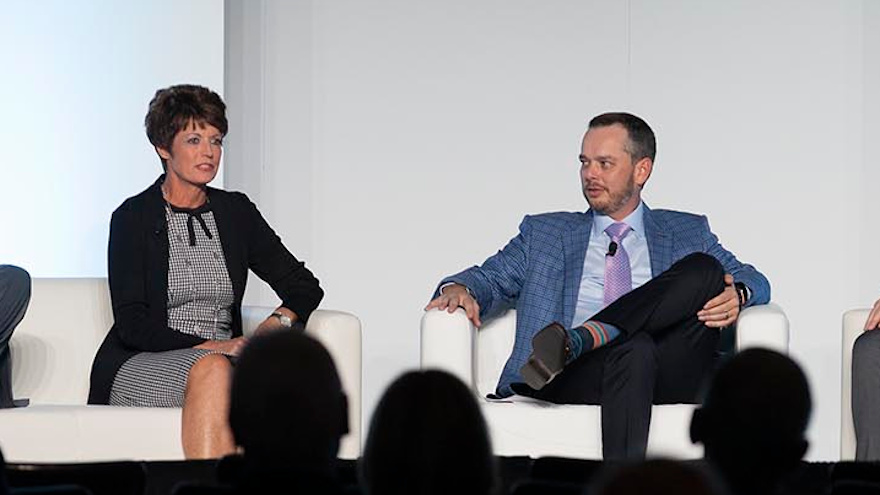
Allied Solutions and Recovery Database Network (RDN) not only operate in the same Indianapolis suburb, but the companies now are partners since they both seek to help auto-finance companies in the same area of their operations.
Allied Solutions, one of the largest providers of insurance, lending, and marketing products to financial institutions in the U.S. for more than 40 years, and RDN, a business unit of vehicle remarketing and technology solutions provider KAR Global, recently announced a partnership the companies believe will give finance companies a seamless, efficient solution for their asset recovery needs.
For more than 10 years, RDN highlighted that its software-as-a-service technology has provided auto-finance companies with improved recovery performance and increased operational efficiency while offering full security and transparency. The web-based application can connect thousands of recovery agents and automotive lenders to a streamlined vehicle recovery process — with reduced redundancies and increased actionable data throughout the entire recovery, re-titling, and remarketing value chain.
“Our clients are seeking secure, digital solutions to enhance and optimize their current recovery processes,” Allied Solutions senior vice president Anne Holtzman said in a news release. “RDN provides a trusted technology that enables lenders to better measure their performance and move more quickly through the repossession process.
“With a full suite of tools, and continuous adaption, RDN is a great partner to help fill an inventory management need for many of our clients,” Holtzman continued.
“Allied recognizes that our clients have a diverse and ever-expanding set of needs when it comes to recovery strategies,” Holtzman went on to say. “This partnership with RDN establishes an adaptable and comprehensive solution that we can provide to our clients so they can feel confident they are being as efficient and effective as possible with their recoveries.”
RDN vice president of business development John Sibbitt added, “At RDN, we are committed to continuously enhancing our technology and connecting customers to a streamlined vehicle recovery process.
“Now, Allied Solutions customers using the RDN asset recovery platform will have access to transparent repossession processes with real-time, automated status updates and tracking — connecting Allied Solutions’ lending customers to the agents managing their asset recovery,” Sibbitt said.
Editor’s note: This commentary is the second in a series compiled by Joel Kennedy, who is the current president of the National Automotive Finance Association and board adviser at TruDecision, looking at the intricacies of repossessions and recovery. The first segment is available here.
I founded an auto-finance business during the peak of the Great Recession in early 2009. I knew credit, risk, analytics, finance, compliance — you name it. But when it came to loan servicing and managing delinquent borrowers, skips, recoveries, asset disposal — it was a trial by fire.
Despite our team’s collective naiveté, we did a decent job of handling these activities early-on. In fact, we did well enough to get through multiple rounds of funding and “servicing retained” deals. After the second round of funding (the “big” round) the loan portfolio really grew, and along with that growth came a lot of new issues and problems to manage. The hallmark of these issues was that they were largely centered on finding borrowers and collateral that we had lost our grip on, and these problem accounts have a way of hiding from you, so you really run the risk of missing some big things.
In hindsight, there were choices to be made on how to manage these operational components that I should have outsourced entirely from day one. The problem was that my partner and I put too much stock in building all of these capabilities internally, and we viewed outsourcing them as dilutive to our brand. We figured that building a finance company that is nothing more than a bunch of outsourced systems, vendors, etc. cobbled together, can that really be unique and create enterprise value? We certainly got a passing grade in Management Hubris 101.
I now reflect on the opportunities from my auto-finance company with a much better understanding of all of the moving parts operationally and how they manifest in the financials. Nowadays, it doesn’t matter to me who does an activity — just is that activity optimized and maximized — or am I at least getting the best possible service or result. My time embedded with Flying A Information Resources, a skip/locate and recovery company really opened my eyes to the full power and scope of outsourcing in a way that eliminates a lot of the pain, friction, and knee-jerk management that I self-inflicted.
Top 8 challenges
Through my experience, I identified what I believe to be eight primary challenges.
Challenge No. 1: Lagging repossession, skip, and recovery rates
For non-prime banks and finance companies (mostly small-to-mid-sized), repossession rates generally run in the low-to-mid teens, but have been rising in recent years. Similarly, the unrecovered skip rate (as measured by the number of unrecovered repos in the current year / number of repossessions for the prior year) runs on the lower side of the mid-teens as well. Recovery rates (net post-charge off deficiency) for the non-prime segment generally run in the mid-to-high teens. So, now that we have the general benchmarks, how does your institution stack up? If you are outperforming, then you probably already know that, and have a good thing going. For underperformers turning the tides on lagging performance can be tough – there are a lot of moving parts with systems, process and people, which can make diagnosing the problem a substantial undertaking.
Challenge No. 2: Days to recover are increasing
The longer the days to recover, the worse your collateral recovery will be. Plain and simple. And the reasons for nonperformance can come from a number of prior actions that resulted in misses. Did you start off with good customer contact and get ahead of delinquency and roll rates? Were there misses along the way where your collectors decided to wait rather than advance an account to assignment for repo? Do you have a solid process that is followed consistently on which accounts need to be skip-traced or assigned? All of these misses add up to a huge hit on your bottom line because when cars are missing for too long, the more busted up they become, and the less you have to recover at auction if and when you get it. Even worse, you end up recovering a total bomb that you should have just abandoned.
Challenge No. 3: Poor / declining collateral sale proceeds
Poor collateral sale proceeds can be a function of many things. For example, just as automotive retailers look to match the collateral they carry to their local clientele, auctions have some differences that are worth noting. A vehicle that does well at a larger, higher volume auction may not do well at a smaller auction, and vice-versa. It is a good idea to be constantly evaluating your auction returns, and looking for ways to improve the top line and reduce your recovery and reconditioning costs. Do you have someone representing you at auctions? Do you have good lane placement and time of day for your cars to roll through? At the end of the day, the CFO’s question on this one is a good one; what was our expectation for collateral sale proceeds versus what we are actually recovering?
Challenge No. 4: Volume of recoveries and agent management is unmanageable
When delinquency and roll rates increase or even spike, regardless of whether it was weaker credit quality for a particular vintage, seasonal / exogenous factors, or poor collections performance, you have a bubble that needs to be addressed. This is often the time that outsourced options are seriously considered and deployed, and for good reason; you have a bump in volume that you don’t want to staff to, you just want to solve it. In my opinion, this is the time when a longer-standing relationship with an outsourced vendor gets crucial. The lender knows that the accounts were mismanaged, but most will look to hold the vendor to a standard that is more suitable to a well-managed account. If this understanding gap can be overcome, then chances are that vendor becomes strategic.
Challenge No. 5: I am not confidently managing specialty accounts
Specialty accounts can quickly eclipse a finance company’s abilities. Military, BK, Non-self-help states, and sovereign nation reservations all have particulars that if not properly managed can equate to serious legal, regulatory, and reputational risks, along with the risk of losing recoveries, or even the lender’s claim to pursuing the deficiency balance. It has been my observation that most finance companies fall into two camps on this: one that relies on the most expensive and comprehensive legal guidance they can buy, and those that ignorantly apply their normal process to these accounts. To shed further light on the issues involved with the most prevalent categories, I interviewed some experts.
• Military: Kelly Blankenship of KRB Partners, a regulatory compliance consultancy provides some caution in handling military recoveries, said, “Make sure you have policies and procedures in place to verify the military status of your borrowers before your company begins the repossession process. A best practice would have checks and balances in key places along the repossession process, for ex., at the time the vehicle is categorized as eligible for repo and prior to assigning it for repossession agent or forwarder. As a reminder, protected service members are people who have made an installment payment (one payment is enough) prior to entering military service and were in the military at the time of repossession.”
• Bankruptcy: Brad Cloud of National Bankruptcy Services (NBS), a bankruptcy administration and management firm serving lenders and loan servicers, said, “Our clients who have built up internal bankruptcy management functions know the pain of having to manage multiple different law firms across the country to assist in the management of bankruptcies. The cost of court filings can really add up, and it is not always easy to staff bankruptcy teams with experienced administrators. In general, NBS can deliver results for half the cost of doing the same internally. And, when you consider that bankruptcy files generally represent between 50 and 100 basis points in a portfolio, even the captives (who have the capacity to do it themselves) choose to outsource this work.” Cloud adds that the first step for them is to audit what the client has done, and what he sees are that debtors and their attorneys tend to err on the side of less (in terms of validating assets, and their values) and it is on the lender to identify this, call it out and correct it – with real financial impacts.
• Sovereign nation reservations: Gabriel Garcia of Flying A Information Resources has been working specialty accounts for some time. According to Garcia, “Each reservation has their own laws, so if an agent is not fully familiar with the tribal laws, it is better to check in with the tribal police before going to make contact with the borrower or touch the collateral. It is actually best to have a native of the reservation to act as an agent while performing the recovery and performing any contact with the borrower.” Garcia had some interesting tidbits on the stickiness of a recovery that pertained to the use of a GPS (can be sticky on a reservation), and the fees (legal fees + access fees + native lawyer fees) that can quickly add up when you don’t even have eyes on the car and you have no idea of the vehicle’s current condition. Another interesting fact is that geography can be an issue in the recovery of a vehicle when it is recovered outside of tribal lands. You can end up recovering a vehicle just outside of tribal land, yet the only road back to the tow yard requires that you re-enter tribal land on your way back home. In many cases, the agent can be forced to surrender the vehicle to tribal police unless they have a signed surrender form from the customer.
• Non-self-help states: On the topic of non-self-help states, Garcia continues, “It is important that the self-help laws are written into the contract. Lenders that do not put that verbiage on their sales contract are not able to use self-help. If self-help fees are approved and available to the client, then the repossession agent has to file paperwork and pay fees to both the parish and the local sheriff’s office. There are always two fees paid, one to each municipality.” Garcia sites a specific example, with the state of Louisiana, “You approach the customer with a voluntary surrender form, and if they sign, you can repossess the vehicle. If they refuse, you can pay a fee to the sheriff then you can do a self-help repossession.”
Challenge No. 6: Loan and payables associated with recovery and sale activities are unmanageable
Some auctions provide transport, and reconditioning and net those charges out of your disposal proceeds, while others invoice you directly for these services. When contemplating a skip that flips to a deep skip, then moves to recovery, is then stored for some time, transported, reconditioned and sold, you could have quite a lot of invoices tied to that single account. Further, if you do a good bit of business with any of these vendors along the process, chances are they will invoice you for all the services and then you have to break it all out and assign it to each unit. And, this assignment of all recovery, reconditioning, transport costs is super-important, and must be correct on the deficiency balance notice, and in many states the issuing of that notice must be timely. This is just one of the reasons why you want to stay far away from the accounting team during month’s close activities. They are literally ripping their hair out (and for good reason).
Challenge No. 7: Immature skip and recovery operations
Loss mitigation is a tough game. You need to apply a significant amount of rigor and structure to keep things organized and not drop any balls. At the same time, it requires a great deal of financial intelligence / intuition, and the more analytic your team the better. Unfortunately for most small-to-mid-sized operators if they have one good person that fits this bill, they are lucky. Grit and determination are great, but they should not overshadow the higher-level skills that need to be present as well. You can hire a “hammer” to do the job (perhaps someone that used to work in skip / recovery for a repossessor), or you can hire a “hand” that will provide more guidance and analytical leadership. The fact is that you need both, and they both need to be gritty since they are always cleaning up someone else’s mess. The reality is that many operators hire out of immediacy and desperation, often thinking that they can develop excellence internally, only to be disappointed.
Challenge No. 8: Managing non-auto recoveries
Similar to the specialty accounts, non-auto recoveries can be problematic for lenders or holders of these different accounts. Let’s say that you picked up a few portfolios of boats, farm equipment and RVs. These are vastly different collateral types that would be housed, stored and even hidden in a variety of ways. So, the real issues don’t start at the point of repossession — they start prior to that in the skip phase. The farmer hides his farm equipment on a friend’s farm, the boat owner hides their boat in dry-dock, and the RV owner is never in one place (or state) for long. If the majority of your holdings are in auto and these other assets make up a smaller number in the portfolio, you may find yourself spending significant time and effort simply lining up vendors to help you.
In summary, managing collateral recoveries is an entire process that can be mapped out, but managing the process tree can be difficult given that there are very few “vanilla” involuntary recoveries. This can often result in these accounts not being worked, or perhaps outsourced to a specialist that understands the legal and regulatory aspects but may not be so great at operationalizing the solution.
Possible solutions
When it comes to managing collateral recoveries, the fact is that there is a baseline level where we all use outside vendors to get the job done; recovery agents, and auctions to name just two. I support a strategic, and financially-driven decision to guide the structuring of this function either internally or outsourced. So, while I admitted bias and hubris on my part at my last finance company (where we outsourced the minimum), I have seen the value of a more exhaustive outsourcing arrangement for everything from skip through recovery and disposition, and I have changed my tune accordingly.
The short answer is that there are organizations out there that do a very good job of specializing this skill-set and function, takes care of the accounts, hires people, handles sub-contractor payment and performance, possesses workflow, and can even share some resources across a variety of lenders that can save you significant money. To me, it is no different than me listening to Spotify and not buying CDs, and buying movies in the cloud and abandoning DVDs, and purchasing cloud space for my digital photos instead of buying photo boxes. Be open to the changes and you may find better results and fewer headaches.
Evaluating what is right for you
When evaluating options of insourcing / outsourcing, I offer a basic framework for assessing:
• Results: Is your team outperforming or underperforming on key metrics such as recovery rate, skip rate, collateral recovery $? If you are underperforming is it because your back-end team is underperforming or is it because your collections team is underperforming and letting too much flow through, or is it because the underlying loans (customer, asset, structure) are poor?
• Cost of achieving results: How much does it cost you to staff, train, and equip your skip, recovery, asset disposition team? Are replacement resources readily available in your locale? Take the time to add up the cost of all the skip tools (e.g. license plate recognition, PACER, information sources, etc) and the success rate associated with your staff employing these tools. Is there a better option available to you?
• Capabilities: Do you have access to an abundance of highly skilled resources that specialize in these activities? Do you have legal and regulatory expertise in the specialty areas such as military, BK, non-self-help states? Is your loan accounting function highly performing, or do they seem all frazzled every month-end?
Joel Kennedy is a consumer finance executive, advisor, and consultant. He has a passion for growing and improving auto finance ecosystem. He has over 24 years’ experience helping big banks down to start-up finance companies to build, grow, improve, and repeat. He is the current president of the National Automotive Finance Association, and a board adviser to TruDecision. He can be reached at (240) 308-2169 or [email protected].
After sharpening the solution for nearly a year, PAR North America is ready to broaden the availability of a service aimed at enhancing the wholesaling of repossessed vehicles.
The KAR Global business unit on Tuesday announced the expansion of its PAR Repo 360 Advantage service.
Finance companies using this digital-first product for their recovered vehicles can launch those units for sale to a potentially nationwide buyer base on ADESA.com and the ADESA Marketplace app directly from the recovery vendor’s lot, potentially saving time and money on both transportation and reconditioning.
Buyers also can benefit by getting first-pick access to fresh inventory of high-quality vehicles nearly two weeks before those units would otherwise be available in auction lanes.
“We’ve watched the digital transformation of the remarketing space over the past two decades, and the time is now right for the repossession segment to take advantage of the upstream, online sales channels that work so well in the wholesale space,” PAR North America president Lisa Scott said in a news release.
“The detailed vehicle information available today, like AutoGrade ratings, condition reports and image capturing technology, has earned buyer confidence, and selling platforms like ADESA Simulcast have grown more sophisticated and efficient,” Scott continued.
“With Repo 360 Advantage, buyers can purchase the high-quality vehicles they are looking for much more quickly, and lenders can sell those assets faster and with fewer costs. It’s a win-win,” she went on to say.
The company explained PAR’s Repo 360 Advantage program can open up an expanding online sales channel to its finance company clients, allowing them to sell recovered vehicles in a relevant, widely recognized method of inventory disposal, before adding transportation or reconditioning expenses. In the pilot with a credit union, PAR’s Repo 360 Advantage service reduced the average days to sale by 11 days and saved the client hundreds of dollars per vehicle in remarketing costs.
The PAR Repo 360 Advantage product is starting its nationwide expansion after being tested and refined since April of last year. The company highlighted vehicles in the Repo 360 Advantage pilot demonstrated a significantly positive conversion rate, and retention was higher overall for vehicles sold on ADESA.com than for those sold in-lane.
“The gains in days to sale and net proceeds due to cost savings have been substantial for the lender in our pilot, as well as seeing improved conversion rate and retention,” said Stacey White, senior vice president of remarketing for PAR North America.
“We’re confident that our other lending institution clients will benefit from the innovative approach of Repo 360 Advantage,” White added.
PAR’s Repo 360 Advantage service leverages the strengths of other KAR Global companies to provide services for its clients.
In addition to accessing the remarketing capabilities of ADESA, PAR North America utilizes AutoVIN to conduct any inspections required at recovery agent lots, and High Tech Locksmiths provides both finance companies and repossession vendors with key replacement services.
These services are integrated into the Repo 360 Advantage product through PAR’s secure, proprietary VIPR/eVIPR system, which can allow clients to receive fast, real-time updates, hold/close notifications, repossession reports, condition reports and other associated documents.
For more information, go to parnorthamerica.com.
Along with the opportunity to reconnect with other industry operators, the American Recovery Association is using this year’s North American Repossessors Summit to unveil a new program that’s been in development for several years.
During NARS 2020, the association will be debuting its new program — ARA University — an initiative to help members position themselves as industry leaders through courses to improve their business and growth.
Part of the event includes an “Introduction to ARA University” as Dan Johnson and Doug Duncan will take the stage to reveal a first look at the industry program that will give invaluable information to members looking to further their business growth.
“With an eye toward providing certifications and credibility to the repossession industry, this introduction will set the stage for the unified education of all sectors of the business,” ARA said about this portion of NARS 2020, which is set for May 7-8 in Irving, Texas.
The association elaborated about the speakers who will introduce ARA University
Johnson is the chief executive officer of Camping Companies in Phoenix. ARA highlighted that Johnson has considerable experience in organizational development across his career, gaining the respect of many professionals in the asset recovery industry due to his effective leadership of successful repossession companies and his contributions to the broader repossession community through his service with the American Recovery Association.
Doug Duncan is president of TalentValue, possessing 30 years of experience in business planning and human resources. Duncan’s clients are companies in a wide variety of industries including the supermarket industry and a large Midwest insurance company.
Complete details about NARS 2020 are available at www.reposummit.com.
Organizers of the North American Repossessors Summit (NARS) have announced the opening of nominations for their second annual Industry Awards. Designed to honor exemplary repossession professionals, this year’s award categories include Recovery Agent of the Year, Service Representative of the Year, Humanitarian of the Year and Agency Owner of the Year.
NARS officials said submissions can be made until March 6. The NARS committee will choose the top three nominations in each category before opening voting to the public to select winners.
“All nominees will be carefully vetted based on the quality and detail of submission and their contributions to the repossession industry,” officials said.
The awards categories are as follows:
Recovery Agent of the Year
The Agent of the Year Award honors the agent who has demonstrated outstanding professionalism, understanding of lender needs and full compliance with industry standards, as well as protection of the consumer's rights and safety.
Service Representative of the Year
The Service Representative of the Year Award represents someone who has shown exemplary performance and has consistently excelled in their position. This person demonstrates integrity, creates a positive atmosphere in their workplace, and displays a strong commitment to the mission and values of our industry.
Humanitarian of the Year
Humanitarian of the Year submissions showcase an industry professional of any position who contributes significantly to alleviating human suffering and improving the quality of life in their community. This person demonstrates leadership through outstanding volunteer accomplishments that bring honor to the collateral recovery profession.
Agency Owner of the Year
Finally, the Agency Owner of the Year Award will go to an owner who has at least a three-year commitment of excellence within their company and the collateral recovery industry. This person should also be able to document their commitment to professional education and compliance training as well as the use of innovation and creativity in enabling their company to prosper and extend its reach in the collateral recovery profession.
To submit someone for an industry award, go to reposummit.com.
This week, Resolvion, released a new specialty suite of services.
The skip-tracing and repossession management firm explained these specialty services were designed to address many of the challenges that finance companies encounter in their repossession activities.
Resolvion’s specialty services include the following programs:
• Rural area recovery
• Bankruptcy recovery
• Red Flag/Cease and desist Recovery
• Impound recovery
• Native American Reservation Recovery
Resolvion president Josh Elias indicated these unique programs will support Resolvion’s existing core repossession services.
“Our specialty services are designed to address major pain points for our clients while reducing overall costs and risks,” Elias said in a news release. “This was a major initiative that took a lot of resources to successfully implement so we’re excited to introduce it to our clients.
For more information about Resolvion’s specialty services, finance companies can contact Jose Mendiola at [email protected] or call (954) 931-2848.
Recovery professionals that conduct activities in Massachusetts now have another training opportunity to maintain their compliance knowledge.
RISC recently launched the Massachusetts-specific collateral recovery training course as part of its CARS National Certification Program. The compliance services company emphasized that continually providing up-to-date training on state-mandated regulations is the goal of RISC.
“It’s crucial to let the industry know about updated regulations and provide comprehensive training for collateral recovery in Massachusetts and beyond,” RISC chief executive officer Stamatis Ferarolis said in a news release.
“We are committed to providing these updates and have hired the prestigious law firm, Hudson Cook, to help design the most current training programs in the nation,” continued Ferarolis, who also mentioned RISC will continue to evolve with the industry by building courses that will provide value to both clients and recovery agents.
Steve Digantgikis, owner of New England Adjustment Bureau, offered his assessment of how this RISC training can help. Digantgikis was the first operator to become certified through this Massachusetts-specific CARS program.
“The overview of Massachusetts regulations is very informative,” Digantgikis said. “It’s another great addition to RISC’s current CARS program to keep my recovery staff safe and knowledgeable.”
RISC highlighted the CARS certification is accepted by many domestic lending institutions and is completed by more than 4,000 recovery professionals annually. The course is available on RISC’s education platform for purchase at this website.
Editor’s note: This commentary is the first in a series compiled by Joel Kennedy, who is the current president of the National Automotive Finance Association and chief operating officer at TruDecision, looking at the intricacies of repossessions and recovery.
The industry that locates borrowers and collateral, recovers collateral and handles liquidation on behalf of lenders has grown significantly in the last five to 10 years. Forwarders present lenders a streamlined way to manage recoveries, liquidations and vendor compliance, as a result of their configuration and focus on technology and innovation improvements to the process. During this time, lenders have seen the value in the forwarder model, resulting in the growth of this industry, and now — forwarder consolidation. The most impacted players in this new world are the recovery agents, and the recovery industry is feeling the economic squeeze, and recovery agents are suffering, or worse shuddering up.
The National Automotive Finance Association along with the American Recovery Association have facilitated working sessions between both lenders and recovery agents for the past few years — with the goal of driving standards within the industry that will benefit all players, and create an environment where recovery agents can once again thrive. Last year, the top forwarders in the industry got together and are actively involved in leading this initiative to a lasting result.
As someone involved in this initiative since 2018, and now as the president of the NAF Association, I wanted to get into the details of the skip / recovery space to better understand the lender’s challenges and the solutions that are available for them. To get educated, I embedded myself for some time within the operations of Flying A Information Resources, a skip / locate and recovery company. The results of my learnings are captured within a three-part editorial series on the fundamentals of skip and recovery. I would be remiss if I did not thank CEO Dick Landeis and president Jim Snead of Flying A Information Resources, for supporting this initiative and opening Flying A’s doors and process to me.
Improving Skip-tracing Results
In Disney’s “The Mandalorian,” the client says that “Bounty hunting is a complicated profession,” and provides the main character, a bounty hunter nicknamed “Mando” with only limited information in his pursuit of a bounty. The bounty hunter works solo and has to rely on his own skill and cunning to locate and capture the bounty. This Mandalorian is a specialist, a professional bounty hunter that his peers hate due to his success at catching elusive bounties that have frustrated and confounded them all.
Just as the Mandalorian is brought in when all other possibilities are exhausted, so too is the world of locating borrowers and collateral that have evaded you — also known as skip-tracing. I happen to believe that the seeds of the problems are sewn early on in the business setup. Auto lenders build up the detailed economic forecast and budget, and most of the focus is on stressing the model relative to revenue and losses. We tend not to spend too much time on the particular underlying people, process, and technology required to deliver on the details of plan. As a result, big dollar recovery processes like late-stage collections, skip, impound, vehicle in shop, and deep-skip tend to be cobbled together as afterthoughts.
Far too often it is “too little, too late.” We’ve all seen the scenario of some “pointy haired boss” lambasting the head of collections for a growing list of uncollectable accounts. So, as ops folks, we react by taking immediate action. Get the car, find the borrower, do whatever it takes to get the job done — fees and overtime be damned. Just find a local skip / recovery specialist and assign the case on the double (skipping all sensible vendor due diligence). Equally as detrimental is the fact that the decision whether to build the intelligence internally or outsource is oftentimes based less on considering the strategic elements, and more on the ego of the collections VP or the CEO.
The Challenges
From the smallest to the largest automotive lenders, the challenges are common:
—Challenge No. 1: I can’t locate my borrower.
There are skip accounts in every stage of delinquency, but they tend to get noticed when they start rolling into the 31 days past due bucket. The focus in the earlier stages of delinquency (say anything prior to 61 days or more past due) tends to be more on locating the borrower and trying to help get them back on track, and collections tends to utilize a standard set of borrower outreach tools that escalate as you trip different days past due triggers. So, the phone calls, text messages, and emails continue, while possibly layering in more mail, collectors refer back to the loan package and start calling references, possibly running an updated skip report, and maybe issuing a field call. How well focused and measured these efforts are can vary on the level of management, rigor and controls in place, and this can have a bearing on the results.
—Challenge No. 2: I can’t locate my vehicle.
As a delinquent account ages, the focus on finding the collateral takes central focus. Locating a vehicle when the borrower has changed jobs, residence, possibly even moving out of state can be tricky. Most recovery agents can conduct some skip tracing to provide more information for the case. If your collateral is equipped with a GPS, you can do some skip tracing there (even if the device was tampered with), and if you subscribe to a license plate recognition (LPR), that can be another source of leads.
—Challenge No. 3: I have deep skip accounts that are at a dead-end, and I am battling against the clock and charging off.
Deep skips are those skip accounts that have been worked but are unresolved. They may have been worked internally, and also by an outside skip agency, or even a repossessor, with no result. Deep skips tend to get thrown over to skip / forwarders from time to time, and lenders figure this is a no-lose proposition to find either the collateral, the borrower, or both. Assuming that the borrower is so many payments behind that getting reinstated is not really an option, locating the collateral is the first step towards recovering the vehicle and liquidating at auction.
—Challenge No. 4: My operations are not skilled at skip=tracing.
Skip-tracing is definitely a skill and an art. You are looking for patterns in publicly available data, customer provided data, and special data sources (like skip reporting tools, legal records, bureaus, etc). The tools are far from a silver bullet, you still need your skip analyst to be able to make sense of all of the information in front of them, and be selective in what additional data is needed to fill in the picture. Further, there are quite a few areas of compliance that need to be addressed when, say, calling borrowers’ place of employment, or their provided references, or known family identified from skip / bureau tools. Building this up from scratch will require some measure of expertise, most likely at the manager level, and the time and resources required to train the team up. For smaller lenders, you can run into situations of inefficiency where you will need to staff and train more than one person to make sure that you have coverage when the person is out or decides to leave the company.
—Challenge No. 5: Skip tools are expensive, and managing the cost and utilization is difficult.
There are many skip tools out in the marketplace. Speak to any experienced skip tracer and they will be happy to provide you with their favorite techniques and resources, but for the most part, they will tell you that you are likely to be using various resources until the point that you find a missing piece to your puzzle. So, in the context of trying to control and manage costs, this can be problematic. If the list of skips grows, it is easy for management to say “pull out all the stops, run every skip report you can.” The CFO sees that expense line grow (after the fact), and now your skip tracers are constrained to run fewer reports.
—Challenge No 6: I don’t have a path to develop skip tracing skillset internally.
As outlined in Challenge No. 4, you need some expertise internally to either staff or train your skip resources. In cases where that skill set is not readily available, lenders often lack the requisite path to stand up a successful skip team. This can not only be costly, but quite daunting a task, and time consuming — potentially taking your eye off the ball in other areas where management needs to be actively engaged.
In summary, many lenders struggle with locating their skipped borrowers, and vehicles. They may not possess the path or skillset in-house to positively resolve the situation. The cost to address the gap in skip capabilities can be expensive to resolve, and in the learning phases the cost of running redundant, superfluous reports can only set you back further with the internal turmoil that will ensue.
The Solutions
The issues we outlined exist in some measure at most lenders. There are strategic and financial considerations, understanding your company’s risk tolerance, comfort with compliance, and a variety of other factors to consider in how best to approach gaps in skip tracing performance. Thinking in the most basic terms, there are three possible outcomes that can resolve these gaps:
1. Build the Capability Internally
Building skip capability internally can be a good idea, provided you have a path to acquire (or develop) the team to deliver results, and do so safely with consumer rights and compliance central to your controls. Additionally, the cost of running the variety of skip tools is something that needs to be well-managed and tightly controlled if you don’t want end of month “surprises” for your CFO. Ideally, as a skip function grows and matures, there should be ways to train this skillset into your collections staff (particularly the late-stage group, where the lines between collections and skip are blurred) and extend your ability to locate and resolve skips earlier in the process. These are real benefits, and can be realized if you have a clear path, and are willing to make the investment in time and money.
2. Outsource Broadly
The last decade saw a substantial increase in the proliferation of, and increased market share of skip specialists and forwarders. These outsourcing partners can take your skip activity when assigned and manage the entire process. Lender clients will want to clearly establish their expectations for receiving updates with good content and frequency. You will get the benefit of having a managed process, with streamlined process flow, and if you can integrate the data back in to your core (loan servicing) system, you can make it faster and easier for collectors, and recovery specialists to act quickly and not drop the ball. Beyond the core components of service delivery, outsourcing of skip can open each of your assignments to a variety of data sources and skip tools that are constantly changing, each of which costs money to run. A perfect example of this is tapping into LPR analytics (i.e. have we seen this car before on prior scans?), and posting these vehicles into a live status in LPR, opening them up for not only skip, and locate, but if the client wishes — also recovery.
As already mentioned, the market for outsourced skip and subsequent processes (recovery, disposal, etc.) has grown significantly in recent years. To lender clients, the simplicity of managing all skips (and beyond) through a single or handful of vendors is an attractive option to managing all aspects of skip cases directly. If a lender truly has a solid leader and grasp of skip to the point where they will consistently outperform an outsourced option, and do so at a cheaper cost, then by all means. There are many lenders that do just this, just as there is an ever-growing portion that opt to outsource. The fact is that results and performance can change over time, and performing routine comparisons of the results and cost of achieving those results is something that I always advocate.
Which leads us to our final option.
3. Outsource Partially / Specific Elements
In non-prime auto, while there are several large, national players, for the most part the industry is characterized as fragmented, with a majority of smaller regional participants. Sometimes due to smaller volumes, managing the process internally and directly can be the best option. Problems can however crop up when a borrower goes outside of the lenders’ geographic footprint. Lenders may need to engage new skip and repo companies that operate in these “out of footprint” areas, leading to the assignment of skips and repos out to forwarders that have already established relationships with providers that have been vetted for process, compliance, etc.
Another reason why companies may outsource some (but not all) skips would be that they have arrived at a point where they are at a dead-end. Sending these to an outside party to crack the case is a way to keep things moving.
What I do encourage in cases like these would be to create a learning loop with the outside vendor that allows your internal skip tracers to learn and grow. Industry veteran and expert, Dick Landeis, CEO of Flying A Information Resources said, “The best thing a lender can do is get the skip accounts to your skip agent earlier. There is nothing gained from letting an account age.”
Jim Snead, the president of Flying A Information Resources added, “Like many skip agencies, we will tend to see accounts that have been worked 2 or 3 times by recovery agents that don’t specialize in skip, and are flipped over to us. We are always happy to help, but I can tell you that in most cases, had we gotten the account sooner, we would have solved the case quicker, resulting in higher recovery dollars to the lender client.”
So, I am not the only one that thinks “the sooner the better” when it comes to case submission — so identify the dead-ends sooner and you help the vendor out and yourself with better results. It ultimately increases overall client satisfaction, and results, and the vendor will always have new data sources / methods that will keep them relevant and not losing future business because of it. A win-win.
Measuring Results
While we discussed the virtues of lenders looking outside for help to generate improvements, at the end of the day what matters are the results. We ultimately want to move the needle on the results, irrespective of whether they came internally or externally (of course cost of getting the results needs to be considered). At the end of the day, the metrics we want to move are:
• Reduction in delinquency
• Reduction in skip accounts
• Improved skip performance
• Improved recovery rates from skip efforts appending more reliable, up-to-date whereabouts of your collateral and customer
• Reduced losses
• Streamlined operations, faster management of your issues with accountability
As a former operator of more than 20 years, I can tell you that there is always something new that you can do, some new technique, or some outside service that you can employ that will make all the difference and you think “why didn’t I do this sooner?” To me, the big key with all of this is keeping an open mind, not allowing management hubris get the better of you, and openly testing and evaluating options that impact your business configuration.
Acknowledgment
I would be remiss if I did not thank Dick Landeis and Jim Snead of Flying A Information Resources, for supporting this initiative and opening Flying A’s doors and process to me.
Joel Kennedy is chief operating officer of TruDecision. As president of the National Automotive Finance Association, Joel is passionate about growing and improving auto finance ecosystem. Joel has more than 24 years’ experience helping big banks down to start-up finance companies to build, grow, improve, and repeat. Joel can be reached at (240) 308-2169 or [email protected].
Resolvion — the newly formed provider of loss mitigation services stemming from the recent merger of ALS Resolvion and Del Mar Recovery Solutions — added a well-known executive to its board.
Resolvion announced on Wednesday that Tim Russi, former vice chairman of Ally Auto Finance, has joined the company’s board of directors.
Russi joins Resolvion after having spent 10 years at Ally where he was responsible for all aspects of the auto finance and remarketing businesses. Prior to joining Ally, he was the president of Bank of America’s Dealer Financial Services. He has also been active with the American Financial Services Association, including its Vehicle Finance committee and the overall board of directors.
“We are thrilled to have an executive with Tim’s experience in the auto finance industry join our board of directors,” Resolvion chief executive officer Michael Levison said in a news release. “He has a long track record of helping companies develop a clear strategic vision and guiding it's execution.”
“We expect that he will play a strong role as we seek to broaden our capabilities and continue to grow our business,” Levison continued.
Russi wound down his tenure with Ally in October 2018.
“I am looking forward to working with the Resolvion leadership team to help build a truly outstanding service business,” Russi said. “With our recent merger with Del Mar, we are well positioned to become the industry leader.”
Coming on the heels of multiple discussions during Used Car Week 2019 about improving efficiencies during the recovery process, a pair of KAR Global business units rolled out key platform enhancements meant to accomplish that objective.
Recovery Database Network (RDN) and Clearplan announced a pair of “innovative” improvements on Tuesday designed to enable better account management for both finance companies and recovery agents.
According to a news release, the features include standardized data fields for updates, making data entry more efficient for agents and providing much-needed clarity to the thousands of daily updates between agents and finance companies.
Furthermore, a real-time geostamping feature for agent updates adds transparency by confirming the location of the agent at the time of the update, according to the companies.
“RDN and Clearplan are committed to continuously making enhancements, and these new features enable our clients to leverage the latest technology and take control of their data,” said Justin Zane, president of RDN and Clearplan. “Keeping up with the more than 500,000 text messages sent each day has been nearly impossible for agents and lenders, but having standardized updates enables them to extract more value from field data and operations.
“Reporting is significantly enhanced, leading to efficiency, better decision making and ultimately more profitability for lenders and agents alike,” Zane continued.
Recovery agents can utilize the new features on both the RDN platform and the Clearplan app. Finance companies can interact with the augmented data points on the RDN platform.
The Check-In Update field and the New Address Discount field can provide drop-down lists of standard status updates, focusing on actionable data. Choosing from a list of options instead of typing in a free-form text response can save “priceless time for the agent and results in clear, unambiguous updates,” the companies said.
Furthermore, RDN and Clearplan believe finance companies can experience substantial advantage from cleaner, more purposeful data.
“Both agents and lenders benefit from the ability to filter and sort through more easily decipherable updates, extracting valuable data points and flagging items that require action,” the companies said.
Finally, RDN and Clearplan explained the geostamping functionality can measure the distance between the agent and the recovery address and can automatically mark where the agent is located when the update is entered, for complete transparency between agent and finance company.
For more than 10 years, RDN’s software-as-a-service technology has been designed to deliver improved recovery performance and increased operational efficiency for finance companies while providing full security and transparency.
Similarly, Clearplan’s digital platform can provide recovery agents, drivers, forwarders and finance companies with a centralized, mobile, cloud-based hub for repossession workflow and logistics management.
Together, Clearplan and RDN, both business units of KAR Global, can connect thousands of recovery agents and finance companies to a streamlined vehicle recovery process — “with reduced redundancies and increased actionable data.”
For more information, visit recoverydatabase.net.