One of the experts set to appear during the upcoming 23rd annual Non-Prime Auto Financing Conference hosted by the National Automotive Finance Association doesn’t have upbeat expectations of how the subprime auto finance space will perform.
Portfolio performance is expected to deteriorate soon, according to a 360-degree market study released last week by Credit Chronometer, a microsite authored by Joseph Cioffi, partner at Davis & Gilbert and a respected authority on credit markets.
Cioffi is part of the collection of nearly 60 executives, industry leaders and other distinguished speakers set to appear during the event, which begins on Wednesday in Plano, Texas.
From the NAF Association/AFSA Non-Prime Auto Financing Survey and a look at the auto ABS market to what’s being dubbed as “Fraud Friday,” this year’s event contains three days of informational presentations and networking opportunities.
“The program is very good. It covers many aspects of non-prime auto financing,” NAF Association executive director Jack Tracey said.
When given the opportunity to speak, Cioffi likely will be referencing his report titled, "Participants’ Expectations Point the Way to the Future of Subprime Auto." The project summarizes the results of an anonymous study of nearly 100 originators, investors, servicers, trustees and other securitization market participants, on topics such as credit quality, the sufficiency of credit enhancement protections and the ability to obtain and maintain desired credit ratings.
Cioffi explained in a news release that participants’ views in these areas diverge, at key points, from the generally upbeat sentiment publicly reported.
“This pessimism for the future exists despite a rosy past, given that a majority of respondents have not yet incurred a loss related to their participation in subprime auto securitizations,” said Cioffi, who is chair of Davis & Gilbert’s insolvency, creditors’ rights and financial products practice group.
Cioffi believes the securitization market’s historical success has been due in large part to the balance achieved by three interdependent factors: credit ratings, credit enhancements and credit quality. Cioffi refers to these as factors as “C3” and finds that participants’ responses indicate that “C3 equilibrium is being disrupted by recent performance,” which will impact credit enhancement levels and credit ratings.
The report described how market expectations will need to adjust to restore the balance.
Other key findings of the study include:
— A negative performance outlook is impacting participants’ views on the sufficiency of credit enhancements and the ability to achieve desired ratings.
— Investors express greater concern than other market participants regarding credit enhancement levels, especially for subordinated tranches.
— Credit quality concerns center on the vulnerability of subprime borrowers to changes in the economy.
The full report findings can be downloaded here.
Along with Cioffi, some of the experts slated to share their insights during the NAF Association’s conference include:
— Ben Werner, FICO
— Amy Martin, S&P Global Ratings
— Jonathan Smoke, Cox Automotive
— Chris Burt, GM Financial
— Michelle Whatley, Exeter Finance
— Eric Johnson, Hudson Cook
— Mark Edelman, McGlinchey Stafford
— Penny Campbell, Jefferson Capital Systems
— Kip Cochran, Texas Dealer Solutions
— Sharon Mancero, Wells Fargo Preferred Capital
— Kelly Blankenship and Richard Hudson, Ignite Consulting Partners
— Frank McKenna, PointPredictive
— Josh Wortman, General Forensics
Also, graduates of the NAF Association’s Certified Consumer Credit Compliance Professional Program can earn up to eight credits toward recertification during the conference.
Complete agenda and registration details are available at www.nafassociation.com.
Along with rolling out a tool that’s designed to deliver precise damage exposure data from a tornadic event within minutes, CoreLogic on Wednesday launched a solution aimed at leveraging the capability of alternative credit data.
The global property information, analytics and data-enabled solutions provider unveiled the new CoreLogic Teletrack platform, offering lenders and credit issuers what the company thinks is “superior access and greater insight” into alternative credit data through one of the industry’s largest alternative credit databases.
The new platform and solution combine upgraded services, data, products and an analytics engine to help users discover new market segments, make smarter risk decisions and grow their business throughout the credit lifecycle.
With the new platform, CoreLogic Teletrack customers can access traditional and alternative consumer credit data, and a suite of credit risk attributes and fraud prevention solutions, through the customer segmentation, customer acquisition, portfolio management, and collections and recovery phases.
“CoreLogic Teletrack has been a leader in the alternative credit data market for 30 years,” CoreLogic Teletrack senior leader Irina Kovach said in a news release. “The new CoreLogic Teletrack platform is built upon the same technology and trusted data that industry professionals have come depend on, but with new state-of-the-art enhancements such as an intuitive user interface, expanded data attributes and increased flexibility around how data is reported leveraging certain Metro 2® reporting fields.
“These benefits provide users with faster, more robust alternative credit data solutions,” Kovach continued.
Kovach mentioned CoreLogic Teletrack can provide information on more than 86 million thin-file, unbanked and under-banked consumers. With the ability to receive real-time updates, the database can accept new inquiries and a continuous stream of consumer loan performance data from businesses nationwide.
The new CoreLogic Teletrack platform is available now. For more information, visit this website.
CoreLogic launches tornado path maps solution
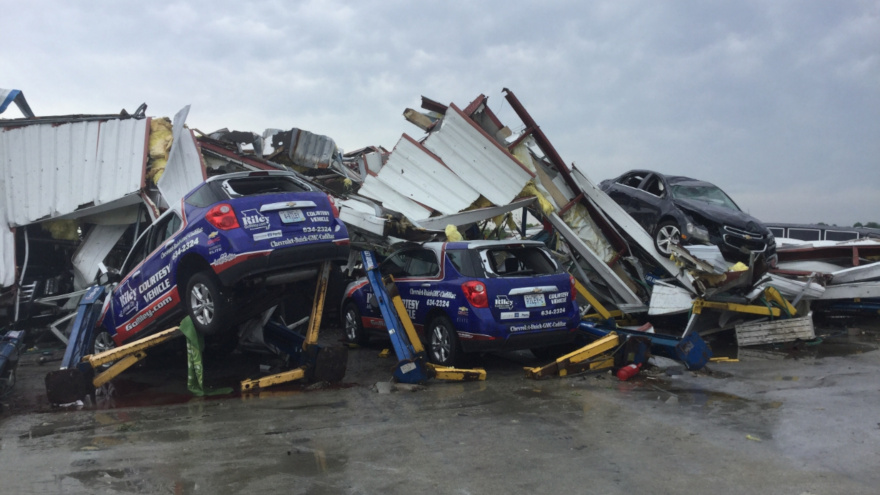
According to the National Weather Service, a tornado struck the capital of Missouri just before midnight on May 22, packing winds approaching 160mph and causing immense destruction in its path that included Riley Chevrolet, a large franchised dealership.
To help the industry respond to disasters like what recently happened in Jefferson City, Mo., CoreLogic announced its launch of Tornado Path Maps. The company claims it has the only solution available on the market that can deliver precise damage exposure data from a tornadic event within minutes — an analysis that can take up to two days to complete using other methods.
CoreLogic said insurers benefit from the ability to anticipate claims volume and adjuster deployment for streamlined claims processing, allowing policyholders to get the support they need faster than ever before.
Unique to CoreLogic, the company explained Tornado Path Maps can offer a data layer updated every 15 minutes following a tornado, displaying area probabilities (from 10% up to 90%) of tornadic damage. In addition to allowing insurance carriers to quickly calculate claims needs, this parcel-level exposure analysis means emergency responders, utility companies, transportation departments and others will be able to quickly determine resource allocation and deployment to begin offering on-the-ground support to the people and properties affected.
“Until now, understanding exposure from tornadoes has been a daunting challenge for most insurers, as typical ground-based observations and reporting are hampered due to infrastructure damage when a tornado moves through an area,” said Curtis McDonald, senior professional product management and meteorologist for CoreLogic Weather Verification Services. “These challenges can create frustrating policyholder experiences.
“Our goal with Tornado Path Map is to enable insurers to efficiently and accurately identify customers under duress immediately following tornadic storms, meaning they’re able to assist with communications and swift response to help their policyholders in need,” McDonald continued.
Tornado Path Maps is based on the proprietary CoreLogic Tornado Verification Model, which combines a novel comprehensive approach to using all available radar data, as well as public and social media reports, backed by the expertise of experienced meteorologists. The end result is the Tornado Verification Model that can provide 250-meter resolution with neighborhood-level detail across most of the United States.
Tornado Path Maps is part of the CoreLogic Severe Convective Storm suite of solutions, which also offers forensics on hail, wind and lightning.
For more information, visit the CoreLogic Tornado Path Maps page.
Celebrating its 50th year in the consumer lending market, Carleton looked to enhance its suite of solutions this week.
Following extensive market feedback and discussions with key partners, Carleton released CarCalcs, a comprehensive and integrated sales tax, registration and dealer fee application programming interface (API) to complement its CarletonCalcs solution.
The company reiterated CarCalcs was designed to be an easy and flexible integration for any platform provider in order to connect and populate dealer administration settings. The application’s ease of use is designed to allow for the seamless onboarding of a dealer and real-time access to registration and dealer fee values. The data returned from the API is delivered in a format easily consumed by the CarletonCalcs payment computation module for the precise calculation of retail sales or leases.
These computations can provide the following:
• Sales tax rates by state, city and county
• Sales tax basis including settings for fees and down payments
• Registration fee based on vehicle information
• Dealer fee default amounts by state, including documentation fees
• Finance company and DMS default computation settings
• Ability to compute payment and deal information in a single call
The CarCalcs sales tax and dealer fee API integrates with the title and registration product from Automotive Titling Corp. (ATC) to generate a comprehensive single data channel delivery service. ATC provides automotive sales tax and registration fees in all 50 states.
“For over two decades, ATC has processed thousands of transactions through DMVs all over the country. This has facilitated our ability to build, catalog and uniquely authenticate the most accurate sales tax and registration fee database in the industry,” ATC president Ken Alley said. “Our authentication process is a full-time focus of our expert team”.
The moves were made in light of the vehicle-buying process shifting to a consumer-driven digital marketplace. As a result, Carleton stressed that dealers and finance companies now need their digital retailing platform to support lending regulations nationwide.
Company leadership insisted the combination of Carleton’s loan and lease payment calculation engine, Carleton’s compliant state-driven dealer fee data base, and ATC’s sales tax and title registration data, has resulted in a comprehensive and accurate payment solution.
“We saw a critical need for additional components to calculate accurate payment computations. This was the impetus for developing CarCalcs. Through our partnership with ATC, we have expanded our calculation offerings to include sales tax and registration fees,” Carleton Matt Ruszkowski president and chief operating officer said.
“We knew we needed a partner with the same level of expertise as our proven calculation services. Partnering with ATC was a logical decision,” Ruszkowski added.
Our series of episodes originating from the Vehicle Finance Conference hosted by the American Financial Services Association continues with a conversation including Craig Stokum, who is director of sales in automotive for ID Analytics.
Nick asked ID Analytics about alternative data and how it can be leveraged by auto finance companies to enhance underwriting, especially with the subprime space.
The full episode can be found below.
Download and subscribe to the Auto Remarketing Podcast on iTunes or on Google Play.
You can also listen to the latest episode in the window below.
Catch the latest episodes on the Auto Remarketing Podcast homepage and on our Soundcloud page.
Please complete our audience survey; we appreciate your feedback.
Ever since some consumer-advocate commentators latched onto one piece of recent auto-finance data, experts from the automotive world replied with context to counter thoughts that thousands soon would be walking because they no longer had a vehicle.
While vehicle affordability and delinquent volume continue to make headlines, new findings from Experian’s Q4 2018 State of the Automotive Finance Market report released on Thursday show these trends may not be as dire as they seem.
In fact, Experian found the percentage of 30-day delinquent contracts improved year-over-year, while the percentage of 60-day delinquencies saw only a minimal uptick over the same time period.
The report shows 30-day delinquencies dropped to 2.32 percent from 2.36 percent a year ago, while 60-day delinquencies increased to 0.78 percent from 0.76 percent the previous year. The percentage of delinquent loans continues to remain stable even as more and more consumers rely on automotive financing.
In Q4 2018, the report indicated 85.1 percent of all new-vehicle purchases were financed compared to 81.4 percent in Q4 2010.
“While delinquencies can be an indicator of automotive finance market health, it’s important to examine these trends within the larger industry context,” said Melinda Zabritski, Experian’s senior director of automotive financial solutions. “With more car shoppers using automotive financing options, it’s natural to see an uptick in the volume of delinquent loans.
“Lenders need to factor in additional historical trends, such as the percentage of subprime loan originations and shifting payment options, to gain a more complete picture and make the right lending decisions,” Zabritski continued.
Experian acknowledged that much of the conversation surrounding delinquency rates is driven by questions of vehicle affordability, specifically the average financed amounts and monthly payments.
Experian reported the average amount financed for a new vehicle was $31,722 (up $623 from the previous year), while the average amount financed for a used vehicle surpassed $20,000 (up $488 from the previous year).
The report also mentioned the average monthly payment for a new vehicle was $545 (up $30 from the previous year) and the average for a used vehicle was $387 (up $16 from the previous year).
Another component of the conversation around vehicle affordability is interest rates — which for new-vehicle financing was 6.13 percent, up from 5.11 percent a year ago. For used-vehicle financing, the average interest rate was 9.59 percent, according to Experian’s information.
“As loan amounts, monthly payments and interest rates continue to rise, there are a number of factors for consumers to consider as they research their car-buying options,” Zabritski said.
“While consumers appear to be doing their due diligence when making borrowing choices that fit their budget, lenders also play a large role,” she continued. “Every consumer deserves access to quality credit, and lenders should leverage all available data to offer the most comprehensive financing options to car shoppers.”
Additional findings for Q4 2018 from Experian included:
• Total outstanding automotive balances in Q4 2018 was $1.178 billion.
• The percentage of outstanding balances held by subprime and deep subprime consumers remained below 20 percent (19.69 percent).
• Loan originations to super prime consumers grew 3.3 percent to 20.54 percent of total originations.
• Leasing grew year-over-year. The percentage of new vehicles that were leased reach 28.76 percent compared to 28.28 percent a year ago.
• Eight of the top 10 new leased models in Q4 2018 were crossover utility vehicles and trucks.
• The gap between the average new and used monthly payments continued to widen, reaching $158.
Experian is hosting a webinar to discuss the entire State of the Automotive Finance Market report. Registration for the event can be completed here.
And ahead of Thursday’s report release, Zabritiski shared her thoughts on the finance space for an episode of the Auto Remarketing Podcast recorded during the Vehicle Finance Conference hosted by the American Financial Services Association in San Francisco this past January.
The episode is available below.
With Cox Automotive experts suspecting that “credit will likely tighten as the appetite for subprime declines,” the company also shared the makes that have the largest penetration of subprime retail installment contracts and vehicle leases so far this year.
Cox Automotive chief economist Jonathan Smoke reviewed the much-publicized data recently released from the Federal Reserve Bank of New York that generated so much attention because it showed more than 7 million contract holders were in delinquency. Smoke shared his assessment first in this Weekly Summary and then expanded in exclusive analysis shared with SubPrime Auto Finance News beneath a title line that read, “Credit will likely tighten as the appetite for subprime declines.”
Smoke continued, “Year-over-year, the number of severe delinquent accounts is up 4.4 percent. Subprime auto loan delinquencies increased much more, as the number of subprime severe delinquent accounts is up 5.9 percent.
“The subprime severe delinquency rate on auto loan accounts was 5.14 percent, which was the highest rate for any December since the Great Recession,” he noted.
“The auto delinquency problem is mainly in subprime as subprime severe delinquencies represent 69 percent of severe delinquencies, yet subprime accounts only represent 20 percent of active auto loan accounts,” Smoke went on to say.
So which brands might be most connected to those subprime contracts that could be in peril? According to data fueled by Dealertrack, here are the badges with the leading amounts of subprime market penetration:
1. Mitsubishi
2. Dodge
3. Fiat
4. Chevrolet
5. Buick
6. Toyota
7. Chrysler
8. Honda
9. RAM
10. BMW
Whether it’s during company conference calls or coffee-shop chatter, many individuals with an interest in auto financing are keeping a close watch on this tax season, especially in light of the longest government shutdown already unfolding to begin 2019 and elected lawmakers continuing to squabble to keep agencies like the Internal Revenue Service fully functioning.
Credit Acceptance senior vice president and treasurer Doug Busk gave a frank answer even before the latest IRS data available showed how much softer this tax season already is at least in the opening stages.
Busk began his reply to an investment analyst’s question during the company’s latest conference call on Jan. 31 by saying, “I don’t think we really know.
“There’s a lot that has been written about potential delays due to the government shutdown. There’s been a lot written relative to the size of refunds versus what consumers have historically received. We don’t know what’s going to transpire so we’ll deal with it when it comes,” Busk continued.
According to the latest statistical update posted by the IRS as of Feb. 1, the tax collector has processed 13.3 million individual tax returns. That’s down by 25.8 percent year-over-year.
And as of that update, the IRS has pushed out $8.5 billion in refunds; a figure 30.3 percent lower year-over-year.
Furthermore, the IRS said the average refund for filers so far this tax season dropped below $2,000, coming 8.8 percent lower than the same juncture a year ago at $1,901.
Perhaps, an element skewing the data a bit is the fact that by law, refunds cannot be issued before Feb. 15 for tax returns that claim the Earned Income Tax Credit or the Additional Child Tax Credit. Officials said this stipulation applies to the entire refund — even the portion not associated with the EITC and ACTC.
The stage already was set for a complicated tax season long before uncertainty over whether or not the federal government will be funded and fully open for business after the stopgap action taken by President Trump and Congress expires Friday. Cox Automotive research manager Zo Rahim explained the situation after a press conference at NADA Show 2019 in San Francisco.
“We estimated that the tax withholding tables were adjusted aggressively and withholdings have adjusted by a larger percentage than the tax rate change implied. There is a fraction of the population that they could see an average refund smaller than they received previously. If they thought they were going to get the same level, they might not this year,” Rahim said.
“Consumers might have to owe more than they previously had. If you’re thinking, ‘I might get a refund,’ and it’s smaller, they might change your consumption pattern. And if you owe, and you don’t have money saved up because you thought you were getting a refund, that could have an impact on consumption,” he continued.
“We want to stress that not everyone is going to have this impact, because remember there are 100 million plus tax filers in the U.S. But even, if it’s 1 or 2 million, if that happens to them, it could have trickle impact,” Rahim went on to say.
If consumers have less money to put toward a down payment or perhaps get an account out of delinquency, those circumstances could trigger even more tightening of underwriting; a trend Rahim and the Cox Automotive team were already expecting.
“In 2015, we saw pretty loose credit, and then we saw some tightening in ’16, ’17 and the first part of ’18. But then in the second half of 2018, we saw, specifically in subprime, lenders get more aggressive,” Rahim said.
“What this means is the interest rate they were charging versus the Fed funds rate, that spread decreased, meaning they took money off the table to chase that subprime borrower and get them into a vehicle,” he continued. “We know that’s not sustainable, because you can’t sustain growth on subprime. We made that mistake once. I don’t lenders are going to make that mistake again.
Rahim went on to say, “2018 was a very weird year. I think lenders made one last effort to push as many sales as they could because the retail market is declining.”
While tax season might be full of uncertainty, the situation might be part of the reason why the Federal Reserve is not as active in 2019 as it was a year ago. Policymakers already passed on their first chance of the year to raise interest rates after increasing them four times in 2018.
The Fed meets again on March 19 and 20.
Coming into this year, we thought there maybe three hikes in 2019 after there were four in 2018. But recent stock market volatility plus some concerns about China and Europe and what oil is doing, it looks more like we’re looking more like one or two rate hikes,” Rahim said during the NADA convention in late January.
“We don’t think there is going to be a rate cut environment. Some were talking that the volatility in December means we’re going to have cuts in 2019. But if you look at the stock market now, things have rebounded. They’re starting to look better. There isn’t much that suggests that the Fed is going to be aggressively like they were in 2018. Four hikes, I think is off the table,” he went on to say.
ID Analytics recently rolled out a tool specifically tailored for finance companies looking to buy a little deeper while still having solid footing with its underwriting.
The Symantec company and consumer risk management provider recently announced Credit Optics Full Spectrum Auto, a new version of its credit score designed specifically to address the needs of the automotive financing industry by providing companies with insights that can help them extend even more compelling credit offers to applicants across the credit spectrum.
The company explained Credit Optics Full Spectrum Auto can distinguish itself from more limited alternative credit solutions by delivering a more complete understanding of credit worthiness on applicants from no-hits to thick-files, subprime to super-prime, helping finance companies to extend more competitive offers and ultimately book more retail installment contracts.
To accomplish this goal, ID Analytics said that it leverages a powerful and uncorrelated assessment of consumer credit risk using event and performance data found in ID Analytics’ ID Network, one of the nation’s largest networks of cross-industry consumer behavioral data. The ID Network can provide deeper insights from data not typically analyzed in traditional credit scores, including transaction data from wireless, cable and utility accounts; online marketplace, payday and subprime lending and other credit-relevant alternative data sources.
To illustrate how a score that looks at both traditional and alternative credit data can reveal a substantial difference in risk within a bureau score band, ID Analytics analyzed a group of prime auto finance applicants with traditional credit scores of 750 and higher. When these applicants were scored using Credit Optics Full Spectrum Auto, the company discovered a significant separation of risk among what are considered excellent credit applicants — with the riskiest 20 percent being more than nine times higher than the lowest risk consumers within the super-prime score band (applicants with 750 scores).
In a rigorous regulatory environment, ID Analytics said credit risk solutions often struggle to meet the evolving demands of financial regulators without compromising performance. ID Analytics shared that it has spent years innovating new techniques designed to help lenders meet their regulatory requirements while minimizing trade-offs on score performance.
“In an increasingly competitive market, Credit Optics Full Spectrum Auto helps lenders gain the insights needed to stay ahead of the competition,” said Ajay Nigam, chief executive officer of ID Analytics.
“Conventional credit scores typically provide only a partial view of consumer behavior and its associated risk,” Nigam continued. “By combining this information with alternative data, automotive lenders can enhance their underwriting strategies with the goals of extending more competitive loan terms to consumers across the credit spectrum, and increasing book-to-look ratios while minimizing their exposure to risk.”
ID Analytics’ Credit Optics Full Spectrum Auto is available today. Interested finance companies can send a message to [email protected] or go to www.idanalytics.com/industries/automotive-lending.
MaximTrak Technologies announced on Tuesday a preferred partnership with Allstate Dealer Services to provide digital F&I solutions for agents and their dealer customers retailing Allstate’s aftermarket products.
MaximTrak highlighted that its platform seamlessly can integrate into auto dealers’ business processes, providing solutions that can help make Allstate Dealer Services’ agents and dealers more successful and profitable.
These solutions include MaximTrak’s FLITE platform, an interactive digital showroom experience, and MaximTrak’s F&I menu system, known as MenuTrak. The platform can help dealers deliver seamless, efficient and consistent aftermarket product presentations that save time, promote trust and engage customers.
Allstate Dealer Services national sales director Thomas Hackett said, “MaximTrak’s technology makes the F&I experience more transparent and helps consumers understand the products and their benefits.
“Allstate’s goal is to ensure consumers have the best vehicle protection products, and our partnership with MaximTrak is a great step towards this goal,” Hackett continued.
As a RouteOne company, MaximTrak also can bring extensive additional sales leverage to Allstate Dealer Services’ customers, including eContracting. RouteOne has booked more than 11 million eContracts to date and has more than 60 finance sources in its rapidly growing eContracting customer base.
Other MaximTrak digital solutions available through this preferred partnership include:
— MenuTrak: Interactive digital menus, sales aids, videos and compliance management.
— ServiceTrak: Menu sales, e-rating and electronic contracting tools for finance and service lane.
— Dashboards: Customizable reporting tool.
—FLITE: Interactive touch technology, smart survey, decisioning engine, risk profile and intelligent product recommendations solution.
“Since we launched FLITE, system usage has rapidly grown along with meaningful results for dealers and their customers,” said Jim Maxim Jr., president of MaximTrak.
“Dealers who retail Allstate Dealer Services’ products will now benefit from the power of FLITE and the MaximTrak global F&I platform to drive more profit from their business, while giving their customers a more engaging and transparent experience,” Maxim went on to say.
Dealership organizations in two states think services from Dealertrack can help their members streamline operations that happen behind the scenes of vehicle deliveries.
The Louisiana Automobile Dealers Association (LADA) recently announced its exclusive endorsement of Dealertrack Registration and Title Solutions to equip Louisiana dealers with the tools they need to deliver a more accurate and intuitive titling process.
And the Wisconsin Automobile & Truck Dealers Association (WATDA) has given a preferred endorsement to Dealertrack Registration and Title Solutions in an effort to bring a modernized and efficient titling process to Wisconsin dealers.
Building on a 16-year relationship with LADA, officials highlighted this exclusive endorsement with Dealertrack Registration and Title Solutions strengthens and expands its footprint with dealers in Louisiana, where it already connects and supports the majority of the franchised dealer market.
“In our mission to promote the automotive trade across the state, LADA is pleased to give Dealertrack our exclusive endorsement of their registration and titling services which signals to our dealers how great their products and service really are,” LADA president Will Green said.
“Utilizing a more streamlined solution will significantly improve the accuracy and speed of motor vehicle purchases for both dealerships and customers, as well as ensure greater compliance,” Green continued.
The company explained Dealertrack’s registration and title management tools can empower Louisiana dealers to transform a complex and time-consuming transaction into a seamless experience for consumers. The solution can help create a fast, accurate and compliant process, which minimizes repetitive data entry, offers automated data validation and streamlines payments and accounting.
Furthermore, Dealertrack Registration and Title Solutions can allow dealers to track the progress of each transaction and verify the collection of fees, taxes and trade information.
Working in tandem, LADA and Dealertrack will continue to support dealerships across the state, capitalizing on Dealertrack’s expertise to provide insights into new market trends, industry standards and communicate any changes in DMV state regulation.
In addition, Dealertrack offers dealers registration and title education, helping to ensure full compliance with the Louisiana DMV, as well as facilitating proper disclosures, the collection of state fees and taxes, and the correct processing of all required documentation.
Additionally, with more and more dealers looking to move vehicles quickly, ensure high CSI ratings, and increase customer satisfaction, Dealertrack’s one of a kind tools also help Louisiana dealers expedite the sale of vehicles they take in on trade, reducing the payoff-title release process to as little as 4-6 days, while ensuring title accuracy, along with selling of vehicles to cross boarder state customers, whether these customers are military personnel, snowbird customers or simply traveling to a dealer in Louisiana to get the vehicle of their choice with the inventory on hand.
Dealertrack’s commitment to support LADA helps ensure Louisiana dealers have the tools, products, training and services required to maintain an efficient, hassle-free title and registration process — removing the complexity for all parties involved.
“Registration and titling are the last step in the car buying process and it is critical for that process to run smoothly so that customers have a positive last impression of their interaction with the dealership. Dealertrack strives to create the most efficient registration and titling process in Louisiana and 14 other states so that this final step is simple and seamless for dealers and their customers,” said Kaitlin Gavin, vice president and general manager of Dealertrack Registration and Title Solutions.
“Receiving this exclusive endorsement solidifies our ongoing relationship with the LADA to provide a fast, easy-to-use and comprehensive solution which significantly simplifies the titling and registration process,” Gavin continued.
Meanwhile, Gavin also appreciated the decision made in Wisconsin.
She emphasized this preferred endorsement will enable Dealertrack Registration and Title Solutions to further its footing in Wisconsin as it partners with WATDA to help dealers build confidence in the accuracy and efficiency of taking their registration and titling processes digital.
“Wisconsin auto and truck dealers wanted a registration and title partner with deep expertise to give them a simplified solution, superior service and confidence,” said Bill Sepic, president of WATDA. “Dealertrack fulfills on that ask.”
Dealertrack stressed this endorsement solidifies the company’s commitment to providing industry-leading solutions that ease the titling and registration process. By expanding digital registration and titling in the State, Dealertrack and WATDA will work in tandem to ensure long-term sustainability for dealerships as they look to the future of the industry.
With expertise, user-inspired technology, and superior service and implementation support, Dealertrack Registration and Title Solutions insisted it is uniquely positioned to help Wisconsin dealers turn complex and time-consuming registration and title work into a simple, easy and accurate process while delivering the fast experience that today’s consumer demands.
“Faced with ongoing margin compression and changing customer expectations, dealers are working hard to find new ways to create process efficiencies and protect their bottom line,” Gavin said.
“Receiving this preferred endorsement from WATDA is a momentous honor that recognizes how our best-in-class offering can give Wisconsin dealers that streamlined solution they need to deliver a more simplified process that will help them drive results and meet customer expectations,” Gavin went on to say.