
‘Resilient’ wholesale vehicle market slows in April, but EVs gain momentum
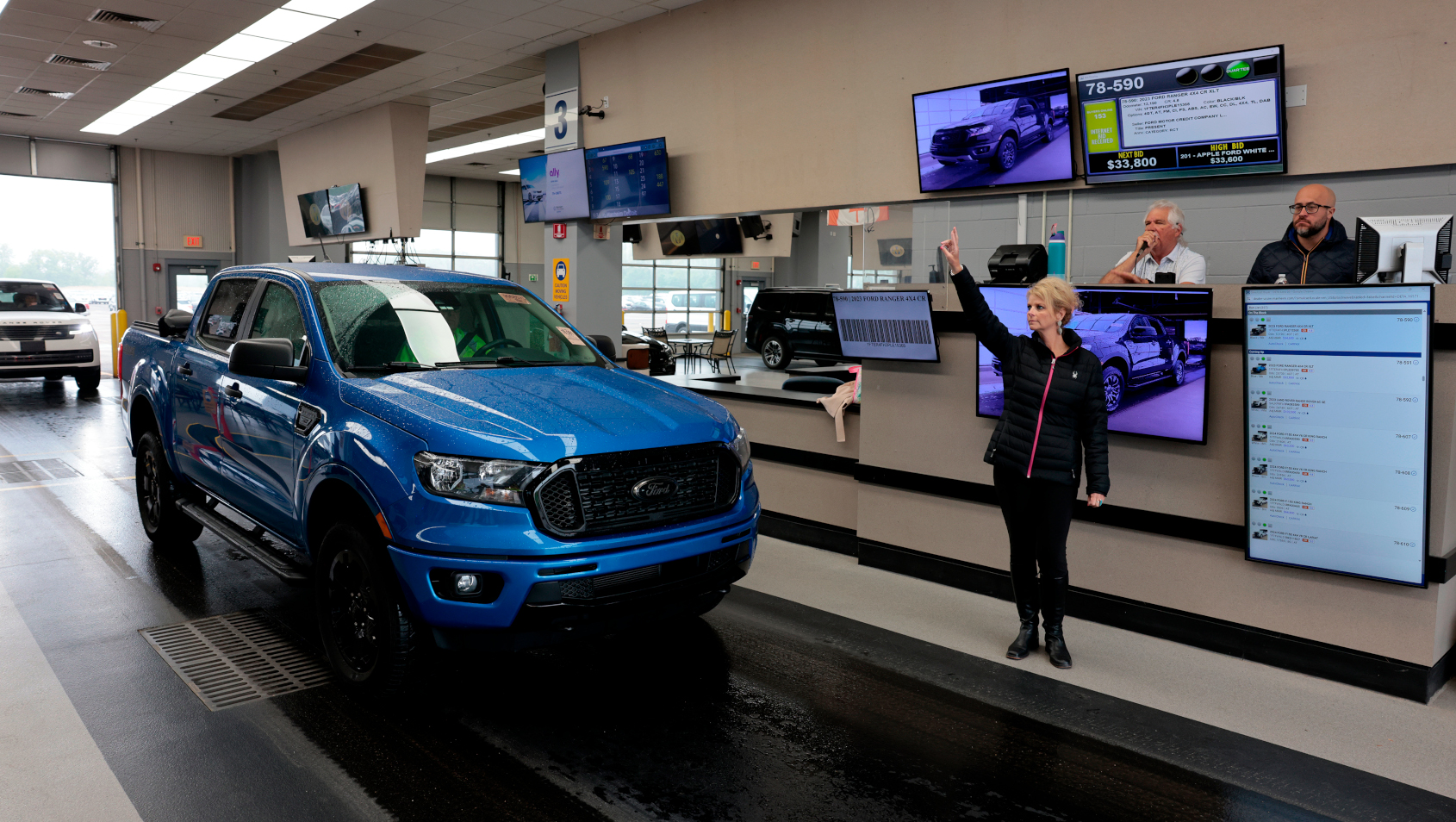
Manheim Detroit location in Carleton, Michigan on May 21, 2025. Photo by Jeff Kowalsky. Image courtesy of Cox Automotive.
By subscribing, you agree to receive communications from Auto Remarketing and our partners in accordance with our Privacy Policy. We may share your information with select partners and sponsors who may contact you about their products and services. You may unsubscribe at any time.
After a strong start to the year, wholesale vehicle prices remained “resilient” in April, but momentum from tax season has slowed.
That, coupled with other market headwinds like the conflict in the Middle East and affordability, dimmed used-car prices slightly last month, industry observers report.
For instance, Black Book’s Used Vehicle Retention Index came in at 146.6 for April, down 0.7% month-over-month and off 1.8% year-over-year.
“April’s retention results reflect a market that remained seasonally resilient but became more selective as the month progressed,” said Laura Wehunt, Black Book’s vice president of data & analytics, in an analysis accompanying the index.
“Early spring demand and tax-season activity supported values, but that momentum softened by month-end as buyers placed greater emphasis on vehicle quality, configuration, and retail readiness,” Wehunt said. “Trucks and SUVs continued to provide relative stability, while cars faced more pressure, resulting in a modest month-over-month decline in the Black Book Used Vehicle Retention Index.”
Over at Cox Automotive, its Manheim Used Vehicle Value Index climbed 1.8% year-over-year (when adjusted for mix, mileage and seasonality) to 211.9, which is a 1.6% decrease from March.
Subscribe to Auto Remarketing to stay informed and stay ahead.
By subscribing, you agree to receive communications from Auto Remarketing and our partners in accordance with our Privacy Policy. We may share your information with select partners and sponsors who may contact you about their products and services. You may unsubscribe at any time.
Unadjusted, the Manheim index was up 2.8% year-over-year and up 0.4% month-over-month.
“A strong tax refund season drove consumers toward used vehicles early this year, and that kept demand and values high at Manheim through the spring market. The conflict in the Middle East has now been ongoing for two months, and while energy prices backed off a bit in mid-April, they have reaccelerated to the upside: the price of gas just hit a high for the year and is up 47% since the end of February,” Cox Automotive chief economist Jeremy Robb said in an analysis.
“Those higher prices are soaking up a lot of the extra money in consumers’ pockets, and currently there’s no end in sight,” Robb said.
“The Manheim Index fell in April and non-seasonally adjusted values weren’t quite as strong as normal for this time of year. But that doesn’t mean prices are weak — current values are declining at normal rates for this time of year and remain elevated against long-term averages for the end of April.”
Electric vehicles are one of the market standouts, though.
In April, EV wholesale prices climbed 7.2% year-over-year, while non-EVs were up 1.1%, according to data from the Manheim index.
That could change with an influx of EVs coming off lease later this year, but in the meantime, demand and prices are strong for this segment.
“Buying interest in electric vehicles (EVs) is also on the rise, pushing wholesale EV prices to outperform non-EVs for both the index and non-seasonally adjusted values as well,” Robb said.
“Affordability remains front and center, and that’s driving some increased demand for older vehicles at Manheim as well as changing the calculus for consumers shopping for EVs,” he said.
“As we get into the summer months, we will continue to see off-lease EV maturities multiply at Manheim, and that may put downward pressure on valuations. But right now, they are strong, and shoppers are considering these vehicles as a viable alternative.”