
Lane watch: 3 reasons why $4.50-per-gallon gas leaving much different impact now versus 2008
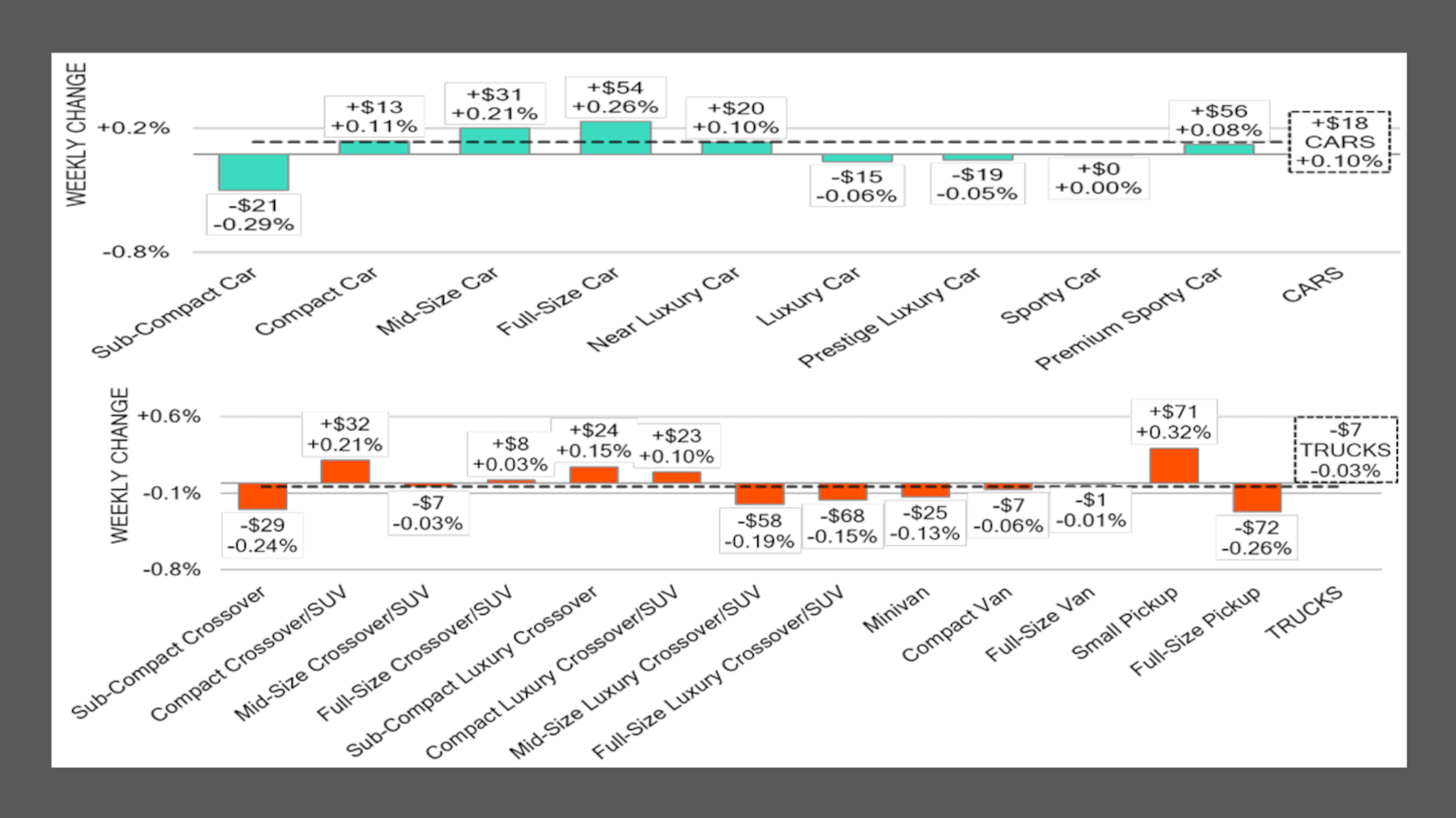
Charts courtesy of Black Book.
By subscribing, you agree to receive communications from Auto Remarketing and our partners in accordance with our Privacy Policy. We may share your information with select partners and sponsors who may contact you about their products and services. You may unsubscribe at any time.
Black Book offered two separate looks at the wholesale market this week.
The first observation was its weekly installment of Market Insights, which showed wholesale values remained unchanged while auction conversion rates edged higher to 64%.
The other assessment explained three reasons why the ongoing surge of gas prices above $4.50 per gallon is creating a much different situation for the used-car industry than what it encountered in 2008.
Let’s continue with what Black Book saw in the auction lanes during the first full week of May.
“Wholesale market conditions showed signs of softening last week as pricing gains became less consistent despite steady buyer activity and improving auction conversion rates, which rose to 64%,” analysts said through Market Insights.
“Clean, well-equipped vehicles continued to outperform, while average-condition inventory faced more selective bidding. Car values edged higher, led by full-size cars, while weakness in full-size pickups weighed on the truck segment overall,” Black Book continued in the report.
Subscribe to Auto Remarketing to stay informed and stay ahead.
By subscribing, you agree to receive communications from Auto Remarketing and our partners in accordance with our Privacy Policy. We may share your information with select partners and sponsors who may contact you about their products and services. You may unsubscribe at any time.
On a volume-weighted basis, Black Book reported overall car values increased 0.10% last week. For reference, car prices decreased 0.11% during the previous week.
After 14 consecutive weeks of value gains, analysts noticed prices for cars less than 2 years old declined last week, “signaling that the spring market may be nearing its end. By comparison, the spring market rally in 2025 lasted 11 weeks.
“The premium sporty car is still holding onto the spring strength with another increase in values last week,” Black Book added about the segment that generated an 0.08% price uptick, “consistent with the average weekly change over the last 13 weeks.”
Black Book then offered these two observations from the truck department.
“Despite the continued elevated fuel prices, the full-size crossover/SUV segment continued to gain value last week, extending its streak to 11 consecutive weeks, though the pace of appreciation has slowed. In contrast, the luxury variant declined for a second straight week,” analysts said.
Black Book also said prices for small pickups rose another 0.32% last week, as the segment has not generated a value increase during 13 of the past 14 weeks.
What $4.50 gas is doing to the used-car market
Black Book acknowledged it’s the first time in three years since it’s been this expensive to fill a vehicle’s fuel tank.
Veteran auction and dealership managers might remember when fuel prices surged in 2008 ahead of the Great Recession. Black Book compiled another online analysis this week to calm those individuals who might be thinking car-business history is about to repeat itself.
Analysts backed their thinking with these three reasons.
—Negative equity is slowing the trade cycle
“In past cycles, rising fuel costs pushed consumers to quickly trade out of less efficient vehicles,” Black Book said. “Today, many consumers are carrying significant negative equity after years of higher transaction prices, extended loan terms, and elevated interest rates.
“Even when fuel costs rise, trading into a different vehicle often isn’t financially practical,” analysts continued. “Instead of rapid demand shifts, many consumers are simply holding vehicles longer.”
—Used supply remains constrained
“Unlike 2008, today’s used market — especially late-model inventory — remains relatively tight,” Black Book said. “That constrained supply environment continues to support used vehicle values across many segments, even as certain categories experience softness.
“Rather than a broad market reset, we’re seeing more selective pressure,” analysts noted.
—Consumer impact is far more fragmented
“Some households are extremely payment-sensitive and heavily impacted by higher fuel costs. Others can absorb elevated gas prices without materially changing buying behavior,” Black Book said. “That creates a more uneven market response than what the industry experienced during the broad financial stress of 2008.”
Instead of consumers sprinting to dealerships to dump full-size SUVs for gas-sipping sedans like they did 16 years ago, Black Book explained the car business is being influenced more by affordability considerations and longer ownership cycles.
“The current environment is tighter, more fragmented, and more financially constrained than many expected — and market pressure is showing up differently as a result,” analysts said.