COMMENTARY: The spring bounce is strong — how inventory-first dealers will win
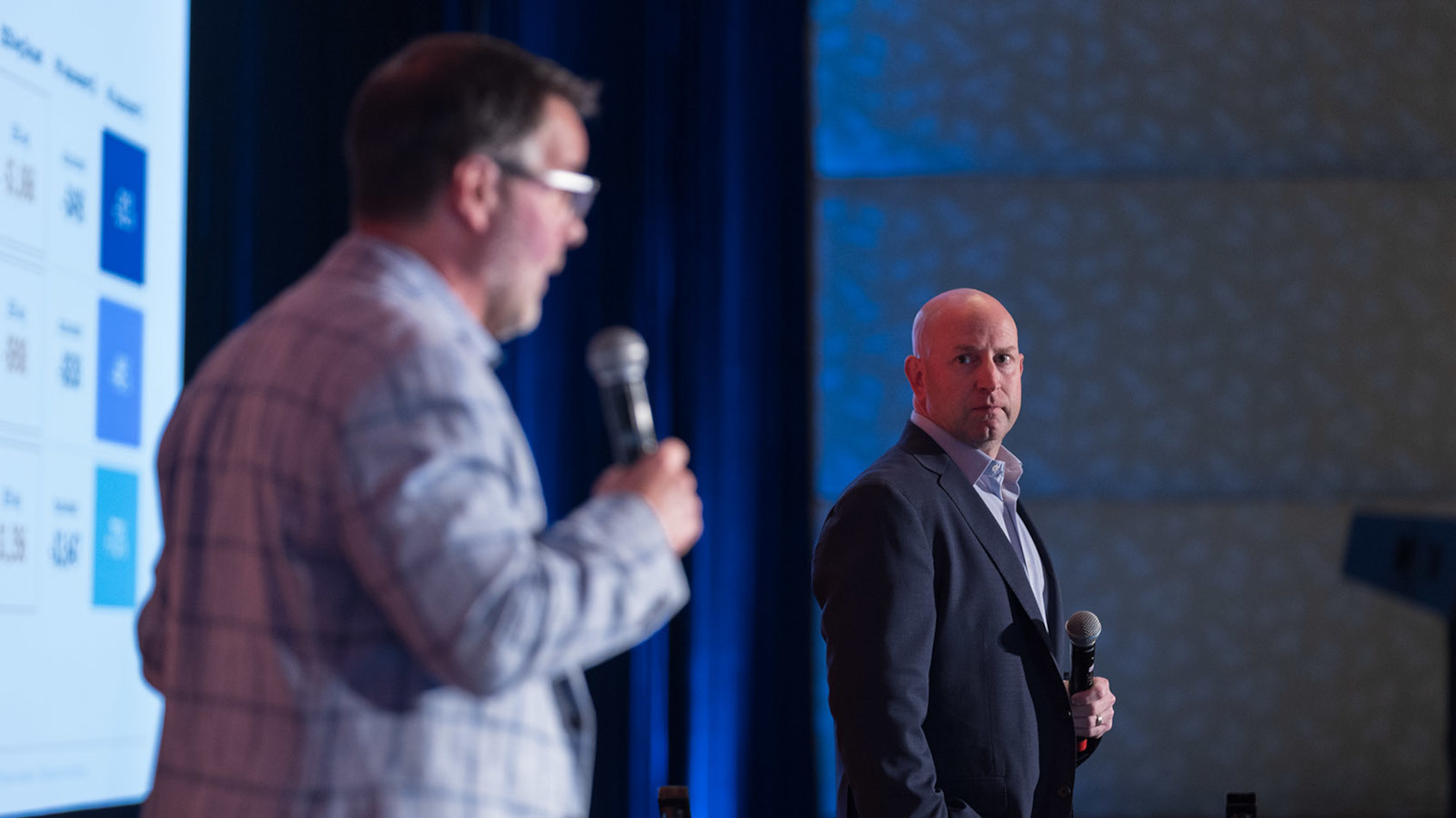
Peter Grupposo (right) of Cox Automotive during a presentation at the Used Car Industry Summit last week in Miami. Photo by Jonathan Fredin.
By subscribing, you agree to receive communications from Auto Remarketing and our partners in accordance with our Privacy Policy. We may share your information with select partners and sponsors who may contact you about their products and services. You may unsubscribe at any time.
The familiar spring bounce is back in the automotive market — and this year, it started early and is still going strong, pushing vehicle values higher. Dealers bought aggressively at the start of the year, in part fueled by expectations of higher tax refunds, and that momentum is carrying into what is typically the strongest stretch of the year for used-vehicle sales. With just over half of expected tax returns filed so far and average refunds up 11% year over year, there’s still more upside ahead.
That optimism is clear in the latest Cox Automotive Dealer Sentiment Index, where dealers report growing confidence in demand and consumer sentiment in the months ahead.
Even with the conflict in the Middle East and rising gas prices back in the headlines, dealer behavior hasn’t shifted much. Inventory and days’ supply at Manheim are tightening, as is typical for this time of year. With off-lease supply building into summer and additional consumer stimulus ahead, the wholesale market could continue to show strength through April.
All of that strength is intensifying competition for the right vehicles — and the cost of getting it wrong could add up fast. That’s why in 2026, the dealers who win won’t chase everything. They’ll lead with an inventory‑first strategy.
Inventory first means buying with a plan
An inventory first strategy is not about buying more cars. It means buying the right cars, at the right number, with a clear plan for how they will move. In a tighter supply market with higher holding costs, the biggest risk is buying the wrong vehicle and paying to sit on it.
What dealers can put into action now
As tax refunds begin to hit, here are three inventory-first moves dealers can put to work right away:
Subscribe to Auto Remarketing to stay informed and stay ahead.
By subscribing, you agree to receive communications from Auto Remarketing and our partners in accordance with our Privacy Policy. We may share your information with select partners and sponsors who may contact you about their products and services. You may unsubscribe at any time.
- Set your spring buy list before you start acquiring
Before the first offer is written, get clear on what winning inventory looks like in your market. Identify the segments you expect to move fastest based on past spring performance and pressure‑test those assumptions against current shopper behavior and pricing. Buying with intention prevents overbuying when the market starts to feel busy.
- Decide the exit before you set the number
Every acquisition should have an exit plan. Before finalizing a purchase, ask one question: If this vehicle does not sell quickly, how will I move it? When the exit is defined before you buy, pricing becomes more disciplined and slow inventory is less likely to erode margin.
- Source across channels, but anchor your wholesale plan
Inventory-first dealers do not rely on one source. They work across wholesale, service drive, trades and consumer acquisition to keep inventory flowing and aligned with demand. Wholesale can provide an anchor for that strategy by serving as a reference point for value, liquidity and exit timing as conditions change.
The takeaway
The spring bounce is real, but optimism alone does not protect margin. Dealers who succeed in 2026 will be the ones who plan every buy, build an exit into every decision and keep inventory moving with intention. Most importantly, inventory first only works when it becomes habit. This should go beyond a spring checklist and turn into a discipline dealers use every time they acquire inventory.
Pete Grupposo serves as senior vice president of sales for Cox Automotive Inc., where he oversees the Commercial Sales, Dealer Sales, and Market Insights teams for Manheim and NextGear Capital. He brings 18 years of experience and leadership in automotive, working with dealers and large commercial clients.