Q&A with UCW Hall of Famer Grace Huang of Cox Automotive

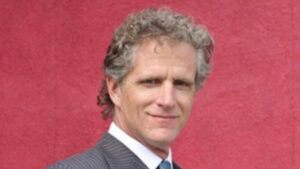
Grace Huang, who is president of inventory solutions at Cox Automotive, responds to a question from Cherokee Media Group’s Bill Zadeits during their conversation at Used Car Week 2024 in Scottsdale, Ariz. Photo by Jonathan Fredin.
By subscribing, you agree to receive communications from Auto Remarketing and our partners in accordance with our Privacy Policy. We may share your information with select partners and sponsors who may contact you about their products and services. You may unsubscribe at any time.
We begin our Q&A series featuring the 2026 Used Car Week Hall of Fame honorees with Grace Huang, president of Cox Automotive Inventory Solutions, who joined Cherokee Media Group’s Joe Overby for a conversation about her career journey, the value of in-person events, travel tips and more. Below is an excerpt from that conversation.
Huang and her fellow UCW Hall of Fame inductees will be recognized during a luncheon on Nov. 19 at Used Car Week in San Diego and in the December issue of Auto Remarketing. Listen to the full podcast here: Used Car Week Hall of Fame: Grace Huang of Cox Automotive | Auto Remarketing
What do you value about in-person events and what makes them important to you?
Even with all the changes (in the auto auciton industry), it’s going to come down to trust. And that trust in our industry has been built on relationships.
And we all learned through COVID that while you can conduct a lot of business remote and through (Microsoft) Teams and so forth, it isn’t until you really sit down, break some bread, have a conversation, whether that’s in a hallway or at the water cooler or the conference room, before you really develop that trust … And it’s not just our industry. I think all businesses have so much facing us in terms of the technological changes and the speed. And so we really have to develop the trust among our industry (peers) because we’re going to have to work through it together. And, of course, these conferences are the best way …
I try to explain this to other people outside of our industry. Yes, we compete every day for the volumes. We compete. We have very much the same buyers, the same sellers. But when we come to a conference, when we come to an industry events, we’re really all here to better the industry.
Subscribe to Auto Remarketing to stay informed and stay ahead.
By subscribing, you agree to receive communications from Auto Remarketing and our partners in accordance with our Privacy Policy. We may share your information with select partners and sponsors who may contact you about their products and services. You may unsubscribe at any time.
Because we want to be able to help each of us, ourselves, right, continue to move forward. Because we also know there could be external forces that completely disrupt us. So let’s share best practices.
Let’s talk about some of these things … We can compete outside the room, but there’s a lot of things we can also cooperate on.”
What do you think has given you that ability to adapt to wearing multiple hats (as a leader)?
I actually think that is the most fun part of my job … I do get to think about things at a very high level, sometimes 50,000 feet, sometimes 30,000 feet. But at the same time, I run core operations and it’s the daily moments sometimes that matter.
And so you have to know this business from the ground up as well. Now, I don’t know about every single thing in every single process. I learned a long time ago from a very wise mentor that as you get more senior, you have to manage by exception. And honestly, when you have an amazing team, last thing they want is a micromanager. So it’s being able to understand the business, being able to, most importantly, empathize and also have the empathy because we do employ a lot of different types of people across our industry. And so it’s having all those skills. But that’s what makes this job fun, really …
I’ve been in my role for 10 years now. And early on, I had to really learn the business because I came in not from the auction itself. I came in more from a corporate perspective.
So I actually had to go backwards and really learn the business from ground up. And the first couple of years, it was really spent dedicated to doing that. And then, of course, COVID happened and we had to live through all that … now I have the chance to really step back with an amazing team, amazing leadership, amazing GMs and RVPs that I get a chance to really think about the future. And right now, that’s probably one of the most important things that I can do because the disruption is so fast. The competition is coming so fast.
And we’ve got to keep moving forward. And so we have to have a North Star to move forward towards. We don’t know where exactly where we might land, but you have to have a destination out there so that we can move the organization up in one coherent and one in lockstep.”
Coming from outside of automotive to an automotive role at Cox and then going from a more corporate role to running operations. You mentioned you kind of had to take a step backwards and learn. What were some of the things you did to train yourself and learn and be able to adjust to those new roles?
I tell people now, whatever role you get, give yourself a year. It takes a year to learn a new role. And we were just talking about that with some of our newer GMs.
We have amazing, amazing operators that grew up in the Manheim system. And they started writing CRs or working in maintenance or whatever it was and worked their way up. And they know every single job at every single client. So the first year, I just spent a lot of time, and I still do actually today, just visiting all of our locations, spending time with people, trying to do each one of their jobs.
I’m one of those folks that I have to actually do it to really understand it. So being able to do those jobs — to be put on the phone for an arbitration, that was nerve wracking. You need to go on the arbitration desk and get it.
I’m like, “You realize I would just say yes to all of these.” Or they’re putting me on the block, you know, so that I would rep the cars and actually say sold. That’s also nerve-wracking, because I have a tendency to sell everything.
So actually doing some of those jobs (and) just spending a lot of time talking to a lot of different people. And spending a lot of time with those who have spent a lot of time in the operations. Because I came in from more of a strategy, corporate product background.
But it was also Janet Barnard, the previous president of Manheim that hired me. She was looking for something very specific, because we were undergoing a lot of changes within Manheim at the time. And it was the beginning of gavel to gate, where we did all of our operating systems.
We had just come out of the Great Recession. So there was a lot of things where in the past, we were really lucky, right? Because we had so much tailwinds in the entire industry, where if you did the right thing operationally, you would grow. And then after post-Great Recession, it became clear that you also have to be much more thoughtful and strategic and so forth.
Because those tailwinds that had propelled us for so many decades weren’t going to necessarily look the same or be the same going forward. And that’s really when I came in. And Janet wanted to marry up kind of that strategic view, which is my background, with all those who had those decades and tenures in operations. So I would say hopefully that’s worked out pretty well. I mean, I’m 10 years in the job, so I think it’s OK.