Jenell Ross’s customer service strategy may be simple — provide quality service at a fair price within a reasonable timeframe — but the president of Bob Ross Auto Group and a member of Auto Remarketing’s 2013 Women In Remarketing class says this strategy never fails to create repeat business.
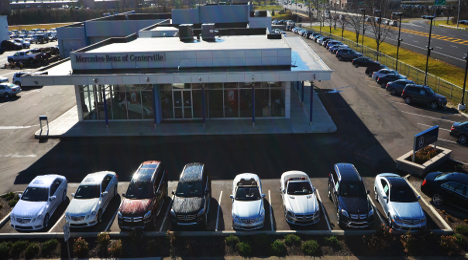
The dealership group is situated on more than nine acres of land in the Miami Valley Region in Ohio and encompasses three buildings, which Ross points out have undergone many changes over the years to evolve with the times, changing hands within the family.
A Legacy Passed Down
For 40 years, the Bob Ross Auto Group has been one of the leading automotive businesses in the city of Centerville, Ohio, and the Miami Valley Region.
Under Ross’ leadership, this year the dealer group celebrates 40 years as a Buick dealership, 35 years as a Mercedes-Benz dealership, 32 years as a GMC dealership and two years as a Fiat dealership.
Ross took on the role of president of Bob Ross Automotive Group in 2010 after her mother, Norma Ross, passed away, becoming the only second-generation African-American female automobile dealer.
Ross also touts the distinction of operating the only Mercedes-Benz, Buick-GMC and Fiat dealerships owned by an African-American woman.
Just last year, Ross served as the second-ever female chair of the American International Auto Dealers Association.
Fostering Repeat Customers
Ross explained that it takes more than a legacy to create repeat customers — it takes fostering loyalty and staying in touch with customers to ensure they keep coming in.
Ross says repeat business is the most important used-vehicle sourcing avenue available to the dealership group.
When asked about the best outlet for quality used vehicles, Ross says, “Trades from customers are the best source” — especially trade-ins that have been maintained at the dealership group’s own service departments, she added.
“Trades are a very valuable part of our business. We have programs and procedures I place to stay connected to these customers, whether it is sales or service,” Ross explained.
And the company has strategies in place to ensure it doesn’t lose touch with loyal customers.
To maintain relationships with customers, Ross said the staff uses direct mail, email, and phone calls.
“An open line of communication is important in maintaining repeat business,” she added.
The service department also has programs in place internally and with the manufacturer to “constantly stay in touch with our customers to maintain customer loyalty and dealership loyalty,” Ross shared.
The strategy seems to be working, as the company’s repeat business for sales average over 40 percent for new vehicles and 25 percent in pre-owned on a monthly basis — statistics which Ross pointed out are well above the national average.
These trade-ins also serve as great inventory for the dealership group’s certified pre-owned departments.
Bob Ross Auto Group participates in manufacturer certified pre-owned programs, and the dealerships actively advertise their CPO offerings and the benefits of owning a CPO vehicle.
“Our staff is trained to convey these benefits to the customer, first the multi-step inspection, Carfax report, repairs and the repair orders, and any other document relative to the reconditioning of the vehicle,” said Ross. “We provide these documents for customers to review, and it is required so that we can extend the warranty of that vehicle.”
The company also employs a few other non-traditional avenues for sourcing pre-owned and CPO vehicles, which include online manufacturer auctions.
Ross also pointed out the dealer group sends out mailers to select registrations stating interest in a person’s vehicle. The stores also look at local classified ads from private sellers, as well.
Editor's Note: This article can also be found in the print and digital editions of the April 15 Auto Remarketing magazine, which honors our 2014 Women in Remarketing.
More than a third of used-car buyers said in a recent survey by DMEautomotive that they visited just one dealership before purchasing their respective cars.
Meanwhile, 20 percent of used buyers stopped by two stores, 19 percent visited three and 5 percent didn’t visit any store, according to the study results released Tuesday. Seven percent went to four stores, 4 percent visited five and 8 percent stopped in six or more dealerships.
Put another way, 62 percent of used buyers visited two or fewer dealerships before buying.
And when including the new-car data set as well, DMEa’s data found that 68 percent of buyers visited two stores or fewer. And 40 percent went to just one dealer.
The study also took a look at how many buyers took test drives. Here’s what they found, specifically, about used-car purchasers.
“Conventional wisdom is that used-car buyers at dealerships take significantly more test-drives (as each vehicle is unique), but the DMEa study reveals that is not the case: 30 percent of used buyers test-drove only one vehicle (versus 35 percent of new buyers) —and a greater percentage of used buyers (18 percent) than new (14 percent) reported taking no test-drives,” the company said in its analysis.
Mary Sheridan — DMEa’s manager of research and analytics — discussed the overall results in more detail.
“This avoidance of physical dealerships is in stark contrast with how much online vehicle research is happening: four in five people now use the Internet for car buying, visiting 10 auto websites in the process,” she said, citing the 2013 New Autoshopper.com Study from J.D. Power and Associates.
“More people are stealthily comparison-shopping dealerships and inventory online, and then swooping in to buy when their minds are already made up,” Sheridan continued.
“Dealerships can no longer rely on in-store visits and the old ‘be-backs’ to drive sales: they need to have the most powerful online presence wherever dealer/vehicle selection is happening, and work far harder to keep customers close throughout the ownership cycle, using every retention marketing tool possible, like a constant-connection mobile app,” she added.
When it comes to buying expensive commodities like cars, the “dissonance” factor is incredibly high. After all, it is a costly purchase, and nobody wants to go wrong when closing the deal.
According to the recent 2014 US Women Car Buying Report, women are becoming the most powerful and largest segment of car buyers, presenting a plethora of opportunities for dealerships and salespersons to capture more sales.
Savvy sales advisers know when selling a car to a woman that they are not simply selling to someone who is taking “inventory off the lot”, or is selling to another “up”, or a “number”, or “helping to make our month”.
Dealers who “get it” know that the key distinction is having exceptional sales advisors who continually offer exceptional service. But what does that mean? From thousands of reviews on Women-Drivers.com, women customers are telling exactly what works for them when interacting with a sales agent. Here, we share the top 5 reasons they buy from their sales advisers:
Trust: 52.3 percent
Respect: 52.1 percent
Likeable: 47.8 percent
Knowledgeable: 45.6 percent
Understanding: 40.6 percent
*These percentages add up to more than 100 percent because reviewers can submit multiple answers.
NOTE: Coming in at 34 percent was the price of the vehicle. It is not the top consideration — it is important, but ranks sixth overall. Clearly, connection and relationship are pivotal.
Let’s now take a look at each of these five reasons and how contrasting scenarios can play out at the dealership:
1. Trusting
Women buy from those they trust. Therefore, it’s very essential to build trust immediately — that rapport can take just a matter of minutes to create. The best way to build trust is to provide valuable and relevant information, quality guidance and advice to women buyers. Be honest and never try to make a forceful sale, because that is a complete turn off.
If the woman likes the vehicle and does not trust the sales person, she most likely will walk out of the dealership without making a purchase. Conversely, if she likes the car and trusts the sales person, the buyer will purchase the vehicle.
2. Being Respected
Scenario 1: A woman walks into the store and is overlooked by two sales persons who are talking to each other. She walks the store for 10 minutes and is not approached by either sales person, one of whom is one the phone and the other is using a tablet. After she asks a question, the one adviser responds to her. His reply is short and unenthusiastic. Outcome: The woman feels like no one had time for her and like she was an intrusion. So, she leaves and heads to another dealership down the road.
Scenario 2: A woman walks into the store and the sales adviser greets her with a smile and welcomes her. The sales adviser is enthusiastic and friendly. He asks the woman if she would like cold water or carbonated soda. Next, he asks her what kind of car she is looking for and then accordingly guides her through the store, provides her quality information about different models in the store in a friendly manner, not forceful. The sales adviser answers all the questions and concerns and makes sure that she enjoys her visit even through today she is just shopping. He provides his business cards and reassures her that she can call or email with questions about anything at this store, or even competitive questions about other branded models. Outcome: The woman feels informed and respected. She enjoyed her experience. She believes once she concludes on buying versus leasing, she will return to this dealership to buy a car from this individual.
How women are treated by their sales adviser really matters. In fact, it’s the only thing that matters, initially. Very often, without respect, nothing else gets too close to a purchase. The best way pathway to provide respect is to a) acknowledge her presence, b) ask questions, c) find out what she is looking for d) listen and e) repeat “d.”
3. Knowledgeable
Women buy from sales men or women who are knowledgeable and informative. Since they may not have purchased a vehicle in a number of years and the technology changed dramatically, they want to be provided with complete and comprehensive information including features, mileage, price and safety features.
Scenario 1: A woman buyer walks in the dealership. It’s the first time that she has purchased a vehicle. The sales adviser briefly answers only those questions that she asks. She does not provide “above and beyond” valuable information that can assist the prospective client further in making an informed buying decision. Outcome: The woman buyer decides to leave the dealership and go to another nearby store.
Scenario 2: A woman buyer walks in the dealership. It’s the first time that she has purchased a vehicle. . The sales adviser welcomes her, answers all her questions comprehensively and provides her valuable information about the new technology and latest features in the cars in store. She also provides the prospective client with information on buying versus leasing payments per month, including estimated warranty costs. Outcome: The women buyer feels informed and closes the deal successfully with full confidence.
4. Likeable
Likeability is definitely a trump card. Studies show that women buy from sales advisers who are likeable and friendly. It is easy to talk to a friendly sales adviser rather than a stern looking one, or one that is dismissive or doesn’t listen well. This just makes sense: women want to connect with someone who is pleasant and has good eye contact and makes her feel at ease. Maybe even helps her laugh during a stressful situation like buying a car.
5. Understanding
Understanding is vital to meeting a buyer’s expectations. Women buy from those who are concerned and empathetic rather than pushing their own opinions on them. Successful sales ambassadors listen to women needs and wants. Also be extremely cooperative and patient. As compared to men, women perform extensive research before they finalize their car buying decision. She feels heard and listened to. She acknowledges the sales person’s cooperative attitude and finalizes her car-buying decision.
Editor's Note: Anne Fleming is president and car-buying advocate of Women-Drivers.com and a guest contributor to Auto Remarketing
. She was also recognized as one of AR's
2013 Women in Remarketing.
It’s been said that, "business success comes with being receptive to change." What changes at car dealerships would increase sales? Changes range from who is buying, what’s being sold, to technology, safety and design features, new styles and designs, and certainly new methods and ways to sell, buy and research cars.
Women shop and buy cars differently than men. Females spend more time on market research, dealership comparison and showroom visits. The majority of women car buyers perform their car review and dealer review research online from the comfort of their homes or through their smart phones.
Here’s why:
- Convenience
- Comfort
- No Pressure
- Time Saving: Locate dealers that have a great public reputation
- Ease: Locate dealerships quickly
If your online presence makes a woman buyer confident that you are the trusted dealer to go to, you can grow your sales. Here is how to market to women before they walk into your door.
Reviews: Strategically Build Confidence in Your Dealership
In a recent report by Digital Air Strike, virtually seven in 10 car buyers said that car dealer reviews impacted which dealership they went to and ultimately purchased from.
Are you taking reviews seriously?
Here’s some more compelling information: Women are almost 50 percent more likely than men to rely on reviews. Why? They don’t want to waste their time and go to a dealership that doesn’t take them seriously. J.D. Power reports that women give higher scoring reviews than men do. By asking women buyers to review your store you can easily increase your number of reviews — and, your overall rating!
This is a strategic lo-cost way to increase dealership awareness and share your buyer’s experiences with others. Through positive online reviews, it’s easy to build a strong brand reputation, and increase your sales.
Certified Dealers: The Ultimate Confidence for Women
If your store is Certified Women+Family Friendly, you are already far ahead of the competition. These distinguished dealers have a great advantage. They have been rated “Certified” by their very own women customers. Women customers travel farther to visit these certified stores after reading reviews from their peers. The bottom line is these dealers sell more cars and have higher CSI scores.
Inviting customers to write reviews shows your openness to transparency and to receive feedback. And, inherently demonstrates your dealership is already women+family friendly. Reviews serve as a great source for prospective consumers to filter dealership choices.
Attracting women buyers to your dealership is an important aspect because often women will only walk into the store if they have heard of it from media, online of word of mouth, i.e. family or friends. If you are able to attract customers and instill confidence in them, this will make the car selling process much easier.
Ensure Your Customers Write the Best Possible Reviews
As a dealership, train your sales and services team members to deliver the ultimate car buying experience to women buyers. Some of the core basics include:
- Respectfully greet them.
- Understand, listen, listen and listen
- Learn about each women’s car needs and wants – never assume.
- Be easy to talk to and friendly.
- Provide women with relevant information and valuable guidance.
- Ask for reviews.
By focusing on these little things, women will be interested in buying from you. Also, when a woman decides to purchase or lease a few years from now, your dealership is likely be her first choice of preference.
Editor's Note: Anne Fleming is president and car-buying advocate of Women-Drivers.com and a guest contributor to Auto Remarketing. She was also recognized as one of AR's 2013 Women in Remarketing.
If Tesla Motors is successful in pushing its direct-to-consumer sales model forward as well as bringing a more affordable electric vehicle to the market, the company may make an even bigger splash in the dealer market in the near future.
And if Tesla solidifies a larger footprint in the industry, its core business practices, such as no-haggle pricing, have the potential to bleed over into the current franchised dealer model.
Announced Thursday, Tesla is fighting one the latest restrictions put on the company through recent lawsuits stemming from disapproval of the company’s direct-to-consumer sales model.
The luxury electric vehicle automaker is appealing New Jersey’s Motor Vehicle Commission ruling that would ban the carmaker from selling its luxury electric vehicles directly to auto shoppers in the state.
Tesla leadership is appealing of the basis that the regulation contradicts a franchise statute the New Jersey state Legislature approved that green lights such a sales model.
“Franchise dealers have an inherent conflict of interest in selling electric vehicles,” Tesla said in the filing. “In order to do so effectively, they would need to enthusiastically tout the reasons why electric vehicles are superior to gasoline vehicles. This is not something that they are going to do since gasoline vehicles represent virtually all of their revenue.”
If overturned, New Jersey would join New York in allowing Tesla to sell directly to consumers, bypassing the current franchised dealer system.
And with Tesla Motors claiming to have a more affordable vehicle in the works (see more on the Tesla “Gen III” here), it’s becoming more and more likely Tesla Motors is here to stay — along with its controversial direct-to-consumer sales model.
David Kirsch and Brent Goldfarb, both associate professors of management and entrepreneurship at the University of Maryland's Robert H. Smith School of Business, suggest that dealers can and should consider responding to the Tesla challenge through a different route than filing more lawsuits.
Kirsch, author of the revised dissertation The Electric Vehicle and the Burden of History, published by Rutgers University Press in 2000, says dealers should first consider “why Tesla is different.”
Kirsch and Goldfarb outlined a few factors of Tesla’s business model that sets it apart from traditional dealerships, as follows:
- Tesla does not want a dealer intermediary so as to control the relationship with the consumer.
- Compensation for Tesla employees is not tied to closing deals.
- Second, at present, with Tesla's small vehicle lineup, it does not need large showrooms, which allows the company to put stores in high-traffic areas.
- Tesla does not care who makes the sale so there is no competition between stores.
All of these factors lead to an overall different car-buying experience, and the two professors pointed out “the way dealerships are structured makes replicating these components difficult.”
That said, if the Tesla model grows and becomes more competitive, and if car shoppers begin to expect a similar experience from traditional dealerships, the franchised dealer network may have shift its processes.
Kirsch explained that one of the changes that might occur for franchised dealers to remain competitive with such a model is the adoption of no-haggle pricing.
Many dealer groups, such as CarMax, have already adopted this model and taken negotiating out of the sales process.
Kirsch also noted dealers will have to provide significant post-sale service to customers to keep up with Tesla’s ex-post service plans. Their vehicles also include more intuitive systems that cut down on service visits. For example, the Internet-connected Tesla Model S is designed to self-diagnose issues and can download software fixes and updates without help.
Most franchised dealerships are driven by competition — interestingly, on the other hand, there is no competition between Tesla stores or Tesla employees, as compensation is not tied to closing deals.
“To replicate this sales experience, one would have to remove incentives to undersell, as currently there is competition between dealerships selling the same car,” said Goldfarb.
Goldfarb explained that one response from the franchised dealer body would be to merge dealerships in each geographic market.
“This would allow unifying the sales experience,” he said.
He also noted that no-haggle prices would allow removal of commissions as a compensation mechanism, “and economies of scale might allow a better customer relationship.”
The bottom line?
If Tesla is successful in pushing their direct-to-consumer sales model and bringing an affordable vehicle to the market, shifts and changes in the franchised dealer network may follow.
Kirsch contends focusing on a smoother sales process instead of lawsuits might make people buy more cars, as well as continue the progress of the fast-paced, ever-changing world of car sales.
More information regarding the University of Maryland's Robert H. Smith School of Business can be found here.
A new product hit the market Tuesday that has the potential to help dealers learn more about their customers and what these buyers want from a dealership.
Customer relationship management platform OneCommand revealed a new survey tool this week.
Dealer Review is a mobile responsive email survey tool, which helps dealers capture customer feedback about their recent sales or service experience.
“Over the years, we’ve had more and more dealers ask us for a tool that helps them gather feedback from their customers in real-time. With our Customer Marketing and Loyalty Automation Platform, it just makes sense to include the Dealer Review service in our product offering since we are already providing follow-up to these customers after each purchase or service transaction,” said Jeff Hart, president and chief executive officer at OneCommand. “OneCommand’s new Dealer Review solution will capture consumer feedback and provide alerts to the dealership before the situation escalates.”
Dealer Review sends out surveys to dealership’s customers that aim to gain responses regarding their visit “to address any issues, work to maintain excellent customer satisfaction, and ensure exceptional scores are obtained on the manufacturer’s survey,” the company explained.
The tool was designed in an effort to help dealers show they are committed to customer satisfaction, which in turn, can increase customer loyalty and retention.
The tool will also serve as a way for dealers to pinpoint trouble areas within the store.
DealerSocket has picked DMEAutomotive as its exclusive call center provider for dealers who use its popular customer relationship management platform.
The partnership gives DealerSocket users direct integration with DMEautomotive’s call-center service, MasterCall, and its mobile app, Driver Connect, the companies shared.
“I am very pleased to announce this partnership. Our users will hugely benefit from a secure and seamless connection with DMEautomotive’s call center and scheduling services,” said Jonathan Ord, founder and chief executive officer of DealerSocket. “And, as mobile marketing becomes so crucial for today’s dealerships, having direct access to DriverConnect, the leading dealership mobile app, gives our users a real edge in the marketplace.”
Through the mobile app piece of the agreement, DealerSocket will also enable service scheduling and connectivity through Driver Connect.
This integration means user data, including service and sales appointments, will feed directly into DealerSocket CRM.
“We are thrilled that DealerSocket has chosen DMEa as its primary provider of call center services,” said Mike Walther, chief executive officer of DMEautomotive. “DealerSocket is our preferred CRM provider and we look forward to introducing more of our dealer customers to this indispensible tool. We understand that operating a successful and profitable dealership depends on having all the tools you need working in concert – this partnership makes that eminently achievable.”
Service departments can be one of the keys to sourcing quality used vehicles as potential trade-ins come in and out of the shop doors every day. But it's also an extremely vital revenue stream for any dealer. Are you maximizing productivity and profitability in this branch of the dealership?
With this in mind, NADA-ATD Academy will be holding a week-long advanced service seminar focused on strategies, processes and best practices designed to maximize productivity and profitability of dealership service departments.
Led by leading industry trainer and fixed ops expert Robert Atwood, this interactive seminar will be held April 21 through April 25 at the NADA headquarters in McLean, Va.
This workshop ties into the most recent edition of Auto Remarketing, which focuses on top trends and practices in the fixed operations space. For more information, see our digital edition here.
NADA-ATD revealed a few of the hot button topics that will be covered during the seminar, as follows:
- Problem Identification (repair order analysis, telephone service sales with mystery calls conducted and non-dealer pricing strategy);
- Current Situation Assessment (departmental analysis, profit-centering and expense analysis and service analysis);
- Personnel Techniques (proficiency assessment and staffing requirements, customer handling and write-up procedures, and repair order and warranty management);
- Production Techniques (conventional, work groups and teams);
- Legal Requirements (lemon law, mechanic/garageperson’s lien and bailment, OFAC/GLB and more);
- Shop Scheduling and Loading (appointment and scheduling procedures, hours-available calculations and comebacks)
- Idea Session and SWOT Analysis (participant-provided ideas for contributing to greater profits/savings and an in-depth homework assignment using skills acquired during the week);
- Managing by Objective (leadership techniques, practical job aids and tools and service manager’s quick-check).
To register for the seminar, go to NADA Service Seminar, or for more information, call 703.821.7216 or email [email protected].
Amid the rapid expansion of digital marketing channels in the automotive space, the process of connecting with and retaining service customers these days can be like the subway routes at Grand Central Station: complicated and moving quickly in multiple directions.
Such is the sentiment from a study released by DMEautomotive at this year’s NADA Convention and Expo.
“Our new study indicates that, with digital channels multiplying, the way consumers find, select, and choose to return to service businesses has never been so complex and fragmented,” said Doug Van Sach, DMEautomotive’s vice president of strategy and analytics, in the study’s analysis released at NADA in late January.
“Service providers that want to attract and retain customers — and want to have a prayer with the hard-researching, all-media-hungry next generation — need a digital service marketing attack plan with an unprecedented number of touch-points: whether ‘getting found’ at Google or ‘getting heard’ at Yelp,” he added. “Service providers, and dealers, in particular, are simply not doing enough to meet these realities.”
DMEautomotive chief marketing officer Mike Martinez would tell Auto Remarketing in an interview following the convention that there has been a “generational shift ” for younger consumers — and even among some of the older ones — to move more of their service interactions online or via mobile.
In fact, about a third of consumers under 35 prefer to set service appointments online (i.e. using smartphones, tablets or computers), versus 20 percent of overall consumers who choose this route, the study says.
Meanwhile, 51 percent of the under-35 crowd refer to set appointments by phone (62 percent overall favor this), and 17 percent of the younger group chooses to set appointments in person (same as overall).
“Another eye-opening finding: 16 percent of all servicers (up from 13 percent in 2012) — and 26 percent of those under age 35 — report they will now only visit service centers where online appointments are available, meaning dealerships that don’t enable easy, online appointment scheduling across all devices will increasingly lose business,” DMEautomotive said in its report.
That’s something that NADA Academy management instructor Les Abrams honed in on during a recent interview with Auto Remarketing.
Abrams was asked about how dealers can improve their use of social and digital mediums to boost the service department.
“The lowest hanging fruit for a dealer — it’s not easy to achieve, but here it is — what customers want digitally is to be able to make an appointment on either the website or on their mobile device — a service appointment, an actual service appointment, not a request for an email response … an actual service appointment,” Abrams said.
“In order for a dealership to be able to do that, they have to internally offer something called electronic dispatch,” he continued. “So when a dealership has electronic dispatch, then they can easily transition over to a customer making a service appointment and then they can go ahead and build an app.
“When they sell a customer a car, they can encourage the customer to download this app onto their smartphone and use it to make appointments. And this will really aid in customer retention,” he added.
Additionally, dealers “can use their website to track customers through some sort of digital marketing campaign,” Abrams added.
“Let’s say a dealership got a new wheel alignment machine. They can, indeed, use the search engine to market their new product,” he continued. “They can build a landing page on their website to promote their brand new alignment machine, all the benefits of it and give you coupons.
“And they can drive just about any service they want through digital marketing, if they understand how it works,” he added.
More on Mobile & Using Social Media Properly
Here’s a statistic Jeff Cowan shared with Auto Remarketing that might have dealers thinking more about how their use the mobile to lift their service department: some estimates indicate that 70 percent of the information people receive on a daily basis is through a cell phone.
Cowan — the president of Jeff Cowan’s PRO TALK Inc., a sales training and consulting firm focusing on the service side of the dealership— said that one of things that successful dealers he works with do is using texts on the service side; for instance, texting to give the customer an update on his or her car in the service drive or as a social media tool to get information to the customer faster.
Additionally, some dealers are using mobile apps for their stores to send push notifications to their customers to alert them, for example, that their vehicles are ready for service or suggest steps to winterize their vehicles.
Only the social side, Cowan also sees dealers using social media for advertising and communication purposes, but points out this mix that his own company uses: for every advertising-related message, there are three messages that are not directly related to what his company does.
While the non-advertising messages for Jeff Cowan’s PRO TALK might be more nationally based, the scale for a dealership is more localized, hence why dealers should be cognizant of what is going on in their communities. For instance, sending out a Facebook message congratulating a local high school basketball team for a big win.
It’s also important, Cowan said, that a dealership’s social media leader is someone who is actually savvy and knowledgeable when it comes to social media. He advises having one person in control who understands what’s going on in each department at the dealership as well as the surrounding community.
That comes into play when tailoring your social media message. For example, Cowan said, if you’re town is buried in snow, social media messages about car sales aren’t going to work — nobody is going anywhere. Rather, what might work better is a social media message about tips for winter.
Then once the snow clears, the store could run messages about specials or even coordinate with the body shop about messages on vehicle repair from the snow.
Point is, it’s about being connected and not just selling cars or service.
Professionals in the auto industry who missed workshops at January’s NADA Convention & Expo — or even those who would like a refresher — now have a second chance to obtain the information.
Just announced is viewing availability of the workshops through NADA University Online,the online education and training arm of the National Automobile Dealers Association, by visiting www.NADAUniversity.com.
The workshops available include 64 recorded sessions covering seven tracks, designed to offer training and information for new-car and truck dealers toward their success in the retail market.
“For those who couldn’t make it to New Orleans or missed any workshops of interest, this is a second chance to ‘attend’ them without going anywhere,” said Wesley Lutz, chair of the NADA Dealership Operations Committee and a new-car dealer in Jackson, Mich.
“These sessions are a can’t-miss opportunity for anyone working at a dealership who’s looking for real solutions to business challenges and creative strategies from the top trainers in our industry, and now you can see them at your convenience, from your own office or home,” Lutz said.
From the 2014 convention, the seven workshop tracks now available online include:
- Dealer/Executive: Includes legal and regulatory issues, managing multiple locations, tax and succession planning, fraud prevention.
- Human Resources: Covers recruiting, hiring, retirement plans and “soft skills.”
- Legal and Regulatory: Includes issues such as cash reporting, OSHA compliance, Red Flags, UNICAP, HAPs and FMLA.
- Internet and Marketing: Includes online auctions, social media, video search marketing, computer policies, selecting IT vendors, and controller issues.
- Sales, Business Office/F&I: Covers legal matters, advertising and marketing, trade appraisals, CPO programs, leasing and auctions, F&I, inventory management and automotive CRM.
- Parts: Covers inventory control, Hazmat transportation regulations, accessories sales, and service and parts communication.
- Service and Body Shop: Covers technician retention, ROI analysis, performance analysis and absorption.
Additional workshops of interest include those on healthcare reform, and hiring and retaining Millennials.
Current premium subscribers to NADA University Online can access the workshops by logging in; non-subscribers can purchase them in the NADA U store at NADAUniversity.com.