Four of the five leaders of the Federal Trade Commission support a proposed a rule to ban what the federal regulator called “junk fees and bait-and-switch advertising tactics that can plague consumers throughout the car-buying experience.”
The commissioner who voted against moving forward with this process articulated four points that she said, “Stakeholder input on these potential concerns would be constructive.”
The FTC explained in a news release why it’s taking this action and what it hopes to accomplish.
During the past 10 years, the FTC recapped that it has brought more than 50 law enforcement actions related to automobiles and helped lead two nationwide law enforcement sweeps that included 181 state-level enforcement actions in these areas.
The regulator also mentioned complaints from consumers related to automobiles remain in the top 10 complaint types received by the FTC, with more than 100,000 complaints from consumers annually over the past three years.
In the Notice of Proposed Rulemaking announced on Thursday, the FTC is seeking comment on proposed measures that would:
• Ban bait-and-switch claims: The proposal would prohibit dealers from making a number of deceptive advertising claims to lure in prospective car buyers. This deal deception can include the cost of a vehicle or the terms of financing, the cost of any add-on products or services, whether financing terms are for a lease, the availability of any discounts or rebates, the actual availability of the vehicles being advertised, and whether a financing deal has been finalized, among other areas. Once in the door or on the hook, consumers face the fallout of false promises that don't pan out.
• Ban fraudulent junk fees: The proposal would prohibit dealers from charging consumers junk fees for fraudulent add-on products and services that provide no benefit to the consumer (including “nitrogen filled” tires that contain no more nitrogen than normal air).
• Ban surprise junk fees: The proposal would prohibit dealers from charging consumers for an add-on without their clear, written consent and would require dealers to inform consumers about the price of the car without any of optional add-ons.
• Require full upfront disclosure of costs and conditions: The proposal would require dealers to make key disclosures to consumers, including providing a true “offering price” for a vehicle that would be full price a consumer would pay, excluding only taxes and government fees. It would also require dealers to make disclosures about optional add-on fees, including their price and the fact that they are not required as a condition of purchasing or leasing the vehicle, along with disclosures to consumers with key information about financing terms.
The notice includes questions for public comment to inform the FTC’s decision-making on the proposal. These include questions about provisions in the proposed rule and whether other provisions should or should not be included in the rule, as well as questions related to the costs and benefits to consumers and auto dealers of the proposed rule.
In addition, the FTC said the notice includes a preliminary regulatory analysis estimating that the net economic benefit of the rule would be more than $29 billion over 10 years.
After the FTC reviews the comments received, it will decide whether to proceed with issuance of a final rule.
FTC commissioner Christine Wilson explained why she voted against proceeding with this potential rule.
“Experience reveals that even when motivated by the best of intentions, regulatory schemes frequently fail to generate promised improvements for their intended beneficiaries. Instead, they tend to create market distortions that stifle innovation, increase costs and prices, and ultimately harm consumers. For these reasons, I respectfully dissent,” Wilson said in a statement.
However, Wilson hopes comments about the proposal touch on four areas, including:
1. Anticipated changes in the automobile marketplace with respect to technology, marketing, and sales, and whether it is possible to future-proof the proposed rule so that it avoids inhibiting beneficial changes in these areas.
2. Insights into why deceptive practices persist in this industry and whether additional business education would assist businesses with compliance.
3. Avenues for consumer education to assist consumers with navigating these and other important financial transactions and decisions, including through improved financial literacy. How could state and local agencies support and amplify FTC consumer education efforts? To what extent is financial literacy taught in middle schools and high schools, and how effective are those efforts? What more could be done?
4. Potential negative consequences of, or costs attendant to, the rule that the FTC may not have anticipated.
Samuel Levine, director of the FTC’s Bureau of Consumer Protection, described how the process could benefit dealers who follow guidelines as well as consumers.
“As auto prices surge, the commission is taking comprehensive action to prohibit junk fees, bait-and-switch advertising, and other practices that hit consumers’ pocketbooks,” Levine said in the news release. “Our proposed rule would save consumers time and money and help ensure a level playing field for honest dealers.”
The entire proposed rule can be viewed via this website.
In what officials called a record-setting settlement, the Federal Trade Commission and the State of Illinois said on Friday that they are taking action against Napleton, a large, multistate auto dealer group based in Illinois.
Officials said they’re making this move because Napleton was “sneaking illegal junk fees for unwanted ‘add-ons’ onto customers’ bills and for discriminating against Black consumers by charging them more for financing.”
According to a news release, Napleton will pay $10 million to settle the lawsuit brought by the FTC and the state of Illinois, a record-setting monetary judgment for an FTC auto financing case.
The defendants in the case are:
• North American Automotive Services, Inc., also doing business as Ed Napleton Automotive Group (Oak Brook, Ill.)
• Ed Napleton Elmhurst Imports, Inc., also doing business as Napleton’s Kia of Elmhurst/Ed Napleton Acura (Elmhurst, Ill.)
• Napleton’s Arlington Heights Motors, Inc., also doing business as Arlington Heights Chrysler Dodge Jeep Ram (Arlington Heights, Ill.)
• Hitko Kadric, general manager of the two Illinois-based dealerships
• Napleton’s North Palm Auto Park, Inc., also doing business as Napleton’s Northlake Chrysler Dodge Jeep Ram (Lake Park, Fla.)
• Napleton Enterprises, LLC, also doing business as Napleton’s South Orlando/Kissimmee Chrysler Dodge Jeep Ram (Kissimmee, Fla.)
• Clermont Motors, LLC, also doing business as Napleton’s Clermont Chrysler Dodge Jeep Ram (Clermont, Fla.)
• North Palm Motors, LLC, also doing business as Napleton’s Northlake Kia (North Palm Beach, Fla.)
• Napleton’s Ellwood Motors, Inc., also doing business as Napleton’s Ellwood Chrysler Dodge Jeep Ram (Ellwood City, Pa.)
• Napleton’s Mid Rivers Imports, Inc., also doing business as Napleton’s Mid Rivers Kia (St. Peters, Mo.)
“Working closely with the Illinois attorney general, we are holding these dealerships accountable for discriminating against minority consumers and sneaking junk fees onto people’s bills,” said Samuel Levine, director of the FTC’s Bureau of Consumer Protection.
“Especially as families struggle with rising car prices, dealerships that cheat their customers can expect to hear from us,” Levine continued in the news release.
In another news release Illinois attorney general Kwame Raoul said, “I appreciate the partnership of the FTC in holding accountable Edward Napleton Automotive Group over its abusive, discriminatory practices in Illinois and several other states around the nation.
“A vehicle is a large purchase, and the process can be overwhelming for consumers. We will not tolerate dealerships that take advantage of customers by charging them for added on products and features they never agreed to — or explicitly declined,” Raoul added.
The complaint against North American Automotive Services, Inc. (also known as Ed Napleton Automotive Group) alleged that eight of its dealerships and the general manager of two Illinois dealerships illegally tacked on junk fees for unwanted “add-on” products such as payment insurance and paint protection.
“The illegal junk fees cost consumers hundreds or even thousands of dollars,” the FTC said, using the same term that the Consumer Financial Protection Bureau recently said it was investigating, too.
According to the complaint, the dealerships would often wait until the end of the hours-long negotiation process to sneak junk fees for add-on products and services into consumers’ purchase contracts, which often run as long as 60 pages.
“These junk fees were often added despite consumers specifically declining the add-ons or having confirmed prices that did not include the add-ons. In other cases, the consumers were falsely told the add-ons were free or were a requirement to purchase or finance their vehicle,” officials said.
A survey cited in the complaint showed that 83% of buyers from the dealerships were “charged junk fees for add-ons without authorization or as a result of deception.”
One consumer cited in the complaint reported that the dealership located in Arlington Heights, Ill., charged him for nearly $4,000 in add-on fees after he’d paid a similar amount in down payment.
The complaint also alleged that the Napleton dealerships discriminated against Black consumers in connection with financing vehicle purchases. Napleton employees had wide latitude to increase the cost of a consumer’s loan by increasing the amount paid in interest or adding add-ons to the final contract.
According to the complaint, Black customers at the dealerships were charged approximately $190 more in interest and paid $99 more for similar add-ons than similarly situated non-Latino White customers.
Under the terms of the proposed settlement with the FTC and the state of Illinois, $9.95 million of the $10 million judgment will be used to provide monetary relief to consumers, and $50,000 will be paid to the Illinois Attorney General Court Ordered and Voluntary Compliance Payment Projects Fund.
The settlement will also the require the defendants to establish a comprehensive fair lending program that, among other components, will cap the additional interest markup they can charge consumers. The settlement also requires the defendants to charge consumers only with express, informed consent, and prohibits them from misrepresenting the cost or terms to buy, lease, or finance a car, or whether a fee or charge is optional.
The FTC vote authorizing the staff to file the complaint and stipulated final order was 4-0. The FTC filed the complaint and final order in the U.S. District Court for the Northern District of Illinois.
The FTC reiterated that it files a complaint when it has “reason to believe” that the named defendants are violating or are about to violate the law and it appears to the FTC that a proceeding is in the public interest. Stipulated final orders have the force of law when approved and signed by the District Court judge.
FTC chair Lina Khan and commissioner Rebecca Kelly Slaughter said a concurring statement, The FTC plays a critical role in protecting consumers from unscrupulous auto sales practices and is charged with enforcing key laws and regulations applicable to the motor vehicle marketplace, including those that cover sales, financing and leasing. The commission takes action to make sure that consumers get accurate pricing and financing information. The commission is also committed to ensuring that consumers do not face discriminatory treatment or pricing when buying or leasing a car.”
Editor’s note: Watch for more analysis of this case in an upcoming print edition of SubPrime Auto Finance News.
The Federal Trade Commission (FTC) took action against a firm that used a government website as part of its scheme connected with consumer credit reports.
This week, the FTC obtained an order halting a credit repair scheme that allegedly bilked consumers out of millions of dollars by falsely claiming they will remove negative information from credit reports, while also filing fake identity theft reports to explain negative items on customers’ credit reports.
At the request of the FTC and the Department of Justice, an FTC news release indicated a federal judge issued an injunction against Texas-based Turbo Solutions Inc., which does business as Alex Miller Credit Repair, and its owner Alex Miller.
According to a complaint filed by the Department of Justice on behalf of the FTC, the regulator alleged that Turbo Solutions and Miller operate a deceptive credit repair scheme that claims it can help repair consumers’ credit through a “two-step process,” but often fails to deliver on its promises.
The FTC said the company claims it can remove negative information from consumers’ histories through “advanced disputing” of negative items on a consumer’s credit report and by adding “credit building products” to boost credit scores, which can help consumers obtain loans and other credit at lower rates.
The complaint seeks both civil penalties and consumer redress, according to the news release.
Through the company’s website and Instagram account, Miller and his company claim, “We Delete Inaccurate and Negative Accounts,” and promise “results in 40 days,” according to the complaint.
The FTC said its complaint alleges consumers who call a phone number listed on the company’s website and Instagram account reach company representatives who often make many of the same false claims including that consumers’ credit scores would be boosted by 50 to 200 points, a violation of the Credit Repair Organizations Act (CROA) and the Telemarketing Sales Rule (TSR).
Before providing any services, however, the company illegally demands consumers pay a $1,500 fee up front, according to the complaint.
Furthermore, the regulator said Miller and his company have allegedly filed false identity theft reports — usually without customers’ knowledge — through the FTC’s identitytheft.gov website and deceptively claimed that negative items on consumers’ credit reports were the result of identity theft.
“IdentityTheft.gov is a resource for consumers, not scammers,” said Samuel Levine, director of the FTC’s Bureau of Consumer Protection. “Those who abuse this resource by filing fake reports can expect to hear from us.”
The FTC pointed out that credit reporting agencies may decline to remove negative items if they think an identity theft report was wrongly filed.
In fact, in many instances, the regulator said Miller and his company have failed to remove negative items from customers’ credit reports or histories and some consumers reported that their credit scores actually went down as a result of the company’s efforts.
The complaint also alleges that Miller and his company have violated CROA by failing to include disclosures detailing the cancelation policies and failing to provide all consumers with a copy of contracts they are required to sign to obtain the company’s services.
The FTC vote to refer the complaint to DOJ for filing was 4-0. The Department of Justice filed the complaint on behalf of the FTC in the U.S. District Court for the Southern District of Texas, Houston Division.
The court issued the injunction on March 18.
“Credit repair scams affect consumers who already are suffering from low credit scores,” said Principal Deputy Assistant Attorney General Brian Boynton, head of the Justice Department’s Civil Division. “The Department of Justice will use all tools at its disposal to stop credit repair agencies from engaging in unlawful conduct targeting financially vulnerable consumers.”
How many times have family or friends outside of the auto industry asked you why they’re receiving numerous phone calls about a vehicle warranty?
Well, the Federal Trade Commission (FTC) might be taking action in federal court against one of those operators who might be agitating your sibling, first cousin or long-time college buddy.
The FTC said on Wednesday a Florida-based group of defendants allegedly has called hundreds of thousands of consumers nationwide to pitch them expensive “extended automobile warranties,” using deceptive telemarketing tactics.
According to a complaint filed in federal district court, American Vehicle Protection Corp. (AVP) and related defendants bilked consumers out of more than $6 million during the last four years, pretending to represent their dealer or manufacturer, and providing coverage much more limited than represented.
According to a news release, the defendants include:
1. American Vehicle Protection Corp.
2. CG3 Solutions Inc., also d/b/a My Protection Plan Inc.
3. Tony Allen Gonzalez, individually and as an owner, officer, and/or manager of American Vehicle Protection Corp., CG3 Solutions Inc., and Tony Gonzalez Consulting Group, Inc.
4. Tony Gonzalez Consulting Group, Inc., also d/b/a The Gonzalez Group
5. Charles Gonzales, individually and as an owner, officer, and/or manager of American Vehicle Protection Inc. and CG3 Solutions Inc.
6. Daniel Kole, individually and as an owner, officer, and/or manager of American Vehicle Protection Corp. and Kole Consulting Group, Inc.
7. Kole Consulting Group, Inc.
Within the complaint, the FTC asserted AVP and several related corporate and individual defendants headquartered in Pompano Beach, Fla., violated both the FTC Act and the commission’s Telemarketing Sales Rule (TSR) by calling consumers — many of whom were on the Do Not Call Registry — and attempting to sell them the warranties.
In addition to misrepresenting that they either are, or are associated with, the consumers’ vehicle manufacturer or dealer, the FTC alleged that the defendants’ telemarketers have made false promises that they can provide “bumper to bumper” or “full vehicle” coverage for prices ranging between $2,800 and $3,400.
The FTC said they also falsely claimed that consumers can get a full refund of their down payment or full payment within 30 days of buying the warranty if they are not happy with it.
In filing the complaint, the FTC said it is seeking an order barring the defendants from such illegal conduct, from violating the TSR through their illegal and deceptive telemarketing, from remotely creating and depositing remote checks, from violating the DNC Registry rules by calling consumers whose phone numbers are on the registry, and from failing to pay the fees required to access the numbers on the Registry and scrub them from their call lists.
The FTC vote approving the filing of the complaint was 4-0. The commission filed the complaint in U.S. District Court for Southern District of Florida.
“AVP blasted consumers with illegal calls and made bogus claims about bumper-to-bumper warranties,” said Samuel Levine, director of the FTC’s Bureau of Consumer Protection. “The truth is that the warranties didn’t come from the manufacturer, didn’t cover the repairs people needed, and weren’t sold legally. We are holding AVP accountable.”
The Subcommittee on Consumer Protection and Commerce of the U.S. House Committee on Energy and Commerce recently conducted a hearing on how best to modernize the Federal Trade Commission.
With all five current commissioners participating, the subcommittee deliberated 16 proposals aimed helping the regulator handle a growing number of mergers and acquisitions as well as how technology impacts business practices and consumer privacy.
“The FTC plays a critical role in ensuring that markets are fair for families and honest businesses, but today we face many challenges. The global pandemic has devastated families across the United States, and bad actors are seeking to prey on their pain,” the five commissioners, chaired by Lina Khan and including Joshua Phillips, Rohit Chopra, Rebecca Slaughter and Christine Wilson, said in their opening statement of the hearing.
“In spite of these challenges, the FTC has worked vigorously to ensure that its critical work can continue,” they continued. “In addition, the commission is currently facing extremely severe resource constraints. Global mergers and acquisitions have soared to new records, putting heavy stress on our ability to effectively investigate and challenge unlawful transactions. The pandemic has also led to large numbers of complaints to the FTC about marketplace abuses. The commission believes that additional resources are necessary to help it effectively achieve its mission.”
Two lawmakers leading the subcommittee each appeared to agree that the FTC needs more resources to be effective.
“We are now facing another seminal moment for consumer protection. The digital age has fundamentally changed the consumer experience, but the FTC’s mission to protect consumers and honest businesses remains the same,” Rep. Frank Pallone, Jr. said in his opening remarks.
“Congress must meet the moment again. It’s time to bring the FTC into the modern era, to give it the tools and resources to keep up with changes in the market. Much of the legislation before us today would do just that,” the New Jersey Democrat continued.
“Unfortunately, on the other hand, some proposals before us today would hinder the FTC and ultimately harm consumers. I am concerned by the proposals that would burden staff and drain resources with needless process and reports and effectively obstruct information exchanges between the FTC and other regulators and lawmakers,” Pallone said later in his opening statement.
“My Republican committee colleagues routinely emphasize the need for comprehensive consumer privacy legislation. I agree, and that is why the Committee remains hard at work on privacy. At the same time, however, their legislation would effectively gut the FTC’s ability to protect consumers’ privacy. Across the board deregulation and a strong federal privacy regime cannot coexist. I can only hope that despite their legislation put forth today, my Republican colleagues share my commitment to a federal privacy law that would actually protect Americans’ privacy,” Pallone went on to say.
Rep. Janice Schakowsky, an Illinois Democrat, also added this perspective in her opening remarks.
“It is essential that the commission have the tools it needs to hold technology platforms accountable. The era of self-regulation is over. Self-regulation has threatened our democracy and now threatens our health and our very lives as vaccine misinformation continues to spread indiscriminately across social media,” Schakowsky said.
“Consent tools have proven ineffective at improving the behavior of technology companies. Violation after violation underscore that stronger enforcement tools are urgently needed. The American people deserve a 21st century consumer protection agency that meets 21st century threats,” she went on to say.
Less than a month after being confirmed as chair of the Federal Trade Commission, Lina Khan gained approval on a partisan vote for the regulator to proceed via a series of resolutions authorizing investigations into key law enforcement priorities for the next decade.
And one of those priorities could have a strong connection to automotive since it’s been so active on the merger-and-acquisition front so far this year.
The FTC said in a news release that it instructed its resolutions direct agency staff to use “compulsory process,” such as subpoenas, to investigate seven specific enforcement priorities, including repeat offenders as well as technology companies and digital platforms.
Furthermore, at a time when the FTC said merger filings are surging, the agency added that it is ramping up enforcement against illegal mergers, both proposed and consummated.
In remarks delivered during an open meeting, Khan noted that the approved resolutions represent an “important step” in rethinking the work of the FTC. Instituting new cross-agency, investigatory resolutions will promote a more holistic use of the FTC’s enforcement authorities to stop bad actors across markets, according to the new chair.
“For many years, the commission has routinely adopted compulsory process resolutions on a wide range of topics. For example, in 1980, the Commission voted on a resolution to authorize staff to investigate violations of the FTC’s Franchise Rule. This resolution is still in effect today, over 40 years later. Many of these resolutions cover specific industries, like the automobile industry or the post-secondary education industry, while others involve business practices that cut across sectors, like privacy or the targeting of older Americans,” Khan said.
“The reforms are designed to ensure that our staff can comprehensively investigate unlawful business practices across the economy,” Khan continued. “They will help relieve unnecessary burdens on staff and cut back delays and ‘red tape’ bureaucracy when it comes to advancing our commission’s law enforcement priorities. This is particularly important given that we are in the midst of a massive merger boom.
The resolutions gained just a 3-2 approval with the Republican appointments voting against the actions. Commissioner Christine Wilson offered this pushback.
"American consumers are best served when policy decisions are made with input from a variety of stakeholders,” Wilson said in her dissenting statement. “The FTC has a laudable history of seeking this input by issuing for notice and comment draft policy statements and other initiatives; holding workshops and hearings on policy issues; and preparing thoughtful and thorough reports. Our staff who host these proceedings, and who work each day to fulfill our mission, have developed significant expertise. The work of the Commission is enhanced when staff is available to present recommendations and answer questions. And I benefit from staff recommendations prepared by career professionals who have thought deeply about the issues and who will be tasked with implementing the initiatives on which we are voting. I am certainly better equipped to opine on matters for which I have received staff analyses.
“Unfortunately, the format the chair has chosen for this meeting omits our knowledgeable staff and precludes a dialogue among the commissioners,” Wilson continued. “A bipartisan and collaborative approach has been the hallmark of the FTC for years and would be welcome today, particularly given the importance of the matters being considered. We have arrived at the consumer welfare standard, a rulemaking process that respects objectivity and public input, and an appreciation for our limited jurisdiction for very specific reasons. Those reasons are worth discussing, but that requires a thoughtful process. And when we have chaos instead of a thoughtful process, it is the American consumer who will suffer.”
The U.S. Senate confirmed President Joe Biden’s choice to be chair of the Federal Trade Commission on Tuesday.
And Hudson Cook partner Lucy Morris explained how the appointment might influence auto financing as well as how the development correlates back to the Consumer Financial Protection Bureau.
Lina Kahn was sworn in on Tuesday as FTC chair. Biden appointed Khan, a Democrat, to a term on the commission that expires Sept. 25, 2024 and designated her as chair.
Khan takes over for acting chair Rebecca Kelly Slaughter, who had been placed in that position by Biden following the resignation of chair Joseph Simons in January.
“It is a tremendous honor to have been selected by President Biden to lead the Federal Trade Commission,” Khan said in a news release distributed by the FTC. “I look forward to working with my colleagues to protect the public from corporate abuse.
“I’m very grateful to acting chairwoman Slaughter for her outstanding stewardship of the commission,” Khan added.
Prior to becoming chair of the FTC, Khan was an associate professor of law at Columbia Law School.
Khan also previously served as counsel to the U.S. House Judiciary Committee’s Subcommittee on Antitrust, Commercial, and Administrative Law, legal adviser to FTC commissioner Rohit Chopra and legal director at the Open Markets Institute.
And speaking of Chopra, that’s part of what Morris shared with SubPrime Auto Finance News via email about the latest developments. You might recall that Chopra is Biden’s pick to lead the CFPB, but has yet to be confirmed by the Senate.
Morris offered a unique perspective. Now Morris is chair of Hudson Cook’s Government Investigations, Examinations and Enforcement practice, but she previously served as a Deputy Enforcement Director at the CFPB and, along with Chopra, was a founding member of the implementation team that organized the bureau after the passage of the Dodd-Frank Act.
“With Khan’s confirmation, the FTC is now controlled by the Democrats, with three Democrats and two Republicans,” Morris said. “In the short term, Rohit Chopra will likely stay long enough to allow the majority to vote out any important pending matters such as those relating to auto finance and any potential rulemaking in that area.
“But I expect that Chopra will soon be confirmed as the new CFPB director and then they will need to nominate and confirm his replacement at the FTC,” Morris continued.
The acting leader of the Federal Trade Commission isn’t sitting idle, either, putting actions into motion similar to her counterpart at the Consumer Financial Protection Bureau.
Last week, chairwoman Rebecca Kelly Slaughter announced the creation of a new rulemaking group within the FTC’s Office of the General Counsel. According to a news release, the regulator explained the new structure will allow the FTC to take a strategic and harmonized approach to rulemaking across its different authorities and mission areas.
With this new group in place, the FTC indicated it is poised to strengthen existing rules and to undertake new rulemakings to prohibit unfair or deceptive practices and unfair methods of competition.
Especially given the risk that the Supreme Court substantially curtails the FTC’s ability to seek consumer redress under section 13(b), Slaughter pointed ou that rulemaking is a critical part of the FTC’s toolbox to stop widespread consumer harm and to promote robust competition.
“I believe that we can and must use our rulemaking authority to deliver effective deterrence for the novel harms of the digital economy and persistent old scams alike. Our rulemaking power under section 18 has gotten a bad reputation for being too hard to use, but longstanding FTC rules, such as the Funeral Rule and the Eyeglass Rule, have provided significant benefits to consumers,” Slaughter said in the news release.
“It is also time for the commission to activate its unfair methods of competition rulemaking authority in our increasingly concentrated economy, and I am excited for this new rulemaking group to explore all the possibilities,” she continued.
The FTC emphasized that “clear” rules provide a roadmap for “honest” businesses to comply with the law and better protection for consumers and workers against “bad actors.”
“They also lead to substantial market-wide deterrence due to significant civil penalties for rulebreakers,” the FTC added.
The FTC currently has dozens of active rules that protect consumers and promote competition in the markets every day, including the Funeral Rule, adopted in 1984, the Eyeglass Rule, adopted in 1978, and the Credit Practices Rule, adopted in 1984, among others.
Currently, rulemaking within the FTC mentioned is decentralized, with individual bureaus and divisions responsible for particular rules. In recent decades, most rulemaking activity has been periodic review of existing rules.
“The new structure will aid the planning, development, and execution of rulemaking — especially new rulemakings — in turn making the commission’s work more efficient and potent,” the regulator said.
The FTC’s move arrived after CFPB acting director Dave Uejio announced the bureau rescinded an abusiveness policy statement as well as clarified a rule prohibiting discrimination based on sexual orientation and gender identity.
The Federal Trade Commission announced this week that the regulator began to send refunds totaling nearly $1.5 million to individuals who were affected by allegedly unlawful financing and sales practices by Bronx Honda.
The actions stem from a settlement reached in May.
According to the FTC, Bronx Honda and its general manager told sales employees to charge higher financing markups and fees to African-American and Hispanic customers. The regulator said the defendants told employees that these groups should be targeted due to their “limited education” and not to attempt the same practices with non-Hispanic white consumers.
The FTC further alleged that Bronx Honda failed to honor advertised sale prices, changed the sales price on paperwork in the middle of the sale without telling the consumer, double-charged consumers for taxes and fees, and misrepresented to consumers that they were required to pay extra reconditioning and warranty fees to purchase “certified” vehicles.
The FTC said it is providing refunds — averaging about $371 each — to 3,977 victims of Bronx Honda’s practices.
“Those who receive checks should deposit or cash their checks within 60 days, as indicated on the check,” officials said. “The FTC never requires people to pay money or provide account information to cash a refund check.”
In addition to the $1.5 million is being used to provide redress to consumers, the FTC indicated the settlement also prohibit Bronx Honda from misrepresenting the cost or terms to buy, lease, or finance a vehicle, or whether a fee or charge is optional.
The regulator added that the dealership will also be required to establish a fair lending program that will, among other components, cap the amount of additional interest markup they can charge consumers.
With consumer fraud incidents on the rise — especially through a scam that started on social media — the Federal Trade Commission recently launched a new reporting system.
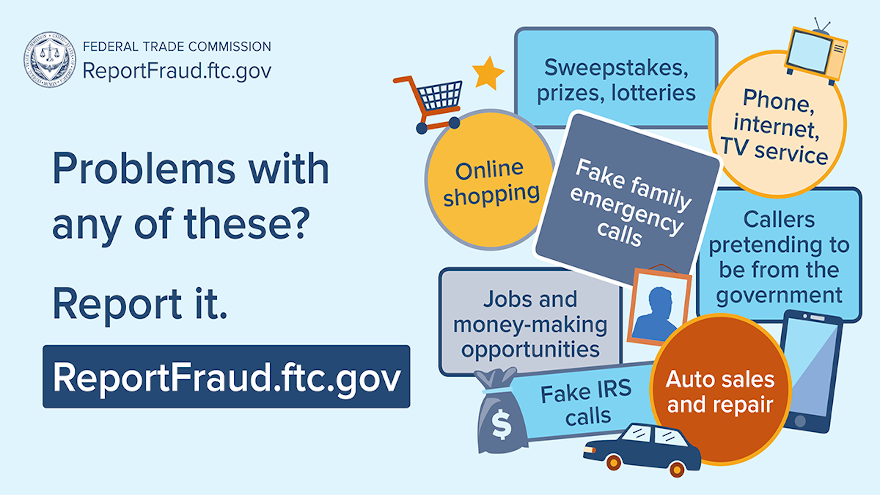
Highlighting automotive as one of the primary segments in its opening campaign, the FTC has launched a new website, ReportFraud.ftc.gov, where consumers can report fraud and all other consumer issues directly to the FTC.
At ReportFraud.ftc.gov, officials explained that consumers will find a streamlined and user-friendly way to submit reports to the FTC about scams, frauds, and bad business practices.
The FTC emphasized that it has long encouraged consumers to report these issues to the FTC when they encounter them — whether or not they lost money to the fraud.
“Every time you report scams or bad business practices to the FTC, you’re helping to protect your community,” said Andrew Smith, director of the FTC’s Bureau of Consumer Protection.
“With ReportFraud.ftc.gov, it’s quicker and easier than ever to share your story, and each report helps the FTC, and other federal, state, and local law enforcement agencies, fight fraud,” Smith continued.
The launch coincided with newly released data from the FTC that showed that there has been a surge in reports from people who say they lost money to a scam that started on social media, including a spike of these complaints in the spring at the height of the COVID-19 pandemic.
FTC data indicated that the number of complaints about scams that started on social media has more than tripled in the past year.
People reported losing more than $117 million to this type of scam in just the first six months of 2020 compared to $134 million for all of 2019, according to the FTC’s latest Consumer Protection Data Spotlight.
Online shopping topped the list of complaints from consumers who reported a scam to the FTC that originated on social media. Of these consumers, many were responding to an ad they saw on social media and reported that the item they ordered never arrived.
Officials added that most of those consumers (94%) who identified the social media service in their complaint cited Facebook or Instagram as the platform they used.
To help those individuals, the regulator highlighted that its new reporting system will provide streamlined experience and advice for consumers filing complaints with the FTC.
One new feature of the site is that consumers who file a report will receive next steps from the FTC with advice on what to do based on their particular report.
The FTC has more information available for consumers, including a new video explaining how the site works.
The site takes the place of the FTC Complaint Assistant, and consumers visiting that site will be redirected to ReportFraud.ftc.gov to share their information.
The site is also in Spanish at ReporteFraude.ftc.gov.