In a continued effort to provide a most compliant financing solution, Vergent Loan Management Software recently announced a partnership with Carleton for consumer loan calculation support.
Vergent has been providing financial management software since 2006. Formerly eSoftware Solutions, the company offers a web-based loan management software solution that encompasses loan origination, loan servicing, marketing, reporting and accounting exports, along with ancillary services to enhance and streamline the lending process.
Its latest web-based lending solution interfaces with CarletonCalcs that’s geared to ensure payments and disclosures are accurate and compliant.
According to Vergent chief operating officer Terry Freeze, “Our company has experienced tremendous customer growth and we recognized a need to ensure our lending calculations are compliant with all federal and state regulations.
“Strong compliance is so important in today’s litigious lending environment which is why partnering with a very experienced company like Carleton for additional compliance support made a lot of sense,” Freez continued.
Carleton president and chief operating officer Matt Ruszkowski added, “Vergent recognized the importance of having compliance alignment between the contract language and their loan origination and loan servicing computations.
“Our 50 years of lending calculation experience and demonstrated lender and dealer support is why Vergent partnered with Carleton,” Ruszkowski went on to say. “We are excited to be part of the Vergent team as we are both committed to providing the highest quality level of service in each of our areas of expertise.”
The newest financing data from Edmunds and Kelley Blue Book reinforced how the newly installed chairman of the National Automobile Dealers Association didn’t mince words as the auto industry gathered for annual festivities in San Francisco.
“Affordability is an issue. All of the new technology, safety features and fuel economy add costs. That’s a real concern,” current NADA chair Charlie Gilchrist told fellow dealers and finance company executives who assembled for the closing day of the Vehicle Finance Conference hosted by the American Financial Services Association.
On Friday, Edmunds arrived with information to illustrate just how much of a potential issue affordability is becoming for possible buyers walking into your showroom, scanning online inventory or completing financing applications.
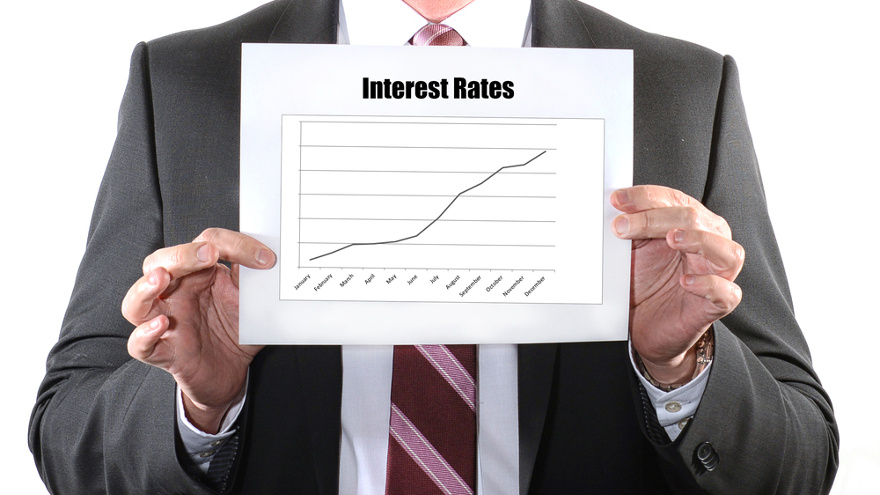
Edmunds reported that tightening credit conditions and rising vehicle prices continued to squeeze consumers in January. Due in part to an evaporation of zero percent financing deals, the average annual percentage rate (APR) on new financed vehicles hit the second highest point in 10 years in January, averaging 6.19 percent.
The newest reading is up from 4.99 percent last January and 4.22 percent five years ago.
Additionally, the average transaction price of a new vehicle is expected to hit a near-record high of $37,150 in January, and zero percent financing offers dropped to their lowest level since 2006.
The analysts at Kelley Blue Book reported similar figures. They indicated the estimated average transaction price for a light vehicle in the United States was $37,149 in January, up 4.2 percent or $1,481 from January of last year.
“Car shoppers who are returning to the market for the first time in a few years could be in for a big shock,” said Jessica Caldwell, Edmunds’ executive director of industry analysis. “Vehicle prices and interest rates are so high right now that consumers are facing the very real possibility of spending thousands of dollars more on a new vehicle than they did last time they purchased a new car.”
And depending on which new model they choose, that sticker and financing shock could be intense.
“There are several factors contributing to strong average transaction prices, which climbed 4 percent year-over-year,” said Tim Fleming, analyst for Kelley Blue Book.
“First, Tesla has approached BMW and Mercedes-Benz U.S. sales numbers in recent months with even stronger transaction prices,” Fleming said. “Also, full-size trucks are more popular than they have been for over a decade, and the new Chevrolet Silverado, GMC Sierra and Ram 1500 pickups helped drive prices up.”
Although Edmunds experts noted that sales in January showed relative strength and the overall impact of the polar vortex across the Midwest was minimal, analysts caution that sales are likely to take a turn through the rest of 2019.
“Although January saw a slight lift, higher fleet sales give the false appearance of a more robust sales month,” Caldwell said. “If the economy starts to slip for any reason, we could see significant repercussions for the overall market.”
Encouraging employment news
At least for now, it appears consumers will need vehicles to get to their employment while gaining income to handle those financing commitments. The trend stems from the U.S. Labor Department’s January Jobs Report also released on Friday.
U.S. Secretary of Labor Alexander Acosta said January’s Job Report demonstrated “the strength of the American economy” as the January Employment Situation report indicated 304,000 jobs were added. Acosta said private sector job creation continued to surge despite the partial government shutdown.
Acosta also noted significant growth in the mining, construction, and transportation and warehousing sectors led the report.
Officials pointed out the unemployment rate ticked up by 0.1 percentage point to 4.0 percent, largely as a result of the temporary lapse in federal government funding. However, January represented the 11th consecutive month that the unemployment rate has been at or below 4.0 percent.
The federal agency went on to mention average hourly earnings rose by 3.2 percent, marking the sixth straight month in which year-over-year hourly earnings have been growing at or above 3 percent. Average weekly earnings rose at an even more robust 3.5 percent year-over-year.
“Another key indicator in the report pointed to the increase of the labor force participation rate to 63.2 percent, the highest rate since August 2013,” Acosta said.
“As the jobs and employment data normalizes over the coming months, we are confident the nation’s economy will continue to build on the strength seen in 2018 and the first report of 2019,” he added.
The latest employment data also impressed Curt Long, who is chief economist at the National Association of Federally-Insured Credit Unions (NAFCU).
“The January jobs report showed no signs that hiring is slowing down,” Long said. “The slight uptick in the unemployment rate owes to the highest rate of labor force participation in over five years.
“Wages growth slowed, which suggests there is still room to run. It also supports the Fed’s patient stance on rates, as inflationary pressures remain muted,” Long added.
Resilient auto industry
Brad Korner, general manager for Cox Automotive Rates and Incentives, described how OEMs didn't lean on a crutch of the past to keep metal rolling over the curb.
"Automakers in January continued a relatively tempered, measured approach to incentives. Our team was tracking fewer programs in the month, notably fewer at Ford, which uncharacteristically held steady and offered fewer-than-normal regional programs," Korner said.
"In January, lease pull-aheads remained popular and there was continued healthy spending on full-size pickups trucks, notably from Ford and GM, who both have money and programs in place on 2019 models to compete with the new RAM model which is offering less incentives due to a high consumer demand," he continued.
"The incentive business is experiencing a transition away from incentive promotion and toward a focus on monthly payments for both finance and lease deals. This is likely to combat the affordability issues and help consumer with budgeting for a new vehicle," Korner went on to say.
"Also, as more digital retailing solutions are offered, consumers are finding more transparency in the deal, with less emphasis on the amount of a rebate or incentive and more emphasis on the resulting monthly payment," he added.
No matter what headwinds might appear in terms of elements like affordability — especially if the Federal Reserve continues to adjust interest rates — Gilchrist is confident dealerships will still be turning used and new metal throughout the year. Along with being NADA chair, he is also president of Gilchrist Automotive, which includes Buick-Chevrolet-GMC, Chrysler-Dodge-Jeep-Ram, Ford, Nissan and Volkswagen franchises at five Texas dealership locations in the Dallas-Fort Worth area.
“We respond well to our local markets,” Gilchrist told the auto finance community during AFSA’s event. “This is a fun business, but it’s an intense business. We have to smile every day and keep our attitude right.”
New-Car Finance Data
|
|
January 2019
|
January 2018
|
January 2014
|
|
Term
|
69.1
|
69.2
|
65.9
|
|
Monthly Payment
|
$551
|
$524
|
$476
|
|
Amount Financed
|
$31,707
|
$31,236
|
$27,573
|
|
APR
|
6.19
|
4.99
|
4.22
|
|
Down Payment
|
$4,191
|
$3,914
|
$3,628
|
Used-Car Finance Data
|
|
January 2019
|
January 2018
|
January 2014
|
|
Term
|
67.2
|
66.9
|
64.4
|
|
Monthly Payment
|
$407
|
$384
|
$363
|
|
Amount Financed
|
$21,763
|
$21,084
|
$19,441
|
|
APR
|
8.88
|
7.83
|
7.58
|
|
Down Payment
|
$2,614
|
$2,473
|
$2,200
|
Source: Edmunds
Black Book responded to auto finance companies and buy-here, pay-here dealers still looking for help on how to comply with upcoming accounting changes in connection with reserving for losses.
On Wednesday, Black Book released a new educational white paper titled, “Analytic-Driven Data Helps Auto Finance Lenders Mitigate Risk & Become CECL Compliant.”
To recap, the Financial Accounting Standards Board (FASB) is looking to ensure that financial institutions have solid measures in place to ensure they have appropriate reserves for any future losses based on the life of each auto loan. As a result, the board has instituted its new Current Expected Credit Loss model (CECL).
The new model will require higher levels of loan loss reserves and lead to changes in lending practices and portfolio management. It will also require a significant amount of data capture, analysis and modeling to meet the implementation deadline of Dec. 15.
With CECL’s requirement that finance companies perform life-of-loan loss forecasting, as soon as the provider says yes to a contract, Black Book explained the company must begin reserving for potential losses on that loan. Black Book emphasized this requirement means each finance company must have a much better understanding of the borrower’s financial condition, as well as accurate historical and residual collateral insight, when they make the loan.
The Black Book white paper discusses how auto finance companies have the opportunity to rely even more on having the most accurate and up-to-date credit and collateral data on their portfolios in order to meet these new requirements.
“Auto finance companies can leverage this opportunity to convert this compliance need into a competitive advantage,” said Anil Goyal, executive vice president of operations for Black Book.
“By leveraging granular data and building loan-level analytic models, auto lenders will have a better understanding of risks and improve return on capital,” Goyal continued.
The white paper also addresses the following topics:
• Probability of default methodology
• Estimations of probability of default and loss given default with model samples
• CECL modeling and data readiness
• CECL’s effect on loan strategies
• How varying economic scenarios can impact lender strategies for CECL
To download the new white paper, go to this website.
The team at 700Credit this week rolled out a new solution built to identify and combat synthetic fraud using a suite of synthetic identity detection rules to prevent criminals from continuing to hide behind false identities.
The provider of credit reports, compliance solutions, prescreen and consumer pre-qualification products and services explained that its synthetic fraud detection solution is one of many defensive tools available to detect potential threats that could not be spotted with traditional verification methods.
Executives at 700Credit insisted early detection can enhance the loan origination process, “pushing out” threats early and streamlining the funding process.
When it comes to synthetic identity fraud, 700Credit managing director Ken Hill went on to acknowledge that knowing there is a problem is only half the battle. Detecting it is challenging because fraudsters take the time to develop their synthetic identity to mirror a real person.
“Our solution includes a combination of a high-risk fraud score along with synthetic identity rules to find false identities that alert dealers of potential risks,” Hill said. “Our model complies with the Fair Credit Reporting Act (FCRA) and returns a risk score with factors to help determine if a new customer application is likely associated with a synthetic identity.”
Using proprietary logic and unique combinations of available data, the high-risk fraud score can look at a consumer’s credit behavior and credit relationships over time to uncover hard to detect risk.
“The high-risk fraud score has been very effective in finding those synthetic identities that are established and approaching the maturity level necessary to perpetrate fraud. Additionally, the score can detect those identities that are products of synthetic identity farms,” Hill said.
To address a synthetic identity fraud challenge that extends beyond specific credit behavior and relationships, 700Credit offers synthetic identity detection rules consisting of 30 conditions that evaluate a broad selection of consumer behaviors. When they occur in specific combinations, these behaviors indicate a higher probability of synthetic identity fraud.
The synthetic fraud solution is available as an add-on to the 700Credit Red Flag summary product.
For more information, contact 700Credit at (866) 273-3848.
LAUNCHER.SOLUTIONS (Launcher), a technology provider specializing in subprime auto finance originations, recently announced its successful integration with LexisNexis Risk Solutions.
The alliance is designed to give subprime finance companies access to alternative data within Launcher’s appTRAKER loan origination system. The intended results not only could help increase finance company efficiencies, but also enhance understanding of the risk and credit worthiness of their potential customers.
Launcher created the appTRAKER loan origination system to cater to subprime finance companies that demand more from their software, including the need for quicker decisioning and smoother integration with vendor data that could help lenders make more intelligent credit decisions. In the subprime/near-prime space, Launcher president Nikh Nath acknowledged that credit approvals are not always granted based on a credit score, meaning that it’s often an arduous process for lenders to sort out the profitable deals from the rest.
“We created appTRAKER Loan Origination System to help lenders build stronger portfolios through a faster, more reliable system with the ideal workflow for subprime … a major part of that workflow is risk assessment,” Nath said.
“Working with LexisNexis Risk Solutions gives our clients access to additional data that can be used for Autodecisioning, risk-based pricing, and in conjunction with scorecards resulting in a more streamlined decision-making process,” Nath continued.
Launcher’s integration with LexisNexis RiskView can offer lenders the ability to utilize non-tradeline data in an automated manner via Autodecisioning to improve credit risk analysis.
“Every business today is operating in the decision economy,” said Solomon Semere, director of credit risk strategy at LexisNexis Risk Solutions. “When an auto lender can make quick, confident credit decisions, the business is going to grow profitably.
"This alliance between Launcher and LexisNexis Risk Solutions helps auto lenders thrive in the decision economy and come out the winners," Semere went on to say.
As the Federal Reserve mulls interest-rate decisions for 2019, Edmunds explained that December’s auto finance data reinforced how 2018 represented a “tipping point.”
Analysts indicated interest rates for new vehicles dipped slightly for a second consecutive month in December. But for used vehicles, the exact opposite happened as the rate jumped a full percentage point year-over-year.
The annual percentage rate (APR) on new vehicles financed during the closing month of the year averaged 5.9 percent in December, compared to 6.0 percent in November and 6.2 percent in October.
For used-vehicle financing, Edmunds indicated the average APR climbed from 7.66 percent to 8.66 percent as the average amount financed topped $22,000.
Edmunds noted that low interest rate finance deals on the new-car side can be attributed to this overall month-over-month dip. According to Edmunds data, 14 percent of buyers received rates below a 2-percent APR, compared to 12 percent of buyers receiving the same rates in November.
“Holiday sales gifted car shoppers with another slight respite from record high interest rates in December, but in many ways this month was a curtain call for robust finance deals,” said Jeremy Acevedo, Edmunds’ manager of industry analysis.
“With the holidays behind us and the most recent Fed rate hike kicking into effect, automakers won’t be as inclined to move mountains in the new year, so shoppers can expect average APRs above 6 percent to be the new normal,” Acevedo continued.
Edmunds noted that reliable incentives such as zero percent finance deals have all but dried up, threatening to derail industry sales in 2019. According to Edmunds data, zero percent finance loans remained flat month-over-month, but at 5.5 percent hit their lowest December level since 2005.
Also of note from the new-car perspective, ALG estimated average transaction prices (ATP) for a new light vehicle was $35,145 in December, up 1.3 percent from a year ago. ALG added average incentive spending per unit declined by $223 to $3,746. The ratio of incentive spending to ATP is expected to be 10.7 percent, down from 11.4 percent from a year ago.
While the rate movements on the new-model side might be more active, Edmunds also pointed out that the average APR for used-vehicle financing climbed only 16 basis points between December 2013 and December 2017.
No matter what happens within the dealership finance offices and finance company underwriting departments, how the Federal Reserve operates in 2019 will be an overarching influencer. Policymakers have moved interest rates higher more than a half dozen times during the past 24 months.
But at least one member of the Federal Open Market Committee thinks it might be time for the Fed to get to he defined as a “neutral rate.” Robert Kaplan is president of the Federal Reserve Bank of Dallas.
Kaplan explained back in October that the neutral rate is the theoretical federal funds rate at which the stance of Federal Reserve monetary policy is neither accommodative nor restrictive.
At the time of his analysis with the U.S. unemployment rate at approximately 3.7 percent and the headline personal consumption expenditures (PCE) rate of inflation at slightly more than 2 percent, Kaplan stressed that, “I believe that the Federal Reserve is achieving its dual-mandate objectives.”
He continued, “As we reach our dual-mandate objectives, I believe that the Federal Reserve should be gradually easing off the accelerator — we no longer need to be stimulating the U.S. economy. As such, I believe we should be gradually and patiently moving toward a neutral policy stance.”
The Fed meets again beginning on Jan. 29, giving the auto finance industry the first glimpse of the year to see if policymakers will follow Kaplan’s suggested course.
“Rising interest rates will be one of the biggest factors influencing how the auto market fares in 2019,” Acevedo said. “Access to cheap credit has been a staple of the post-recession auto market, and 2018 marked a tipping point for the industry.
“Interest rates in 2018 closed more than a point higher than they closed 2017, and rates are only going to continue to trend upward, which poses a real threat to shopper demand as we head into 2019,” he went on to say.
New-Car Finance Data
|
|
December 2018
|
December 2017
|
December 2013
|
|
Term
|
68.41
|
68.99
|
65.18
|
|
Monthly Payment
|
$558
|
$536
|
$487
|
|
Amount Financed
|
$32,056
|
$32,080
|
$28,032
|
|
APR
|
5.87
|
4.73
|
4.05
|
|
Down Payment
|
$4,487
|
$4,056
|
$3,941
|
Used-Car Finance Data
|
|
December 2018
|
December 2017
|
December 2013
|
|
Term
|
67.22
|
66.89
|
64.54
|
|
Monthly Payment
|
$413
|
$392
|
$371
|
|
Amount Financed
|
$22,207
|
$21,613
|
$19,956
|
|
APR
|
8.66
|
7.66
|
7.50
|
|
Down Payment
|
$2,683
|
$2,488
|
$2,281
|
Source: Edmunds
GWC Warranty is opening 2019 with a reinforced staff to highlight its used-vehicle service contracts sold through dealers.
The company recently announced the addition of Andrew Huber as its new product strategy manager.
As a member of the marketing department, Huber will be responsible for managing GWC’s suite of products while evaluating new opportunities for innovative product enhancements, all in an effort to ensure GWC Warranty’s products are effectively meeting the needs of its automotive industry partners.
Prior to joining GWC Warranty, Huber held several progressive positions in product management with companies such as The Home Depot, Harland Clarke and Georgia’s Own Credit Union.
GWC Warranty caps year of charitable giving
In other company news, GWC Warranty recently completed a year of charitable activities in support of local causes in northeastern Pennsylvania.
Charitable donations and activities in 2019 included:
• A Relay For Life team sponsorship in support of the American Cancer Society
• Lead sponsorship for the Wilkes-Barre/Scranton Penguins Goal In One Golf Tournament, which supports the Penguins GOALS Foundation
• Sponsor for the Commission on Economic Opportunity (CEO) Food 4 Kids program, which provides lunches to underprivileged children during the summer months
• A donation of more than 200 pet items as part of a Cutest Pet Competition in support of the SPCA of Luzerne County
• Sponsorship and participation as part of the local SPCA Walk For The Animals
• Monetary donations from employees resulting from a “Pink Out Day” shirt sale benefitting the Foundation For Cancer Care
• Volunteering and a donation of more than 400 food items during the CEO Weinberg Food Bank’s Thanksgiving project
• Monetary and toy donations as part of the VFW Post No. 396 toy drive
• 40 local children were provided with Christmas gifts thanks to employees who partook in the Salvation Army Angel Tree Program
“Two of GWC Warranty’s core values are Fair and Friendly, and it warms our hearts to see our employees live these honorable traits out in our communities,” said Jeanette Bogdon, vice president of human resources for GWC Warranty and APCO Holdings.
“We are proud to call northeastern Pennsylvania home and these charitable activities throughout the year serve as our way of giving back and showing our appreciation to the communities in which we live and work,” Bogdon went on to say.
Two companies are collaborating for enhanced subprime underwriting at a lower cost.
This week, LAUNCHER.SOLUTIONS, a technology provider specializing in subprime originations, announced a strategic integration partnership with VinAudit.com aimed at reducing costs incurred by subprime finance companies for vehicle history reports.
Officials explained the full API integration with VinAudit.com in LAUNCHER.SOLUTION's appTRAKER Loan Origination System can show finance companies all data points for use in the origination process.
The company reiterated the appTRAKER Loan Origination System was created by subprime auto finance companies specifically for the subprime and near-prime spaces. The integration partnership with VinAudit.com is beneficial for finance companies using appTRAKER Loan Origination System because it can provide them with cost-effective reports for checking:
—Title problems
—Odometer tampering
—Open liens
—Prior damage
—Active theft
—Past sale listings
Nikh Nath, president of LAUNCHER.SOLUTIONS, said, “The integration with VinAudit.com is great for all lenders — especially budget-conscious lenders.”
Nath also pointed out the integration can help lenders that purchase subprime and near-prime paper, providing more than just vehicle information. He noted the data points provided by VinAudit.com will feed into the appTRAKER Loan Origination System in such a way that the information will be useful in risk assessment and when creating underwriting rules.
Nath went on to mention LAUNCHER.SOLUTIONS' appTRAKER Loan Origination System is fully customizable so finance companies are now able to utilize VinAudit.com to pull various reports either automatically on every application submitted, or manually on individual applications.
Finance companies continue to fill and expand their portfolios, especially when buying paper attached to a new vehicle that’s becoming more difficult for consumers to afford as transaction prices and interest rates keep climbing.
October data shared by Edmunds and Kelley Blue Book on Thursday morning illuminated the trends, which to a degree are being impacted by high-line models.
The analysts at Kelley Blue Book reported the estimated average transaction price for light vehicles in the United States came in at $37,007 in October. They indicated new-vehicle prices increased by $1,118 or 3.1 percent year-over-year while remaining flat compared to the previous month.
“October was a strong month for transaction prices, as the new-car average rose 3 percent,” Kelley Blue Book analyst Tim Fleming said. “However, much of the growth was aligned to higher priced vehicles like full-size trucks and SUVs.
“In addition, Tesla is now driving the industry numbers up in a meaningful way as the brand’s sales volume recently soared to the level of top luxury automakers,” Fleming continued.
“All segments in the $20,000 to $30,000 price range also showed little-to-no growth, which could be cause for concern considering these segments make up nearly half of the industry’s sales totals,” he went on to say.
And with only select consumers having at least $20,000 readily accessible — especially in the subprime space — the demand for financing is there, putting even more light on the interest-rate moves made by the Federal Reserve.
Tightening credit conditions continued to squeeze consumer wallets in October, according to the experts at Edmunds. The annual percentage rate (APR) on new financed vehicles averaged 6.2 percent in October, a 1.3-percent increase from a year ago, and a 2-percent increase from five years ago.
Edmunds pointed out that average is at the highest level on record since January 2009.
Edmunds analysts note that these higher interest rates contributed to the scarcity of zero percent finance loans, which fell to their lowest level since 2007. The percentage of sales with zero percent finance deals dropped to 3.8 percent in October, compared to 7.5 percent in 2017 and 7.8 percent five years ago.
“We haven’t seen interest rates hit the 6 percent mark in nearly 10 years, and zero percent finance loans have been cut down by nearly a third of where they were in 2016,” said Jeremy Acevedo, Edmunds’ manager of industry analysis.
“It’s getting harder and harder for shoppers to afford a new car, and if the economy starts to slip, we’re at a point now where we really could start to see some significant impacts in the auto market,” Acevedo continued.
Edmunds mentioned high interest rates have been the driving factor eating into car shoppers' wallets.
Analysts computed the average new-vehicle buyer will pay $1,316 more in interest over the life of the contract if the individual bought a vehicle this past October compared to October of last year (taking into consideration average term lengths, average amount financed and average APRs).
And Edmunds reiterated that shoppers with lower-than-average credit scores could pay even more.
“Access to cheap credit has been a key factor in the industry's post-recession sales rally and transition toward pricier trucks and SUVs. Now that we’re entering a time when transaction prices are also booming, these rising rates compromise affordability and will likely begin to dampen demand moving forward,” Acevedo said.
“Even with upcoming holiday sales piling extra cash on the hood, shoppers planning on financing might be finding themselves priced out of vehicles they thought they could previously afford,” he went on to say.
Dealers nationwide not only can use Westlake Financial Services to get a deal bought for their potential buyers, but stores also can leverage the provider for another ancillary product, too.
Westlake recently announced the nationwide expansion of its vehicle protection program, SECUREONE.
SECUREONE offers two vehicle protection coverages — Powertrain and Advantage.
Powertrain covers the vehicle’s engine group, transmission, transaxle, transfer case and drive axle group. Advantage Coverage includes Powertrain Coverage, plus; power steering, electrical and air conditioning.
Both coverage options are available on either a 12-month/12,000-mile or a 24-month/24,000-mile vehicle protection term.
Additional product benefits include: 24-hour roadside assistance, rental car and trip interruption as well as turbo/supercharger engines, and officials added that 4WD/AWD type vehicles are covered at no additional charge.
“We have been pleased with the feedback we have received from our customers,” said Ralph Ontiveros, vice president of Westlake Services & Lending Solutions. “SECUREONE’s success stems from reliable vehicle protection options with a customer-first philosophy.”
Westlake Financial Services is active in all 50 states plus Puerto Rico, with a dealer base of more than 30,000 franchised and independent dealerships.
Dealerships interested in learning more about Westlake Financial Services are invited to contact Westlake directly at (888) 893-7937 or online at www.westlakefinancial.com.