Q&A with UCW Hall of Famer Jared Kalfus of Black Book
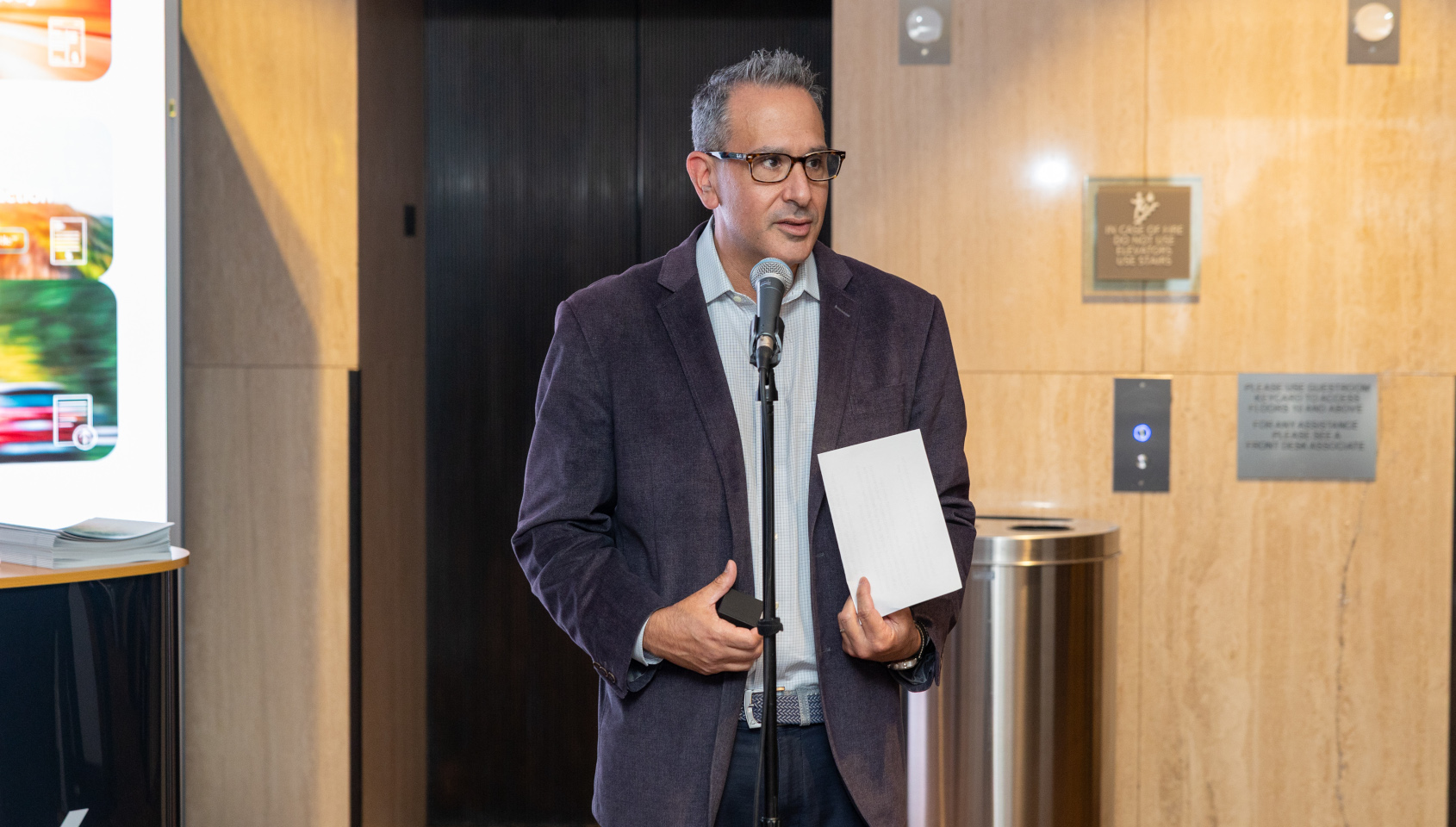
Jared Kalfus of Black Book. Image courtesy of company.
By subscribing, you agree to receive communications from Auto Remarketing and our partners in accordance with our Privacy Policy. We may share your information with select partners and sponsors who may contact you about their products and services. You may unsubscribe at any time.
We finish our Q&A series highlighting the 2026 Used Car Week Hall of Fame honorees with a conversation featuring Black Book president Jared Kalfus.
Kalfus describes what it takes to be successful in sales and why face-to-face conversations are still vitally important.
Kalfus and fellow UCW Hall of Fame inductees will be recognized during a luncheon on Nov. 19 at Used Car Week in San Diego and in the December issue of Auto Remarketing. Read an excerpt from the Q&A below and listen to the full conversation here.
Nearly all your professional career has been within sales in some capacity. Would you consider yourself a natural salesperson? Why so or why not? What makes someone successful in sales, in your opinion?
It’s funny. If you would have looked at the 13-, 14-, 15-, 16-year-old Jared, you would have never pegged this. There’s a story that goes around my family that when I was 7 or 8 years old playing Little League baseball, we had to go sell candy bars for a dollar to raise money for uniforms.
My parents sent me out, and I literally took the box of candy bars and went down the street, turned the corner so that nobody could see me, and sat down and ate all the candy bars myself because I was too scared to go knock on people’s doors and say, ‘Would you like to buy a candy bar for a dollar?’ I don’t know that anybody would have bet this. But as I matured through my teenage years and my college years, I really kind of gained confidence.
Subscribe to Auto Remarketing to stay informed and stay ahead.
By subscribing, you agree to receive communications from Auto Remarketing and our partners in accordance with our Privacy Policy. We may share your information with select partners and sponsors who may contact you about their products and services. You may unsubscribe at any time.
What I realized is that a few things. No. 1, I’ve always been naturally curious along with being competitive, and those are certainly traits that will serve anybody well in sales. I think you marry that with I really enjoy learning how businesses work and that curiosity of learning those different things and trying to solve problems. Those things have helped me in my DNA over the years.
But I don’t think that salespeople are just simply born that way. I think it’s a craft, and it requires discipline and preparation and resilience and repetitiveness, but you also have to listen. There’s that old phrase that says the best salespeople listen more than they talk. You’ve got to ask good questions. You’ve got to understand, and you’ve got to know when to be quiet.
I haven’t mastered any of that, believe me, but I think those things are part of the ingredients of what makes a successful salesperson and ultimately a sales leader.
Your foray into automotive began in the rental market in the mid-1990s. What were some of the memorable moments from that point of your life and professional journey?
I always like to say, and 100% believe that every role that I’ve had professionally throughout my career has really prepared me for not only working at Black Book, but ultimately becoming the president of Black Book. Because every one of these stops that I’ve had along my career have really played a part into the customers that Black Book serves. I just could not have gotten any luckier, and certainly I didn’t know it back then.
I started my career at Enterprise Rent-A-Car, and I was just able to touch all different pieces of the business there, from rental to fleet to remarketing to vehicle acquisition, vehicle disposal. And that was really a master’s or a PhD at an early age. I spent roughly four, almost five years there and just touched everything.
And then that prepared me in the late 1990s to go work for CarsDirect.com, which was a startup at the time. Actually, at the time that I got there, I was the 12th employee. Scott Painter was the original CEO there when I joined and he hired me. And we were going to figure out how to sell cars online. So then I got e-commerce and advertising and digital from there for roughly seven years.
Then I went to Manheim after that, which taught me truly my Ph.D. in remarketing, consignment and floor planning and all the things like that. It was just an amazing journey that brought me to Black Book. And all of those things prepared me for the customers that we serve in this broad intersection of where Black Book lives with data. I couldn’t have planned it. I didn’t plan it, but it served me so, so well.
After three other professional stops, your time with Black Book began in June 2012. How would you describe yourself professionally at that juncture?
I’ll admit this now. I thought that I knew a lot more than I did because I had those stops along the way. But what I realized in coming here in June of 2012, and I remember talking to the great Tom Cross, who oversaw Black Book for so many years. And truly, I walked into my ego got chapped pretty quickly. And while it was a great foundation, I wasn’t as great as I thought I was. I got reminded of that pretty well and humbled. But it did serve me very well from a foundational standpoint.
When I first joined Black Book in mid 2012, I was the director of automotive licensing. I led a team that was focused on a few different channels, including the vendors that serve the space, the software companies and the inventory management companies and those kind of folks, along with marketing companies, OEMs and government. And so that really opened my eyes. Having never licensed data, I was just amazed by it.
But I will tell you, I went home confused probably every night for the first six months. And my wife would say, ‘How was it? And I would say, ‘Oh, I don’t know if it’s right for me. But Tom believed in me and he was said to stick with it. And it’s obviously been an unbelievable success. I was certainly ambitious at the time. I was motivated, and I was confident that I could leverage those relationships.
But I’ve learned so, so much at Black Book. And the team has really been receptive to me and they deserve this award, frankly, probably more than I do, because they’ve put up with me for all these years here.
We’ve joked in the past – especially before the pandemic – about how much you had to travel for work, how you even had to reintroduce yourself to the family dog. How do you handle the demands of work travel? How valuable do in-person conversations remain?
Yeah, it was a joke, but it was also pretty close to reality. It was certainly a part of my life. I handled it by really trying to stay organized. You have to remind yourself that the travel really serves a purpose, and it allows you to spend time with customers.
You got to understand their business, supporting the team, supporting the organization, building those relationships. That’s much more difficult. But there is something special, unique, better, in my opinion, of being in front of those customers.
The sacrifices that that I made are easy compared to my wife and my son. And I’ve been super grateful for their support. My wife is a working mom. She pretty much raised my son while I was on the road. And she’s so much better than I am.
Certainly today, technology makes it a bit easier to stay connected. But I do believe that those in-person meetings, in-person conversations, they are incredibly valuable. You’ll learn more sitting across from someone, picking up the body language and reading the signs and asking those follow-up questions than you ever will over a video camera or Zoom call. I’m just a believer of that. And anytime you have the opportunity to meet with a prospect, a customer, I would say, do that.
Another part of your travel commitments has been to industry events like Used Car Week. How did you approach going to industry events as an attendee and as an exhibitor?
As an attendee, I think you’re there for several reasons. No. 1, you have to take advantage of the conference or the convention. You have to learn. You have to you have to go to those sessions. You have to go to those breakout groups. You have to go to those keynote speeches. You have to learn.
At the same time, you also have to network. Get those opportunities for those in-person conversations. They are just fundamental. The most valuable conversations happen outside of those formal sessions, whether it’s hallway, coffee, dinner. That’s important as an attendee.
As an exhibitor, I’m going to say our because it’s not Jared, it’s our responsibility at Black Book, we’ve got to make the time worthwhile for the attendees, for the people that are coming to see us. You’ve got to be prepared. You’ve got to understand the issues that our customers are facing. You’ve got to have meaningful conversations rather than just simply listing everything we’ve got on our on our menu. Ask those questions. Have that curiosity. I’m not sure that a booth would be considered successful just because it’s busy. I think it’s successful even if you have fewer conversations, if you have the right conversations. And I believe that those types of conversations really reflect the strengths of the relationships that that you build.
Why has Used Car Week been something you and Black Book have seen as being worth your investment of time and resources?
I think that what I see most around Used Car Week, which I don’t see as much, or even at all, in other events that we that we attend — and we’re very selective, we don’t have an unlimited budget, so we have to be very selective — is that I see the constant evolution as the industry is changing. You’re changing with it and you’re implementing sessions that are topical and they’re relevant.
What’s your reaction to being one of this year’s Used Car Week Hall of Fame inductees?
Well, my first reaction, and I’m still the same way, was this kind of shock and bewilderment, to be honest with you. I remember reading the note from (Bill Zadeits, Nick Zulovich and Joe Overby), and it was like, ‘Are you kidding me?’ I really read it a couple of times. And I was like, ‘You know, I just don’t understand this.’
But after it sunk in, it’s been it’s been a bit now that I’ve had time to digest it, honestly, it’s a tremendous honor. It’s a little overwhelming because it’s humbling. And I don’t necessarily see myself at the same levels as some of the folks that have already been inducted. In my role, especially in a company that is the size of Black Book, we’re just always running hard. You’re working each day and you’re tending to kind of focus on the next thing or the next customer or the next opportunity, whatever it is. And I don’t know that I spend a lot of time, frankly, none thinking about recognition.
So it’s just absolutely humbling. But it’s also a reflection not of anything I’ve done. It’s the people around me, specifically at Black Book. I’ve got we’ve got just such an amazing team. I am far from the best person here. I’m far from the smartest person. The teamwork really lends to the success. I’m just the face right now. I’m grateful. I’m proud. But it’s a reflection of them. And I’m thrilled for them. I’m honored to accept it on behalf of the team at Black Book. That’s what’s most important to me.