Over 30 percent of respondents to a recent Total Dealer Compliance survey said they have submitted a complaint to a dealership, and more than half of them were dissatisfied with the resolution provided.
TDC said the findings illustrate the importance of a clear complaint resolution process. In fact, 60 percent of consumers admitted that they were more likely to buy a car from a dealer if that process is apparent.
When asked what the biggest pain point was when submitting a complaint to a dealership, over 50 percent said it was the dealerships’ obvious lack of desire to resolve the issue. Nearly 80 percent of respondents believe that customer satisfaction is of utmost importance to the dealership when they have a clearly stated complaint resolution process.
“Compliance and customer satisfaction go hand in hand. A clear complaint resolution process that is overseen by a compliance officer is the most effective approach to resolving customer complaints,” said Max Zanan, president of TDC. “Sheds a spotlight on why TDC audits and compliance training can help improve policies and procedures and positively impact customer satisfaction.
“Currently either a general manager or a general sales manager handles customer complaints, which is counter-productive as it is hard to be objective especially when your salary depends on commissions from sales,” Zanan said. “A compliance officer is better equipped to handle complaints because their main objective is to protect the dealership.
“State and federal agencies do not start investigating a car dealership for no reason, and we are delighted to offer a solution that will help dealerships avoid unnecessary headaches and expenses.”
Also of note: Phone trumps internet as customers’ preferred method of submitting a complaint, as nearly 75 percent of respondents said they had opted to call their dealership over registering a complaint online.
The TDC survey was conducted online in September among 200 U.S. adults 18 and older.
Building a successful certified pre-owned program takes work — and an in-depth understanding of your customer base. If you have a good grasp of your customers’ needs, you can easily identify which ones will be a good fit for a CPO vehicle.
And by targeting those customers effectively, you can tap into today’s profitable CPO market, earning more sales and more satisfied customers.
But if you get your targeting wrong and advertise CPO to customers who aren’t interested, you’ll waste your ad dollars, as well as your CPO opportunity.
Fortunately, finding the perfect matches for your CPO program is simple. That information is already logged in your CRM. You just have to know what you’re looking for. By prospecting your CRM for these four major opportunities, you’ll be able to match the right CPO offer to the right customer, keeping them satisfied and your CPO sales numbers high.
CPO opportunity 1: Credit-challenged buyers
Many customers would love to purchase a new car, but can’t get approved for a loan to finance one. These buyers are a prime target for CPO vehicles, which provide the peace-of-mind of a new vehicle, but at lower price points. If you have customers in your CRM who were recently denied a new car loan, now’s the time to reach out and share the benefits of CPO.
Educating these buyers is critical — because a third of new-vehicle shoppers still don’t know much about CPO programs. And even if customers are relatively CPO-savvy, they might not know that your dealership has CPO options. Promoting CPO in your messaging and on your website is a great way to raise market awareness about your offerings.
And by targeting credit-challenged customers with these messages, you can get them the car they want while boosting your CPO sales.
CPO opportunity 2: Expiring leases
New-car lessees are excellent targets for CPO programs. You know they’re committed to driving high-quality, proven-safe vehicles.
You also know they aren’t interested in paying the full price of owning a new vehicle. CPO vehicles offer the same high quality and financial benefits of a new-car lease, along with the added perk of owning the vehicle long-term.
Scan your CRM for customers with fast-approaching end-of-lease terms. These customers are a great target for CPO, since you know exactly when they’ll be coming back to your dealership. They might be thinking about purchasing their next vehicle instead of leasing — and you should make CPO top-of-mind when they’re making that decision. On the other hand, if they’d rather sign another lease, CPO can still be in the picture.
CPO leases are highly attractive for many customers, and are generally more cost-effective than new-vehicle leases.
CPO opportunity 3: Frequent service visits
A great way to tell whether a customer will be a good fit for CPO is by looking at their service history. Since 10 percent of Americans will drive with their “check engine” light on for three months or more, a customer who regularly visits your dealership for service is probably more safety-conscious than the rest. And safety and security are among CPO’s biggest draws.
When asked why they chose a CPO vehicle, the most common answers customers gave were “the warranty” and “peace-of-mind.” In fact, 57 percent of vehicle shoppers purchased a CPO vehicle because of the warranty’s safety benefits.
If you’ve tied your service data to your CRM, you can easily search for active service customers. Then, target those customers with messaging that emphasizes CPO’s safety benefits. They’ll appreciate the extra peace of mind you’re offering — and you’ll appreciate the extra CPO sales.
CPO opportunity 4: Recent CPO purchases
To make your CPO program thrive in the long term, it’s important to keep working to understand your customers after they purchase. But just how important is it? Well, let me tell you a story.
Back in the 1960s, an Italian businessman wanted to treat himself to the finest sports car in the world: a Ferrari. But when he took his new vehicle on the road, he encountered one mechanical issue after another.
Even worse, the more often he brought his vehicle back for service, the more the dealership started to suspect he was the problem, not the car. Fed up, the businessman — named Ferruccio Lamborghini — decided to start manufacturing his own automobiles. And the rest is history.
Obviously, you aren’t selling CPO Lamborghinis, but the lesson remains the same: Interactions after the sale are just as important as what happens before.
Even if a customer has already bought a CPO vehicle, you should make sure you’re meeting their needs after the purchase.
For example, if a customer has purchased a CPO vehicle but didn’t opt for a vehicle service contract, that’s a prime opportunity to provide post-sale value. Inform existing CPO customers of the additional safety benefits and features a VSC can provide.
By looking out for your customers’ needs both now and in the future, you’ll nurture long-term relationships that increase your odds of additional revenue, referrals and retention.
Your dealership’s CRM is your key to matching the right CPO offers to the right customers. By making the effort to understand your customers’ needs and nurture personalized relationships through the CRM, you can tap into a source of sales and referrals that can keep your CPO program successful — instead of losing customers to the competition.
Rob Christman is the fixed operations director of sales at Cox Automotive.
Dealers, take note: When it comes to the customer reviews you choose to feature online, words may matter more than stars.
CDK Global, as part of its The Language of Closers study, has identified the top words and phrases playing a role converting potential shoppers through dealership reviews.
“Dealers typically assume that positive, five-star reviews should be front and center on their homepage,” said Jason Kessler, lead data scientist at CDK Global. “However, we found that reviews using specific and relatable words, even if their overall star-ranking is lower, are more effective at converting shoppers.”
The research found that words such as “passing” (as in passing another vehicle on the road) were high predictors for conversion in sedan reviews. This word ranked at the top because it helps shoppers visualize and understand the power of a car by its passing ability. Terms such as “torque” and “horsepower,” on the other hand, are primarily meaningful to car enthusiasts.
“Quiet” and “comfortable” were other highly ranked words for all vehicle reviews.
“Words that help a customer imagine what it might be like to drive the vehicle were consistently ranked at the top of the list,” continued Kessler. “While dealers can’t control what their customers say, they can highlight the reviews that will be most beneficial to their customers, and their business.”
To learn more about The Language of Closers, click here.
Car thieves may be getting more sophisticated, but the latest Uniform Crime Report from the FBI shows that the number of stolen vehicles has dropped dramatically over the last decade.
According to the report, 707,758 motor vehicles were stolen in the U.S. in 2015 (220.2 per 100,000 people). That’s nearly a 41-percent drop from 2006.
Last year’s figure does represent a 3.1-percent increase over 2014, when there were 686,803 thefts.
More than $4.9 billion was lost due to motor vehicle thefts in 2015, and the average dollar loss per vehicle stolen was $7,001. About $2.6 billion worth was recovered, for a recovery rate of 58.2 percent.
Broken down by region, the most thefts — 39.9 percent — occurred in the West, with 35.3 percent in the South. The Northeast was lowest at 8 percent.
California saw the most thefts last year at 170,993, while Washington, D.C., had the highest number of thefts per capita: 485.5 per 100,000.
The UCR does not report makes and models of stolen vehicles, but the National Insurance Crime Bureau reported earlier this year that the most-stolen vehicle in 2015 was the 1996 Honda Accord. And the most common 2015 make and model stolen last year was the Nissan Altima.
Auto Remarketing talked to Pat Clancy, vice president of law enforcement at LoJack and a former police officer, for his thoughts on the data and the changing nature of auto theft.
Auto Remarketing: While there was an uptick in vehicle thefts last year, the crime has been lessening over the past decade.
Pat Clancy: This drop has been going on for 25 years. The U.S. peaked in 1991 with 1.7 million auto thefts and now here we are with 700,000. But it’s still a significant crime; it’s still a $4.5 billion industry just in the U.S. It’s significant and something that needs to be dealt with. This is the first year in a 10-year span that the numbers have actually gone up for the year. The increase was driven by five or six states, like California, Colorado, Nevada, New Mexico. They had double-digit upticks in auto theft last year.
I think the overall reduction is because of what they term an immobilizer, which you might know as a smart key or chip key. It used to be no big deal to cross wires, use a screwdriver, use a jiggle key or a shaved key, which the thieves used to manipulate ignitions of cars back in the ’70s, ’80s and ’90s.
Gradually over the last 25 or 30 years, the manufacturers have introduced that chip key technology into just about every make and model that’s coming out now. The thieves have to adapt. It’s no longer just a crime of opportunity like it used to be, although it still is.
AR: How so?
PC: Because still, 25 to 30 percent of auto thefts, I think the experts will tell you, are because people leave their cars running and people walk by. They might not even be out to steal a car that day but they see a car running and boom, that’s an opportunity.
We see a lot of it. It’s mostly in the cold-weather states. People warm up their car and go inside. … The criminals have organized to the point where in the mornings they drop off people in neighborhoods and they’re just looking for cars that have been left running outside of people’s homes.
The point is, it’s harder and harder to steal somebody’s car without the keys. So they’re reverting to different ways to steal cars.
AR: Can you talk about the changing nature of auto theft with emergence of connected cars?
PC: As cars are getting more and more connected and the OEMs are installing more devices into cars, the car is not just a means of transportation. It’s a communications hub, a business hub. They have a lot of computing power inside that car. People connect to those cars and they plug their smart phones into those cars, so they can talk hands free, use remote start features, so they can do a million different things.
What that does is leave vulnerabilities for people to be able to intercept the communication link. In essence they have the ability to hijack that car. They can get into the brain of the car, the VCU, and get into the VIN of the car, the service records. When they get a VIN, they can get a key made.
You also have the electronic ignitions, where a key is not necessary to start the vehicle. That’s another opportunity for somebody to hack the car.
It’s upping the ante on the part of the thieves. They have to be tech savvy. But the traditional methods have not gone away.
AR: What are you seeing at the dealership level?
PC: We are seeing a strong uptick in fraudulent theft from dealerships. For example, people go into a dealership with a false identity, with false credit, and they pose as someone else. They purchase, typically, a high-end car that’s loaded. They might even put down two or three months’ payment in advance. They leave and they’re out the door with an $80,- $90,- $100,000 vehicle. Two or three months later, the dealership discovers this person did not exist. We see a ton of that.
Last year we were part of an interception of over 40 vehicles that were obtained that way from dealerships in Southern California. They were all Porches, Lexuses, BMWs, Mercedes. And they were a group that went to dealerships, presented false identities and false credit, obtained these luxury vehicles, and sent them over to Hong Kong in shipping containers. One of those cars had a LoJack in it and they were able to bust the whole group.
AR: What about vehicle recovery overall?
PC: The recovery rate is going down overall on non-LoJack vehicles. The cars are being exported. In the last couple of years, let’s say there’s roughly 300,000 cars that are not being recovered. Typically in the past, two or three years later some of those cars might show up. But that’s not happening now, and the reason for that is the exporting. And these high-end vehicles, they want to get their hands on them … and they export them as soon as they can. So an $80,000 Range Rover is worth 200,000 in South America or West Africa. … So that’s a huge part of the non-recovery growth.
AR: What advice do you have for dealers?
PC: It would be make sure to investigate the credit. A lot of times it’s with foreign nationals, and people at dealerships may not be as familiar with identities from other countries, so they might not ask to see a passport or they might not be familiar with visas. So these people are actually borrowing or paying for a legit visa from someone else and then building an identity to go with that visa.
So the people at the dealerships, they’re anxious to make a sale. They don’t want to take the time to dig too deeply. But they need to run a license, there’s ways to check a license to make sure they’re legitimate. They all have holograms and barcodes on the back. They really need to do their due diligence.
AR: What is something LoJack offer dealers?
PC: What we call our pre-install program, or PIP. Instead of partnering with a dealership and selling them one at a time, we go in to a dealership put a LoJack on every car in the lot. So everybody who buys a car is presented with the opportunity to buy a LoJack. That protects the dealer in terms of lot protection and theft of loaner cars. It works out both ways for the dealer and for LoJack. And for the police. We’ve really been pushing this the last couple of years. It’s a large portion of our installations now.
AR: Do you foresee an end to auto theft?
PC: I just think as long as people have something of value, other people are going to want to get it. They’re going to find different ways to do it.
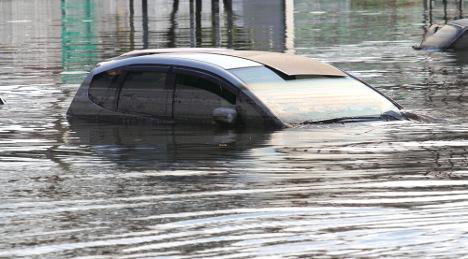
With a host of rivers in places such as North Carolina cresting at record levels, Hurricane Matthew has floodwaters rising throughout the Southeast, wreaking havoc in communities, damaging homes, businesses and vehicles.
With the American Red Cross’ previous announcement that the this year’s flooding in Louisiana was the worst U.S. disaster since Hurricane Sandy in 2013, many property owners are concerned that Hurricane Matthew will further compound the issue of flood-damaged vehicles potentially going down the lanes or ending up in inventory.
“It’s important for used-car shoppers to know how to spot flood damage no matter where they live, because these cars can end up on a dealer lot anywhere, especially this year,” said Alliance Inspection Management (AiM) regional director Carl Sullivan, who has more than 32 years of vehicle inspection experience.
“A car that’s been in a flood, with the engine submerged for any length of time, will never be the same,” Sullivan continued.
Many states issue a flood or salvage title to a vehicle that has been submerged or flood-damaged, information which can be found on a vehicle history report.
However, some sellers may try to unload their vehicle before a flood or salvage title appears on a vehicle’s history report. To combat this possibility, Sullivan offered these warning signs to help identify flood damage in a vehicle:
• A musty odor in the vehicle, which may be from moldy carpeting or padding. If possible, pull up the carpeting to see how far water may have risen in the vehicle, and also if any moisture remains
• Mud in the seat belt tracks or seat belt tensioners
• Water or condensation in the headlights or taillights. Sullivan notes this could also be due to an accident, but water in these areas could also be a tip-off to flood-related problems
• Water in the spare tire well in a vehicle’s trunk. “If we see water in the spare tire well, it leads us to look a little further,” said Sullivan
• A sagging headliner in the interior, particularly on a late-model vehicle
• Look under the seats. “I found two fish under a back seat once,” said Sullivan, who was inspecting cars in Florida at the time. “That was a pretty sure sign the car had been flooded.”
• Corrosion in the vehicle’s undercarriage, such as on brake lines or around the fuel tank. When corrosion appears near the top of the springs or shock towers are corroded, these are signs of flood-related damage.
“A car’s engine, electronics, fuel system, airbags and brakes are all extremely susceptible to flood water,” Sullivan said. “It’s extremely important to find any water damage before you invest your money in a used car, and a professional inspection will find flood damage no matter how a seller tries to hide it.”
AiM and its team of 1200-plus full-time inspectors review vehicles throughout the U.S., providing detailed condition reports for clients ranging from consumers, dealers and auctions to manufacturers. AiM’s independent, 150-point inspection can identify problems on vehicles for buyers and sellers. The company has instructed its inspectors to pay particular attention to flood damage due to this year’s severe weather.
AiM also is a platinum sponsor of this year’s National Remarketing Conference/NAAA Convention, which is set for Nov. 16-18 at the Red Rock Resort and Casino in Las Vegas. It’s all part of Used Car Week that also includes the CPO Forum — America’s Used Car Conference, the SubPrime Forum and the Re3 Conference.
Used Car Week brings together dealers, auction executives, finance companies, service providers and other top industry experts for networking and more. A $200 early bird discount expires on Friday.
More details can be found at www.usedcarweek.biz.
The gut response to market change is belt tightening. That’s often a prudent and wise action to take, but if you do, make certain cost-cutting isn’t cutting off oxygen to your business.
What do I mean?
When trends and data seem to indicate the industry tide is turning — when pundits predict slower times ahead — when Chicken Little worries, winners continue to operate using restraint and an opportunistic perspective (and approach) in preparation for most any way the market should move.
They pare expenses carefully, so cuts don’t diminish opportunity, and they stay focused on revenue generation. They practice the long view. They sacrifice margin today for retention downstream.
Smart dealers will forego big profits in F&I in exchange for bringing new customers into the family, as consultant Tommy Gibbs says, to recapture those dollars and more in the months and years through ongoing service visits.
I don’t have to tell you that pushing for margin that loses a deal costs more than the gross.
Likewise, indiscriminate cutting of technology investments might in the longer run cost the dealership more than the software’s upfront and monthly maintenance fees.
Cuts here should be heavily weighed — exercise caution, as cost-cutting revenue-generating investments can be unwise.
Consider implementing software tools for driving customer retention. Retention efforts that keep customers connected to the dealership down the road grow the business. Look at your store’s retention reports to verify this statement yourself. Dealers that give or sell (discounted) prepaid maintenance plans keep customers coming back.
Consider one dealer group’s dealer-branded retention and service growth investment result:
- Store No. 1, fall of 2013 through late summer 2016: 760 RO/month to 1,575 a month.
- Store No. 2, fall of 2013 through late summer 2016: 270 RO/month to 670 RO/month.
Bottom line, dealer-branded retention plans keep customers returning to your dealership. Unlike OEM plans, dealer-branded plan benefits can be used only at the issuing dealership.
Scott Smith, dealer principal at the five-store dealer group Automotive Associates of Atlanta, also uses prepaid maintenance to drive retention and loyalty.
“Dealer branding has been a critical factor in our stores realizing a 20-percent to 22-percent bump in fixed absorption rates, across the board. These improvements help us be more aggressive on the retail side,” says Smith.
Not every maintenance plan delivers these benefits, Smith points out. He dropped OEM and other third-party providers’ maintenance programs, because those plans did not lock the consumer into using the dealership that issued the plan for service.
“Those other plans give consumers too much flexibility in where those plans can be employed — we wanted a program that makes sure those customers service back here,” he notes. “Customers using this retention plan maintain their cars better and therefore have fewer breakdowns. As a result, we’ve enjoyed an 8-percent decrease in our VSC loss ratio every year for the last several years. For a big player like us, that’s a big deal.”
Keeping customers happy and coming back is job one for every employee in the dealership. That’s why people who know their products, who can comfortably engage customers, and have a heart for serving others are foundational to customer retention.
Couple this fundamental to a structured program for retaining customers to your service department, and longer and higher retention and increased service dollars will follow. Regardless of the nature of the plan you hope to put in place, make sure it:
- Drives consumers to your business, and especially your service department.
- Delivers a positive experience, so customers continue to come back.
- Has baked in accountability tools to measure the lift in customer-pay dollars for each visit, so program ROI is measurable.
Here’s what you should look for when comparing loyalty programs for your dealership:
- Digital service BDC, including a lost customer report and the tools to drive them back through your doors.
- Everything needed to ensure predictability in your service drive.
- Detailed reporting powered by DMS integration, including a summary report, monthly ROI calculations, and customer spending habits.
- Loyalty card customized for each customer and branded for the dealer.
- Laminated sell sheets for F&I to up-sell plan holders to multi-year programs.
- Customized service menu to assist up-sells on the service drive.
- Dealer-branded F&I forms.
- Branded brochures to market the program.
At the end of the day, you should know if the plan your store uses for driving retention is actually driving customers to the service lane, as well as plan holder upsell, per visit. Finally, make sure your loyalty program provider is validating its R.O.I. to your dealership. Click here if you’d like to explore these ideas further.
Ryan Williams is president of Fidelis PPM, and is a 20-plus year veteran of the auto industry, having served in multiple dealerships as sales manager, F&I manager, and GM. You can reach him at [email protected].
TrueCar has launched a series of half-day, educational Dealer Summits designed to provide insights and best practices on sales processes, digital marketing, conversion rates and profitability.
The first of these was Tuesday in Atlanta, with additional 2016 summits planned for Philadelphia and California — plus more to come in 2017.
Auto Remarketing caught up with vice president of dealer marketing Kerri Wise on Monday as the TrueCar team was preparing for the kickoff event in Georgia.
'Extension' of Dealer Pledge
Wise said that part of the Dealer Pledge that TrueCar launched in March dealt with how they provided service to the dealers and efforts to hire people to consult and train dealers.
These summits, she said in a phone interview, are an “extension of that pledge.”
The goal is to give dealers a way to boost their performance when it comes to digital marketing and sales tactics, she said. The sessions will delve into sales processes, digital marketing, conversions and profitability.
“And we’ll have something for everybody,” Wise said, “whether they’re an owner, a general manager, someone in Internet sales or the BDC. So, we’re really focused on creating a well-rounded set of training and a curriculum that has something for everybody in the store.”
As far as the agenda, they will begin with an address from TrueCar’s leadership and hold a “town hall” of sorts to get feedback. (Tuesday’s event in Atlanta featured True chief executive officer Chip Perry.)
Delivering the keynote address at the session is Brian Pasch of PCG Companies, discussing “Optimizing Your Marketing Budget to Increase Website Traffic Quality and Conversion.”
Then there are two workshop options, including a session on maximizing TrueCar’s tools and a session led by Ed French, president of AUTOPROFIT Consulting.
The day ends with a panel discussion with Pasch, French, a TrueCar executive and a dealer.
Value of face-to-face connection
Some of the feedback that TrueCar has gathered suggests that dealers don’t just want to learn best practices; they want to be able to connect with both TrueCar and other dealers, Wise said.
“In a time where things are constantly changing in terms of the market, in terms of the consumer, I think dealers value events like this. They’re free, but yet give them direction on how to think about the digital marketing landscape that’s always evolving and ever-changing.
“Dealers are eager for this type of information and we’re eager to continue to offer this information to better serve our dealer partners.”
‘Era of empowered consumer’
So, how exactly has the digital marketing landscape that Wise refers to changed?
“We’re in the era of the empowered consumer,” Wise said. “And I think the consumer is really what’s changing.
“They have a lot of information at their fingertips, in terms of pricing information and vehicle information,” she said. “They have technology that’s ever-evolving that allows them to have that information wherever they go, in terms of their smartphone.
“And they have high expectations in terms of the experience … so I think with those three elements, in terms of the consumer, it’s kind of forcing dealers to also adjust to meet the needs of that consumer.”
In fact, TrueCar recently conducted a study of its dealer partners that closed sales at the highest rates (relative to competitors).
The company found that these dealers were the ones who were strongest at “meeting needs of that empowered consumer and connecting the dots between what happens online and then what happens off-line, in the store — which is a much more difficult thing to do these days,” Wise said.
Preview of CPO Forum presentation
Wise will discuss this concept of the “evolving consumer” further during her presentation at the CPO Forum, part of the Used Car Week Conferences being held Nov. 14-18 at the Red Rock Casino, Resort & Spa in Las Vegas.
Her session — titled “Key Tactics to Compete and Win in Today’s Transparent Marketplace” — will be held at 4 p.m. (PT) on Nov. 15.
“One of the advantages that we have at TrueCar is that we’re watching some of the patterns of consumers from shopping all the way through the sale,” she said.
“And so we learn a lot about not only how they shop, but how they’re changing. And so I’m going to be using some of that insight from consumers as well as our observations and studying of our top-performing dealers to understand how these top-performing dealers close at a high percent in a transparent way,” Wise said. “It’s easier said than done.
“We’ll be looking at these consumer insights, combined with these best practices from real dealers that are balancing transparency and balancing their bottom line, and sharing that with the audience in terms of what makes them successful,” she said.
Facebook originally built buy and sell Facebook groups to help people connect and hock what they had to sell. Now, Facebook built a standalone marketplace for those 450 million people who visit those groups every month. Facebook calls it a “convenient destination to discover, buy and sell items with people in your community."
Facebook Marketplace is in its infancy right now, but it’s going to have huge potential. Here are some ways your dealership can take advantage of this new platform.
Buying in Facebook Marketplace
You can think of Facebook Marketplace like Craigslist’s classified ads for dealerships. Facebook Marketplace lets you search for something you would like to buy, either locally, or in a different city, and you can message the seller directly. Facebook is not currently facilitating payments or delivery, but you can almost guarantee that they will in the future. They’re a publically traded company after all.
Selling in Facebook Marketplace
To sell an item in Facebook Marketplace, you:
1. Take a photo of your item from your cell phone and add it from your camera roll
2. Enter a product name, description and price
3. Confirm your location and select a category
4. Post
How dealerships can benefit from Facebook Marketplace
You already know what is selling well at your dealership, or at least you should. Now your sales team, or internet sales manager, can use Facebook Marketplace to reach out to consumers, offering to buy what they’re selling and get them into something new at your dealership. You can also offer to just buy it from them, which may be better received and less “spammy”
Facebook offers a cars, trucks and motorcycles category and you can filter by price and location. Expect more filters in the future if the marketplace is widely adopted.
As mentioned earlier, Facebook Marketplace is not technically for businesses yet, but you can use your personal Facebook page to start taking advantage it. Get your feet wet now, while it’s still new, and your dealership will surely benefit.
Adam Goldberg is the marketing manager at LotVantage, a provider of digital marketing solutions for automotive, marine, powersports, RV, trailer and outdoor power equipment dealerships. He can be reached at [email protected]. You can also access more social media tips at motors.lotvantage.com/blog.
Social media success for your dealership is not an exact science. You may fall into one of the below categories when it comes to managing your dealership’s social media presence, which is synonymous with having a website. You need to have it in order for your dealership to stay competitive.
Here are the five ways dealerships often manage their social media:
—We manage it in-house and have a well-thought-out strategy.
—We post sometimes, but don’t really know what to do.
—Someone used to do it, but they no longer work at the dealership and we don’t have access to the page.
—We don’t see value in it or any ROI for the time we spend on it.
—We use it to post our inventory and that’s it, when we have the time.
If you fall into any of these categories, LotVantage can help you.
As of June 30, Facebook has 1.71 billion daily active users and Instagram has 300 million daily active users. According to Alexa, Facebook is the third-most-visited website on the internet and Instagram is No. 16. There is absolutely value in having an active and engaging presence on social media, especially Facebook and Instagram.
In this post we’re going to highlight what it takes for your dealership to be successful on social media and we’ll go into depth as to why each one of those tactics will make your dealership a destination, rather than passing right by it.
8 qualities of a successful dealership on social media
1. Rarely post inventory. Social media is not a direct sales tool.
2. Engage with your customers in posts and comments.
3. Happy customers post on their Facebook page about your dealership.
4. Share interesting and engaging content your customers will find value in and want to share.
5. Run Facebook and Instagram targeted ad campaigns.
6. Advertise specific inventory through retargeting based on what the customer was looking at on your website.
7. Don’t over- or under post.
8. Fans are using your Facebook page to write reviews and ask questions.
Why does your dealership need a social media presence?
Even though you’re a dealer, you’re a consumer as well. Aren’t you more likely to purchase something from a company you know and trust? Social media is how you build that trust and how people get to know your dealership.
Let’s go into detail about the ways your dealership will be successful on social media.
1. Social media is not a direct sales tool
Your website, salespeople, Craigslist and eBay are direct sales tools. Social media is an indirect sales tool. It indirectly gives you authority, builds trust and gives you a platform to communicate with your current and potential customers.
2. Engage with your customers
As of May, Facebook reported that consumers are spending 50 minutes a day on Facebook on average. Why not give your dealership a presence on a website where people are spending a lot of time? This means that 1/16 of the average user’s waking time is spent on Facebook. If your dealership is on Facebook with an active presence, customers will find you. If they comment on one of your posts, make sure you comment back.
3. Activate and motivate happy customers
If you post pictures on your dealership’s Facebook page of happy customers, you’re only doing it half right. The real value in a happy customer is that all their friends see it if they post it on their own page. Find a way to incentivize them to share that photo on their Facebook page instead and tag your dealership. Do this and you'll earn yourself free advertising.
4. Share interesting and engaging content
If you’re not supposed to post inventory and happy customers all the time, what are you supposed to post? Well, you need to put yourself in the shoes of your customer. What are they going to find entertaining and get some sort of value from? It could be an article about the different types of synthetic oil or how to know when to replace your tires. If you spend the time searching the internet for these types of articles, you’ll start to see your Facebook audience like, comment and share your content. Likes, comments and shares increase your dealership’s exposure.
5. Run Facebook and Instagram advertising campaigns (here’s where the ROI is)
Facebook has an extremely powerful advertising platform, which will let you run many different types of advertising campaigns. These advertising campaigns can actually be tied back to form submissions on your website, which will tell you when someone has filled out a form as a result of clicking on your ad. Even if you don’t have an Instagram account, you can use your Facebook page to represent your dealership on Instagram. We’ve covered a few topics regarding Instagram for your dealership in the past.
6. Retarget customers who land on your website with ads on other websites and Facebook
This is an advanced strategy, but if your dealership is able to master this, it puts advertisements for specific pieces of inventory back in front of your customers, helping close the sales loop and putting your dealership top of mind. If your dealership is using these types of ads and your competitors are not, you have gained the upper hand. LotVantage can help you with retargeting your inventory by placing a series of pixels and uploading a product catalog. Contact us if retargeting is something your dealership is interested in.
7. Post on your dealership Facebook Page consistently, but don’t over post
There is a balance between posting too much and not enough. Posting once a day is ideal, but don’t go without posting for 3 days. Remember, you are competing with other pages and friends to stay top of mind. It is important that you don’t inundate, which will dilute your message.
8. Facebook is a great platform to solicit reviews for your dealership
Facebook is a fantastic place to direct your customers to post reviews about your dealership. It’s also recommended that you respond to any and all customer reviews. It gives you an opportunity to manage your dealership’s reputation. Make sure you thank happy customers and work with those who may have had a negative experience.
Adam Goldberg is the marketing manager at LotVantage, a provider of digital marketing solutions for automotive, marine, powersports, RV, trailer and outdoor power equipment dealerships. He can be reached at [email protected]. You can also access more social media tips at motors.lotvantage.com/blog.
This year, hundreds of independent dealers who previously attended Innovate: The Independent Dealer Conference will instead set their sights on DealerSocket’s User Summit. The seventh annual conference will host dealers from both the franchised and independent space with more than 1,100 guests expected.
This is the first year that User Summit attendees will be able to choose an independent track (from more than 70 total classes) that highlights today’s most pressing compliance issues, industry insights and best practices from other dealers, as well as new independent technology.
Breakout sessions will cover the latest developments in compliance; digital marketing; customer experience; DMS, CRM and inventory management technology; business management; sales and marketing; and more. There is even a track covering the sales, service, F&I and collections concerns of buy-here-pay-here dealers.
“We are thrilled to expand our annual User Summit to welcome former Innovate attendees into the fold. Last year, we introduced a small selection of independent classes, but starting this year, we are officially merging with Innovate and multiplying our schedule to include a Texas-sized offering for independent attendees,” said Peter Ord, national sales director, independent at DealerSocket.
“Whether you are a member of the DealerSocket family or just interested in educating yourself on the issues facing your business, User Summit will prepare you for the future of independent,” Ord continued.
Among what's in store, DealerSocket will officially launch Blackbird at this year’s event, complete with on-site demos. Blackbird includes the company’s brand-new CRM, as well as the long-awaited iDMS.
DealerSocket will also release its second annual Independent Dealership Action Report, a comprehensive, data-packed guide on the state of today’s independent industry and how dealers can thrive amid its challenges.
User Summit 2016 will take place Oct. 3-5 at the JW Marriott San Antonio Hill Country Resort and Spa. For more information or to register, visit http://usersummit.dealersocket.com/ind.