Two alleged arson incidents in a three-month span in the storage lots at repossession agents in Arizona and Illinois has the American Recovery Association quite concerned for a myriad of reasons.
ARA recapped in a news release that 18 vehicles were destroyed by an alleged firebomb attack in July while they were being stored at an agent lot in Chicago. In May, a similar scene unfolded at Reliable Recovery Services in West Phoenix, Ariz.
ARA said the agent’s security cameras captured evidence in connection with the Arizona incident.
“The recovery industry and our people are in a state of collective shock,” ARA said in the news release. “The dangers of doing the job are already high enough, and the stories of our brothers and sisters being shot, injured and killed in the line of duty are now all too commonplace.
“The economic pinch of the recent years brought about by intermediation, and COVID’s impact on repossession assignments and executive orders locking us out of being able to do work added significant enough strain to eliminate over 25% of our repossession industry. Now we have this,” the association continued.
While human life is obviously priceless, ARA also explained about confronting the numbers when it comes to insurance claims for when repossessed vehicles are damaged in this manner.
Mike Peplinski of Harding-Brooks Insurance Agency offered his explanation when garage keepers coverage comes into play.
“Garage keepers coverage is responsible for the second most frequent claim we see for a recovery professional behind auto accidents and third most costly. It’s simple: paid claims equals higher premiums,” Peplinski said.
Peplinski then calculated some figures based on the arson incident destroying 18 vehicles, which would be covered under the direct primary portion of garage keepers direct primary coverage
“Hypothetically, if a recovery professional’s garage keepers limit was $350,000, (industry standard) and the value of each unit was $10,000 (and all 18 units were totaled due to the fire), the insurance company’s payout would be $180,000 minus the deductible which is normally $500 or $1,000 per vehicle with a cap of $2,500 or $5,000 per claim. $180,000 minus $5,000 equals $175,000 total paid out,” Peplinski continued.
When asked about the longer-term impacts of such a claim on the recovery professional, Peplinski said, “In this example, the recovery professional will now have a $175K claim on their loss runs. This will undoubtedly trigger an increase in their premium at renewal.”
After absorbing Peplinski’s explanations, ARA closed with these thoughts.
“It is unfortunate to see the pain and loss involved in the incident itself, and it is an extra kick in the gut to realize that your premiums will now increase or could result in being dropped entirely if you had prior claims that broke the camel’s back,” the association said.
“As we move deeper into the third quarter of this year, we, as recovery agents, must consider what we collectively can do to bridge the gap in what it cost to store these units that are under our care, custody, and control versus what our profit margins are to store them,” ARA continued. “The answer we should all come up with is there is no profit, as there is no charge to store a vehicle.
“We must reconsider the word ‘free’ and why are we giving a service away for free that cost our office thousands of dollars annually to cover. Why are we giving one day storage away free? If a peril occurs while we have custody of our client’s collateral, we are bound by contract to accept the liability, however daily we are putting our businesses at risk accepting this type of liability with zero compensation,” the association went on to say.
“Unity is key. This is simply starting a conversation to educate our industry,” ARA added.
The American Recovery Association’s new leadership tandem made time for this episode of the Auto Remarketing Podcast.
Installed earlier this summer, president Vaughn Clemmons and executive director Joel Kennedy offered their perspective on taking these leadership roles for an industry segment that facing some notable challenges.
To listen to the conversation, click on the link available below, or visit the Auto Remarketing Podcast page.
Download and subscribe to the Auto Remarketing Podcast on iTunes or on Google Play.
A trio of officials from the Consumer Financial Protection Bureau reiterated their position about repossessions and Servicemembers Civil Relief Act (SCRA).
Earlier this week, Patrick Brick, Ryan Kelly and Chris Kukla published a blog post on the bureau’s website recapping CFPB research as well as the SCRA. They said by the age of 24, about 20% of young servicemembers have at least $20,000 in auto debt, which the CFPB officials computed to be nearly two-thirds of a young enlisted soldier’s typical base salary.
“If you take a drive down the main road leading to most military bases in the country, you’ll likely see car dealerships lining both sides of the street. The CFPB’s prior research has shown that young servicemembers tend to take out auto loans soon after joining the military and carry more auto debt than their civilian peers. This isn’t altogether surprising. When many servicemembers finish basic training, their first duty station is often in an area where a car is needed to get around or leave the base,” the CFPB officials wrote.
“Access to credit can be an important and valuable tool for servicemembers,” they continued. “At the same time, if a servicemember becomes unable to keep up with financial obligations, it can lead to adverse personnel actions such as a lost security clearance or potential discharge. Many servicemembers are young, first-time car buyers with limited knowledge of credit products and terms.
“Accordingly, they may be more likely to agree to products they don’t need or understand or receive loan terms that are not in their best interest. While we expect that lenders will treat all borrowers fairly and responsibly, lenders need to pay particular attention to how they treat servicemembers and their families,” the CFPB officials went on to say.
Brick, Kelly and Kukla closed their blog post with a direct message to the repossession and recoveries industries.
“We expect servicers, lenders and repossession agents to adhere to the requirements under the SCRA, particularly when using new repossession technologies to ensure that servicemembers are treated fairly and that all applicable laws and regulations are carefully followed,” they wrote.
While the CFPB made these assertions this week, it’s been the Department of Justice that has carried out enforcement actions during the past couple of years involving vehicle repossessions and the SCRA.
In October, the Justice Department said Chrysler Capital agreed to pay more than $134,000 to settle a federal lawsuit alleging that the company denied early vehicle lease terminations to servicemembers who qualified for them under SCRA.
In September 2020, the Justice Department reached an agreement with ASAP Towing & Storage Co. (ASAP) in Jacksonville, Fla., to resolve allegations that ASAP violated a federal law and the SCRA by auctioning off or otherwise disposing of vehicle owned by protected servicemembers without first obtaining court orders.
And in August 2019, the Department of Justice announced Nissan Motor Acceptance Corp. (NMAC) agreed to pay almost $3 million to resolve allegations that it violated the SCRA.
How a piece of technology goes from an initial idea, through development to a product launch can be a winding path.
John Nethery and Oscar Nunez shared their personal experiences on those past and present journeys for this episode of the Auto Remarketing Podcast.
The two executives from insightLPR, a technology company providing proprietary license plate recognition (LPR) software, hardware and data products to help companies and communities increase their value and safety, also shared how quickly the firm is gaining traction since an industry launch about a month ago during the North American Repossessors Summit.
To listen to the conversation, click on the link available below, or visit the Auto Remarketing Podcast page.
Download and subscribe to the Auto Remarketing Podcast on iTunes or on Google Play.
Having just established new leadership, the American Recovery Association is continuing its proactive approach to serve its members, highlighting the potential pitfalls of a potential “edict” recently made by an unnamed auto finance company.
The entire matter stems from recent bulletin distributed by the Consumer Financial Protection Bureau titled, “2022-04: Mitigating Harm from Repossession of Automobiles.” ARA recapped that the bulletin outlines the bureau’s application of the unfair and deceptive acts and practices (UDAAP) to the repossession process.
In the bulletin, ARA noted that the bureau lays out a variety of categories of concern and references prior enforcement cases brought by the CFPB.
In section III of the bulletin, under the category of “the bureau’s expectations,” ARA pointed out that the CFPB cited 20 unique examples of instances where the bureau intends to hold “auto lenders, loan holders, and servicers accountable if they or their agents commit UDAAPs when repossessing automobiles.”
Now here’s when the situation become even more complicated, according to a news release distributed by ARA this week.
The association said a recent letter from a finance company client was distributed to its network of agents and forwarders. According to ARA, the letter indicates that repossession agents will be held liable in situations where the wrongful repossession was determined to be a result of a failure on the part of the repossession agent.
The association referenced two examples contained in the letter, including:
—The repossession order was not validated prior to the repossession
—Ff the repossession agent caused a delay in returning collateral that was deemed “wrongfully repossessed” by the finance company
According to ARA, this initiative went into effect on July 1 for this finance company and its agents. The letter also outlined monetary penalties to be absorbed by the repossession agent under these circumstances, the ARA said.
“Standard indemnification clauses already exist in contracts between lenders, servicers and the agents,” ARA said. “Issuing a letter indicating a shift in liability and monetary penalties to your network of agents comes across more like an edict, and does not necessarily constitute a legally binding, and agreed to contract change.
“The American Recovery Association (ARA) is against this approach,” the organization continued. “It puts an additional burden on the agents that is redundant with the liability already contractually owned by agents within the contracts that are already in place. The ARA welcomes all opportunities to work with lender and servicer partners to build standards and procedures that are acceptable to all involved.”
And likely to be a part of that potential process is new ARA executive director Joel Kennedy, who elaborated about taking on this position in a separate message sent to SubPrime Auto Finance News.
“Working alongside Les McCook and Dave Kennedy for the past four years has been an honor and a downright pleasure,” Joel Kennedy said. I thank the National Automotive Finance Association’s first executive director Jack Tracey for having the guts and the vision to build a bridge between the NAF and the ARA. I see my leadership role in the ARA as a continuation of the work and progress we have made.
“I have watched the birth of Repo Alliance, which finally gives the recovery industry a voice on Capitol Hill. I have watched Les and Dave unite the industry. These are not easy things. In fact, there were more people advising us that we are wasting our time, rather than throwing their weight and support behind us,” Joel Kennedy continued.
“I am blessed to have the opportunity to use my gifts for the betterment of the industry. The American consumer and our lender clients deserve to be served by the ARA; the most professional, highly trained, compliant, and dedicated group of recovery professionals on the planet,” Joel Kennedy went on to say.
“Exciting times are ahead, and I invite my peers in the other industry trade groups to pick up your gloves and get in the game. United we can do so much to move the industry forward all while protecting and respecting the rights of hard-working Americans,” he added.
The pandemic and its subsequent aftermath gave Alex "SkipGuru" Price another opportunity to examine human behavior and its application toward skip-tracing and vehicle repossession.
The director of training and development for LocateSmarter, a data and analytics company, also explained how new technology can be blended into the mix of collections and recoveries.
To listen to the conversation, click on the link available below, or visit the Auto Remarketing Podcast page.
Download and subscribe to the Auto Remarketing Podcast on iTunes or on Google Play.
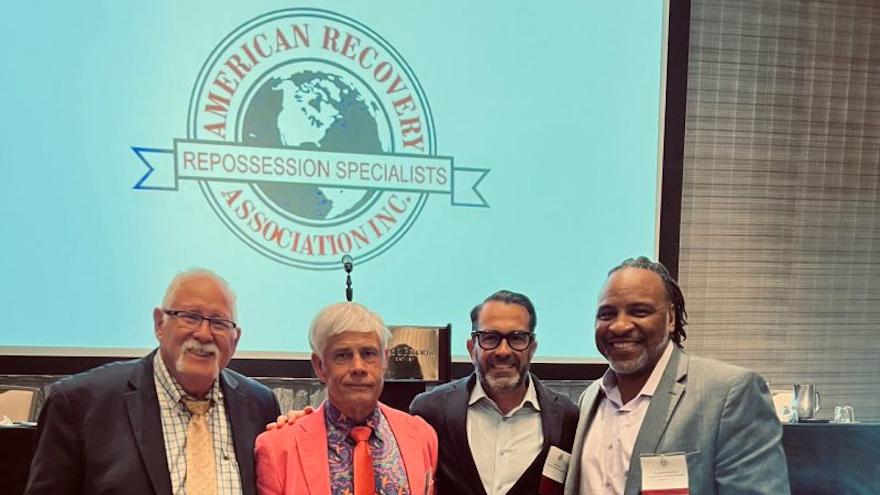
Tip of the conference cap to the American Recovery Association and the North American Repossessors Summit planning committee. They scheduled a pair of intriguing panel discussions to begin the 2022 edition of NARS, which unfolded for the first time at the foot of the Rocky Mountains.
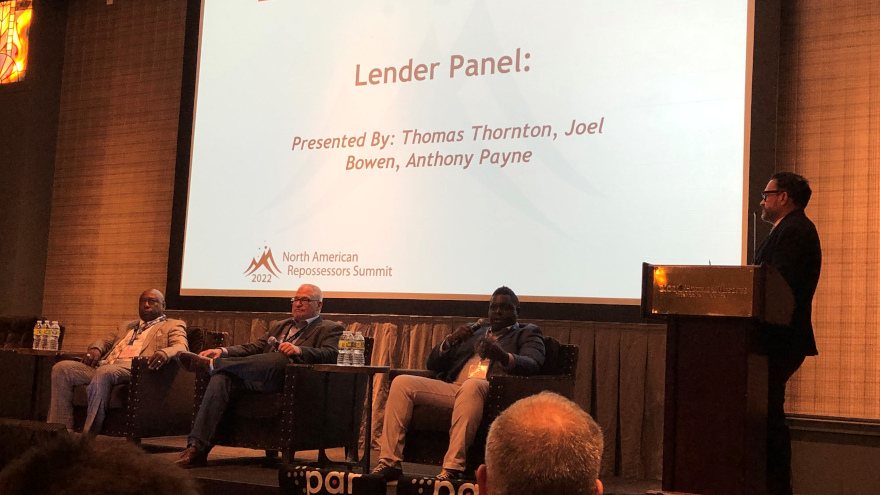
The opening panel on Tuesday afternoon featured a diverse trio of executives from the finance community; representatives from a captive, a credit union and a bank. Leading the conversation was newly bearded Joel Kennedy, who served in similar capacities during Used Car Week as well as when he was president of the National Automotive Finance Association.
The NARS gathering of close to 500 repossession agents, collections and recovery managers at other finance companies as well as leaders from an array of industry service providers listened intently to comments made by Joel Bowen, who has served as the loan resolution manager at Caltech Employees Federal Credit Union since August 2002.
While the latest data shows stability in payments, delinquencies and defaults, Bowen shared that he asked his supervisors and colleagues to increase loss reserves significantly based on the expectation that the credit union’s portfolio could sustain some turbulence during the next nine to 12 months.
“It’s better to have more than enough in reserves,” Bowen said.
And speaking of data, looking for trends is what Anthony Payne of Southeast Toyota Finance is doing. Payne joined the captive in 1998, serving currently as collateral return manager, so he is responsible for repossession activities as well as lease-end servicing and vehicle returns.
Payne acknowledged that trying to find sources to be an accurate predictor of what might happen with delinquencies in auto finance has been challenging during the past two years, especially in light of accommodations finance companies of all stripes have given to their customers during the pandemic. So, Payne said he’s watching the credit card market as a barometer of current consumer health.
Tom Thornton, who is senior vice president within the customer asset management group for M&T Bank, mentioned that the institution no longer has pandemic-connected payment accommodations in place for its customers. However, Thornton pointed out that the bank is not going to ignore the plight of its customers, especially if they’ve hit a rough patch. (And who isn’t feeling the impact of $5 per gallon gas?)
“We’re still trying to make sure we have a good customer experience. We try to do the right thing,” said Thornton, who also appeared on stage during the Repo Con portion of 2021 Used Car Week.
Bowen, Payne and Thornton all are expecting repossession volume to rise in the coming months since defaults still remain well below pre-pandemic readings and are on a trajectory to normalize.
“We’re working closely with our partners, repo agents and auto auctions, to make sure we’re ready,” Thornton said.
The next panel featured three active repossession agents, including current ARA president Dave Kennedy.
Kennedy focused much of his comments on the successes of the Repo Alliance, the grassroots funded lobbying organization based in Washington, D.C. He rattled off many successes for the endeavor, which he said has triggered several “we didn’t even think of that” comments from both federal lawmakers and regulators.
Starr Sawalqah runs Alpha Recovery in Phoenix and offered several recommendations to her fellow repossession agents. Sawalqah insisted that agents “shouldn’t be afraid to be vulnerable” when describing their escalating costs to finance companies. But she emphasized that agents need to back up their claims with plenty of data to show just how much it costs to skip-trace a customer and repossess a vehicle.
James McNeil is the chief executive officer of Day Break Metro, which provides repossession, locksmithing and transportation services from seven lot locations in California. McNeil might have made the most poignant statement of the day.
“We’re in an industry that’s going to be surprised by how much we’re going to be overwhelmed with assignments,” McNeil said, suggesting that fellow agents get their trucks and other physical resources as well as their workforces as strong as their finances will allow.
McNeil agreed with the timeline Bowen made during the previous panel discussion about the potential rise of repossessions.
“The industry is shrinking,” Bowen said. “Are we going to have enough agents to handle the volume?”
For ARA members in the room at the Omni Interlocken Hotel in Denver, they should take comfort in what Bowen said next.
“As long as you’re an ARA member, you’re someone to do business with in my book,” he said.
Nick Zulovich is senior editor with Cherokee Media Group and can be reached at [email protected].
When InsightLPR unveiled its five-person executive team last month, the technology company providing proprietary license plate recognition (LPR) software, hardware and data products to help companies increase their value said it would be rolling out its solutions at the North American Repossessors Summit, which is set to start in three weeks in Denver.
A news release distributed on Tuesday confirmed InsightLPR’s plans as the company said it will officially release and showcase its unique business model and LPR strategy to the repossession industry.
“We’re launching our agent-centric platform in response to a real market need,” InsightLPR chief product officer Oscar Nunez said in the news release. “Our team is excited to be at the summit, where we will demonstrate our platform’s benefits to recovery agents, including how much more control they can have over the LPR data they collect with our platform.”
Additionally, InsightLPR’s platform can enable quicker repossessions, increase recovery rates and add value to an agent’s business.
The company also offers a “bring-your-own” Genetec device option.
“Your Genetec hardware is compatible with our solution, so if you have these devices, come and talk to us,” Nunez said.
“What’s most exciting about our platform is that we have built a solid LPR solution on a flexible and reliable technology stack. Our offering fills the gaps on existing technologies and is setting new standards for excellence and LPR innovation in the industry,” Nunez added, outlining the following additional benefits:
• Transparent partnership
• No long-term commitment, no 12-month, non-compete post termination
• Agent data is not shared or sold to forwarders, lenders or competing recovery companies
• Agent has full access to historical data
• Optimized network size
• Full case management integrations
• Access to large staging hotlist
• Earn a minimum of $355 per Live Repo
For more information on InsightLPR’s model and strategy for the repossession industry, send an email [email protected] or visit insightlpr.com.
The American Recovery Association (ARA) recently highlighted the successes of the Repo Alliance, a fundraising organization rolled out at the start of the pandemic to boost lobbying and other industry promotion efforts.
From discussions with federal lawmakers and their staffs to a meeting with officials from the Consumer Financial Protection Bureau who are involved with auto financing, ARA said in an association update that the Repo Alliance has “not only focused on preventing bad things from happening to our industry, but also on educating policymakers as to the essential role we play in ensuring consumers have access to credit.
“We have worked hard to make sure that decision makers begin to view us through this lens, and not as an unpopular caricature at odds with their constituents. For the first time in the history of the repossession industry, we have a group completely focused and dedicated to the collateral recovery industry,” ARA continued in the industry message.
Since March 2020, the Repo Alliance has educated U.S. Senators about the negative implications of a repossession moratorium and also gave attention on reverse indemnification and imbalances in contracts while monitoring legislation to be sure there would not be any form of restrictions on repossessions.
Following a meeting with the CFPB, ARA mentioned the Repo Alliance also put into motion plans to gather repossession industry data sought by the regulator to help officials understand the repossession costs and potential issues that can result in wrongful repossession.
“The alliance would never claim to take sole credit for every action taken in our space. We welcome and applaud any and all like-minded partners who devote their own time and energy to advancing our shared goals,” ARA said. “Undoubtedly, we will only better our chances of success if there are additional voices aligned on these issues.
“What we do know is that all of our work educating members of Congress in meetings and with our industry specific materials over the last two years has undeniably helped to inform and provide a base of concern that now exists and is growing on the Hill,” the association continued. “We worked consistently and diligently to make them aware of an industry many told us they had never heard from or met with before, planting the seeds necessary to begin a trusted dialogue.
“In the end, we would hope that all engaged in these efforts would be less focused on claiming credit and instead join forces where we can to applaud these Senators questioning of Rohit Chopra’s inflammatory and tunnel visioned statements,” ARA went on to say. “We are stronger if we all work to support our shared goals.
“From our end, the Repo Alliance is committed to the path we are on of sustained federal engagement to protect and advance our industry’s priorities because the one thing we can guarantee you — and we have said it a hundred times — is the old Washington adage: ‘If you are not at the table, you are on the menu,’” the association added.
The Repo Alliance and a host of other matters are likely to be discussed when ARA hosts the North American Repossessors Summit on June 21-22 in Denver.
More details about the event organized under the theme, “Repo in the Rockies – Together, We Can Move Mountains,” can be found at reposummit.com.
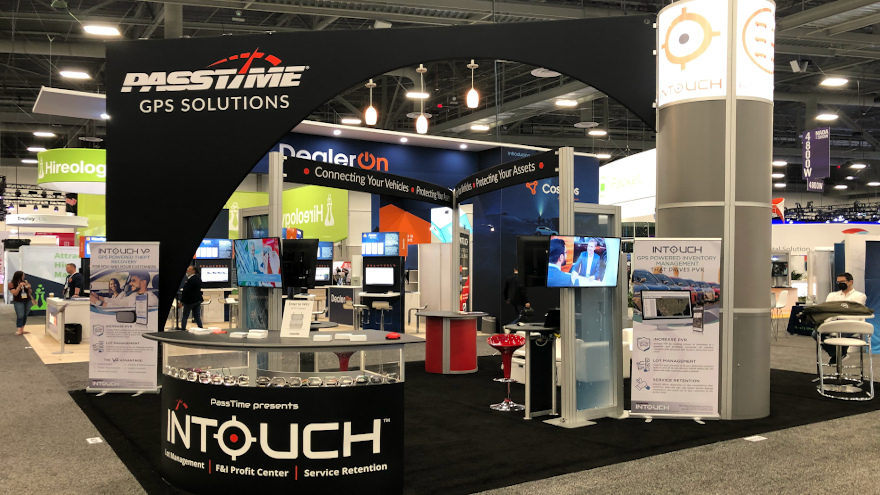
Dealerships and finance companies that use PassTime technology now have a refreshed tool to use to maintain contact with their assets and mitigate risk.
The GPS solutions provider announced last week the launch of Encore 3, the third generation of its Encore platform.
PassTime highlighted that this third generation of Encore builds upon the device platform that was first introduced in 2019 with the first version of Encore.
In addition to the enhancements and improvements achieved through previous Encore generations, the company mentioned in a news release that Encore 3 features technology advancements with new, improved GNSS (GPS plus others) for better satellite location accuracy and performance, giving customers even better ability to locate mobile assets.
PassTime explained Encore’s components are specifically selected and designed to achieve extremely low power-consumption, resulting in the ability to attain several years of battery life, in a compact design.
With the ability to select and switch between four different power modes, the company pointed out that customers can choose the features and reporting frequency they desire while balancing the battery life options that meet their business objectives.
While the Encore platform is completely self-powered, PassTime also noted Encore has an optional, external power cable that enhance the device’s functionalit, offering customers the ability to place an Encore device on an endless number of mobile assets within seconds.
PassTime went on to say Encore 3 features an updated, modern USB-C connector design for this optional external cable for improved ease of use and connectivity.
“PassTime has always had innovation at the core of everything we do. We continuously look for ways to improve and enhance our solutions, utilizing the most up to date technologies and components,” PassTime president and chief operating officer Chris Macheca said in the news release.
“Encore 3 is the result of that never-ending drive to provide our customers with innovative products and solutions and an affordable price point,” Macheca went on to say.
Macheca added that Encore 3, along with the previous versions, are built with Cat-M1 LTE cellular technology for connectivity and provides 5G compatibility, giving the solution platform impressive longevity.
For more information, visit https://passtimegps.com.